THE PCU FORMAT
•CHAPTER 1
• THE PROBLEM AND REVIEW OF RELATED LITERATURE
• Introduction (Perceived gap)
• Background of the Study
• Literature Review (Only the variables found in the Statement of the Problem are provided with a literature review.
Use only the findings)
• Synthesis of Literature Review
• Theoretical Frameworks (the variables in the SOP must be back-up with grounded theory)
• Conceptual Framework
• Statement of the Problem
• Hypothesis
• Significance of the Study
• Scope and Limitations
• Definition of Terms
3.
STATEMENT OF THEPROBLEM
• A very specific statement which clearly identifies the
problem being studied; will usually identify the key variables
as well as give some information about the scope of the
study
• May be in either question or declarative form
• May include inherent sub-problems, if appropriate
• Formulation of problem statement takes place after an
initial review of related literature and the distillation process
nbp2023
4.
TOPICS
Cultural Adaptation andClass Performance of Chinese
Foreign Nursing Students
This study aims to investigate the cultural adaptation of
Chinese Foreign Students in terms of their class
performance.
QUESTIONS
1. What is the demographic profile of the respondents in
terms of:
• 1.1 Age
• 1.2 Sex
• 1.3 Citizenship
• 1.4 Primary Language
• 1.5 Years Staying in the Philippines
• 1.6 Reason for studying nursing in the Philippines
• What cultural challenges do foreign nursing students
encounter in their classes?
• What coping strategies have chinese foreign nursing
students developed to overcome cultural adaptation
issues?
• What recommendations can be made to improve the
cultural adaptation process for Chinese foreign nursing
students?
The impact of family separation on mental
health
This study aims to examine the mental health
outcomes of familial separation among Chinese
nursing students in the Philippines. Specifically, it
seeks to answer the following questions:
1. What is the demographic profile of the
respondents in terms of:
o Age
o Sex
o Duration of stay in the Philippines
o Family structure
2. What is the current mental health status of
the respondents based on standardized
assessments?
3. What are the common mental health
challenges encountered by the respondents?
5.
THE INTRODUCTION
The introductionhas more than one function. It
provides context for your research, explains
your paper's subject and objectives, and
summarizes the work to come. In order to set
the stage for your paper's methodology,
findings, and discussion sections, you need a
strong introduction.
nbp2023
6.
ELEMENTS OF THEINTRODUCTION
• Definition of the key concepts and variables of the
study.
• Citations of Global, ASEAN, and local situations
relevant to the study.
• Citations of Global, ASEAN, and local findings of
past studies relative to the problem of the study.
• The reason for researching the topic and the need
to solve the problem is presented.
nbp2023
7.
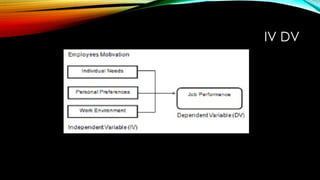
INDEPENDENT (CAUSE)
DEPENDENT (EFFECT)
•Cultural Adaptation and Class Performance of Chinese Foreign Nursing
Students
• The impact of family separation on mental health of Chinese Foreign Nursing
Students
Define the variables, describe
Indicate your research gap (reason why is there a need to study this topic)
8.
• The PerceivedGap. At most three paragraphs: the first
paragraph deals with general topic of the research, the
second paragraph deals with the specific topic, and the
third paragraph is the perceived gap.
Background of the Study – actual situation, cite articles (1 or 2)
• Following the order of the variables presented in the
statement of the problem, discuss briefly the current situation
related to these variables.
9.
REVIEW OF RELATEDLITERATURE
• The review follows the order of the Statement of the Problem,
i.e., the topics being reviewed follow the order of the
intervening, explanatory, moderating variables as presented in
the Statement of the Problem
NOTE:
1 Whether local or foreign, these are presented whenever it is
appropriate
2 Only the findings are required here. Do not include the
design used or recommendations).
3 As much as possible place the authors together where
appropriate.
10.
THEORETICAL FRAMEWORK
Agood theoretical framework gives you a strong scientific research base
and provides support for the rest of your dissertation. But what exactly is a
theoretical framework? And how do you write one? After you have identified
your problem statement and research question(s), it is important to
determine what theories and ideas exist in relation to your chosen subject.
By presenting this information, you ‘frame’ your research and show that you
are knowledgeable about the key concepts, theories, and models that
relate to your topic.
The theoretical framework also provides scientific justification for your
investigation: it shows that your research is not just coming “out of the blue,”
but that it is both grounded in and based on scientific theory.
11.
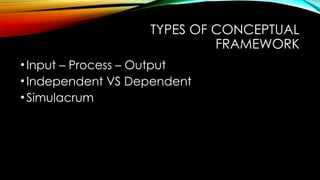
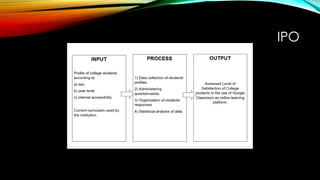
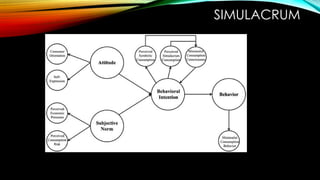
CONCEPTUAL FRAMEWORK
• Researchreports cast the problem statement within the
context of a conceptual framework. A description of this
framework contributes to a research report in at least two
ways because it identifies research variables, and clarifies
relationships among the variables.











![lit-review-presentation [Autosaved].pptx](https://cdn.slidesharecdn.com/ss_thumbnails/lit-review-presentationautosaved-231112114627-3bf7e6e0-thumbnail.jpg?width=640&height=640&fit=bounds)


![Hypothalamus short notes on location, function and disorders by Dr. Neha [PT]...](https://cdn.slidesharecdn.com/ss_thumbnails/hypothalamusbydr-260124142231-2b48143d-thumbnail.jpg?width=640&height=640&fit=bounds)


