CONCEPT OF CONFLICT

• Conflict is having different meanings to different persons. Some
say conflict is a disagreement between individuals/groups or
may be viewed as a perception of disagreement in the
individuals.
• Thomas defined Conflict as “ Conflict is a process that

begins when one party perceives that another party
has negatively affected, or is about to negatively
affect ,something that the first party cares about.”
• As per Newstrom & Davis “Conflict is any situation which two or
more parties feel themselves in opposition .It is an
interpersonal process that arises from disagreements over the
goals or the methods to accomplish those goals.”
On the basis of the definition we can derive various
features:
1. Conflict arises because of incompatibility of two or more aspects
of an element : it may be goals ,interests, methods of working or
any other feature.
2. Conflicts occur when an individual is not able to choose among
the available courses of action.
3. Conflict is a dynamic process as it indicates a series of events.
4. If no one is aware of conflict ,it is generally agreed that conflict
does not exist even though there may be incompatibility in
some respect.
CAUSES OF CONFLICT
•
•
•
•

1. Differing values can lead to conflicts.
2. Making assumptions can lead to conflicts.
3. Differing expectations can lead to conflict.
4. Differences in the way you were brought
up can result in conflict.
• 5. Knowledge and ability to deal with conflict
can result in conflict.
Types of Conflicts
•
•
•
•
•

Relationship Conflicts
Data Conflicts
Interest Conflicts
Structural Conflicts
Value Conflicts
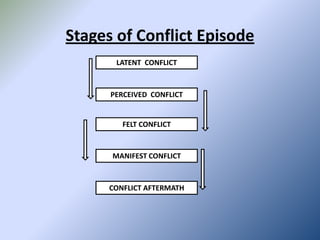
Stages of Conflict Episode
LATENT CONFLICT

PERCEIVED CONFLICT

FELT CONFLICT

MANIFEST CONFLICT

CONFLICT AFTERMATH
1.LATENT CONFLICT
1. Each conflict begins with latent(hidden)
conflict.
2. In this stage the conflict has not taken a
shape, therefore it is not noticeable.
3. It may occur in subconscious mind.
2.Perceived Conflict
• Parties to the conflict may perceive about
incompatibility of the past history of conflict ,
though sometimes this perception may be
wrong.
• This stage of conflict occurs due to
misunderstanding of parties ,caused due to
lack of communication.
3.Felt Conflict
• At this stage parties to the conflict feel that
they have some conflict among themselves.
• Felt conflict differs from perceived conflict .
• For example inconsistency in demands from
the organization and individual needs may
create internalization of conflict situation.
4.Manifest Conflict
• This is the stage when two parties to the conflict
show variety of conflicting behavior such as open
aggression, withdrawal etc

5.Conflict Aftermath
 At this stage attempts are made to resolve the conflict

through conflict resolution mechanism.
 If the conflict is resolved properly then a basis of

cooperative behavior is
parties.

established

between the
Positive and Negative aspects of Conflict
• In general the opinion of common person about conflict is
negative. The reason behind this is they have seen the
conflicts between two groups in an organization.
• There are three approaches for looking at consequences of
conflicts
– TRADITIONAL VIEW(-tv)
– HUMAN RELATIONS VIEW (natural)
– INTERACTIONIST VIEW (+tv) /Modern approach
TRADITIONAL VIEW

HUMAN RELATIONS VIEW

INTERACTIONIST VIEW

Conflict in the
Treats conflicts as Beliefs that
organization is
a natural
conflict is not
taken negatively. phenomenon
only a positive
force but also
necessary for a
group to perform
effectively
CONFLICT RESOLUTION
• Whenever Conflict arise ,these have to be resolved by some
specific actions known as Conflict Resolutions Actions. Some
major action of conflict resolution take place in the following
ways:
1. Problem Solving
2. Avoidance
3. Smoothing
4. Compromise
5. Confrontation
1. Problem Solving
• It is the most positive technique because it
emphasizes the attaining of the common
interests of both conflicting parties.
• Questions of who is right or wrong is usually
avoided but sharing and communicating are
required in order to find areas of common
interest.

• This technique is applied when conflict is based
on misunderstanding.
2. Avoidance
• In this technique the parties in the conflict are
suggested to withdraw or conceal the
incompatibility.

• This method is more correctly for avoiding
conflicts rather than solving the actual
conflicts.
3.Smoothing
• It is a process of playing down differences that
exist between individuals or groups
while
emphasizing common interests.
• Differences are suppressed and similarities are
accentuated or highlighted in smoothing process.
• This is also not a long term solution for the
conflicts.
4.Compromise
• It is a well accepted technique for resolving conflicts.
• There is neither a looser or a winner.
• In this method the external or third party intervention
is entertained.
• A compromise achieve by third party intervention is
called as MEDIATION and without the intervention of
the external parties is called as BARGAINING.
• This is an effective method to solve conflict between
management and workers.
5.Confrontation
• If the parties takes a rigid stand then the methods
discussed above may not bring resolution of
conflict between parties.
• In such case the parties are left to confrontation
to settle the conflict themselves.
• The parties concerned may settle their score by
applying their strength against each other.
Conflict Management

Conflict Management

  • 2.
    CONCEPT OF CONFLICT •Conflict is having different meanings to different persons. Some say conflict is a disagreement between individuals/groups or may be viewed as a perception of disagreement in the individuals. • Thomas defined Conflict as “ Conflict is a process that begins when one party perceives that another party has negatively affected, or is about to negatively affect ,something that the first party cares about.” • As per Newstrom & Davis “Conflict is any situation which two or more parties feel themselves in opposition .It is an interpersonal process that arises from disagreements over the goals or the methods to accomplish those goals.”
  • 3.
    On the basisof the definition we can derive various features: 1. Conflict arises because of incompatibility of two or more aspects of an element : it may be goals ,interests, methods of working or any other feature. 2. Conflicts occur when an individual is not able to choose among the available courses of action. 3. Conflict is a dynamic process as it indicates a series of events. 4. If no one is aware of conflict ,it is generally agreed that conflict does not exist even though there may be incompatibility in some respect.
  • 4.
    CAUSES OF CONFLICT • • • • 1.Differing values can lead to conflicts. 2. Making assumptions can lead to conflicts. 3. Differing expectations can lead to conflict. 4. Differences in the way you were brought up can result in conflict. • 5. Knowledge and ability to deal with conflict can result in conflict.
  • 5.
    Types of Conflicts • • • • • RelationshipConflicts Data Conflicts Interest Conflicts Structural Conflicts Value Conflicts
  • 6.
    Stages of ConflictEpisode LATENT CONFLICT PERCEIVED CONFLICT FELT CONFLICT MANIFEST CONFLICT CONFLICT AFTERMATH
  • 7.
    1.LATENT CONFLICT 1. Eachconflict begins with latent(hidden) conflict. 2. In this stage the conflict has not taken a shape, therefore it is not noticeable. 3. It may occur in subconscious mind.
  • 8.
    2.Perceived Conflict • Partiesto the conflict may perceive about incompatibility of the past history of conflict , though sometimes this perception may be wrong. • This stage of conflict occurs due to misunderstanding of parties ,caused due to lack of communication.
  • 9.
    3.Felt Conflict • Atthis stage parties to the conflict feel that they have some conflict among themselves. • Felt conflict differs from perceived conflict . • For example inconsistency in demands from the organization and individual needs may create internalization of conflict situation.
  • 10.
    4.Manifest Conflict • Thisis the stage when two parties to the conflict show variety of conflicting behavior such as open aggression, withdrawal etc 5.Conflict Aftermath  At this stage attempts are made to resolve the conflict through conflict resolution mechanism.  If the conflict is resolved properly then a basis of cooperative behavior is parties. established between the
  • 11.
    Positive and Negativeaspects of Conflict • In general the opinion of common person about conflict is negative. The reason behind this is they have seen the conflicts between two groups in an organization. • There are three approaches for looking at consequences of conflicts – TRADITIONAL VIEW(-tv) – HUMAN RELATIONS VIEW (natural) – INTERACTIONIST VIEW (+tv) /Modern approach
  • 12.
    TRADITIONAL VIEW HUMAN RELATIONSVIEW INTERACTIONIST VIEW Conflict in the Treats conflicts as Beliefs that organization is a natural conflict is not taken negatively. phenomenon only a positive force but also necessary for a group to perform effectively
  • 13.
    CONFLICT RESOLUTION • WheneverConflict arise ,these have to be resolved by some specific actions known as Conflict Resolutions Actions. Some major action of conflict resolution take place in the following ways: 1. Problem Solving 2. Avoidance 3. Smoothing 4. Compromise 5. Confrontation
  • 14.
    1. Problem Solving •It is the most positive technique because it emphasizes the attaining of the common interests of both conflicting parties. • Questions of who is right or wrong is usually avoided but sharing and communicating are required in order to find areas of common interest. • This technique is applied when conflict is based on misunderstanding.
  • 15.
    2. Avoidance • Inthis technique the parties in the conflict are suggested to withdraw or conceal the incompatibility. • This method is more correctly for avoiding conflicts rather than solving the actual conflicts.
  • 16.
    3.Smoothing • It isa process of playing down differences that exist between individuals or groups while emphasizing common interests. • Differences are suppressed and similarities are accentuated or highlighted in smoothing process. • This is also not a long term solution for the conflicts.
  • 17.
    4.Compromise • It isa well accepted technique for resolving conflicts. • There is neither a looser or a winner. • In this method the external or third party intervention is entertained. • A compromise achieve by third party intervention is called as MEDIATION and without the intervention of the external parties is called as BARGAINING. • This is an effective method to solve conflict between management and workers.
  • 18.
    5.Confrontation • If theparties takes a rigid stand then the methods discussed above may not bring resolution of conflict between parties. • In such case the parties are left to confrontation to settle the conflict themselves. • The parties concerned may settle their score by applying their strength against each other.