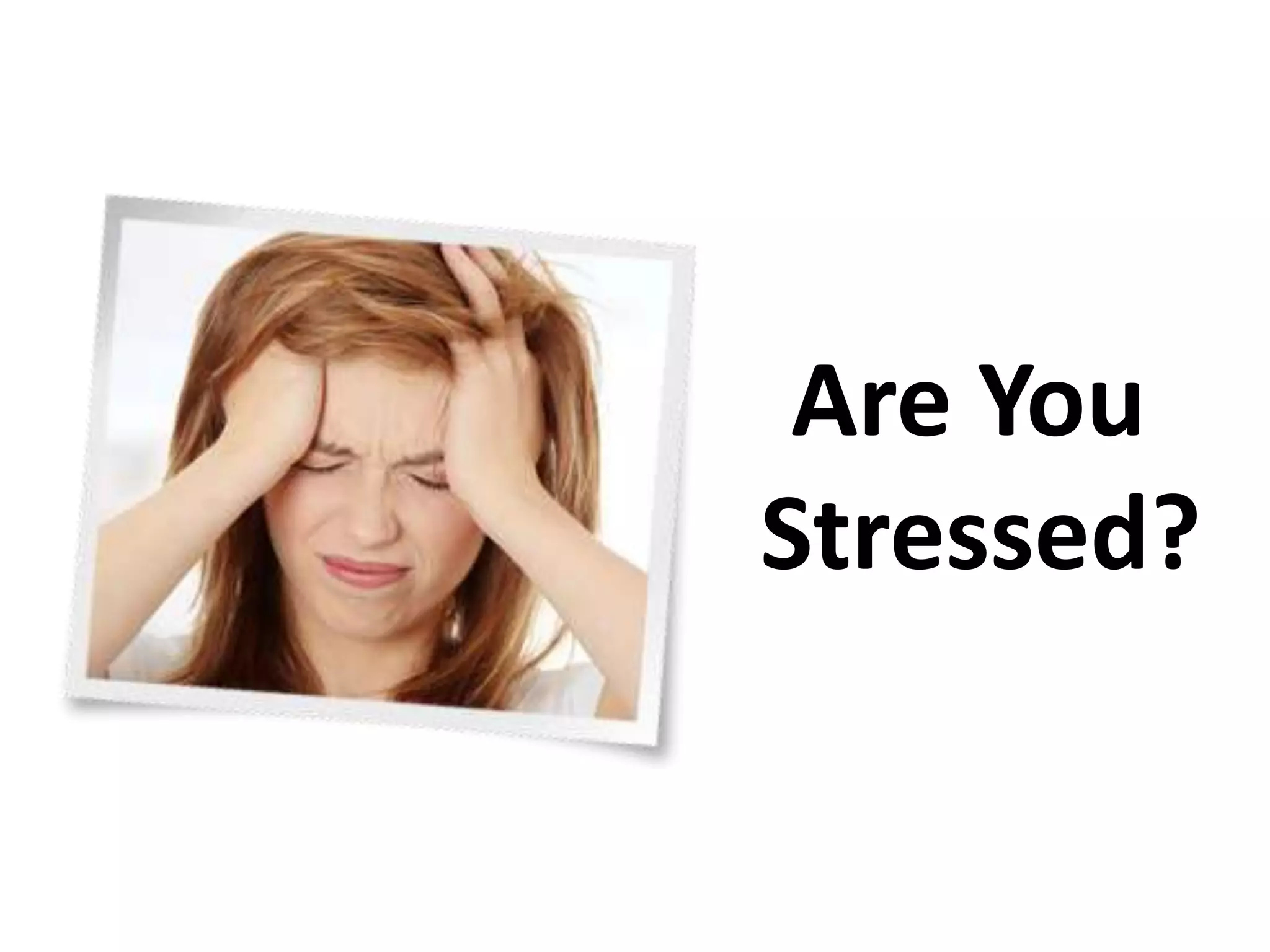
Are You
Stressed?
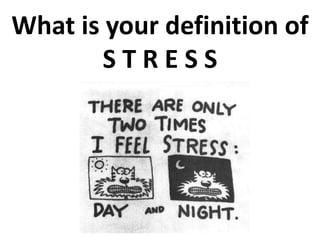
What is your definition of
S T R E S S
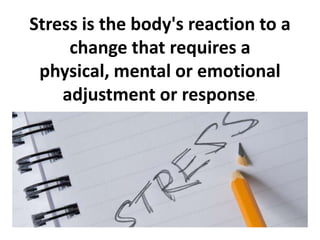
Stress is the body's reaction to a
change that requires a
physical, mental or emotional
adjustment or response.
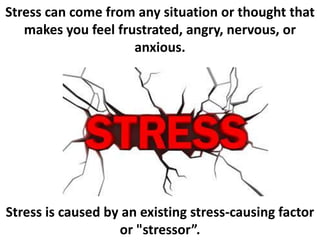
Stress can come from any situation or thought that
makes you feel frustrated, angry, nervous, or
anxious.
Stress is caused by an existing stress-causing factor
or "stressor”.
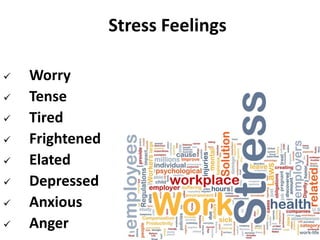
 Worry
 Tense
 Tired
 Frightened
 Elated
 Depressed
 Anxious
 Anger
Stress Feelings
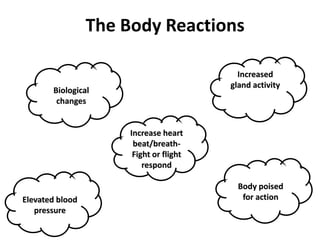
The Body Reactions
Increased
gland activity
Body poised
for actionElevated blood
pressure
Increase heart
beat/breath-
Fight or flight
respond
Biological
changes
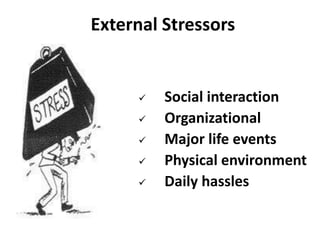
External Stressors
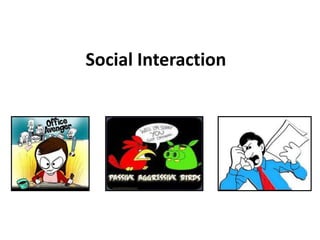
 Social interaction
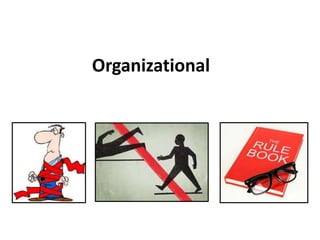
 Organizational
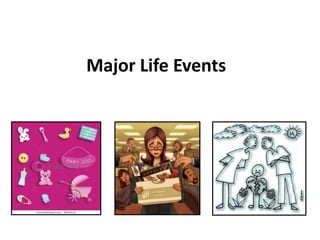
 Major life events
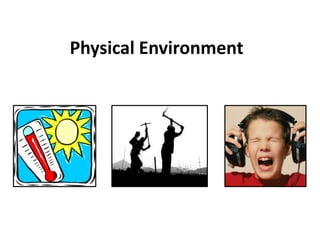
 Physical environment
 Daily hassles
Physical Environment
Social Interaction
Organizational
Major Life Events
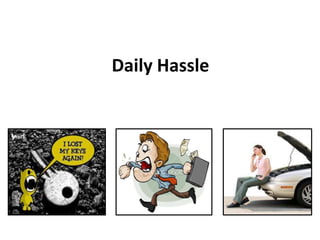
Daily Hassle
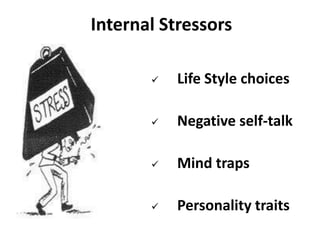
Internal Stressors
 Life Style choices
 Negative self-talk
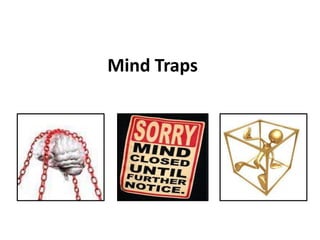
 Mind traps
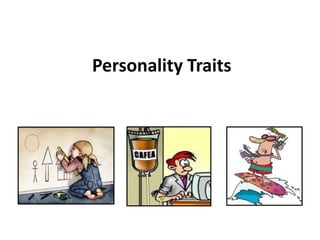
 Personality traits
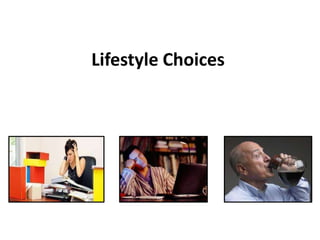
Lifestyle Choices
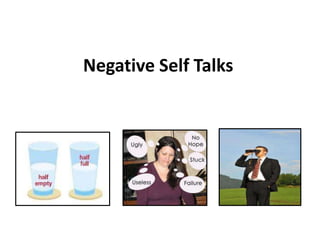
Negative Self Talks
Mind Traps
Personality Traits
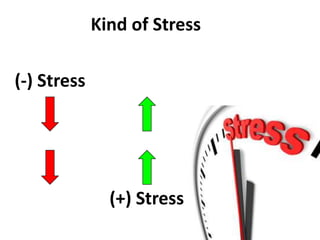
Kind of Stress
(-) Stress
(+) Stress
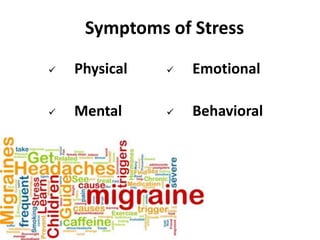
Symptoms of Stress
 Physical
 Mental
 Emotional
 Behavioral
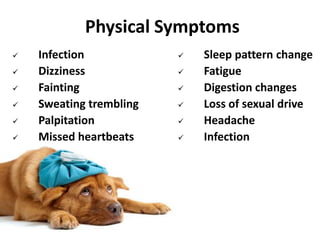
Physical Symptoms
 Sleep pattern change
 Fatigue
 Digestion changes
 Loss of sexual drive
 Headache
 Infection
 Infection
 Dizziness
 Fainting
 Sweating trembling
 Palpitation
 Missed heartbeats
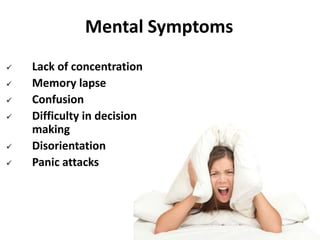
Mental Symptoms
 Lack of concentration
 Memory lapse
 Confusion
 Difficulty in decision
making
 Disorientation
 Panic attacks
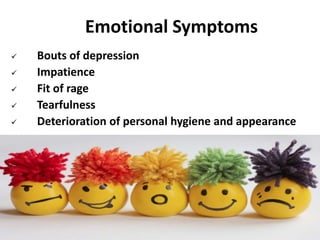
Emotional Symptoms
 Bouts of depression
 Impatience
 Fit of rage
 Tearfulness
 Deterioration of personal hygiene and appearance
Behavioral Symptoms
 Appetite change
 Eating disorder
 Increased intake of
alcohol or drugs
 Restlessness
 Hypochondria
 Nail biting
 Fidgeting habit
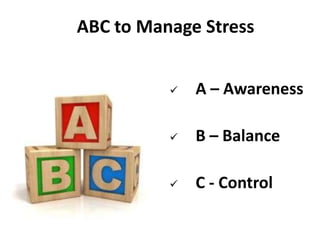
ABC to Manage Stress
 A – Awareness
 B – Balance
 C - Control
A - Awareness
 What causes you stress?
 Why it causes you stress?
 How do you react?
 What level of stress you endure
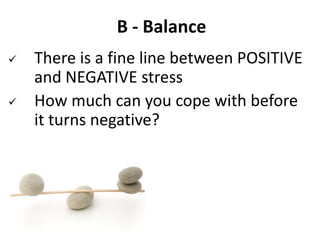
B - Balance
 There is a fine line between POSITIVE
and NEGATIVE stress
 How much can you cope with before
it turns negative?
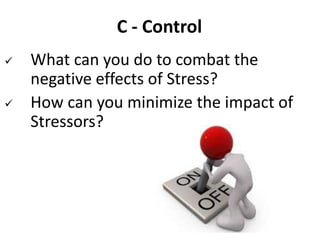
C - Control
 What can you do to combat the
negative effects of Stress?
 How can you minimize the impact of
Stressors?
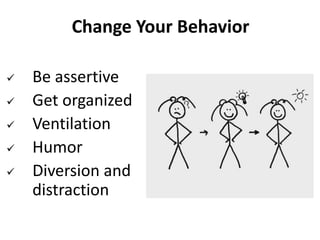
Change Your Behavior
 Be assertive
 Get organized
 Ventilation
 Humor
 Diversion and
distraction
Equality & Basic Rights
 Right to express my feelings
 Right to express my opinion
 Right to say yes/no
 Right to change my mind
 Right to be ME
Assertive Skills
 Maintain eye contact
 Steady body language
 Sit / stand with poise
 Maintain voice modulation
 Communicate concisely
 I think/ I feel
Benefits
 High self- esteem
 Lower self conscious
 Less anxious
 Manage emotions
 Self appreciation
 Self control
Get Organized
 Structured approach
 Prioritize objectives
 Don’t over-load your mind
 Work-life balance
Humour
 Good stress- reducer
 Applies at home and work
 Relieves muscular tension
 Improves breathing
 Pumps endorphins into the
 blood stream
 Body’s natural pain-killer
Diversions & Distractions
 Take time out
 Get away from things
 that bothers you
 Think logically
 Pragmatic approach
 Calm down
Change your Lifestyle
 Diet
 Smoking and alcohol
 Exercise
 Sound sleep
 Leisure
 Relaxation
 Socialize
Stress Mngt

Stress Mngt