WHAT IS ETIQUETTE ?

“ ETIQUETTE”      is about presenting
yourself with the kind of polish that
shows you can be taken seriously.
The word “etiquette” is derived from
French     which    actually   means    a
“ticket”, your ticket to getting anything
and any place you want.
Etiquette in simpler words is defined
as good behaviour which distinguishes
human beings from animals.
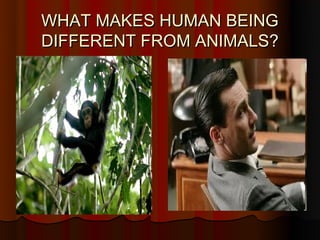
WHAT MAKES HUMAN BEING
DIFFERENT FROM ANIMALS?
ETIQUETTE
 It refers to norms and standards for
 behavior that is socially acceptable and
 being comfortable around people.
 Research conducted by Harvard
 University shows that technical skills and
 knowledge accounts for only 15% of
 getting, keeping and advancing in a job.
 85% of the job success is connected to
 people skills.
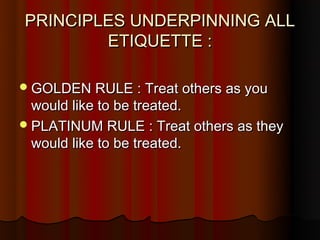
PRINCIPLES UNDERPINNING ALL
        ETIQUETTE :

 GOLDEN RULE : Treat others as you
  would like to be treated.
 PLATINUM RULE : Treat others as they
  would like to be treated.
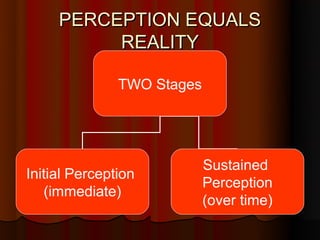
PERCEPTION EQUALS
          REALITY

               TWO Stages


                            Sustained
Initial Perception
                            Perception
   (immediate)
                            (over time)
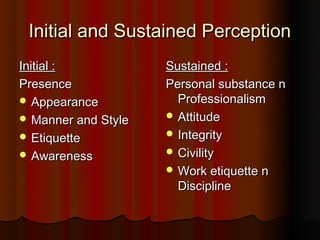
Initial and Sustained Perception
Initial :            Sustained :
Presence             Personal substance n
 Appearance           Professionalism
 Manner and Style    Attitude

 Etiquette           Integrity

 Awareness           Civility
                      Work etiquette n
                       Discipline
PRESENCE
 APPEARANCE
 MANNERISM AND STYLE
 ETIQUETTE
PRESENCE
People begin to evaluate us before any
  words are even spoken.
‘Who you are speaks so loudly I do not hear
  what you say ‘ – Emerson
NEED FOR ETIQUETTE
   Etiquette makes you a cultured individual who leaves
    his mark wherever he goes.
   Etiquette teaches you the way to talk, walk and most
    importantly behave in the society.
   Etiquette is essential for an everlasting first impression.
    The way you interact with your superiors, parents,
    fellow workers, friends speak a lot about your
    personality and up- bringing.
   Etiquette enables the individuals to earn respect and
    appreciation in the society. No one would feel like
    talking to a person who does not know how to speak or
    behave in the society.
TYPES OF ETIQUETTE
1.   Social Etiquette
2.   Bathroom Etiquette
3.   Wedding Etiquette
4.   Corporate Etiquette
5.   Meeting Etiquette
6.   Telephone Etiquette
7.   Eating Etiquette
8.   Business Etiquette
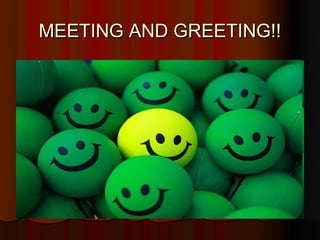
MEETING AND GREETING!!
Why should you smile ?
 Smiling   when dealing with Clients
  helps to create a friendly atmosphere
 Smile shows that you are enjoying
  your work
 Our smile says to Clients “ We are
  glad you’re here”,or, you are pleased
  to meet him
 Smiling is good for your health
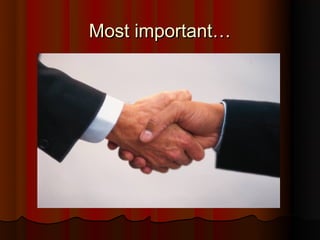
Most important…
HANDSHAKE
 Handshake is a gesture of Acceptance and
  Welcome
 Extend your right hand
 Web to web, finger to finger
 Give slight pressure
 Grasp the person’s hand Firmly and Completely
 Look into the eyes and smile
 Release the hand in 3 seconds
 But no matter what, never refuse to accept
  anyone’s hand
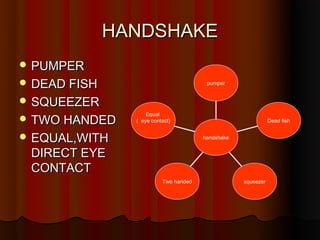
HANDSHAKE
 PUMPER
 DEAD FISH                             pumper


 SQUEEZER
 TWO HANDED
                    Equal
                ( eye contact)                                Dead fish


 EQUAL,WITH                           handshake


 DIRECT EYE
 CONTACT
                          Two handed               squeezer
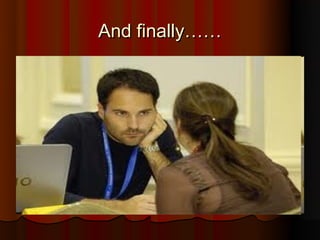
And finally……
COMMUNICATION
The Process of Conveying or Transmitting
 a message from one person to another
 through a proper channel.
SMALL TALKS

          3 DISTINCT PARTS
1. OPENER
2. MIDDLE
3. BREAK AWAY
OPENER
Compliment..
Weather talks…
Food..
Current event
‘how have your day been?...’
MIDDLE
Choose safe topics, like :
Sports..
Books..
Movies..
Art..
Travel..
‘’BE MORE INTERESTED THAN
   INTERESTING ‘’
BREAK-AWAY
 Stay not more than 10 minutes in one place
 Break away lines : I’m going to circulate…or,
  I see someone, I must meet..
 Tell them, you enjoyed speaking with them
And last but certainly, not the least..

     BE POSITIVE in your Outlook!!
Business etiquette

Business etiquette

  • 1.
    WHAT IS ETIQUETTE? “ ETIQUETTE” is about presenting yourself with the kind of polish that shows you can be taken seriously. The word “etiquette” is derived from French which actually means a “ticket”, your ticket to getting anything and any place you want. Etiquette in simpler words is defined as good behaviour which distinguishes human beings from animals.
  • 2.
    WHAT MAKES HUMANBEING DIFFERENT FROM ANIMALS?
  • 3.
    ETIQUETTE  It refersto norms and standards for behavior that is socially acceptable and being comfortable around people. Research conducted by Harvard University shows that technical skills and knowledge accounts for only 15% of getting, keeping and advancing in a job. 85% of the job success is connected to people skills.
  • 4.
    PRINCIPLES UNDERPINNING ALL ETIQUETTE :  GOLDEN RULE : Treat others as you would like to be treated.  PLATINUM RULE : Treat others as they would like to be treated.
  • 5.
    PERCEPTION EQUALS REALITY TWO Stages Sustained Initial Perception Perception (immediate) (over time)
  • 6.
    Initial and SustainedPerception Initial : Sustained : Presence Personal substance n  Appearance Professionalism  Manner and Style  Attitude  Etiquette  Integrity  Awareness  Civility  Work etiquette n Discipline
  • 7.
  • 8.
    PRESENCE People begin toevaluate us before any words are even spoken. ‘Who you are speaks so loudly I do not hear what you say ‘ – Emerson
  • 9.
    NEED FOR ETIQUETTE  Etiquette makes you a cultured individual who leaves his mark wherever he goes.  Etiquette teaches you the way to talk, walk and most importantly behave in the society.  Etiquette is essential for an everlasting first impression. The way you interact with your superiors, parents, fellow workers, friends speak a lot about your personality and up- bringing.  Etiquette enables the individuals to earn respect and appreciation in the society. No one would feel like talking to a person who does not know how to speak or behave in the society.
  • 10.
    TYPES OF ETIQUETTE 1. Social Etiquette 2. Bathroom Etiquette 3. Wedding Etiquette 4. Corporate Etiquette 5. Meeting Etiquette 6. Telephone Etiquette 7. Eating Etiquette 8. Business Etiquette
  • 11.
  • 12.
    Why should yousmile ?  Smiling when dealing with Clients helps to create a friendly atmosphere  Smile shows that you are enjoying your work  Our smile says to Clients “ We are glad you’re here”,or, you are pleased to meet him  Smiling is good for your health
  • 13.
  • 14.
    HANDSHAKE  Handshake isa gesture of Acceptance and Welcome  Extend your right hand  Web to web, finger to finger  Give slight pressure  Grasp the person’s hand Firmly and Completely  Look into the eyes and smile  Release the hand in 3 seconds  But no matter what, never refuse to accept anyone’s hand
  • 15.
    HANDSHAKE  PUMPER  DEADFISH pumper  SQUEEZER  TWO HANDED Equal ( eye contact) Dead fish  EQUAL,WITH handshake DIRECT EYE CONTACT Two handed squeezer
  • 16.
  • 17.
    COMMUNICATION The Process ofConveying or Transmitting a message from one person to another through a proper channel.
  • 18.
    SMALL TALKS 3 DISTINCT PARTS 1. OPENER 2. MIDDLE 3. BREAK AWAY
  • 19.
  • 20.
    MIDDLE Choose safe topics,like : Sports.. Books.. Movies.. Art.. Travel.. ‘’BE MORE INTERESTED THAN INTERESTING ‘’
  • 21.
    BREAK-AWAY  Stay notmore than 10 minutes in one place  Break away lines : I’m going to circulate…or, I see someone, I must meet..  Tell them, you enjoyed speaking with them
  • 22.
    And last butcertainly, not the least.. BE POSITIVE in your Outlook!!