FUDGE 
Presentation by 
FAIZAN MEHTAB 
Seat no:B1030007 
????
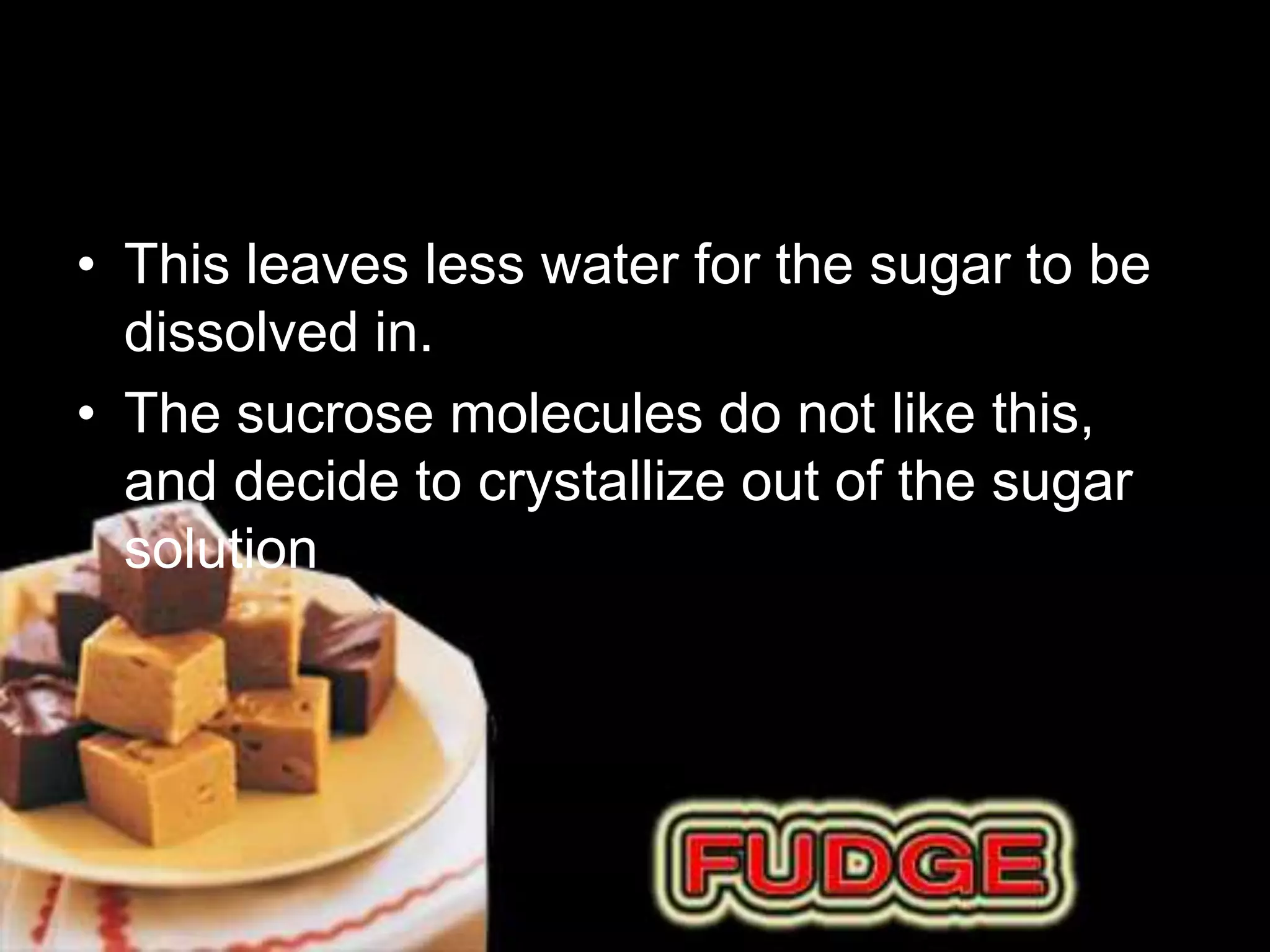
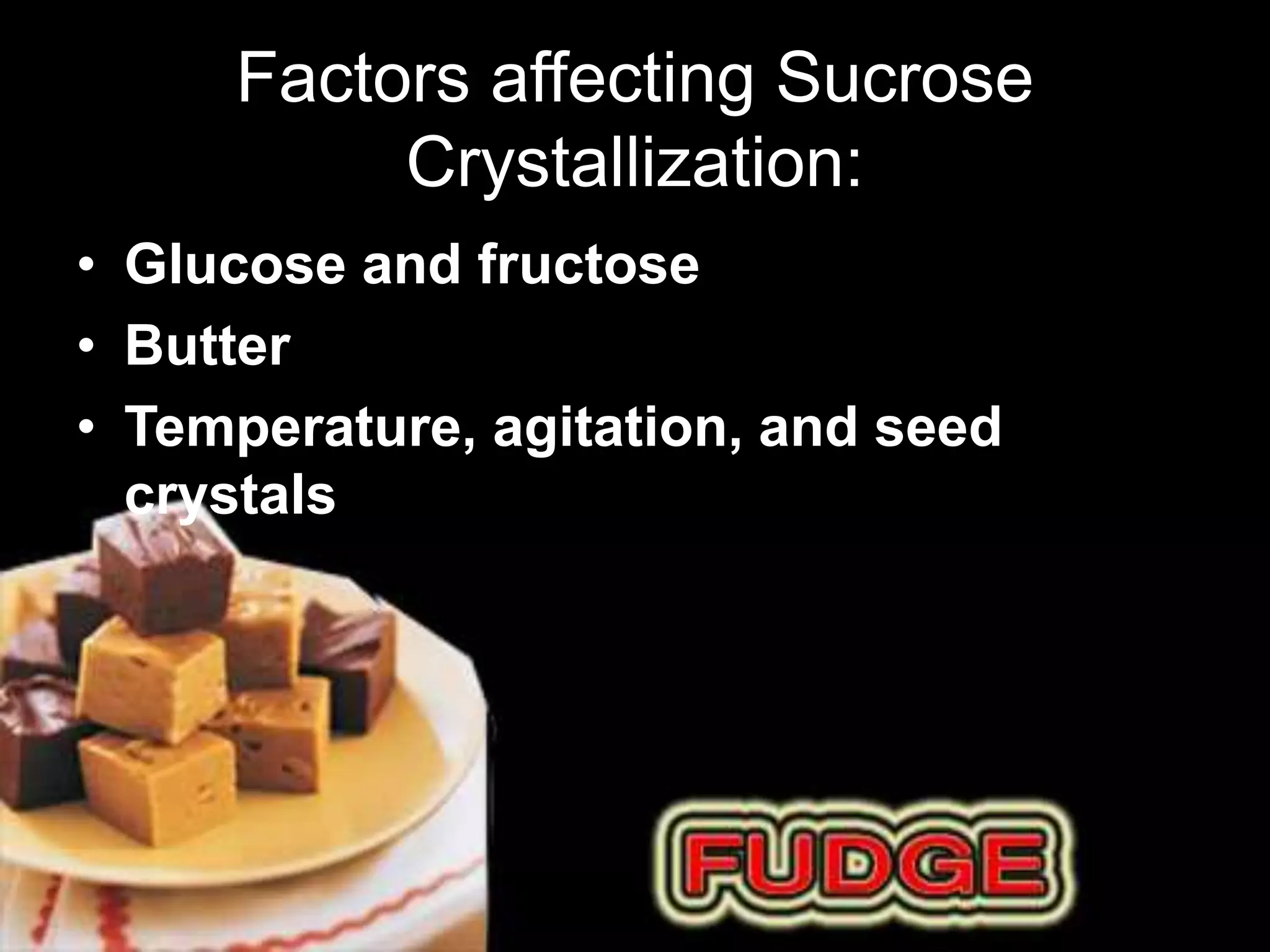
Fudge 
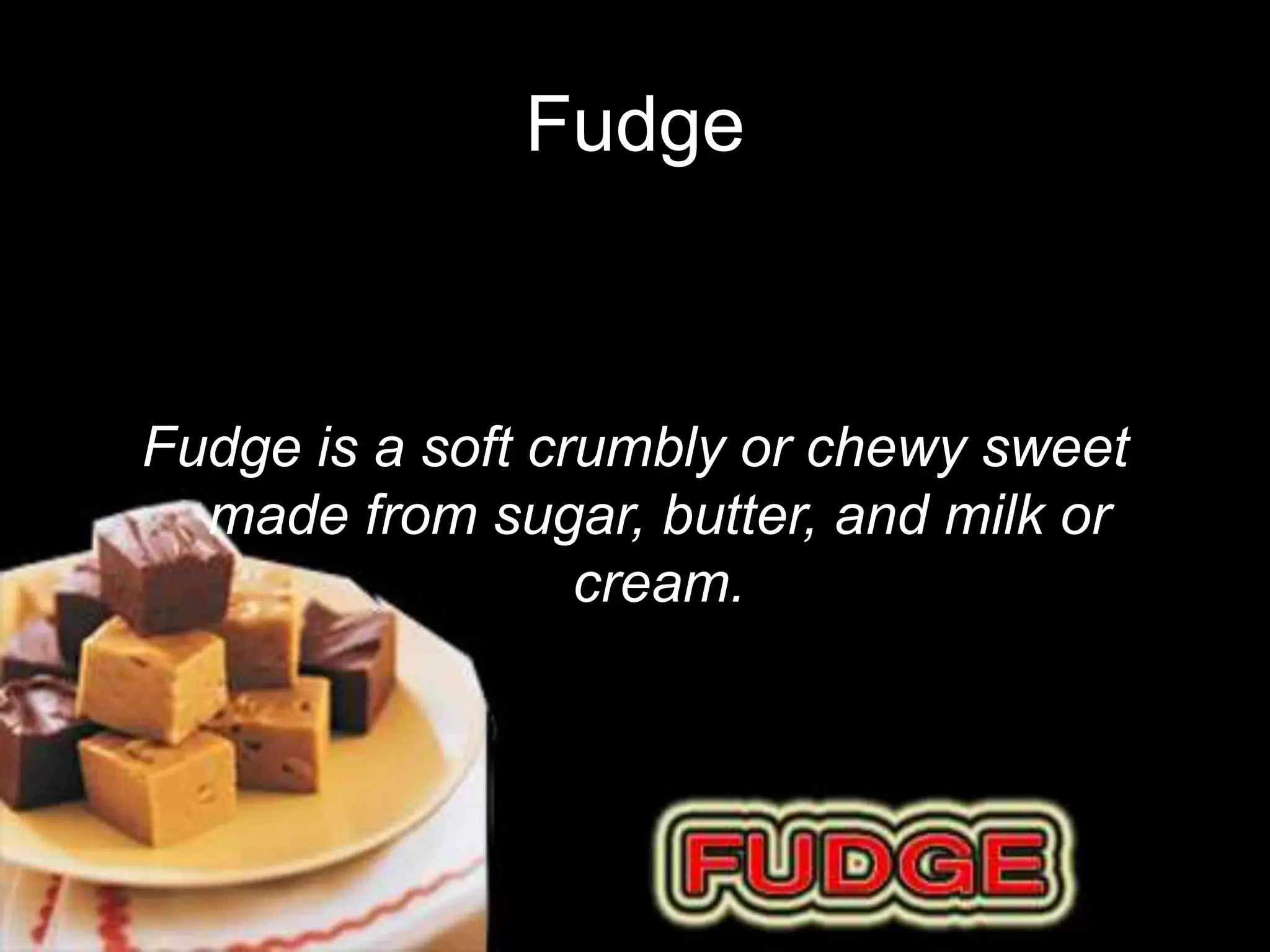
Fudge is a soft crumbly or chewy sweet 
made from sugar, butter, and milk or 
cream.
Manufacturing process: 
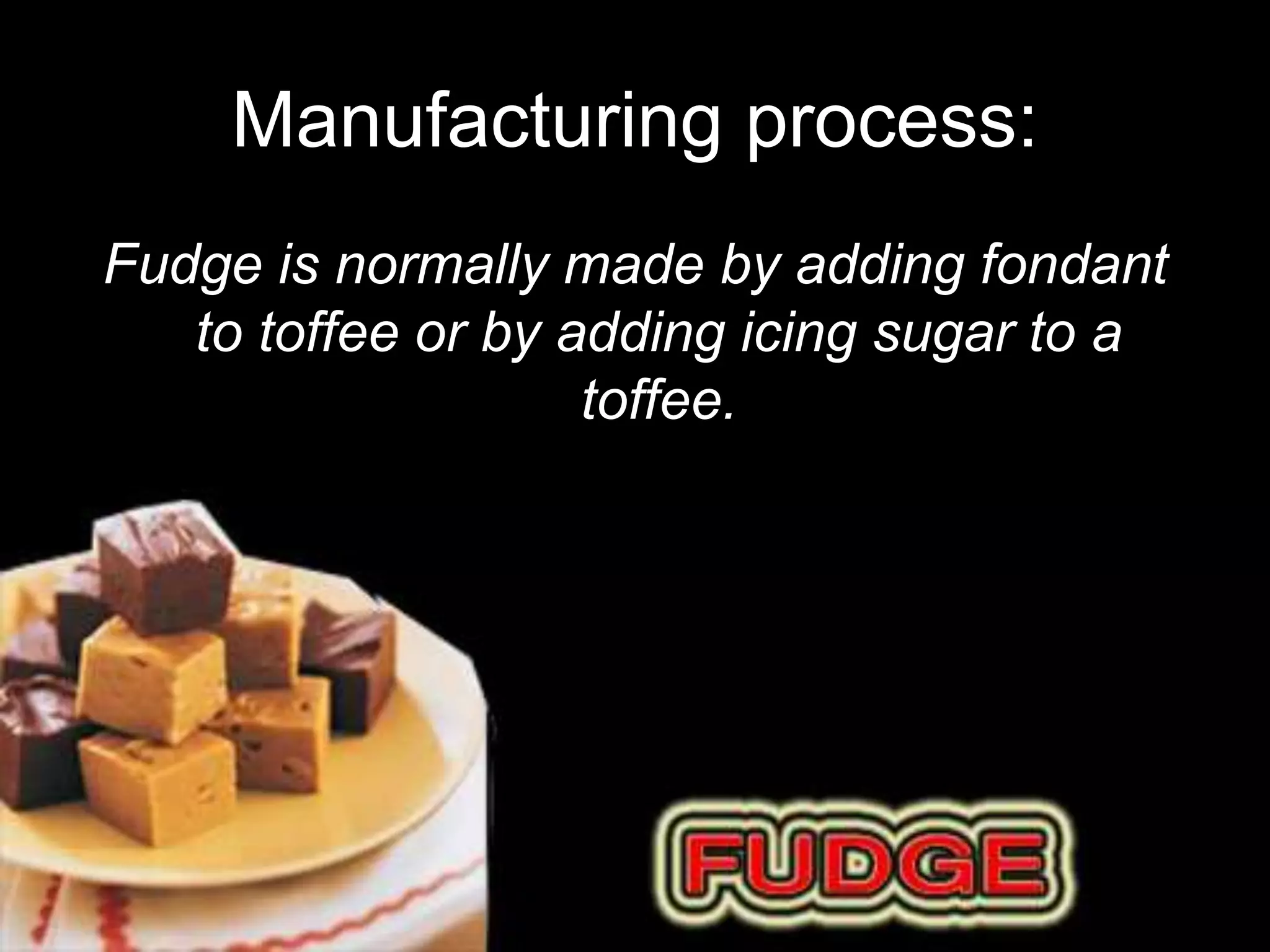
Fudge is normally made by adding fondant 
to toffee or by adding icing sugar to a 
toffee.
Basic Steps in Fudge-Making 
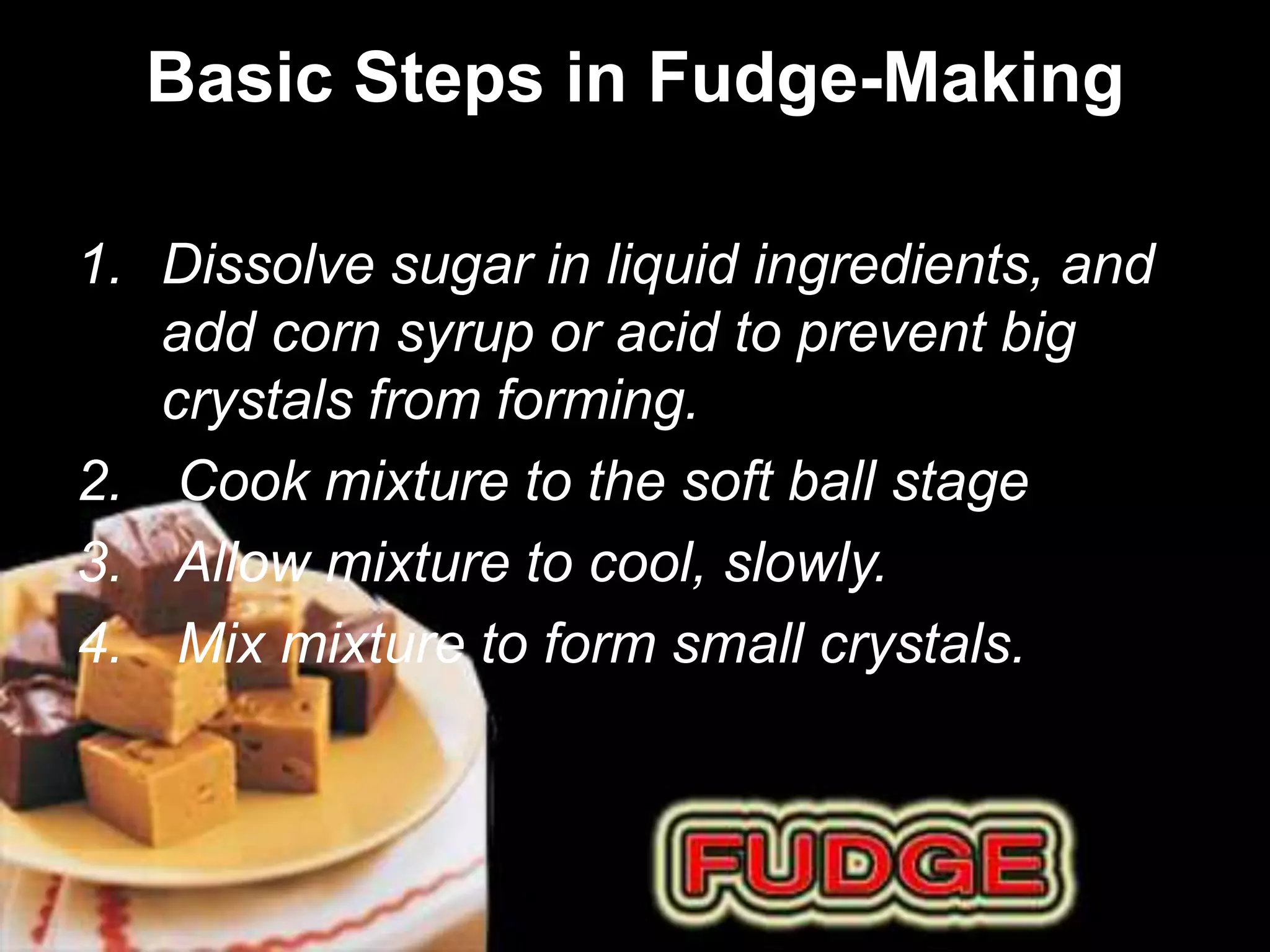
1. Dissolve sugar in liquid ingredients, and 
add corn syrup or acid to prevent big 
crystals from forming. 
2. Cook mixture to the soft ball stage 
3. Allow mixture to cool, slowly. 
4. Mix mixture to form small crystals.
What is soft ball stage: 
At soft ball stage temp should be: 235° F – 
240° F. 
Sugar concentration: 85% 
At this temperature, sugar syrup dropped 
into cold water will form a soft, flexible ball.
History of Fudge: 
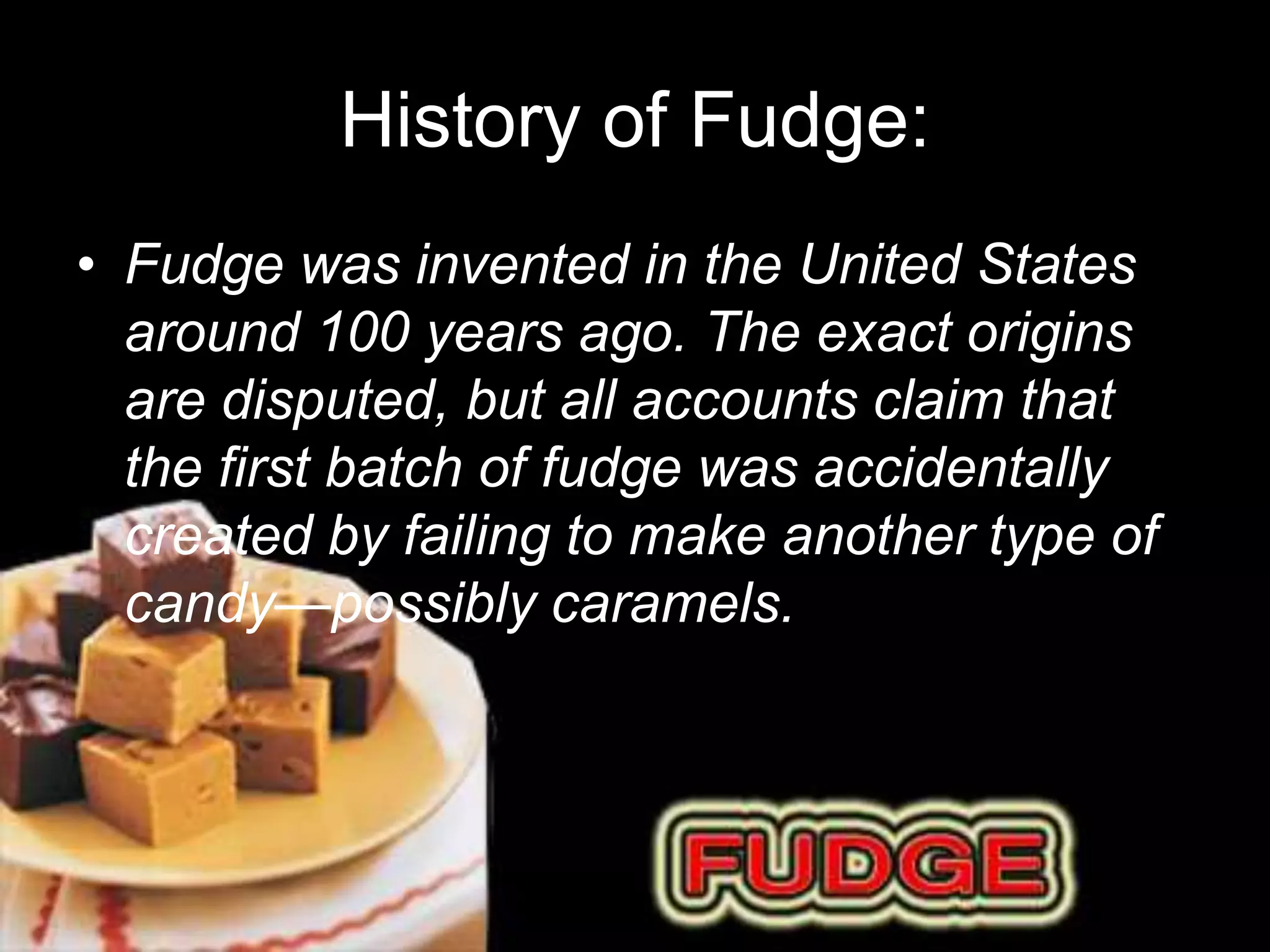
• Fudge was invented in the United States 
around 100 years ago. The exact origins 
are disputed, but all accounts claim that 
the first batch of fudge was accidentally 
created by failing to make another type of 
candy—possibly caramels.
Chemistry of Fudge: 
The chemistry of fudge is the chemistry of 
proteins heated with reducing sugars, i.e. 
the chemistry of the Maillard reaction. 
Fudge is crystalline in nature because it 
contains sugar crystals unlike lollipops, 
caramels, and toffee, crystal formation is 
desirable in fudge
The smaller the sugar crystals the more 
smoother and creamier taste develop in 
the mouth. 
Chemistry of Fudge depends on 
supersaturation and crystallization.
By controlling these processes a good 
fudge can be manufactured. 
Creamy texture of fudge depends on the 
perfect amount of sugar crystallization.
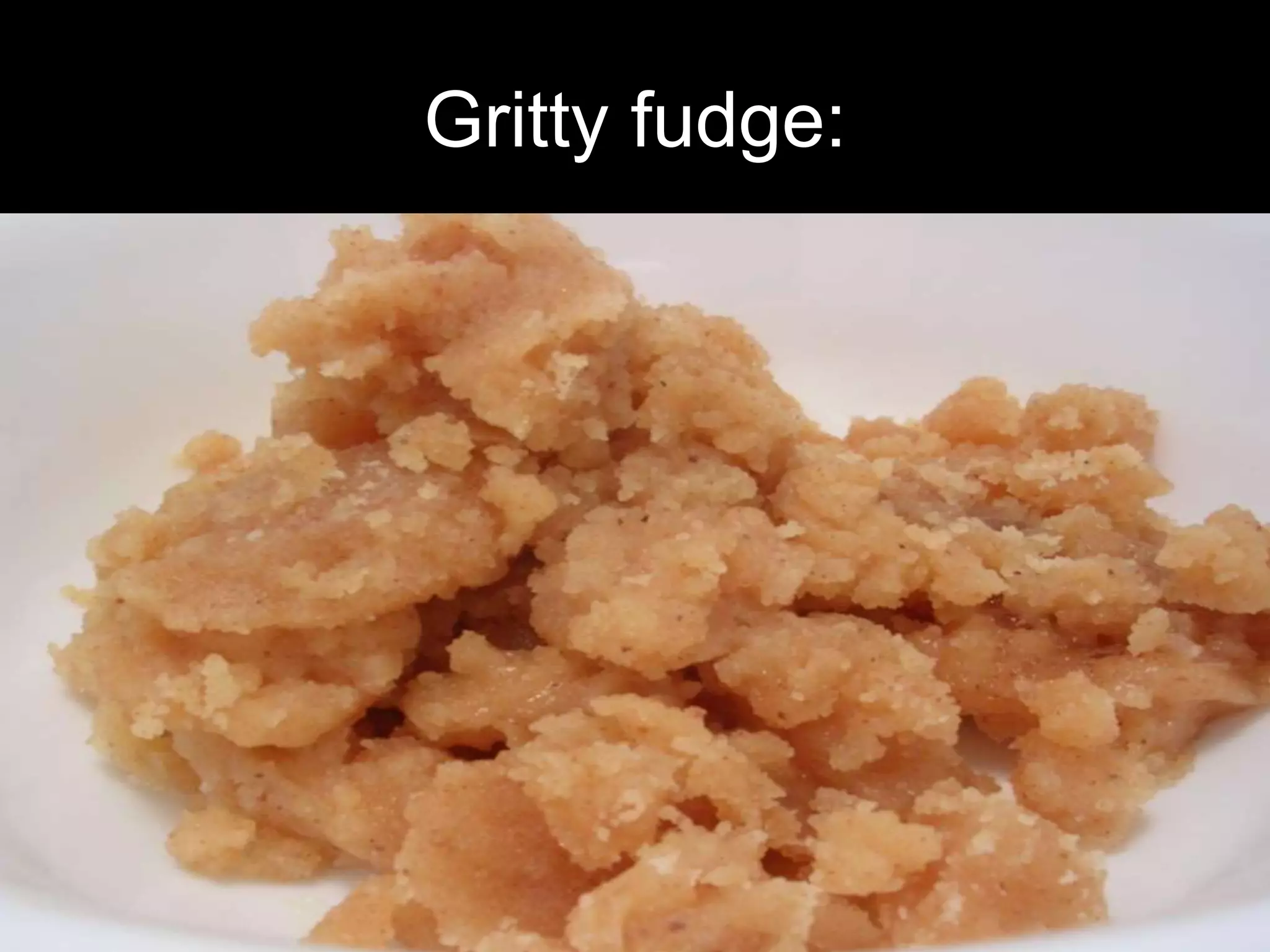
If there is too much crystallization, or the 
sugar crystals are too large, fudge will 
have a gritty texture and be too hard. 
Not enough crystallization, and it won’t be 
fudge, but rather a thick, syrupy goo.
• Sucrose has a tendency to crystallize 
when making fudge and other confections 
• This is because when you dissolve sugar 
in water, and then begin to cook this 
mixture, the water begins to evaporate
• This leaves less water for the sugar to be 
dissolved in. 
• The sucrose molecules do not like this, 
and decide to crystallize out of the sugar 
solution
• a good fudge texture relies on the perfect 
balance of crystallization 
• If crystallization occurs too early in the 
fudge-making process, they will be big, 
gritty crystals.
Factors affecting Sucrose 
Crystallization: 
• Glucose and fructose 
• Butter 
• Temperature, agitation, and seed 
crystals
• Glucose and fructose : 
• Glucose and fructose molecules get in the 
way of sucrose crystallization. If enough 
glucose and fructose molecules are 
present, they surround the sucrose 
molecules, preventing too many sucrose 
molecules from joining up to make a big 
crystal
• heat and acid will convert sucrose to its 
two components i.e glucose and fructose 
 Butter: 
 Butter plays a similar role in sucrose 
crystallization. Like glucose and fructose, 
butter gets in the way to control the 
number of sucrose molecules that can join 
to form a crystal.
Temperature, agitation, and seed crystals 
• Allowing the fudge to cool slowly makes 
for a smooth texture. If cooled too quickly, 
if the fudge is agitated during cooling, or if 
seed crystals are present, this can start a 
chain reaction of sucrose molecules 
crystallizing out of the mixture
Gritty fudge:

Fudge

  • 1.
    FUDGE Presentation by FAIZAN MEHTAB Seat no:B1030007 ????
  • 2.
    Fudge Fudge isa soft crumbly or chewy sweet made from sugar, butter, and milk or cream.
  • 3.
    Manufacturing process: Fudgeis normally made by adding fondant to toffee or by adding icing sugar to a toffee.
  • 4.
    Basic Steps inFudge-Making 1. Dissolve sugar in liquid ingredients, and add corn syrup or acid to prevent big crystals from forming. 2. Cook mixture to the soft ball stage 3. Allow mixture to cool, slowly. 4. Mix mixture to form small crystals.
  • 5.
    What is softball stage: At soft ball stage temp should be: 235° F – 240° F. Sugar concentration: 85% At this temperature, sugar syrup dropped into cold water will form a soft, flexible ball.
  • 6.
    History of Fudge: • Fudge was invented in the United States around 100 years ago. The exact origins are disputed, but all accounts claim that the first batch of fudge was accidentally created by failing to make another type of candy—possibly caramels.
  • 7.
    Chemistry of Fudge: The chemistry of fudge is the chemistry of proteins heated with reducing sugars, i.e. the chemistry of the Maillard reaction. Fudge is crystalline in nature because it contains sugar crystals unlike lollipops, caramels, and toffee, crystal formation is desirable in fudge
  • 8.
    The smaller thesugar crystals the more smoother and creamier taste develop in the mouth. Chemistry of Fudge depends on supersaturation and crystallization.
  • 9.
    By controlling theseprocesses a good fudge can be manufactured. Creamy texture of fudge depends on the perfect amount of sugar crystallization.
  • 10.
    If there istoo much crystallization, or the sugar crystals are too large, fudge will have a gritty texture and be too hard. Not enough crystallization, and it won’t be fudge, but rather a thick, syrupy goo.
  • 11.
    • Sucrose hasa tendency to crystallize when making fudge and other confections • This is because when you dissolve sugar in water, and then begin to cook this mixture, the water begins to evaporate
  • 12.
    • This leavesless water for the sugar to be dissolved in. • The sucrose molecules do not like this, and decide to crystallize out of the sugar solution
  • 13.
    • a goodfudge texture relies on the perfect balance of crystallization • If crystallization occurs too early in the fudge-making process, they will be big, gritty crystals.
  • 14.
    Factors affecting Sucrose Crystallization: • Glucose and fructose • Butter • Temperature, agitation, and seed crystals
  • 15.
    • Glucose andfructose : • Glucose and fructose molecules get in the way of sucrose crystallization. If enough glucose and fructose molecules are present, they surround the sucrose molecules, preventing too many sucrose molecules from joining up to make a big crystal
  • 16.
    • heat andacid will convert sucrose to its two components i.e glucose and fructose  Butter:  Butter plays a similar role in sucrose crystallization. Like glucose and fructose, butter gets in the way to control the number of sucrose molecules that can join to form a crystal.
  • 17.
    Temperature, agitation, andseed crystals • Allowing the fudge to cool slowly makes for a smooth texture. If cooled too quickly, if the fudge is agitated during cooling, or if seed crystals are present, this can start a chain reaction of sucrose molecules crystallizing out of the mixture
  • 18.