☻ Introduction
☻ Food processing techniques
☻ Extraction
a) Mechanism
b) Methods
c) Applications
☻ Filtration
a) Principle
b) Methods
c) Applications
☻ conclusion
Objectives:
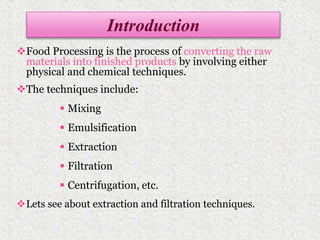
Food Processing is the process of converting the raw
materials into finished products by involving either
physical and chemical techniques.
The techniques include:
 Mixing
 Emulsification
 Extraction
 Filtration
 Centrifugation, etc.
Lets see about extraction and filtration techniques.
Introduction
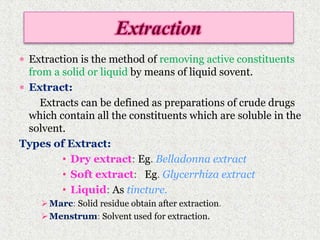
 Extraction is the method of removing active constituents
from a solid or liquid by means of liquid sovent.
 Extract:
Extracts can be defined as preparations of crude drugs
which contain all the constituents which are soluble in the
solvent.
Types of Extract:
• Dry extract: Eg. Belladonna extract
• Soft extract: Eg. Glycerrhiza extract
• Liquid: As tincture.
Marc: Solid residue obtain after extraction.
Menstrum: Solvent used for extraction.
Extraction
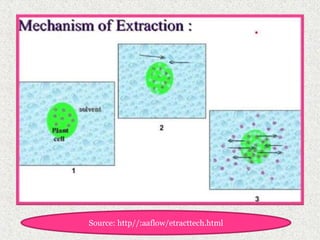
.
Source: http//:aaflow/etracttech.html
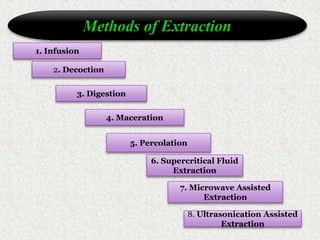
1. Infusion
2. Decoction
3. Digestion
4. Maceration
5. Percolation
6. Supercritical Fluid
Extraction
7. Microwave Assisted
Extraction
8. Ultrasonication Assisted
Extraction
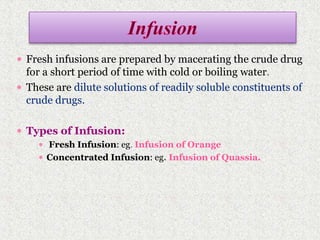
 Fresh infusions are prepared by macerating the crude drug
for a short period of time with cold or boiling water.
 These are dilute solutions of readily soluble constituents of
crude drugs.
 Types of Infusion:
 Fresh Infusion: eg. Infusion of Orange
 Concentrated Infusion: eg. Infusion of Quassia.
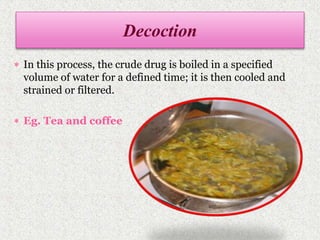
 In this process, the crude drug is boiled in a specified
volume of water for a defined time; it is then cooled and
strained or filtered.
 Eg. Tea and coffee
Decoction
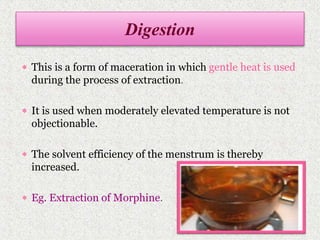
 This is a form of maceration in which gentle heat is used
during the process of extraction.
 It is used when moderately elevated temperature is not
objectionable.
 The solvent efficiency of the menstrum is thereby
increased.
 Eg. Extraction of Morphine.
Digestion
 The solid ingredients are placed in a stopper
container with the whole of the solvent and allowed
to stand for a period of atleast 3-7 days with
frequent agitation until soluble matter is dissolved.
 The mixture is then obtained by filtration.
Maceration
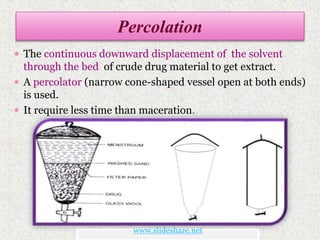
 The continuous downward displacement of the solvent
through the bed of crude drug material to get extract.
 A percolator (narrow cone-shaped vessel open at both ends)
is used.
 It require less time than maceration.
Percolation
www.slideshare.net
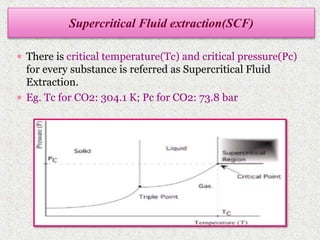
 There is critical temperature(Tc) and critical pressure(Pc)
for every substance is referred as Supercritical Fluid
Extraction.
 Eg. Tc for CO2: 304.1 K; Pc for CO2: 73.8 bar
Supercritical Fluid extraction(SCF)
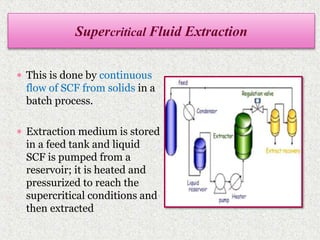
 This is done by continuous
flow of SCF from solids in a
batch process.
 Extraction medium is stored
in a feed tank and liquid
SCF is pumped from a
reservoir; it is heated and
pressurized to reach the
supercritical conditions and
then extracted
Supercritical Fluid Extraction
 Microwaves (about 2.45 GHz) are used extract the fluid
mixtures are regarded as Microwave Assisted Extraction.
 They offer rapid delivery of energy to a total volume of
solvent and solid plant matrix with subsequent heating of
the solvent and solid matrix, efficiently and
homogenously.
Microwave Assisted Extraction
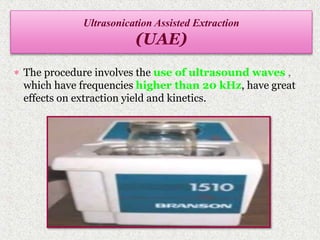
 The procedure involves the use of ultrasound waves ,
which have frequencies higher than 20 kHz, have great
effects on extraction yield and kinetics.
Ultrasonication Assisted Extraction
(UAE)
Percolation is used to extract the Belladonna and Cardamom
tincture.
SCF extraction is used for Petroleum recovery, oils,
fragrances, impurities from agricultural and food products.
Pollution control.
MAE used to extract nutrachemical products from plant
sources in a faster manner than conventional solid-liquid
extractions.
UAE is used to extract oils from almond, apricot and rice
bran.
UAE is also used to extract carvone and limonene with
hexane.
General Applications
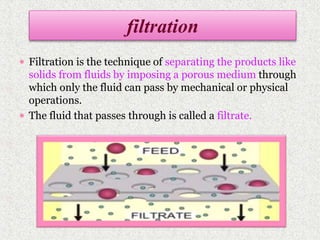
 Filtration is the technique of separating the products like
solids from fluids by imposing a porous medium through
which only the fluid can pass by mechanical or physical
operations.
 The fluid that passes through is called a filtrate.
filtration
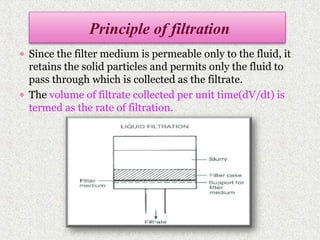
 Since the filter medium is permeable only to the fluid, it
retains the solid particles and permits only the fluid to
pass through which is collected as the filtrate.
 The volume of filtrate collected per unit time(dV/dt) is
termed as the rate of filtration.
Principle of filtration
1) Bed filtration
2) Plate and Frame Filtration
3) Continuous Rotary Filtration
4) Microfiltration
Methods of Filtration
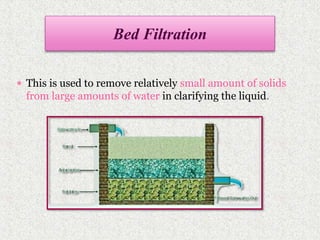
 This is used to remove relatively small amount of solids
from large amounts of water in clarifying the liquid.
Bed Filtration
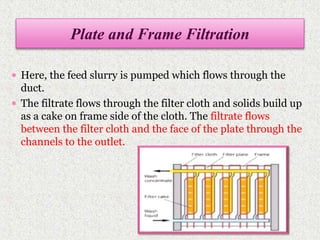
 Here, the feed slurry is pumped which flows through the
duct.
 The filtrate flows through the filter cloth and solids build up
as a cake on frame side of the cloth. The filtrate flows
between the filter cloth and the face of the plate through the
channels to the outlet.
Plate and Frame Filtration
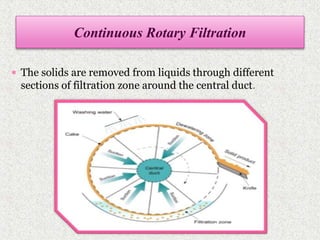
 The solids are removed from liquids through different
sections of filtration zone around the central duct.
Continuous Rotary Filtration
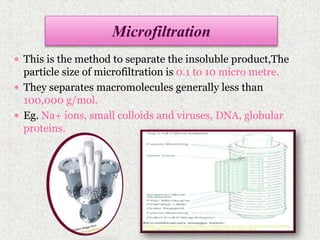
 This is the method to separate the insoluble product,The
particle size of microfiltration is 0.1 to 10 micro metre.
 They separates macromolecules generally less than
100,000 g/mol.
 Eg. Na+ ions, small colloids and viruses, DNA, globular
proteins.
Microfiltration
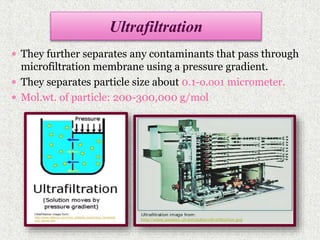
 They further separates any contaminants that pass through
microfiltration membrane using a pressure gradient.
 They separates particle size about 0.1-o.oo1 micrometer.
 Mol.wt. of particle: 200-300,000 g/mol
Ultrafiltration
 Filtration is used to separate coffee from grounds in homes.
 They used in laboratories as HEPA filters to provide sterile
air
 They help in controlling environmental pollution.
 In kidneys, there occurs filtration of blood in glomerulus.
 On a industrial scale, it is used by oil, gas, food &beverages
and pharmaceutical industries.
 Municipalities use this to treat sewage and purify water.
 Furnaces use filtration to prevent the furnace elements
from fouling with particulates.
Applications
 Thus , we gained a clear knowledge on the extraction and
filtration procedures and its applications.
 They are essential in the physical conversion of foods
products in food processing industries.
Conclusion
 Desrosier,N.W-The technology of the Food
preservation CBS publishers, New Delhi.
 www.slideshare.net
 www.geafiltration.com
 www.aaflow.de/filtertech/index.html
Reference
Food processing techniques- Extraction and Filtration

Food processing techniques- Extraction and Filtration

  • 2.
    ☻ Introduction ☻ Foodprocessing techniques ☻ Extraction a) Mechanism b) Methods c) Applications ☻ Filtration a) Principle b) Methods c) Applications ☻ conclusion Objectives:
  • 3.
    Food Processing isthe process of converting the raw materials into finished products by involving either physical and chemical techniques. The techniques include:  Mixing  Emulsification  Extraction  Filtration  Centrifugation, etc. Lets see about extraction and filtration techniques. Introduction
  • 4.
     Extraction isthe method of removing active constituents from a solid or liquid by means of liquid sovent.  Extract: Extracts can be defined as preparations of crude drugs which contain all the constituents which are soluble in the solvent. Types of Extract: • Dry extract: Eg. Belladonna extract • Soft extract: Eg. Glycerrhiza extract • Liquid: As tincture. Marc: Solid residue obtain after extraction. Menstrum: Solvent used for extraction. Extraction
  • 5.
  • 6.
    1. Infusion 2. Decoction 3.Digestion 4. Maceration 5. Percolation 6. Supercritical Fluid Extraction 7. Microwave Assisted Extraction 8. Ultrasonication Assisted Extraction
  • 7.
     Fresh infusionsare prepared by macerating the crude drug for a short period of time with cold or boiling water.  These are dilute solutions of readily soluble constituents of crude drugs.  Types of Infusion:  Fresh Infusion: eg. Infusion of Orange  Concentrated Infusion: eg. Infusion of Quassia.
  • 8.
     In thisprocess, the crude drug is boiled in a specified volume of water for a defined time; it is then cooled and strained or filtered.  Eg. Tea and coffee Decoction
  • 9.
     This isa form of maceration in which gentle heat is used during the process of extraction.  It is used when moderately elevated temperature is not objectionable.  The solvent efficiency of the menstrum is thereby increased.  Eg. Extraction of Morphine. Digestion
  • 10.
     The solidingredients are placed in a stopper container with the whole of the solvent and allowed to stand for a period of atleast 3-7 days with frequent agitation until soluble matter is dissolved.  The mixture is then obtained by filtration. Maceration
  • 11.
     The continuousdownward displacement of the solvent through the bed of crude drug material to get extract.  A percolator (narrow cone-shaped vessel open at both ends) is used.  It require less time than maceration. Percolation www.slideshare.net
  • 12.
     There iscritical temperature(Tc) and critical pressure(Pc) for every substance is referred as Supercritical Fluid Extraction.  Eg. Tc for CO2: 304.1 K; Pc for CO2: 73.8 bar Supercritical Fluid extraction(SCF)
  • 13.
     This isdone by continuous flow of SCF from solids in a batch process.  Extraction medium is stored in a feed tank and liquid SCF is pumped from a reservoir; it is heated and pressurized to reach the supercritical conditions and then extracted Supercritical Fluid Extraction
  • 14.
     Microwaves (about2.45 GHz) are used extract the fluid mixtures are regarded as Microwave Assisted Extraction.  They offer rapid delivery of energy to a total volume of solvent and solid plant matrix with subsequent heating of the solvent and solid matrix, efficiently and homogenously. Microwave Assisted Extraction
  • 15.
     The procedureinvolves the use of ultrasound waves , which have frequencies higher than 20 kHz, have great effects on extraction yield and kinetics. Ultrasonication Assisted Extraction (UAE)
  • 16.
    Percolation is usedto extract the Belladonna and Cardamom tincture. SCF extraction is used for Petroleum recovery, oils, fragrances, impurities from agricultural and food products. Pollution control. MAE used to extract nutrachemical products from plant sources in a faster manner than conventional solid-liquid extractions. UAE is used to extract oils from almond, apricot and rice bran. UAE is also used to extract carvone and limonene with hexane. General Applications
  • 17.
     Filtration isthe technique of separating the products like solids from fluids by imposing a porous medium through which only the fluid can pass by mechanical or physical operations.  The fluid that passes through is called a filtrate. filtration
  • 18.
     Since thefilter medium is permeable only to the fluid, it retains the solid particles and permits only the fluid to pass through which is collected as the filtrate.  The volume of filtrate collected per unit time(dV/dt) is termed as the rate of filtration. Principle of filtration
  • 19.
    1) Bed filtration 2)Plate and Frame Filtration 3) Continuous Rotary Filtration 4) Microfiltration Methods of Filtration
  • 20.
     This isused to remove relatively small amount of solids from large amounts of water in clarifying the liquid. Bed Filtration
  • 21.
     Here, thefeed slurry is pumped which flows through the duct.  The filtrate flows through the filter cloth and solids build up as a cake on frame side of the cloth. The filtrate flows between the filter cloth and the face of the plate through the channels to the outlet. Plate and Frame Filtration
  • 22.
     The solidsare removed from liquids through different sections of filtration zone around the central duct. Continuous Rotary Filtration
  • 23.
     This isthe method to separate the insoluble product,The particle size of microfiltration is 0.1 to 10 micro metre.  They separates macromolecules generally less than 100,000 g/mol.  Eg. Na+ ions, small colloids and viruses, DNA, globular proteins. Microfiltration
  • 24.
     They furtherseparates any contaminants that pass through microfiltration membrane using a pressure gradient.  They separates particle size about 0.1-o.oo1 micrometer.  Mol.wt. of particle: 200-300,000 g/mol Ultrafiltration
  • 25.
     Filtration isused to separate coffee from grounds in homes.  They used in laboratories as HEPA filters to provide sterile air  They help in controlling environmental pollution.  In kidneys, there occurs filtration of blood in glomerulus.  On a industrial scale, it is used by oil, gas, food &beverages and pharmaceutical industries.  Municipalities use this to treat sewage and purify water.  Furnaces use filtration to prevent the furnace elements from fouling with particulates. Applications
  • 26.
     Thus ,we gained a clear knowledge on the extraction and filtration procedures and its applications.  They are essential in the physical conversion of foods products in food processing industries. Conclusion
  • 27.
     Desrosier,N.W-The technologyof the Food preservation CBS publishers, New Delhi.  www.slideshare.net  www.geafiltration.com  www.aaflow.de/filtertech/index.html Reference