Introduction
 Each generation of computers is characterized by
  major    technological    development       that
  fundamentally changed the way computers
  operate,      resulting    in       increasingly
 smaller, cheaper, more powerful and more efficient
 and reliable devices. Read about each generation
 and the developments that led to the current
 devices that we use today.
First Generation (1940-1956)
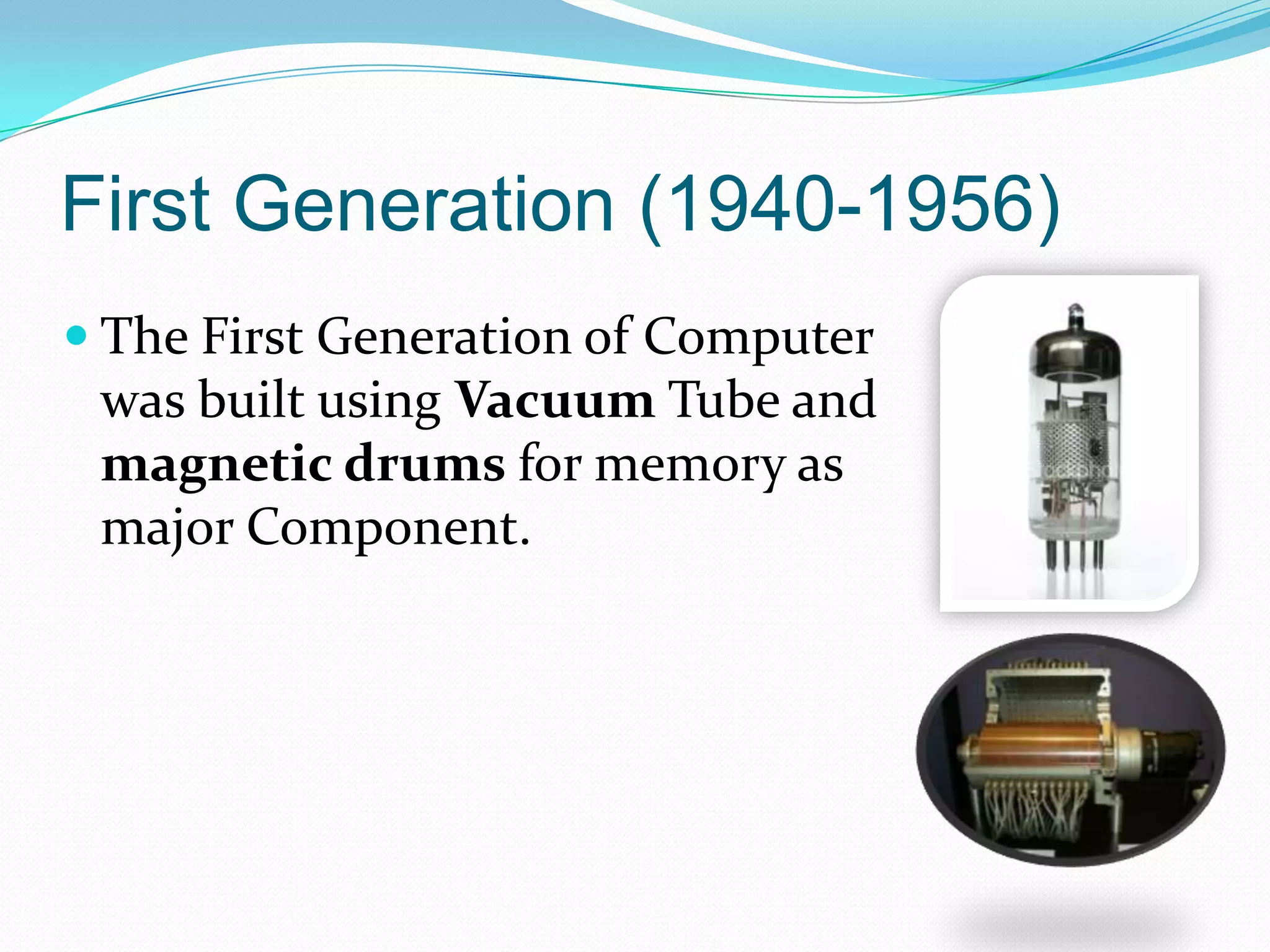
 The First Generation of Computer
 was built using Vacuum Tube and
 magnetic drums for memory as
 major Component.
The main feature of first generation :
  Used Vacuum tubes.
  Very large size, unreliable and slower than
   other generation.
  Most data were entered in the form of Punch
   card.
  Produce a lot of Heat.
  They were difficulty of maintenance .
Second Generation (1956-1963)
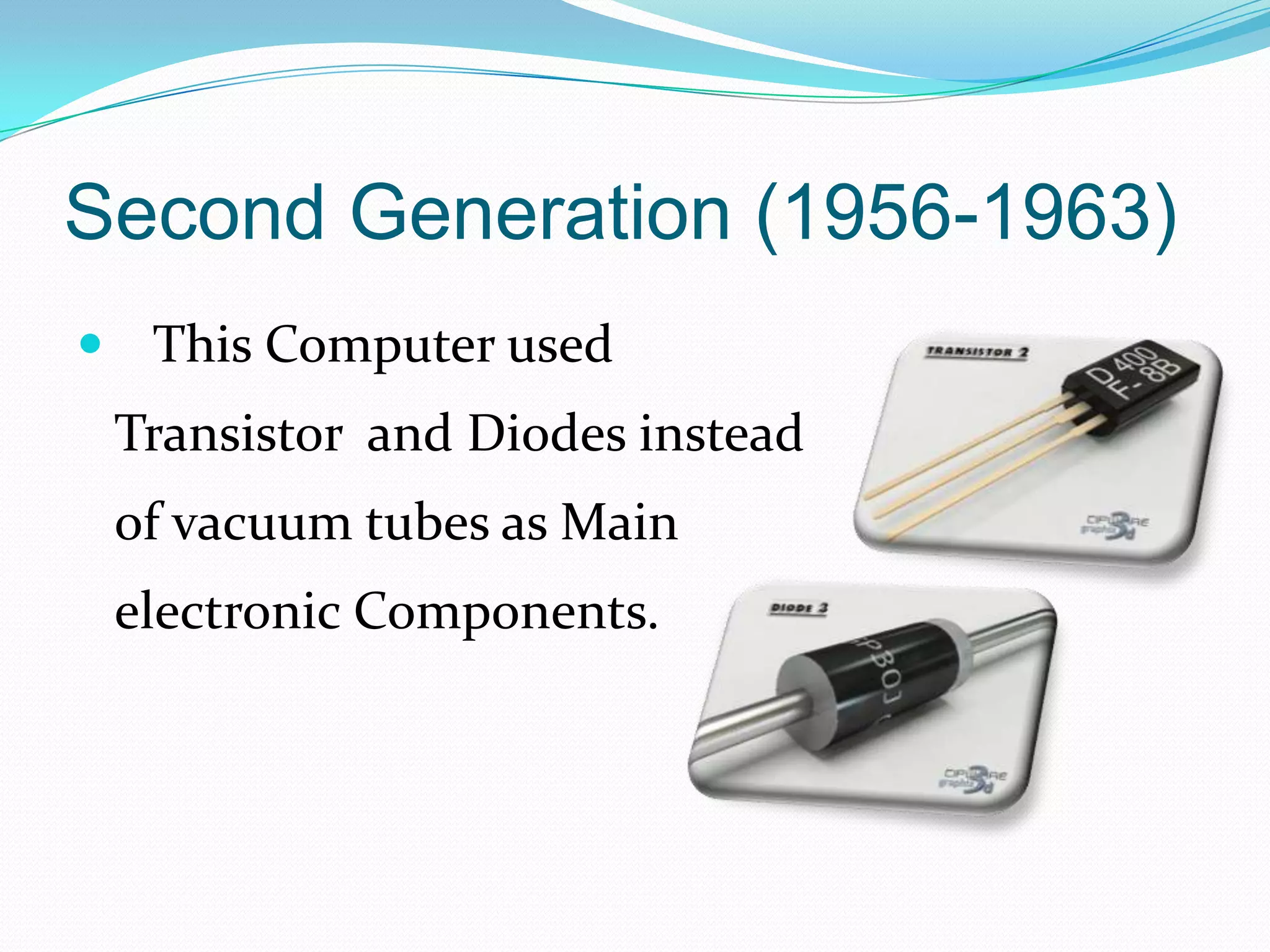
 This Computer used
 Transistor and Diodes instead
 of vacuum tubes as Main
 electronic Components.
The main feature of second generation :
 Use transistor and diodes.
 Smaller in Size than first generation.
 Produce less amount of Heat than first generation.
 Machine dependent High level Language.
 More Reliable, efficient , Higher accuracy than 1st
 Generation computers.
Third Generation (1964-1971)
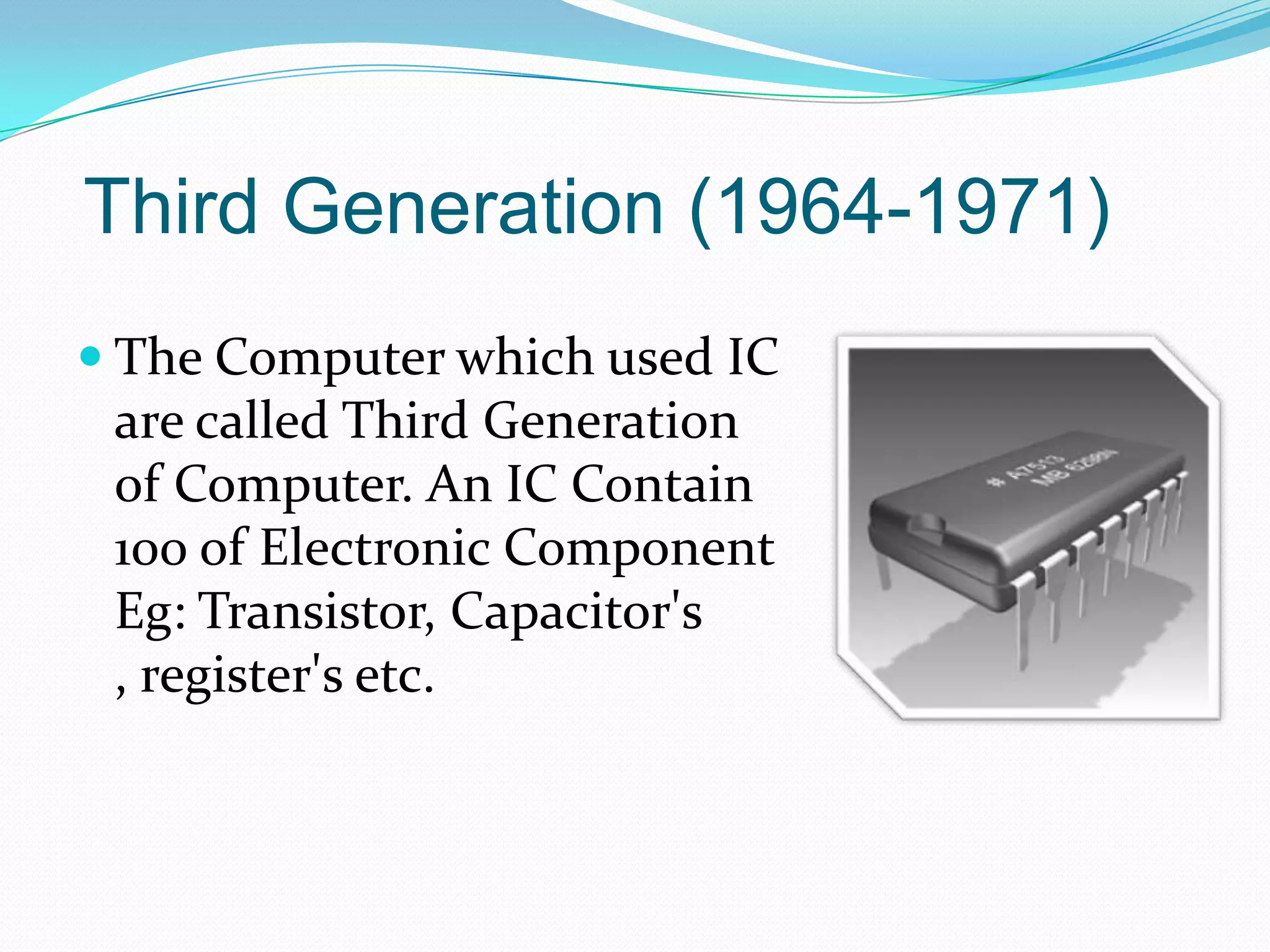
 The Computer which used IC
  are called Third Generation
  of Computer. An IC Contain
  100 of Electronic Component
  Eg: Transistor, Capacitor's
  , register's etc.
The main feature of third generation :
  IC were Used.
  Processing Speed Increase to Nanosecond.
  Monitor, Keyboard were Introduce as data output and
     Input Devices respectively.
    More reliable and better performance .
    Computer become Portable.
    Operating System were used.
    The size of Computer rapidly decrease Compare to
     Second Generation Computer.
Fourth Generation (1971-till now)
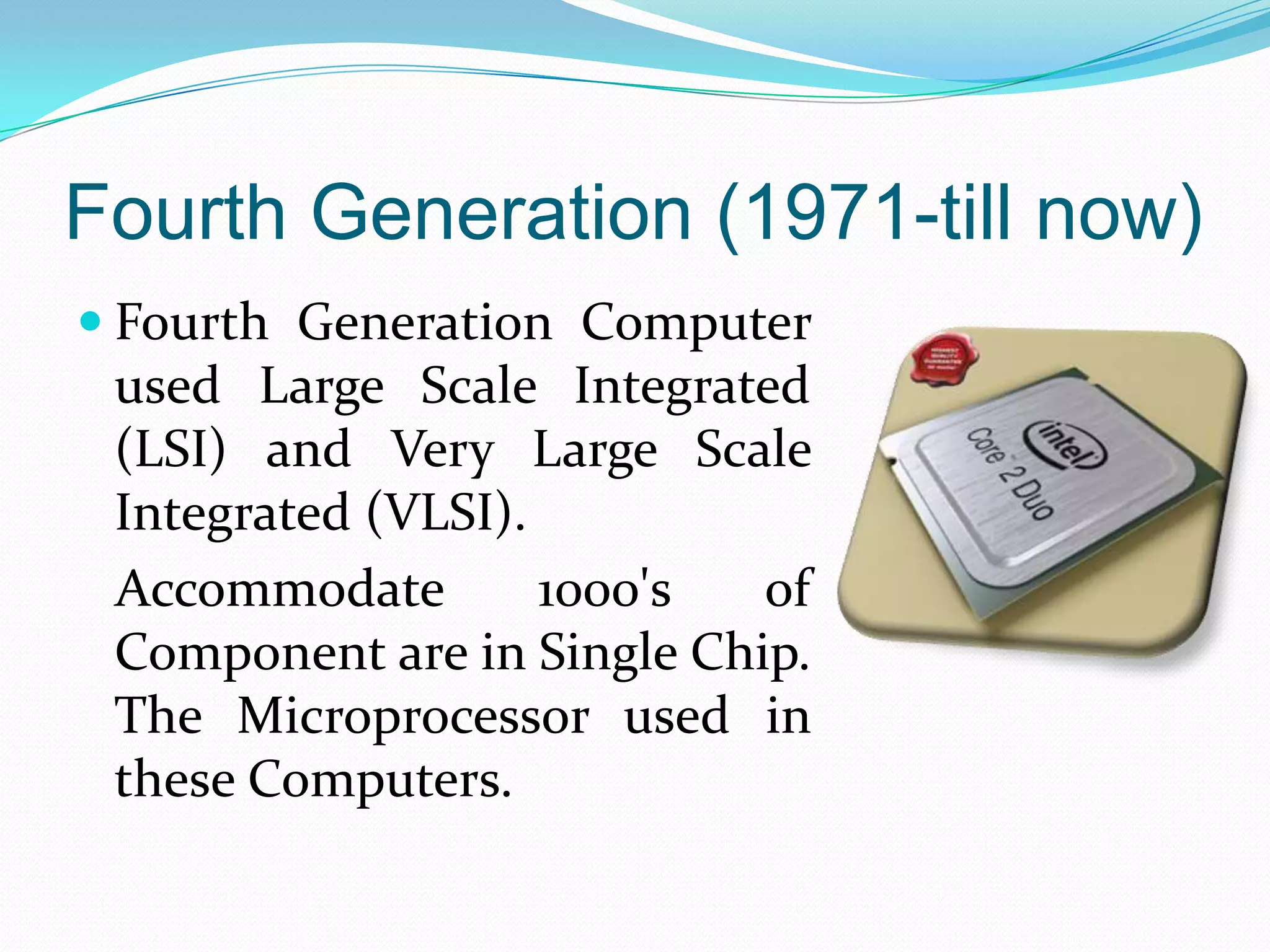
 Fourth Generation Computer
 used Large Scale Integrated
 (LSI) and Very Large Scale
 Integrated (VLSI).
 Accommodate        1000's  of
 Component are in Single Chip.
 The Microprocessor used in
 these Computers.
The main feature of fourth generation :

 Computer's are highly reliable.
 The Operating Speed increase to Picoseconds and
  MIPS (Million of Instruction Per Second).
 Micro Computer were Introduced.
 Magnetic Disk and Optical Instrument device Become
  Common for a Mass.
 Hard and sophisticated programs are used.
 Word processing and e-mail system were introduced
 Multi-processing, Multi-media and multi-tasking is
  Possible.
 Smallest Computer Called Desktop, Laptop and
  Palmtop were introduced.
 Eg: IBM-PC, DEC 10, IBM 4341, IBM
  System/370, BURROUGHS B7700, HP3000, Apple
  2, Apple Macintosh, Cray X-MP.
Fifth Generation (Present, future)
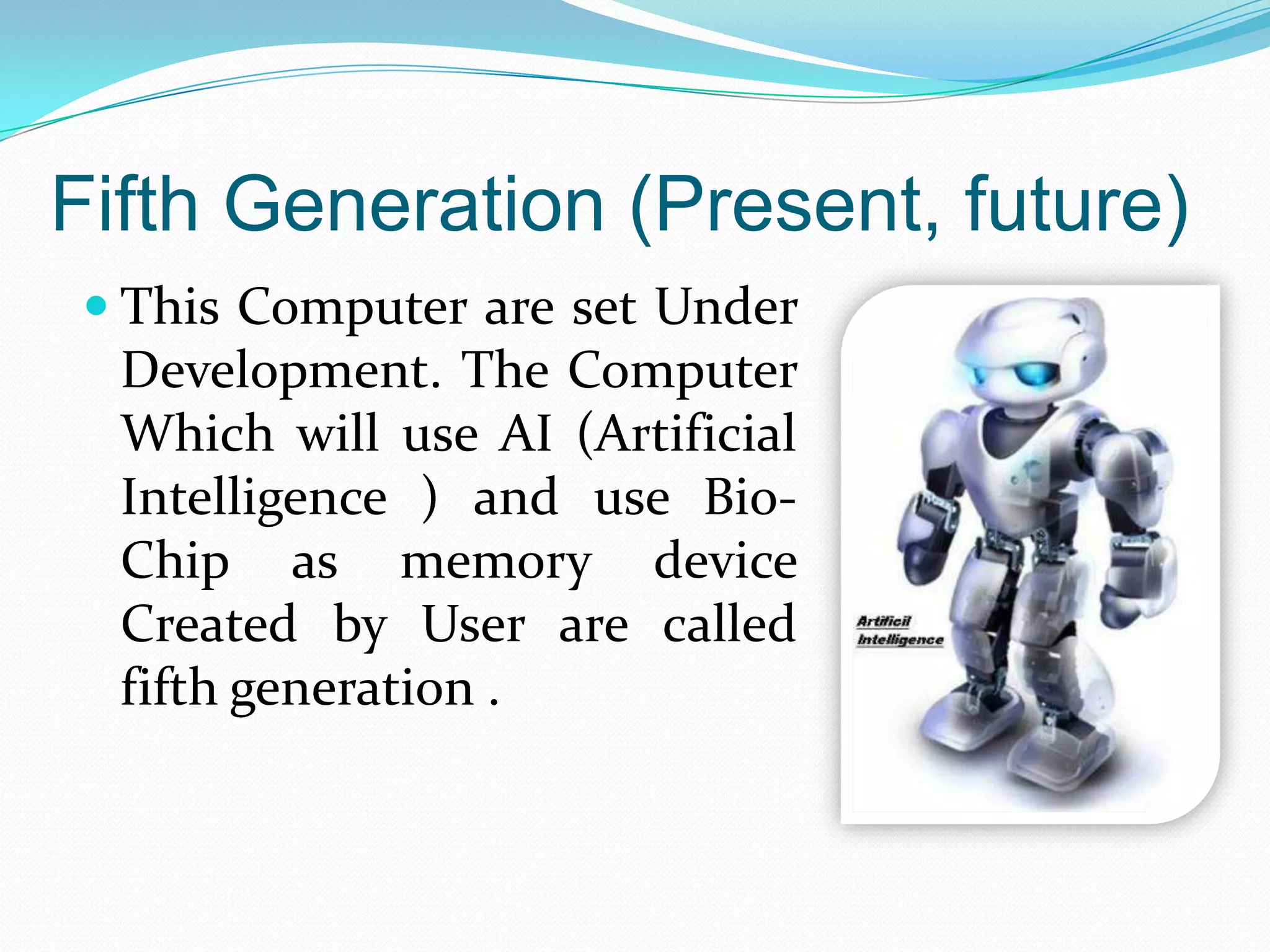
 This Computer are set Under
  Development. The Computer
  Which will use AI (Artificial
  Intelligence ) and use Bio-
  Chip as memory device
  Created by User are called
  fifth generation .
The main feature of fifth generation :
 They will be Intelligent.
 They will be Capable of Parallel Processing.
 Because of use of Super Conductor Material like Bio-
  Chip speed will be very high.
 Large Subset of Natural Language like
  English, Japanese etc will be used and make more user
  friendly.
Reference
 http://www.mystudyroom.com.np/classnotes.php?na
  n=75&fire=2&cake=20&sun=8&rnd=3321549784df8a8f3
  5e5765.03103944
 http://www.turbosquid.com/3d-models/diode-3-3d-
  c4d/370854

Computer generation

  • 2.
    Introduction  Each generationof computers is characterized by major technological development that fundamentally changed the way computers operate, resulting in increasingly smaller, cheaper, more powerful and more efficient and reliable devices. Read about each generation and the developments that led to the current devices that we use today.
  • 3.
    First Generation (1940-1956) The First Generation of Computer was built using Vacuum Tube and magnetic drums for memory as major Component.
  • 4.
    The main featureof first generation :  Used Vacuum tubes.  Very large size, unreliable and slower than other generation.  Most data were entered in the form of Punch card.  Produce a lot of Heat.  They were difficulty of maintenance .
  • 5.
    Second Generation (1956-1963) This Computer used Transistor and Diodes instead of vacuum tubes as Main electronic Components.
  • 6.
    The main featureof second generation :  Use transistor and diodes.  Smaller in Size than first generation.  Produce less amount of Heat than first generation.  Machine dependent High level Language.  More Reliable, efficient , Higher accuracy than 1st Generation computers.
  • 7.
    Third Generation (1964-1971) The Computer which used IC are called Third Generation of Computer. An IC Contain 100 of Electronic Component Eg: Transistor, Capacitor's , register's etc.
  • 8.
    The main featureof third generation :  IC were Used.  Processing Speed Increase to Nanosecond.  Monitor, Keyboard were Introduce as data output and Input Devices respectively.  More reliable and better performance .  Computer become Portable.  Operating System were used.  The size of Computer rapidly decrease Compare to Second Generation Computer.
  • 9.
    Fourth Generation (1971-tillnow)  Fourth Generation Computer used Large Scale Integrated (LSI) and Very Large Scale Integrated (VLSI). Accommodate 1000's of Component are in Single Chip. The Microprocessor used in these Computers.
  • 10.
    The main featureof fourth generation :  Computer's are highly reliable.  The Operating Speed increase to Picoseconds and MIPS (Million of Instruction Per Second).  Micro Computer were Introduced.  Magnetic Disk and Optical Instrument device Become Common for a Mass.  Hard and sophisticated programs are used.
  • 11.
     Word processingand e-mail system were introduced  Multi-processing, Multi-media and multi-tasking is Possible.  Smallest Computer Called Desktop, Laptop and Palmtop were introduced.  Eg: IBM-PC, DEC 10, IBM 4341, IBM System/370, BURROUGHS B7700, HP3000, Apple 2, Apple Macintosh, Cray X-MP.
  • 12.
    Fifth Generation (Present,future)  This Computer are set Under Development. The Computer Which will use AI (Artificial Intelligence ) and use Bio- Chip as memory device Created by User are called fifth generation .
  • 13.
    The main featureof fifth generation :  They will be Intelligent.  They will be Capable of Parallel Processing.  Because of use of Super Conductor Material like Bio- Chip speed will be very high.  Large Subset of Natural Language like English, Japanese etc will be used and make more user friendly.
  • 14.
    Reference  http://www.mystudyroom.com.np/classnotes.php?na n=75&fire=2&cake=20&sun=8&rnd=3321549784df8a8f3 5e5765.03103944  http://www.turbosquid.com/3d-models/diode-3-3d- c4d/370854