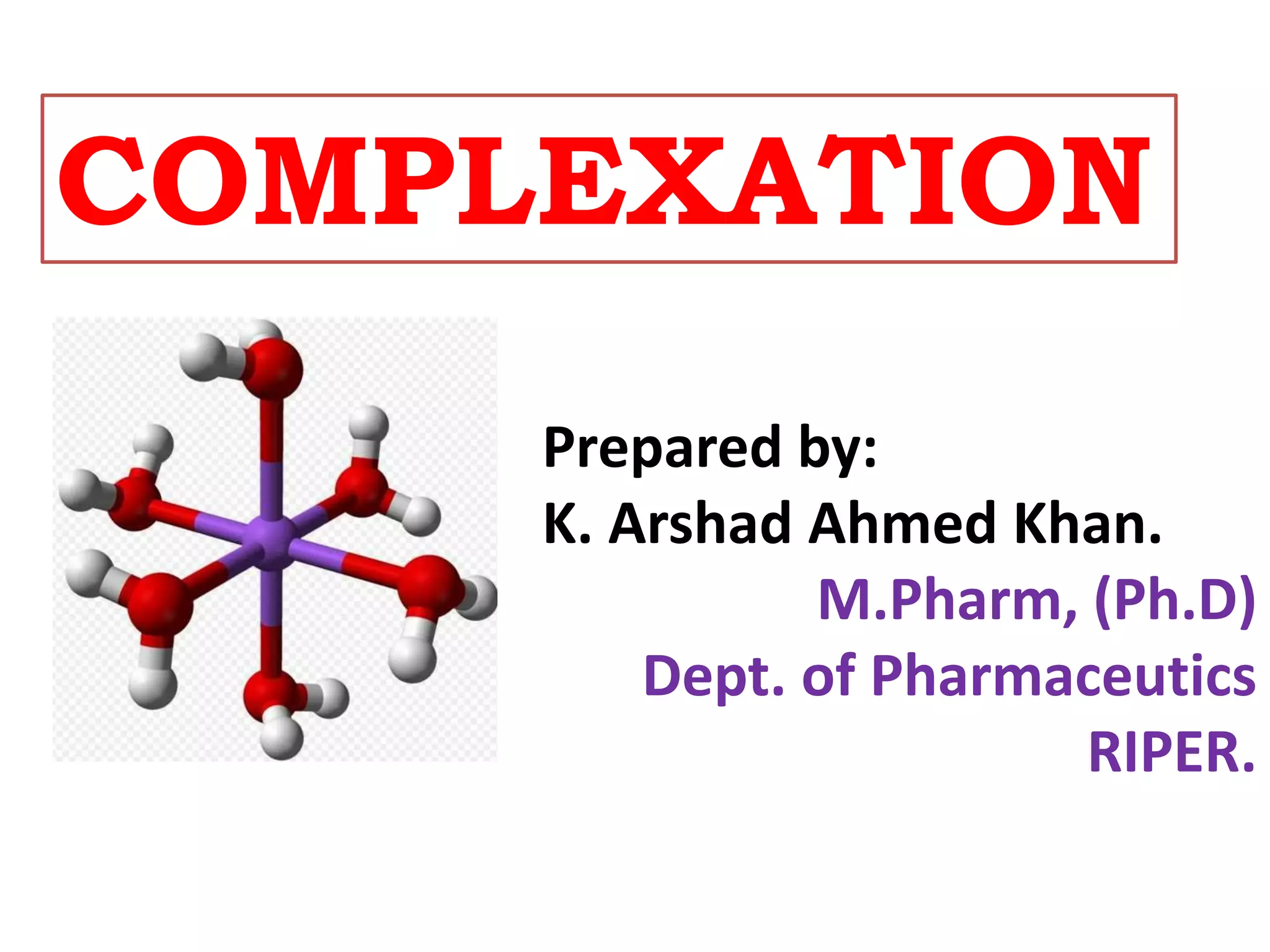
COMPLEXATION
Prepared by:
K. Arshad Ahmed Khan.
M.Pharm, (Ph.D)
Dept. of Pharmaceutics
RIPER.
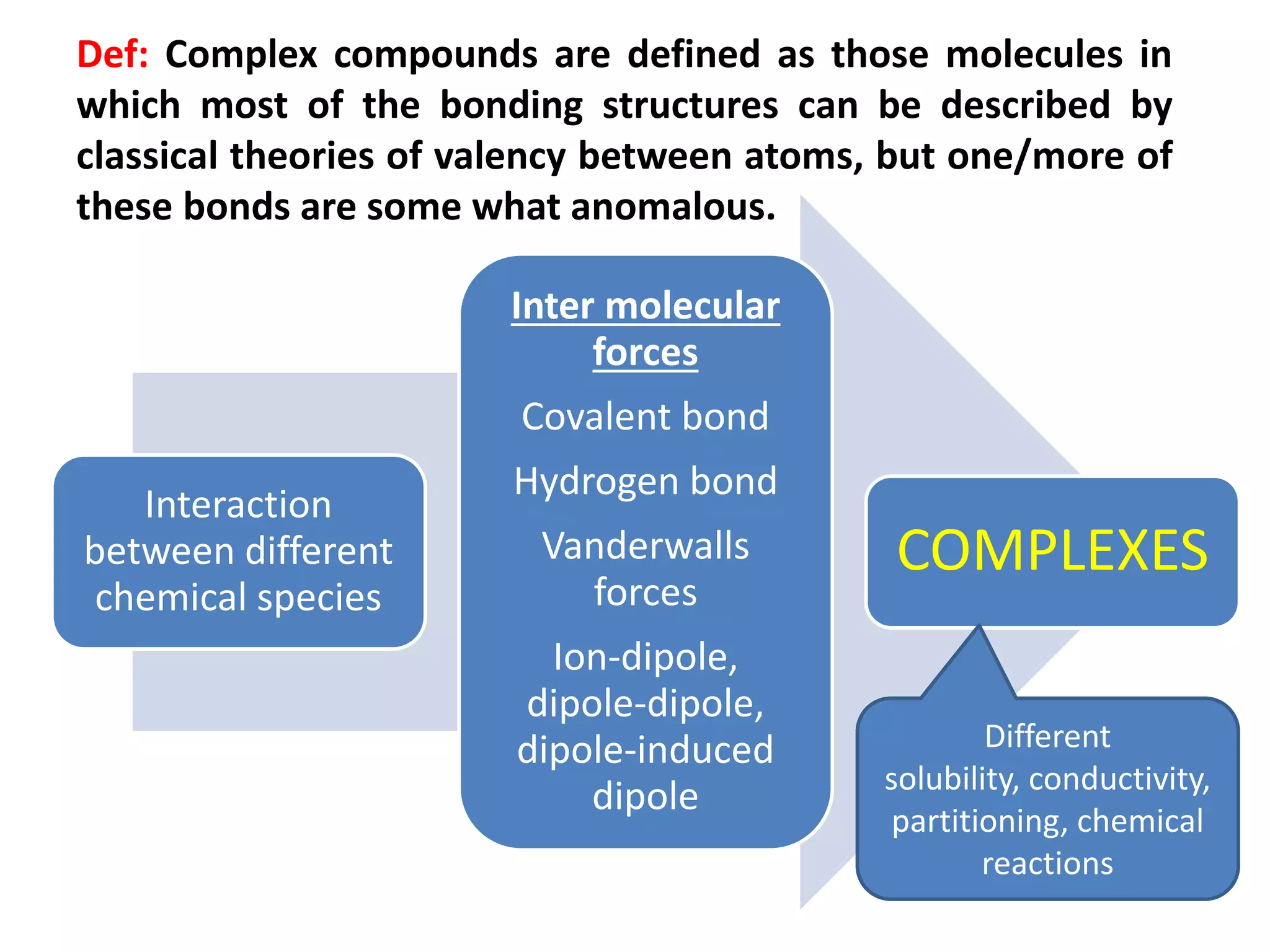
Def: Complex compounds are defined as those molecules in
which most of the bonding structures can be described by
classical theories of valency between atoms, but one/more of
these bonds are some what anomalous.
Interaction
between different
chemical species
Inter molecular
forces
Covalent bond
Hydrogen bond
Vanderwalls
forces
Ion-dipole,
dipole-dipole,
dipole-induced
dipole
COMPLEXES
Different
solubility, conductivity,
partitioning, chemical
reactions
COMPLEXES
Metal
complexes
Organic
molecular
complexes
Inclusion
compounds
1. Inorganic types
2. Chelates
3. Olefin type
4. Aromatic type
1. Drug-caffine
complex
2. Polymer type
3. Picric acid type
4. Quinhydrone
type
1. Channel type
2. Layer type
3. Clathrates
4. Mono
molecular type
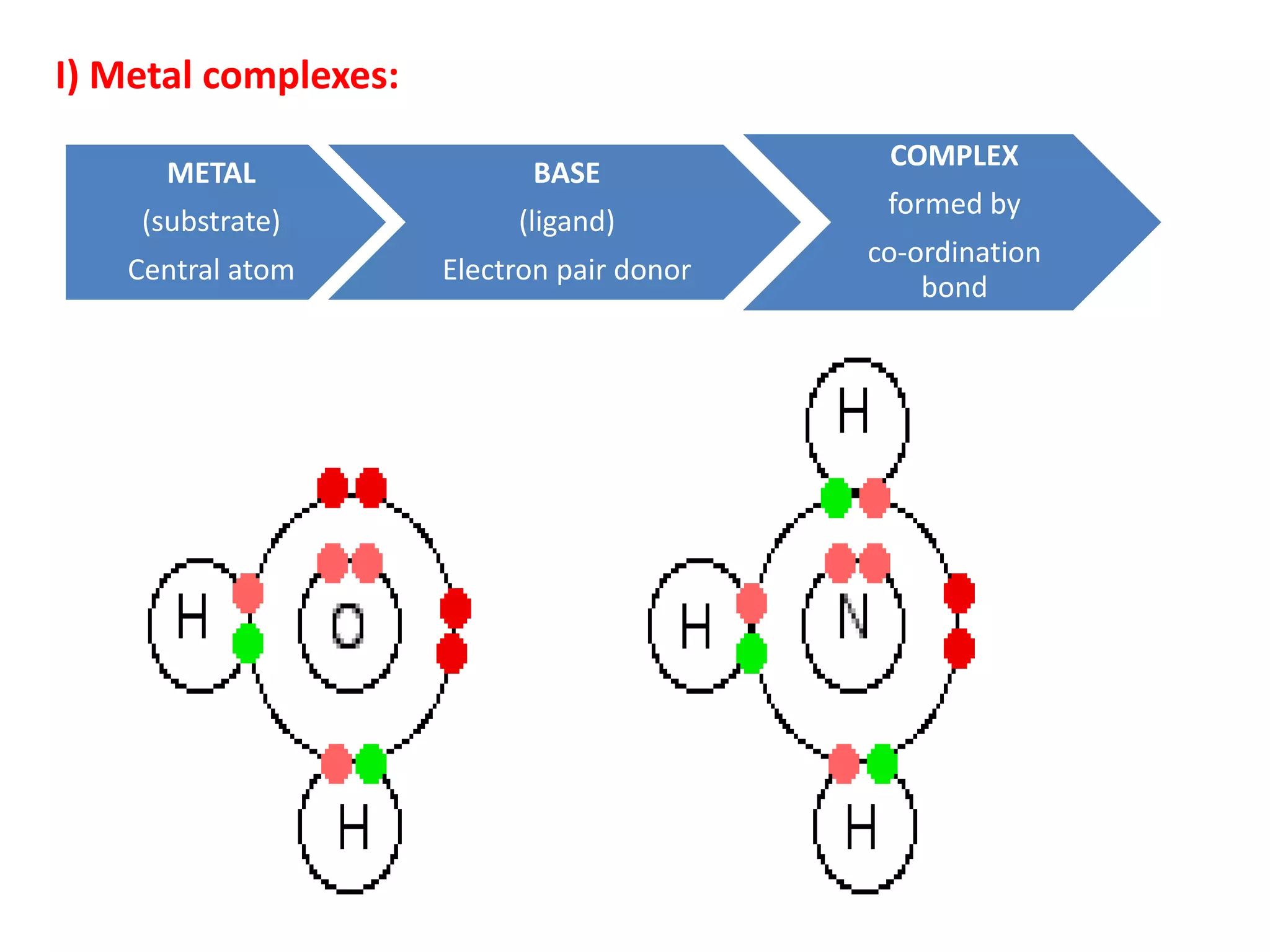
I) Metal complexes:
METAL
(substrate)
Central atom
BASE
(ligand)
Electron pair donor
COMPLEX
formed by
co-ordination
bond
I-A) INORGANIC COMPLEXES:
Werner postulates:
1. There are 2 types of valences primary (ionic), secondary
(coordinate).
2. Same type of anion/ radical/ molecule may be held by any one /
both type of valence.
3. Every central atom has fixed number of non-ionic valences (co-
ordination number)
4. The co-ordination atoms occupy the first sphere/coordination
sphere, other atoms occupy second/ ionization sphere.
5. Neutral molecules/ions may satisfy non-ionic valences.
6. The non-ionic valences are directed to specific positions in space.
Ex: [Co Cl (NH3)5] Cl2
Substrate Coordination sphere
Ionization sphere
Ex: [Co Cl (NH3)5] Cl2
1. Compound ionize to form [Co Cl (NH3)5]+2 and 2Cl- .
2. Central chlorine do not precipitate with silver nitrate.
3. Substrate and ligand are bonded with coordination bond.
4. Coordination number is maximum number of atoms and groups
that combine with central atom in coordination sphere.
5. Co-ordination number for cobalt is 6.
Participate in
complexation
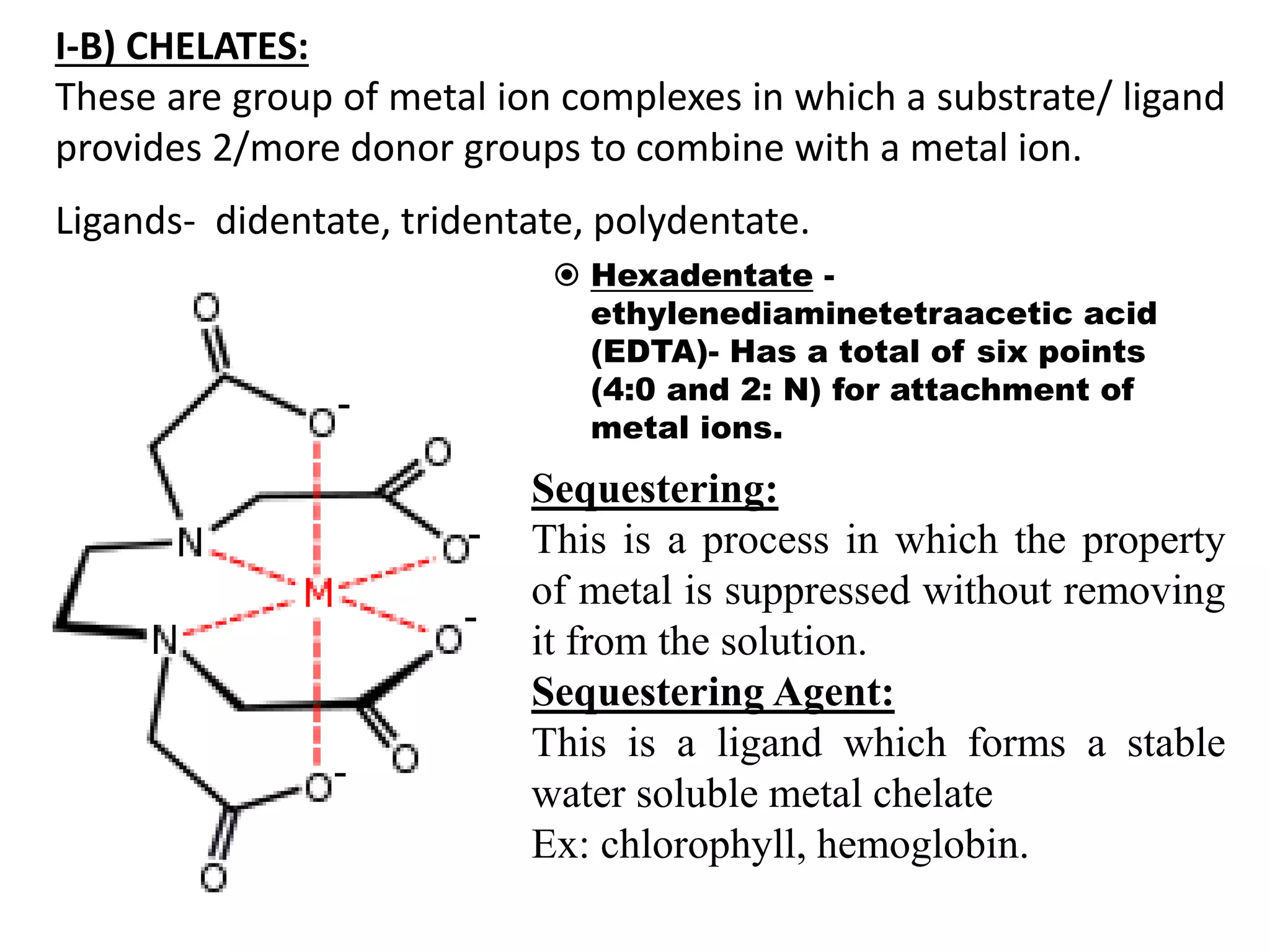
I-B) CHELATES:
These are group of metal ion complexes in which a substrate/ ligand
provides 2/more donor groups to combine with a metal ion.
Ligands- didentate, tridentate, polydentate.
 Hexadentate -
ethylenediaminetetraacetic acid
(EDTA)- Has a total of six points
(4:0 and 2: N) for attachment of
metal ions.
Sequestering:
This is a process in which the property
of metal is suppressed without removing
it from the solution.
Sequestering Agent:
This is a ligand which forms a stable
water soluble metal chelate
Ex: chlorophyll, hemoglobin.
Chelates applications:
1. INCREASING SOLUBILITY:
Fruit juices and drugs (ascorbic acid) + Fe/Cu  oxidative
degradation.
Add EDTA + Fe/Cu  stable Chelate
2. PURIFICATION OF HARD WATER:
Hard water (Ca+2) + EDTA  EDTA-Ca+2 (ppt)  filter  Pure
water.
3. DURG ANALYSIS:
Procainamide + cupric ions (1:1) at pH 4-4.5  Coloured complex 
detect by Colourimetry.
4. ANTI-COAGULANT:
Blood (Ca+2) + EDTA/Citrates/Oxalates prevent thrombin
formation  no clotting.
1-C,D: OLEFIN AND AROMATIC TYPE:
a. These involves Lewis acid-base reactions
b. These type of complexes can be used as
catalysts in the manufacturing of bulk drugs,
intermediates and in drug analysis.
II. ORGANIC MOLECULAR COMPLEXES:
1. Interaction between 2 organic molecules  Complex
temperature change  molecular compound.
2. These complexes have (H)bonds/ weak vander wall forces/
dipole-induced dipole interactions.
3. Energy of attraction is 3K.Cal/mole
4. Bond distance is 3A0
Complex Molecular compound
Reaction in COLD TEMPERATURE Reaction in HOT TEMPERATURE
Weak attraction forces Strong electrostatic interactions
Complexes can not be separated
from solutions
Compounds can be separated
from solutions
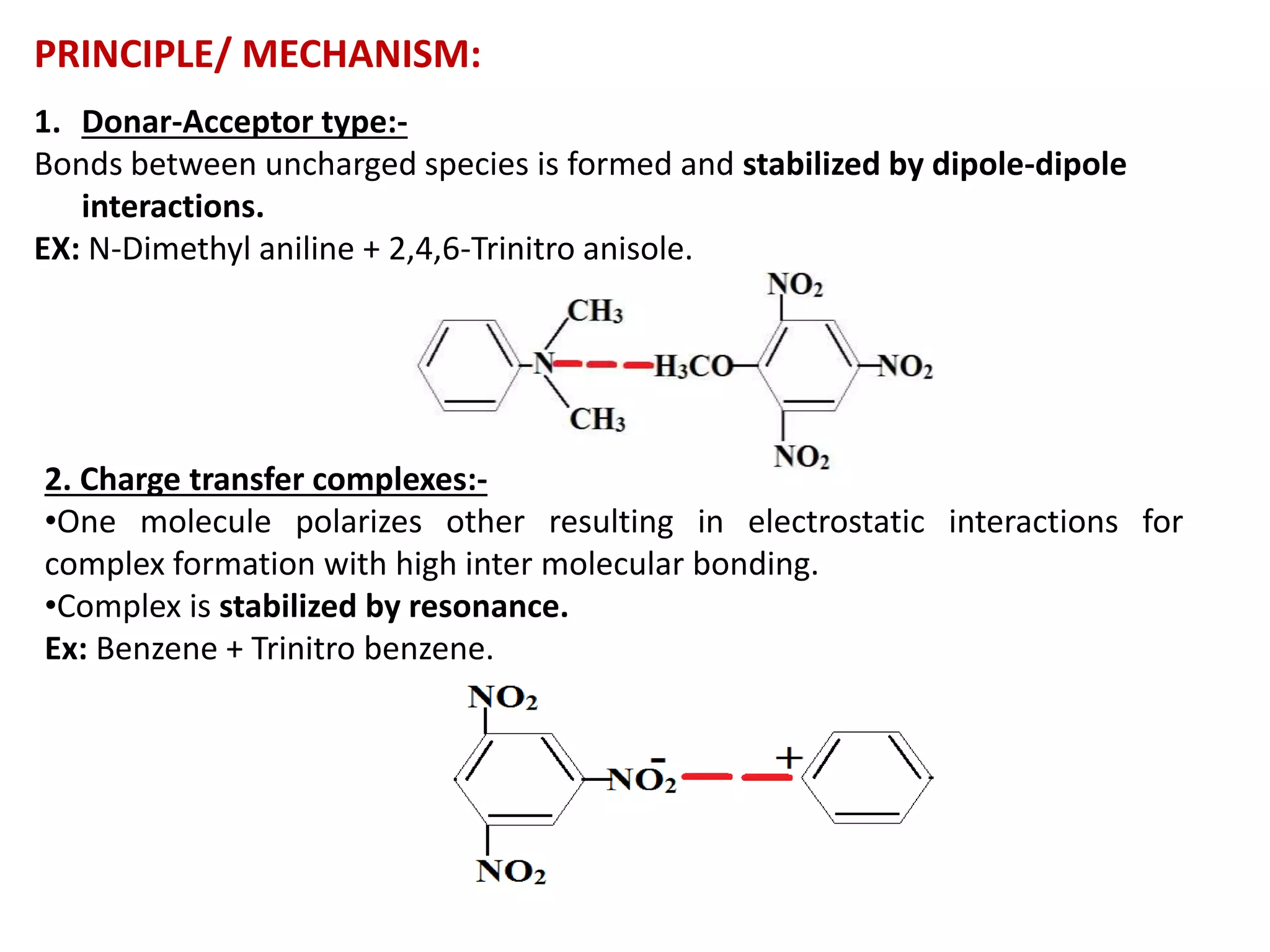
PRINCIPLE/ MECHANISM:
1. Donar-Acceptor type:-
Bonds between uncharged species is formed and stabilized by dipole-dipole
interactions.
EX: N-Dimethyl aniline + 2,4,6-Trinitro anisole.
2. Charge transfer complexes:-
•One molecule polarizes other resulting in electrostatic interactions for
complex formation with high inter molecular bonding.
•Complex is stabilized by resonance.
Ex: Benzene + Trinitro benzene.
2-A) DRUG & CAFFINE COMPLEX:
Acidic drugs (benzocaine, procaine) + Caffeine  Complexes
Mechanism:
1. dipole-dipole forces/ hydrogen bonding between acid (H) atom and caffeine
carboxyl group.
2. Interaction of non-polar parts
Ex: Caffeine + Benzocaine.
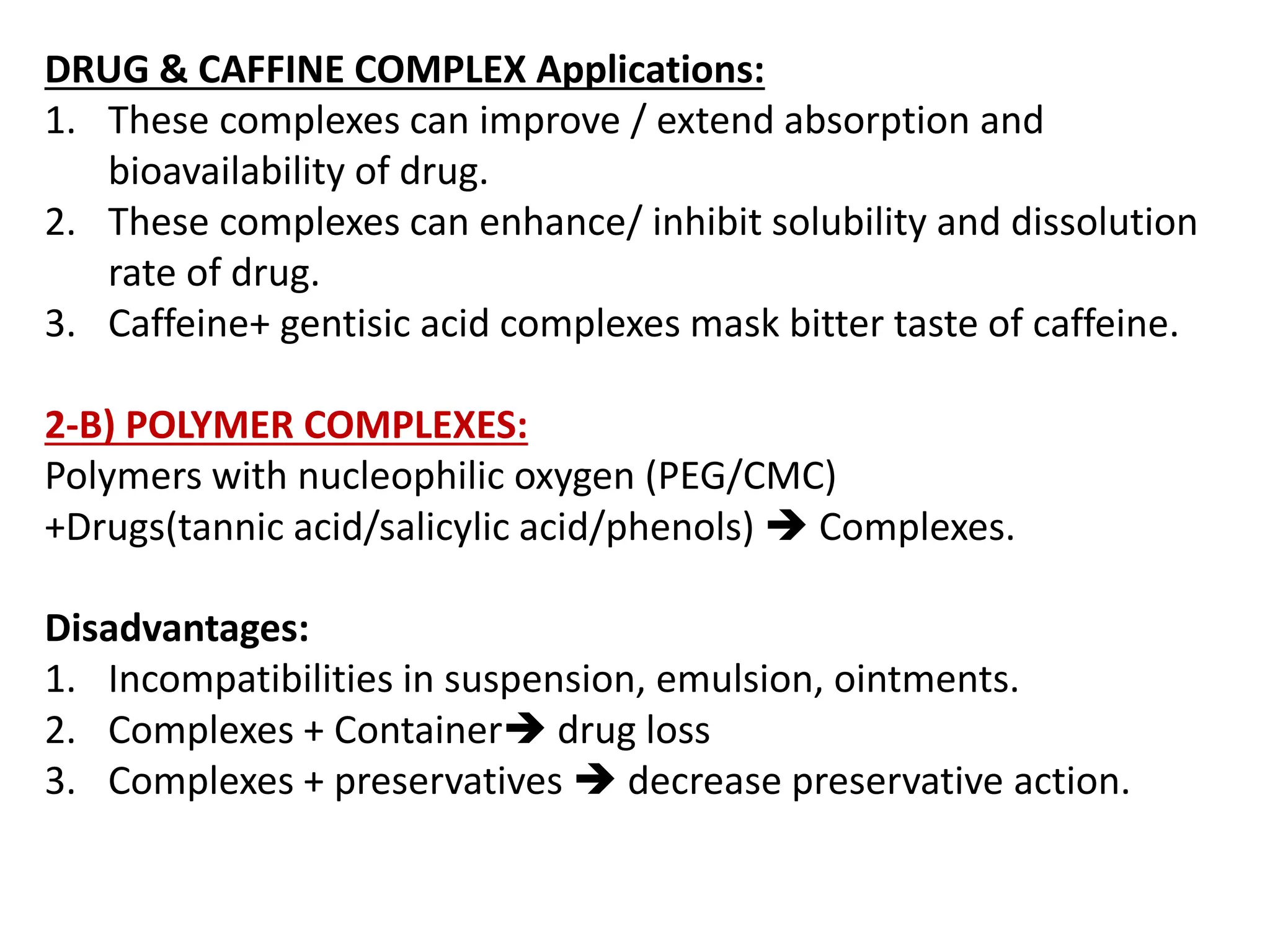
DRUG & CAFFINE COMPLEX Applications:
1. These complexes can improve / extend absorption and
bioavailability of drug.
2. These complexes can enhance/ inhibit solubility and dissolution
rate of drug.
3. Caffeine+ gentisic acid complexes mask bitter taste of caffeine.
2-B) POLYMER COMPLEXES:
Polymers with nucleophilic oxygen (PEG/CMC)
+Drugs(tannic acid/salicylic acid/phenols)  Complexes.
Disadvantages:
1. Incompatibilities in suspension, emulsion, ointments.
2. Complexes + Container drug loss
3. Complexes + preservatives  decrease preservative action.
2-C) PICRIC ACID COMPLEXES:
Picric acid (strong acid) + strong base Salt.
Picric acid (strong acid) + weak base  Complexes.
Ex: BUTESIN PICRATE
Picric acid (antiseptic) + Butesin (anesthetic)
1% ointment used for burns and abrasions.
DISADVANTAGES:
Picric acid + Carcinogenic Agents COMPLEX increase carcinogenic
activity.
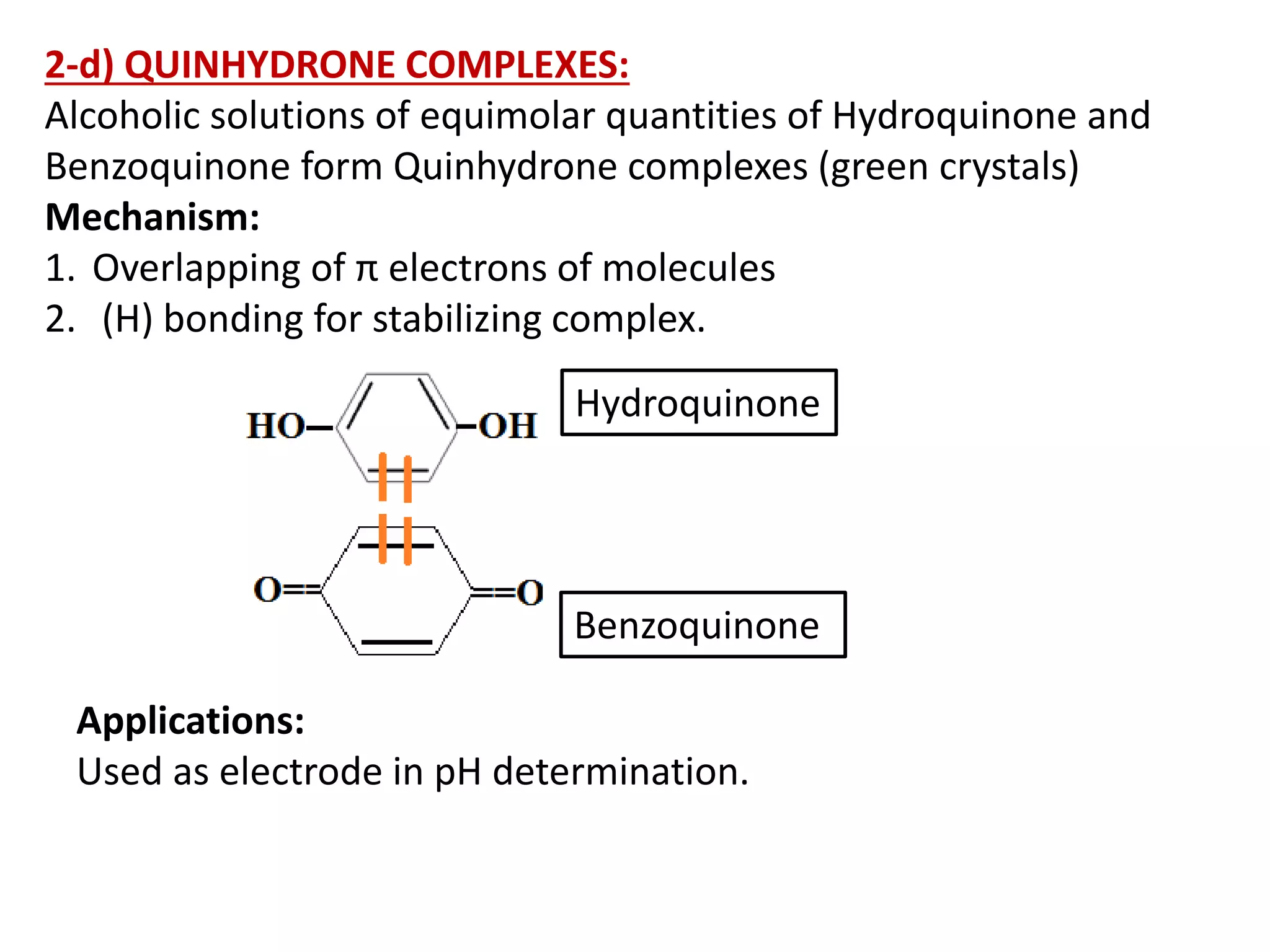
2-d) QUINHYDRONE COMPLEXES:
Alcoholic solutions of equimolar quantities of Hydroquinone and
Benzoquinone form Quinhydrone complexes (green crystals)
Mechanism:
1. Overlapping of π electrons of molecules
2. (H) bonding for stabilizing complex.
Applications:
Used as electrode in pH determination.
Hydroquinone
Benzoquinone
3.INCLUSION COMPLEXES/OCCLUSION COMPOUNDS:
1. One compound is trapped in lattice/cage like structure of other
compound.
2. Interaction are due to suitable molecular structure.
3. Prediction of complex formation is difficult.
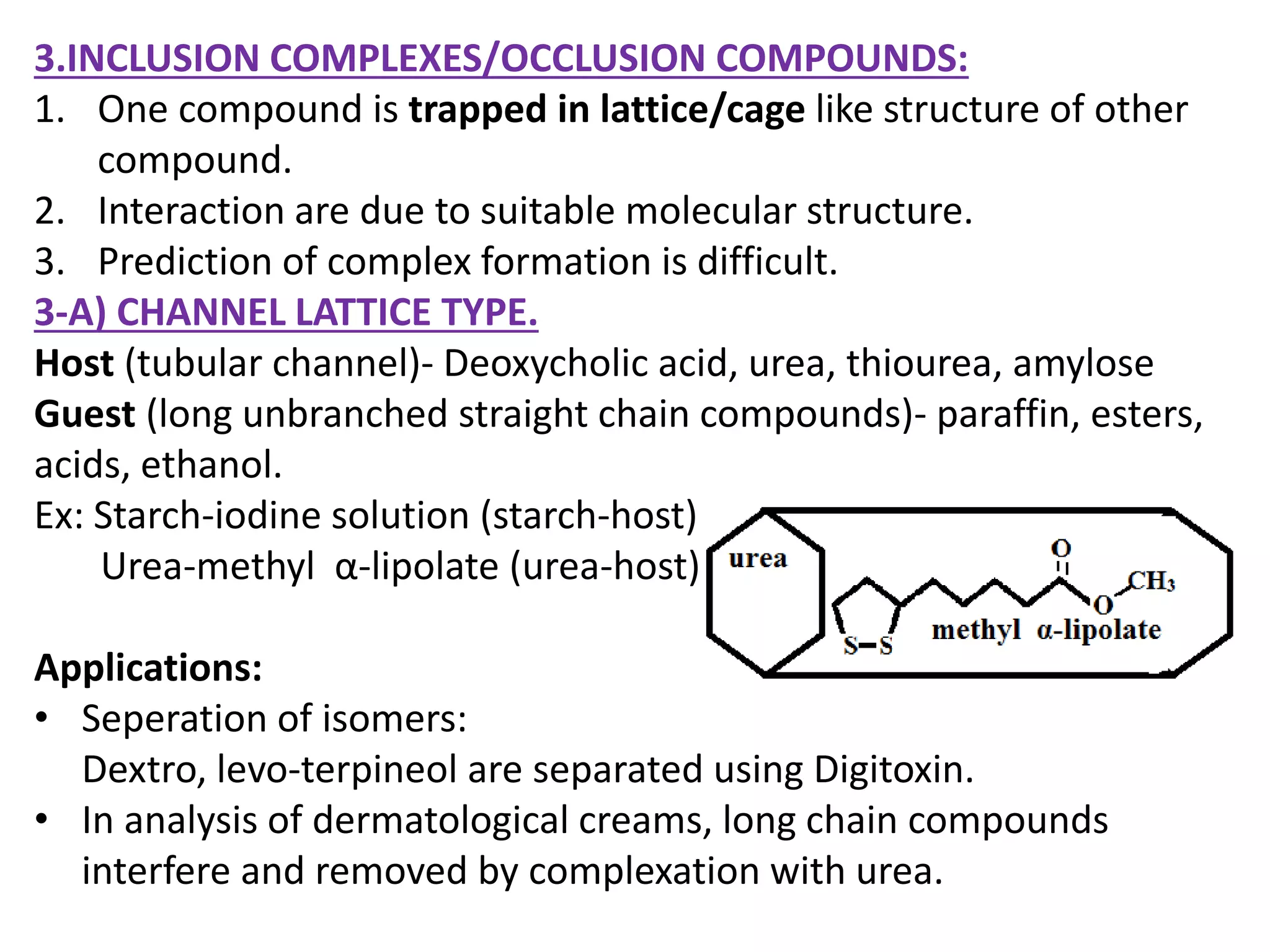
3-A) CHANNEL LATTICE TYPE.
Host (tubular channel)- Deoxycholic acid, urea, thiourea, amylose
Guest (long unbranched straight chain compounds)- paraffin, esters,
acids, ethanol.
Ex: Starch-iodine solution (starch-host)
Urea-methyl α-lipolate (urea-host)
Applications:
• Seperation of isomers:
Dextro, levo-terpineol are separated using Digitoxin.
• In analysis of dermatological creams, long chain compounds
interfere and removed by complexation with urea.
3-B) LAYER TYPES:
Host (Layers With Gaps)- clays, bentonite, montmorillite
Guest (entrapped in gaps)- hydrocarbons, alcohols, glycols.
Use:
Due to their large surface area they are used as catalysts.
3-C)CLATHRATES: (cage like structure)
During crystallization some compounds (host) form cage like
structures in which coordinating compound (guest) is entrapped.
Ex: warfarin sodium (water + isopropyl alcohol)
Hydroquinone form cage with hydrogen bonds and hole have
diameter of 4.2A0.
This can entrap methanol, carbon dioxide, hydrochloric acid.
CAGE
APPLICATIONS:
1. Synthetic metalo- alumino
silicates act as molecular sieves.
2. The pores store volatile gases
and toxic substances.
3. The entrapped molecule can be
removed by physical process.
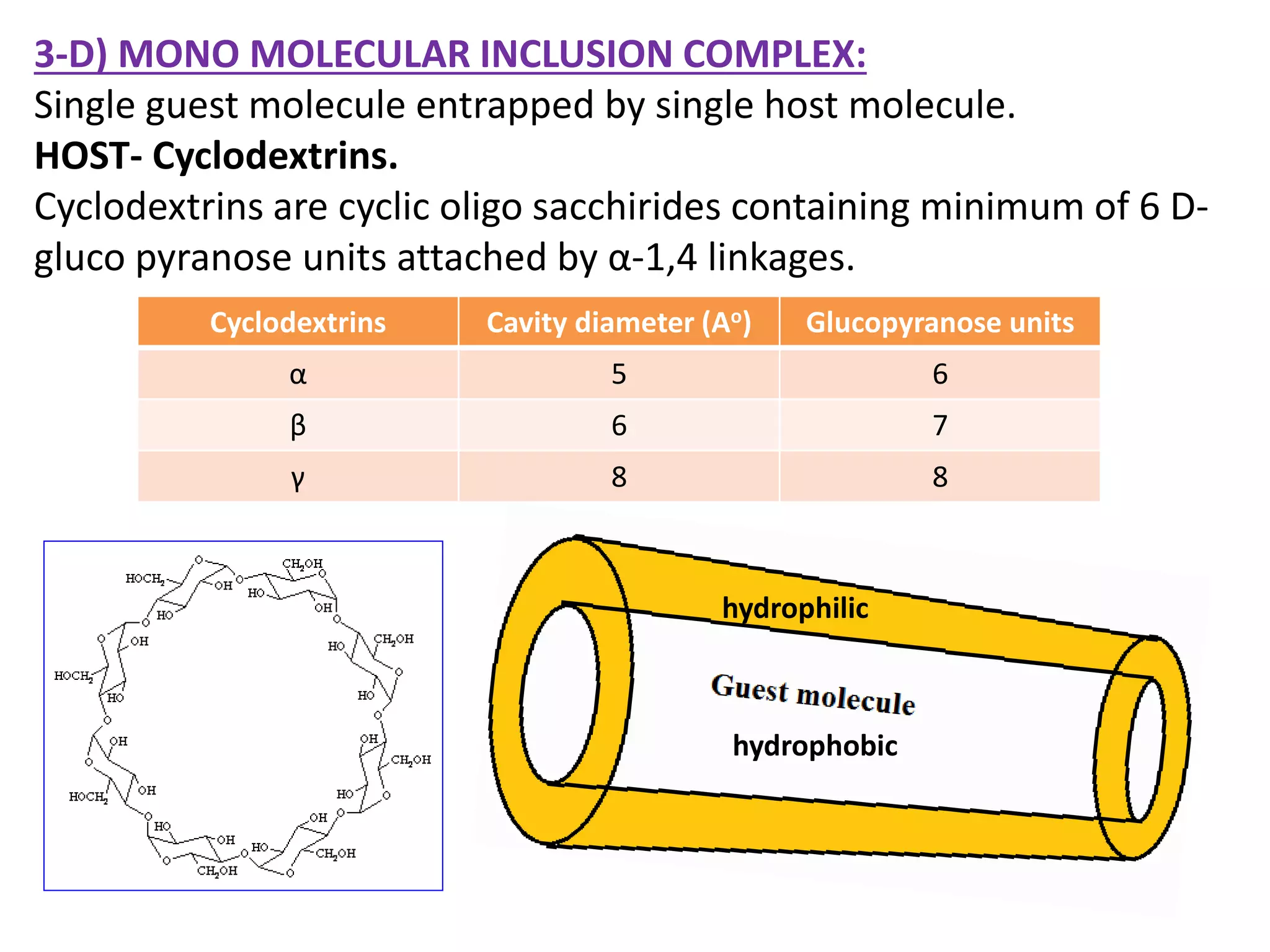
3-D) MONO MOLECULAR INCLUSION COMPLEX:
Single guest molecule entrapped by single host molecule.
HOST- Cyclodextrins.
Cyclodextrins are cyclic oligo sacchirides containing minimum of 6 D-
gluco pyranose units attached by α-1,4 linkages.
Cyclodextrins Cavity diameter (Ao) Glucopyranose units
α 5 6
β 6 7
γ 8 8
hydrophilic
hydrophobic
MONO MOLECULAR INCLUSION COMPLEX APPLICATIONS:
1. Enhanced solubility:
Retonic acid (solubility= 0.5mg/ml)
Retonic acid + β-CD (solubility= 160 mg/ml)
2. Enhanced dissolution:
Famotidine/ Tolbtamide + β-CD
3. Enhanced stability:
Asprin/Ephedrine/Testosterone + β-CD
(no reaction with other functional groups)
4. Sustained release:
Ethylated β-CD + Diltiazem
COMPLEXATION –Applications in pharmacy
•Physical state
•Volatility
•Solid state Stability
•Chemical stability
•Solubility
•Dissolution
•Partition coefficient
•Absorption & bioavailability
•Reduced toxicity
•Antidote in metal poisoning
•Drug action through metal
poisoning
•Antibacterial activity
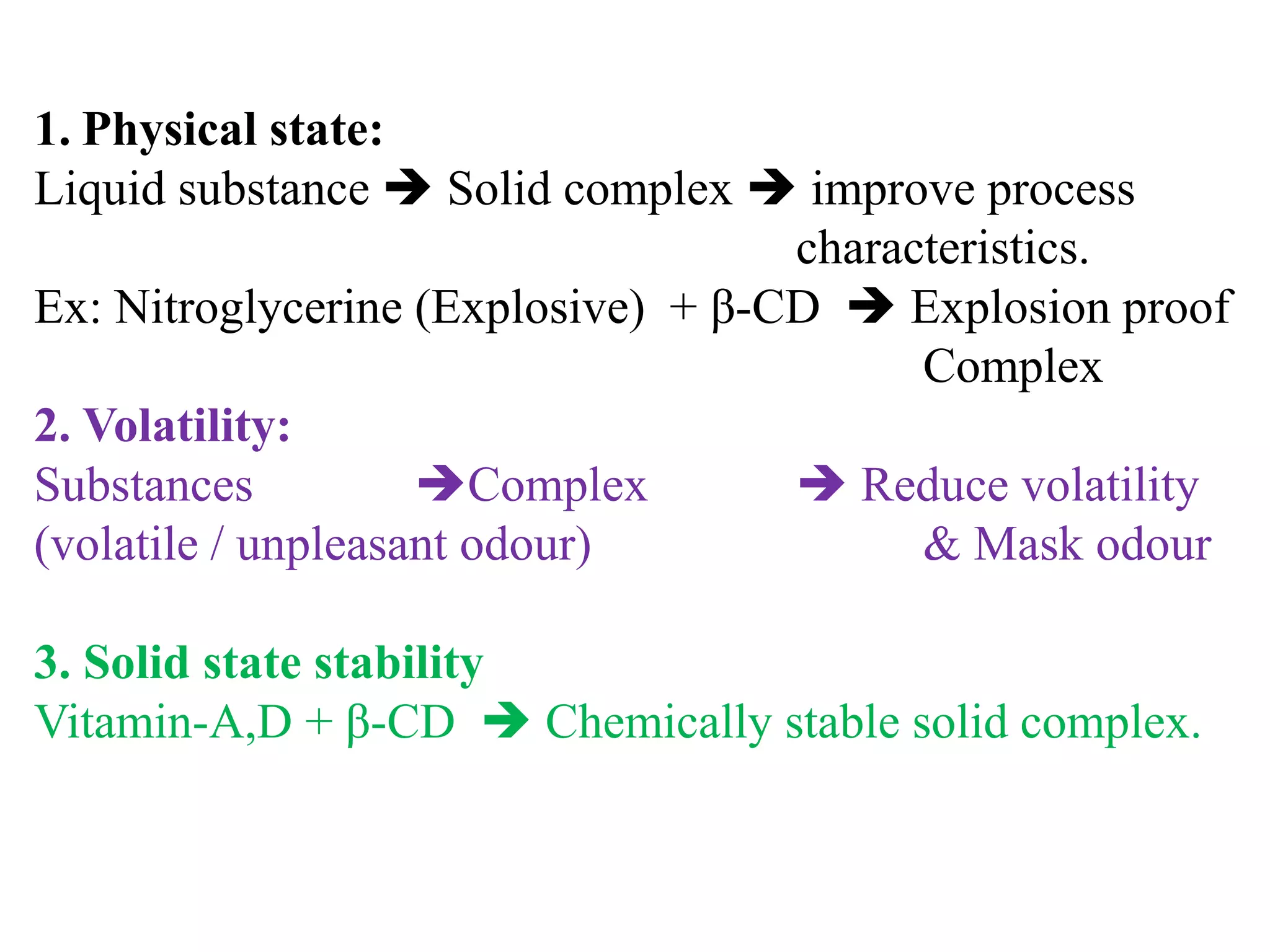
1. Physical state:
Liquid substance  Solid complex  improve process
characteristics.
Ex: Nitroglycerine (Explosive) + β-CD  Explosion proof
Complex
2. Volatility:
Substances Complex  Reduce volatility
(volatile / unpleasant odour) & Mask odour
3. Solid state stability
Vitamin-A,D + β-CD  Chemically stable solid complex.
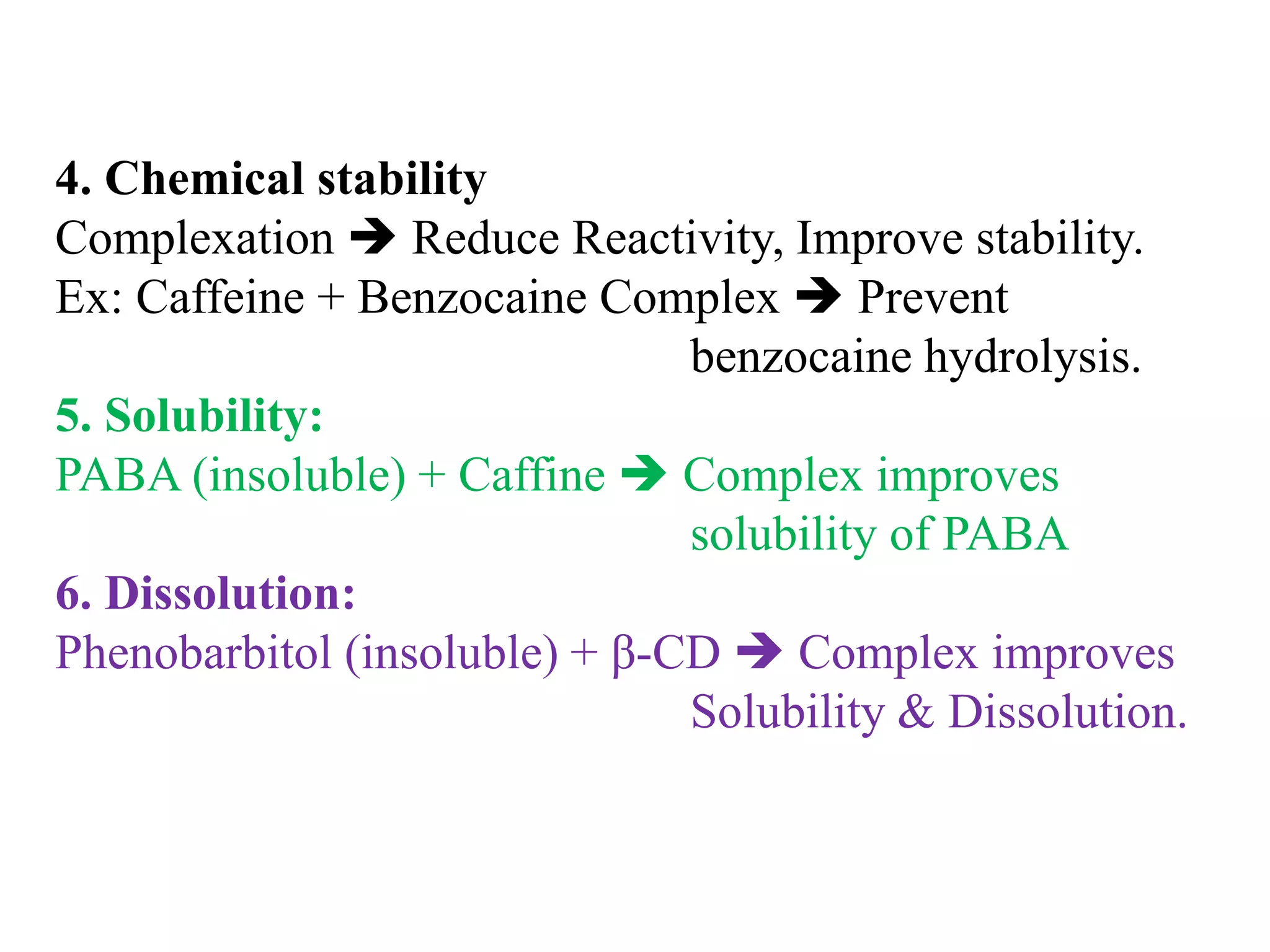
4. Chemical stability
Complexation  Reduce Reactivity, Improve stability.
Ex: Caffeine + Benzocaine Complex  Prevent
benzocaine hydrolysis.
5. Solubility:
PABA (insoluble) + Caffine  Complex improves
solubility of PABA
6. Dissolution:
Phenobarbitol (insoluble) + β-CD  Complex improves
Solubility & Dissolution.
7. Partition Coefficient:
(Water + Benzene) + Permanganate ions  Partition in to
WATER.
(Water + Benzene) + Permanganate ions + Crown ether 
Partition in to Benzene.
8. Absorption & bioavailability
β-CD + Barbiturates  Complex  Improves
Bioavailability
Tetracyclines + Ca+2 / Mg+2  Insoluble metal Complex
 Reduced Absorption & Bioavailability
9. Reduced Toxicity:
β-CD + Indomethacin  Reduce ulcerogenic effect
β-CD + Chlorpramazine  Reduce local tissue toxicity.
10. Antidote in metal poisoning:
Arsenic, Mercury (Toxic metal ions) + (-SH) groups of
enzymes  Effect normal functioning.
Dimercaprol + Arsenic,  Complex  Easily eliminated
Mercury from body.
11. Drug action through metal poisoning:
8-Hydroxy Quinoline + Iron  Complex  Enter malarial
parasite  Accumulation of metal  Anti-Malarial action.
12. Antibacterial activity:
PAS + Cupric ions  Cupric Complex + Chelates.
(anti-Tubercular drug)
Chelates  30 times more fat soluble  Penetrate in to
cells  High anti-Tubercular action.
Method of analysis:
Estimation of 2 parameters
1. Stoichiometric ratio of Ligand: Metal / Donar : Acceptor
2. Stability Constant of complex.
Methods:
1. Method of continuous variation.
2. Distribution method
3. Solubility method
4. pH titration method.
General procedure:
Equation for complexation
M + n A  MAn
Stability constant
Applying Log on both sides
Log [MAn] = log K + log [M] + n log [A]
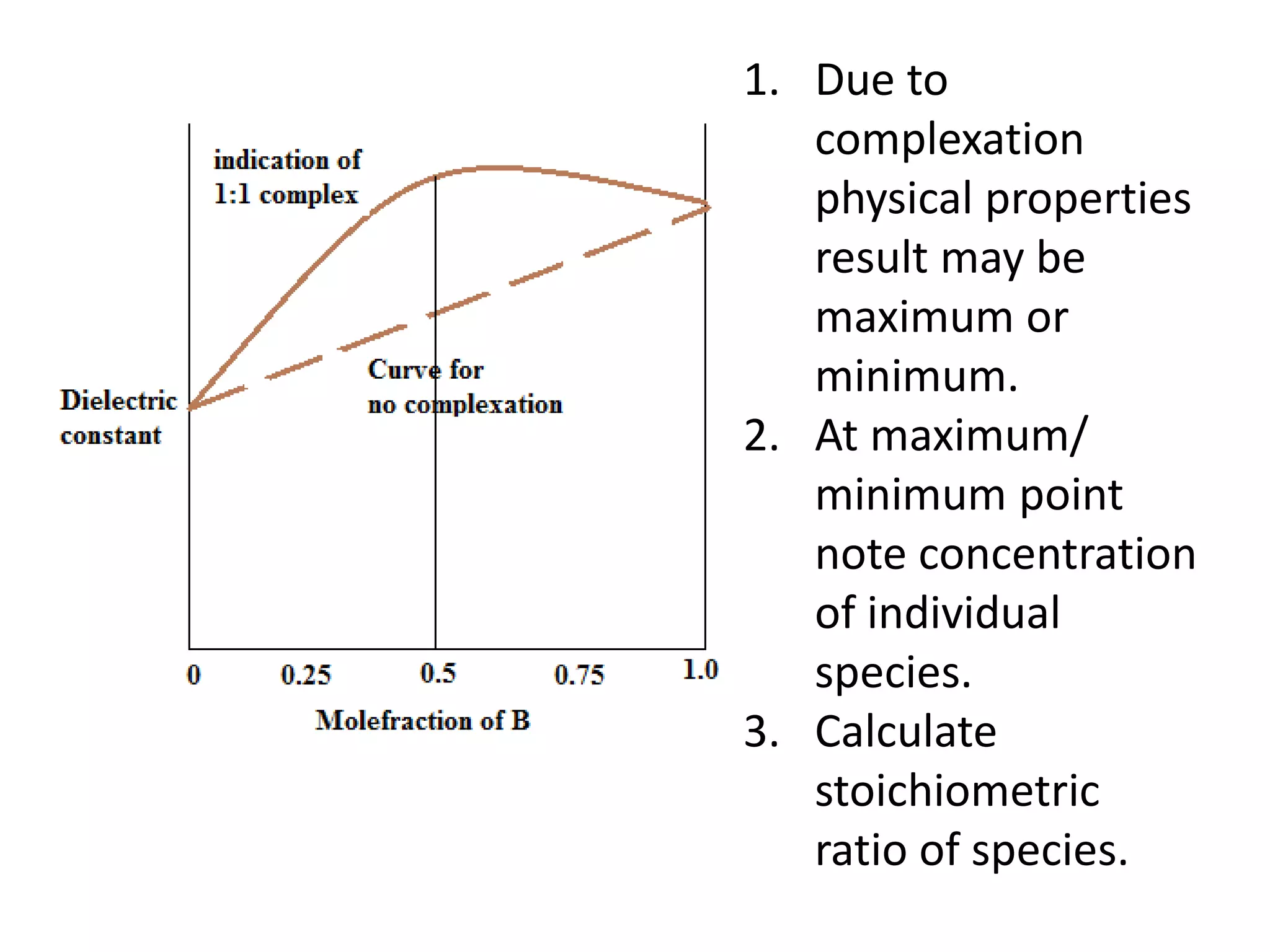
1. Method of continuous variation.
1. Dielectric constant
2. Refractive index
3. Spectrophotometric
extinction coefficient
Physical
properties
Characteristics
of species.
A +B
No
complexation
Complexation
Physical
properties are
additive values
Physical
properties values
different
1. Due to
complexation
physical properties
result may be
maximum or
minimum.
2. At maximum/
minimum point
note concentration
of individual
species.
3. Calculate
stoichiometric
ratio of species.
2. Distribution method:
• Partition coefficient / Distribution changes due to complexation.
• By conducting 2 experiments stability constant is estimated.
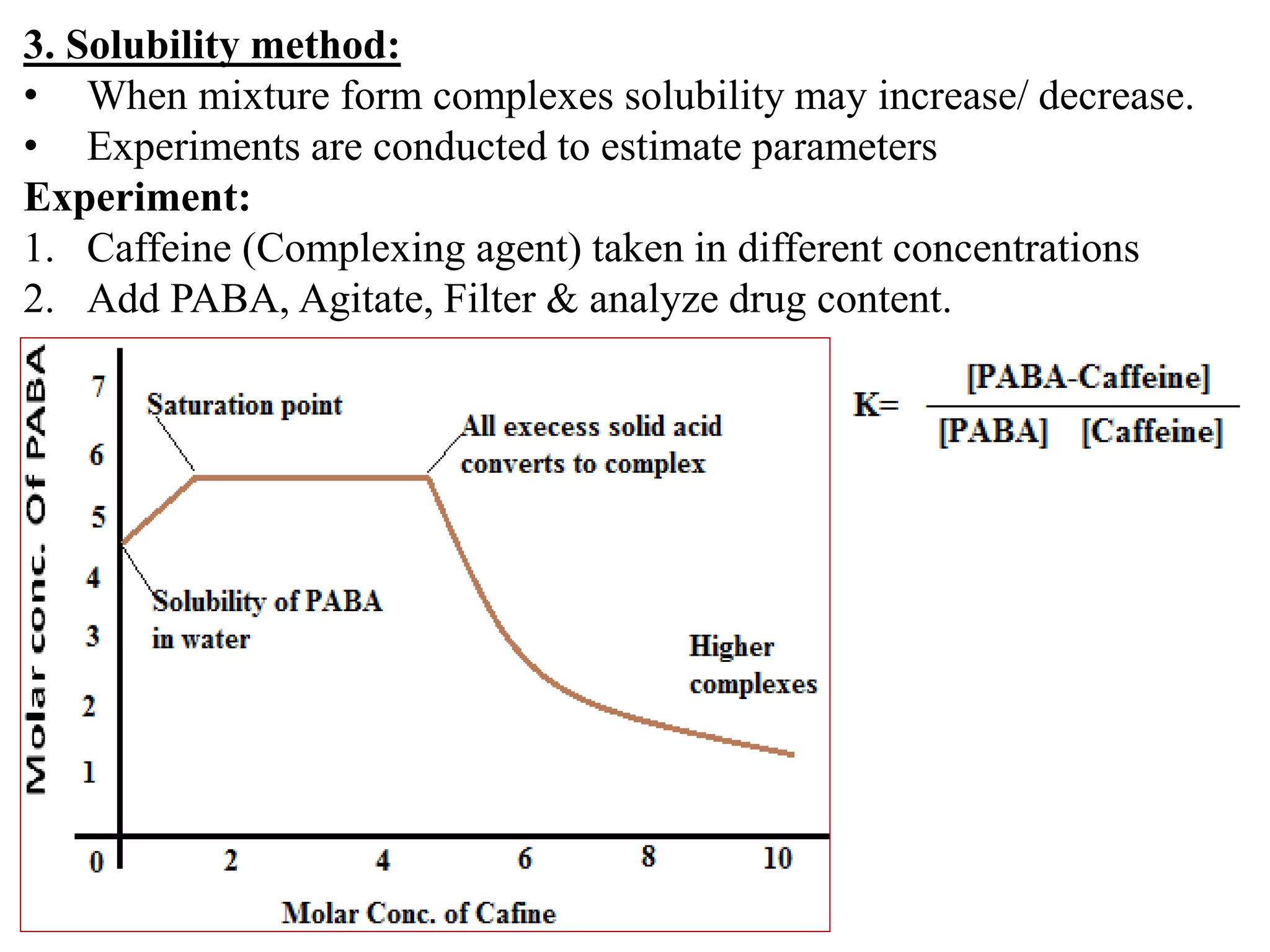
3. Solubility method:
• When mixture form complexes solubility may increase/ decrease.
• Experiments are conducted to estimate parameters
Experiment:
1. Caffeine (Complexing agent) taken in different concentrations
2. Add PABA, Agitate, Filter & analyze drug content.
4. pH titration method.
This method is suitable if complexation produces change in pH.
Experiment:
1. Glycine solution (75 ml) titrated with NaoH, pH is recorded.
2. Glycine solution (75 ml) + Cu+2 Complex titrated with NaoH,
pH is recorded. (Complexation releases Protons and pH decreases)
 Quantity of alkali = Concentration of ligand bound.
Stability constant
Log β = 2 X p [A]
p [A] = pKa-pH-
log([HA]initial-[NaoH] )
Complexation

Complexation

  • 1.
    COMPLEXATION Prepared by: K. ArshadAhmed Khan. M.Pharm, (Ph.D) Dept. of Pharmaceutics RIPER.
  • 2.
    Def: Complex compoundsare defined as those molecules in which most of the bonding structures can be described by classical theories of valency between atoms, but one/more of these bonds are some what anomalous. Interaction between different chemical species Inter molecular forces Covalent bond Hydrogen bond Vanderwalls forces Ion-dipole, dipole-dipole, dipole-induced dipole COMPLEXES Different solubility, conductivity, partitioning, chemical reactions
  • 3.
    COMPLEXES Metal complexes Organic molecular complexes Inclusion compounds 1. Inorganic types 2.Chelates 3. Olefin type 4. Aromatic type 1. Drug-caffine complex 2. Polymer type 3. Picric acid type 4. Quinhydrone type 1. Channel type 2. Layer type 3. Clathrates 4. Mono molecular type
  • 4.
    I) Metal complexes: METAL (substrate) Centralatom BASE (ligand) Electron pair donor COMPLEX formed by co-ordination bond
  • 5.
    I-A) INORGANIC COMPLEXES: Wernerpostulates: 1. There are 2 types of valences primary (ionic), secondary (coordinate). 2. Same type of anion/ radical/ molecule may be held by any one / both type of valence. 3. Every central atom has fixed number of non-ionic valences (co- ordination number) 4. The co-ordination atoms occupy the first sphere/coordination sphere, other atoms occupy second/ ionization sphere. 5. Neutral molecules/ions may satisfy non-ionic valences. 6. The non-ionic valences are directed to specific positions in space. Ex: [Co Cl (NH3)5] Cl2 Substrate Coordination sphere Ionization sphere
  • 6.
    Ex: [Co Cl(NH3)5] Cl2 1. Compound ionize to form [Co Cl (NH3)5]+2 and 2Cl- . 2. Central chlorine do not precipitate with silver nitrate. 3. Substrate and ligand are bonded with coordination bond. 4. Coordination number is maximum number of atoms and groups that combine with central atom in coordination sphere. 5. Co-ordination number for cobalt is 6. Participate in complexation
  • 7.
    I-B) CHELATES: These aregroup of metal ion complexes in which a substrate/ ligand provides 2/more donor groups to combine with a metal ion. Ligands- didentate, tridentate, polydentate.  Hexadentate - ethylenediaminetetraacetic acid (EDTA)- Has a total of six points (4:0 and 2: N) for attachment of metal ions. Sequestering: This is a process in which the property of metal is suppressed without removing it from the solution. Sequestering Agent: This is a ligand which forms a stable water soluble metal chelate Ex: chlorophyll, hemoglobin.
  • 8.
    Chelates applications: 1. INCREASINGSOLUBILITY: Fruit juices and drugs (ascorbic acid) + Fe/Cu  oxidative degradation. Add EDTA + Fe/Cu  stable Chelate 2. PURIFICATION OF HARD WATER: Hard water (Ca+2) + EDTA  EDTA-Ca+2 (ppt)  filter  Pure water. 3. DURG ANALYSIS: Procainamide + cupric ions (1:1) at pH 4-4.5  Coloured complex  detect by Colourimetry. 4. ANTI-COAGULANT: Blood (Ca+2) + EDTA/Citrates/Oxalates prevent thrombin formation  no clotting.
  • 9.
    1-C,D: OLEFIN ANDAROMATIC TYPE: a. These involves Lewis acid-base reactions b. These type of complexes can be used as catalysts in the manufacturing of bulk drugs, intermediates and in drug analysis.
  • 10.
    II. ORGANIC MOLECULARCOMPLEXES: 1. Interaction between 2 organic molecules  Complex temperature change  molecular compound. 2. These complexes have (H)bonds/ weak vander wall forces/ dipole-induced dipole interactions. 3. Energy of attraction is 3K.Cal/mole 4. Bond distance is 3A0 Complex Molecular compound Reaction in COLD TEMPERATURE Reaction in HOT TEMPERATURE Weak attraction forces Strong electrostatic interactions Complexes can not be separated from solutions Compounds can be separated from solutions
  • 11.
    PRINCIPLE/ MECHANISM: 1. Donar-Acceptortype:- Bonds between uncharged species is formed and stabilized by dipole-dipole interactions. EX: N-Dimethyl aniline + 2,4,6-Trinitro anisole. 2. Charge transfer complexes:- •One molecule polarizes other resulting in electrostatic interactions for complex formation with high inter molecular bonding. •Complex is stabilized by resonance. Ex: Benzene + Trinitro benzene.
  • 12.
    2-A) DRUG &CAFFINE COMPLEX: Acidic drugs (benzocaine, procaine) + Caffeine  Complexes Mechanism: 1. dipole-dipole forces/ hydrogen bonding between acid (H) atom and caffeine carboxyl group. 2. Interaction of non-polar parts Ex: Caffeine + Benzocaine.
  • 13.
    DRUG & CAFFINECOMPLEX Applications: 1. These complexes can improve / extend absorption and bioavailability of drug. 2. These complexes can enhance/ inhibit solubility and dissolution rate of drug. 3. Caffeine+ gentisic acid complexes mask bitter taste of caffeine. 2-B) POLYMER COMPLEXES: Polymers with nucleophilic oxygen (PEG/CMC) +Drugs(tannic acid/salicylic acid/phenols)  Complexes. Disadvantages: 1. Incompatibilities in suspension, emulsion, ointments. 2. Complexes + Container drug loss 3. Complexes + preservatives  decrease preservative action.
  • 14.
    2-C) PICRIC ACIDCOMPLEXES: Picric acid (strong acid) + strong base Salt. Picric acid (strong acid) + weak base  Complexes. Ex: BUTESIN PICRATE Picric acid (antiseptic) + Butesin (anesthetic) 1% ointment used for burns and abrasions. DISADVANTAGES: Picric acid + Carcinogenic Agents COMPLEX increase carcinogenic activity.
  • 15.
    2-d) QUINHYDRONE COMPLEXES: Alcoholicsolutions of equimolar quantities of Hydroquinone and Benzoquinone form Quinhydrone complexes (green crystals) Mechanism: 1. Overlapping of π electrons of molecules 2. (H) bonding for stabilizing complex. Applications: Used as electrode in pH determination. Hydroquinone Benzoquinone
  • 16.
    3.INCLUSION COMPLEXES/OCCLUSION COMPOUNDS: 1.One compound is trapped in lattice/cage like structure of other compound. 2. Interaction are due to suitable molecular structure. 3. Prediction of complex formation is difficult. 3-A) CHANNEL LATTICE TYPE. Host (tubular channel)- Deoxycholic acid, urea, thiourea, amylose Guest (long unbranched straight chain compounds)- paraffin, esters, acids, ethanol. Ex: Starch-iodine solution (starch-host) Urea-methyl α-lipolate (urea-host) Applications: • Seperation of isomers: Dextro, levo-terpineol are separated using Digitoxin. • In analysis of dermatological creams, long chain compounds interfere and removed by complexation with urea.
  • 17.
    3-B) LAYER TYPES: Host(Layers With Gaps)- clays, bentonite, montmorillite Guest (entrapped in gaps)- hydrocarbons, alcohols, glycols. Use: Due to their large surface area they are used as catalysts.
  • 18.
    3-C)CLATHRATES: (cage likestructure) During crystallization some compounds (host) form cage like structures in which coordinating compound (guest) is entrapped. Ex: warfarin sodium (water + isopropyl alcohol) Hydroquinone form cage with hydrogen bonds and hole have diameter of 4.2A0. This can entrap methanol, carbon dioxide, hydrochloric acid. CAGE APPLICATIONS: 1. Synthetic metalo- alumino silicates act as molecular sieves. 2. The pores store volatile gases and toxic substances. 3. The entrapped molecule can be removed by physical process.
  • 19.
    3-D) MONO MOLECULARINCLUSION COMPLEX: Single guest molecule entrapped by single host molecule. HOST- Cyclodextrins. Cyclodextrins are cyclic oligo sacchirides containing minimum of 6 D- gluco pyranose units attached by α-1,4 linkages. Cyclodextrins Cavity diameter (Ao) Glucopyranose units α 5 6 β 6 7 γ 8 8 hydrophilic hydrophobic
  • 20.
    MONO MOLECULAR INCLUSIONCOMPLEX APPLICATIONS: 1. Enhanced solubility: Retonic acid (solubility= 0.5mg/ml) Retonic acid + β-CD (solubility= 160 mg/ml) 2. Enhanced dissolution: Famotidine/ Tolbtamide + β-CD 3. Enhanced stability: Asprin/Ephedrine/Testosterone + β-CD (no reaction with other functional groups) 4. Sustained release: Ethylated β-CD + Diltiazem
  • 21.
    COMPLEXATION –Applications inpharmacy •Physical state •Volatility •Solid state Stability •Chemical stability •Solubility •Dissolution •Partition coefficient •Absorption & bioavailability •Reduced toxicity •Antidote in metal poisoning •Drug action through metal poisoning •Antibacterial activity
  • 22.
    1. Physical state: Liquidsubstance  Solid complex  improve process characteristics. Ex: Nitroglycerine (Explosive) + β-CD  Explosion proof Complex 2. Volatility: Substances Complex  Reduce volatility (volatile / unpleasant odour) & Mask odour 3. Solid state stability Vitamin-A,D + β-CD  Chemically stable solid complex.
  • 23.
    4. Chemical stability Complexation Reduce Reactivity, Improve stability. Ex: Caffeine + Benzocaine Complex  Prevent benzocaine hydrolysis. 5. Solubility: PABA (insoluble) + Caffine  Complex improves solubility of PABA 6. Dissolution: Phenobarbitol (insoluble) + β-CD  Complex improves Solubility & Dissolution.
  • 24.
    7. Partition Coefficient: (Water+ Benzene) + Permanganate ions  Partition in to WATER. (Water + Benzene) + Permanganate ions + Crown ether  Partition in to Benzene. 8. Absorption & bioavailability β-CD + Barbiturates  Complex  Improves Bioavailability Tetracyclines + Ca+2 / Mg+2  Insoluble metal Complex  Reduced Absorption & Bioavailability 9. Reduced Toxicity: β-CD + Indomethacin  Reduce ulcerogenic effect β-CD + Chlorpramazine  Reduce local tissue toxicity.
  • 25.
    10. Antidote inmetal poisoning: Arsenic, Mercury (Toxic metal ions) + (-SH) groups of enzymes  Effect normal functioning. Dimercaprol + Arsenic,  Complex  Easily eliminated Mercury from body. 11. Drug action through metal poisoning: 8-Hydroxy Quinoline + Iron  Complex  Enter malarial parasite  Accumulation of metal  Anti-Malarial action. 12. Antibacterial activity: PAS + Cupric ions  Cupric Complex + Chelates. (anti-Tubercular drug) Chelates  30 times more fat soluble  Penetrate in to cells  High anti-Tubercular action.
  • 26.
    Method of analysis: Estimationof 2 parameters 1. Stoichiometric ratio of Ligand: Metal / Donar : Acceptor 2. Stability Constant of complex. Methods: 1. Method of continuous variation. 2. Distribution method 3. Solubility method 4. pH titration method.
  • 27.
    General procedure: Equation forcomplexation M + n A  MAn Stability constant Applying Log on both sides Log [MAn] = log K + log [M] + n log [A]
  • 28.
    1. Method ofcontinuous variation. 1. Dielectric constant 2. Refractive index 3. Spectrophotometric extinction coefficient Physical properties Characteristics of species. A +B No complexation Complexation Physical properties are additive values Physical properties values different
  • 29.
    1. Due to complexation physicalproperties result may be maximum or minimum. 2. At maximum/ minimum point note concentration of individual species. 3. Calculate stoichiometric ratio of species.
  • 30.
    2. Distribution method: •Partition coefficient / Distribution changes due to complexation. • By conducting 2 experiments stability constant is estimated.
  • 31.
    3. Solubility method: •When mixture form complexes solubility may increase/ decrease. • Experiments are conducted to estimate parameters Experiment: 1. Caffeine (Complexing agent) taken in different concentrations 2. Add PABA, Agitate, Filter & analyze drug content.
  • 32.
    4. pH titrationmethod. This method is suitable if complexation produces change in pH. Experiment: 1. Glycine solution (75 ml) titrated with NaoH, pH is recorded. 2. Glycine solution (75 ml) + Cu+2 Complex titrated with NaoH, pH is recorded. (Complexation releases Protons and pH decreases)  Quantity of alkali = Concentration of ligand bound. Stability constant Log β = 2 X p [A] p [A] = pKa-pH- log([HA]initial-[NaoH] )