COMMUNICATION
SKILLS
BY:
Arpit Modh (16BCH035)
B.Tech Chemical
Nirma University,
Ahmedabad.
INNOVATIVE ASSIGNMENT
CONTENTS
Kinesics
Proxemics
Chronemics
Barriers of Communication
KINESICS
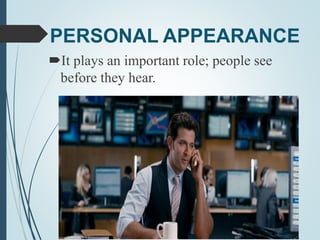
PERSONAL APPEARANCE
It plays an important role; people see
before they hear.
nirma
university
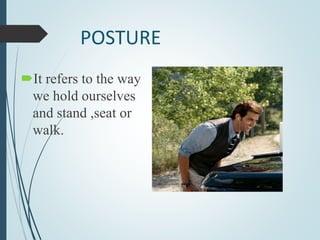
POSTURE
It refers to the way
we hold ourselves
and stand ,seat or
walk.
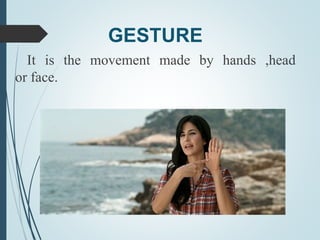
GESTURE
It is the movement made by hands ,head
or face.
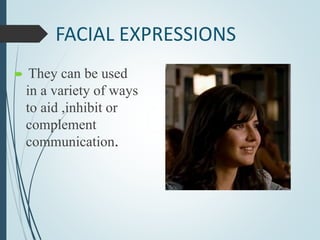
FACIAL EXPRESSIONS
 They can be used
in a variety of ways
to aid ,inhibit or
complement
communication.
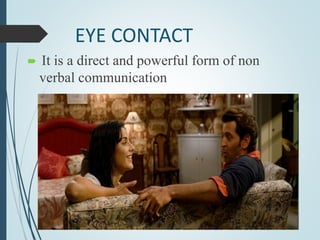
EYE CONTACT
 It is a direct and powerful form of non
verbal communication
nirma
university
PROXEMICS
(study of physical space in
interpersonal relationships)
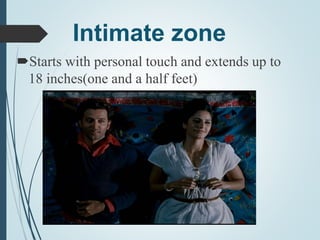
Intimate zone
Starts with personal touch and extends up to
18 inches(one and a half feet)
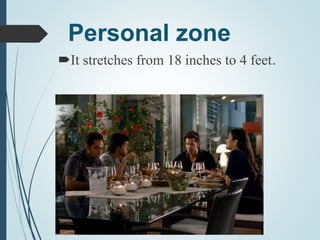
Personal zone
It stretches from 18 inches to 4 feet.
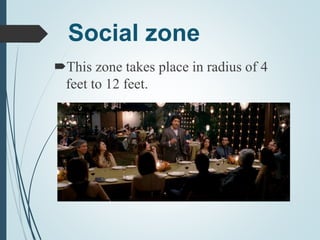
Social zone
This zone takes place in radius of 4
feet to 12 feet.
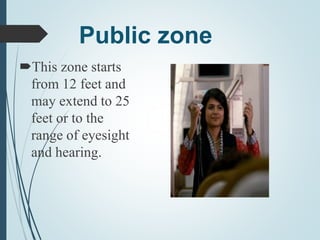
Public zone
This zone starts
from 12 feet and
may extend to 25
feet or to the
range of eyesight
and hearing.
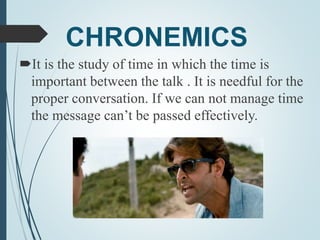
CHRONEMICS
It is the study of time in which the time is
important between the talk . It is needful for the
proper conversation. If we can not manage time
the message can’t be passed effectively.
BARRIERS OF
COMMUNICATION
Intrapersonal
barriers
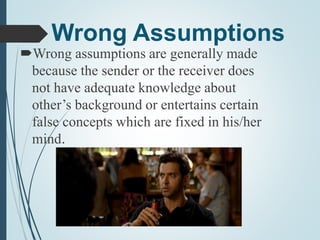
Wrong Assumptions
Wrong assumptions are generally made
because the sender or the receiver does
not have adequate knowledge about
other’s background or entertains certain
false concepts which are fixed in his/her
mind.
Varied Perceptions
It is about how different
individuals hold different
viewpoints about the same
situation.
The best way to overcome
it is to step back and take a
wider, unbiased
perspective of the issue.
Differing Backgrounds
Background can be
different due to
different education,
culture, language,
etc.
Empathy with other
person is solution to
this barrier.
Categorical Thinking
This type of thinking
exists in people who
feel that they know
everything about a
particular subject,
and therefore refuse
to accept any further
information on that
topic.
Interpersonal
Barriers
Limited Vocabulary
Inadequate vocabulary can be a
major hindrance in communication.
At times, we find ourselves
searching for the exact word or
phrase that would be appropriate for
what we are trying to express.
Incompatibility of Verbal
and Non-Verbal
messages
Misinterpreted non verbal communication acts
as a barrier to effective communication flow.
One should try not only to accurately gauge
others’ non-verbal cues but also be aware of
one’s own body language.
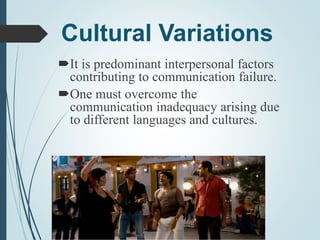
Cultural Variations
It is predominant interpersonal factors
contributing to communication failure.
One must overcome the
communication inadequacy arising due
to different languages and cultures.
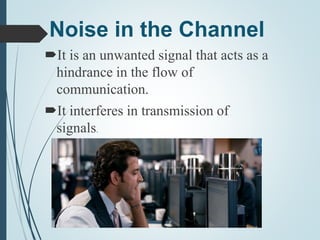
Noise in the Channel
It is an unwanted signal that acts as a
hindrance in the flow of
communication.
It interferes in transmission of
signals.
Organizational
Barriers
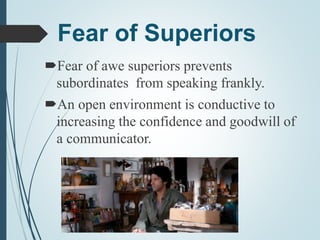
Fear of Superiors
Fear of awe superiors prevents
subordinates from speaking frankly.
An open environment is conductive to
increasing the confidence and goodwill of
a communicator.
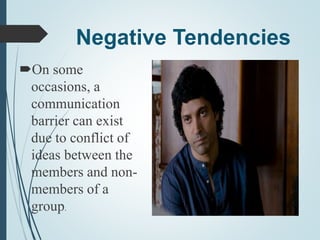
Negative Tendencies
On some
occasions, a
communication
barrier can exist
due to conflict of
ideas between the
members and non-
members of a
group.
Use of Inappropriate
media
While choosing the medium for a particular
occasion, the advantages, disadvantages and
potential barriers to communication must be
considered.
Information Overload
One of the major problems faced by
organizations today is the decrease
in efficiency resulting from manual
handling of huge amount of data.
This is known as information
overload.
Communication skills

Communication skills