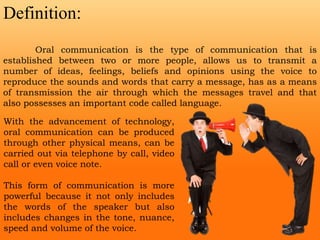
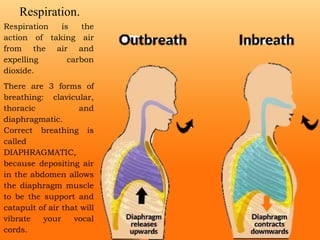
Oral communication involves the transmission of ideas, feelings, and opinions using voice and language, facilitated by technology such as phone and video calls. It has key characteristics including being dynamic, context-dependent, and requiring at least two participants, while potential defects may arise from poor vocabulary, nervousness, and incoherent expression. Various classification types exist for oral communication, and effective techniques such as diaphragmatic breathing and modulation can improve clarity and projection.