govnerment 
Engineering 
College,Bhavnagar
Communication Skills 
Non Verbal 
Communication
NON-VERBAL OR INFORMAL 
COMMUNICATION 
 Non-verbal communication involves 
exchange of information or transmitting 
data without the use of word or 
language. 
 We express our emotions, attitudes, 
feelings, options and views through our 
body movements, it is called non- verbal 
communication.
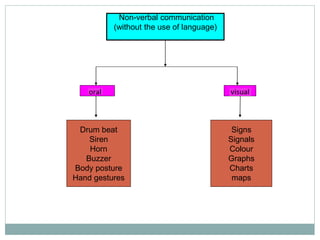
Non-verbal communication 
(without the use of language) 
Drum beat 
Siren 
Horn 
Buzzer 
Body posture 
Hand gestures 
Signs 
Signals 
Colour 
Graphs 
Charts 
maps
NON-VERBAL COMMUNICATION 
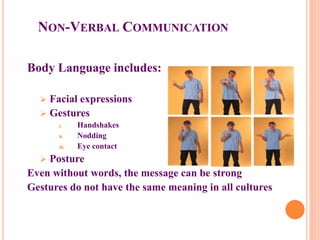
Body Language includes: 
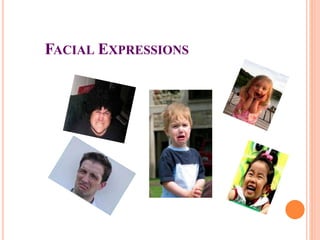
 Facial expressions 
 Gestures 
i. Handshakes 
ii. Nodding 
iii. Eye contact 
 Posture 
Even without words, the message can be strong 
Gestures do not have the same meaning in all cultures
COMPONENTS OF NON-VERBAL 
COMMUNICATION 
Kinesics 
Proxemics 
Chronemics 
Haptics 
Oculesics 
Paralanguage
Kinesics 
Kinesics is a body’s physical movement. 
It is the way the body communicates 
without words, that is, through various 
movements of its parts. 
Kinesics, or body language, is one of the 
most powerful way that human can 
communicate non-verbally.
kinesics 
 Developed by anthropologist Ray L 
Birdwhistell in the 1950s, kinesics studies is 
nothing but the study of body movement, 
facial expressions and gestures. 
 Kinesics studies include the study of 
following elements: face, eyes, gestures, 
postures and shapes.
FACIAL EXPRESSIONS
Proxemics (perception of 
space) 
 The study of how people perceive the 
physical space around them is known as 
Proxemics. 
 According to proxemics, physical distance 
between two people can be co-related to 
relationship they share, be it personal or 
social. 
 Proxemics define this distance.
Chronemics is study of time usage in non-verbal 
communication. 
Time perceptions can be expressed 
through punctuality, willingness to wait, 
speed of speech or even the amount of 
time people are willing to listen.
HAPTICS (STUDY OF TOUCH) 
 Haptic refers to the study of touching as a 
tool of non-verbal communication. 
 The various forms of touching that can be 
included in non-verbal communication 
include handshake, holding hands, back 
patting or even brushing arms.
Oculesics (study of eyes) 
 Eyes are perhaps the most expressive feature 
of human body. 
 Eye contact can indicate a lot of emotion 
ranging from interest, attention and 
involvement. 
A simple case is comprised of looking while 
talking, while listening, or even while 
observing.
Paralanguage (related to non-verbal 
communication) 
 Paralanguage is part of non-verbal 
communication because it is not related to 
content or verbal message or others 
attribute of speaking which includes the 
pitch, the tone, the volume, rhythm, 
resonance and even the accent of 
speakers collectively known as prosody. 
 Paralanguage is thus the study of non-verbal 
cues of the voice.
Thanking regards

Communication skills

  • 1.
  • 2.
    Communication Skills NonVerbal Communication
  • 3.
    NON-VERBAL OR INFORMAL COMMUNICATION  Non-verbal communication involves exchange of information or transmitting data without the use of word or language.  We express our emotions, attitudes, feelings, options and views through our body movements, it is called non- verbal communication.
  • 4.
    Non-verbal communication (withoutthe use of language) Drum beat Siren Horn Buzzer Body posture Hand gestures Signs Signals Colour Graphs Charts maps
  • 5.
    NON-VERBAL COMMUNICATION BodyLanguage includes:  Facial expressions  Gestures i. Handshakes ii. Nodding iii. Eye contact  Posture Even without words, the message can be strong Gestures do not have the same meaning in all cultures
  • 6.
    COMPONENTS OF NON-VERBAL COMMUNICATION Kinesics Proxemics Chronemics Haptics Oculesics Paralanguage
  • 7.
    Kinesics Kinesics isa body’s physical movement. It is the way the body communicates without words, that is, through various movements of its parts. Kinesics, or body language, is one of the most powerful way that human can communicate non-verbally.
  • 8.
    kinesics  Developedby anthropologist Ray L Birdwhistell in the 1950s, kinesics studies is nothing but the study of body movement, facial expressions and gestures.  Kinesics studies include the study of following elements: face, eyes, gestures, postures and shapes.
  • 9.
  • 10.
    Proxemics (perception of space)  The study of how people perceive the physical space around them is known as Proxemics.  According to proxemics, physical distance between two people can be co-related to relationship they share, be it personal or social.  Proxemics define this distance.
  • 11.
    Chronemics is studyof time usage in non-verbal communication. Time perceptions can be expressed through punctuality, willingness to wait, speed of speech or even the amount of time people are willing to listen.
  • 12.
    HAPTICS (STUDY OFTOUCH)  Haptic refers to the study of touching as a tool of non-verbal communication.  The various forms of touching that can be included in non-verbal communication include handshake, holding hands, back patting or even brushing arms.
  • 13.
    Oculesics (study ofeyes)  Eyes are perhaps the most expressive feature of human body.  Eye contact can indicate a lot of emotion ranging from interest, attention and involvement. A simple case is comprised of looking while talking, while listening, or even while observing.
  • 14.
    Paralanguage (related tonon-verbal communication)  Paralanguage is part of non-verbal communication because it is not related to content or verbal message or others attribute of speaking which includes the pitch, the tone, the volume, rhythm, resonance and even the accent of speakers collectively known as prosody.  Paralanguage is thus the study of non-verbal cues of the voice.
  • 15.