Downloaded 71 times

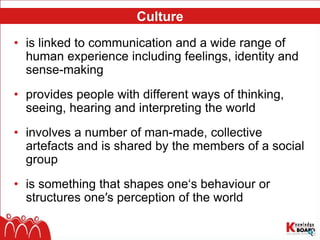
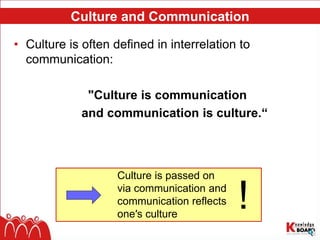
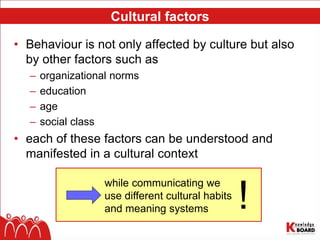
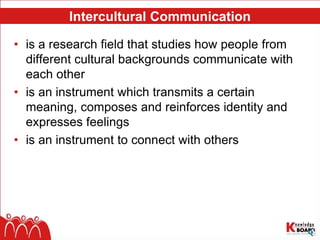
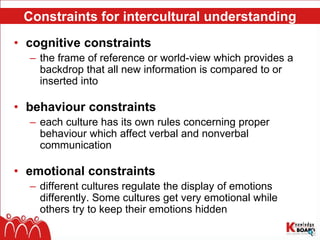
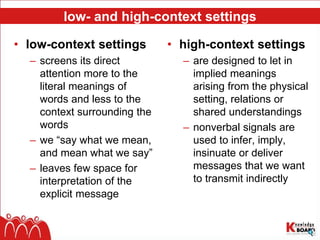
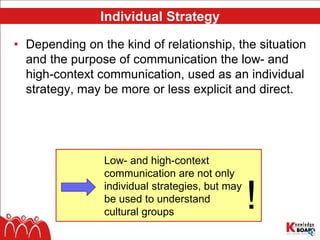
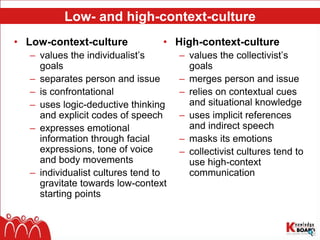
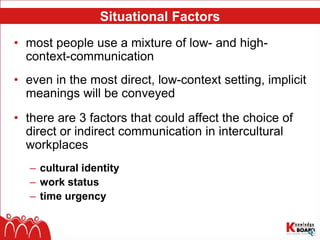
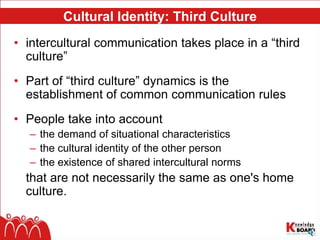
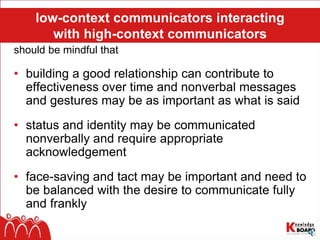
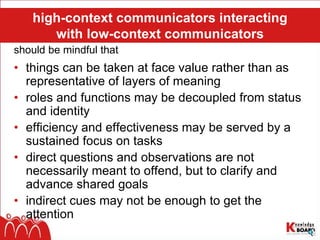
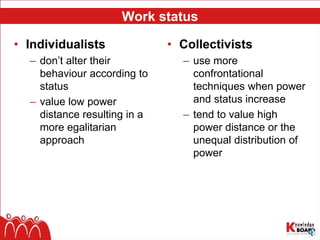
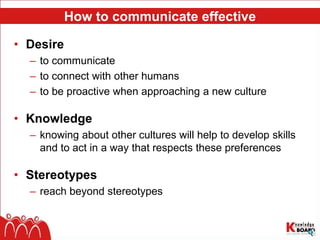
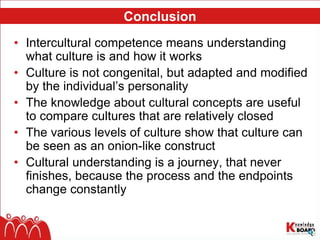

Intercultural communication involves the study of how people from different cultural backgrounds communicate. Culture provides people with different ways of thinking and interpreting the world. It is linked to communication and shared among members of a social group. Culture shapes behavior and perceptions. Communication both reflects and passes on culture. Factors like organization, education, age, and social class also influence behavior and are understood within a cultural context. Intercultural communication allows people to connect across cultures but also faces constraints from differences in cognition, behaviors, and emotional expression between cultures. Effective intercultural communication requires understanding both low- and high-context communication styles and being aware of how cultural identity, work status, and time urgency can impact interactions.


![What did you say? mindful interculture communication [201608 icgse]](https://cdn.slidesharecdn.com/ss_thumbnails/whatdidyousaymindfulinterculturecommunication201608icgse-160907181822-thumbnail.jpg?width=640&height=640&fit=bounds)


