Common Skills
Our Team Members
Kowshika
Kasthuri
Senthuran
Nirojan
Batch No : CSD - 12
Assessor : Suganthini
Contents
 Introduction
 Communication Skills
 Interpersonal Skills
 Time Management
 Conclusion
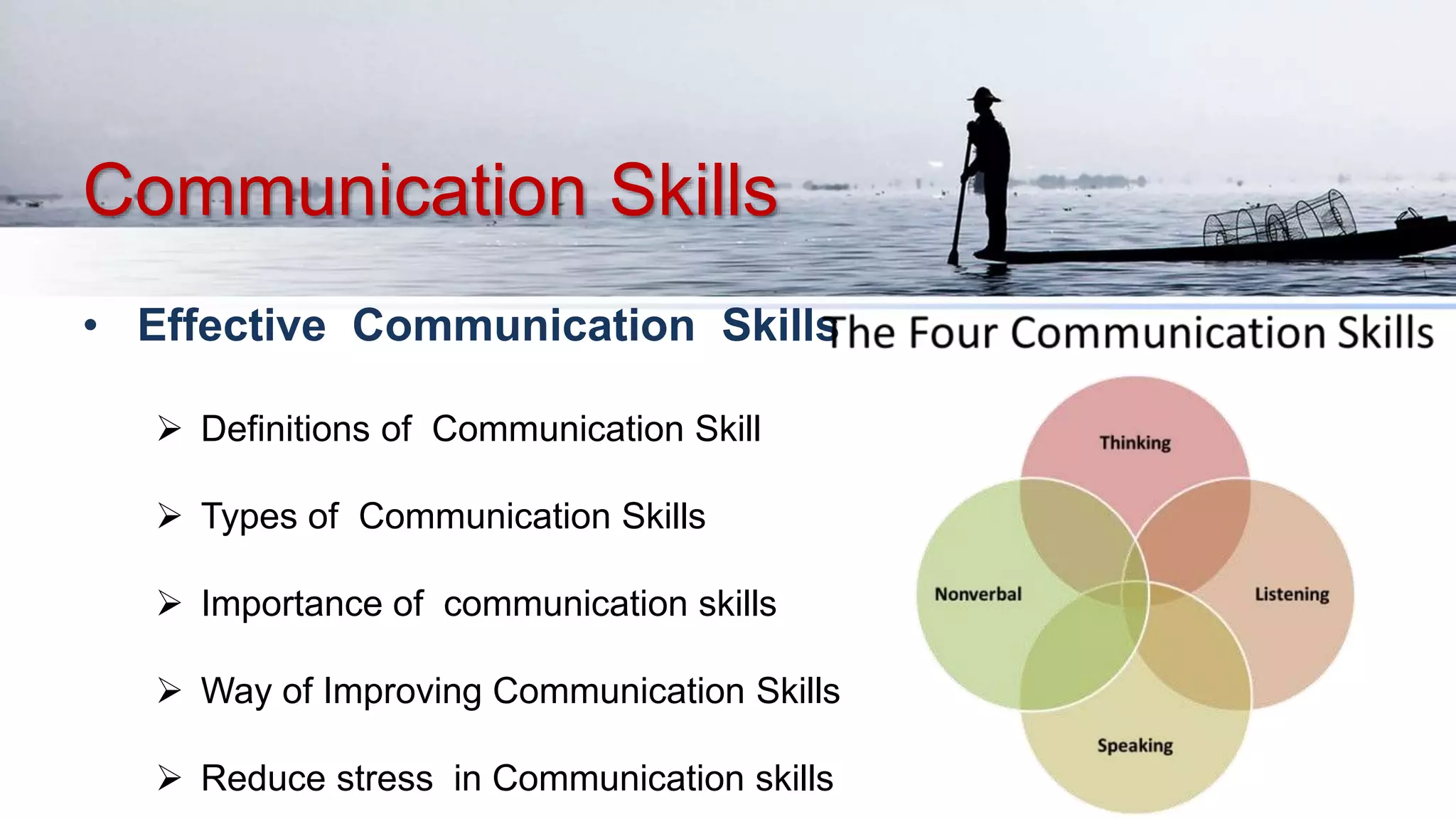
Communication Skills
• Effective Communication Skills
 Definitions of Communication Skill
 Types of Communication Skills
 Importance of communication skills
 Way of Improving Communication Skills
 Reduce stress in Communication skills
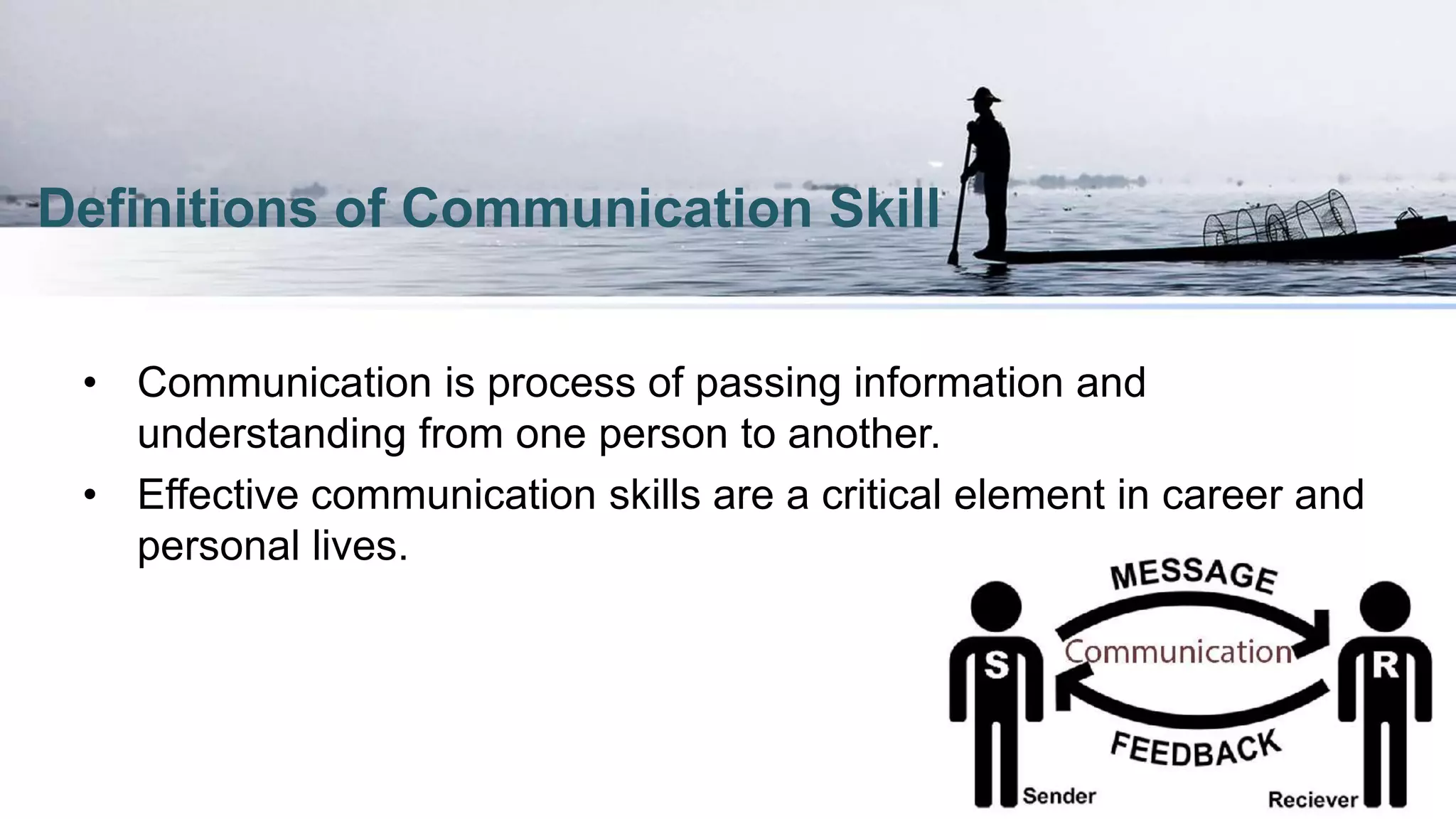
Definitions of Communication Skill
• Communication is process of passing information and
understanding from one person to another.
• Effective communication skills are a critical element in career and
personal lives.
Types of Communication Skills
 Verbal (sound, language, tone of voice)
paying attention to the words and feelings that are being
expressed.
 Non verbal(facial expression, body language)
Giving full physical attention to the speaker; being aware of the
speakers non verbal messages.
 Written(memo, report, letters)
Communication by means of written symbols either printed or
hand written . Written communication is the most common form
of work places communication.
Verbal Communication in work place
 Interviews
 Telephone conversation
 Informal gathering of staff
 Dealing with clients
 Formal meetings
 Training sessions
 Giving the presentation
 Conferences
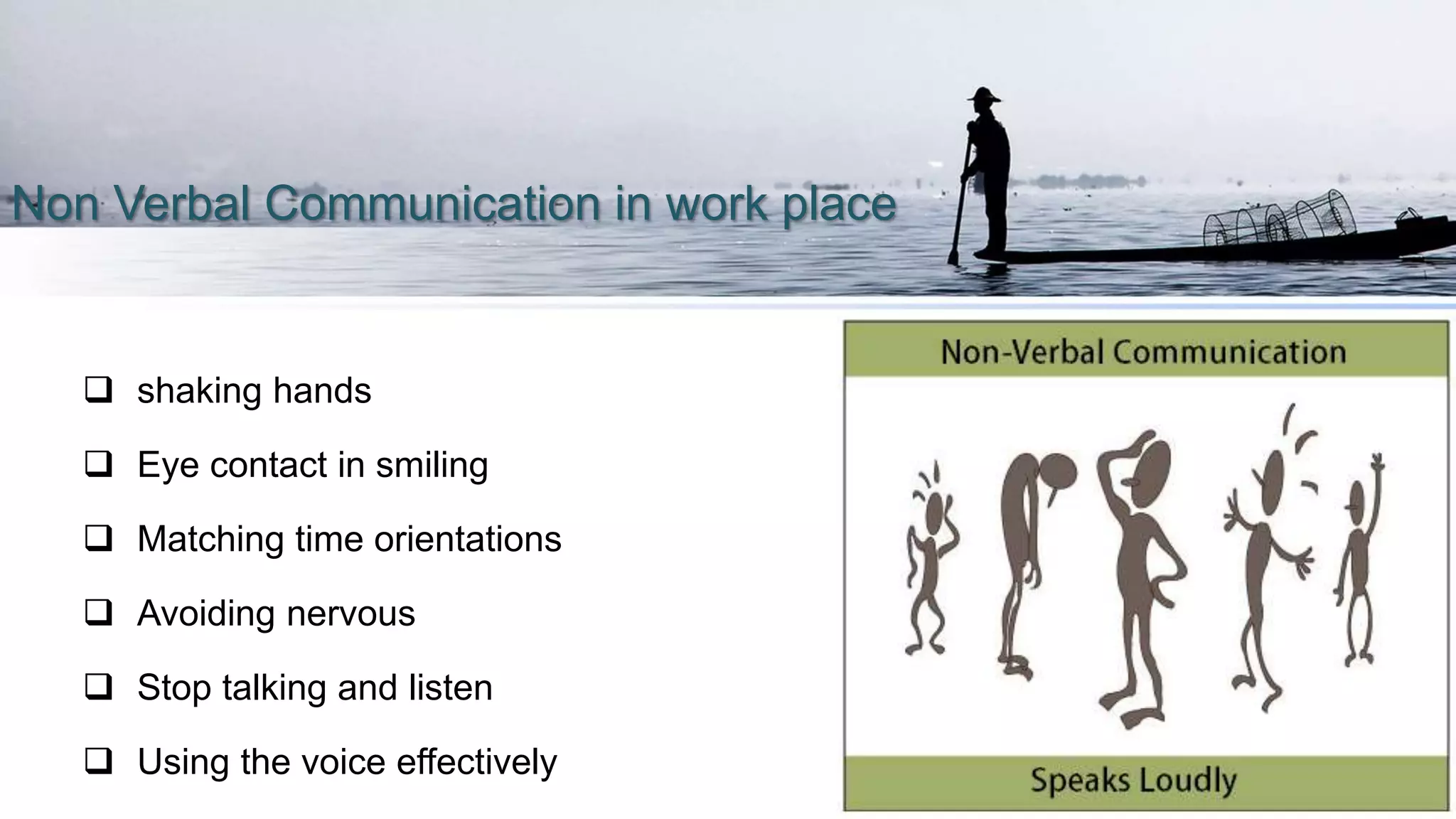
Non Verbal Communication in work place
 shaking hands
 Eye contact in smiling
 Matching time orientations
 Avoiding nervous
 Stop talking and listen
 Using the voice effectively
Importance of Communication Skills
o Easily achieve the objectives
o Anticipate problems
o Make decisions
o Coordinate workflow
o Supervise others
o Develop relationship
o Manage knowledge, ideas and creativity
o Promote products and services
Way of Improving Communication Skills
 Know how to read non verbal communication signs such
as body language.
 Improve your listening skills.
 Be clear and to the point.
 Ask open ended questions.
 Talking over each other.
 Practice writing reports / letters.
 Look presentable and confident.
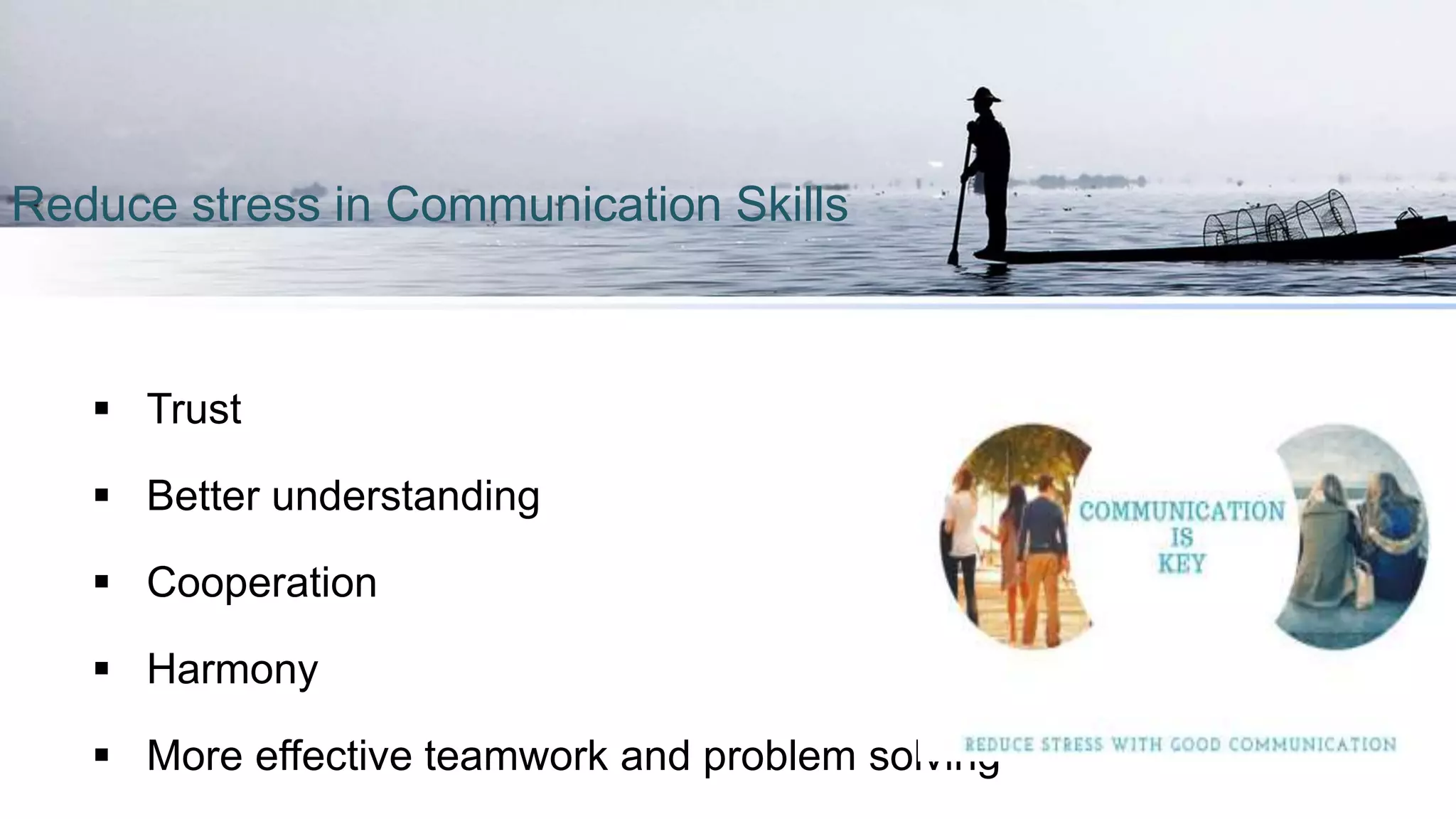
Reduce stress in Communication Skills
 Trust
 Better understanding
 Cooperation
 Harmony
 More effective teamwork and problem solving
Interpersonal Skills
• Effective Interpersonal Skills
 Definitions of interpersonal Skill
 Types of interpersonal Skills
 Importance of interpersonal skills
 Way of Improving interpersonal Skills
 Reduce Stress
• Interpersonal Skills:
Soft Skills
Negotiating Skills
Assertiveness Skills
Social Skills.
Definition of Interpersonal Skills
• The set of abilities enabling to person to interact positively and work
effectivly with others.
• When employees are hiring interpersonal skills are one of the top criteria
used to evaluate candidates.
• Interpersonal skills are comes from the root word interaction and person.
Soft Skills
Soft skills are essentially people skills-the non-technical, intangible, personality-
specific skills.
Here are the 8 soft skills you need to be successful!
 Communication
 Team work
 Problem solving
 Initiative and enterprise
 Planning and organization
 Self-management
 Learning
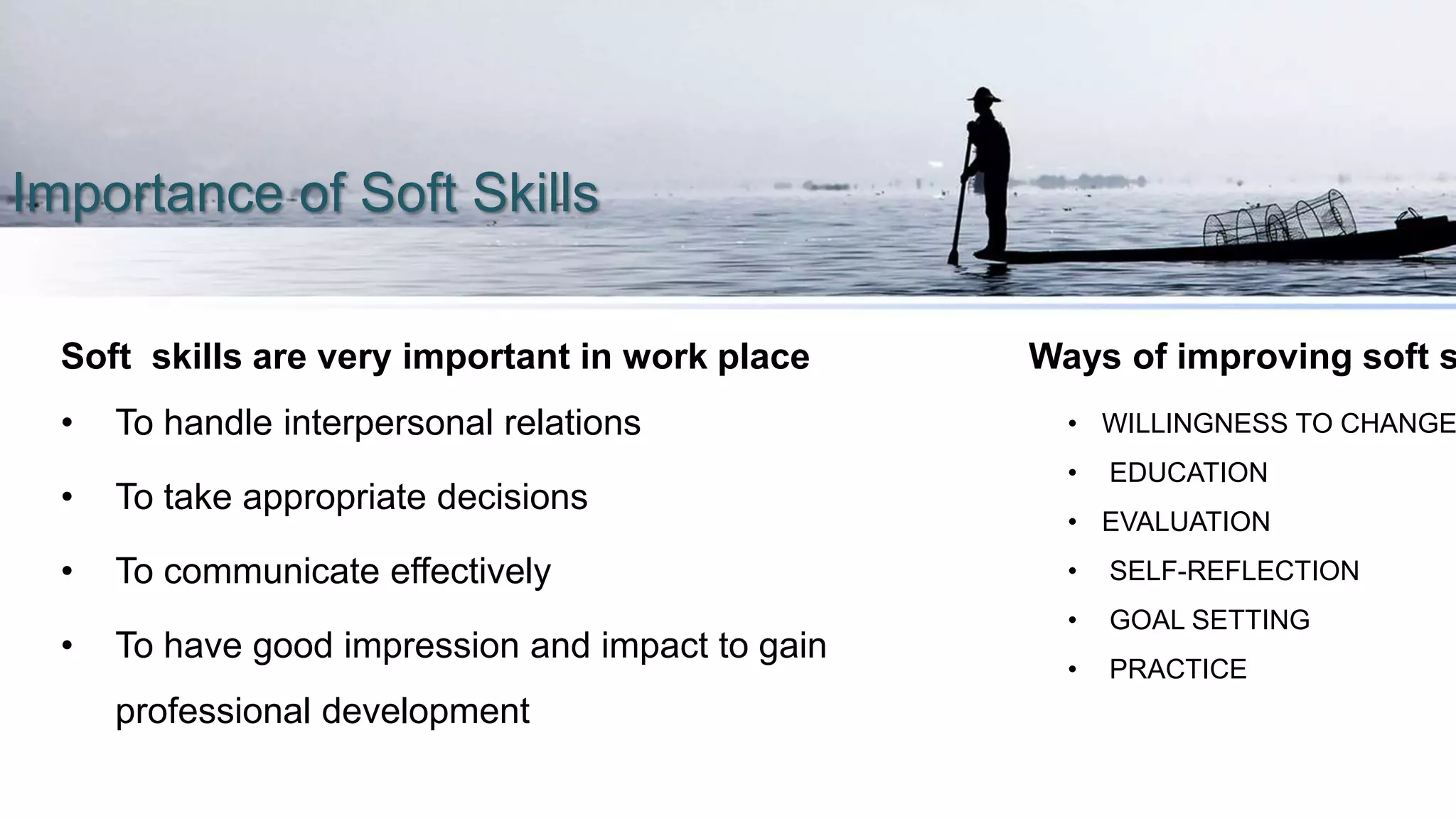
Importance of Soft Skills
Soft skills are very important in work place
• To handle interpersonal relations
• To take appropriate decisions
• To communicate effectively
• To have good impression and impact to gain
professional development
Ways of improving soft s
• WILLINGNESS TO CHANGE
• EDUCATION
• EVALUATION
• SELF-REFLECTION
• GOAL SETTING
• PRACTICE
Negotiating Skills
Negotiating is the process of communicating back and forth ,for the purpose of
reaching a joint agreement about differing needs or ideas.
Types of negotiation
 Distributive(win-lose)
 Integrative(win-win)
The Importance of
Negotiation
 Negotiate for Long-Term
Career Success
 Negotiate Your Role
 Negotiate for Your Deal’s
Success
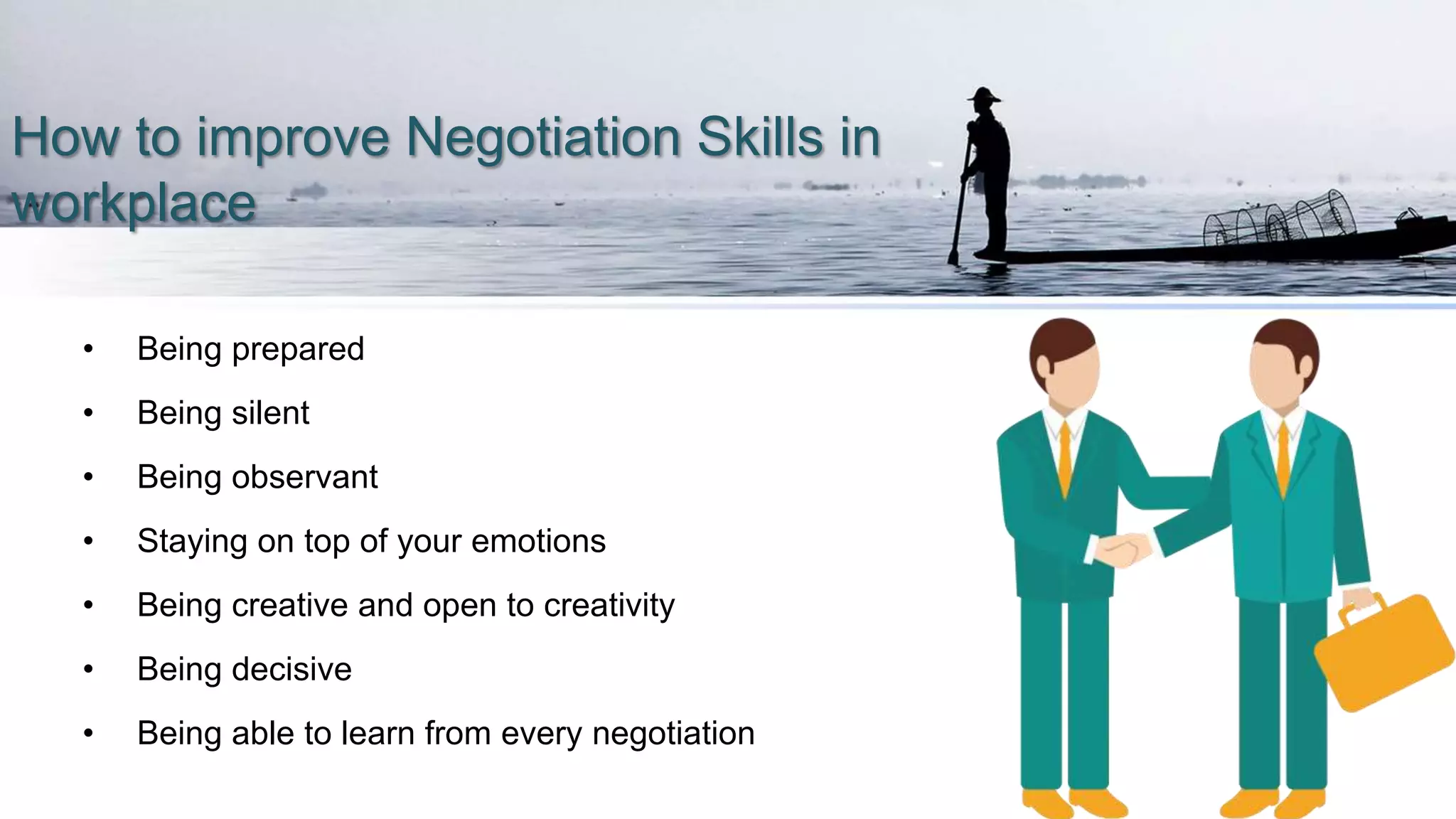
How to improve Negotiation Skills in
workplace
• Being prepared
• Being silent
• Being observant
• Staying on top of your emotions
• Being creative and open to creativity
• Being decisive
• Being able to learn from every negotiation
Assertiveness Skills
• Assertiveness is about self confidence which means having a positive attitude
towards yourself and others.
The Importance of Assertive
Communication
• Allows you to set boundaries with aggressive people.
• Provides an avenue for speaking up confidently on your own behalf — this
enhances your visibility and credibility.
• Allows you to express your ideas and convey your value in your organization,
which boosts your self-confidence. This behavior allows you to establish and
project the image of a poised and polished professional.
How to improve Assertive Skills
o Being responsible for your behavior.
o Avoid being influenced
o Be honest regarding compliments
o Learn to say “No’
o Use “I” and “We” statements instead of “You’
o Use appropriate body language
o Choose assertive words carefully
o Avoid exaggerations
o Ask for feedback
Social Skills
The interpersonal skills necessary for successful communication and social
interaction.
Functions of social skills
 Recognizing emotions in others
 Effective communication
 Conflict resolution
 Self-regulation of emotions
 Social problem solving
 Acceptance and tolerance for others
Important Social Skills You Need to
Succeed at Work
 Empathy
 Listening
 Being
positive
 Cooperation
How to Improve your Social skills at
Workplace? Improve your confidence and self esteem.
 Join in office discussions.
 Participate in opportunities to give seminars and presentations.
 Read and be inspired.
 Try and understand human nature.
 Training your juniors.
Time management
 Effective time management
 Definitions of time management
 Types of time management
 Importance of time management
 Way of Improving time management
Definition of Time Management
• Time management is the process of planning and executing it.
Time management skills
 Goal setting
 Prioritisation.
 Self-awareness
 Focus
 Planning
Personal Time Management Skills
• Set Goal
• Make schedule
• Revisit and revise your plan
Improve your time management
o Outline Your Goals
o Determine Where You Want to Improve
o Talk to Your Team
o Learn How to Listen
o Get Organized
o Learn How to Effectively Communicate with Anyone
o Steps to Leadership Success
o Do smartly
Time Management Quadrant
• Urgent and important (“Do”)
 Has dead line and high value
• Important but not urgent (“Plan”)
 High value but no-dead line
• Urgent but not important(“Delegate”)
 Has dead line but less value
• Not important and not urgent (“Limit”)
 Less value and no-dead line
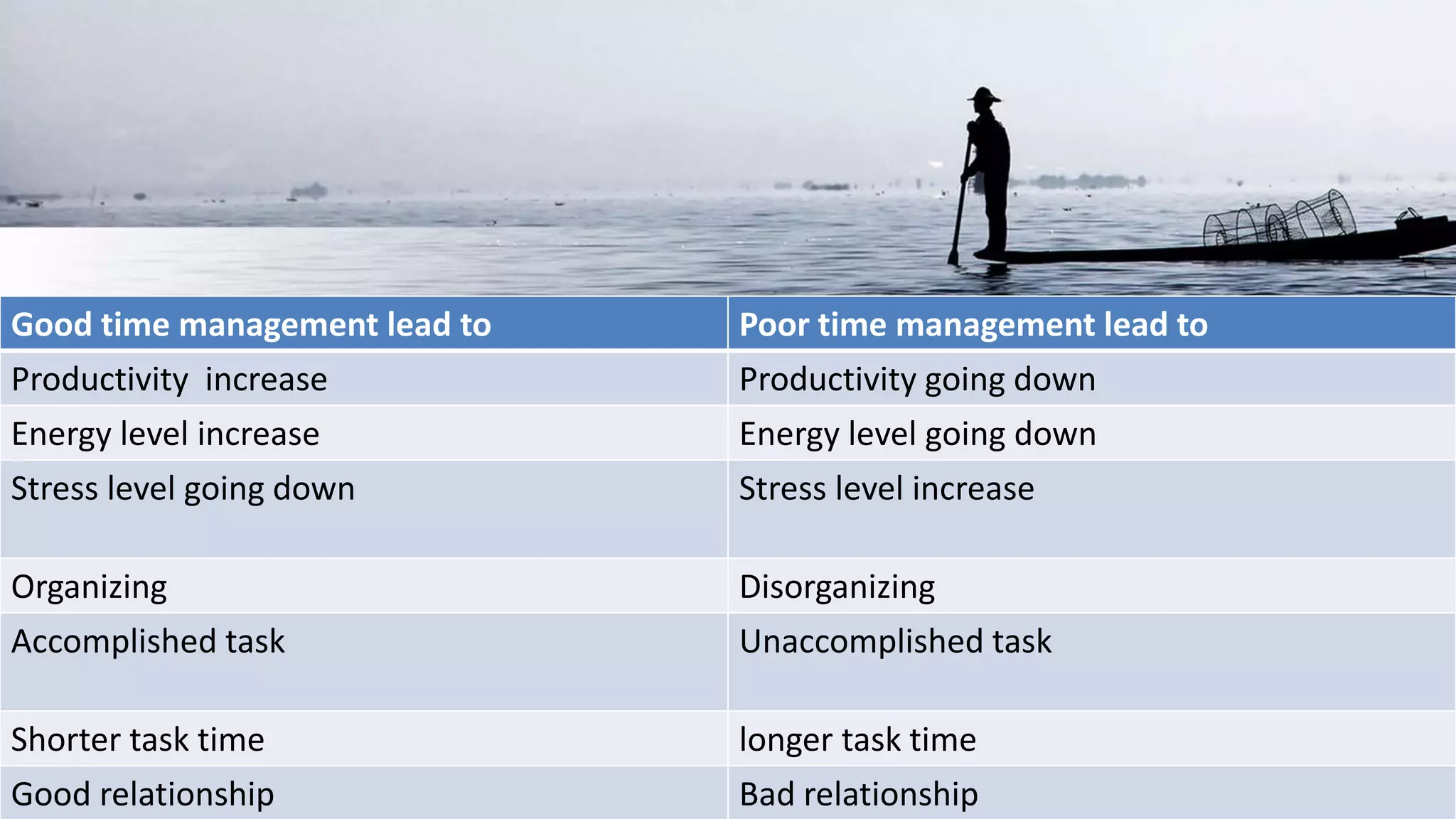
Good time management lead to Poor time management lead to
Productivity increase Productivity going down
Energy level increase Energy level going down
Stress level going down Stress level increase
Organizing Disorganizing
Accomplished task Unaccomplished task
Shorter task time longer task time
Good relationship Bad relationship
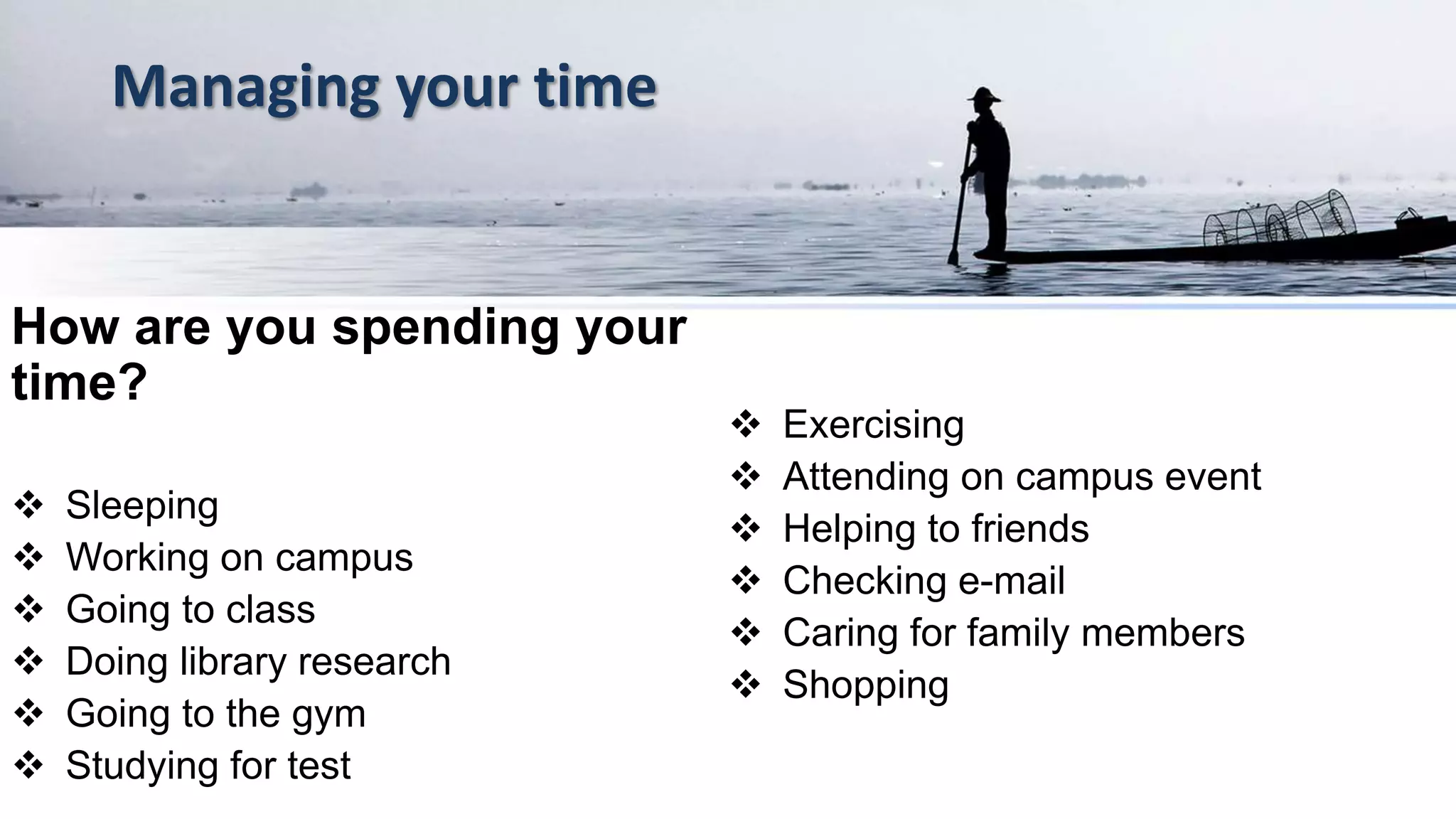
Managing your time
How are you spending your
time?
 Sleeping
 Working on campus
 Going to class
 Doing library research
 Going to the gym
 Studying for test
 Exercising
 Attending on campus event
 Helping to friends
 Checking e-mail
 Caring for family members
 Shopping
Reference
 Doyle, Alison. thebalancecareers. 26 June 2018. 28 June 2018
<https://www.thebalancecareers.com/interpersonal-skills-list-2063724>.
 Dunson, Baden. Research Gate. August 2015. 24 June 2018
<https://www.researchgate.net/publication/283622623_Interpersonal_Skills_1_2
016_-_4th_ed>.
 Janowiak, Art. Conover company. 16 December 2015. 24 June 2018
<https://www.conovercompany.com/7-interpersonal-social-skills-for-the-
workplace/>.
 Farman, Tessa. research gate. 26 January 2017. 26 2018 June
<https://www.researchgate.net/profile/Tessa_Pfafman>.
 Shonk, Katie. Program on Negotiation at Harvard Law School. 16 APRIL 2018.
26 June 2018 <https://www.pon.harvard.edu/daily/business-negotiations/the-
importance-of-negotiation-in-business/>.
Thank
YouFor Your Patience &
Silent

Communication Or Common Skills

  • 1.
    Common Skills Our TeamMembers Kowshika Kasthuri Senthuran Nirojan Batch No : CSD - 12 Assessor : Suganthini
  • 2.
    Contents  Introduction  CommunicationSkills  Interpersonal Skills  Time Management  Conclusion
  • 3.
    Communication Skills • EffectiveCommunication Skills  Definitions of Communication Skill  Types of Communication Skills  Importance of communication skills  Way of Improving Communication Skills  Reduce stress in Communication skills
  • 4.
    Definitions of CommunicationSkill • Communication is process of passing information and understanding from one person to another. • Effective communication skills are a critical element in career and personal lives.
  • 5.
    Types of CommunicationSkills  Verbal (sound, language, tone of voice) paying attention to the words and feelings that are being expressed.  Non verbal(facial expression, body language) Giving full physical attention to the speaker; being aware of the speakers non verbal messages.  Written(memo, report, letters) Communication by means of written symbols either printed or hand written . Written communication is the most common form of work places communication.
  • 6.
    Verbal Communication inwork place  Interviews  Telephone conversation  Informal gathering of staff  Dealing with clients  Formal meetings  Training sessions  Giving the presentation  Conferences
  • 7.
    Non Verbal Communicationin work place  shaking hands  Eye contact in smiling  Matching time orientations  Avoiding nervous  Stop talking and listen  Using the voice effectively
  • 8.
    Importance of CommunicationSkills o Easily achieve the objectives o Anticipate problems o Make decisions o Coordinate workflow o Supervise others o Develop relationship o Manage knowledge, ideas and creativity o Promote products and services
  • 9.
    Way of ImprovingCommunication Skills  Know how to read non verbal communication signs such as body language.  Improve your listening skills.  Be clear and to the point.  Ask open ended questions.  Talking over each other.  Practice writing reports / letters.  Look presentable and confident.
  • 10.
    Reduce stress inCommunication Skills  Trust  Better understanding  Cooperation  Harmony  More effective teamwork and problem solving
  • 11.
    Interpersonal Skills • EffectiveInterpersonal Skills  Definitions of interpersonal Skill  Types of interpersonal Skills  Importance of interpersonal skills  Way of Improving interpersonal Skills  Reduce Stress
  • 12.
    • Interpersonal Skills: SoftSkills Negotiating Skills Assertiveness Skills Social Skills.
  • 13.
    Definition of InterpersonalSkills • The set of abilities enabling to person to interact positively and work effectivly with others. • When employees are hiring interpersonal skills are one of the top criteria used to evaluate candidates. • Interpersonal skills are comes from the root word interaction and person.
  • 14.
    Soft Skills Soft skillsare essentially people skills-the non-technical, intangible, personality- specific skills. Here are the 8 soft skills you need to be successful!  Communication  Team work  Problem solving  Initiative and enterprise  Planning and organization  Self-management  Learning
  • 15.
    Importance of SoftSkills Soft skills are very important in work place • To handle interpersonal relations • To take appropriate decisions • To communicate effectively • To have good impression and impact to gain professional development Ways of improving soft s • WILLINGNESS TO CHANGE • EDUCATION • EVALUATION • SELF-REFLECTION • GOAL SETTING • PRACTICE
  • 16.
    Negotiating Skills Negotiating isthe process of communicating back and forth ,for the purpose of reaching a joint agreement about differing needs or ideas. Types of negotiation  Distributive(win-lose)  Integrative(win-win) The Importance of Negotiation  Negotiate for Long-Term Career Success  Negotiate Your Role  Negotiate for Your Deal’s Success
  • 17.
    How to improveNegotiation Skills in workplace • Being prepared • Being silent • Being observant • Staying on top of your emotions • Being creative and open to creativity • Being decisive • Being able to learn from every negotiation
  • 18.
    Assertiveness Skills • Assertivenessis about self confidence which means having a positive attitude towards yourself and others. The Importance of Assertive Communication • Allows you to set boundaries with aggressive people. • Provides an avenue for speaking up confidently on your own behalf — this enhances your visibility and credibility. • Allows you to express your ideas and convey your value in your organization, which boosts your self-confidence. This behavior allows you to establish and project the image of a poised and polished professional.
  • 19.
    How to improveAssertive Skills o Being responsible for your behavior. o Avoid being influenced o Be honest regarding compliments o Learn to say “No’ o Use “I” and “We” statements instead of “You’ o Use appropriate body language o Choose assertive words carefully o Avoid exaggerations o Ask for feedback
  • 20.
    Social Skills The interpersonalskills necessary for successful communication and social interaction. Functions of social skills  Recognizing emotions in others  Effective communication  Conflict resolution  Self-regulation of emotions  Social problem solving  Acceptance and tolerance for others
  • 21.
    Important Social SkillsYou Need to Succeed at Work  Empathy  Listening  Being positive  Cooperation How to Improve your Social skills at Workplace? Improve your confidence and self esteem.  Join in office discussions.  Participate in opportunities to give seminars and presentations.  Read and be inspired.  Try and understand human nature.  Training your juniors.
  • 22.
    Time management  Effectivetime management  Definitions of time management  Types of time management  Importance of time management  Way of Improving time management
  • 23.
    Definition of TimeManagement • Time management is the process of planning and executing it.
  • 24.
    Time management skills Goal setting  Prioritisation.  Self-awareness  Focus  Planning
  • 25.
    Personal Time ManagementSkills • Set Goal • Make schedule • Revisit and revise your plan
  • 26.
    Improve your timemanagement o Outline Your Goals o Determine Where You Want to Improve o Talk to Your Team o Learn How to Listen o Get Organized o Learn How to Effectively Communicate with Anyone o Steps to Leadership Success o Do smartly
  • 27.
    Time Management Quadrant •Urgent and important (“Do”)  Has dead line and high value • Important but not urgent (“Plan”)  High value but no-dead line • Urgent but not important(“Delegate”)  Has dead line but less value • Not important and not urgent (“Limit”)  Less value and no-dead line
  • 28.
    Good time managementlead to Poor time management lead to Productivity increase Productivity going down Energy level increase Energy level going down Stress level going down Stress level increase Organizing Disorganizing Accomplished task Unaccomplished task Shorter task time longer task time Good relationship Bad relationship
  • 29.
    Managing your time Howare you spending your time?  Sleeping  Working on campus  Going to class  Doing library research  Going to the gym  Studying for test  Exercising  Attending on campus event  Helping to friends  Checking e-mail  Caring for family members  Shopping
  • 30.
    Reference  Doyle, Alison.thebalancecareers. 26 June 2018. 28 June 2018 <https://www.thebalancecareers.com/interpersonal-skills-list-2063724>.  Dunson, Baden. Research Gate. August 2015. 24 June 2018 <https://www.researchgate.net/publication/283622623_Interpersonal_Skills_1_2 016_-_4th_ed>.  Janowiak, Art. Conover company. 16 December 2015. 24 June 2018 <https://www.conovercompany.com/7-interpersonal-social-skills-for-the- workplace/>.  Farman, Tessa. research gate. 26 January 2017. 26 2018 June <https://www.researchgate.net/profile/Tessa_Pfafman>.  Shonk, Katie. Program on Negotiation at Harvard Law School. 16 APRIL 2018. 26 June 2018 <https://www.pon.harvard.edu/daily/business-negotiations/the- importance-of-negotiation-in-business/>.
  • 32.