Leadership 101Modules One and TwoCritical Thinking & Communication Skills
Learning ObjectivesDefine critical thinking and effective communication skillsIntegrate skills into everyday decision-making and workplace interactionsBe able to distinguish between fact and opinionExhibit excellent interpersonal communication ability
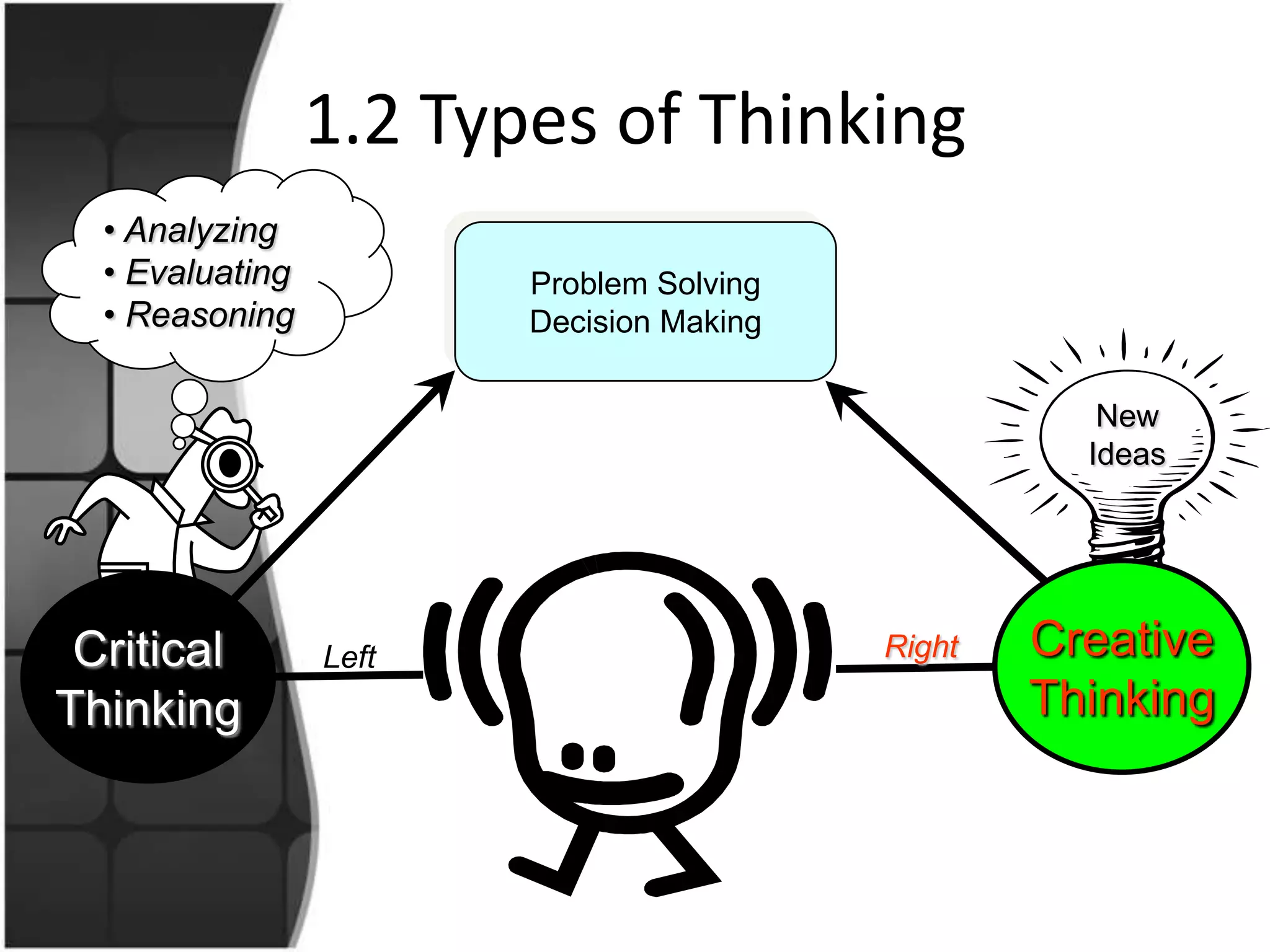
1.2 Types of Thinking Analyzing
 Evaluating
ReasoningNewIdeasCriticalThinkingCreativeThinkingProblem SolvingDecision MakingRightLeft
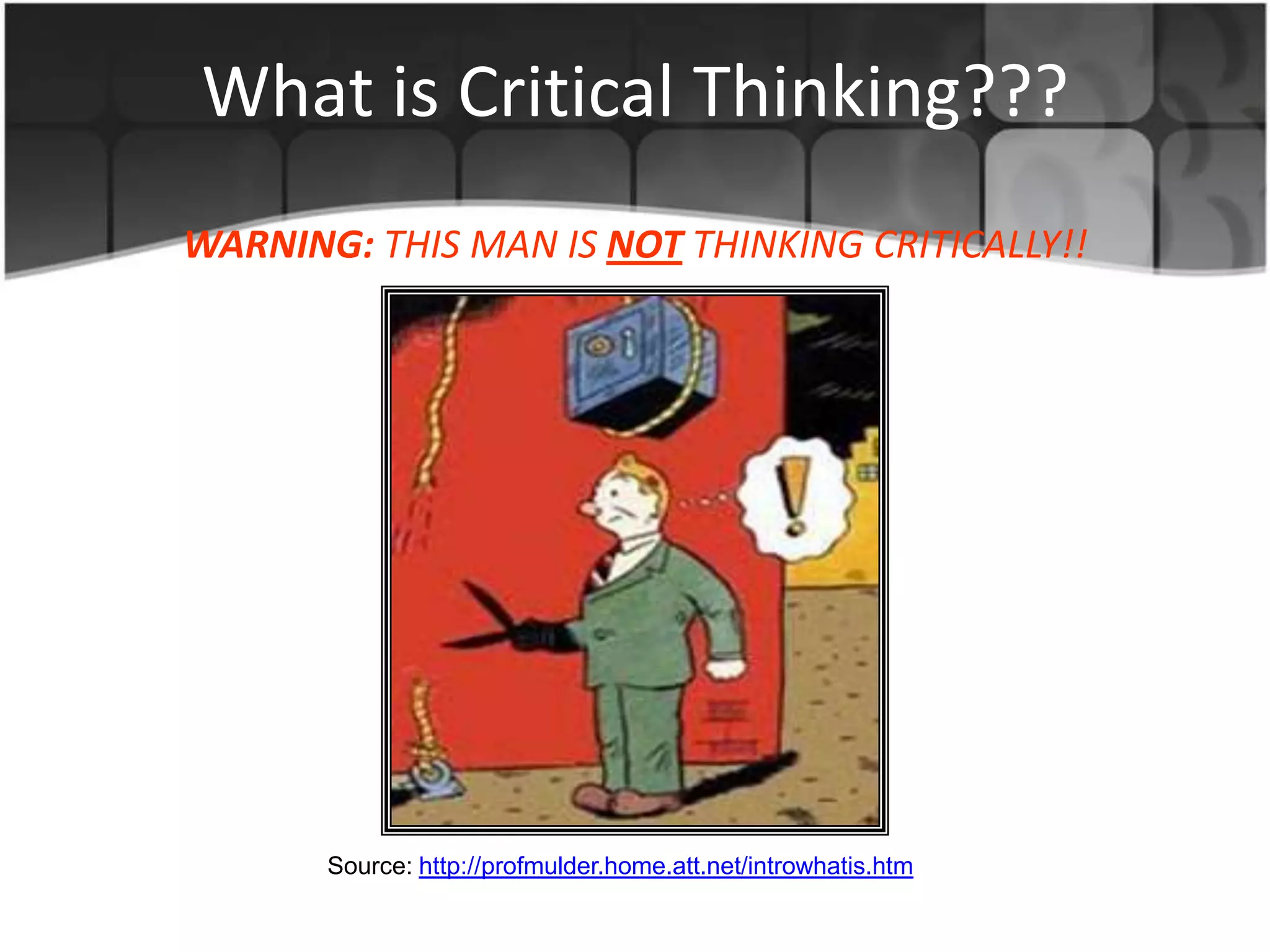
What is Critical Thinking???WARNING: THIS MAN IS NOT THINKING CRITICALLY!!Source: http://profmulder.home.att.net/introwhatis.htm
Activity:  “Don’t Be A Lame Brain”
Critical Thinking – QUICK Overview
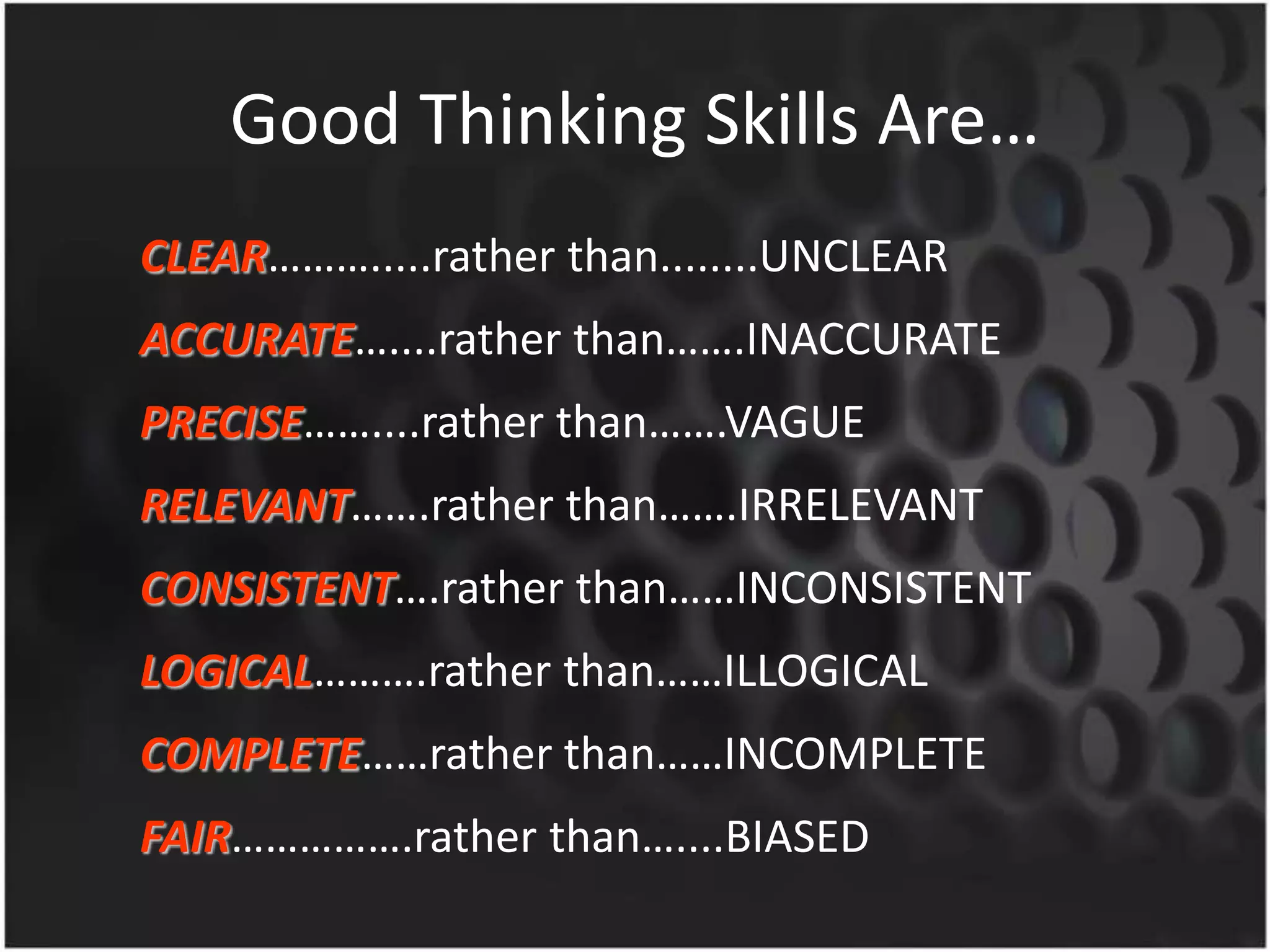
Good ThinkingSkills Are…CLEAR……….....rather than........UNCLEARACCURATE…....rather than…….INACCURATEPRECISE……....rather than…….VAGUERELEVANT…….rather than…….IRRELEVANTCONSISTENT….rather than……INCONSISTENTLOGICAL……….rather than……ILLOGICALCOMPLETE……rather than……INCOMPLETEFAIR…………….rather than…....BIASED
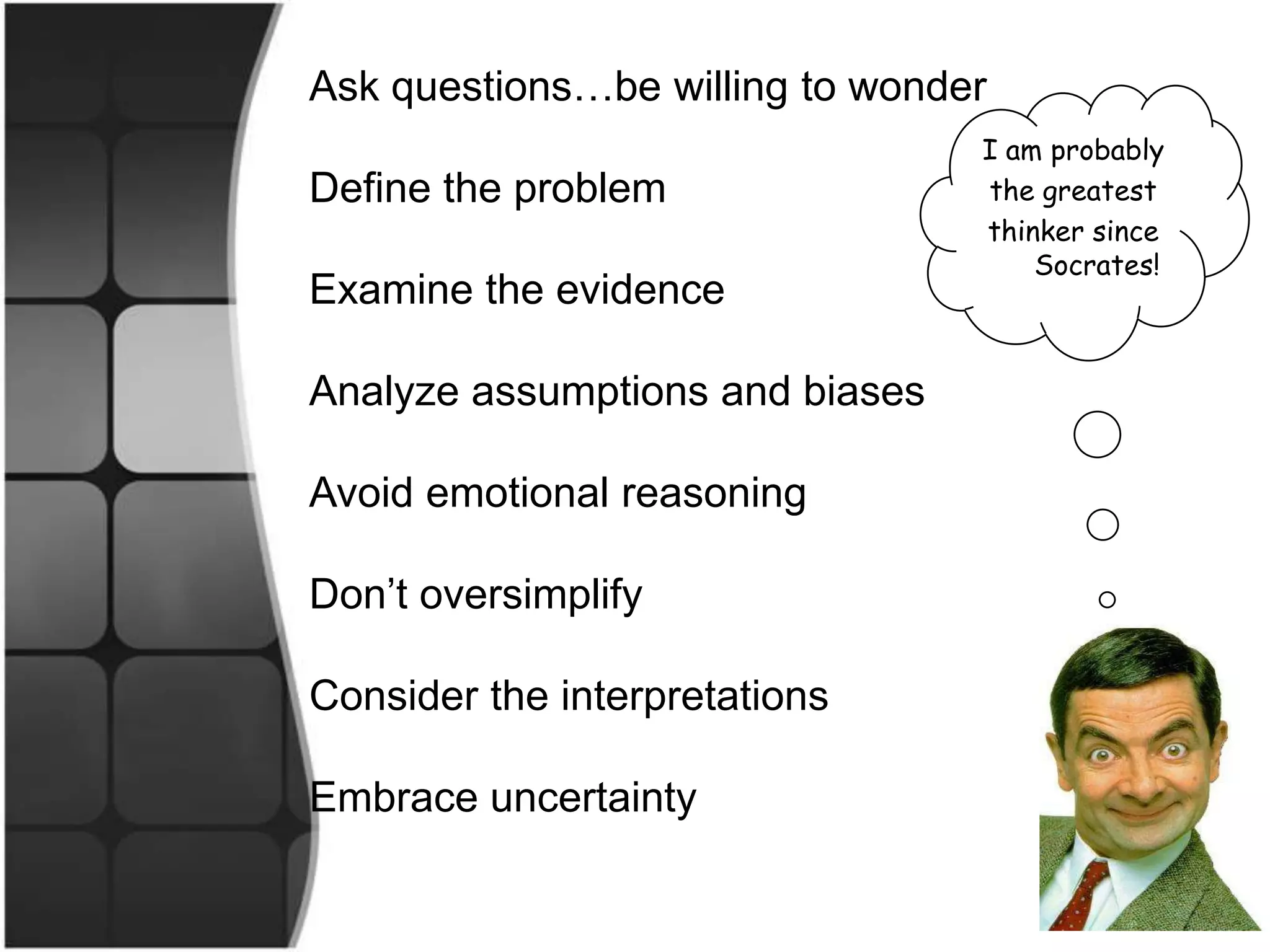
Ask questions…be willing to wonderDefine the problemExamine the evidenceAnalyze assumptions and biasesAvoid emotional reasoningDon’t oversimplifyConsider the interpretationsEmbrace uncertaintyI am probablythe greatestthinker since Socrates!
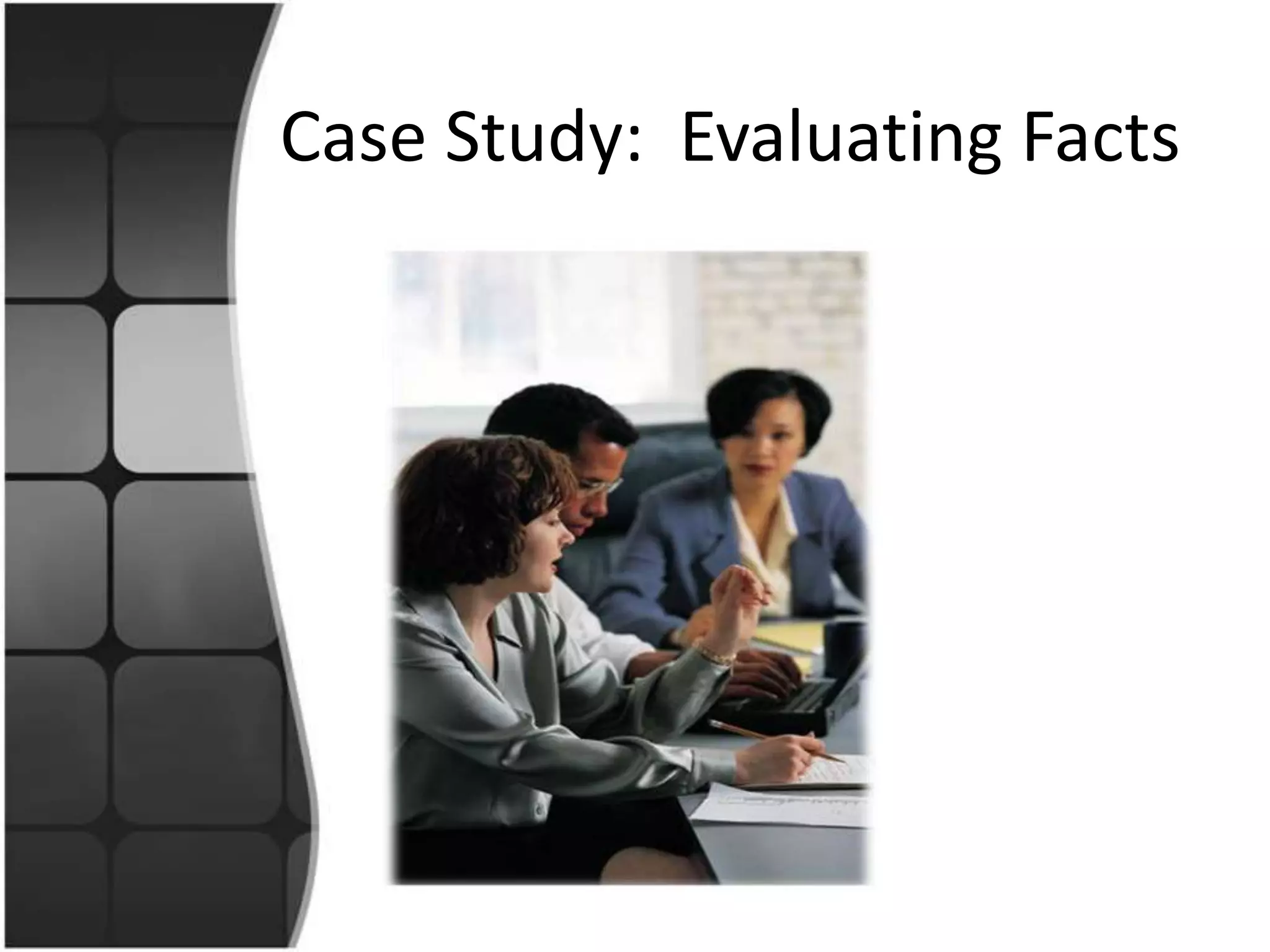
Case Study:  Evaluating Facts
Let’s take a break…10 Minutes
Communication SkillsDefinition:  Communication skills is the set of skills that enables a person to convey information so that it is received and understood.
Communication NotesBe aware of all three parts of the messages you send:• Words• Tone• Body Language
Clarifying and ConfirmingClarify :	You are seeking information 		to help you understand what 		the speaker is saying and/or 		why he or she is saying it.
Clarifying and ConfirmingConfirm :	You are stating your understanding of what 				someone is saying and why 	he or she is saying it.	Note:  Your confirmation  is only successful 			when the other person agrees that 			you’ve understood them.
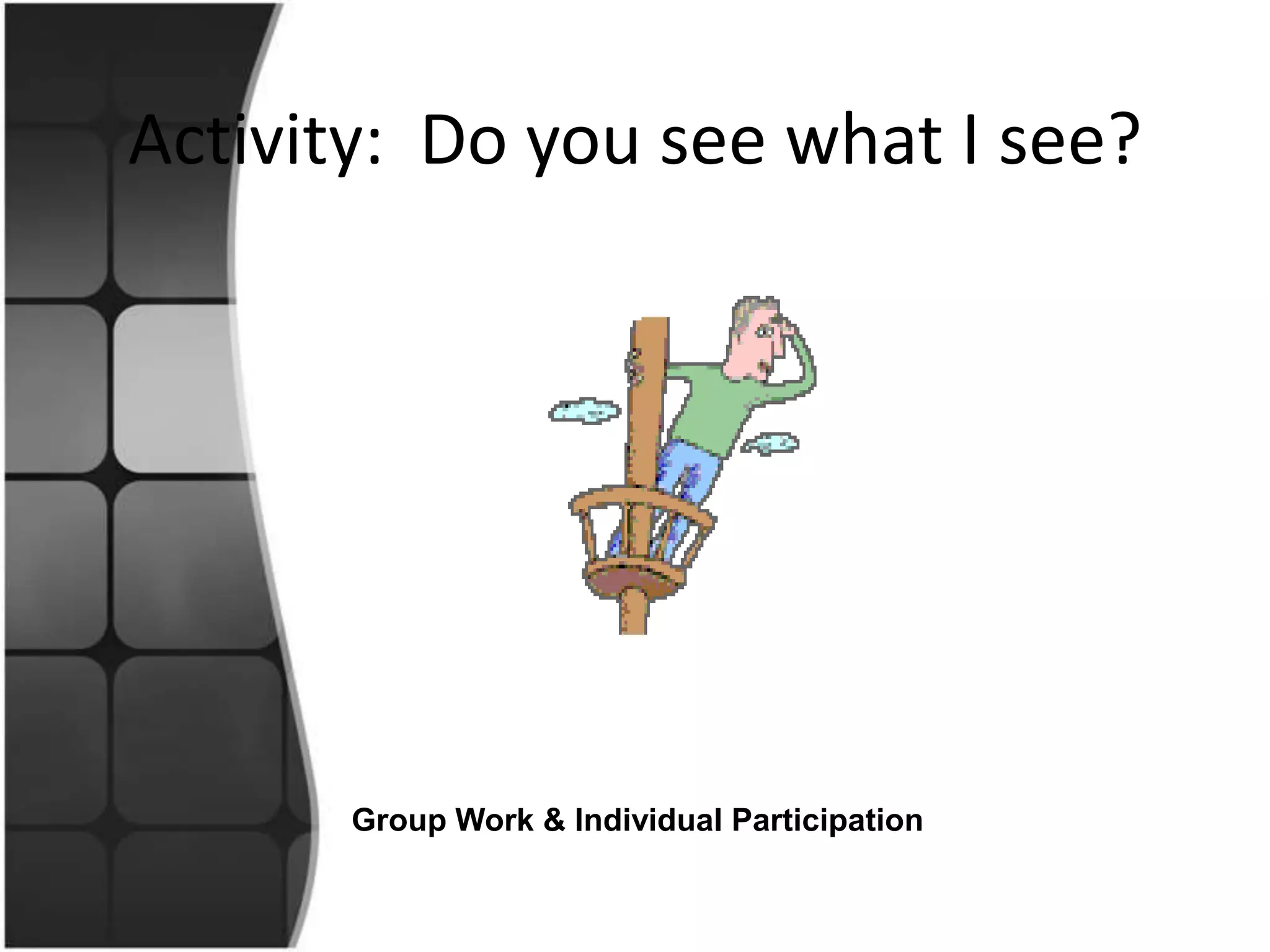
Activity:  Do you see what I see?	Group Work & Individual Participation
Workplace Communication

Critical thinking & communication skills rev5.24.10

  • 1.
    Leadership 101Modules Oneand TwoCritical Thinking & Communication Skills
  • 2.
    Learning ObjectivesDefine criticalthinking and effective communication skillsIntegrate skills into everyday decision-making and workplace interactionsBe able to distinguish between fact and opinionExhibit excellent interpersonal communication ability
  • 3.
    1.2 Types ofThinking Analyzing
  • 4.
  • 5.
  • 6.
    What is CriticalThinking???WARNING: THIS MAN IS NOT THINKING CRITICALLY!!Source: http://profmulder.home.att.net/introwhatis.htm
  • 7.
    Activity: “Don’tBe A Lame Brain”
  • 8.
    Critical Thinking –QUICK Overview
  • 9.
    Good ThinkingSkills Are…CLEAR……….....ratherthan........UNCLEARACCURATE…....rather than…….INACCURATEPRECISE……....rather than…….VAGUERELEVANT…….rather than…….IRRELEVANTCONSISTENT….rather than……INCONSISTENTLOGICAL……….rather than……ILLOGICALCOMPLETE……rather than……INCOMPLETEFAIR…………….rather than…....BIASED
  • 10.
    Ask questions…be willingto wonderDefine the problemExamine the evidenceAnalyze assumptions and biasesAvoid emotional reasoningDon’t oversimplifyConsider the interpretationsEmbrace uncertaintyI am probablythe greatestthinker since Socrates!
  • 11.
    Case Study: Evaluating Facts
  • 12.
    Let’s take abreak…10 Minutes
  • 13.
    Communication SkillsDefinition: Communication skills is the set of skills that enables a person to convey information so that it is received and understood.
  • 14.
    Communication NotesBe awareof all three parts of the messages you send:• Words• Tone• Body Language
  • 15.
    Clarifying and ConfirmingClarify: You are seeking information to help you understand what the speaker is saying and/or why he or she is saying it.
  • 16.
    Clarifying and ConfirmingConfirm: You are stating your understanding of what someone is saying and why he or she is saying it. Note: Your confirmation is only successful when the other person agrees that you’ve understood them.
  • 17.
    Activity: Doyou see what I see? Group Work & Individual Participation
  • 18.
  • 19.
    Next Class…People &Resource Management June 28-29, 2010
  • 20.
    RESOURCESAtwood, Christee. “ManagerSkills Training” ASTD Press, VA 2008. Bartholomew, R.E and Radford, B. “Hoaxes, Myths and Manias: Why We Need Critical Thinking.” Prometheus Books, NY 2003.Decker, Bert. “Communication Skills for Leaders: Delivering a Clear Message” 3rd edition. Thomson Course Technology, MA 2006.Gurchiek, Kathy. “Motivating Innovation” pp.31-35. HR Magazine, February 2009.“Critical Thinking Skills: Success in 20 Minutes a Day.” Learning Express, NY 2010.www.criticalthinking.com; www.youtube.com; www.bnet.com; www.astd.org; www.shrm.org

Editor's Notes

  • #16 Each group of six will pull 2 cards to use during group discussions; communication feedback scenarios will be given to use in conjunction (interpersonal communication booklet) – Sandy & Laura; Terry & Pat; Lee & Mgr.