Grade 7 Science
Suggested Guide for Discussion (Remedial Lesson)
MA. RACHEL B. ESPINO
Buhatan National High School
Purok Marcos, Buhatan, Sorsogon City
 Land breeze and sea breeze are two breezes
occurring along coastal areas or areas with
adjacent large water bodies.
 Water and land have different heating
abilities.Water takes a bit more time to warm
up and is able to retain the heat longer than
land does.This phenomena can be explained
as follows:
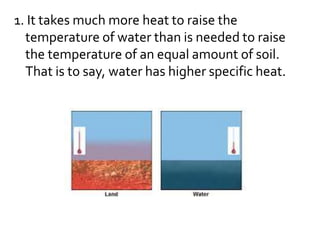
1. It takes much more heat to raise the
temperature of water than is needed to raise
the temperature of an equal amount of soil.
That is to say, water has higher specific heat.
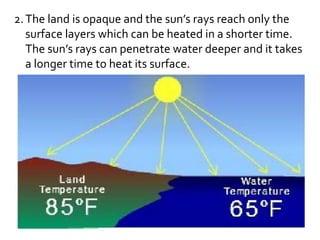
2.The land is opaque and the sun’s rays reach only the
surface layers which can be heated in a shorter time.
The sun’s rays can penetrate water deeper and it takes
a longer time to heat its surface.
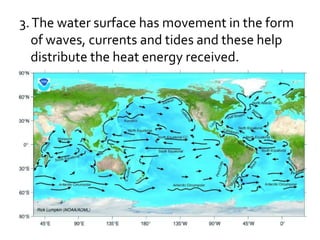
3.The water surface has movement in the form
of waves, currents and tides and these help
distribute the heat energy received.
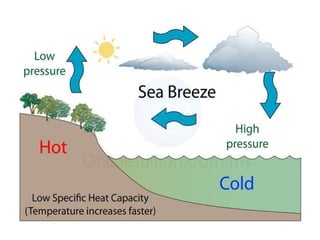
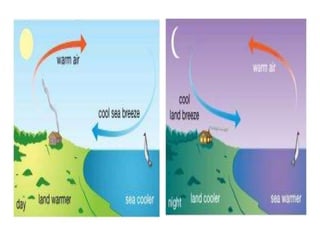
 During the day, when the sun is up, the land
heats up very quickly and the air above it
warms up a out more than air over the water.
The warm air over the land is less dense and
begins to rise. Low pressure is created.
 The air pressure over the water is higher with
cold dense air which moves to occupy the
space created over the land.The cool air that
comes along is called a sea breeze.
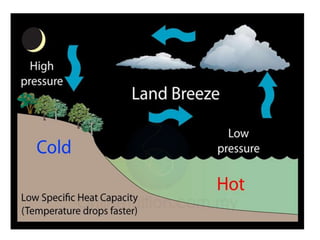
 During the night, the reverse happens.The
land quickly loses its heat while the water
retains its warmth.This means the air over
the water is warmer, less dense and begins to
rise. Low pressure is created over the water.
Cold and dense air over the land begins to
move to the water surface to replace the
warmer rising air.The cool breeze from the
land is called a land breeze.
 Many people think that monsoons are rains.
They are not. Monsoons are wind systems,
but these winds usually brings abundant
rainfall to the country.The prevailing wind
systems in our country are affected by our
proximity to large bodies of land and water.
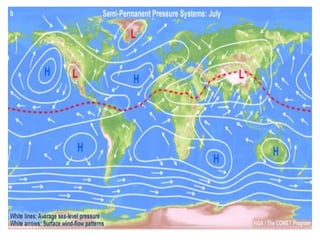
 Earlier, we learned that the land and water
surfaces differ in their rate of heating and
cooling. Land heats and cools faster than
water, this is particularly evident in extensive
surfaces. Continents heat and cool faster than
oceans. As a result a center of low pressure
develops over the continent while high
pressure develops over the adjacent ocean.
 These differences in temperature and
pressure between continents and oceans
brought about by changes in the seasons
develop wind systems known as seasonal
winds or monsoons.
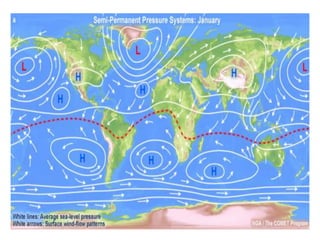
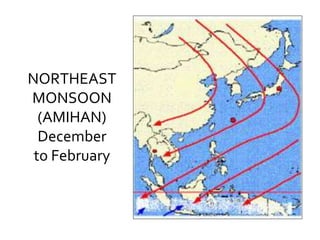
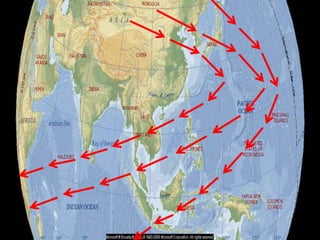
 During the colder months in the Northern
Hemisphere, a high pressure area develops
over India and Southern Siberia in winter
because of the colder air over them.The mass
of cold air then moves toward the Philippines
from a north-easterly direction and the air
mass is called the Northeast Monsoon or
Amihan.This prevails the cold morning
experienced in the country from December to
February.
NORTHEAST
MONSOON
(AMIHAN)
December
to February
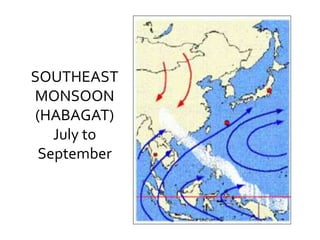
 During the summer in the Northern
Hemisphere, the Asian continent becomes
warmer than the oceans surrounding it. A
cold air mass develops over the Pacific ocean
and begins to move toward the Asian
continent.This forms the Southwest
Monsoon or habagat which prevails over the
Philippines in the months of July, August and
September.
SOUTHEAST
MONSOON
(HABAGAT)
July to
September
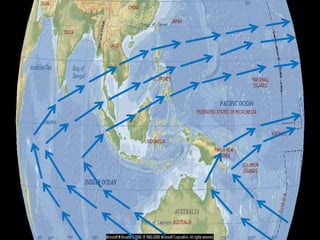
 The trade winds which are the prevailing
winds in the tropics likewise affect the
Philippines during the rest of the year and
whenever the Northeast monsoon and the
Southwest monsoon weaken.
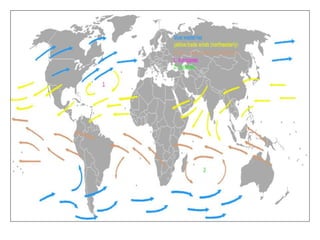
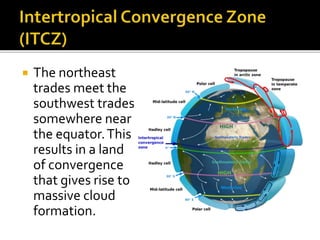
 The northeast
trades meet the
southwest trades
somewhere near
the equator.This
results in a land
of convergence
that gives rise to
massive cloud
formation.
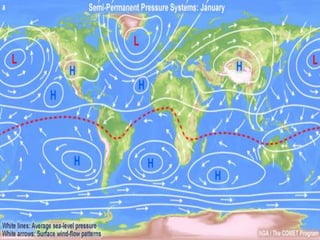
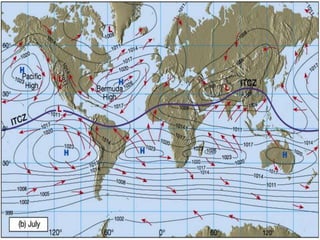
 The Intertropical Convergence Zone or ITCZ
is the place where winds in the tropics meet
or converge, this happens when the air from
the north of the equator and air from south of
the equator moves toward the place where
warm air is rising.Where ITCZ forms, there is
an increased probability of rainfall and bad
weather. Most tropical cyclones in the
Philippines originate as weather disturbances
embedded within the ITCZ.
 Example, during the summer months in the
Northern hemisphere, the ITCZ forms just
north of the Philippines.This also coincides
with the time of the southwest monsoon.
Thus it is not surprising that we experience a
lot of rain and bad weather during this time
up to around November.
Common atmospheric phenomena

Common atmospheric phenomena

  • 1.
    Grade 7 Science SuggestedGuide for Discussion (Remedial Lesson) MA. RACHEL B. ESPINO Buhatan National High School Purok Marcos, Buhatan, Sorsogon City
  • 2.
     Land breezeand sea breeze are two breezes occurring along coastal areas or areas with adjacent large water bodies.
  • 3.
     Water andland have different heating abilities.Water takes a bit more time to warm up and is able to retain the heat longer than land does.This phenomena can be explained as follows:
  • 4.
    1. It takesmuch more heat to raise the temperature of water than is needed to raise the temperature of an equal amount of soil. That is to say, water has higher specific heat.
  • 5.
    2.The land isopaque and the sun’s rays reach only the surface layers which can be heated in a shorter time. The sun’s rays can penetrate water deeper and it takes a longer time to heat its surface.
  • 6.
    3.The water surfacehas movement in the form of waves, currents and tides and these help distribute the heat energy received.
  • 7.
     During theday, when the sun is up, the land heats up very quickly and the air above it warms up a out more than air over the water. The warm air over the land is less dense and begins to rise. Low pressure is created.  The air pressure over the water is higher with cold dense air which moves to occupy the space created over the land.The cool air that comes along is called a sea breeze.
  • 9.
     During thenight, the reverse happens.The land quickly loses its heat while the water retains its warmth.This means the air over the water is warmer, less dense and begins to rise. Low pressure is created over the water. Cold and dense air over the land begins to move to the water surface to replace the warmer rising air.The cool breeze from the land is called a land breeze.
  • 12.
     Many peoplethink that monsoons are rains. They are not. Monsoons are wind systems, but these winds usually brings abundant rainfall to the country.The prevailing wind systems in our country are affected by our proximity to large bodies of land and water.
  • 13.
     Earlier, welearned that the land and water surfaces differ in their rate of heating and cooling. Land heats and cools faster than water, this is particularly evident in extensive surfaces. Continents heat and cool faster than oceans. As a result a center of low pressure develops over the continent while high pressure develops over the adjacent ocean.
  • 14.
     These differencesin temperature and pressure between continents and oceans brought about by changes in the seasons develop wind systems known as seasonal winds or monsoons.
  • 17.
     During thecolder months in the Northern Hemisphere, a high pressure area develops over India and Southern Siberia in winter because of the colder air over them.The mass of cold air then moves toward the Philippines from a north-easterly direction and the air mass is called the Northeast Monsoon or Amihan.This prevails the cold morning experienced in the country from December to February.
  • 18.
  • 20.
     During thesummer in the Northern Hemisphere, the Asian continent becomes warmer than the oceans surrounding it. A cold air mass develops over the Pacific ocean and begins to move toward the Asian continent.This forms the Southwest Monsoon or habagat which prevails over the Philippines in the months of July, August and September.
  • 21.
  • 23.
     The tradewinds which are the prevailing winds in the tropics likewise affect the Philippines during the rest of the year and whenever the Northeast monsoon and the Southwest monsoon weaken.
  • 25.
     The northeast tradesmeet the southwest trades somewhere near the equator.This results in a land of convergence that gives rise to massive cloud formation.
  • 26.
     The IntertropicalConvergence Zone or ITCZ is the place where winds in the tropics meet or converge, this happens when the air from the north of the equator and air from south of the equator moves toward the place where warm air is rising.Where ITCZ forms, there is an increased probability of rainfall and bad weather. Most tropical cyclones in the Philippines originate as weather disturbances embedded within the ITCZ.
  • 28.
     Example, duringthe summer months in the Northern hemisphere, the ITCZ forms just north of the Philippines.This also coincides with the time of the southwest monsoon. Thus it is not surprising that we experience a lot of rain and bad weather during this time up to around November.

Editor's Notes

  • #7 The picture shows the world ocean current from wikipedia
  • #12 Pictures courtesy of Encyclopedia Britanicca 2010
  • #25 The teacher may ask the students to identify the direction of the wind and give their observations and use their answers as springboard for the next topic that is, on ITCZ
  • #26 The teacher is encourage to read articles about Corriolis effect and Global Air circulation in order to further understand how this (ITCZ) happen.
  • #27 Connect the lesson on air movement (i.e.: warm air rises, cold air replaces) and convection The teacher can also relate the location of the Philippines on Earth and the ITCZ
  • #29 Ask the student what is their idea why the ITCZ forms north of the Philippines during habagat. The answer lies in the next slide
  • #30 Locate the path of the wind system and relate it to the formation of ITCZ during habagat