UNIT 2
MODULE 2
Enhanced Science Grade 8
According to the
PHILIPPINE ATMOSPHERIC,
GEOPHYSICAL, AND
ASTRONOMICAL SERVICES
ADMINISTRATION (PAGASA),
about 20 tropical cyclones enter
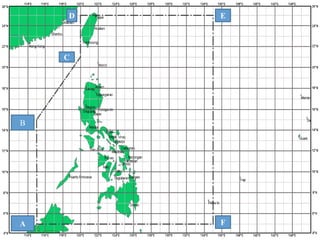
the Philippine Area of
Responsibility (PAR) each year.
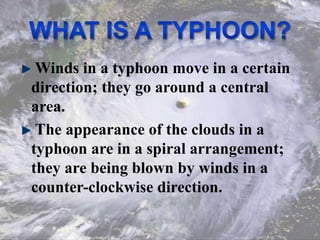
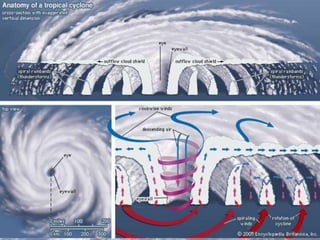
Winds in a typhoon move in a certain
direction; they go around a central
area.
The appearance of the clouds in a
typhoon are in a spiral arrangement;
they are being blown by winds in a
counter-clockwise direction.
is a system of thunderstorms that are
moving around a center.
As the winds intensify or weaken, the
category is upgraded or downgraded
accordingly.
*bagyo is called tropical cyclone by
scientists in the Philippines.
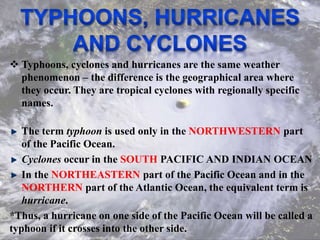
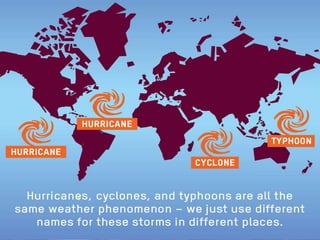
 Typhoons, cyclones and hurricanes are the same weather
phenomenon – the difference is the geographical area where
they occur. They are tropical cyclones with regionally specific
names.
The term typhoon is used only in the NORTHWESTERN part
of the Pacific Ocean.
Cyclones occur in the SOUTH PACIFIC AND INDIAN OCEAN
In the NORTHEASTERN part of the Pacific Ocean and in the
NORTHERN part of the Atlantic Ocean, the equivalent term is
hurricane.
*Thus, a hurricane on one side of the Pacific Ocean will be called a
typhoon if it crosses into the other side.
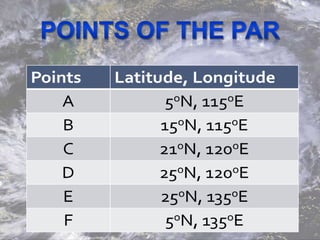
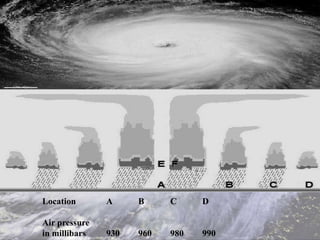
A
B
C
D E
F
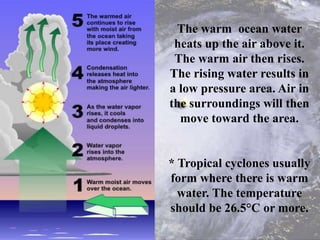
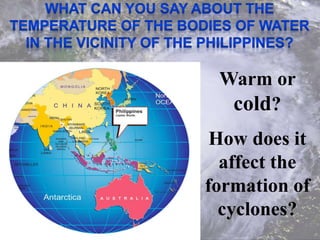
The warm ocean water
heats up the air above it.
The warm air then rises.
The rising water results in
a low pressure area. Air in
the surroundings will then
move toward the area.
* Tropical cyclones usually
form where there is warm
water. The temperature
should be 26.5°C or more.
Warm or
cold?
How does it
affect the
formation of
cyclones?
• nm
• nm
Location A B C D
Air pressure
in millibars 930 960 980 990
PUBLIC STORM
WARNING SIGNALS
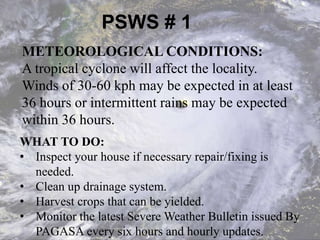
PSWS # 1
METEOROLOGICAL CONDITIONS:
A tropical cyclone will affect the locality.
Winds of 30-60 kph may be expected in at least
36 hours or intermittent rains may be expected
within 36 hours.
WHAT TO DO:
• Inspect your house if necessary repair/fixing is
needed.
• Clean up drainage system.
• Harvest crops that can be yielded.
• Monitor the latest Severe Weather Bulletin issued By
PAGASA every six hours and hourly updates.
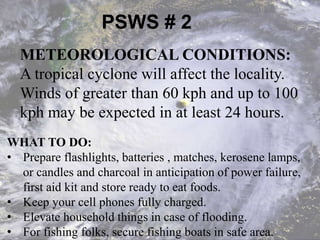
PSWS # 2
WHAT TO DO:
• Prepare flashlights, batteries , matches, kerosene lamps,
or candles and charcoal in anticipation of power failure,
first aid kit and store ready to eat foods.
• Keep your cell phones fully charged.
• Elevate household things in case of flooding.
• For fishing folks, secure fishing boats in safe area.
METEOROLOGICAL CONDITIONS:
A tropical cyclone will affect the locality.
Winds of greater than 60 kph and up to 100
kph may be expected in at least 24 hours.
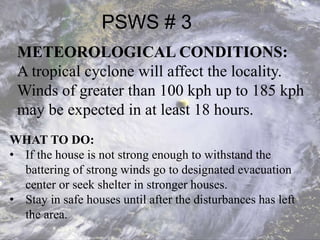
PSWS # 3
METEOROLOGICAL CONDITIONS:
A tropical cyclone will affect the locality.
Winds of greater than 100 kph up to 185 kph
may be expected in at least 18 hours.
WHAT TO DO:
• If the house is not strong enough to withstand the
battering of strong winds go to designated evacuation
center or seek shelter in stronger houses.
• Stay in safe houses until after the disturbances has left
the area.
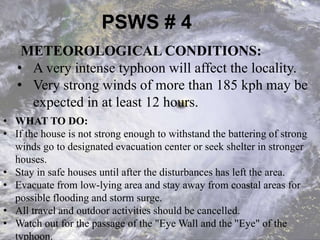
PSWS # 4
METEOROLOGICAL CONDITIONS:
• A very intense typhoon will affect the locality.
• Very strong winds of more than 185 kph may be
expected in at least 12 hours.
• WHAT TO DO:
• If the house is not strong enough to withstand the battering of strong
winds go to designated evacuation center or seek shelter in stronger
houses.
• Stay in safe houses until after the disturbances has left the area.
• Evacuate from low-lying area and stay away from coastal areas for
possible flooding and storm surge.
• All travel and outdoor activities should be cancelled.
• Watch out for the passage of the "Eye Wall and the "Eye" of the
typhoon.

Understanding Typhoon

  • 1.
    UNIT 2 MODULE 2 EnhancedScience Grade 8
  • 3.
    According to the PHILIPPINEATMOSPHERIC, GEOPHYSICAL, AND ASTRONOMICAL SERVICES ADMINISTRATION (PAGASA), about 20 tropical cyclones enter the Philippine Area of Responsibility (PAR) each year.
  • 5.
    Winds in atyphoon move in a certain direction; they go around a central area. The appearance of the clouds in a typhoon are in a spiral arrangement; they are being blown by winds in a counter-clockwise direction.
  • 6.
    is a systemof thunderstorms that are moving around a center. As the winds intensify or weaken, the category is upgraded or downgraded accordingly. *bagyo is called tropical cyclone by scientists in the Philippines.
  • 9.
     Typhoons, cyclonesand hurricanes are the same weather phenomenon – the difference is the geographical area where they occur. They are tropical cyclones with regionally specific names. The term typhoon is used only in the NORTHWESTERN part of the Pacific Ocean. Cyclones occur in the SOUTH PACIFIC AND INDIAN OCEAN In the NORTHEASTERN part of the Pacific Ocean and in the NORTHERN part of the Atlantic Ocean, the equivalent term is hurricane. *Thus, a hurricane on one side of the Pacific Ocean will be called a typhoon if it crosses into the other side.
  • 12.
  • 15.
    The warm oceanwater heats up the air above it. The warm air then rises. The rising water results in a low pressure area. Air in the surroundings will then move toward the area. * Tropical cyclones usually form where there is warm water. The temperature should be 26.5°C or more.
  • 16.
    Warm or cold? How doesit affect the formation of cyclones?
  • 19.
  • 20.
  • 21.
    Location A BC D Air pressure in millibars 930 960 980 990
  • 22.
  • 23.
    PSWS # 1 METEOROLOGICALCONDITIONS: A tropical cyclone will affect the locality. Winds of 30-60 kph may be expected in at least 36 hours or intermittent rains may be expected within 36 hours. WHAT TO DO: • Inspect your house if necessary repair/fixing is needed. • Clean up drainage system. • Harvest crops that can be yielded. • Monitor the latest Severe Weather Bulletin issued By PAGASA every six hours and hourly updates.
  • 24.
    PSWS # 2 WHATTO DO: • Prepare flashlights, batteries , matches, kerosene lamps, or candles and charcoal in anticipation of power failure, first aid kit and store ready to eat foods. • Keep your cell phones fully charged. • Elevate household things in case of flooding. • For fishing folks, secure fishing boats in safe area. METEOROLOGICAL CONDITIONS: A tropical cyclone will affect the locality. Winds of greater than 60 kph and up to 100 kph may be expected in at least 24 hours.
  • 25.
    PSWS # 3 METEOROLOGICALCONDITIONS: A tropical cyclone will affect the locality. Winds of greater than 100 kph up to 185 kph may be expected in at least 18 hours. WHAT TO DO: • If the house is not strong enough to withstand the battering of strong winds go to designated evacuation center or seek shelter in stronger houses. • Stay in safe houses until after the disturbances has left the area.
  • 26.
    PSWS # 4 METEOROLOGICALCONDITIONS: • A very intense typhoon will affect the locality. • Very strong winds of more than 185 kph may be expected in at least 12 hours. • WHAT TO DO: • If the house is not strong enough to withstand the battering of strong winds go to designated evacuation center or seek shelter in stronger houses. • Stay in safe houses until after the disturbances has left the area. • Evacuate from low-lying area and stay away from coastal areas for possible flooding and storm surge. • All travel and outdoor activities should be cancelled. • Watch out for the passage of the "Eye Wall and the "Eye" of the typhoon.

Editor's Notes

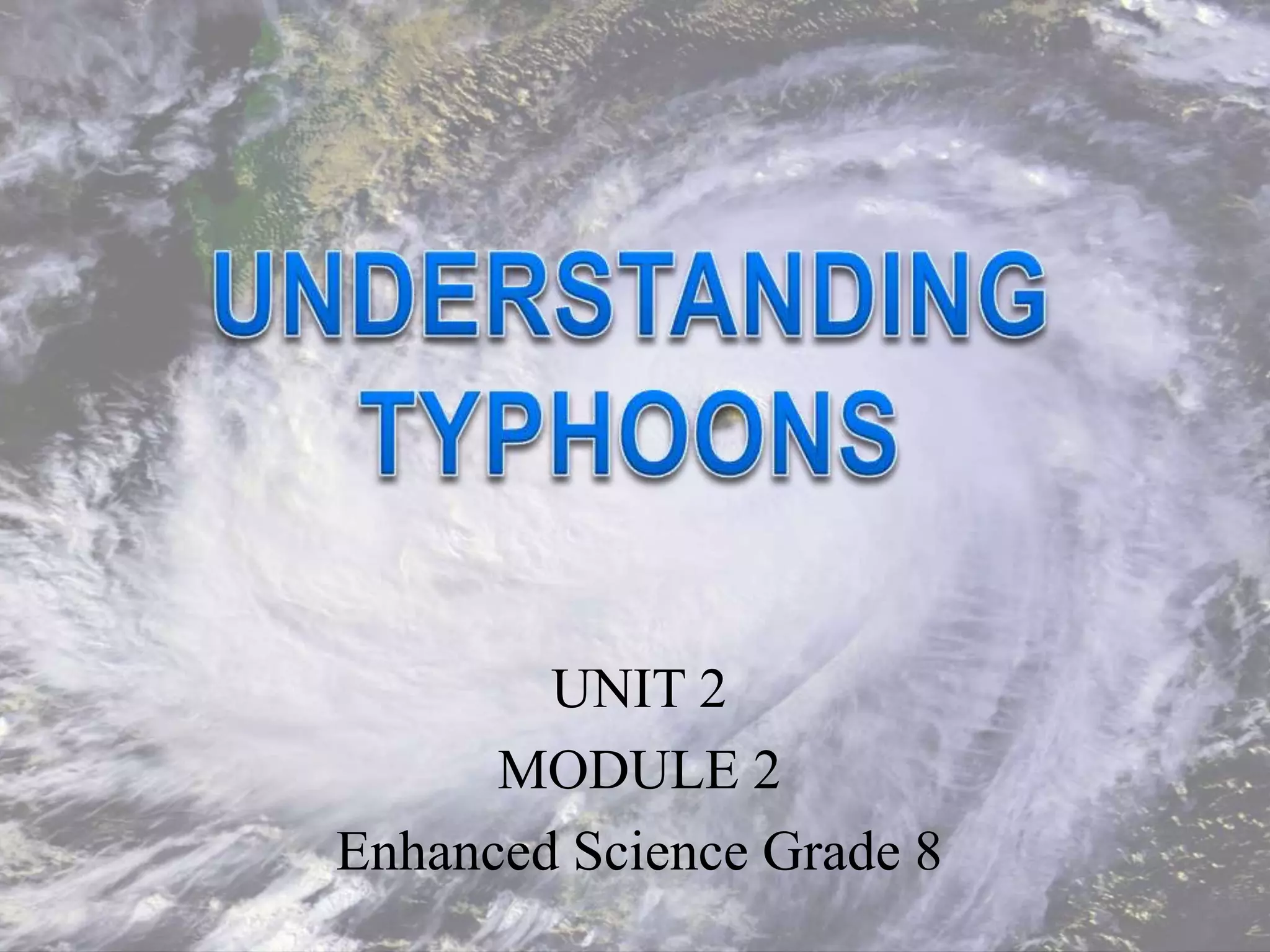
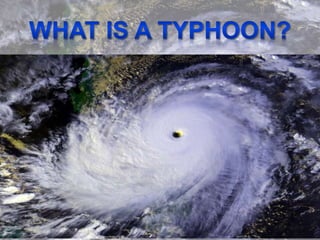
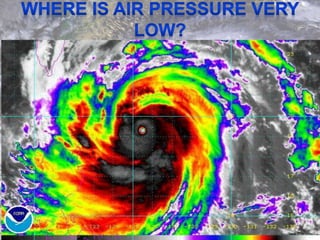
  • #5 A supertyphoon as seen from high above the Earth; at the center is the “eye” of the supertyphoon. Image by NASA Earth Observatory
  • #6 A supertyphoon as seen from high above the Earth; at the center is the “eye” of the supertyphoon. Image by NASA Earth Observatory
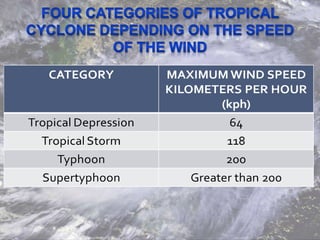
  • #8 The public uses the word bagyo for all types of tropical cyclones. But scientists have subdivided tropical cyclones into four categories depending on the speed of the wind.