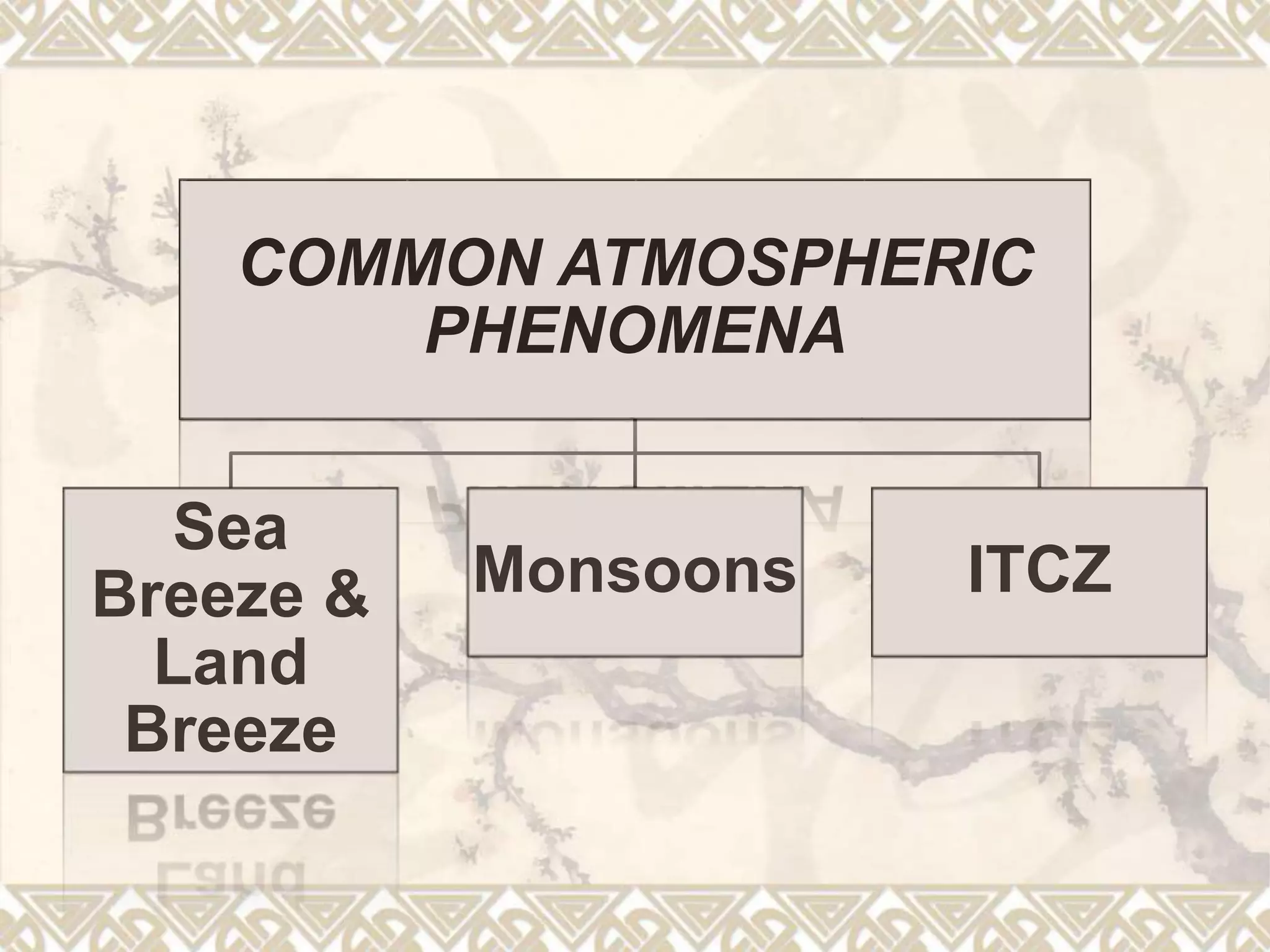
COMMON ATMOSPHERIC
PHENOMENA
Sea
Breeze &
Land
Breeze
Monsoons ITCZ
What makes the air move?
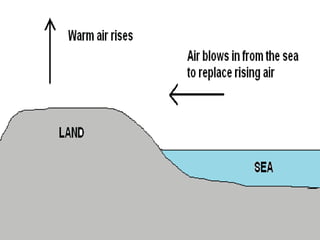
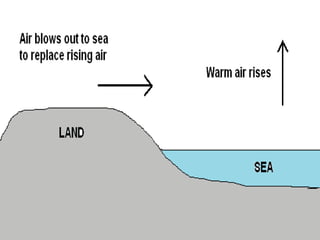
 When the air becomes warm, it
rises.
What will happen to the air in the
surrounding?
 It will move towards the place
where warm air is rising
Which warms up faster – the land
or water?
 The land heats up faster than
water.
Which cools down faster – the
land or water?
 Land lose heat faster the water in
the sea.
Sea Breeze and Land Breeze…
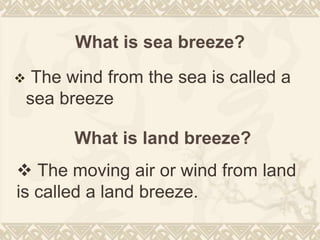
What is sea breeze?
 The wind from the sea is called a
sea breeze
What is land breeze?
 The moving air or wind from land
is called a land breeze.
Monsoons…
What is AIR
PRESSURE?
It weight of the
air above a
certain place.
Low Pressure Area
 Low Pressure Area is a place
where warm air is rising.
High Pressure Area
 High Pressure Area is a place
where cool air is sinking.
What are the two types of
monsoons?
1. Northeast Monsoon (Amihan):
 From October to March amihan
comes from the northeast and moves
towards the south.
 It passes over the Pacific Ocean
before it reaches the Philippines,
bringing rain to the eastern part of the
Philippines.
What are the two types of
monsoons?
2. Southwest Monsoon (Habagat):
 From July to September habagat
comes from the southwest and
moves towards the north.
 It passes over the Indian Ocean
and South China Sea before it arrives
in the country, bringing rain to the
western portion of the Philippines.
Intertropical Convergence
Zone…
What is Intertropical Convergence
Zone?
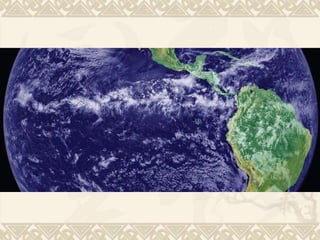
It is a place where winds in the
tropics meet, rise and form
clouds, resulting in
thunderstorms during certain
times of the year.
As warm air over equatorial
areas rises, the air in the
surroundings will move in. Air
from north of the equator and
south of the equator will then
meet or converge at the place
where warm air is rising.
ASSESSMENT!
1. What happens when air is heated?
a. It rises.
b. It stays in place.
c. It spreads in all directions.
d. It moves toward a lower
elevation.
2. Which warms up faster, land or
water?
a. Land
b. Water
c. Both warm up at the same rate.
d. Rate of warming varies;
depends on weather conditions.
3. What happens to the surrounding
air as warm air rises?
a. Moves in all directions
b. Moves to a higher altitude
c. Moves away from the rising air
d. Moves toward the place where
warm air rises
4. In what direction do winds blow?
a. From the northeast to the
southwest
b. From the southwest to the
northeast
c. From low pressure areas to high
pressure areas
d. From high-pressure areas to low-
pressure areas
5. Which of the following does NOT
describe the amihan?
a. Brings lots of rain
b. Brings cold weather
c. Comes around July to
September
d. Comes from the northeast and
moves southward
6. What is FALSE about ITCZ?
a. It results in thunderstorms.
b. It occurs in countries near the
equator.
c. It occurs in the Philippines all
year round.
d. It is a place where winds in the
tropics meet, rise, and form clouds.
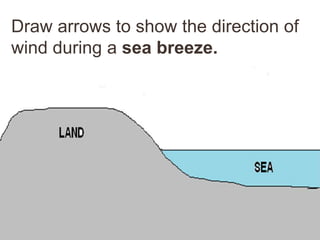
Draw arrows to show the direction of
wind during a sea breeze.
Draw arrows to show the direction of
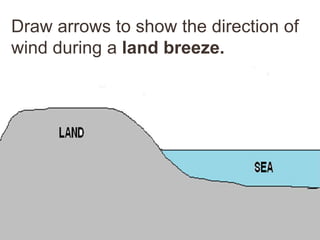
wind during a land breeze.

Common atmospheric phenomena

  • 1.
  • 2.
    What makes theair move?  When the air becomes warm, it rises. What will happen to the air in the surrounding?  It will move towards the place where warm air is rising
  • 3.
    Which warms upfaster – the land or water?  The land heats up faster than water. Which cools down faster – the land or water?  Land lose heat faster the water in the sea.
  • 4.
    Sea Breeze andLand Breeze…
  • 5.
    What is seabreeze?  The wind from the sea is called a sea breeze What is land breeze?  The moving air or wind from land is called a land breeze.
  • 8.
  • 9.
    What is AIR PRESSURE? Itweight of the air above a certain place.
  • 10.
    Low Pressure Area Low Pressure Area is a place where warm air is rising. High Pressure Area  High Pressure Area is a place where cool air is sinking.
  • 11.
    What are thetwo types of monsoons? 1. Northeast Monsoon (Amihan):  From October to March amihan comes from the northeast and moves towards the south.  It passes over the Pacific Ocean before it reaches the Philippines, bringing rain to the eastern part of the Philippines.
  • 12.
    What are thetwo types of monsoons? 2. Southwest Monsoon (Habagat):  From July to September habagat comes from the southwest and moves towards the north.  It passes over the Indian Ocean and South China Sea before it arrives in the country, bringing rain to the western portion of the Philippines.
  • 13.
  • 14.
    What is IntertropicalConvergence Zone? It is a place where winds in the tropics meet, rise and form clouds, resulting in thunderstorms during certain times of the year.
  • 16.
    As warm airover equatorial areas rises, the air in the surroundings will move in. Air from north of the equator and south of the equator will then meet or converge at the place where warm air is rising.
  • 17.
  • 18.
    1. What happenswhen air is heated? a. It rises. b. It stays in place. c. It spreads in all directions. d. It moves toward a lower elevation.
  • 19.
    2. Which warmsup faster, land or water? a. Land b. Water c. Both warm up at the same rate. d. Rate of warming varies; depends on weather conditions.
  • 20.
    3. What happensto the surrounding air as warm air rises? a. Moves in all directions b. Moves to a higher altitude c. Moves away from the rising air d. Moves toward the place where warm air rises
  • 21.
    4. In whatdirection do winds blow? a. From the northeast to the southwest b. From the southwest to the northeast c. From low pressure areas to high pressure areas d. From high-pressure areas to low- pressure areas
  • 22.
    5. Which ofthe following does NOT describe the amihan? a. Brings lots of rain b. Brings cold weather c. Comes around July to September d. Comes from the northeast and moves southward
  • 23.
    6. What isFALSE about ITCZ? a. It results in thunderstorms. b. It occurs in countries near the equator. c. It occurs in the Philippines all year round. d. It is a place where winds in the tropics meet, rise, and form clouds.
  • 24.
    Draw arrows toshow the direction of wind during a sea breeze.
  • 25.
    Draw arrows toshow the direction of wind during a land breeze.

Editor's Notes

  • #10 The air pressure is not the same everywhere
  • #11 In places where warm air is rising, the air pressure is low. Are there any questions about air pressure? Now we can discuss about monsoons…
  • #12 Why do they bring rains? Both the amihan and habagat bring rain to the Philippines. This is because the winds pass over bodies of water which supply a lot of moisture. The amihan passes over the Pacific Ocean before it reaches the Philippines, bringing rain to the eastern part of the Philippines. The habagat passes over the Indian Ocean and South China Sea (West Philippine Sea) before it arrives in our country, bringing rain to the western portion of the country. Why does the wind move from north to south? Because there is a low-pressure area in the south (near Australia) at that time. The northeast monsoon or amihan is cold because it comes from cold areas, such as Siberia and Mongolia, in the Asian continent.
  • #14 What happens when air is heated? a. It rises. b. It stays in place. c. It spreads in all directions. d. It moves toward a lower elevation. 15. Which warms up faster, land or water? a. Land b. Water c. Both warm up at the same rate. d. Rate of warming varies; depends on weather conditions.
  • #15 As warm air over equatorial areas rises, the air in the surroundings will move in. Air from north of the equator and south of the equator will then meet or converge at the place where warm air is rising.
  • #24 Make a drawing showing the direction of wind during a sea breeze.