GRADE 7 
MODULE 2, QUARTER 3; LESSON 2.1 
Teacher’s Guide for Discussion 
MA. RACHEL B. ESPINO 
Teacher, Science 
Buhatan NHS, Sorsogon City
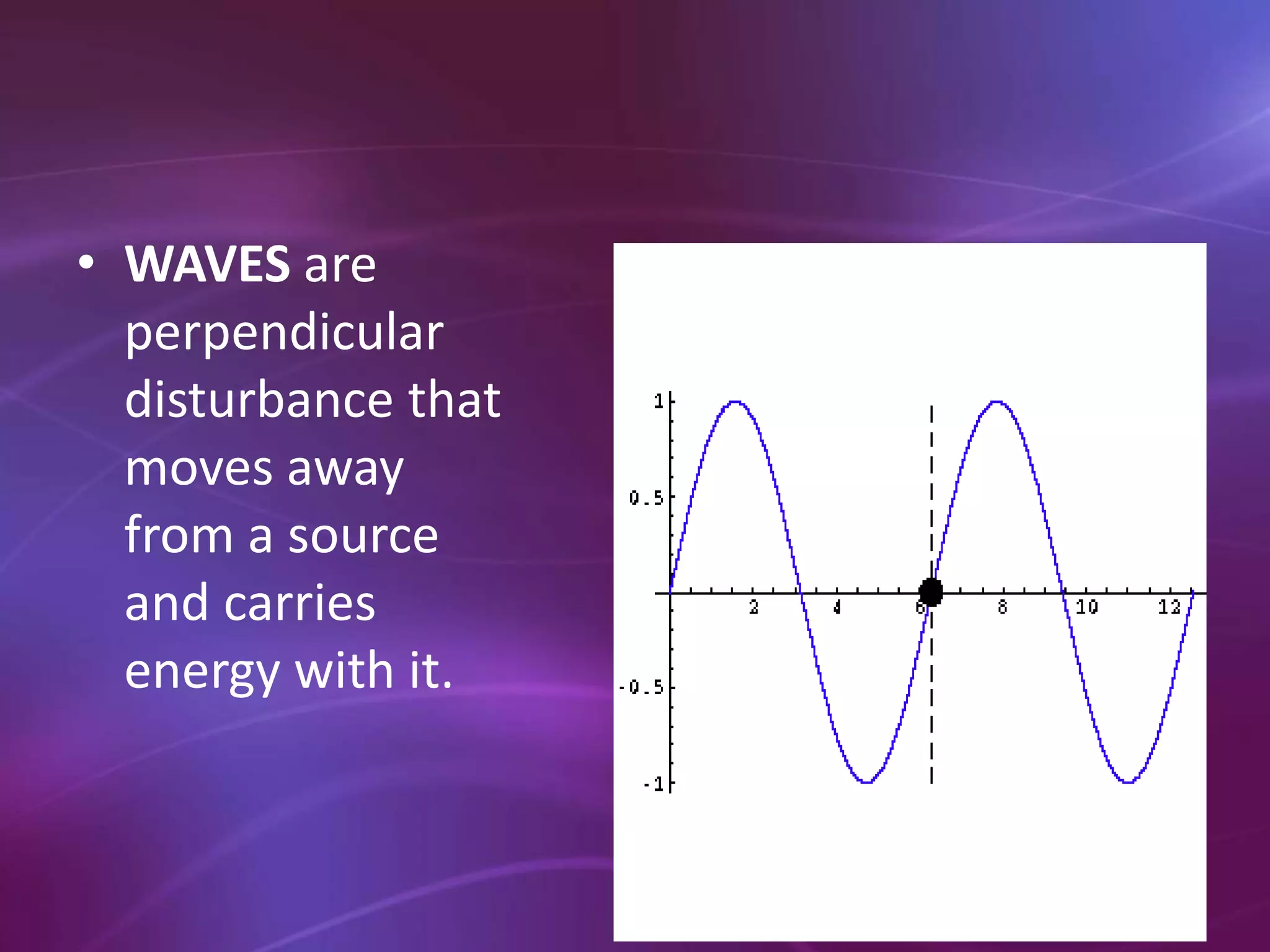
• WAVES are 
perpendicular 
disturbance that 
moves away 
from a source 
and carries 
energy with it.
1. A wave is a travelling disturbance. 
2. It carries energy from one phase to another. 
3. Vibration causes wave motion 
4. Waves travel through a medium
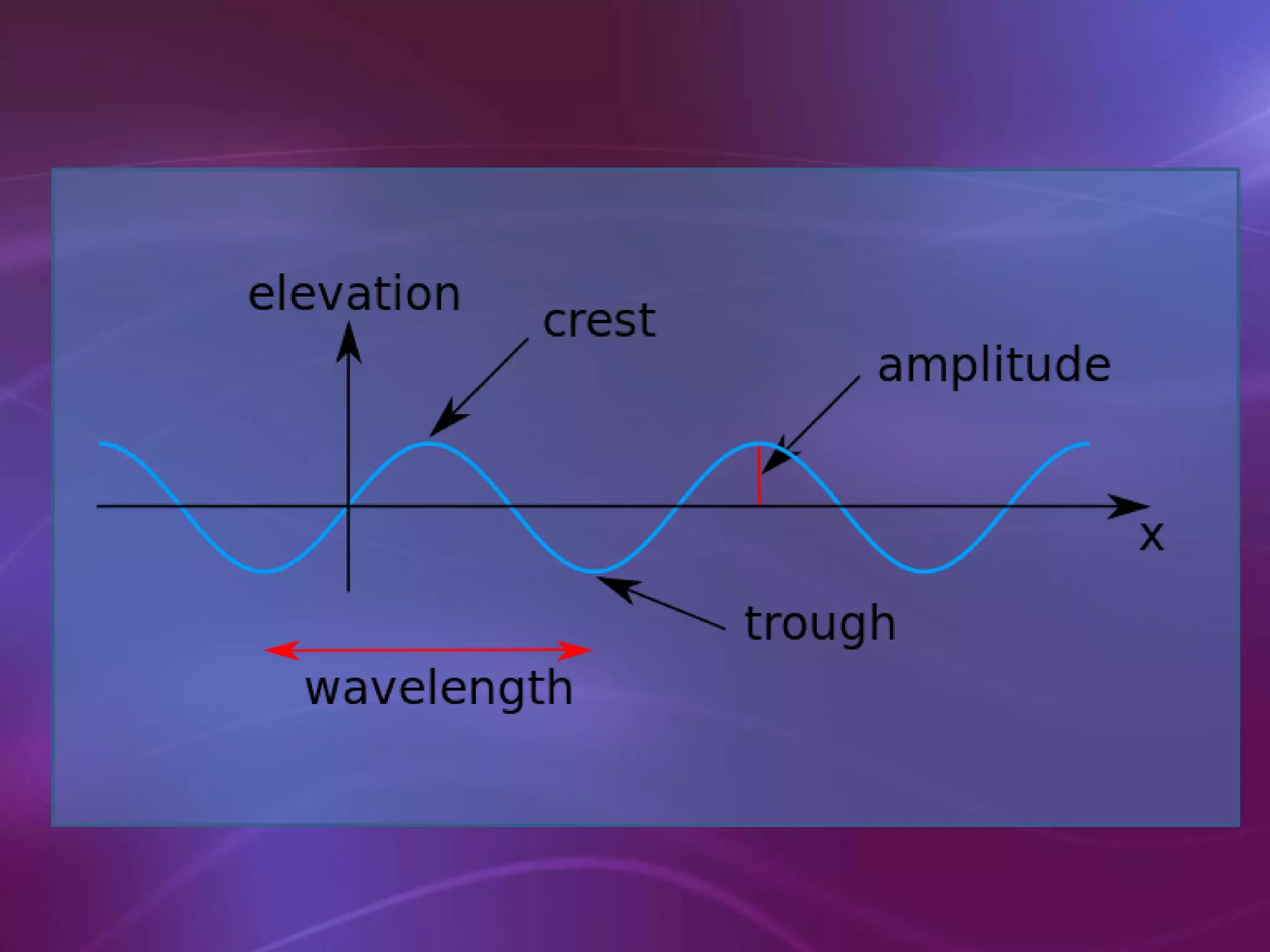
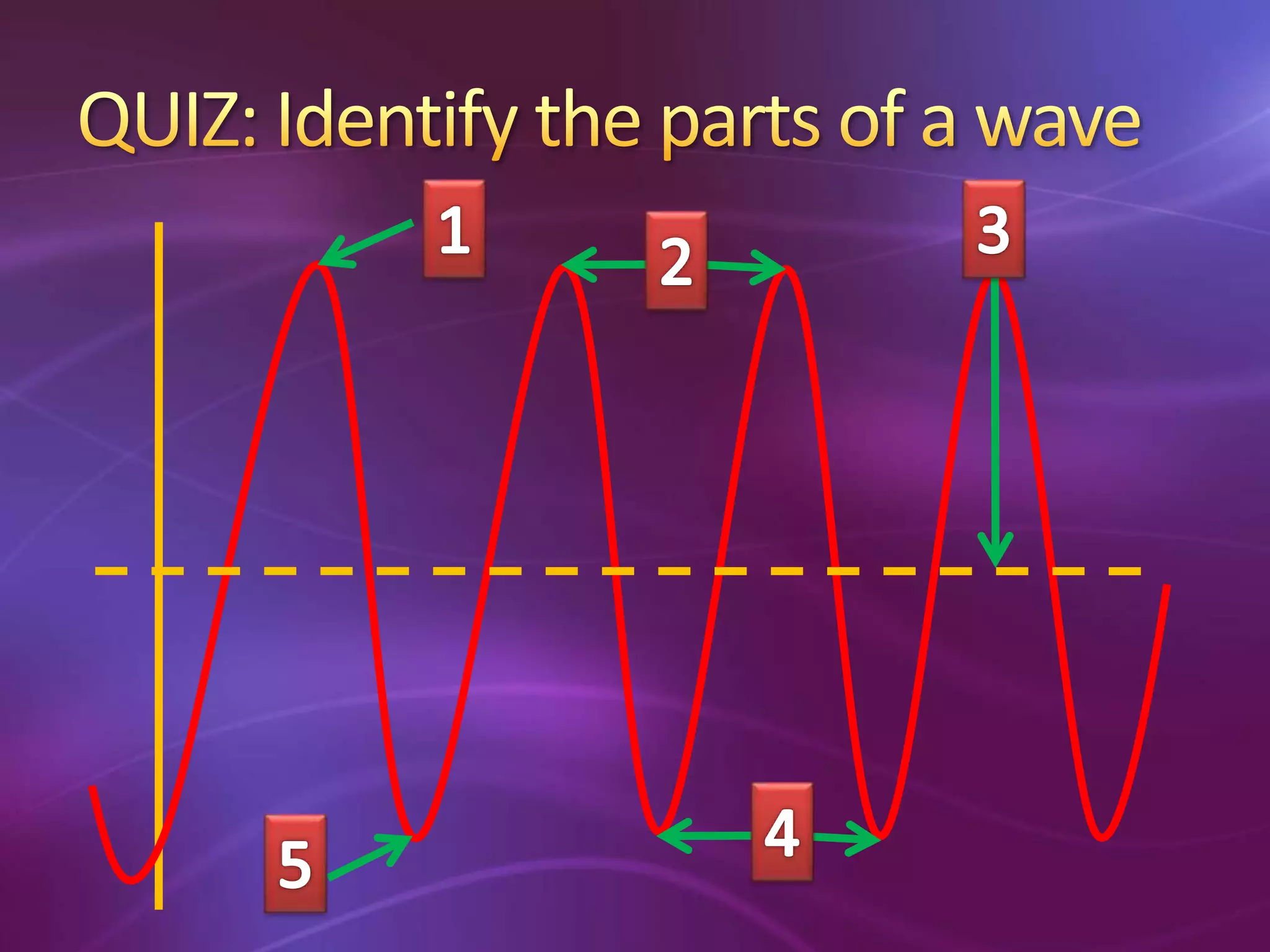
• The high points of waves are called CRESTS or 
PEAKS while the low points are called 
TROUGHS.
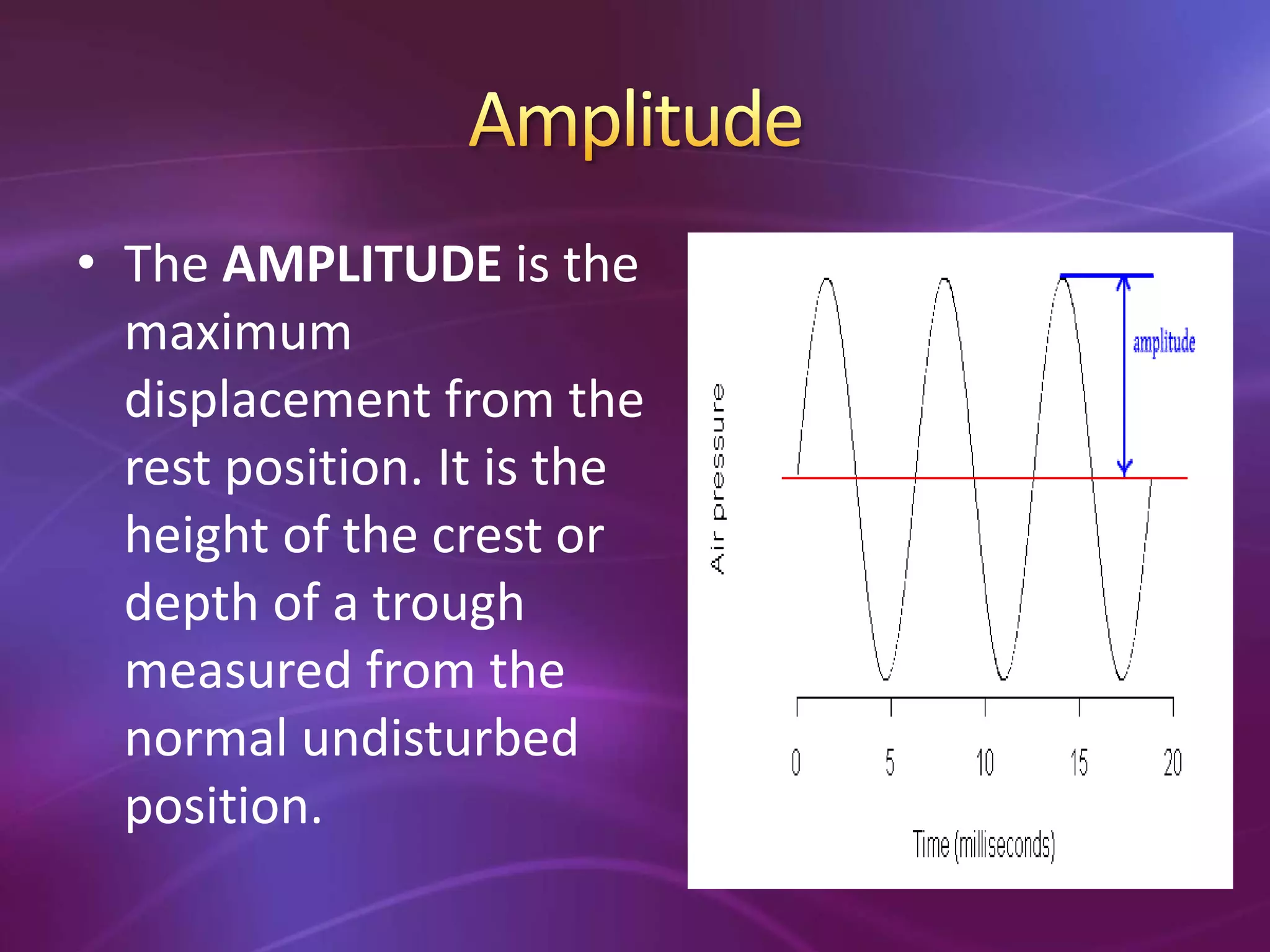
• The AMPLITUDE is the 
maximum 
displacement from the 
rest position. It is the 
height of the crest or 
depth of a trough 
measured from the 
normal undisturbed 
position.
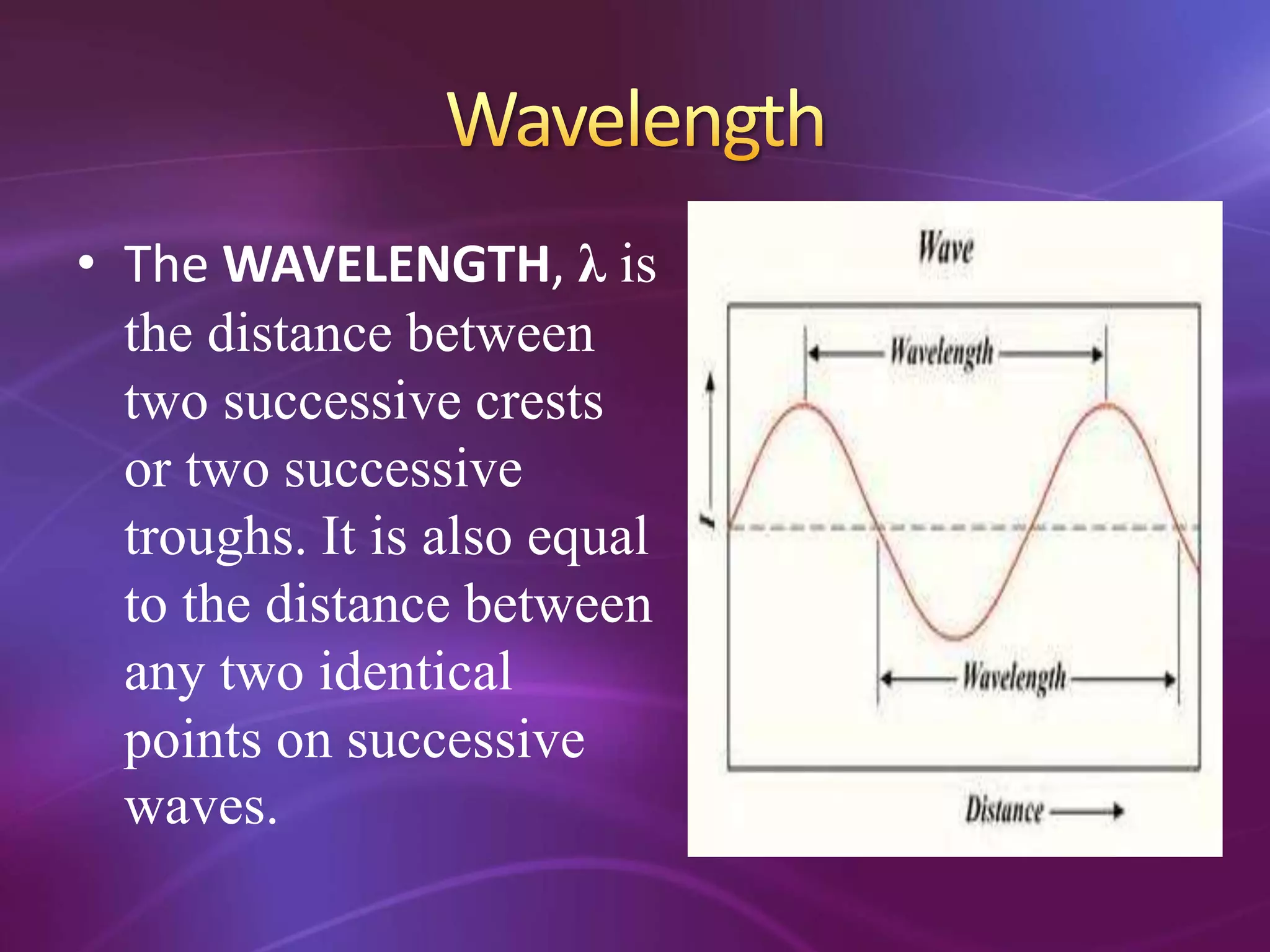
• The WAVELENGTH, λ is 
the distance between 
two successive crests 
or two successive 
troughs. It is also equal 
to the distance between 
any two identical 
points on successive 
waves.
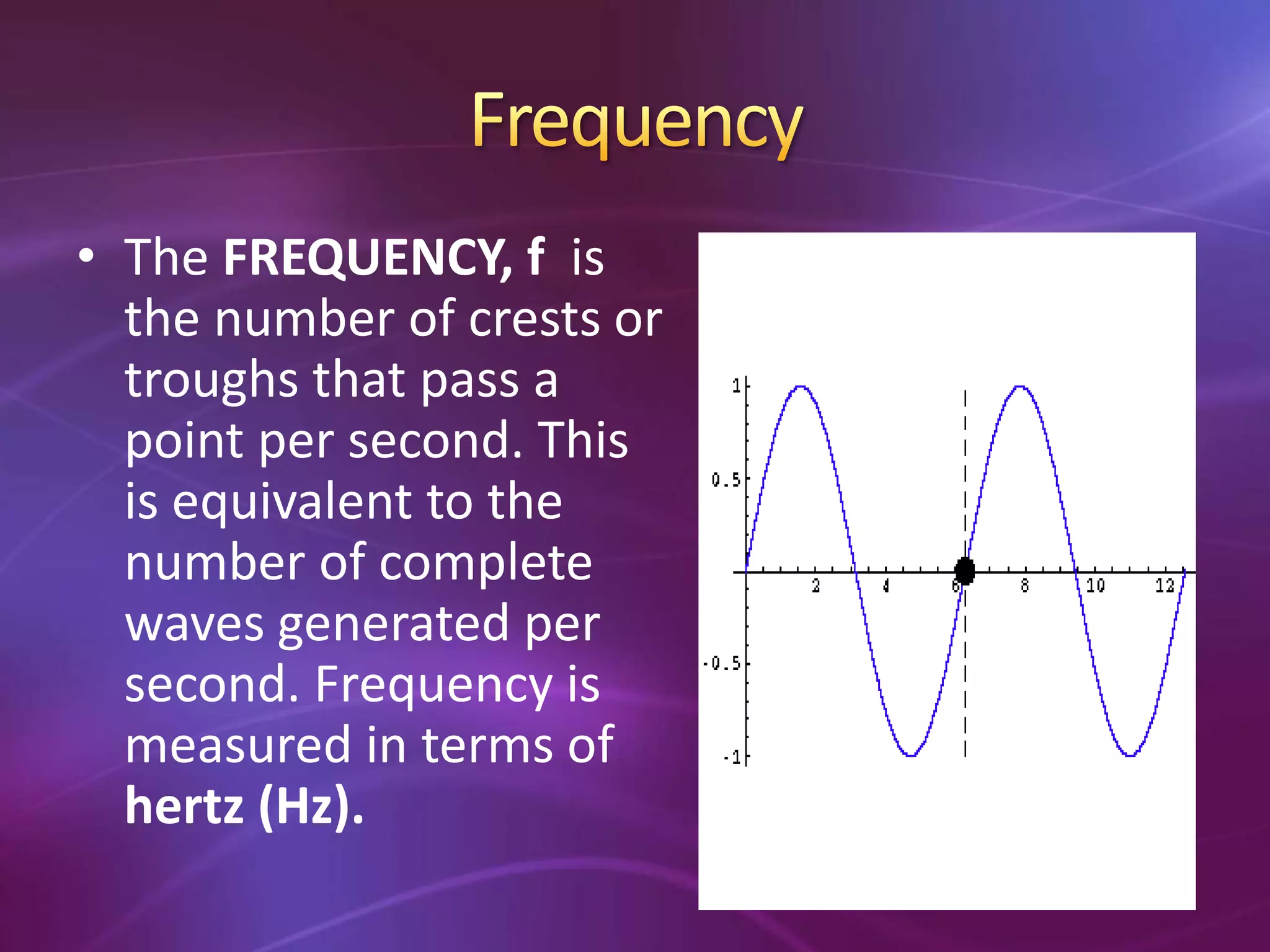
• The FREQUENCY, f is 
the number of crests or 
troughs that pass a 
point per second. This 
is equivalent to the 
number of complete 
waves generated per 
second. Frequency is 
measured in terms of 
hertz (Hz).
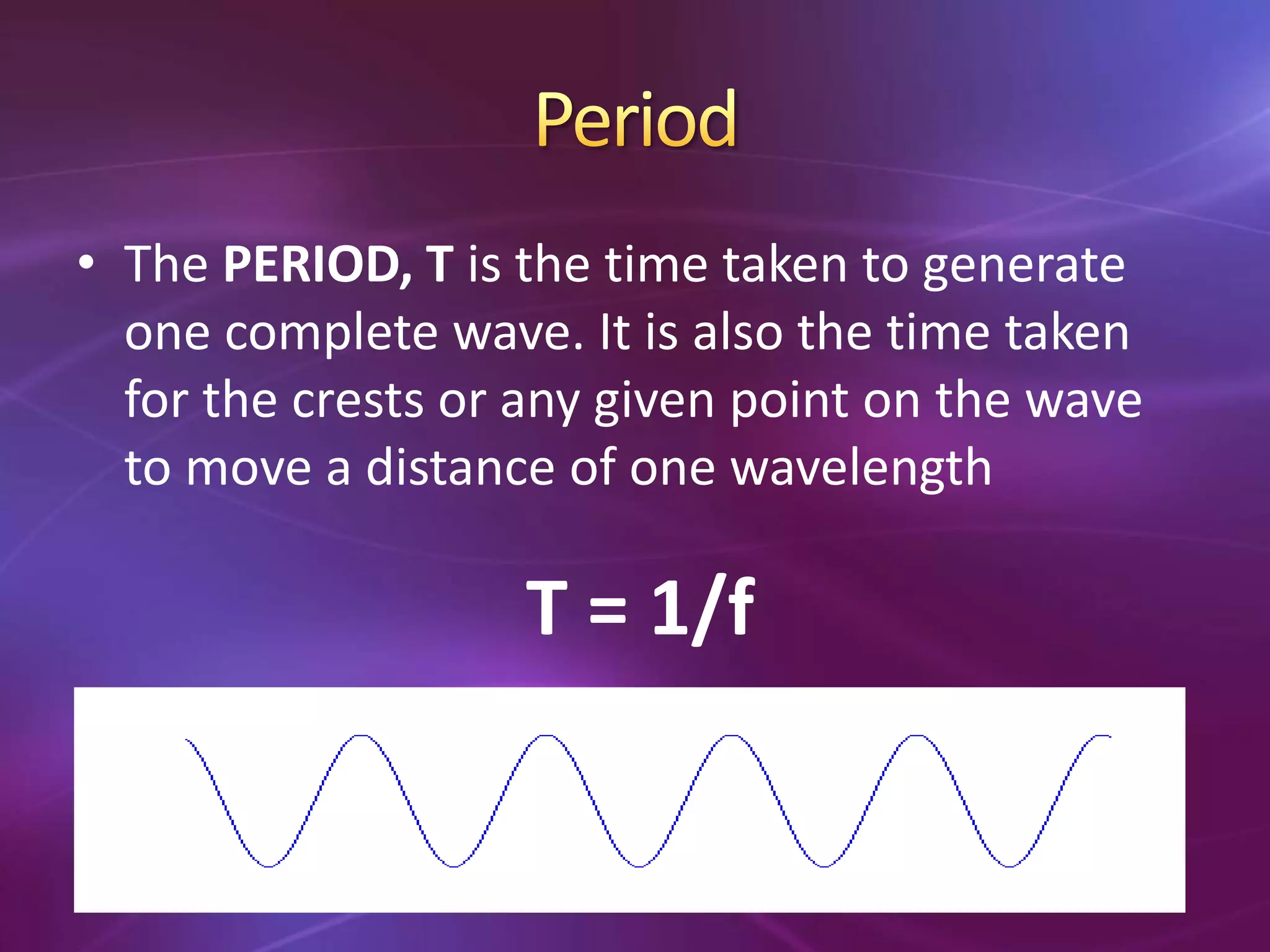
• The PERIOD, T is the time taken to generate 
one complete wave. It is also the time taken 
for the crests or any given point on the wave 
to move a distance of one wavelength 
T = 1/f
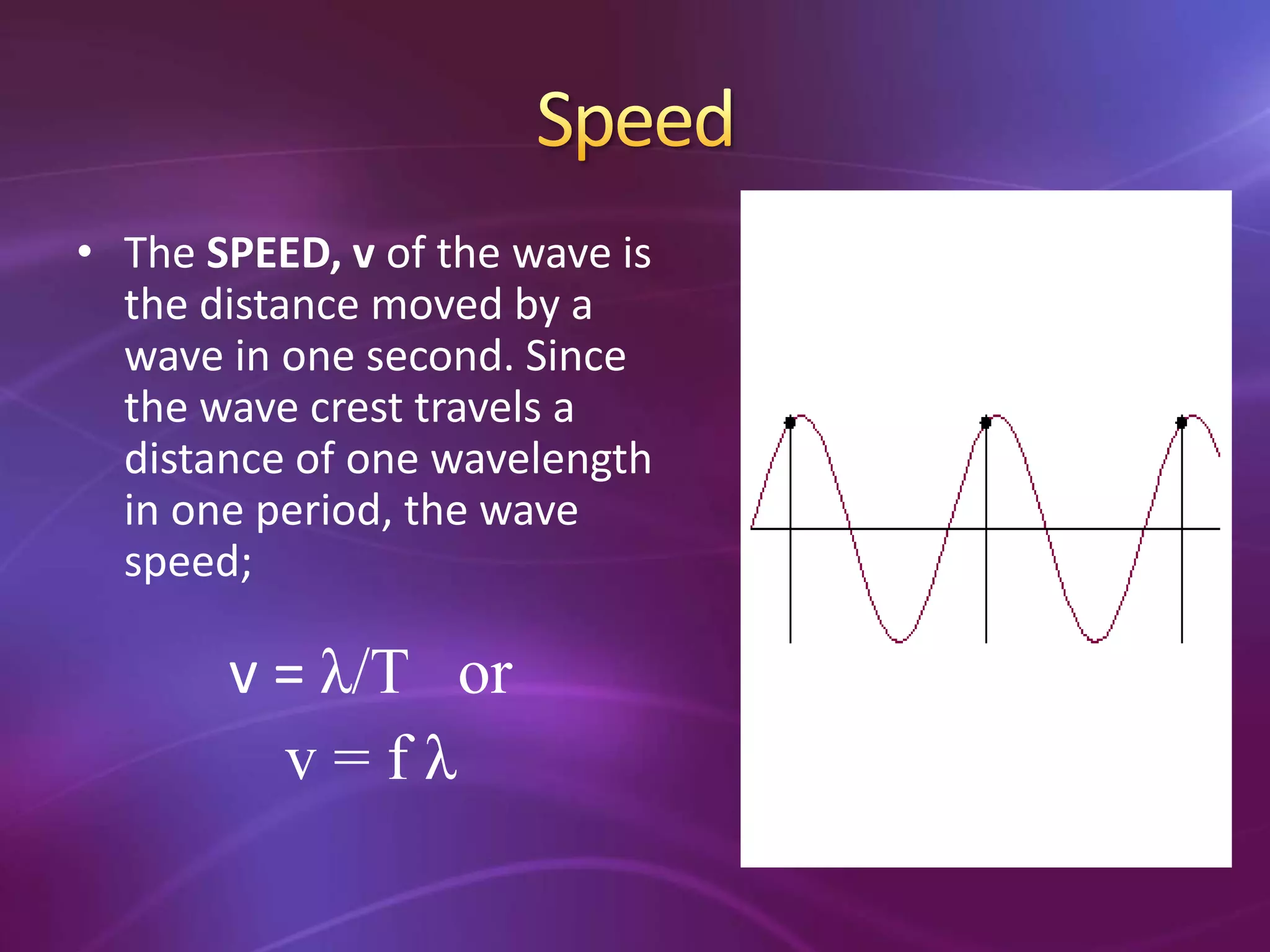
• The SPEED, v of the wave is 
the distance moved by a 
wave in one second. Since 
the wave crest travels a 
distance of one wavelength 
in one period, the wave 
speed; 
v = λ/T or 
v = f λ
• According to the direction of movement of the 
individual particles of the medium relative to 
the direction that the waves travel.
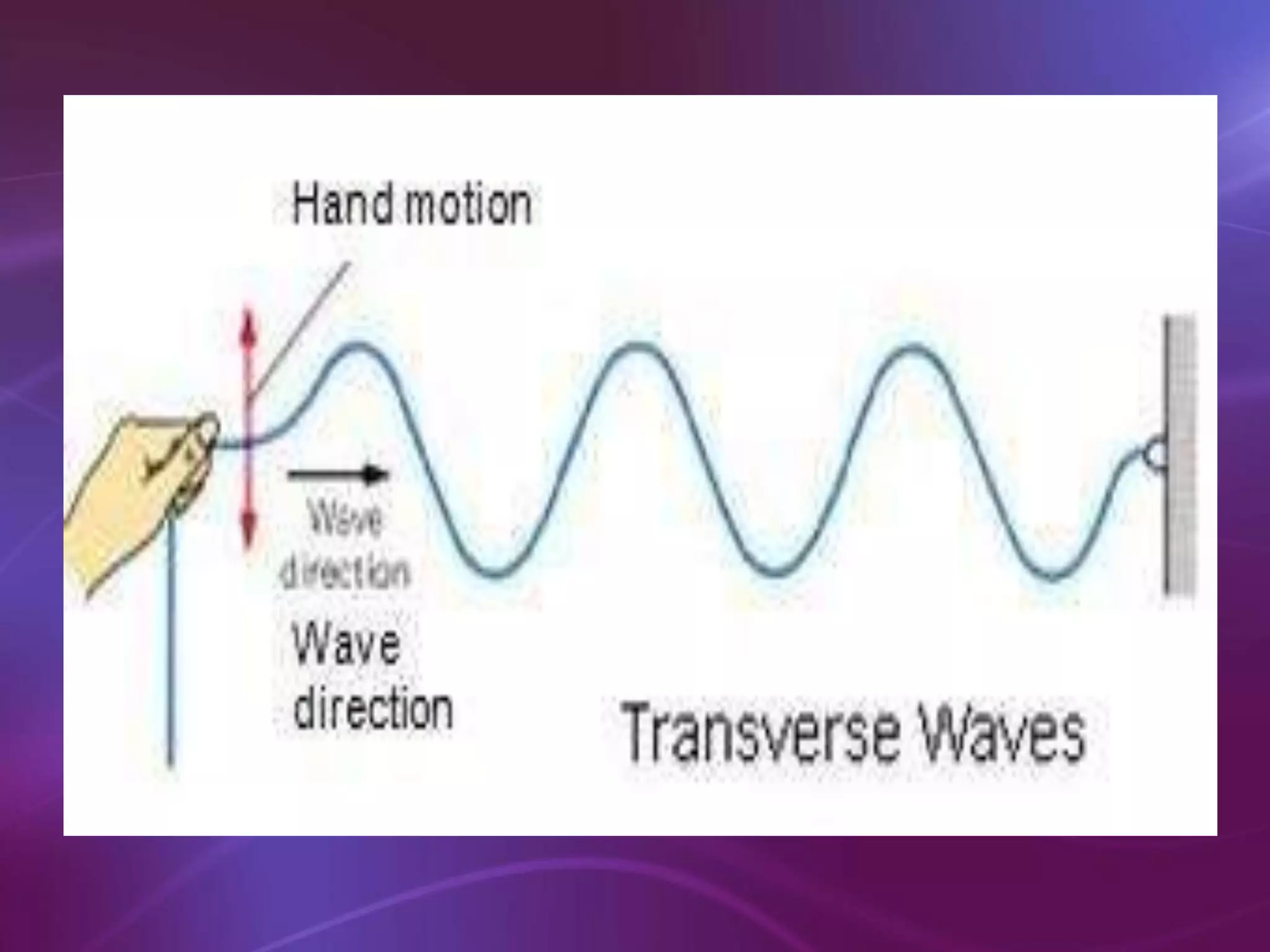
• Waves in which particles of the medium move 
in a direction perpendicular to the direction 
that the wave moves. 
• Particle motion is PERPENDICULAR to wave 
motion. 
Example: waves made by rope.
• http://youtu.be/UHcse1jJAto?list=PL554315A 
A0D2539B8
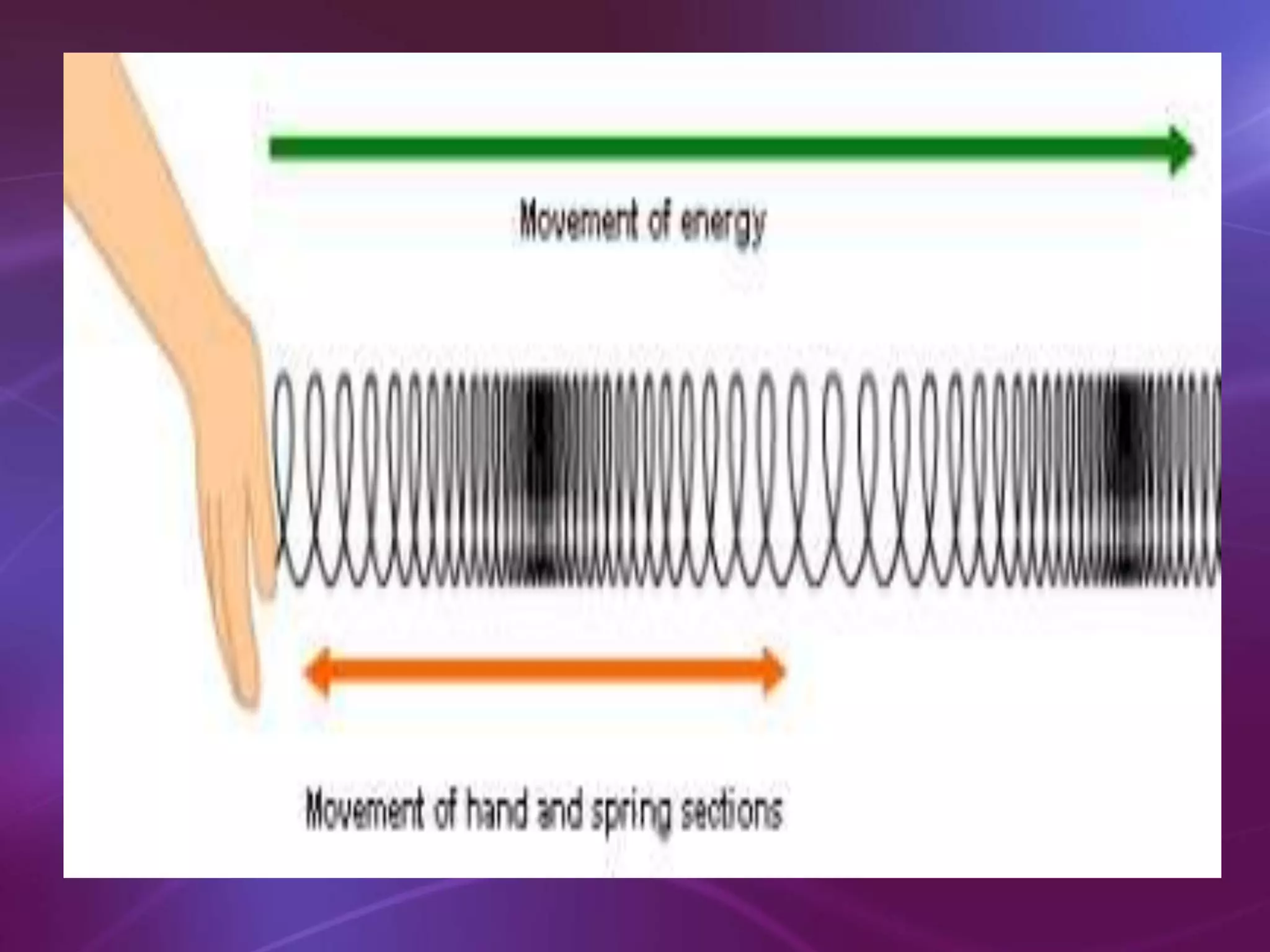
• Waves in which particles of the medium move 
in a direction parallel to the direction that the 
wave moves. 
• Particle motion is PARALLEL to wave motion. 
Example: sound wave
• http://youtu.be/aguCWnbRETU?list=PL55431 
5AA0D2539B8
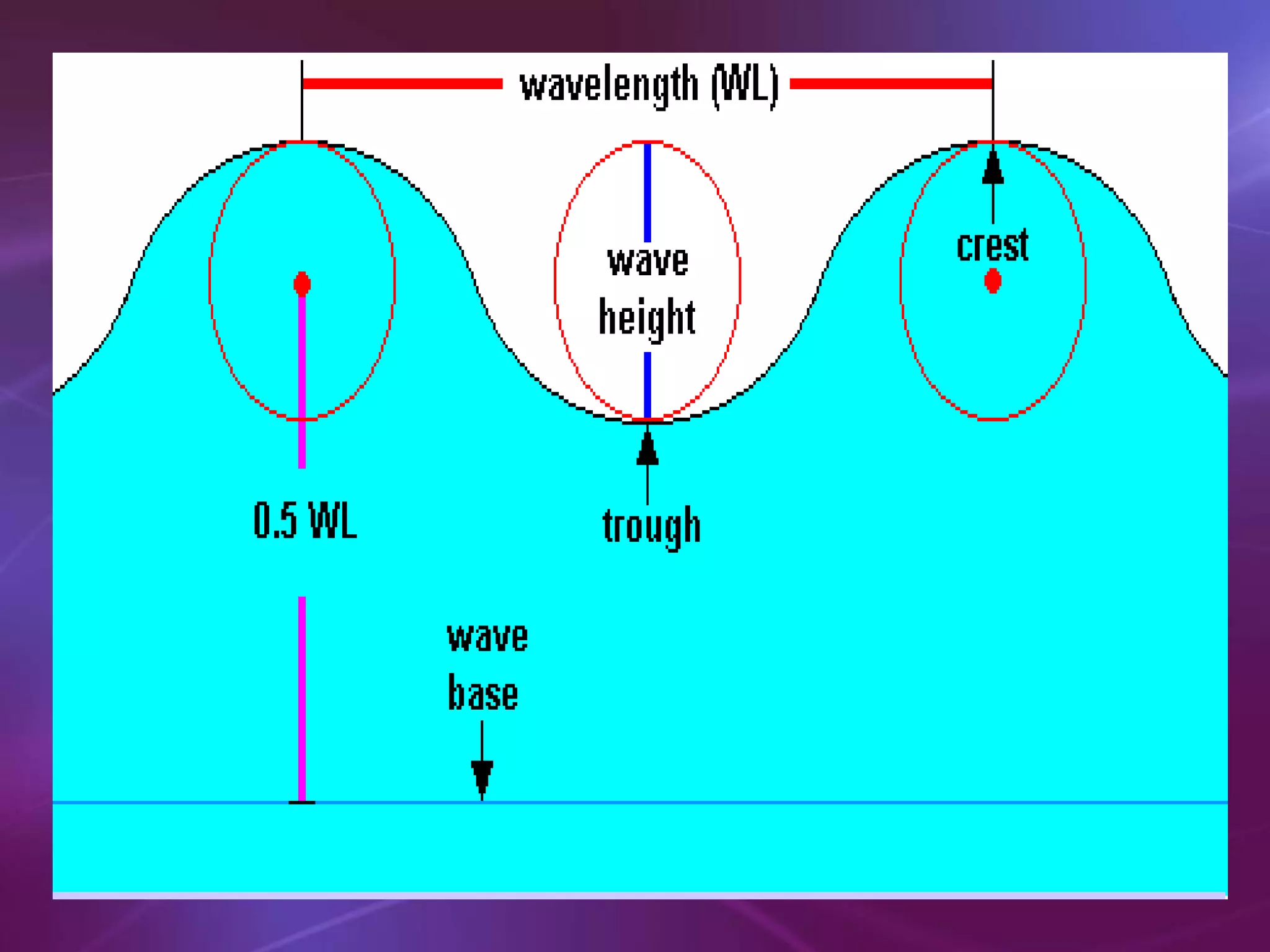
• Waves in which the particles of the medium 
undergo a circular motion. 
• In a surface wave, it is only the particles at the 
surface of the medium that undergo the 
circular motion. The motion of particles tend 
to decrease as one proceeds further from the 
surface.
• http://youtu.be/7yPTa8qi5X8?list=PLLOem9gti 
iXYsLt2tZVK-mmrR9fJ3FWqV
• According to the waves’ ability to transmit 
energy through a vacuum (empty space)
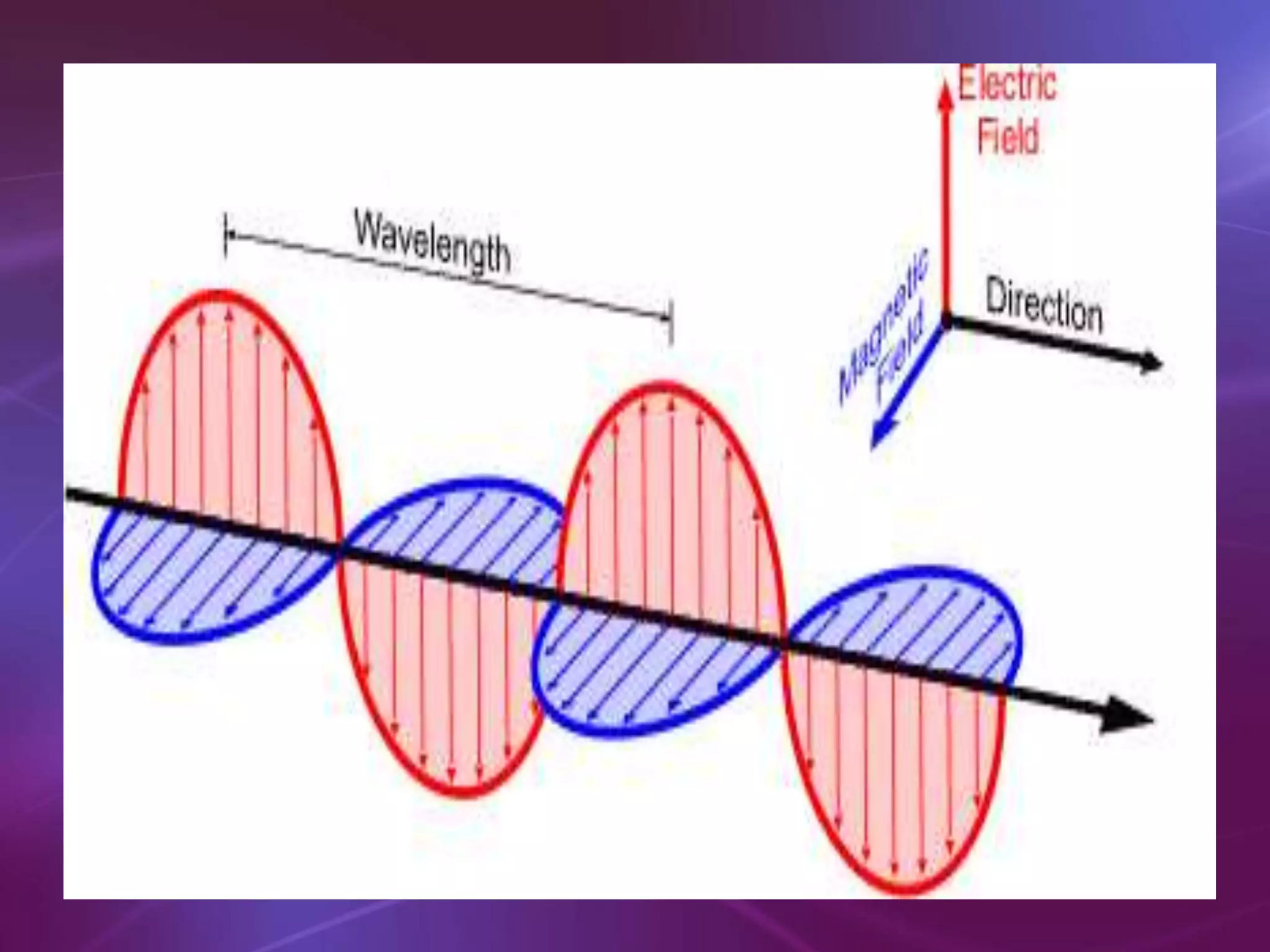
• A wave that is capable of transmitting energy 
through a vacuum. 
Example: rays of the sun, light
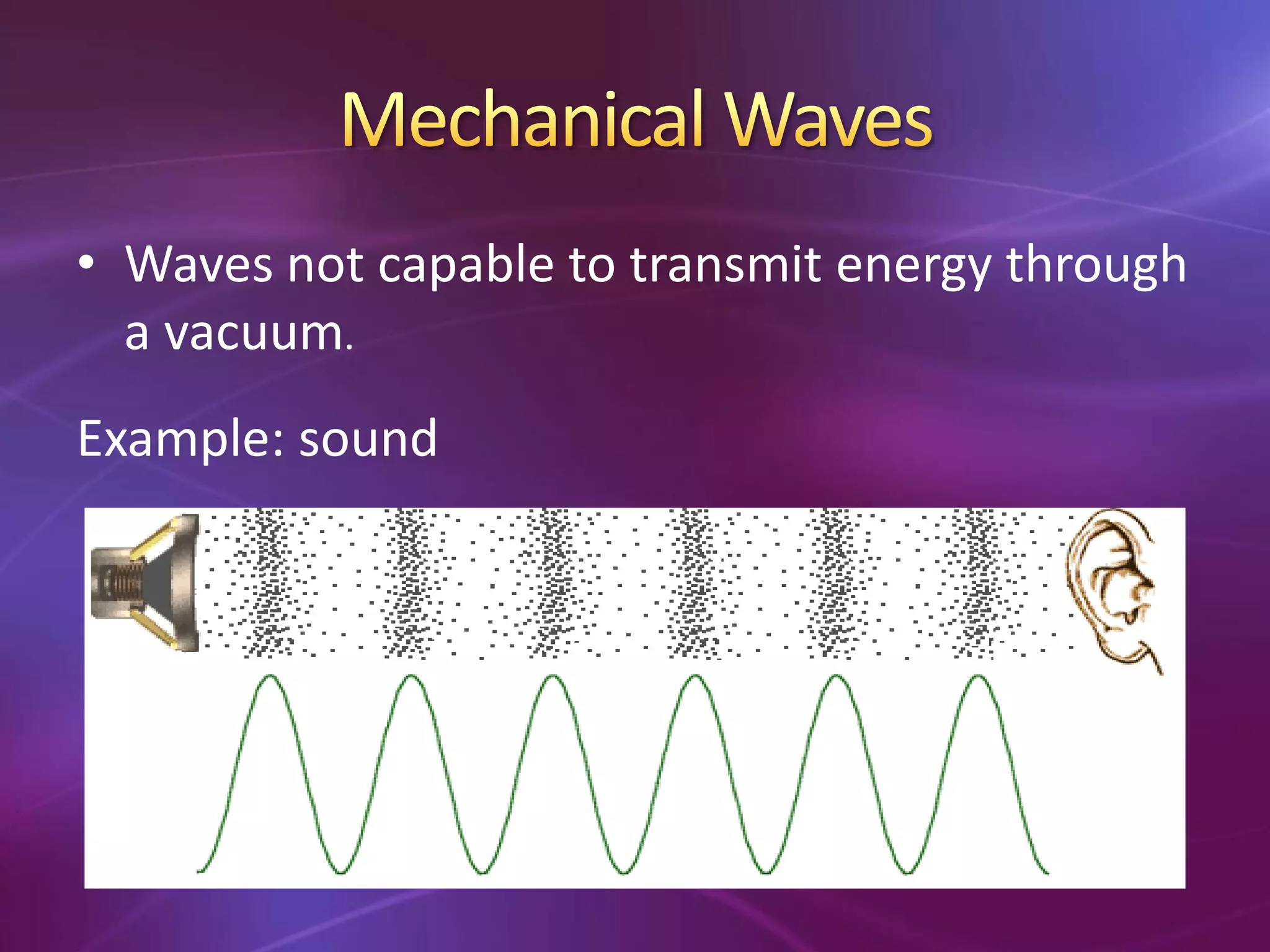
• Waves not capable to transmit energy through 
a vacuum. 
Example: sound
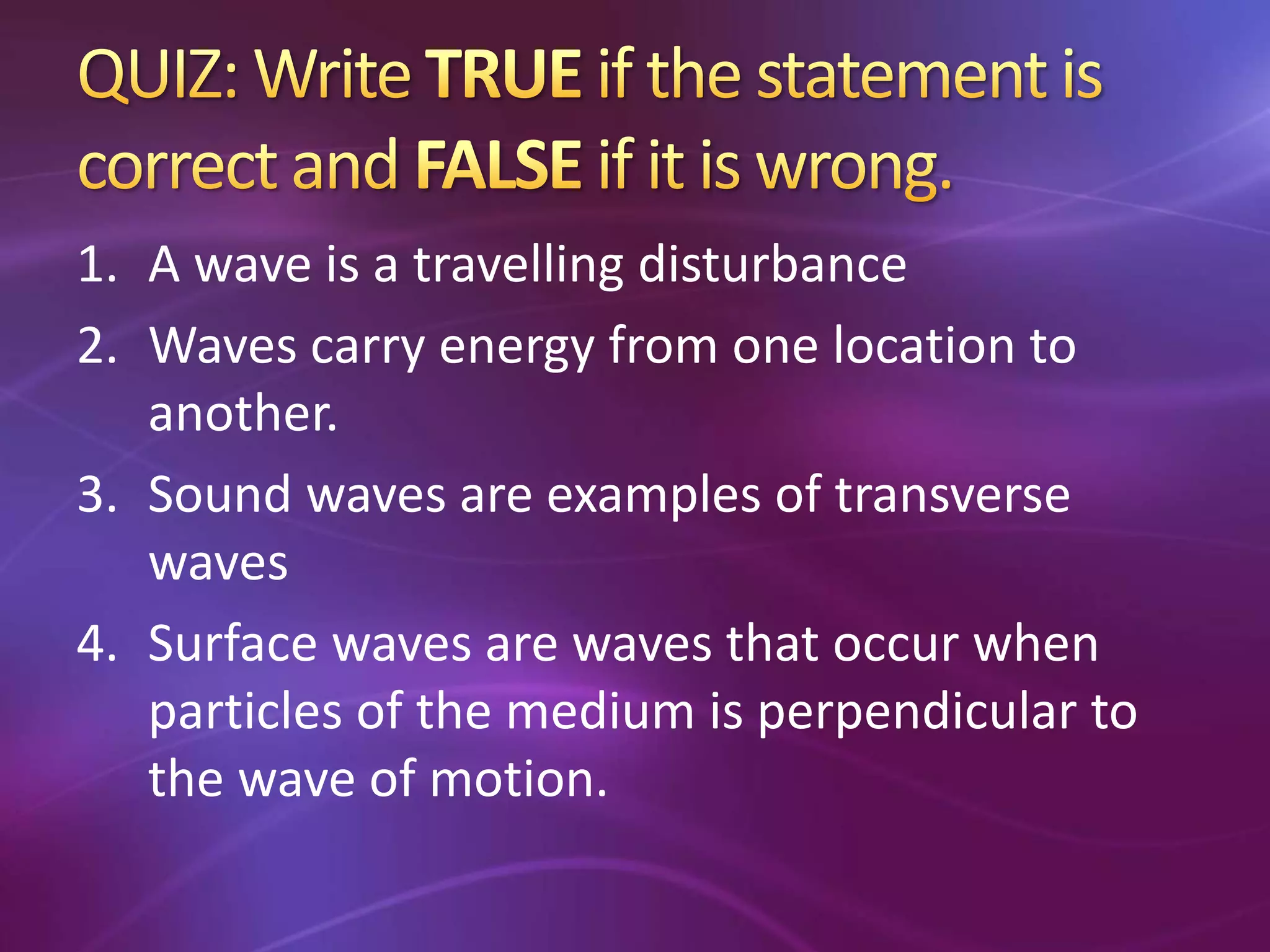
1. A wave is a travelling disturbance 
2. Waves carry energy from one location to 
another. 
3. Sound waves are examples of transverse 
waves 
4. Surface waves are waves that occur when 
particles of the medium is perpendicular to 
the wave of motion.
5. The motion of particles in surface waves tend 
to decrease as it proceeds nearer to the 
surface. 
6. Electromagnetic waves are capable to 
transmit energy through a vacuum. 
7. Wavelength is equal to the distance between 
two identical points on successive waves. 
8. The time taken to generate one complete 
wave is called amplitude.
9. The low points of a wave are called troughs. 
10.The period is the maximum displacement 
from the rest position.
True or False 
1. True 
2. True 
3. False 
4. False 
5. False 
6. True 
7. True 
8. False 
9. True 
10.False 
Identification 
1. CREST/ PEAK 
2. WAVELENGTH 
3. AMPLITUDE 
4. WAVELENGTH 
5. TROUGH

Waves (Grade 7, Quarter 3) Suggested Guide for Discussion

  • 1.
    GRADE 7 MODULE2, QUARTER 3; LESSON 2.1 Teacher’s Guide for Discussion MA. RACHEL B. ESPINO Teacher, Science Buhatan NHS, Sorsogon City
  • 2.
    • WAVES are perpendicular disturbance that moves away from a source and carries energy with it.
  • 3.
    1. A waveis a travelling disturbance. 2. It carries energy from one phase to another. 3. Vibration causes wave motion 4. Waves travel through a medium
  • 4.
    • The highpoints of waves are called CRESTS or PEAKS while the low points are called TROUGHS.
  • 5.
    • The AMPLITUDEis the maximum displacement from the rest position. It is the height of the crest or depth of a trough measured from the normal undisturbed position.
  • 6.
    • The WAVELENGTH,λ is the distance between two successive crests or two successive troughs. It is also equal to the distance between any two identical points on successive waves.
  • 8.
    • The FREQUENCY,f is the number of crests or troughs that pass a point per second. This is equivalent to the number of complete waves generated per second. Frequency is measured in terms of hertz (Hz).
  • 9.
    • The PERIOD,T is the time taken to generate one complete wave. It is also the time taken for the crests or any given point on the wave to move a distance of one wavelength T = 1/f
  • 10.
    • The SPEED,v of the wave is the distance moved by a wave in one second. Since the wave crest travels a distance of one wavelength in one period, the wave speed; v = λ/T or v = f λ
  • 11.
    • According tothe direction of movement of the individual particles of the medium relative to the direction that the waves travel.
  • 12.
    • Waves inwhich particles of the medium move in a direction perpendicular to the direction that the wave moves. • Particle motion is PERPENDICULAR to wave motion. Example: waves made by rope.
  • 14.
  • 15.
    • Waves inwhich particles of the medium move in a direction parallel to the direction that the wave moves. • Particle motion is PARALLEL to wave motion. Example: sound wave
  • 17.
  • 18.
    • Waves inwhich the particles of the medium undergo a circular motion. • In a surface wave, it is only the particles at the surface of the medium that undergo the circular motion. The motion of particles tend to decrease as one proceeds further from the surface.
  • 20.
  • 21.
    • According tothe waves’ ability to transmit energy through a vacuum (empty space)
  • 22.
    • A wavethat is capable of transmitting energy through a vacuum. Example: rays of the sun, light
  • 24.
    • Waves notcapable to transmit energy through a vacuum. Example: sound
  • 25.
    1. A waveis a travelling disturbance 2. Waves carry energy from one location to another. 3. Sound waves are examples of transverse waves 4. Surface waves are waves that occur when particles of the medium is perpendicular to the wave of motion.
  • 26.
    5. The motionof particles in surface waves tend to decrease as it proceeds nearer to the surface. 6. Electromagnetic waves are capable to transmit energy through a vacuum. 7. Wavelength is equal to the distance between two identical points on successive waves. 8. The time taken to generate one complete wave is called amplitude.
  • 27.
    9. The lowpoints of a wave are called troughs. 10.The period is the maximum displacement from the rest position.
  • 29.
    True or False 1. True 2. True 3. False 4. False 5. False 6. True 7. True 8. False 9. True 10.False Identification 1. CREST/ PEAK 2. WAVELENGTH 3. AMPLITUDE 4. WAVELENGTH 5. TROUGH