CLIMATE
Weather is the condition
of the atmosphere in a
place for a short period
of time.
Climate is the average
weather condition of a
place for a longer period
of time.
Different Climate in the 3
zones:
Torrid Zone-------- Tropical Climate
( wet and dry seasons)
Temperate Zone – Temperate
Climate(winter, spring, summer,fall)
Frigid Zone-------- Cold Climate
(very cold; snow all year)
Factors Affecting Climate
altitude
latitude
 rays of the sun
bodies of water
amount of rainfall
wind system
*
1.Altitude
*Elevation
- The height of a place above sea level.
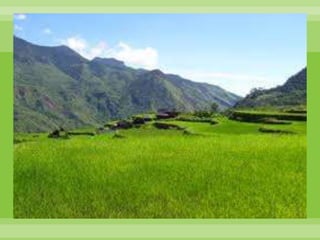
*The climate in higher places is cooler
than in lowlands.
*As height increases, air becomes thinner
or less dense (can’t hold much heat)
*For every 1 000 ft increase in height, the
temperature drops by 3.5 ºC. ( 1 000 km -
--- decrease of 7 ºC)
* Example: Baguio and Tagaytay
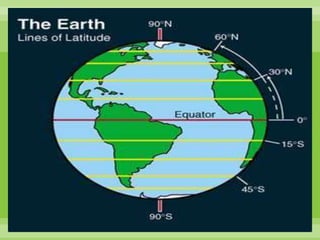
2.Latitude
- the distance of a place North or
South of the equator.
• The nearer the place is to the
equator, the hotter it is; the farther
the place is, the cooler it gets.
• The equator receives direct
sunlight, thus the temperature in
places near it is high.
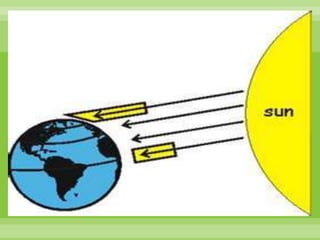
3. Rays of the Sun
- The amount of sunlight a place
receives
• Equator: direct rays from the sun (more
heat/radiation)
• Temperate zone: slanting rays from the
sun (less heat)
• North/South Pole: very little heat from
the sun
4. Bodies of Water
- Oceans, seas, and other bodies of water control the
earth’s temperature.
- Places near bodies of water are cooler than areas
surrounded by other land areas.
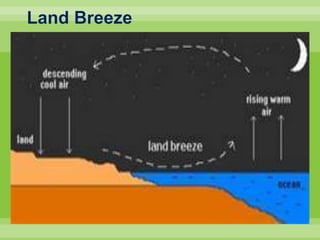
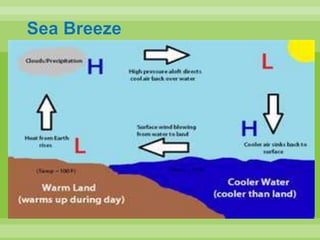
- Land absorbs and loses heat quickly, while water
absorbs and loses heat slowly.
 Land Breeze (Night time) – cold air comes from the
land
 Sea Breeze (Day time) - cold air comes from the
water
Land Breeze
Sea Breeze
5. Amount of Rainfall
 Tropical areas are hot, with monthly temperature
above 64.4 ºF or 18 ºC and they receive large
amount of rainfall.
 Temperate zone, there are differences in temperature
and precipitation patterns. Winter can be quite cold
because of heavy snowfall with at least one month,
averaging below freezing point (-3ºC or 26.6 ºF). The
warmest month has an average temperature of 50ºF
or 10ºC.
 Polar areas are extremely cold. They are quite dry
although water is abundant in the form of solid ice.
6. Wind System- Wind is moving air. It is formed by the unequal heating of the
Earth’s surface.
- The Philippines’ geographical location contributes to its
prevailing wind systems:
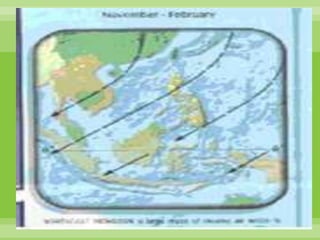
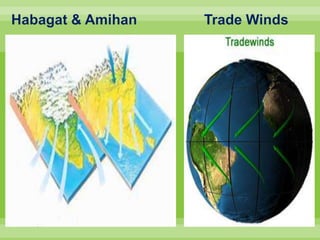
a. Northeast Monsoon – Hanging Amihan; from Nov to March;
blows from Siberia towards the Philippines; brings the cold
temperature from northern hemisphere(winter).
b. Southwest Monsoon – Hanging Habagat; from June to
October; develops because of the cold air mass coming from
the south, Australia, where it is winter. This cold front meets the
warm front in the Philippines and causes the rainy season in the
western part of the country.
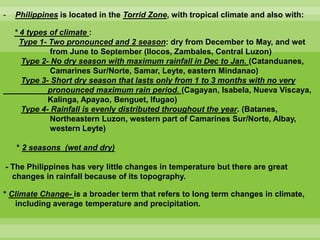
c. Trade Winds – from March to early May; blows from the North
Pacific Ocean and reach the Philippines from the east. It brings
rain only to the eastern part of the country.
Habagat & Amihan Trade Winds
- Philippines is located in the Torrid Zone, with tropical climate and also with:
* 4 types of climate :
Type 1- Two pronounced and 2 season: dry from December to May, and wet
from June to September (Ilocos, Zambales, Central Luzon)
Type 2- No dry season with maximum rainfall in Dec to Jan. (Catanduanes,
Camarines Sur/Norte, Samar, Leyte, eastern Mindanao)
Type 3- Short dry season that lasts only from 1 to 3 months with no very
pronounced maximum rain period. (Cagayan, Isabela, Nueva Viscaya,
Kalinga, Apayao, Benguet, Ifugao)
Type 4- Rainfall is evenly distributed throughout the year. (Batanes,
Northeastern Luzon, western part of Camarines Sur/Norte, Albay,
western Leyte)
* 2 seasons (wet and dry)
- The Philippines has very little changes in temperature but there are great
changes in rainfall because of its topography.
* Climate Change- is a broader term that refers to long term changes in climate,
including average temperature and precipitation.

Chemistry of-the-atmosphere-2

  • 1.
  • 2.
    Weather is thecondition of the atmosphere in a place for a short period of time. Climate is the average weather condition of a place for a longer period of time.
  • 3.
    Different Climate inthe 3 zones: Torrid Zone-------- Tropical Climate ( wet and dry seasons) Temperate Zone – Temperate Climate(winter, spring, summer,fall) Frigid Zone-------- Cold Climate (very cold; snow all year)
  • 4.
    Factors Affecting Climate altitude latitude rays of the sun bodies of water amount of rainfall wind system *
  • 5.
    1.Altitude *Elevation - The heightof a place above sea level. *The climate in higher places is cooler than in lowlands. *As height increases, air becomes thinner or less dense (can’t hold much heat) *For every 1 000 ft increase in height, the temperature drops by 3.5 ºC. ( 1 000 km - --- decrease of 7 ºC) * Example: Baguio and Tagaytay
  • 7.
    2.Latitude - the distanceof a place North or South of the equator. • The nearer the place is to the equator, the hotter it is; the farther the place is, the cooler it gets. • The equator receives direct sunlight, thus the temperature in places near it is high.
  • 9.
    3. Rays ofthe Sun - The amount of sunlight a place receives • Equator: direct rays from the sun (more heat/radiation) • Temperate zone: slanting rays from the sun (less heat) • North/South Pole: very little heat from the sun
  • 11.
    4. Bodies ofWater - Oceans, seas, and other bodies of water control the earth’s temperature. - Places near bodies of water are cooler than areas surrounded by other land areas. - Land absorbs and loses heat quickly, while water absorbs and loses heat slowly.  Land Breeze (Night time) – cold air comes from the land  Sea Breeze (Day time) - cold air comes from the water
  • 12.
  • 13.
  • 14.
    5. Amount ofRainfall  Tropical areas are hot, with monthly temperature above 64.4 ºF or 18 ºC and they receive large amount of rainfall.  Temperate zone, there are differences in temperature and precipitation patterns. Winter can be quite cold because of heavy snowfall with at least one month, averaging below freezing point (-3ºC or 26.6 ºF). The warmest month has an average temperature of 50ºF or 10ºC.  Polar areas are extremely cold. They are quite dry although water is abundant in the form of solid ice.
  • 15.
    6. Wind System-Wind is moving air. It is formed by the unequal heating of the Earth’s surface. - The Philippines’ geographical location contributes to its prevailing wind systems: a. Northeast Monsoon – Hanging Amihan; from Nov to March; blows from Siberia towards the Philippines; brings the cold temperature from northern hemisphere(winter). b. Southwest Monsoon – Hanging Habagat; from June to October; develops because of the cold air mass coming from the south, Australia, where it is winter. This cold front meets the warm front in the Philippines and causes the rainy season in the western part of the country. c. Trade Winds – from March to early May; blows from the North Pacific Ocean and reach the Philippines from the east. It brings rain only to the eastern part of the country.
  • 17.
    Habagat & AmihanTrade Winds
  • 18.
    - Philippines islocated in the Torrid Zone, with tropical climate and also with: * 4 types of climate : Type 1- Two pronounced and 2 season: dry from December to May, and wet from June to September (Ilocos, Zambales, Central Luzon) Type 2- No dry season with maximum rainfall in Dec to Jan. (Catanduanes, Camarines Sur/Norte, Samar, Leyte, eastern Mindanao) Type 3- Short dry season that lasts only from 1 to 3 months with no very pronounced maximum rain period. (Cagayan, Isabela, Nueva Viscaya, Kalinga, Apayao, Benguet, Ifugao) Type 4- Rainfall is evenly distributed throughout the year. (Batanes, Northeastern Luzon, western part of Camarines Sur/Norte, Albay, western Leyte) * 2 seasons (wet and dry) - The Philippines has very little changes in temperature but there are great changes in rainfall because of its topography. * Climate Change- is a broader term that refers to long term changes in climate, including average temperature and precipitation.