Computer Hardware and Servicing
Lesson 4, Module 4
MA. RACHEL B. ESPINO
Buhatan National High School
Purok Marcos, Buhatan, Sorsogon City
 Electricity is define as the
flow of electron or electric
current. It is an invisible
form of energy that can be
transform into other form of
energy like heat light and
mechanical.
 Electron is the negatively
charge component of an
atom. It has the ability to
flow.
 Proton is the positively
charge component of an
atom. It had the ability to
attract electron.
 Matter is anything that
occupy space and has
mass. It can be a solid,
liquid or gas in state.
 Atom is the basic
component of matter. It
composes of a nucleus
which is the central part, the
protons and electrons.
 Current same as electricity
or flow of electron. The
amount of current flowing in
a circuit can be measured in
ampere (I).
 Voltage is the amount of
pulling force that makes the
electron flow. Also known as
potential difference or
EMF(electromotive force).
The amount of voltage can
be measured in volt (V).
 Resistance is define as the
opposition to the flow of
current. The amount of
resistance can be measure
in ohms (Ω).
 Conductors are materials
that easily allow the flow of
current, or it has a low
resistance to current flow.
Examplesaluminum, gold,
silver, copper, iron
 Insulators are materials that
do not easily allow the flow
of current, or it has a high
resistance to current flow.
Examples; rubber, plastic,
paper
 In direct current (DC), the
flow of electric charge is
only in one direction. This is
the type of electricity is
produced by batteries,
static, and lightning. A
voltage is created, and
maybe stored, until it is
consumed. The current
flows directly, in one
direction.
 In the circuit, the current flows
at a specific, constant voltage
(this is oversimplified
somewhat but good enough
for our needs.) When you use
a flashlight, pocket radio,
portable CD player or virtually
any other type of portable or
battery-powered device, you
are using direct current.
 Most DC circuits are
relatively low in voltage; for
example, your car's battery
is approximately 12V, and
that's about as high a DC
voltage as most people ever
use.
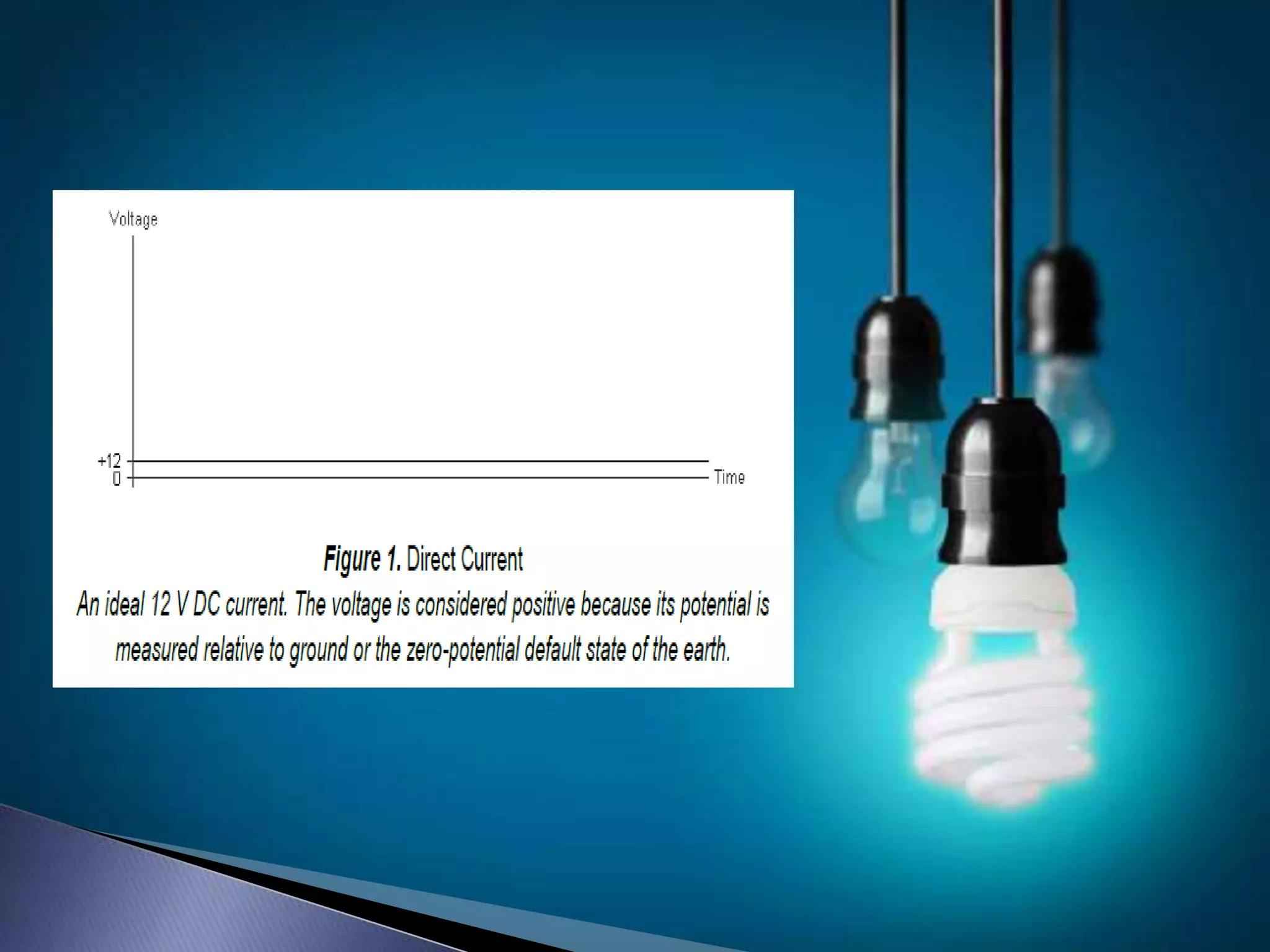
 Direct currents flow in one
direction only, and are
constant in time. Their
appearance is that of a
straight line which does not
vary. They are produced
from power sources such as
batteries, power supplies
and DC generators.
Photovoltaic devices such as
solar cells also generate DC
power.
 In alternating current (AC,
also ac) the movement of
electric charge periodically
reverses direction. This type
of electricity is produced or
generated by AC generators
commonly from a hydro
electric plant. It is the
commercial power that we
use in homes and offices
 Delivered through a power
transmission lines, AC
current can be reduced
through the use of power
transformer to suite for its
application. It can also be
converted to DC for a
specific purpose. In the
Philippines AC is rated as
220V AC at 60 Hz.
 Alternating currents change
direction, flowing first one
way and then the other. They
are sinusoidal waves, so that
they change in time. They are
produced from sources such
as power supplies and AC
generators.
 In North America, AC is 120
volts and 60 hertz or cycles
per second. This means it
changes direction 60 times
per second. In Europe, it is
generally 50 hertz with 220
to 240 volts.
 There are a number of
reasons, but one of the
most important is that a
characteristic of AC is that it
is relatively easy to change
voltages from one level to
another using a
transformer, while
transformers do not work
for DC.
 This capability allows the
companies that generate
and distribute electricity to
do it in a more efficient
manner, by transmitting it
at high voltage for long
lengths, which reduces
energy loss due to the
resistance in the
transmission wires.
 Another reason is that it
may be easier to
mechanically generate
alternating current
electricity than direct
current.
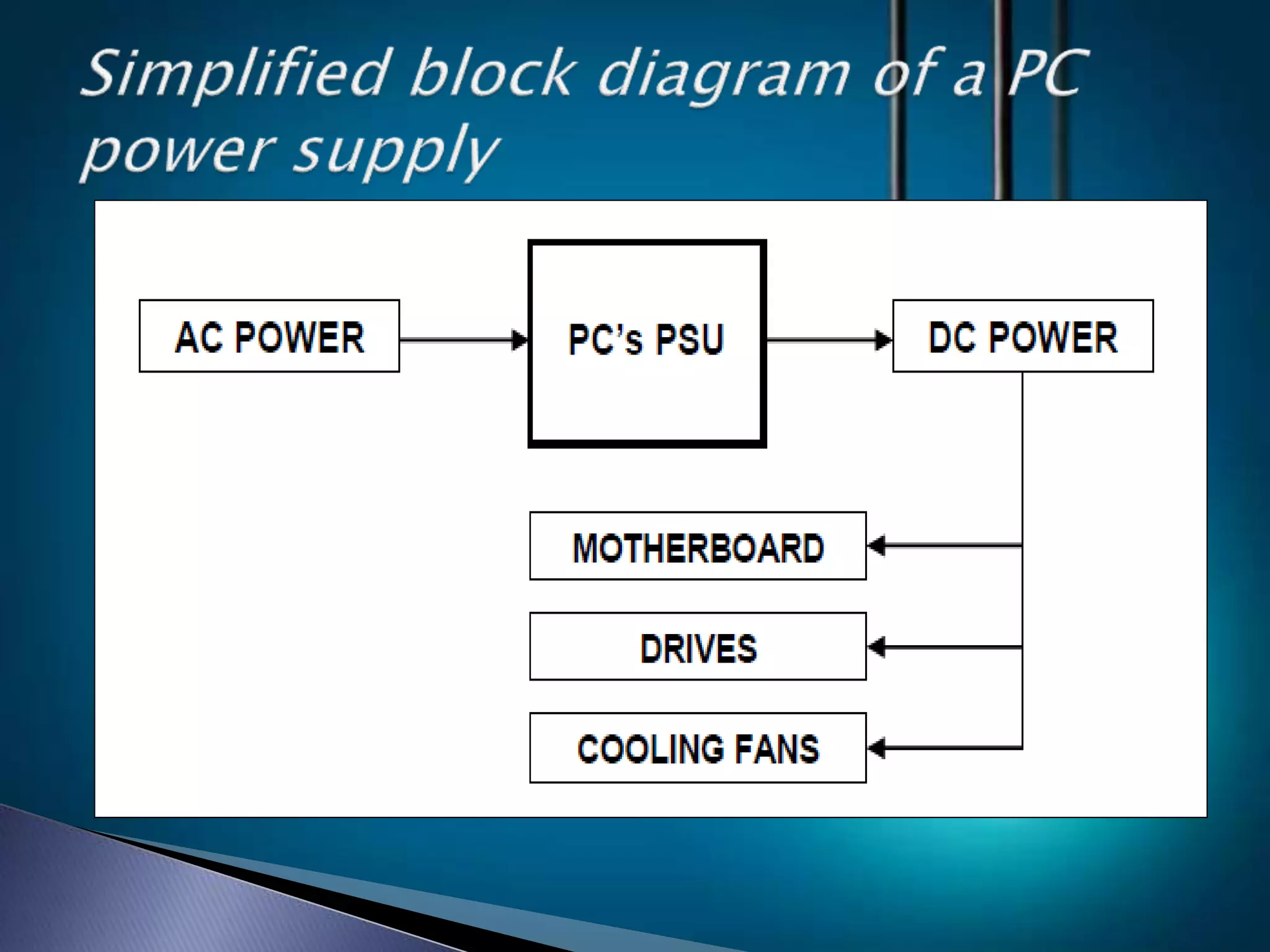
 PC’s use only direct
current, which means that
the alternating current
provided by your utility
must be converted to
direct current before use.
This is the primary
function of your power
supply.
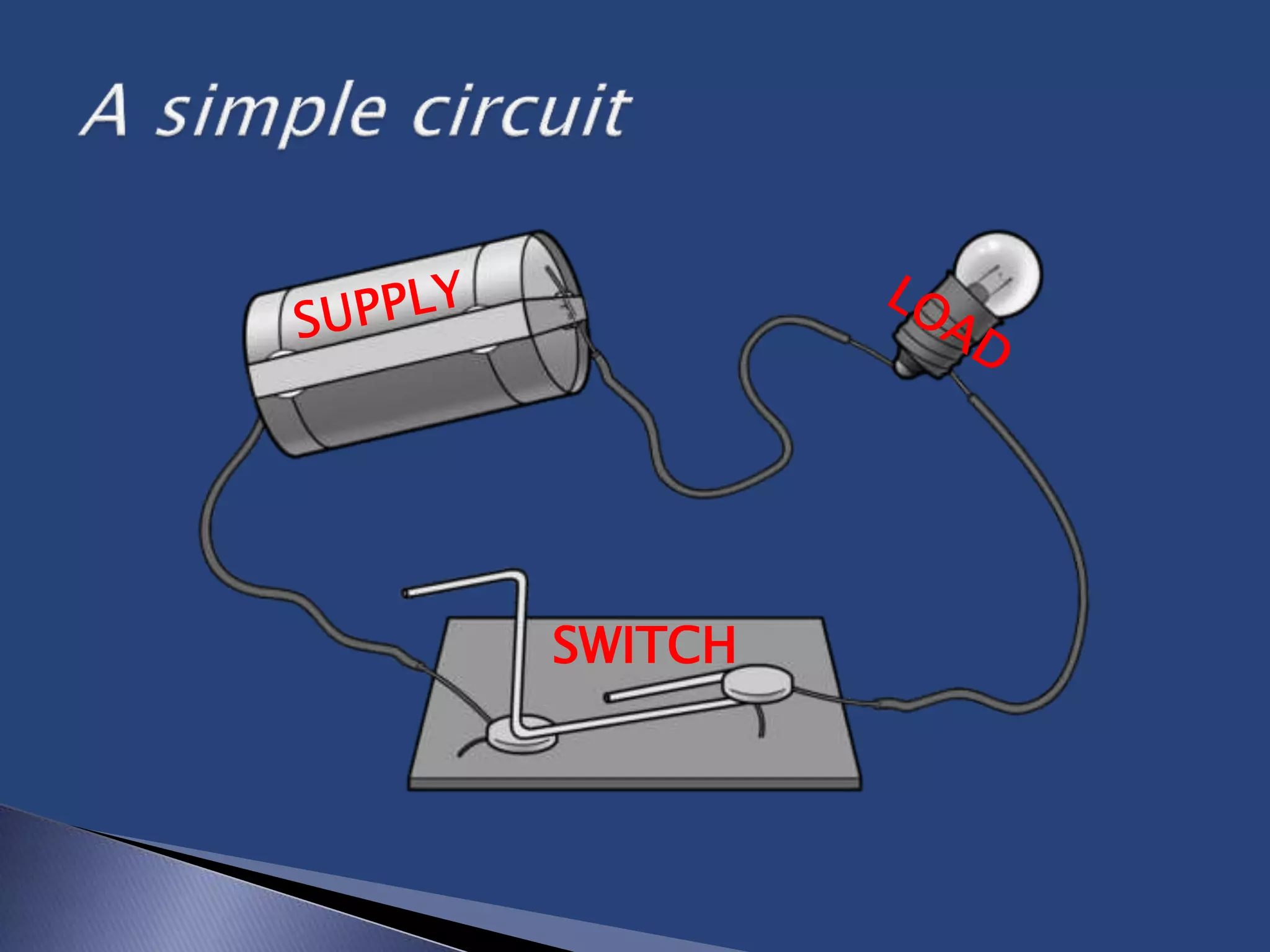
 Electric circuit - is the
pathways for electricity to
flow.
1. Load - commonly
represented by a bulb or
any electrical component
that consumes electricity.
2. Supply - Commonly
represented by a cell or a
battery
3. Switch - an electrical device
that opens or closed a
circuit.
SWITCH
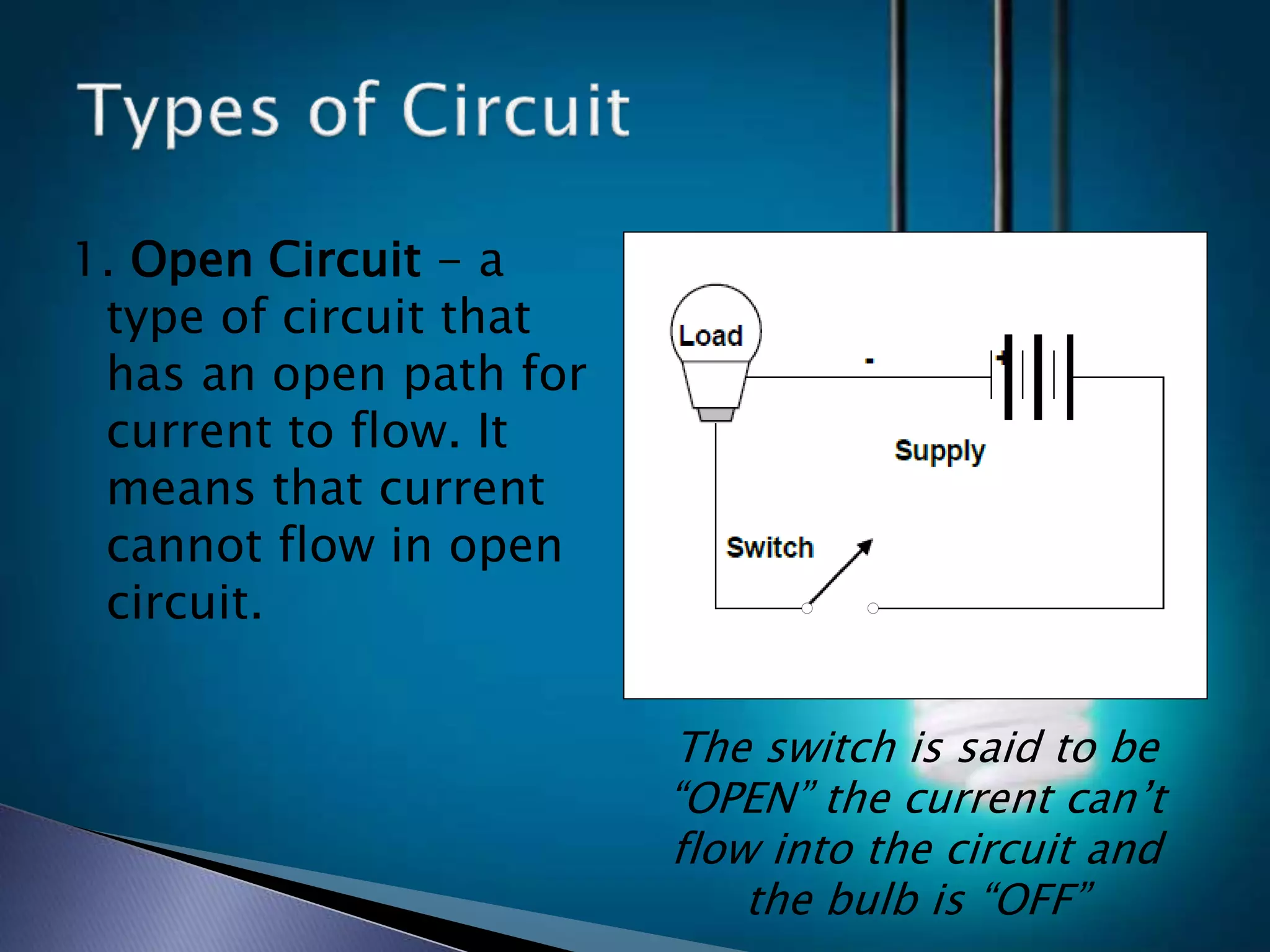
1. Open Circuit - a
type of circuit that
has an open path for
current to flow. It
means that current
cannot flow in open
circuit.
The switch is said to be
“OPEN” the current can’t
flow into the circuit and
the bulb is “OFF”
2. Closed Circuit - a
type of circuit that
has a closed path for
current to flow. It
means that current
can flow in a closed
circuit.
The switch is said to be
“CLOSED” the current can
flow into the circuit and the
bulb is “ON”
 Identify what is being
described in the following
statements.
Basic concepts of electricity

Basic concepts of electricity

  • 1.
    Computer Hardware andServicing Lesson 4, Module 4 MA. RACHEL B. ESPINO Buhatan National High School Purok Marcos, Buhatan, Sorsogon City
  • 2.
     Electricity isdefine as the flow of electron or electric current. It is an invisible form of energy that can be transform into other form of energy like heat light and mechanical.
  • 3.
     Electron isthe negatively charge component of an atom. It has the ability to flow.
  • 4.
     Proton isthe positively charge component of an atom. It had the ability to attract electron.
  • 5.
     Matter isanything that occupy space and has mass. It can be a solid, liquid or gas in state.
  • 6.
     Atom isthe basic component of matter. It composes of a nucleus which is the central part, the protons and electrons.
  • 7.
     Current sameas electricity or flow of electron. The amount of current flowing in a circuit can be measured in ampere (I).
  • 8.
     Voltage isthe amount of pulling force that makes the electron flow. Also known as potential difference or EMF(electromotive force). The amount of voltage can be measured in volt (V).
  • 9.
     Resistance isdefine as the opposition to the flow of current. The amount of resistance can be measure in ohms (Ω).
  • 10.
     Conductors arematerials that easily allow the flow of current, or it has a low resistance to current flow. Examplesaluminum, gold, silver, copper, iron
  • 11.
     Insulators arematerials that do not easily allow the flow of current, or it has a high resistance to current flow. Examples; rubber, plastic, paper
  • 13.
     In directcurrent (DC), the flow of electric charge is only in one direction. This is the type of electricity is produced by batteries, static, and lightning. A voltage is created, and maybe stored, until it is consumed. The current flows directly, in one direction.
  • 14.
     In thecircuit, the current flows at a specific, constant voltage (this is oversimplified somewhat but good enough for our needs.) When you use a flashlight, pocket radio, portable CD player or virtually any other type of portable or battery-powered device, you are using direct current.
  • 15.
     Most DCcircuits are relatively low in voltage; for example, your car's battery is approximately 12V, and that's about as high a DC voltage as most people ever use.
  • 16.
     Direct currentsflow in one direction only, and are constant in time. Their appearance is that of a straight line which does not vary. They are produced from power sources such as batteries, power supplies and DC generators. Photovoltaic devices such as solar cells also generate DC power.
  • 18.
     In alternatingcurrent (AC, also ac) the movement of electric charge periodically reverses direction. This type of electricity is produced or generated by AC generators commonly from a hydro electric plant. It is the commercial power that we use in homes and offices
  • 19.
     Delivered througha power transmission lines, AC current can be reduced through the use of power transformer to suite for its application. It can also be converted to DC for a specific purpose. In the Philippines AC is rated as 220V AC at 60 Hz.
  • 20.
     Alternating currentschange direction, flowing first one way and then the other. They are sinusoidal waves, so that they change in time. They are produced from sources such as power supplies and AC generators.
  • 21.
     In NorthAmerica, AC is 120 volts and 60 hertz or cycles per second. This means it changes direction 60 times per second. In Europe, it is generally 50 hertz with 220 to 240 volts.
  • 22.
     There area number of reasons, but one of the most important is that a characteristic of AC is that it is relatively easy to change voltages from one level to another using a transformer, while transformers do not work for DC.
  • 23.
     This capabilityallows the companies that generate and distribute electricity to do it in a more efficient manner, by transmitting it at high voltage for long lengths, which reduces energy loss due to the resistance in the transmission wires.
  • 24.
     Another reasonis that it may be easier to mechanically generate alternating current electricity than direct current.
  • 25.
     PC’s useonly direct current, which means that the alternating current provided by your utility must be converted to direct current before use. This is the primary function of your power supply.
  • 27.
     Electric circuit- is the pathways for electricity to flow.
  • 28.
    1. Load -commonly represented by a bulb or any electrical component that consumes electricity. 2. Supply - Commonly represented by a cell or a battery 3. Switch - an electrical device that opens or closed a circuit.
  • 29.
  • 30.
    1. Open Circuit- a type of circuit that has an open path for current to flow. It means that current cannot flow in open circuit. The switch is said to be “OPEN” the current can’t flow into the circuit and the bulb is “OFF”
  • 31.
    2. Closed Circuit- a type of circuit that has a closed path for current to flow. It means that current can flow in a closed circuit. The switch is said to be “CLOSED” the current can flow into the circuit and the bulb is “ON”
  • 32.
     Identify whatis being described in the following statements.

Editor's Notes

  • #18 Its suggested to the students to review on science concepts of electricity. The teacher may ask the help of a physics or science teacher or EIM/ Electronics teacher who can further explain these concepts.
  • #21 It is suggested to review on electricity concepts and waves under k to 12 science curriculum
  • #27 Further Concept: The PC only use direct current because the motherboard, drives and cooling fan uses different voltages, which means that the power supply must convert the AC into DC which these devices can use. This is also the reason why magnetic devices such as magnetic screwdrivers are not advisable to use during repair. Some users use an AVR to regulate the flow of electricity into the computer. PC Technician are advised to be careful in handling PSUs and should not attempt to repair damage PSUs unless otherwise they are very sure of their action.