MONSOONS
WIND SYSTEM:
(AMIHAN AND
HABAGAT)
ITCZ
IN WHAT DIRECTION
DO WINDS BLOW–
FROM HIGH TO LOW
PRESSURE AREA OR
VICE VERSA?
OBJECTIVES
After performing this activity, you should be
able to:
1. Interpret a map to determine direction of
wind movement
2. Explain why it is cold around in December
to February and warm around July.
3. Illustrate why habagat brings lots of rain
4. Give examples how the monsoons
(amihan and habagat) affect people.
WHAT TO DO

Part I. Study Figure 17. It shows
the air pressure and direction of
winds in different parts of the
world in January. Low-pressure
areas are marked by L and high-
pressure areas are marked by H.
Broken lines with arrowheads
show the direction of the wind.
ANSWER THE FF.
Q1. Choose a low-pressure area and
study the direction of the winds around
it. Do the winds move toward the low-
pressure area or away from it?
Q2. Choose a high-pressure area and
study the direction of the winds around
it. Do the winds move toward the high-
pressure area or away from it?
Q3. In what direction do winds
blow? Do winds blow from high-
pressure areas to low-pressure
areas? Or, from low-pressure
areas to high pressure areas?
Q4. Where is North in the map?
South? West? East? Write the
directions on the map.
Q5. Study the wind direction near the
Philippine area. From what direction
does the wind blow near the
Philippines in January?
Q6. Study the wind direction near the
Philippine area. From what direction
does the wind blow in the vicinity of
the Philippines in July?
Figure 17 shows what happens
during the colder months. The wind
blows from the high-pressure area in
the Asian continent toward the low
pressure area south of the
Philippines. The cold air that we
experience from December to
February is part of this wind system.
This monsoon wind is locally known
as amihan. (Northeast)
As you can see from Figure
17, the wind passes over
some bodies of water before it
reaches the Philippines. The
wind picks up moisture along
the way and brings rain to the
eastern part of the Philippines.
Now, what happens during the warmer
months? Study Figure 18 carefully. What
do you observe about the low-pressure
area and high-pressure area near the
Philippines? They have changed places.
As a result, the direction of the wind also
changes. This time the wind will move
from the high-pressure area in Australia
to the low-pressure area in the Asian
continent. This monsoon wind is locally
called habagat. (Southwest)
Trace the path of the
habagat before it reaches
the Philippines. Can you
explain why the habagat
brings so much rain? Which
part of the Philippines does
the habagat affect the most?
The monsoons, habagat and
amihan, affect people in
different ways. Try to explain
the following:
Why do farmers welcome
the monsoons?
Why are fisherfolk not so
happy about the monsoons?
Why do energy providers
appreciate the monsoons?
Why are fishpen owners
worried about the
monsoons?
How do the monsoons
affect your own town?
THE INTERTROPICAL
CONVERGENCE ZONE (ITCZ)
Many people who listen to weather
forecasts are confused about the
intertropical convergence zone. But
it is easy to understand it once you
know that warm air rises, and air
moves toward the place where
warm air is rising.
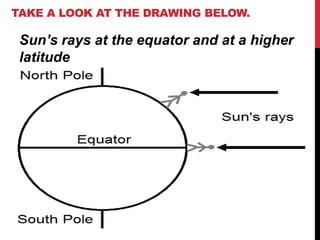
TAKE A LOOK AT THE DRAWING BELOW.

 Sun’s rays at the equator and at a higher
 latitude
Figure 19 shows the rays of
the Sun at two different places
at noon. Study the drawing
carefully. Where would you
observe the Sun directly
above you? When you are at
the equator? Or when you are
at a higher latitude?
As you can see, the position of the
Sun at midday depends on where
you are. At the equator, the Sun
will be directly overhead and the
rays of the Sun will hit the ground
directly. At a higher latitude, the
Sun will be lower in the sky and the
Sun’s rays will strike the ground at
a lower angle. Where do you think
will it be warmer?
It is clear that it is warmer at the
equator than anywhere else.
Because of that, the air over the
equator will be warmer than the air
over other parts of the Earth. And
you already know what happens to
warm air. It rises. And when warm
air rises, air in the surroundings will
then move as a result.
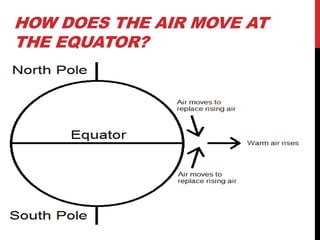
HOW DOES THE AIR MOVE AT
THE EQUATOR?
As you can see from Figure 20, air
from north of the equator and air
from south of the equator will move
toward the place where warm air is
rising. Thus, the intertropical
convergence zone is the place
where winds in the tropics meet or
converge. (Recall that the area near
the equator is called the tropics.)
In time the rising warm air
will form clouds, which may
lead to thunderstorms. Now
you know why weather
forecasters often blame the
ITCZ for some heavy
afternoon rains.
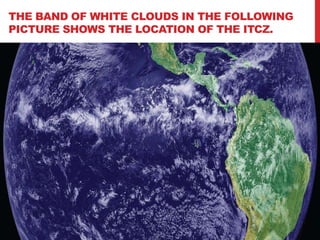
THE BAND OF WHITE CLOUDS IN THE FOLLOWING
PICTURE SHOWS THE LOCATION OF THE ITCZ.

Monsoons

  • 1.
  • 2.
    IN WHAT DIRECTION DOWINDS BLOW– FROM HIGH TO LOW PRESSURE AREA OR VICE VERSA?
  • 3.
    OBJECTIVES After performing thisactivity, you should be able to: 1. Interpret a map to determine direction of wind movement 2. Explain why it is cold around in December to February and warm around July. 3. Illustrate why habagat brings lots of rain 4. Give examples how the monsoons (amihan and habagat) affect people.
  • 4.
    WHAT TO DO PartI. Study Figure 17. It shows the air pressure and direction of winds in different parts of the world in January. Low-pressure areas are marked by L and high- pressure areas are marked by H. Broken lines with arrowheads show the direction of the wind.
  • 5.
    ANSWER THE FF. Q1.Choose a low-pressure area and study the direction of the winds around it. Do the winds move toward the low- pressure area or away from it? Q2. Choose a high-pressure area and study the direction of the winds around it. Do the winds move toward the high- pressure area or away from it?
  • 6.
    Q3. In whatdirection do winds blow? Do winds blow from high- pressure areas to low-pressure areas? Or, from low-pressure areas to high pressure areas? Q4. Where is North in the map? South? West? East? Write the directions on the map.
  • 7.
    Q5. Study thewind direction near the Philippine area. From what direction does the wind blow near the Philippines in January? Q6. Study the wind direction near the Philippine area. From what direction does the wind blow in the vicinity of the Philippines in July?
  • 8.
    Figure 17 showswhat happens during the colder months. The wind blows from the high-pressure area in the Asian continent toward the low pressure area south of the Philippines. The cold air that we experience from December to February is part of this wind system. This monsoon wind is locally known as amihan. (Northeast)
  • 9.
    As you cansee from Figure 17, the wind passes over some bodies of water before it reaches the Philippines. The wind picks up moisture along the way and brings rain to the eastern part of the Philippines.
  • 10.
    Now, what happensduring the warmer months? Study Figure 18 carefully. What do you observe about the low-pressure area and high-pressure area near the Philippines? They have changed places. As a result, the direction of the wind also changes. This time the wind will move from the high-pressure area in Australia to the low-pressure area in the Asian continent. This monsoon wind is locally called habagat. (Southwest)
  • 11.
    Trace the pathof the habagat before it reaches the Philippines. Can you explain why the habagat brings so much rain? Which part of the Philippines does the habagat affect the most?
  • 12.
    The monsoons, habagatand amihan, affect people in different ways. Try to explain the following: Why do farmers welcome the monsoons? Why are fisherfolk not so happy about the monsoons?
  • 13.
    Why do energyproviders appreciate the monsoons? Why are fishpen owners worried about the monsoons? How do the monsoons affect your own town?
  • 14.
    THE INTERTROPICAL CONVERGENCE ZONE(ITCZ) Many people who listen to weather forecasts are confused about the intertropical convergence zone. But it is easy to understand it once you know that warm air rises, and air moves toward the place where warm air is rising.
  • 15.
    TAKE A LOOKAT THE DRAWING BELOW. Sun’s rays at the equator and at a higher latitude
  • 16.
    Figure 19 showsthe rays of the Sun at two different places at noon. Study the drawing carefully. Where would you observe the Sun directly above you? When you are at the equator? Or when you are at a higher latitude?
  • 17.
    As you cansee, the position of the Sun at midday depends on where you are. At the equator, the Sun will be directly overhead and the rays of the Sun will hit the ground directly. At a higher latitude, the Sun will be lower in the sky and the Sun’s rays will strike the ground at a lower angle. Where do you think will it be warmer?
  • 18.
    It is clearthat it is warmer at the equator than anywhere else. Because of that, the air over the equator will be warmer than the air over other parts of the Earth. And you already know what happens to warm air. It rises. And when warm air rises, air in the surroundings will then move as a result.
  • 19.
    HOW DOES THEAIR MOVE AT THE EQUATOR?
  • 20.
    As you cansee from Figure 20, air from north of the equator and air from south of the equator will move toward the place where warm air is rising. Thus, the intertropical convergence zone is the place where winds in the tropics meet or converge. (Recall that the area near the equator is called the tropics.)
  • 21.
    In time therising warm air will form clouds, which may lead to thunderstorms. Now you know why weather forecasters often blame the ITCZ for some heavy afternoon rains.
  • 22.
    THE BAND OFWHITE CLOUDS IN THE FOLLOWING PICTURE SHOWS THE LOCATION OF THE ITCZ.