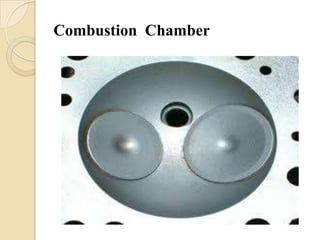
Combustion Chamber
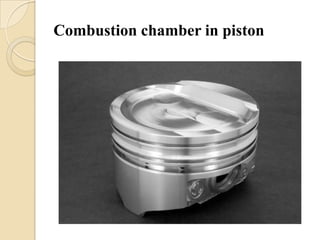
Combustion chamber in piston
COMBUSTION CHAMBER
 A combustion chamber is the part of an engine in which
fuel is burned.
 The combustion chamber is the area inside the engine
 where the fuel/air mixture is compressed and then
ignited.
 It is generally formed on one side by the shape cast into
the cylinder head,
 and on the other side by the top of the piston.
 The combustion chamber is recessed in the cylinder head
and commonly contains a single intake valve and a single
exhaust valve.
When the piston is at top-dead-center the chamber is at its
smallest dimension, and this is the time
 when the fuel/air mixture is at its most unstable condition
and ready to be ignited.
 The better the combustion chamber is designed the better
the engine "breathes;"
 that is, the more efficient the overall flow of air through
the engine
 The hot gases produced by the combustion occupy a far
greater volume than the original fuel,
 Thus creating an increase in pressure within the limited
volume of the chamber.
 This pressure can be used to do work,
 For example, to move a piston on a crankshaft or a
turbine disc in a gas turbine.
 The energy can also be used to produce thrust when
directed out of a nozzle as in a rocket engine.
 The shape of the chamber has a marked effect on power
output, efficiency and harmful emissions
 The intake valve/port is usually placed to give the
mixture a pronounced "swirl" (the term is preferred to
turbulence which implies movement without overall
pattern) above the rising piston,
 improving mixing and combustion.
The shape of the piston top also affects the amount of
swirl.
 Finally, the spark plug must be situated in a position
from which the flame front can reach all parts of the
chamber at the desired point,
 usually around 15 degrees after top dead centre
 Various shapes of combustion chamber have been used,
Combustion chamber types.
 Hemispherical or Pentroof Combustion
Chamber
 Wedge-Shaped Chambers
 Bathtub or Heart-shaped Combustion Chamber
Hemispherical or Pentroof Combustion
Chamber
Hemispherical or Pentroof Combustion
Chamber
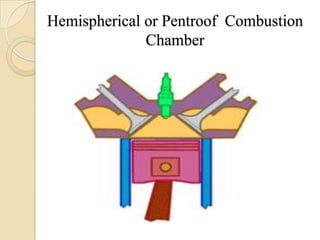
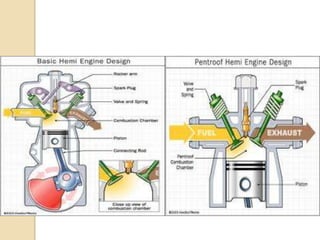
 Hemispherical combustion chamber is one half of
a sphere cast into the bottom of the cylinder head.
 The valves are placed at the outside of the bore
area,
 and at a specific angle from the crankshaft
centerline.
 Hemispherical chambers generally have a central
spark plug, which offers excellent octane tolerance.
 This creates a more efficient cross-flow movement of the
charge during valve overlap and limits thermal transfer
from the exhaust valve to the fresh charge.
 This design offers the best surface-to-volume ratio and
also creates a very short direct exhaust port, essential in
limiting heat rejection into the coolant.
 An additional benefit is the distance between the intake
and exhaust valves, which further limits heat transfer.
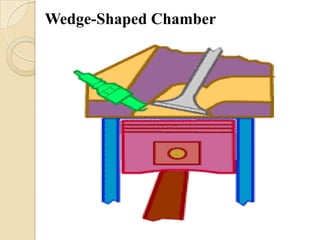
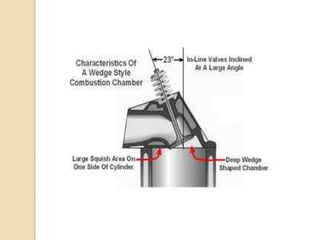
Wedge-Shaped Chamber
 This type of chamber resembles an inclined basin
recessed into the deck of the head.
 The spark plug is located on the thick side of the wedge
and is usually positioned midway between the valves.
 The relatively steep walls in such chamber design force
the air/fuel flow path and deflect .
 and force it to move in a downward spiral around the
cylinder axis.
 During the compression stroke, the compressed air/fuel
area reduces
 To such an extent that the trapped mixture is violently
thrust from the thin to the thick end of the chamber.
 This builds up significant kinetic energy, which when
ignited contributes to overall power.
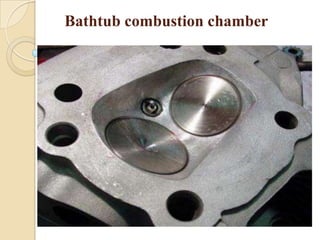
Bathtub combustion chamber
This is formed in the cylinder head and has two vertical
valves and a side- mounted spark plug.
 Mixture in the squish’ area between the piston and the
flat face of the head provides some turbulence within the
mixture,
 Air is pushed into combustion space provided air
movement known as squish.
 which helps it burn smoothly.
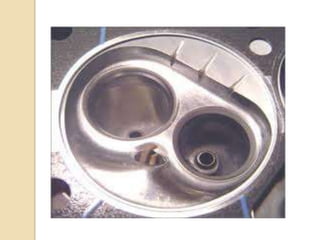
 Some bathtub chambers have a shaped
projection between the valves,
 giving the chamber a heart-shaped plan view.
 This swirls the incoming mixture, helping to
atomize it further.
Thanks

Combustion chamber

  • 1.
  • 2.
  • 3.
    COMBUSTION CHAMBER  Acombustion chamber is the part of an engine in which fuel is burned.  The combustion chamber is the area inside the engine  where the fuel/air mixture is compressed and then ignited.  It is generally formed on one side by the shape cast into the cylinder head,  and on the other side by the top of the piston.
  • 4.
     The combustionchamber is recessed in the cylinder head and commonly contains a single intake valve and a single exhaust valve. When the piston is at top-dead-center the chamber is at its smallest dimension, and this is the time  when the fuel/air mixture is at its most unstable condition and ready to be ignited.  The better the combustion chamber is designed the better the engine "breathes;"  that is, the more efficient the overall flow of air through the engine
  • 5.
     The hotgases produced by the combustion occupy a far greater volume than the original fuel,  Thus creating an increase in pressure within the limited volume of the chamber.  This pressure can be used to do work,  For example, to move a piston on a crankshaft or a turbine disc in a gas turbine.  The energy can also be used to produce thrust when directed out of a nozzle as in a rocket engine.
  • 6.
     The shapeof the chamber has a marked effect on power output, efficiency and harmful emissions  The intake valve/port is usually placed to give the mixture a pronounced "swirl" (the term is preferred to turbulence which implies movement without overall pattern) above the rising piston,  improving mixing and combustion. The shape of the piston top also affects the amount of swirl.
  • 7.
     Finally, thespark plug must be situated in a position from which the flame front can reach all parts of the chamber at the desired point,  usually around 15 degrees after top dead centre  Various shapes of combustion chamber have been used,
  • 8.
    Combustion chamber types. Hemispherical or Pentroof Combustion Chamber  Wedge-Shaped Chambers  Bathtub or Heart-shaped Combustion Chamber
  • 9.
    Hemispherical or PentroofCombustion Chamber
  • 11.
    Hemispherical or PentroofCombustion Chamber  Hemispherical combustion chamber is one half of a sphere cast into the bottom of the cylinder head.  The valves are placed at the outside of the bore area,  and at a specific angle from the crankshaft centerline.  Hemispherical chambers generally have a central spark plug, which offers excellent octane tolerance.
  • 12.
     This createsa more efficient cross-flow movement of the charge during valve overlap and limits thermal transfer from the exhaust valve to the fresh charge.  This design offers the best surface-to-volume ratio and also creates a very short direct exhaust port, essential in limiting heat rejection into the coolant.  An additional benefit is the distance between the intake and exhaust valves, which further limits heat transfer.
  • 13.
  • 15.
    Wedge-Shaped Chamber  Thistype of chamber resembles an inclined basin recessed into the deck of the head.  The spark plug is located on the thick side of the wedge and is usually positioned midway between the valves.  The relatively steep walls in such chamber design force the air/fuel flow path and deflect .  and force it to move in a downward spiral around the cylinder axis.
  • 16.
     During thecompression stroke, the compressed air/fuel area reduces  To such an extent that the trapped mixture is violently thrust from the thin to the thick end of the chamber.  This builds up significant kinetic energy, which when ignited contributes to overall power.
  • 17.
  • 19.
    Bathtub combustion chamber Thisis formed in the cylinder head and has two vertical valves and a side- mounted spark plug.  Mixture in the squish’ area between the piston and the flat face of the head provides some turbulence within the mixture,  Air is pushed into combustion space provided air movement known as squish.  which helps it burn smoothly.
  • 20.
     Some bathtubchambers have a shaped projection between the valves,  giving the chamber a heart-shaped plan view.  This swirls the incoming mixture, helping to atomize it further.
  • 21.