SPARK IGNITION ENGINES
Air-fuel ratio requirements, Design of carburetor –fuel jet size and
venture size, Stages of combustion-normal and abnormal combustion,
Factors affecting knock, Combustion chambers, Introduction to
thermodynamic analysis of SI Engine combustion process.
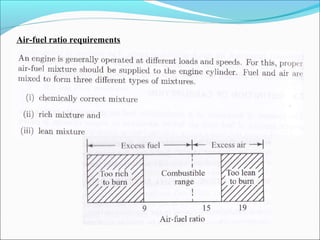
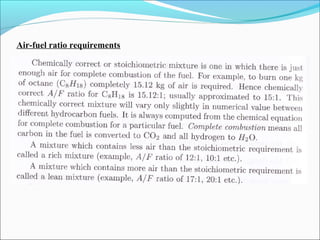
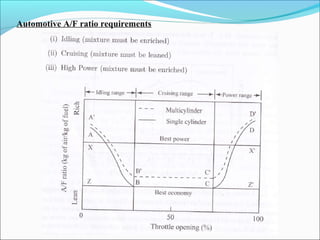
Air-fuel ratio requirements
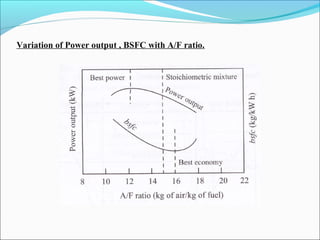
Variation of Power output , BSFC with A/F ratio.
Automotive A/F ratio requirements
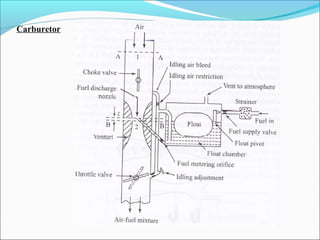
Carburetor
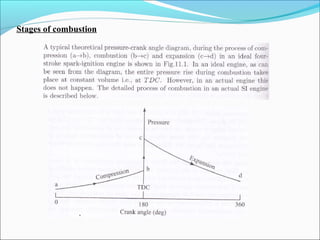
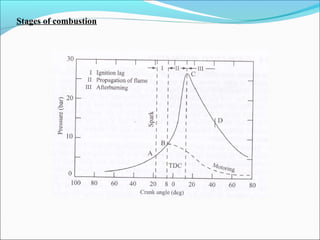
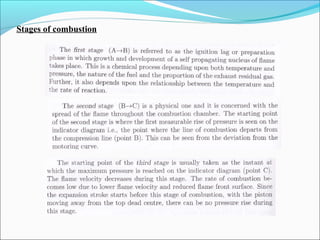
Stages of combustion
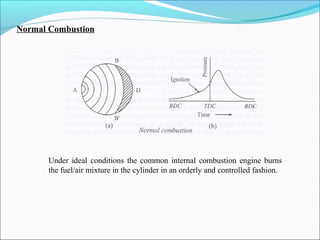
Normal Combustion
Under ideal conditions the common internal combustion engine burns
the fuel/air mixture in the cylinder in an orderly and controlled fashion.
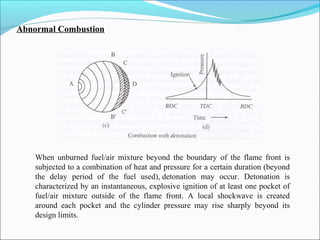
Abnormal Combustion
When unburned fuel/air mixture beyond the boundary of the flame front is
subjected to a combination of heat and pressure for a certain duration (beyond
the delay period of the fuel used), detonation may occur. Detonation is
characterized by an instantaneous, explosive ignition of at least one pocket of
fuel/air mixture outside of the flame front. A local shockwave is created
around each pocket and the cylinder pressure may rise sharply beyond its
design limits.
Knocking
Knocking (also called knock, detonation, spark knock, pinging or pinking) in spark-
ignition IC engine occurs when combustion of the air/fuel mixture in the cylinder
starts off correctly in response to ignition by the spark plug, but one or more
pockets of air/fuel mixture explode outside the envelope of the normal combustion
front.
The fuel-air charge is meant to be ignited by the spark plug only, and at a precise
point in the piston's stroke. Knock occurs when the peak of the combustion process
no longer occurs at the optimum moment for the 4 stroke cycle. The shock wave
creates the characteristic metallic "pinging" sound, and cylinder pressure increases
dramatically. Effects of engine knocking range from inconsequential to completely
destructive.
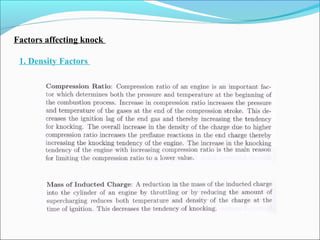
Factors affecting knock
1. Density Factors
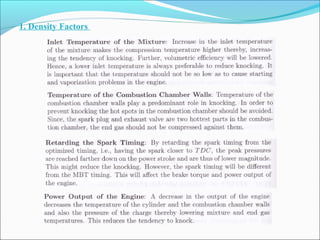
1. Density Factors
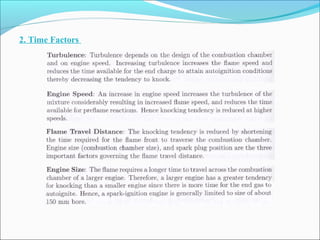
2. Time Factors
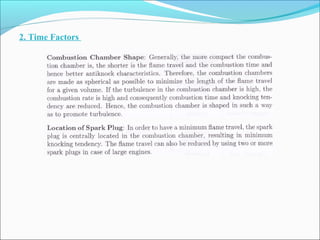
2. Time Factors
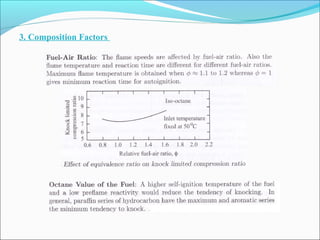
3. Composition Factors
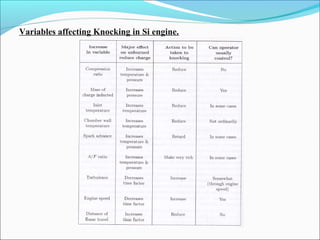
Variables affecting Knocking in Si engine.
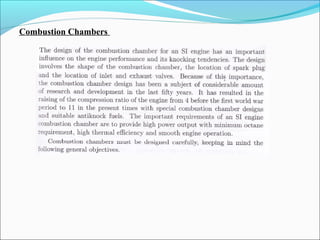
Combustion Chambers
Combustion Chambers
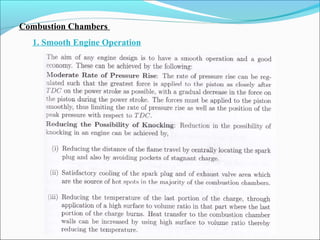
1. Smooth Engine Operation
Combustion Chambers
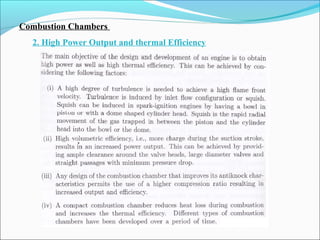
2. High Power Output and thermal Efficiency
Combustion Chambers
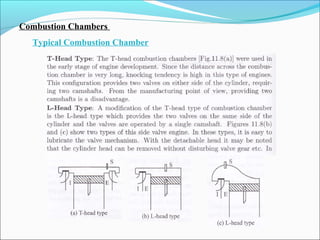
Typical Combustion Chamber
Combustion Chambers
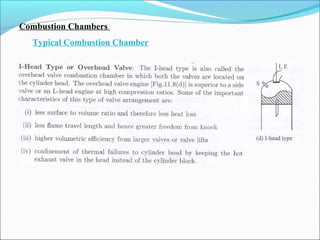
Typical Combustion Chamber
Combustion Chambers
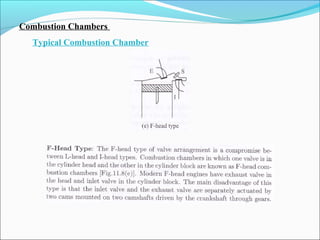
Typical Combustion Chamber

Advanced IC engines Unit i