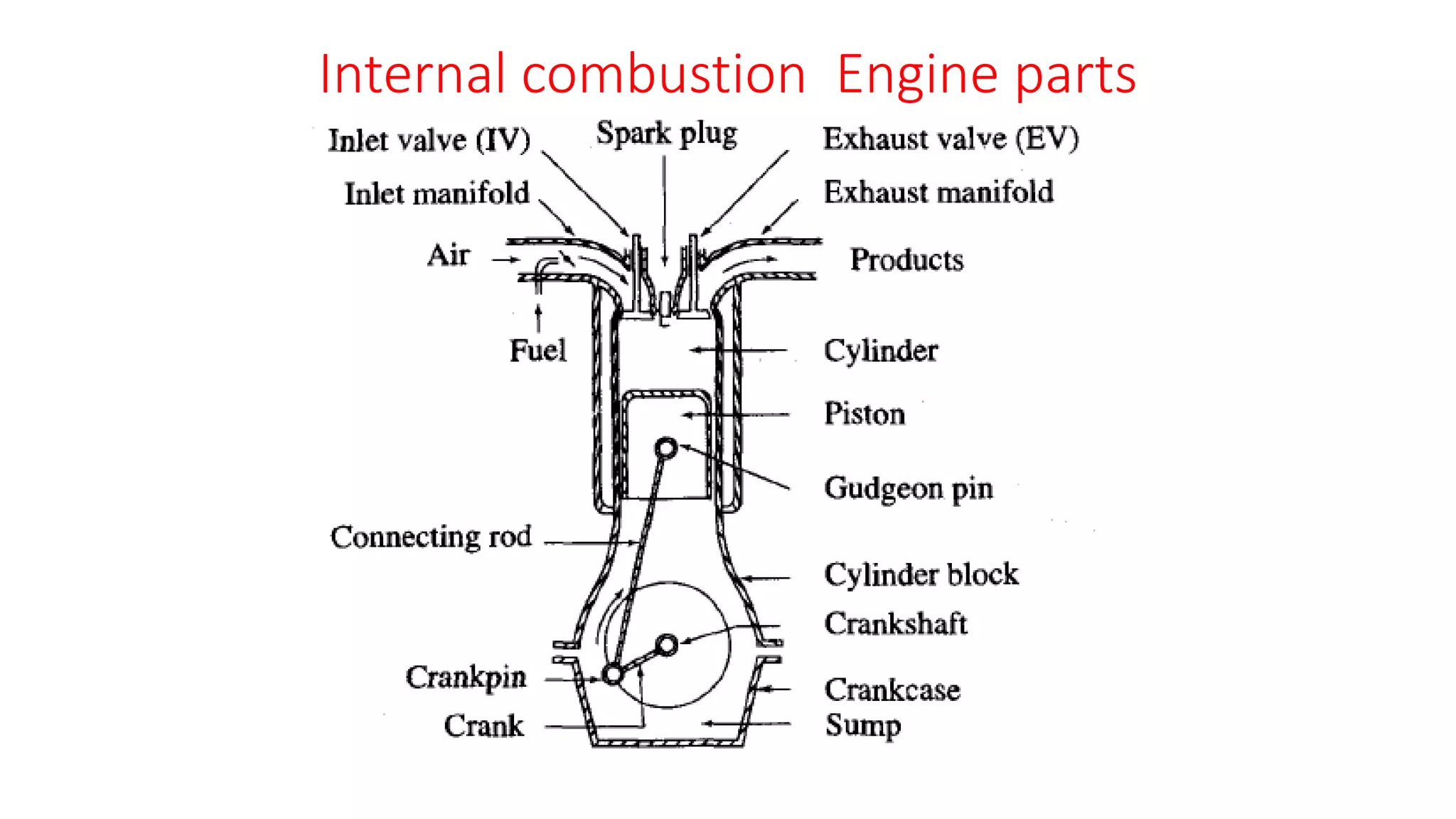
Internal combustion Engine parts
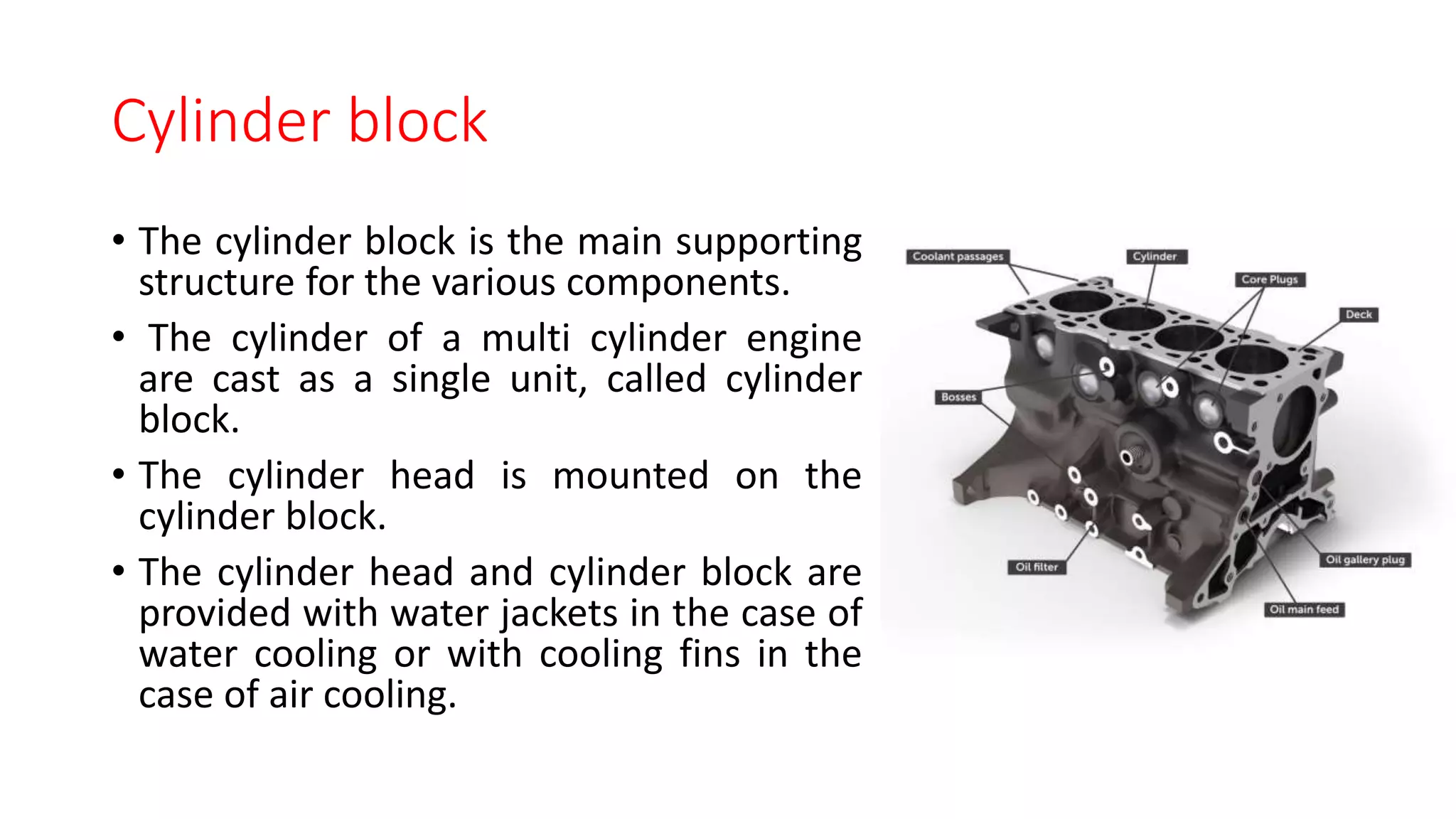
Cylinder block
• The cylinder block is the main supporting
structure for the various components.
• The cylinder of a multi cylinder engine
are cast as a single unit, called cylinder
block.
• The cylinder head is mounted on the
cylinder block.
• The cylinder head and cylinder block are
provided with water jackets in the case of
water cooling or with cooling fins in the
case of air cooling.
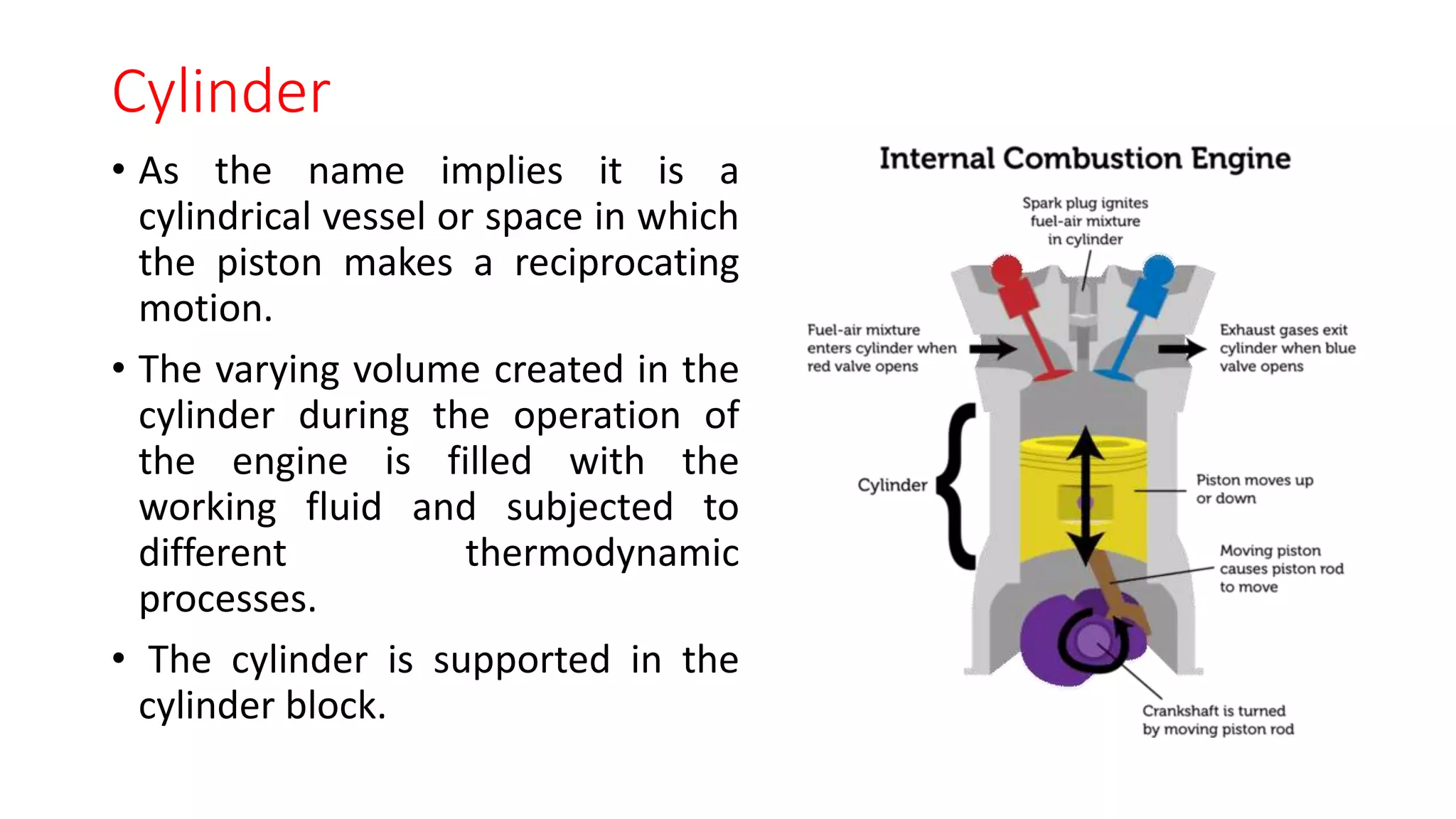
Cylinder
• As the name implies it is a
cylindrical vessel or space in which
the piston makes a reciprocating
motion.
• The varying volume created in the
cylinder during the operation of
the engine is filled with the
working fluid and subjected to
different thermodynamic
processes.
• The cylinder is supported in the
cylinder block.
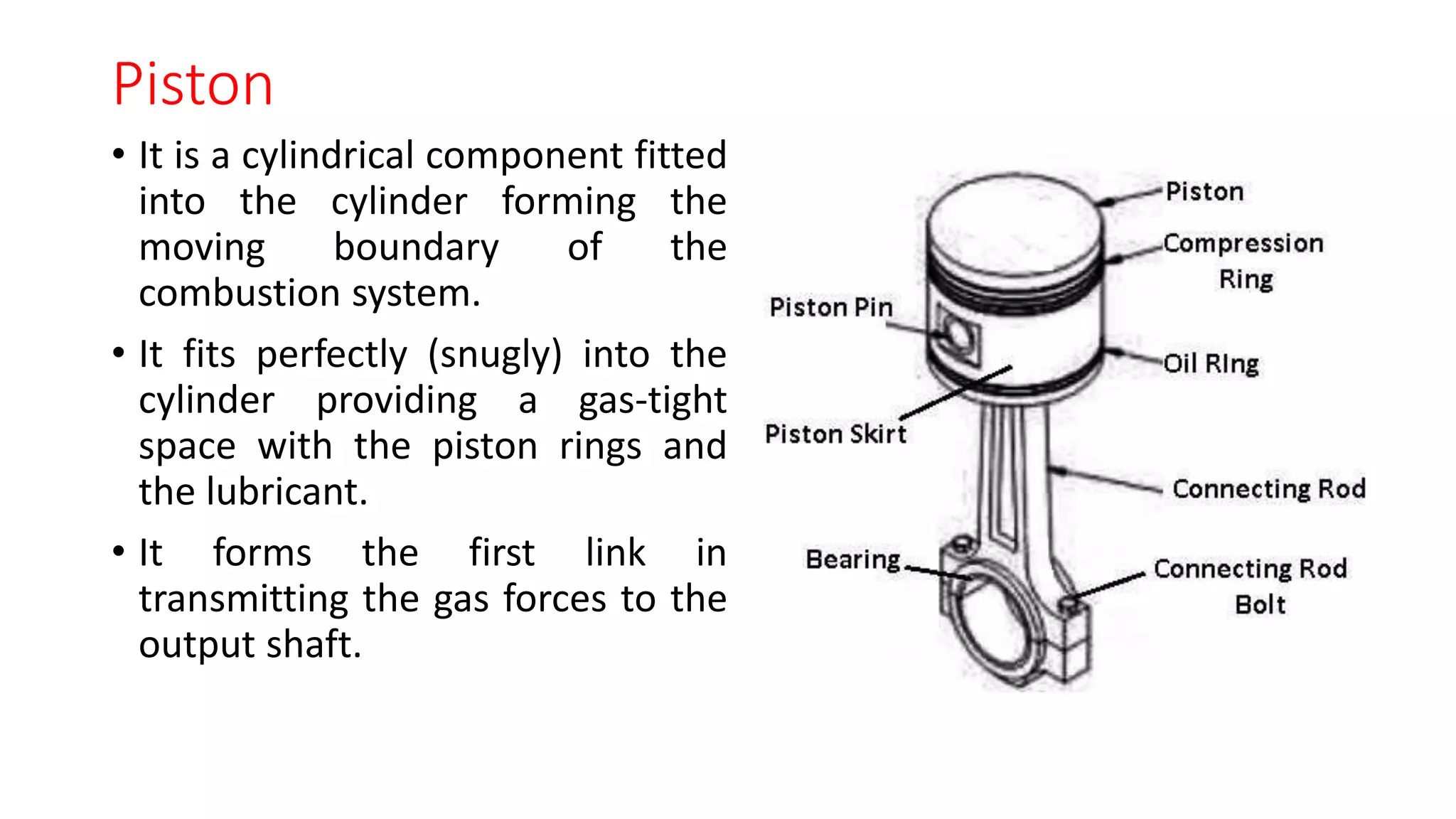
Piston
• It is a cylindrical component fitted
into the cylinder forming the
moving boundary of the
combustion system.
• It fits perfectly (snugly) into the
cylinder providing a gas-tight
space with the piston rings and
the lubricant.
• It forms the first link in
transmitting the gas forces to the
output shaft.
Combustion chamber
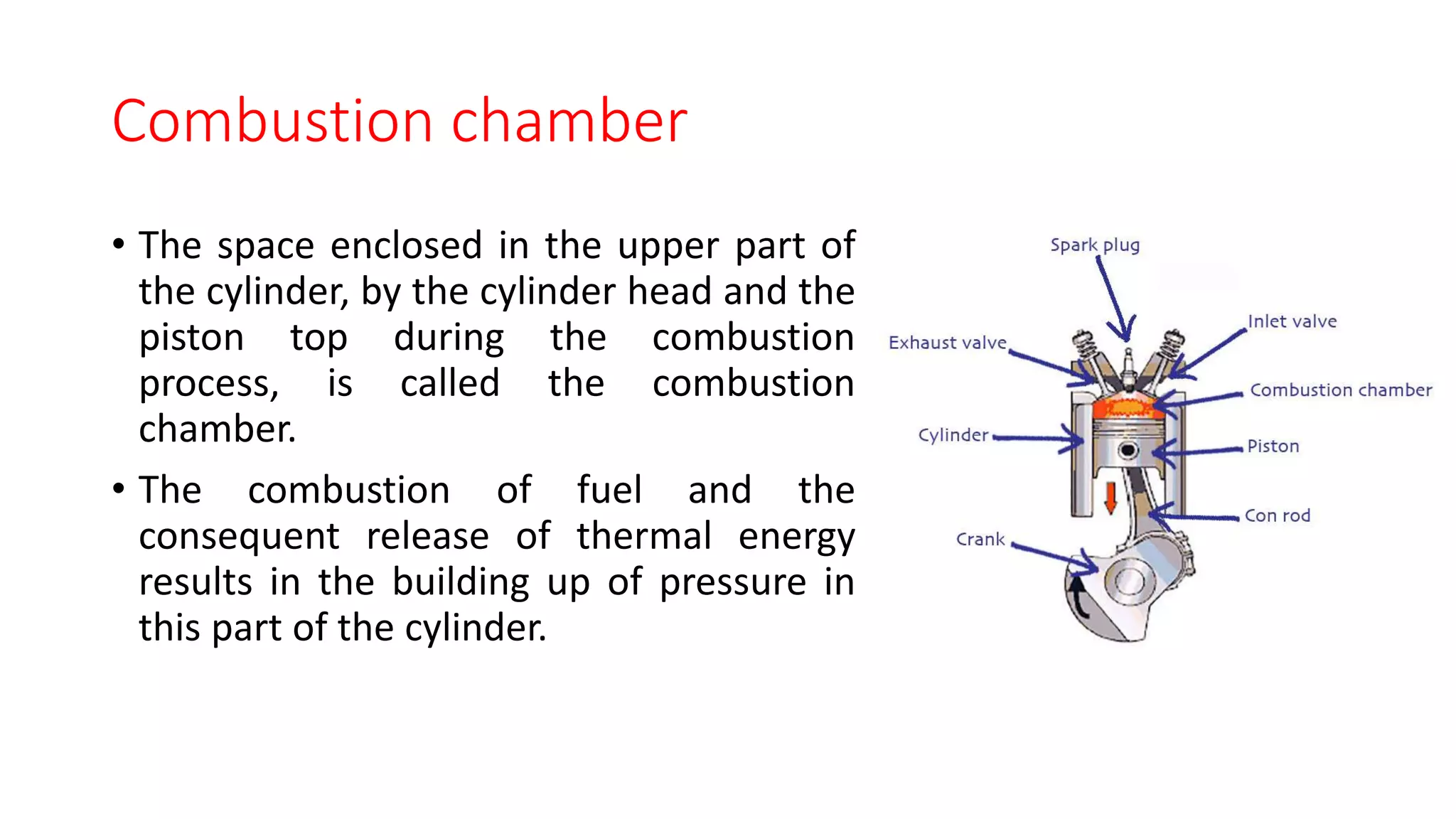
• The space enclosed in the upper part of
the cylinder, by the cylinder head and the
piston top during the combustion
process, is called the combustion
chamber.
• The combustion of fuel and the
consequent release of thermal energy
results in the building up of pressure in
this part of the cylinder.
Inlet manifold
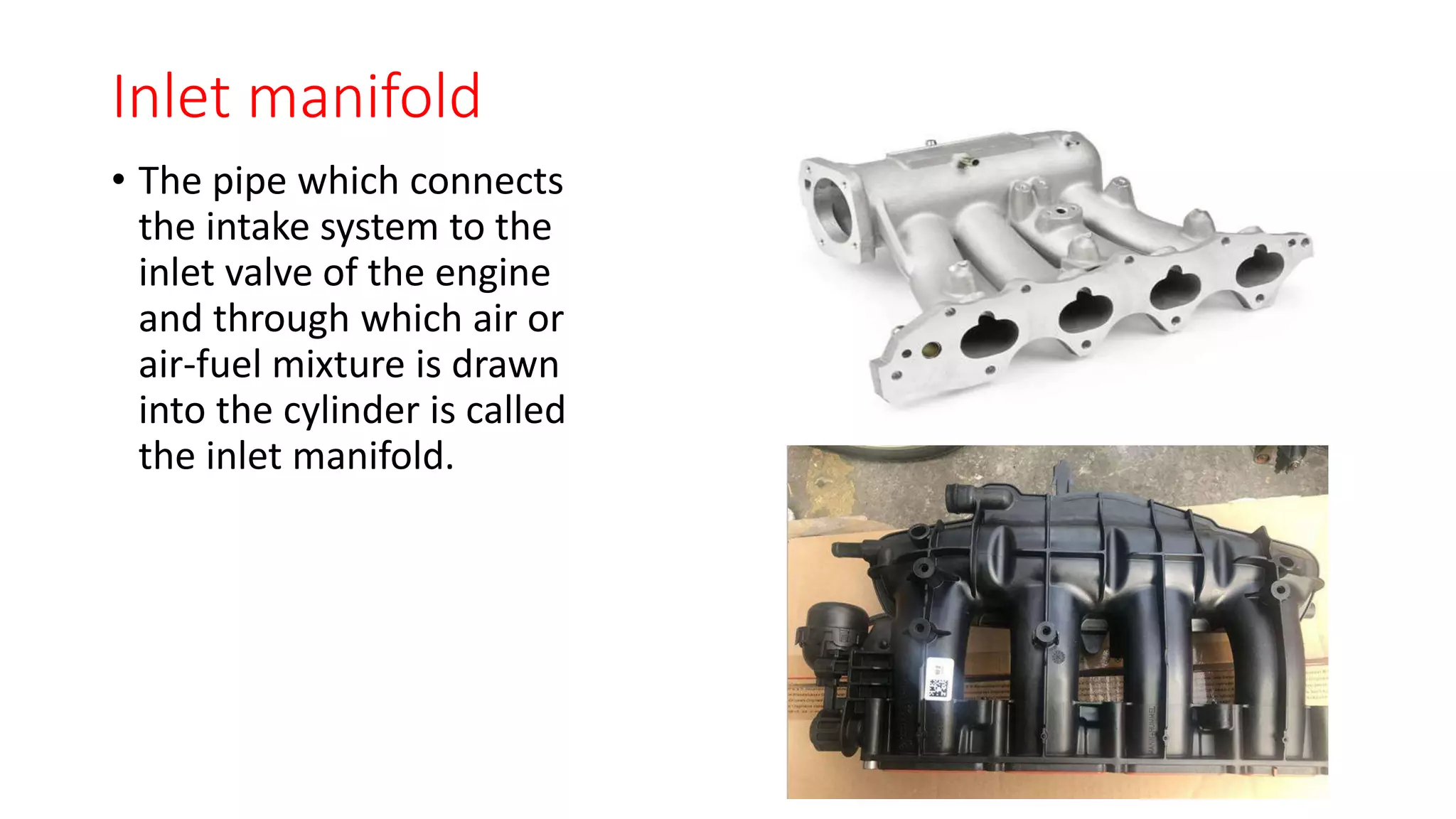
• The pipe which connects
the intake system to the
inlet valve of the engine
and through which air or
air-fuel mixture is drawn
into the cylinder is called
the inlet manifold.
Exhaust manifold
• The pipe which
connects the exhaust
system to the exhaust
valve of the engine
and through which
the products of
combustion escape
into the atmosphere
is called the exhaust
manifold.
Inlet and Exhaust valves
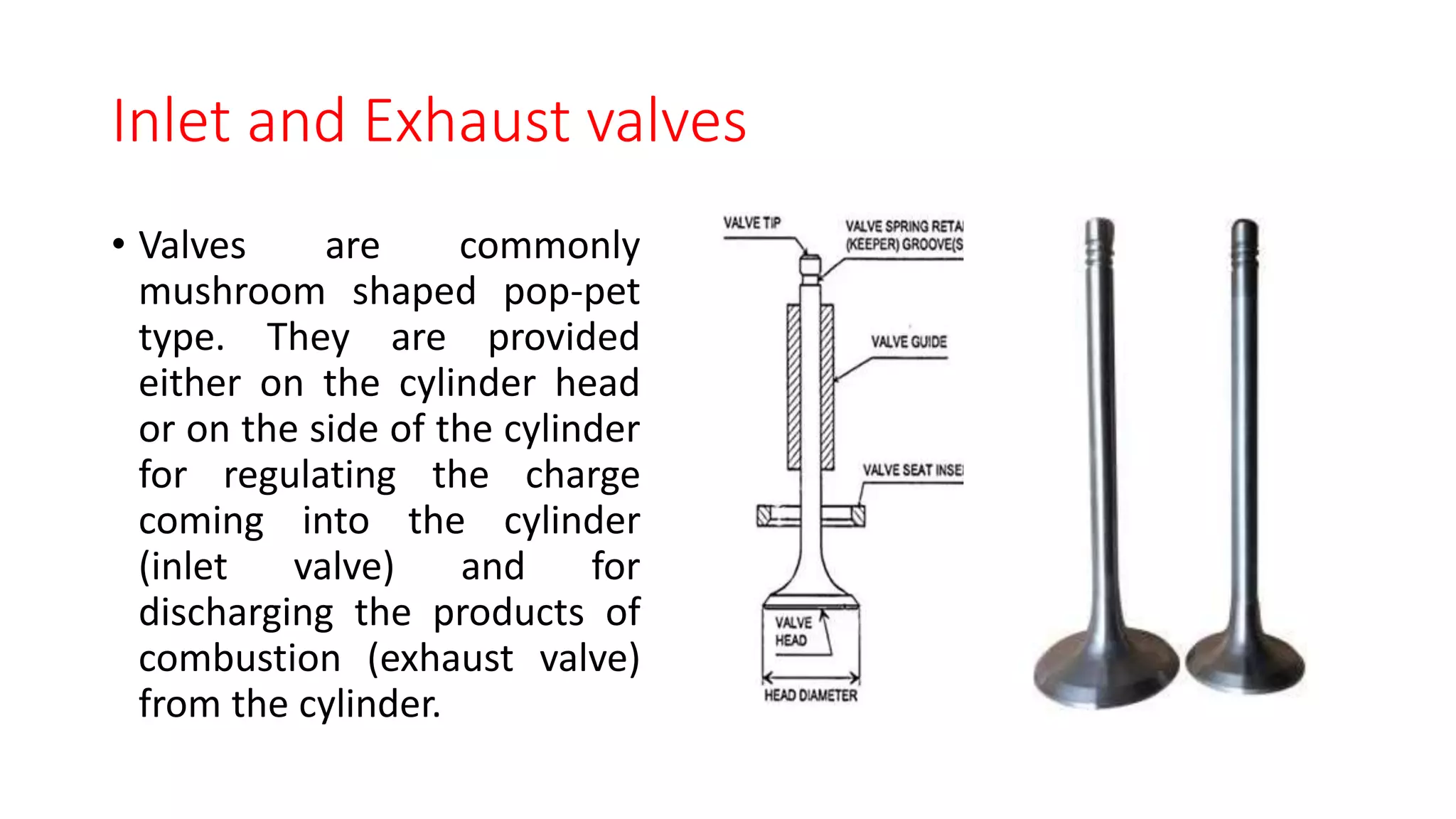
• Valves are commonly
mushroom shaped pop-pet
type. They are provided
either on the cylinder head
or on the side of the cylinder
for regulating the charge
coming into the cylinder
(inlet valve) and for
discharging the products of
combustion (exhaust valve)
from the cylinder.
Spark Plug
• It is a component to
initiate the combustion
process in Spark- Ignition
(SI) engines and is usually
located on the cylinder
head.
Connecting Rod
• It interconnects the piston and
the crankshaft and transmits the
gas forces from the piston to the
crankshaft.
• The two ends of the connecting
rod are called as small end and
the big end.
• Small end is connected to the
piston by gudgeon pin and the
big end is connected to the
crankshaft by crankpin.
Crankshaft
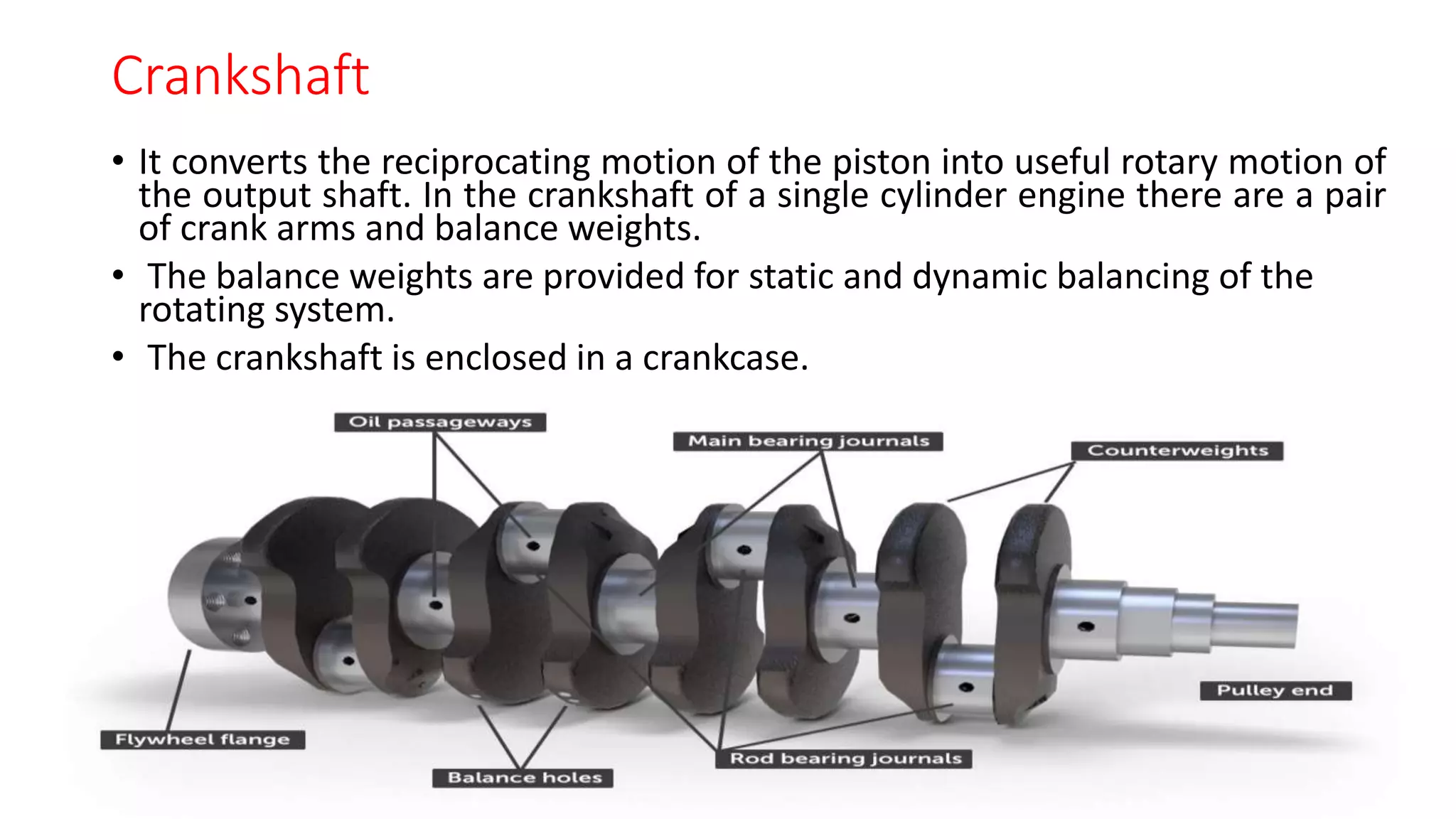
• It converts the reciprocating motion of the piston into useful rotary motion of
the output shaft. In the crankshaft of a single cylinder engine there are a pair
of crank arms and balance weights.
• The balance weights are provided for static and dynamic balancing of the
rotating system.
• The crankshaft is enclosed in a crankcase.
Piston rings
• Piston rings, fitted
into the slots around
the piston, provide a
tight seal between
the piston and the
cylinder wall thus
preventing leakage
of combustion gases.
•Gudgeon pin
• It links the small end
of the connecting
rod and the piston.
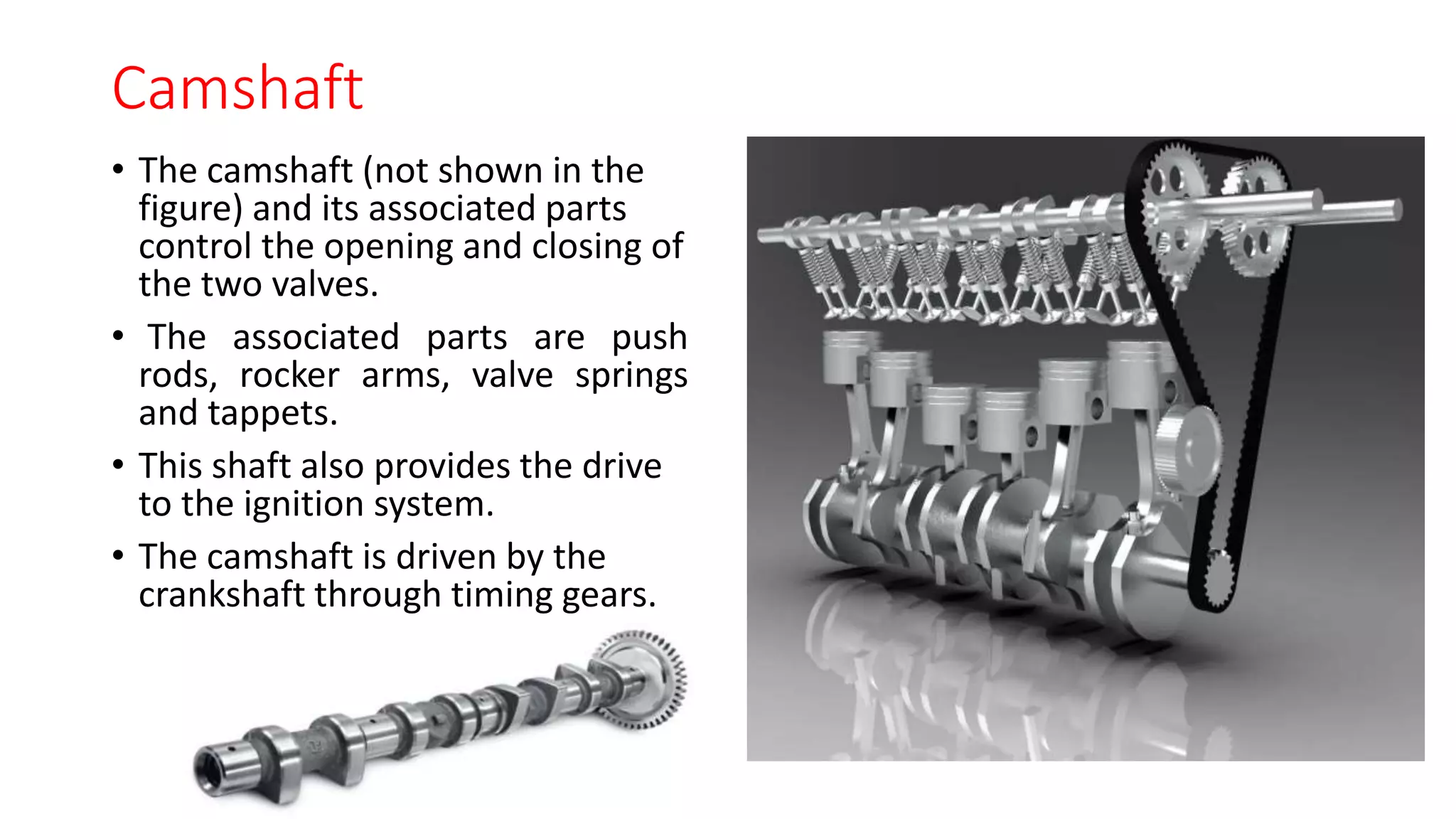
Camshaft
• The camshaft (not shown in the
figure) and its associated parts
control the opening and closing of
the two valves.
• The associated parts are push
rods, rocker arms, valve springs
and tappets.
• This shaft also provides the drive
to the ignition system.
• The camshaft is driven by the
crankshaft through timing gears.
Cams
• These are made
as integral parts
of the camshaft
and are so de-
signed to open
the valves at the
correct timing
and to keep them
open for the
necessary
duration.
Flywheel
• The net torque imparted to the
crankshaft during one complete
cycle of operation of the engine
fluctuates causing a change in
the angular velocity of the shaft.
• In order to achieve a uniform
torque an inertia mass in the
form of a wheel is attached to
the output shaft and this wheel
is called the flywheel.
Carburetor
Carburetor is used in petrol engine for proper mixing of air and petrol
Fuel pump
• Fuel pump is used in diesel engine for increasing pressure and
controlling the quantity of fuel supplied to the injector.
Fuel injector
• Fuel injector is used to inject diesel fuel in the form of fine atomized
spray under pressure at the end of compression stroke.

Ic engine parts

  • 1.
  • 2.
    Cylinder block • Thecylinder block is the main supporting structure for the various components. • The cylinder of a multi cylinder engine are cast as a single unit, called cylinder block. • The cylinder head is mounted on the cylinder block. • The cylinder head and cylinder block are provided with water jackets in the case of water cooling or with cooling fins in the case of air cooling.
  • 3.
    Cylinder • As thename implies it is a cylindrical vessel or space in which the piston makes a reciprocating motion. • The varying volume created in the cylinder during the operation of the engine is filled with the working fluid and subjected to different thermodynamic processes. • The cylinder is supported in the cylinder block.
  • 4.
    Piston • It isa cylindrical component fitted into the cylinder forming the moving boundary of the combustion system. • It fits perfectly (snugly) into the cylinder providing a gas-tight space with the piston rings and the lubricant. • It forms the first link in transmitting the gas forces to the output shaft.
  • 5.
    Combustion chamber • Thespace enclosed in the upper part of the cylinder, by the cylinder head and the piston top during the combustion process, is called the combustion chamber. • The combustion of fuel and the consequent release of thermal energy results in the building up of pressure in this part of the cylinder.
  • 6.
    Inlet manifold • Thepipe which connects the intake system to the inlet valve of the engine and through which air or air-fuel mixture is drawn into the cylinder is called the inlet manifold.
  • 7.
    Exhaust manifold • Thepipe which connects the exhaust system to the exhaust valve of the engine and through which the products of combustion escape into the atmosphere is called the exhaust manifold.
  • 9.
    Inlet and Exhaustvalves • Valves are commonly mushroom shaped pop-pet type. They are provided either on the cylinder head or on the side of the cylinder for regulating the charge coming into the cylinder (inlet valve) and for discharging the products of combustion (exhaust valve) from the cylinder.
  • 10.
    Spark Plug • Itis a component to initiate the combustion process in Spark- Ignition (SI) engines and is usually located on the cylinder head.
  • 11.
    Connecting Rod • Itinterconnects the piston and the crankshaft and transmits the gas forces from the piston to the crankshaft. • The two ends of the connecting rod are called as small end and the big end. • Small end is connected to the piston by gudgeon pin and the big end is connected to the crankshaft by crankpin.
  • 12.
    Crankshaft • It convertsthe reciprocating motion of the piston into useful rotary motion of the output shaft. In the crankshaft of a single cylinder engine there are a pair of crank arms and balance weights. • The balance weights are provided for static and dynamic balancing of the rotating system. • The crankshaft is enclosed in a crankcase.
  • 13.
    Piston rings • Pistonrings, fitted into the slots around the piston, provide a tight seal between the piston and the cylinder wall thus preventing leakage of combustion gases. •Gudgeon pin • It links the small end of the connecting rod and the piston.
  • 14.
    Camshaft • The camshaft(not shown in the figure) and its associated parts control the opening and closing of the two valves. • The associated parts are push rods, rocker arms, valve springs and tappets. • This shaft also provides the drive to the ignition system. • The camshaft is driven by the crankshaft through timing gears.
  • 15.
    Cams • These aremade as integral parts of the camshaft and are so de- signed to open the valves at the correct timing and to keep them open for the necessary duration.
  • 16.
    Flywheel • The nettorque imparted to the crankshaft during one complete cycle of operation of the engine fluctuates causing a change in the angular velocity of the shaft. • In order to achieve a uniform torque an inertia mass in the form of a wheel is attached to the output shaft and this wheel is called the flywheel.
  • 17.
    Carburetor Carburetor is usedin petrol engine for proper mixing of air and petrol
  • 18.
    Fuel pump • Fuelpump is used in diesel engine for increasing pressure and controlling the quantity of fuel supplied to the injector.
  • 19.
    Fuel injector • Fuelinjector is used to inject diesel fuel in the form of fine atomized spray under pressure at the end of compression stroke.