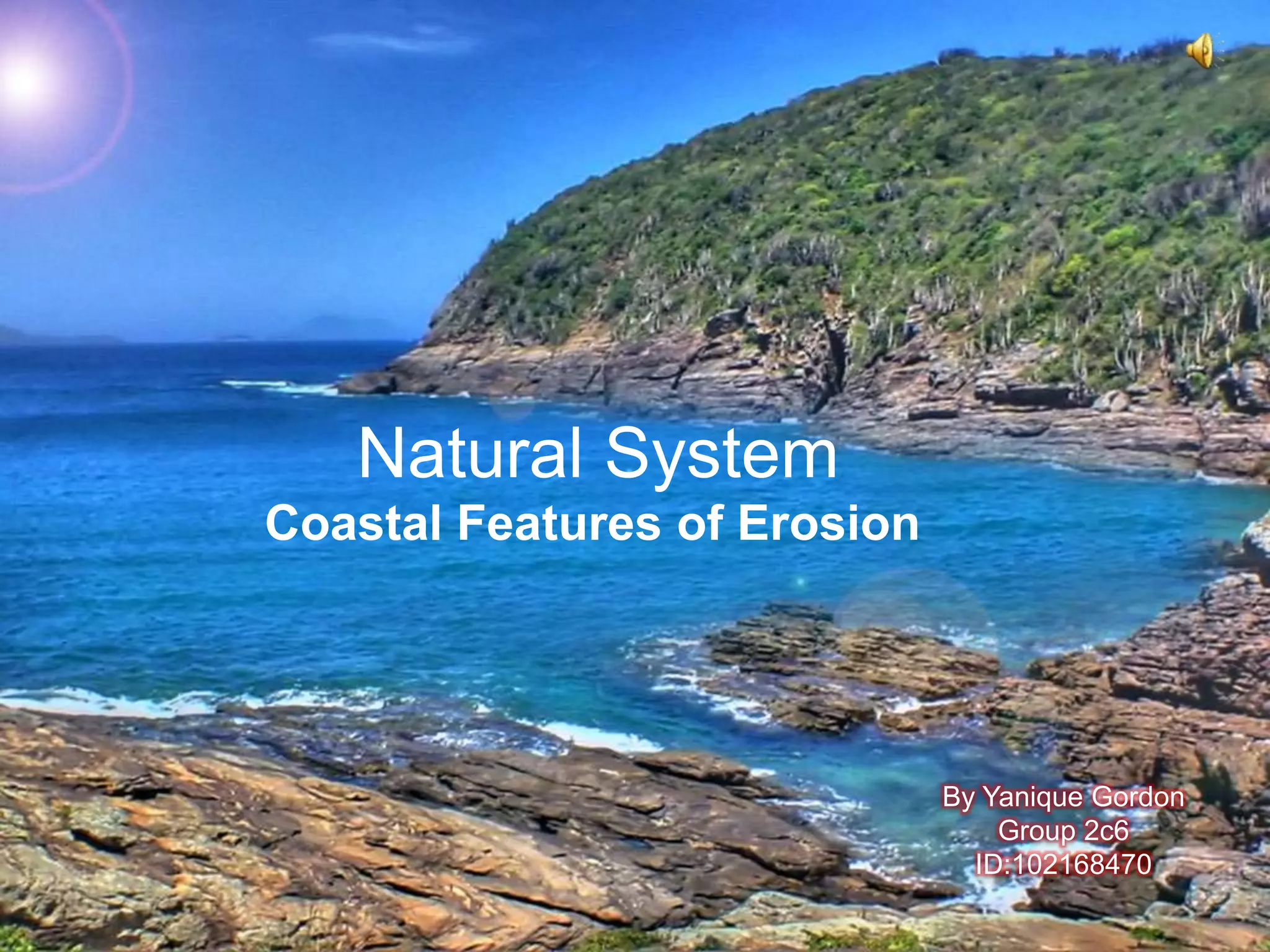
Natural System
Coastal Features of Erosion

By Yanique Gordon
Group 2c6
ID:102168470
Title Page
Institution:

Course:
Name:
Id # :
Date :
Major:

The Mico University
College
Advance Application for
the 21 Century classroom
Yanique Gordon
102168470
December 13, 2013
Geography
Coastal Features of Erosion
Grade 9
Content
Objectives

Rationale

Introduction

Waves

Constructive/
Destructive
Wave

Coastal Erosion

Landforms of
Costal Erosion

Headlands
and Bays
Cliffs and
Waves cut
platform
Caves, Arch,
Stack and
Stump

Additional
Information

Quiz

Conclusion

Reference

Click on the links to research
Objectives
At the end students must be able to:
General Objectives: Understand that
landforms was created by costal erosions
Specific Objectives:
• Explain waves
• Differentiate between wave types
• Name and identify coastal landforms
• Describe the different landforms
Rationale
• It is important for students to understand and
appreciate the environment in which they
live. The processes of coastal erosion is
naturally dynamic and often impact the
ecological environment. This PowerPoint
allow students to interact as well as promote
independent learning.
Introduction
Earth has changed! The indentation in
mountains and boulders that you see in the
water, passing the coast were once apart of
mountains. You may believe that they look
like they've been there forever, but the truth
is that they a result of erosion. The effects
of waves have left exposed areas to erosion
creating different landforms along the coast.
Waves
• Most Waves are formed by wind blowing
across the surface of the sea. Waves
shape landforms through erosion
transportation and deposition.
• The movement of surf waves up the shore
is known as swash. The swash takes
sand particles up the beach
Constructive/Destructive Wave
• Then the water starts to flow back down the
beach. This is back wash of the waves; it
drags sediment from the beach into the water
There are two types of breaking waves:
1. Constructive Wave- these waves help build
beaches
2. Destructive waves: these erode coastline
and beaches
Click on the link below to show how breaking waves are formed:
deconstructive and constructive waves
Coastal Erosion
• Erosion is when wind, water, and ice take
away sediments of land. Sediment is
made of rocks, dirt, and earth.
• Coastal erosion occurs along beaches
and shorelines Both wind action and water
action constantly change the boundary
between land and water.
Landforms of Coastal Erosion
• Coastal erosion takes land away forever
from one area to deposit it someplace
else.
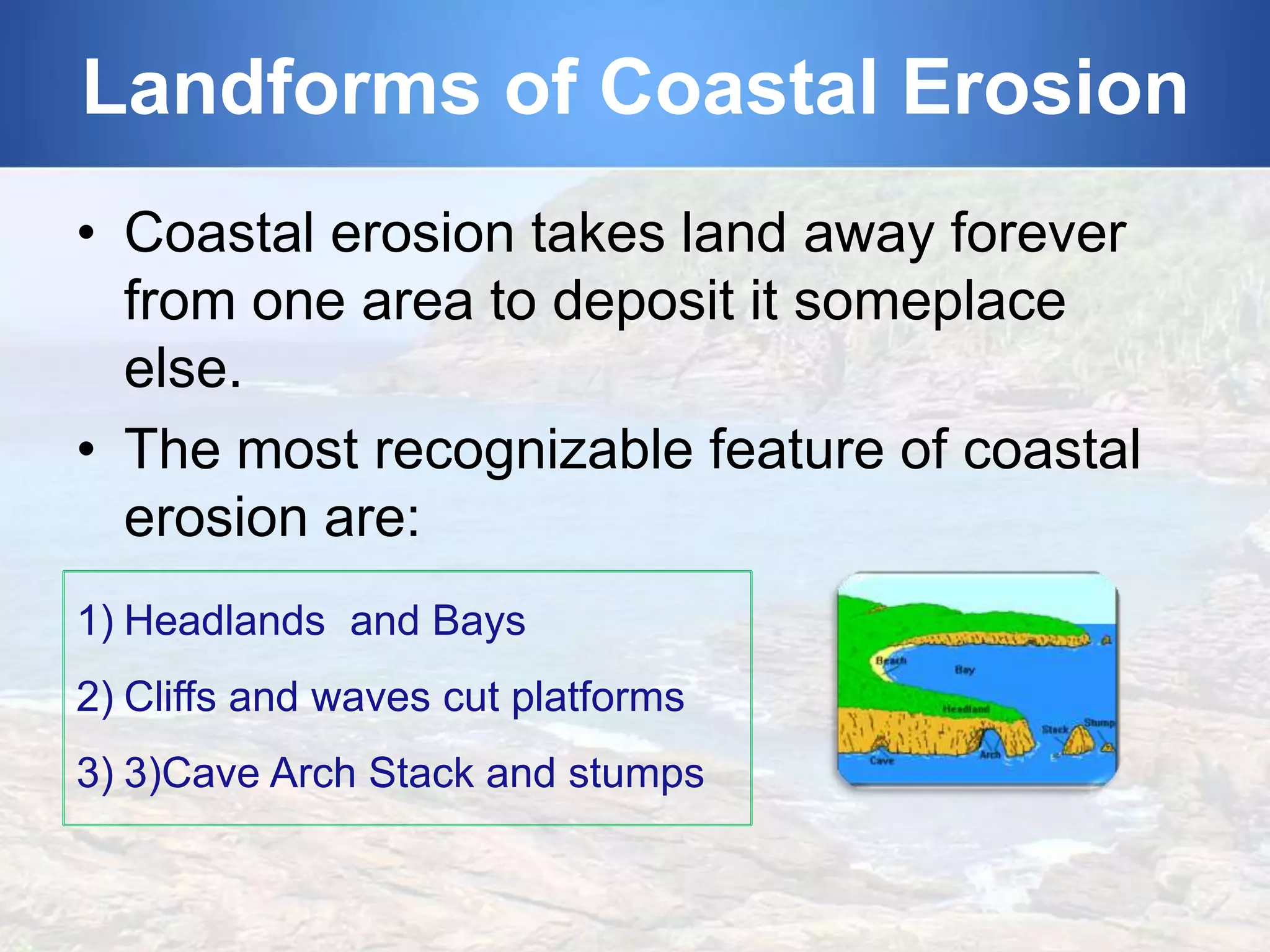
• The most recognizable feature of coastal
erosion are:
1) Headlands and Bays
2) Cliffs and waves cut platforms

3) 3)Cave Arch Stack and stumps
Headlands and Bays

This video shows formation of headlands
and bay. As well as give example of St
Brides Bay in United Kingdom

Headlands – These are
large pieces of land
mass which juts out into
the sea.
The indented area
between two headlands
is known as a bay.
Cliffs and Wave cut platform
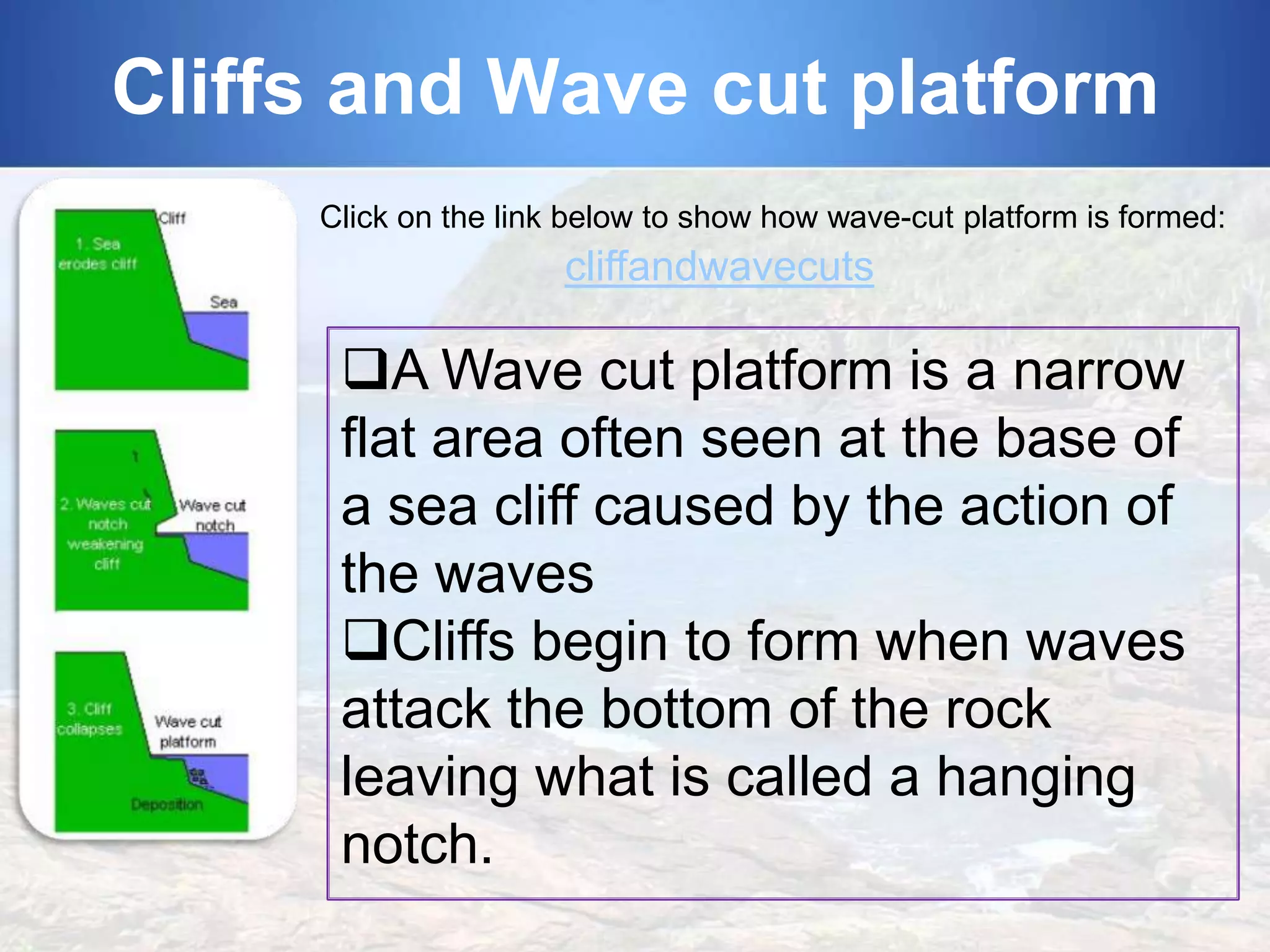
Click on the link below to show how wave-cut platform is formed:

cliffandwavecuts

A Wave cut platform is a narrow
flat area often seen at the base of
a sea cliff caused by the action of
the waves
Cliffs begin to form when waves
attack the bottom of the rock
leaving what is called a hanging
notch.
Cave Arch Stack and Stumps
• Caves occur when waves force their way
into cracks in the cliff face. The water
contains sand and other materials, grinds
away at the rock until the cracks become a
cave.
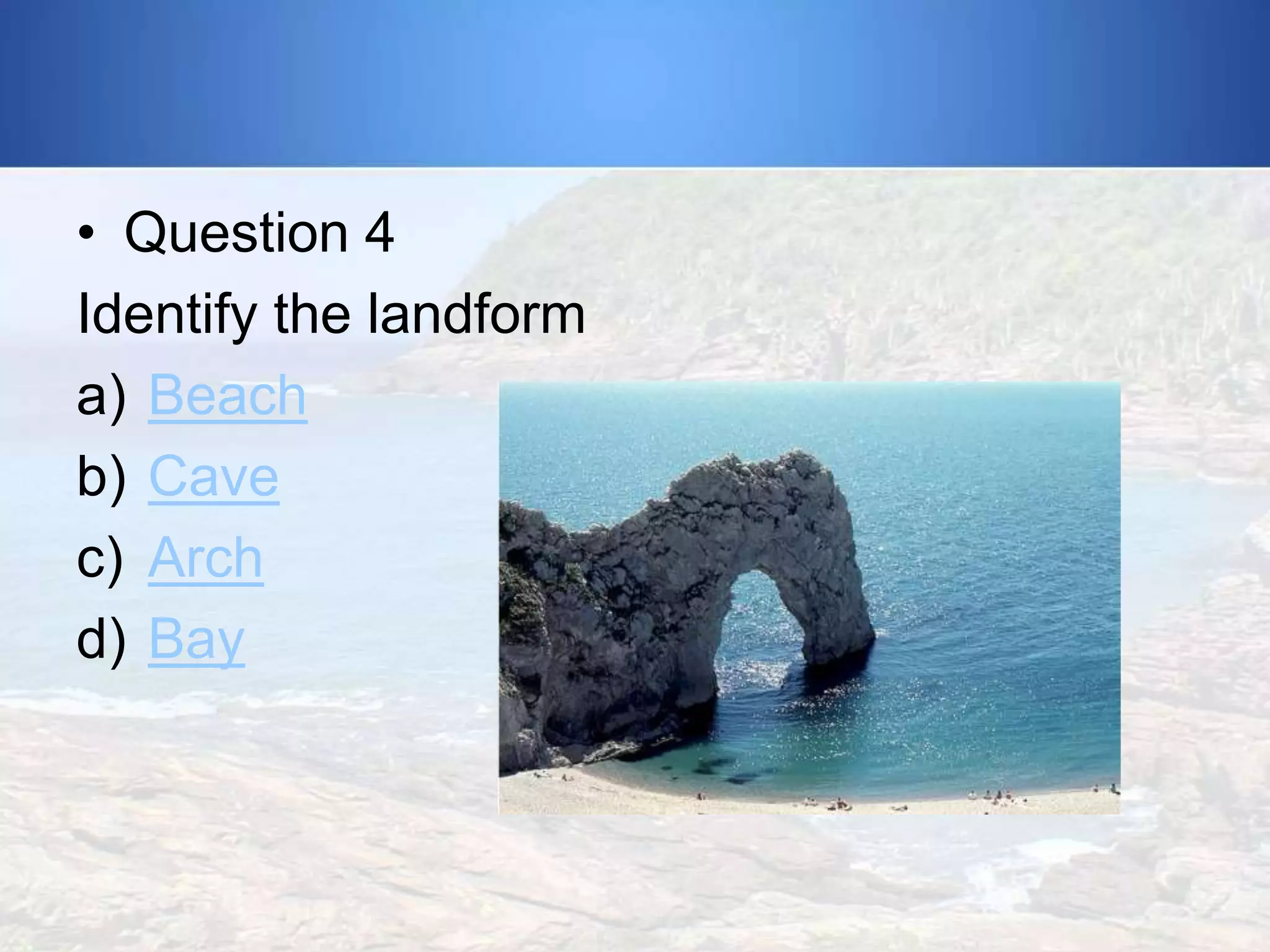
• If the cave is formed in a headland, it may
eventually break through to the other side
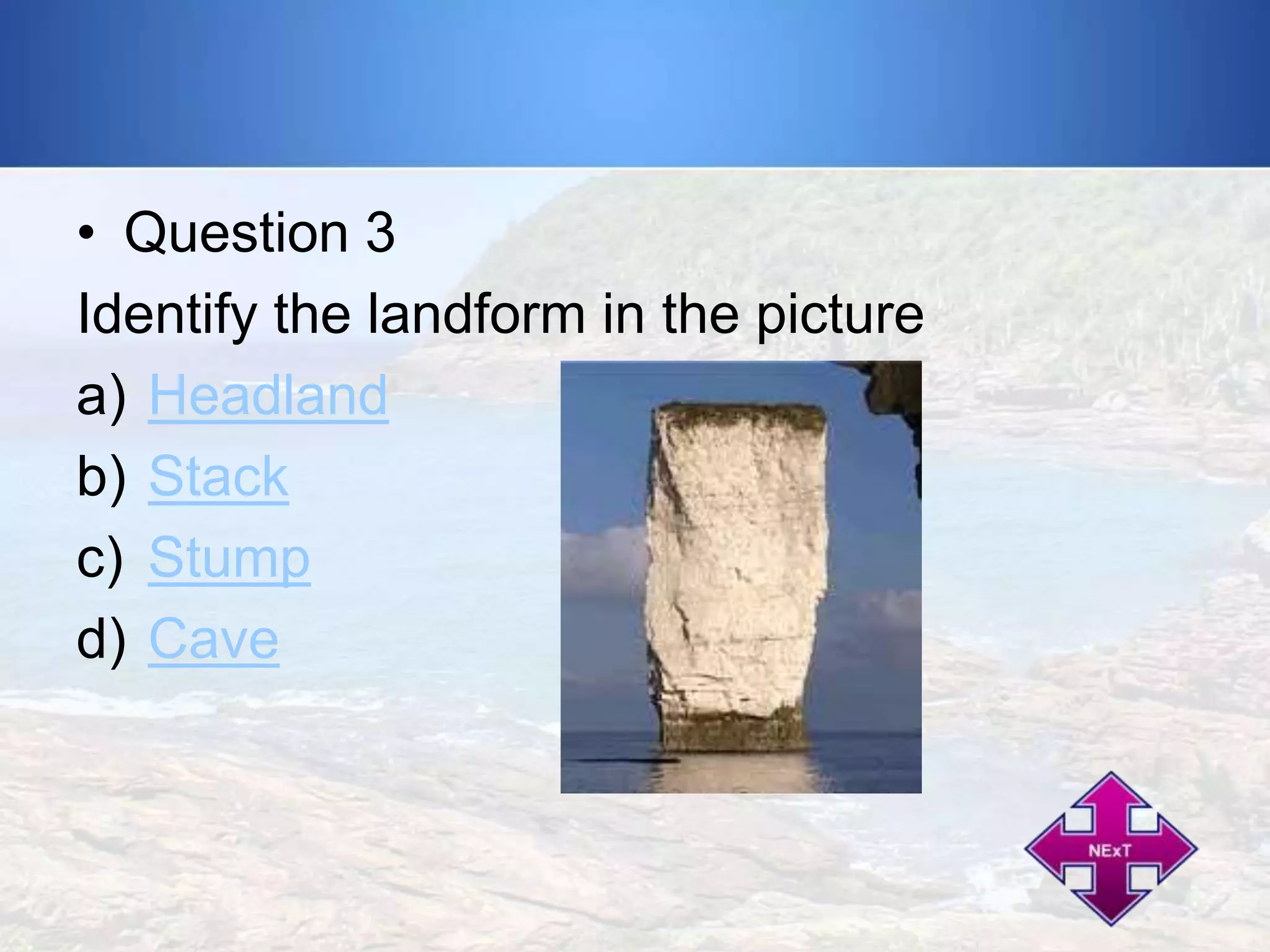
forming an arch.
Cave Arch Stack and Stumps
• When the arch becomes bigger it
eventually collapses, leaving the
headland on one side and a stack on the
other.
• The stack will be attacked at the base in
the same way that a wave-cut notch is
formed. This weakens the structure and it
will eventually collapse to form a stump.
Additional Information
Click on the web addresses
below for different resources
on costal landforms
DownloadsStack formation
(1).ppt

YouTube - How Waves Work
This video shows the effect of costal
erosion

http://www.slideshare.net/exp
attam/lithosphere-coasts
Quiz
Multiple Choice

Question 1
What is Costal Erosion?
a) The wearing away of the land
b) The falling of a cliff
c) The wearing away of land by the sea
d) The movement of the waves
• Question 2
The movement of water up the shore is
known as
a) Backwash
b) Wave length
c) Swash
d) Swells
• Question 3
Identify the landform in the picture
a) Headland
b) Stack
c) Stump
d) Cave
• Question 4
Identify the landform
a) Beach
b) Cave
c) Arch
d) Bay
Conclusion
• Erosion not only shapes our planet's
surface, but it affects the environment in
numerous ways as well. This process,
known as erosion, is gradually wearing
down the coastline. Erosion can move
mountains and create formations such as
arches, headlands and so on
Reference
• Wilson Mark(2005).Natural System. The
Caribbean Environment for CXC
Geography. (pg 56-61)
• Anthony Bennett (2009). Coast Menu.
Retrieved from
http://www.geography.learnontheinternet.c
o.uk/topics/waves.html
Coastal features of erosion

Coastal features of erosion

  • 1.
    Natural System Coastal Featuresof Erosion By Yanique Gordon Group 2c6 ID:102168470
  • 2.
    Title Page Institution: Course: Name: Id #: Date : Major: The Mico University College Advance Application for the 21 Century classroom Yanique Gordon 102168470 December 13, 2013 Geography Coastal Features of Erosion Grade 9
  • 3.
    Content Objectives Rationale Introduction Waves Constructive/ Destructive Wave Coastal Erosion Landforms of CostalErosion Headlands and Bays Cliffs and Waves cut platform Caves, Arch, Stack and Stump Additional Information Quiz Conclusion Reference Click on the links to research
  • 4.
    Objectives At the endstudents must be able to: General Objectives: Understand that landforms was created by costal erosions Specific Objectives: • Explain waves • Differentiate between wave types • Name and identify coastal landforms • Describe the different landforms
  • 5.
    Rationale • It isimportant for students to understand and appreciate the environment in which they live. The processes of coastal erosion is naturally dynamic and often impact the ecological environment. This PowerPoint allow students to interact as well as promote independent learning.
  • 6.
    Introduction Earth has changed!The indentation in mountains and boulders that you see in the water, passing the coast were once apart of mountains. You may believe that they look like they've been there forever, but the truth is that they a result of erosion. The effects of waves have left exposed areas to erosion creating different landforms along the coast.
  • 7.
    Waves • Most Wavesare formed by wind blowing across the surface of the sea. Waves shape landforms through erosion transportation and deposition. • The movement of surf waves up the shore is known as swash. The swash takes sand particles up the beach
  • 8.
    Constructive/Destructive Wave • Thenthe water starts to flow back down the beach. This is back wash of the waves; it drags sediment from the beach into the water There are two types of breaking waves: 1. Constructive Wave- these waves help build beaches 2. Destructive waves: these erode coastline and beaches Click on the link below to show how breaking waves are formed: deconstructive and constructive waves
  • 9.
    Coastal Erosion • Erosionis when wind, water, and ice take away sediments of land. Sediment is made of rocks, dirt, and earth. • Coastal erosion occurs along beaches and shorelines Both wind action and water action constantly change the boundary between land and water.
  • 10.
    Landforms of CoastalErosion • Coastal erosion takes land away forever from one area to deposit it someplace else. • The most recognizable feature of coastal erosion are: 1) Headlands and Bays 2) Cliffs and waves cut platforms 3) 3)Cave Arch Stack and stumps
  • 11.
    Headlands and Bays Thisvideo shows formation of headlands and bay. As well as give example of St Brides Bay in United Kingdom Headlands – These are large pieces of land mass which juts out into the sea. The indented area between two headlands is known as a bay.
  • 12.
    Cliffs and Wavecut platform Click on the link below to show how wave-cut platform is formed: cliffandwavecuts A Wave cut platform is a narrow flat area often seen at the base of a sea cliff caused by the action of the waves Cliffs begin to form when waves attack the bottom of the rock leaving what is called a hanging notch.
  • 13.
    Cave Arch Stackand Stumps • Caves occur when waves force their way into cracks in the cliff face. The water contains sand and other materials, grinds away at the rock until the cracks become a cave. • If the cave is formed in a headland, it may eventually break through to the other side forming an arch.
  • 14.
    Cave Arch Stackand Stumps • When the arch becomes bigger it eventually collapses, leaving the headland on one side and a stack on the other. • The stack will be attacked at the base in the same way that a wave-cut notch is formed. This weakens the structure and it will eventually collapse to form a stump.
  • 15.
    Additional Information Click onthe web addresses below for different resources on costal landforms DownloadsStack formation (1).ppt YouTube - How Waves Work This video shows the effect of costal erosion http://www.slideshare.net/exp attam/lithosphere-coasts
  • 16.
    Quiz Multiple Choice Question 1 Whatis Costal Erosion? a) The wearing away of the land b) The falling of a cliff c) The wearing away of land by the sea d) The movement of the waves
  • 19.
    • Question 2 Themovement of water up the shore is known as a) Backwash b) Wave length c) Swash d) Swells
  • 22.
    • Question 3 Identifythe landform in the picture a) Headland b) Stack c) Stump d) Cave
  • 23.
    • Question 4 Identifythe landform a) Beach b) Cave c) Arch d) Bay
  • 24.
    Conclusion • Erosion notonly shapes our planet's surface, but it affects the environment in numerous ways as well. This process, known as erosion, is gradually wearing down the coastline. Erosion can move mountains and create formations such as arches, headlands and so on
  • 25.
    Reference • Wilson Mark(2005).NaturalSystem. The Caribbean Environment for CXC Geography. (pg 56-61) • Anthony Bennett (2009). Coast Menu. Retrieved from http://www.geography.learnontheinternet.c o.uk/topics/waves.html