Coastal Landforms of Erosion
Erosion: Key Terms
• Stick the sheet in –
avoid any
confusion!
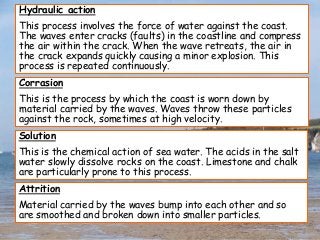
Attrition
Material carried by the waves bump into each other and so
are smoothed and broken down into smaller particles.
Corrasion
This is the process by which the coast is worn down by
material carried by the waves. Waves throw these particles
against the rock, sometimes at high velocity.
Hydraulic action
This process involves the force of water against the coast.
The waves enter cracks (faults) in the coastline and compress
the air within the crack. When the wave retreats, the air in
the crack expands quickly causing a minor explosion. This
process is repeated continuously.
Solution
This is the chemical action of sea water. The acids in the salt
water slowly dissolve rocks on the coast. Limestone and chalk
are particularly prone to this process.
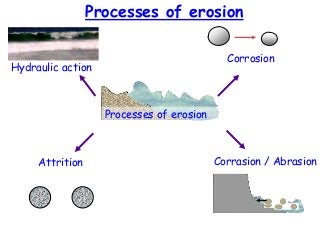
Attrition
Hydraulic action
Corrasion / Abrasion
Corrosion
Processes of erosion
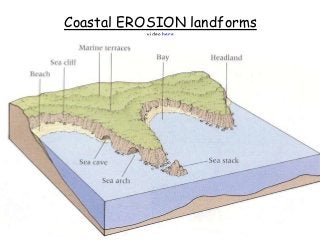
Coastal EROSION landforms
video here
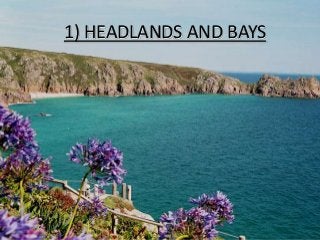
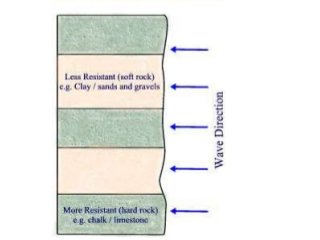
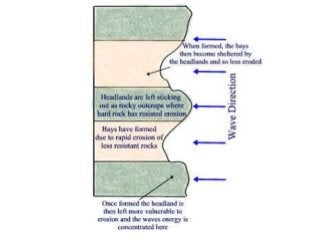
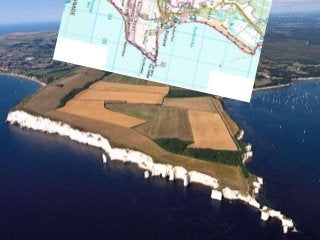
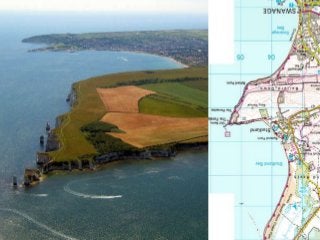
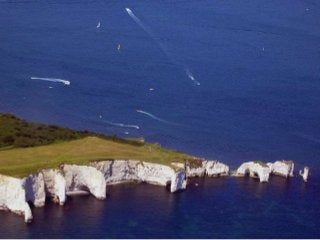
1) HEADLANDS AND BAYS
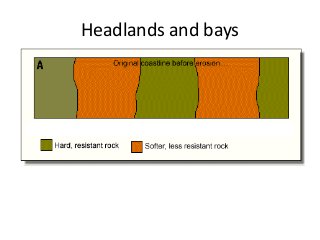
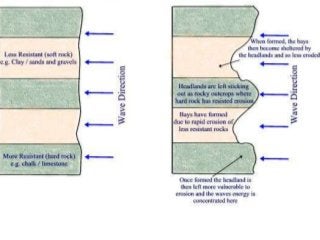
Headlands and bays
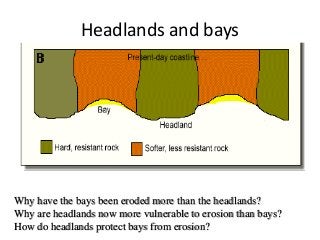
Headlands and bays
Why have the bays been eroded more than the headlands?
Why are headlands now more vulnerable to erosion than bays?
How do headlands protect bays from erosion?
Bay and Headland
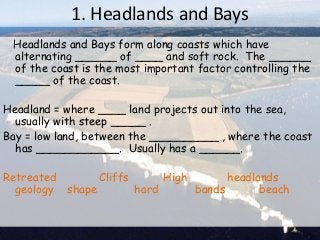
1. Headlands and Bays
Headlands and Bays form along coasts which have
alternating ______ of ____ and soft rock. The ______
of the coast is the most important factor controlling the
_____ of the coast.
Headland = where ____ land projects out into the sea,
usually with steep _____ .
Bay = low land, between the __________ , where the coast
has ____________. Usually has a ______.
Retreated Cliffs High headlands
geology shape hard bands beach
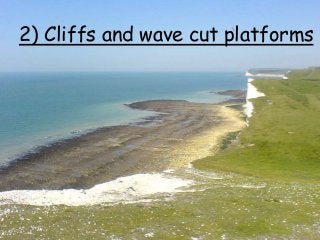
2) Cliffs and wave cut platforms
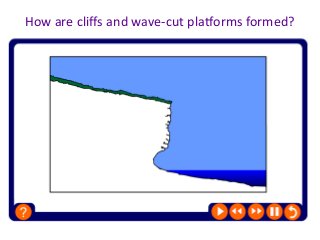
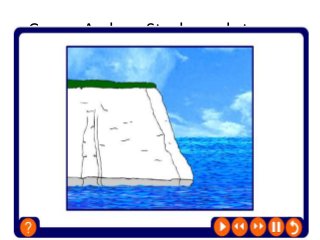
How are cliffs and wave-cut platforms formed?
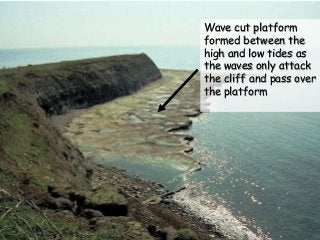
Wave cut platform
formed between the
high and low tides as
the waves only attack
the cliff and pass over
the platform
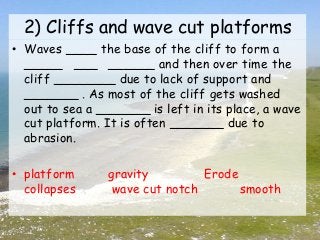
2) Cliffs and wave cut platforms
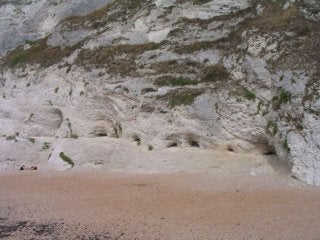
• Waves ____ the base of the cliff to form a
_____ ___ ______ and then over time the
cliff ________ due to lack of support and
_______ . As most of the cliff gets washed
out to sea a _______ is left in its place, a wave
cut platform. It is often _______ due to
abrasion.
• platform gravity Erode
collapses wave cut notch smooth
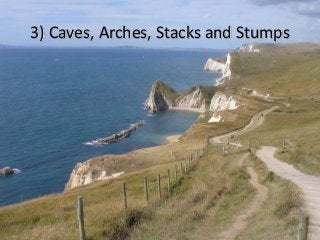
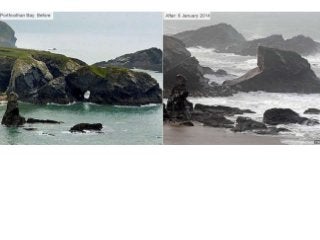
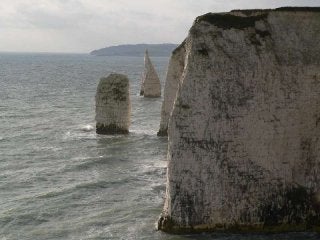
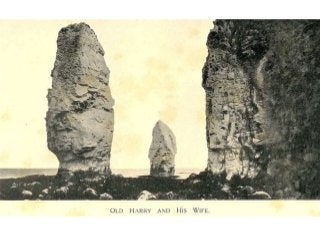
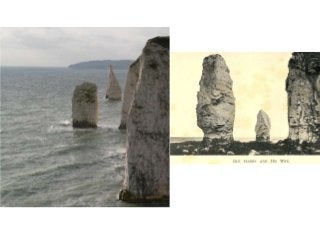
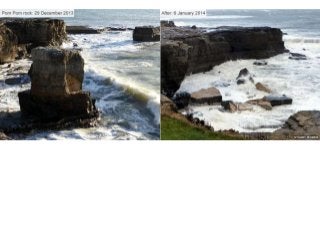
3) Caves, Arches, Stacks and Stumps
Caves, Arches, Stacks and stumps
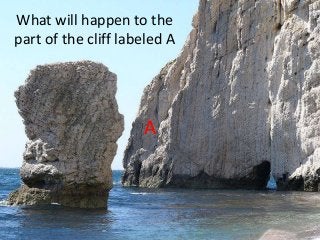
What will happen to the
part of the cliff labeled A
A
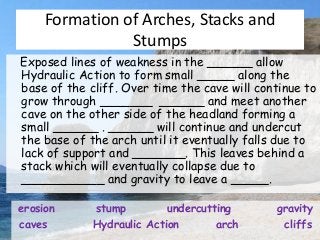
Formation of Arches, Stacks and
Stumps
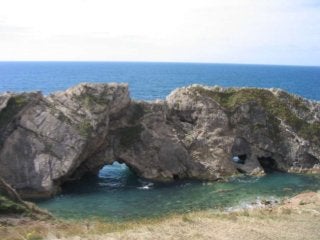
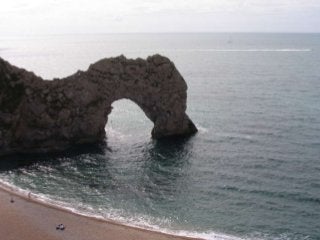
Exposed lines of weakness in the ______ allow
Hydraulic Action to form small _____ along the
base of the cliff. Over time the cave will continue to
grow through _______ ______ and meet another
cave on the other side of the headland forming a
small ______ . ______ will continue and undercut
the base of the arch until it eventually falls due to
lack of support and _______. This leaves behind a
stack which will eventually collapse due to
___________ and gravity to leave a _____.
erosion stump undercutting gravity
caves Hydraulic Action arch cliffs
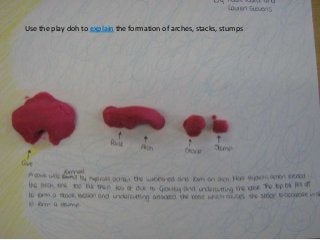
Use the play doh to explain the formation of arches, stacks, stumps
BINGO!Key words:
Erosion Long shore drift
Corrasion Attrition
Solution Hydraulic Action
Constructive Destructive
Swash Backwash
Notch Cave
Arch Stack
Stump Headland

L4 ap erosional landforms

  • 1.
  • 2.
    Erosion: Key Terms •Stick the sheet in – avoid any confusion!
  • 3.
    Attrition Material carried bythe waves bump into each other and so are smoothed and broken down into smaller particles. Corrasion This is the process by which the coast is worn down by material carried by the waves. Waves throw these particles against the rock, sometimes at high velocity. Hydraulic action This process involves the force of water against the coast. The waves enter cracks (faults) in the coastline and compress the air within the crack. When the wave retreats, the air in the crack expands quickly causing a minor explosion. This process is repeated continuously. Solution This is the chemical action of sea water. The acids in the salt water slowly dissolve rocks on the coast. Limestone and chalk are particularly prone to this process.
  • 4.
    Attrition Hydraulic action Corrasion /Abrasion Corrosion Processes of erosion Processes of erosion
  • 5.
  • 6.
  • 7.
  • 8.
    Headlands and bays Whyhave the bays been eroded more than the headlands? Why are headlands now more vulnerable to erosion than bays? How do headlands protect bays from erosion?
  • 13.
  • 15.
    1. Headlands andBays Headlands and Bays form along coasts which have alternating ______ of ____ and soft rock. The ______ of the coast is the most important factor controlling the _____ of the coast. Headland = where ____ land projects out into the sea, usually with steep _____ . Bay = low land, between the __________ , where the coast has ____________. Usually has a ______. Retreated Cliffs High headlands geology shape hard bands beach
  • 17.
    2) Cliffs andwave cut platforms
  • 18.
    How are cliffsand wave-cut platforms formed?
  • 19.
    Wave cut platform formedbetween the high and low tides as the waves only attack the cliff and pass over the platform
  • 20.
    2) Cliffs andwave cut platforms • Waves ____ the base of the cliff to form a _____ ___ ______ and then over time the cliff ________ due to lack of support and _______ . As most of the cliff gets washed out to sea a _______ is left in its place, a wave cut platform. It is often _______ due to abrasion. • platform gravity Erode collapses wave cut notch smooth
  • 22.
    3) Caves, Arches,Stacks and Stumps
  • 23.
  • 32.
    What will happento the part of the cliff labeled A A
  • 34.
    Formation of Arches,Stacks and Stumps Exposed lines of weakness in the ______ allow Hydraulic Action to form small _____ along the base of the cliff. Over time the cave will continue to grow through _______ ______ and meet another cave on the other side of the headland forming a small ______ . ______ will continue and undercut the base of the arch until it eventually falls due to lack of support and _______. This leaves behind a stack which will eventually collapse due to ___________ and gravity to leave a _____. erosion stump undercutting gravity caves Hydraulic Action arch cliffs
  • 35.
    Use the playdoh to explain the formation of arches, stacks, stumps
  • 36.
    BINGO!Key words: Erosion Longshore drift Corrasion Attrition Solution Hydraulic Action Constructive Destructive Swash Backwash Notch Cave Arch Stack Stump Headland