COACHING 
SEMINAR
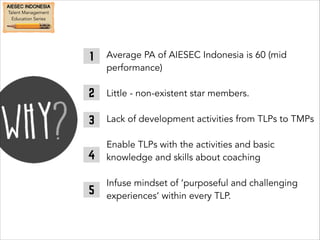
Average PA of AIESEC Indonesia is 60 (mid 
performance) 
! 
Little - non-existent star members. 
! 
Lack of development activities from TLPs to TMPs 
! 
Enable TLPs with the activities and basic 
knowledge and skills about coaching 
! 
Infuse mindset of ‘purposeful and challenging 
experiences’ within every TLP. 
1 
2 
3 
4 
5
WHAT IS 
YOUR 
ROLE?
AIESEC Indonesia is not producing leaders. 
We are not producing leadership 
development experiences. 
That stops now.
WHAT IS A 
COACH?
COACH 
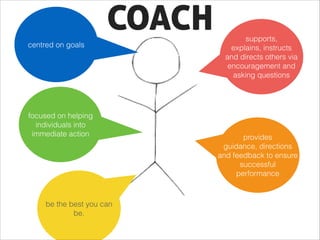
supports, 
explains, instructs 
and directs others via 
encouragement and 
asking questions 
provides 
guidance, directions 
and feedback to ensure 
successful 
performance 
centred on goals 
focused on helping 
individuals into 
immediate action 
be the best you can 
be.
Every TLP in AIESEC Indonesia is a 
coach.
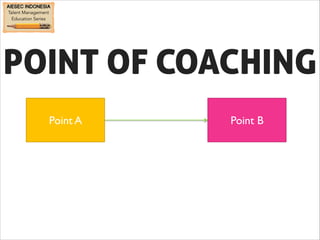
POINT OF COACHING 
Point A 
Point B
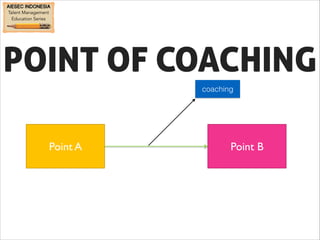
POINT OF COACHING 
coaching 
Point A 
Point B
SITUATIONAL 
LEADERSHIP
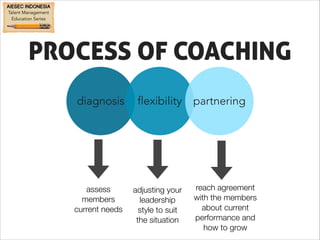
PROCESS OF COACHING 
diagnosis flexibility partnering 
assess 
members 
current needs 
adjusting your 
leadership 
style to suit 
the situation 
reach agreement 
with the members 
about current 
performance and 
how to grow
diagnosis
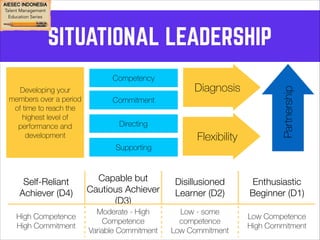
SITUATIONAL LEADERSHIP 
Developing your 
members over a period 
of time to reach the 
highest level of 
performance and 
development 
Competency 
Commitment 
Flexibility 
Partnership 
Self-Reliant 
Achiever (D4) 
Directing 
Capable but 
Cautious Achiever 
(D3) 
Disillusioned 
Learner (D2) 
Enthusiastic 
Beginner (D1) 
High Competence 
High Commitment 
Moderate - High 
Competence 
Variable Commitment 
Low - some 
competence 
Low Commitment 
Low Competence 
High Commitment 
Supporting 
Diagnosis
SITUATIONAL LEADERSHIP 
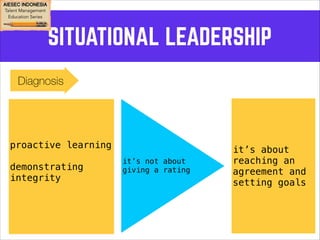
Diagnosis 
proactive learning 
! 
demonstrating 
integrity 
it’s not about 
giving a rating 
it’s about 
reaching an 
agreement and 
setting goals
SITUATIONAL LEADERSHIP 
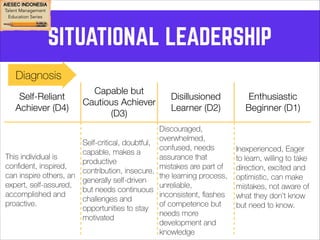
Diagnosis 
Self-Reliant 
Achiever (D4) 
Capable but 
Cautious Achiever 
(D3) 
Disillusioned 
Learner (D2) 
Enthusiastic 
Beginner (D1) 
This individual is 
confident, inspired, 
can inspire others, an 
expert, self-assured, 
accomplished and 
proactive. 
Self-critical, doubtful, 
capable, makes a 
productive 
contribution, insecure, 
generally self-driven 
but needs continuous 
challenges and 
opportunities to stay 
motivated 
Discouraged, 
overwhelmed, 
confused, needs 
assurance that 
mistakes are part of 
the learning process, 
unreliable, 
inconsistent, flashes 
of competence but 
needs more 
development and 
knowledge 
Inexperienced, Eager 
to learn, willing to take 
direction, excited and 
optimistic, can make 
mistakes, not aware of 
what they don’t know 
but need to know.
SITUATIONAL LEADERSHIP 
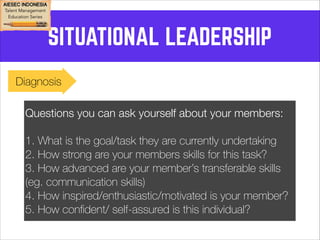
Diagnosis 
Questions you can ask yourself about your members: 
! 
1. What is the goal/task they are currently undertaking 
2. How strong are your members skills for this task? 
3. How advanced are your member’s transferable skills 
(eg. communication skills) 
4. How inspired/enthusiastic/motivated is your member? 
5. How confident/ self-assured is this individual?
SITUATIONAL LEADERSHIP 
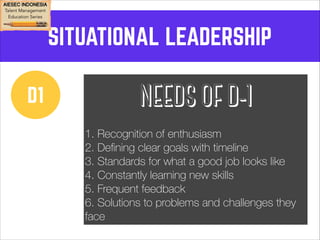
D1 NEEDS OF D-1 
! 
1. Recognition of enthusiasm 
2. Defining clear goals with timeline 
3. Standards for what a good job looks like 
4. Constantly learning new skills 
5. Frequent feedback 
6. Solutions to problems and challenges they 
face
SITUATIONAL LEADERSHIP 
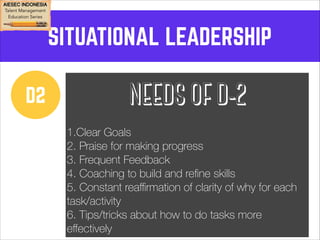
D2 NEEDS OF D-2 
! 
1.Clear Goals 
2. Praise for making progress 
3. Frequent Feedback 
4. Coaching to build and refine skills 
5. Constant reaffirmation of clarity of why for each 
task/activity 
6. Tips/tricks about how to do tasks more 
effectively
SITUATIONAL LEADERSHIP 
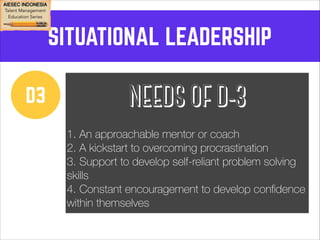
D3 NEEDS OF D-3 
! 
1. An approachable mentor or coach 
2. A kickstart to overcoming procrastination 
3. Support to develop self-reliant problem solving 
skills 
4. Constant encouragement to develop confidence 
within themselves
SITUATIONAL LEADERSHIP 
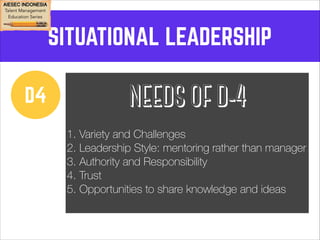
D4 NEEDS OF D-4 
! 
1. Variety and Challenges 
2. Leadership Style: mentoring rather than manager 
3. Authority and Responsibility 
4. Trust 
5. Opportunities to share knowledge and ideas 
!
flexibility
SITUATIONAL LEADERSHIP 
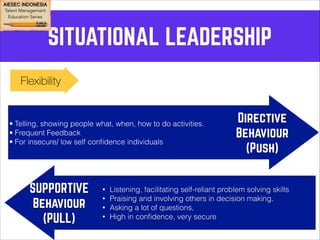
Flexibility 
• Telling, showing people what, when, how to do activities. 
• Frequent Feedback 
• For insecure/ low self confidence individuals 
Directive 
Behaviour 
(Push) 
• Listening, facilitating self-reliant problem solving skills 
• Praising and involving others in decision making. 
• Asking a lot of questions, 
• High in confidence, very secure 
SUPPORTIVE 
Behaviour 
(PULL)
SITUATIONAL LEADERSHIP 
Flexibility 
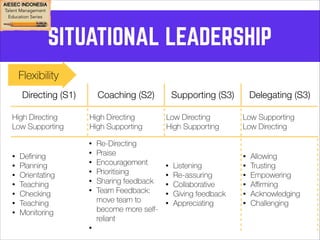
Directing (S1) Coaching (S2) Supporting (S3) Delegating (S3) 
High Directing 
High Directing 
Low Directing 
Low Supporting 
Low Supporting 
High Supporting 
High Supporting 
Low Directing 
• Defining 
• Planning 
• Orientating 
• Teaching 
• Checking 
• Teaching 
• Monitoring 
• Re-Directing 
• Praise 
• Encouragement 
• Prioritising 
• Sharing feedback 
• Team Feedback: 
move team to 
become more self-reliant 
• ! 
• Listening 
• Re-assuring 
• Collaborative 
• Giving feedback 
• Appreciating 
• Allowing 
• Trusting 
• Empowering 
• Affirming 
• Acknowledging 
• Challenging
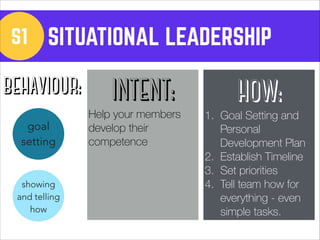
S1 SITUATIONAL LEADERSHIP 
INTENT: 
Help your members 
develop their 
competence 
HOW: 
1. Goal Setting and 
Personal 
Development Plan 
2. Establish Timeline 
3. Set priorities 
4. Tell team how for 
everything - even 
simple tasks. 
BEHAVIOUR: 
goal 
setting 
showing 
and telling 
how
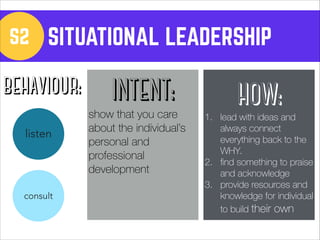
S2 SITUATIONAL LEADERSHIP 
INTENT: 
show that you care 
about the individual’s 
personal and 
professional 
development 
HOW: 
1. lead with ideas and 
always connect 
everything back to the 
WHY. 
2. find something to praise 
and acknowledge 
3. provide resources and 
knowledge for individual 
to build their own 
BEHAVIOUR: 
listen 
consult
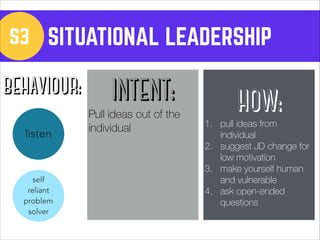
S3 SITUATIONAL LEADERSHIP 
INTENT: 
Pull ideas out of the 
individual 
HOW: 
1. pull ideas from 
individual 
2. suggest JD change for 
low motivation 
3. make yourself human 
and vulnerable 
4. ask open-ended 
questions 
BEHAVIOUR: 
listen 
self 
reliant 
problem 
solver
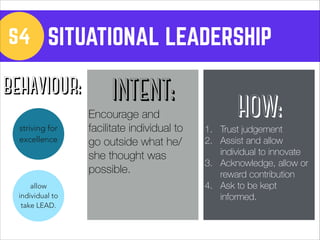
S4 SITUATIONAL LEADERSHIP 
INTENT: 
Encourage and 
facilitate individual to 
go outside what he/ 
she thought was 
possible. 
HOW: 
1. Trust judgement 
2. Assist and allow 
individual to innovate 
3. Acknowledge, allow or 
reward contribution 
4. Ask to be kept 
informed. 
BEHAVIOUR: 
striving for 
excellence 
allow 
individual to 
take LEAD.
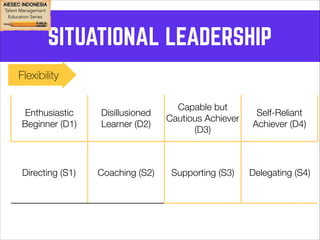
SITUATIONAL LEADERSHIP 
Flexibility 
Enthusiastic 
Beginner (D1) 
Disillusioned 
Learner (D2) 
Capable but 
Cautious Achiever 
(D3) 
Self-Reliant 
Achiever (D4) 
Directing (S1) Coaching (S2) Supporting (S3) Delegating (S4)
partnering
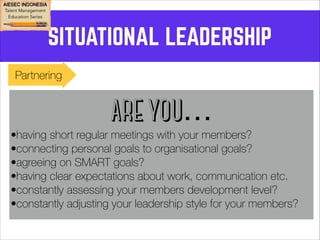
SITUATIONAL LEADERSHIP 
Partnering 
ARE YOU… 
•having short regular meetings with your members? 
•connecting personal goals to organisational goals? 
•agreeing on SMART goals? 
•having clear expectations about work, communication etc. 
•constantly assessing your members development level? 
•constantly adjusting your leadership style for your members?
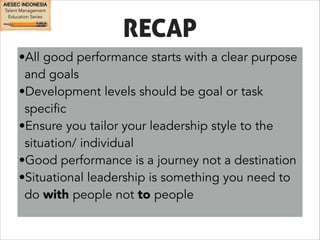
RECAP 
•All good performance starts with a clear purpose 
and goals 
•Development levels should be goal or task 
specific 
•Ensure you tailor your leadership style to the 
situation/ individual 
•Good performance is a journey not a destination 
•Situational leadership is something you need to 
do with people not to people
WHAT IS 
YOUR 
ROLE?
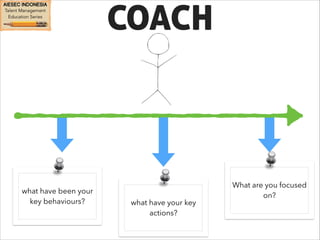
What are you focused 
on? 
COACH 
what have been your 
key behaviours? what have your key 
actions?
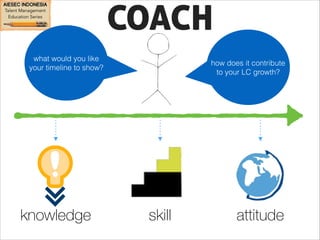
COACH 
what would you like 
your timeline to show? 
how does it contribute 
to your LC growth? 
knowledge skill attitude
THANK YOU 
:)

Coaching skills

  • 1.
  • 2.
    Average PA ofAIESEC Indonesia is 60 (mid performance) ! Little - non-existent star members. ! Lack of development activities from TLPs to TMPs ! Enable TLPs with the activities and basic knowledge and skills about coaching ! Infuse mindset of ‘purposeful and challenging experiences’ within every TLP. 1 2 3 4 5
  • 3.
  • 4.
    AIESEC Indonesia isnot producing leaders. We are not producing leadership development experiences. That stops now.
  • 5.
    WHAT IS A COACH?
  • 6.
    COACH supports, explains,instructs and directs others via encouragement and asking questions provides guidance, directions and feedback to ensure successful performance centred on goals focused on helping individuals into immediate action be the best you can be.
  • 7.
    Every TLP inAIESEC Indonesia is a coach.
  • 8.
    POINT OF COACHING Point A Point B
  • 9.
    POINT OF COACHING coaching Point A Point B
  • 10.
  • 11.
    PROCESS OF COACHING diagnosis flexibility partnering assess members current needs adjusting your leadership style to suit the situation reach agreement with the members about current performance and how to grow
  • 12.
  • 13.
    SITUATIONAL LEADERSHIP Developingyour members over a period of time to reach the highest level of performance and development Competency Commitment Flexibility Partnership Self-Reliant Achiever (D4) Directing Capable but Cautious Achiever (D3) Disillusioned Learner (D2) Enthusiastic Beginner (D1) High Competence High Commitment Moderate - High Competence Variable Commitment Low - some competence Low Commitment Low Competence High Commitment Supporting Diagnosis
  • 14.
    SITUATIONAL LEADERSHIP Diagnosis proactive learning ! demonstrating integrity it’s not about giving a rating it’s about reaching an agreement and setting goals
  • 15.
    SITUATIONAL LEADERSHIP Diagnosis Self-Reliant Achiever (D4) Capable but Cautious Achiever (D3) Disillusioned Learner (D2) Enthusiastic Beginner (D1) This individual is confident, inspired, can inspire others, an expert, self-assured, accomplished and proactive. Self-critical, doubtful, capable, makes a productive contribution, insecure, generally self-driven but needs continuous challenges and opportunities to stay motivated Discouraged, overwhelmed, confused, needs assurance that mistakes are part of the learning process, unreliable, inconsistent, flashes of competence but needs more development and knowledge Inexperienced, Eager to learn, willing to take direction, excited and optimistic, can make mistakes, not aware of what they don’t know but need to know.
  • 16.
    SITUATIONAL LEADERSHIP Diagnosis Questions you can ask yourself about your members: ! 1. What is the goal/task they are currently undertaking 2. How strong are your members skills for this task? 3. How advanced are your member’s transferable skills (eg. communication skills) 4. How inspired/enthusiastic/motivated is your member? 5. How confident/ self-assured is this individual?
  • 17.
    SITUATIONAL LEADERSHIP D1NEEDS OF D-1 ! 1. Recognition of enthusiasm 2. Defining clear goals with timeline 3. Standards for what a good job looks like 4. Constantly learning new skills 5. Frequent feedback 6. Solutions to problems and challenges they face
  • 18.
    SITUATIONAL LEADERSHIP D2NEEDS OF D-2 ! 1.Clear Goals 2. Praise for making progress 3. Frequent Feedback 4. Coaching to build and refine skills 5. Constant reaffirmation of clarity of why for each task/activity 6. Tips/tricks about how to do tasks more effectively
  • 19.
    SITUATIONAL LEADERSHIP D3NEEDS OF D-3 ! 1. An approachable mentor or coach 2. A kickstart to overcoming procrastination 3. Support to develop self-reliant problem solving skills 4. Constant encouragement to develop confidence within themselves
  • 20.
    SITUATIONAL LEADERSHIP D4NEEDS OF D-4 ! 1. Variety and Challenges 2. Leadership Style: mentoring rather than manager 3. Authority and Responsibility 4. Trust 5. Opportunities to share knowledge and ideas !
  • 21.
  • 22.
    SITUATIONAL LEADERSHIP Flexibility • Telling, showing people what, when, how to do activities. • Frequent Feedback • For insecure/ low self confidence individuals Directive Behaviour (Push) • Listening, facilitating self-reliant problem solving skills • Praising and involving others in decision making. • Asking a lot of questions, • High in confidence, very secure SUPPORTIVE Behaviour (PULL)
  • 23.
    SITUATIONAL LEADERSHIP Flexibility Directing (S1) Coaching (S2) Supporting (S3) Delegating (S3) High Directing High Directing Low Directing Low Supporting Low Supporting High Supporting High Supporting Low Directing • Defining • Planning • Orientating • Teaching • Checking • Teaching • Monitoring • Re-Directing • Praise • Encouragement • Prioritising • Sharing feedback • Team Feedback: move team to become more self-reliant • ! • Listening • Re-assuring • Collaborative • Giving feedback • Appreciating • Allowing • Trusting • Empowering • Affirming • Acknowledging • Challenging
  • 24.
    S1 SITUATIONAL LEADERSHIP INTENT: Help your members develop their competence HOW: 1. Goal Setting and Personal Development Plan 2. Establish Timeline 3. Set priorities 4. Tell team how for everything - even simple tasks. BEHAVIOUR: goal setting showing and telling how
  • 25.
    S2 SITUATIONAL LEADERSHIP INTENT: show that you care about the individual’s personal and professional development HOW: 1. lead with ideas and always connect everything back to the WHY. 2. find something to praise and acknowledge 3. provide resources and knowledge for individual to build their own BEHAVIOUR: listen consult
  • 26.
    S3 SITUATIONAL LEADERSHIP INTENT: Pull ideas out of the individual HOW: 1. pull ideas from individual 2. suggest JD change for low motivation 3. make yourself human and vulnerable 4. ask open-ended questions BEHAVIOUR: listen self reliant problem solver
  • 27.
    S4 SITUATIONAL LEADERSHIP INTENT: Encourage and facilitate individual to go outside what he/ she thought was possible. HOW: 1. Trust judgement 2. Assist and allow individual to innovate 3. Acknowledge, allow or reward contribution 4. Ask to be kept informed. BEHAVIOUR: striving for excellence allow individual to take LEAD.
  • 28.
    SITUATIONAL LEADERSHIP Flexibility Enthusiastic Beginner (D1) Disillusioned Learner (D2) Capable but Cautious Achiever (D3) Self-Reliant Achiever (D4) Directing (S1) Coaching (S2) Supporting (S3) Delegating (S4)
  • 29.
  • 30.
    SITUATIONAL LEADERSHIP Partnering ARE YOU… •having short regular meetings with your members? •connecting personal goals to organisational goals? •agreeing on SMART goals? •having clear expectations about work, communication etc. •constantly assessing your members development level? •constantly adjusting your leadership style for your members?
  • 31.
    RECAP •All goodperformance starts with a clear purpose and goals •Development levels should be goal or task specific •Ensure you tailor your leadership style to the situation/ individual •Good performance is a journey not a destination •Situational leadership is something you need to do with people not to people
  • 32.
  • 33.
    What are youfocused on? COACH what have been your key behaviours? what have your key actions?
  • 34.
    COACH what wouldyou like your timeline to show? how does it contribute to your LC growth? knowledge skill attitude
  • 35.