1
Situational Leadership Model
by Paul Hersey & Ken Blanchard
 Model for managing organizational diversity and
management development.
 Identifies 4 individual development levels.
 Identifies 4 leadership styles to match level needs.
Situational Leadership Styles –
consciously use both behaviors:
Directive Behavior
 Structured
 Organized
 Teaching/Mentoring
 Supervised
Supportive Behavior
Open-ended
Listening
Discussing together
Collaborative
3 Key Management Skills
Diagnosis
Flexibility
Partnering for
Performance
Competence
Commitment
Skills
Knowledge
Experience
Motivation
Confidence
Oversupervision
Undersupervision
Goals Alignment
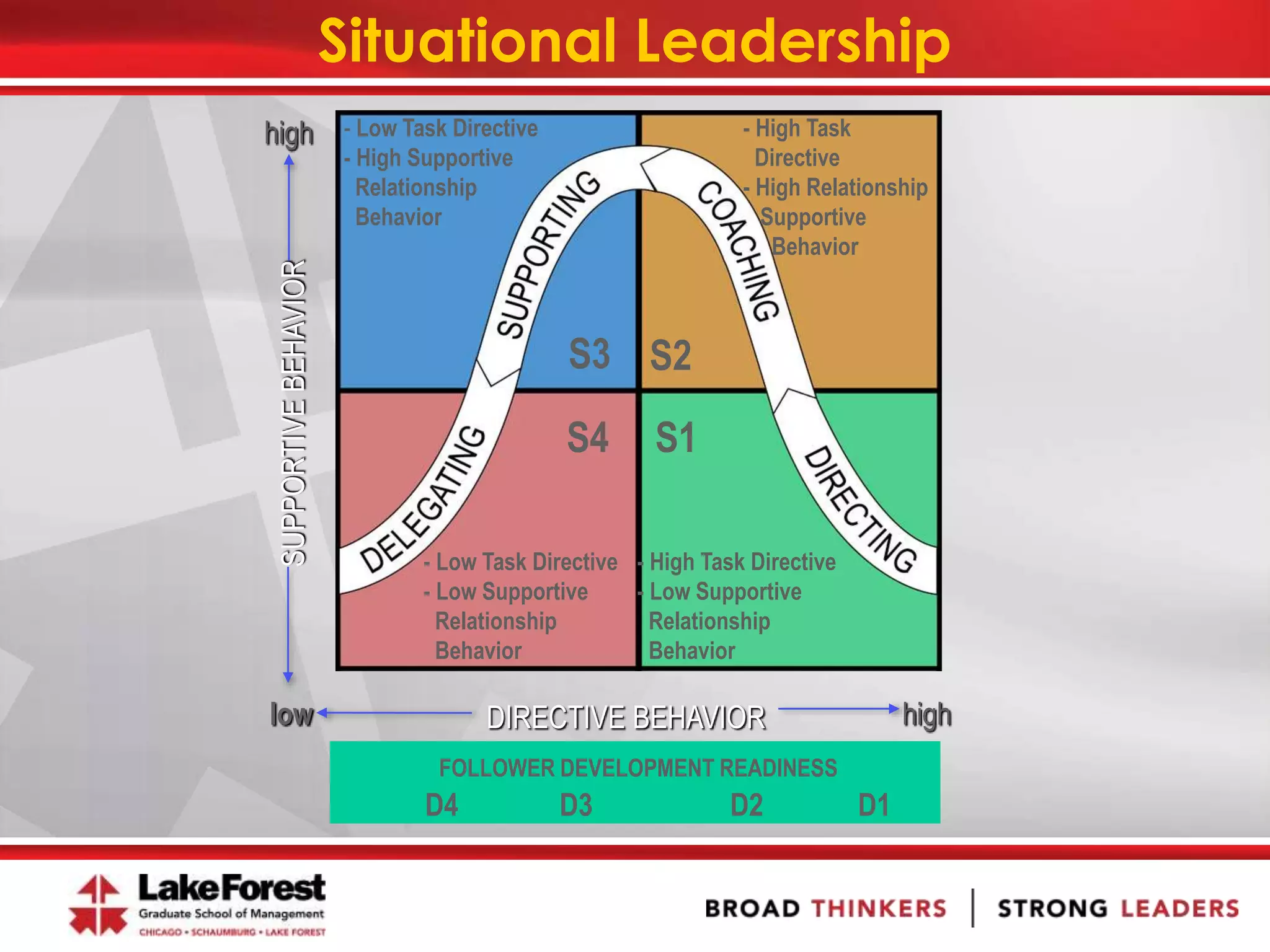
Situational Leadership
S1
SUPPORTIVEBEHAVIOR
DIRECTIVE BEHAVIORlow
high
high
- High Task
Directive
- High Relationship
Supportive
Behavior
S2
- Low Task Directive
- High Supportive
Relationship
Behavior
S3
S4
- High Task Directive
- Low Supportive
Relationship
Behavior
- Low Task Directive
- Low Supportive
Relationship
Behavior
FOLLOWER DEVELOPMENT READINESS
D4 D3 D2 D1
What is your primary leadership Style?
(vs. Primal Leadership)
Style 1 – Directive (Commanding, Pacesetting)
Style 2 – Coaching (Coaching)
Style 3 – Supportive (Afiliative, Democratic)
Style 4 – Delegating (Visionary)
Situational Leadership Statistics
 54% of leaders use 1 style
 34% of leaders use 2 styles
 11% of leaders use 3 styles
 1 % of leaders use all 4 styles
 How many leadership styles do you practice?
The more flexible you are, the more effective you are!
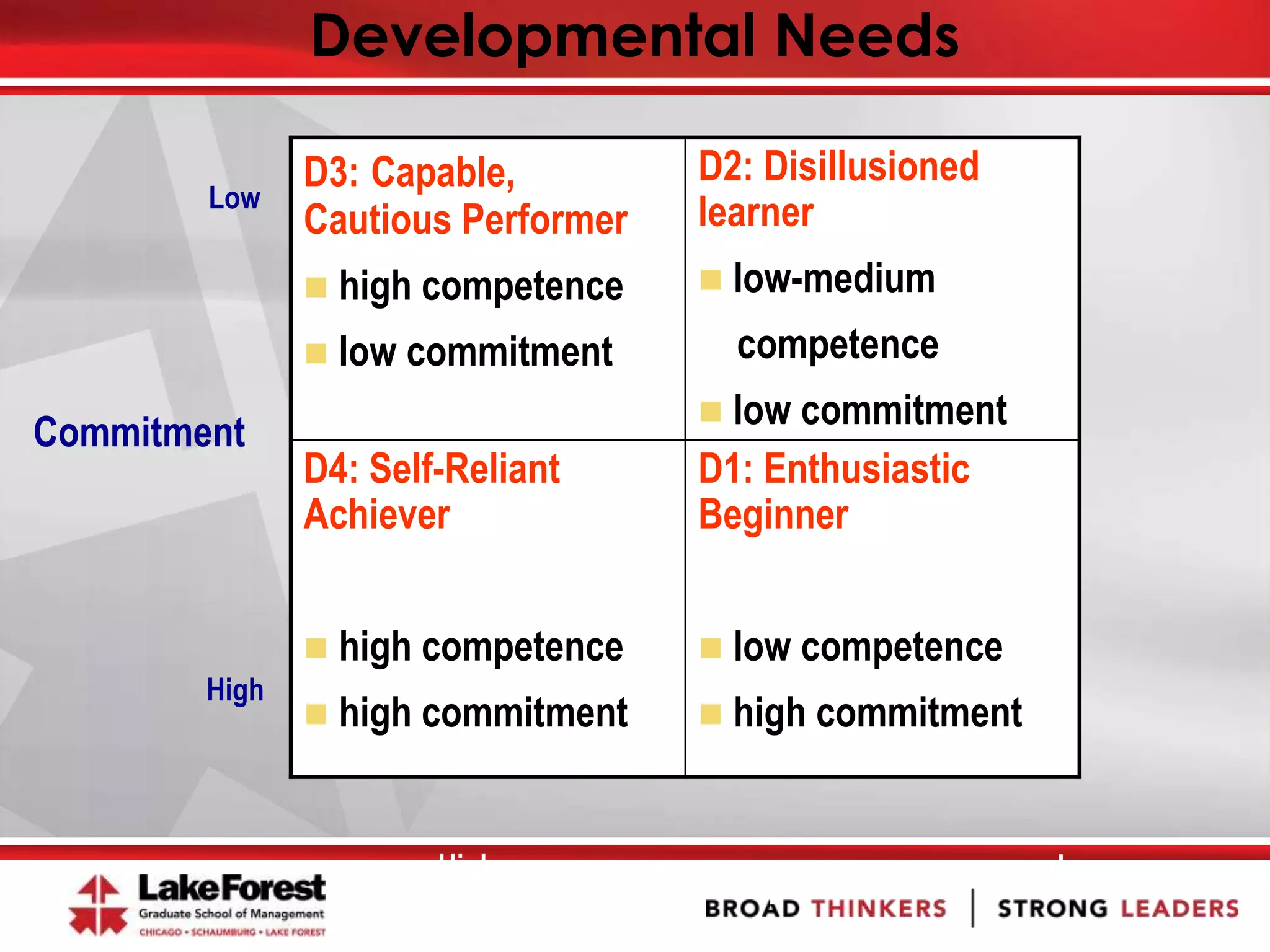
Developmental Needs
D3: Capable,
Cautious Performer
 high competence
 low commitment
D2: Disillusioned
learner
 low-medium
competence
 low commitment
D4: Self-Reliant
Achiever
 high competence
 high commitment
D1: Enthusiastic
Beginner
 low competence
 high commitment
Competence
Commitment
High
High
Low
Low
Situational Leadership Behaviors
S3/D3
“SUPPORTING”
Let’s discuss, we
decide
S2/D2
“COACHING”
Let’s discuss, I
decide
S4/D4
“DELEGATING”
Let’s discuss, you
decide
S1/D1
“DIRECTING”
You listen, I decide
High
HighLow
LowCompetence
Commitment
High
HighLow
Low Directive Behavior
SupportiveBehavior
D1 (Enthusiastic Beginner) Needs
Mentor/Trainer
Clear Goals, Timelines & Priorities
Success & Performance Standards
Culture & Style information - “how things work
around here”
Boundary, Authority and Responsibility limits
Communications Benchmarks
Frequent Feedback
Recognition for Performance
D2 (Disillusioned Learner) Needs
 Mentor/Trainer/Coach
 Permission to make mistakes
 Explanations & Opportunities to discuss concerns
 More Involvement in decision making and problem
solving
 Encouragement & Frequent feedback
 (Plus other D1 list needs)
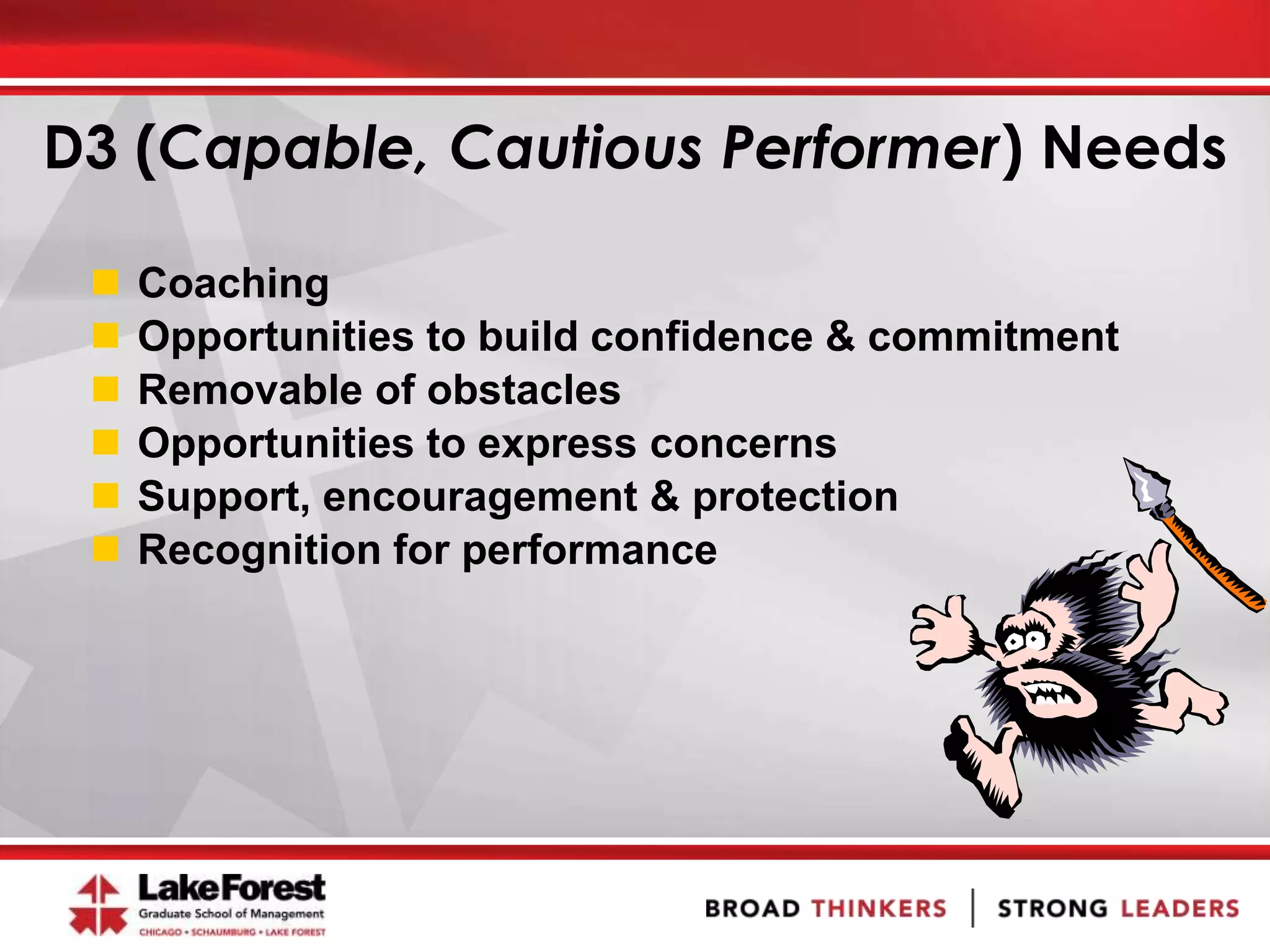
D3 (Capable, Cautious Performer) Needs
 Coaching
 Opportunities to build confidence & commitment
 Removable of obstacles
 Opportunities to express concerns
 Support, encouragement & protection
 Recognition for performance
D4 (Self-reliant Achiever) Needs
 Delegator Boss/Coach
 Opportunity for Initiative
 Variety and challenge
 Autonomy and authority
 Trust
 Acknowledgment of contributions
 Recognition for Performance
“OUTTA
DA WAY!!!”

Module 4 situational lead_lb_6_18_14-nt_lb

  • 1.
  • 2.
    Situational Leadership Model byPaul Hersey & Ken Blanchard  Model for managing organizational diversity and management development.  Identifies 4 individual development levels.  Identifies 4 leadership styles to match level needs.
  • 3.
    Situational Leadership Styles– consciously use both behaviors: Directive Behavior  Structured  Organized  Teaching/Mentoring  Supervised Supportive Behavior Open-ended Listening Discussing together Collaborative
  • 4.
    3 Key ManagementSkills Diagnosis Flexibility Partnering for Performance Competence Commitment Skills Knowledge Experience Motivation Confidence Oversupervision Undersupervision Goals Alignment
  • 5.
    Situational Leadership S1 SUPPORTIVEBEHAVIOR DIRECTIVE BEHAVIORlow high high -High Task Directive - High Relationship Supportive Behavior S2 - Low Task Directive - High Supportive Relationship Behavior S3 S4 - High Task Directive - Low Supportive Relationship Behavior - Low Task Directive - Low Supportive Relationship Behavior FOLLOWER DEVELOPMENT READINESS D4 D3 D2 D1
  • 6.
    What is yourprimary leadership Style? (vs. Primal Leadership) Style 1 – Directive (Commanding, Pacesetting) Style 2 – Coaching (Coaching) Style 3 – Supportive (Afiliative, Democratic) Style 4 – Delegating (Visionary)
  • 7.
    Situational Leadership Statistics 54% of leaders use 1 style  34% of leaders use 2 styles  11% of leaders use 3 styles  1 % of leaders use all 4 styles  How many leadership styles do you practice? The more flexible you are, the more effective you are!
  • 8.
    Developmental Needs D3: Capable, CautiousPerformer  high competence  low commitment D2: Disillusioned learner  low-medium competence  low commitment D4: Self-Reliant Achiever  high competence  high commitment D1: Enthusiastic Beginner  low competence  high commitment Competence Commitment High High Low Low
  • 9.
    Situational Leadership Behaviors S3/D3 “SUPPORTING” Let’sdiscuss, we decide S2/D2 “COACHING” Let’s discuss, I decide S4/D4 “DELEGATING” Let’s discuss, you decide S1/D1 “DIRECTING” You listen, I decide High HighLow LowCompetence Commitment High HighLow Low Directive Behavior SupportiveBehavior
  • 10.
    D1 (Enthusiastic Beginner)Needs Mentor/Trainer Clear Goals, Timelines & Priorities Success & Performance Standards Culture & Style information - “how things work around here” Boundary, Authority and Responsibility limits Communications Benchmarks Frequent Feedback Recognition for Performance
  • 11.
    D2 (Disillusioned Learner)Needs  Mentor/Trainer/Coach  Permission to make mistakes  Explanations & Opportunities to discuss concerns  More Involvement in decision making and problem solving  Encouragement & Frequent feedback  (Plus other D1 list needs)
  • 12.
    D3 (Capable, CautiousPerformer) Needs  Coaching  Opportunities to build confidence & commitment  Removable of obstacles  Opportunities to express concerns  Support, encouragement & protection  Recognition for performance
  • 13.
    D4 (Self-reliant Achiever)Needs  Delegator Boss/Coach  Opportunity for Initiative  Variety and challenge  Autonomy and authority  Trust  Acknowledgment of contributions  Recognition for Performance “OUTTA DA WAY!!!”