Downloaded 440 times
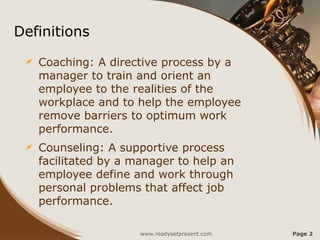
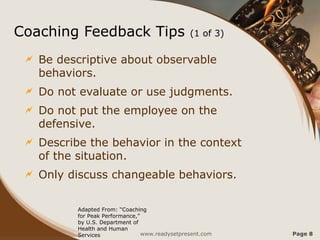
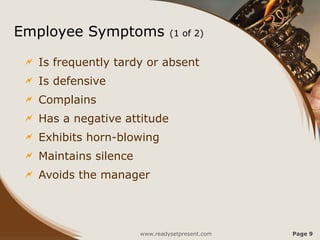
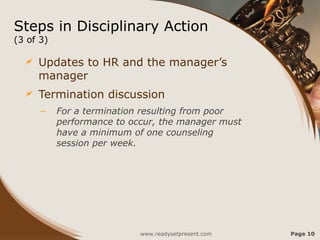

This document discusses coaching and counseling in the workplace. It defines coaching as a directive process led by managers to train employees, while counseling is a supportive process to help employees address personal issues affecting work. The effectiveness of coaching can be measured by comparing results to predefined criteria and whether it improves performance. Benefits of coaching include developing employees, managing priorities, improving productivity, and increasing job satisfaction. Candidates for coaching must be open to feedback and improving, aware of needs and consequences of not improving, and able to commit time to coaching. The document provides tips for coaching, such as focusing feedback on behaviors, not judgments, and discussing changeable behaviors. It also outlines steps in disciplinary action.


![Developing the Coaching Skills of Your Managers and Leaders [Webinar 04.13.16]](https://cdn.slidesharecdn.com/ss_thumbnails/coachingskills041316slides-160413135753-thumbnail.jpg?width=640&height=640&fit=bounds)


