Module 11
The following cloud roots and translations 
summarize the components of this 
classification system:
1) Cirro-: curl of hair, high 
2) Alto-: mid. 
3) Strato-: layer. 
4) Nimbo-: rain, precipitation. 
5) Cumulo-: heap.
High-level clouds: 
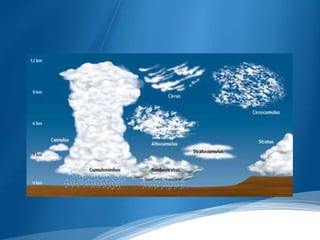
High-level clouds occur above about 20,000 feet and are given the prefix 
"cirro-". Due to cold tropospheric temperatures at these levels, the 
clouds primarily are composed of ice crystals, and often appear thin, 
streaky, and white (although a low sun angle, e.g., near sunset, can 
create an array of color on the clouds). 
The three main types of high clouds are 
cirrus, 
cirrostratus, and 
cirrocumulus.
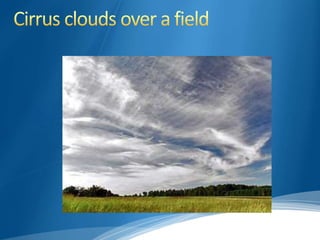
Cirrus clouds are wispy, feathery, 
and composed entirely of ice 
crystals. They often are the first 
sign of an approaching warm front 
or upper-level jet streak.
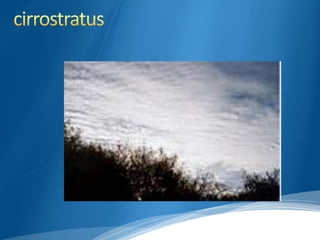
Cirrostratus clouds form more of a 
widespread, veil-like layer (similar to what 
stratus clouds do in low levels). When 
sunlight or moonlight passes through the 
hexagonal-shaped ice crystals of 
cirrostratus clouds, the light is dispersed 
or refracted (similar to light passing 
through a prism) in such a way that a 
familiar ring or halo may form. As a warm 
front approaches, cirrus clouds tend to 
thicken into cirrostratus, which may, in 
turn, thicken and lower into altostratus, 
stratus, and even nimbostratus.
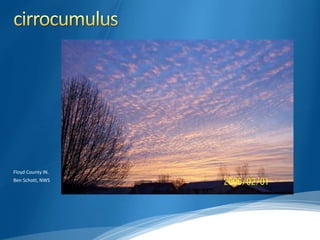
Cirrocumulus clouds are layered 
clouds permeated with small 
cumuliform lumpiness. They also may 
line up in streets or rows of 
clouds across the sky denoting 
localized areas of ascent (cloud 
axes) and descent (cloud-free 
channels).
Floyd County IN. 
Ben Schott, NWS
The bases of clouds in the middle level of the troposphere, given the 
prefix "alto-", appear between 6,500 and 20,000 feet. Depending on the 
altitude, time of year, and vertical temperature structure of the 
troposphere, these clouds may be composed of liquid water droplets, ice 
crystals, or a combination of the two, including super-cooled droplets (i.e., 
liquid droplets whose temperatures are below freezing).
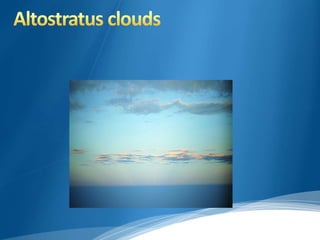
Altostratus clouds are "strato" type clouds that possess a flat and uniform 
type texture in the mid levels. They frequently indicate the approach of a 
warm front and may thicken and lower into stratus, then nimbostratus 
resulting in rain or snow. However, altostratus clouds themselves do not 
produce significant precipitation at the surface, although sprinkles or 
occasionally light showers may occur from a thick alto-stratus deck.
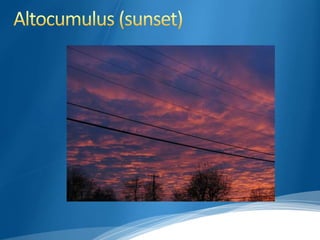
Altocumulus clouds exhibit "cumulo" type characteristics in mid 
levels, i.e., heap-like clouds with convective elements. Like 
cirrocumulus, altocumulus may align in rows or streets of clouds, 
with cloud axes indicating localized areas of ascending, moist air, 
and clear zones between rows suggesting locally descending, 
drier air. 
Altocumulus clouds with some vertical extent may denote the 
presence of elevated instability, especially in the morning, which 
could become boundary-layer based and be released into deep 
convection during the afternoon or evening.
Low-level clouds are not given a prefix, although 
their names are derived from "strato-" or 
"cumulo-", depending on their characteristics. 
Low clouds occur below 6500 feet, and 
normally consist of liquid water droplets or even 
super-cooled droplets, except during cold 
winter storms when ice crystals (and snow) 
comprise much of the clouds.
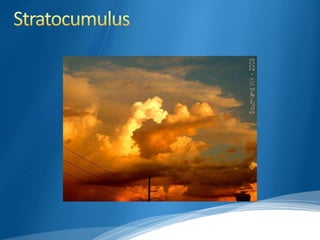
Stratocumulus clouds are hybrids of layered 
stratus and cellular cumulus, i.e., individual 
cloud elements, characteristic of cumulo type 
clouds, clumped together in a continuous 
distribution, characteristic of strato type clouds. 
Stratocumulus also can be thought of as a layer 
of cloud clumps with thick and thin areas. These 
clouds appear frequently in the atmosphere, 
either ahead of or behind a frontal system.
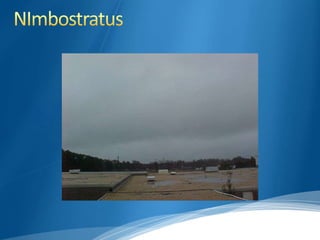
Nimbostratus clouds are generally thick, dense 
stratus or stratocumulus clouds producing 
steady rain or snow
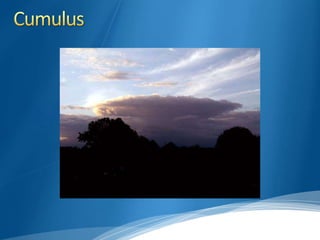
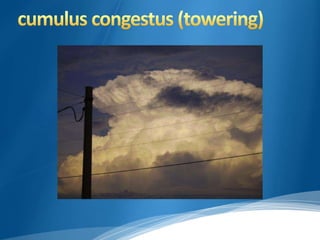
A cumulus cloud that exhibits significant vertical 
development (but is not yet a thunderstorm) is called 
cumulus congestus or towering cumulus. If enough 
atmospheric instability, moisture, and lift are present, 
then strong updrafts can develop in the cumulus cloud 
leading to a mature, deep cumulonimbus cloud, i.e., a 
thunderstorm producing heavy rain. 
In addition, cloud electrification occurs within 
cumulonimbus clouds due to many collisions between 
charged water droplet, graupel (ice-water mix), and ice 
crystal particles, resulting in lightning and thunder.
Material and photos is courtesy of NOAA, via 
the National Weather Service 
http://www.crh.noaa.gov/lmk/?n=cloud_classification 
http://www.srh.noaa.gov/srh/jetstream/clouds/cloudwise/index.html 
http://www.srh.noaa.gov/srh/jetstream/clouds/cloudwise/learn.html 
http://www.srh.noaa.gov/srh/jetstream/clouds/cloudwise/types.html 
http://www.srh.noaa.gov/srh/jetstream/clouds/cloudwise/chart.html

Cloud classification and characteristics

  • 1.
  • 3.
    The following cloudroots and translations summarize the components of this classification system:
  • 4.
    1) Cirro-: curlof hair, high 2) Alto-: mid. 3) Strato-: layer. 4) Nimbo-: rain, precipitation. 5) Cumulo-: heap.
  • 6.
    High-level clouds: High-levelclouds occur above about 20,000 feet and are given the prefix "cirro-". Due to cold tropospheric temperatures at these levels, the clouds primarily are composed of ice crystals, and often appear thin, streaky, and white (although a low sun angle, e.g., near sunset, can create an array of color on the clouds). The three main types of high clouds are cirrus, cirrostratus, and cirrocumulus.
  • 7.
    Cirrus clouds arewispy, feathery, and composed entirely of ice crystals. They often are the first sign of an approaching warm front or upper-level jet streak.
  • 9.
    Cirrostratus clouds formmore of a widespread, veil-like layer (similar to what stratus clouds do in low levels). When sunlight or moonlight passes through the hexagonal-shaped ice crystals of cirrostratus clouds, the light is dispersed or refracted (similar to light passing through a prism) in such a way that a familiar ring or halo may form. As a warm front approaches, cirrus clouds tend to thicken into cirrostratus, which may, in turn, thicken and lower into altostratus, stratus, and even nimbostratus.
  • 11.
    Cirrocumulus clouds arelayered clouds permeated with small cumuliform lumpiness. They also may line up in streets or rows of clouds across the sky denoting localized areas of ascent (cloud axes) and descent (cloud-free channels).
  • 12.
    Floyd County IN. Ben Schott, NWS
  • 13.
    The bases ofclouds in the middle level of the troposphere, given the prefix "alto-", appear between 6,500 and 20,000 feet. Depending on the altitude, time of year, and vertical temperature structure of the troposphere, these clouds may be composed of liquid water droplets, ice crystals, or a combination of the two, including super-cooled droplets (i.e., liquid droplets whose temperatures are below freezing).
  • 15.
    Altostratus clouds are"strato" type clouds that possess a flat and uniform type texture in the mid levels. They frequently indicate the approach of a warm front and may thicken and lower into stratus, then nimbostratus resulting in rain or snow. However, altostratus clouds themselves do not produce significant precipitation at the surface, although sprinkles or occasionally light showers may occur from a thick alto-stratus deck.
  • 17.
    Altocumulus clouds exhibit"cumulo" type characteristics in mid levels, i.e., heap-like clouds with convective elements. Like cirrocumulus, altocumulus may align in rows or streets of clouds, with cloud axes indicating localized areas of ascending, moist air, and clear zones between rows suggesting locally descending, drier air. Altocumulus clouds with some vertical extent may denote the presence of elevated instability, especially in the morning, which could become boundary-layer based and be released into deep convection during the afternoon or evening.
  • 19.
    Low-level clouds arenot given a prefix, although their names are derived from "strato-" or "cumulo-", depending on their characteristics. Low clouds occur below 6500 feet, and normally consist of liquid water droplets or even super-cooled droplets, except during cold winter storms when ice crystals (and snow) comprise much of the clouds.
  • 20.
    Stratocumulus clouds arehybrids of layered stratus and cellular cumulus, i.e., individual cloud elements, characteristic of cumulo type clouds, clumped together in a continuous distribution, characteristic of strato type clouds. Stratocumulus also can be thought of as a layer of cloud clumps with thick and thin areas. These clouds appear frequently in the atmosphere, either ahead of or behind a frontal system.
  • 22.
    Nimbostratus clouds aregenerally thick, dense stratus or stratocumulus clouds producing steady rain or snow
  • 24.
    A cumulus cloudthat exhibits significant vertical development (but is not yet a thunderstorm) is called cumulus congestus or towering cumulus. If enough atmospheric instability, moisture, and lift are present, then strong updrafts can develop in the cumulus cloud leading to a mature, deep cumulonimbus cloud, i.e., a thunderstorm producing heavy rain. In addition, cloud electrification occurs within cumulonimbus clouds due to many collisions between charged water droplet, graupel (ice-water mix), and ice crystal particles, resulting in lightning and thunder.
  • 27.
    Material and photosis courtesy of NOAA, via the National Weather Service http://www.crh.noaa.gov/lmk/?n=cloud_classification http://www.srh.noaa.gov/srh/jetstream/clouds/cloudwise/index.html http://www.srh.noaa.gov/srh/jetstream/clouds/cloudwise/learn.html http://www.srh.noaa.gov/srh/jetstream/clouds/cloudwise/types.html http://www.srh.noaa.gov/srh/jetstream/clouds/cloudwise/chart.html