PRECIPITATION
2.1. INTRODUCTION
2.1.1. DEFINITION OF PRECIPITATION
- Precipitation is any product of the
condensation of atmospheric water vapour that
falls under gravity.
- Precipitation occurs when a portion of the
atmosphere becomes saturated with water
vapour, so that the water condenses and
"precipitates".
2.1.2. FORMS OF PRECIPITATION
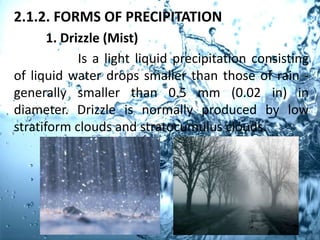
1. Drizzle (Mist)
Is a light liquid precipitation consisting
of liquid water drops smaller than those of rain -
generally smaller than 0.5 mm (0.02 in) in
diameter. Drizzle is normally produced by low
stratiform clouds and stratocumulus clouds.
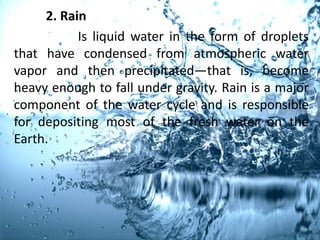
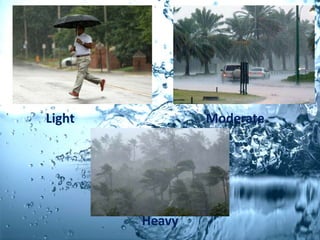
2. Rain
Is liquid water in the form of droplets
that have condensed from atmospheric water
vapor and then precipitated—that is, become
heavy enough to fall under gravity. Rain is a major
component of the water cycle and is responsible
for depositing most of the fresh water on the
Earth.
Light Moderate
Heavy
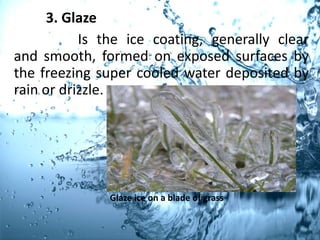
3. Glaze
Is the ice coating, generally clear
and smooth, formed on exposed surfaces by
the freezing super cooled water deposited by
rain or drizzle.
Glaze ice on a blade of grass
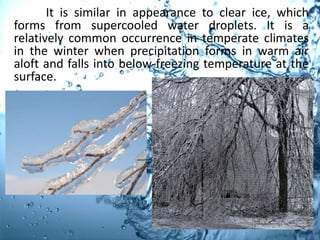
It is similar in appearance to clear ice, which
forms from supercooled water droplets. It is a
relatively common occurrence in temperate climates
in the winter when precipitation forms in warm air
aloft and falls into below-freezing temperature at the
surface.
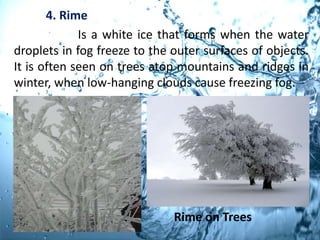
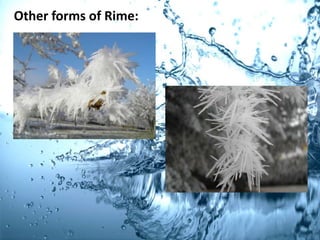
4. Rime
Is a white ice that forms when the water
droplets in fog freeze to the outer surfaces of objects.
It is often seen on trees atop mountains and ridges in
winter, when low-hanging clouds cause freezing fog.
Rime on Trees
Other forms of Rime:
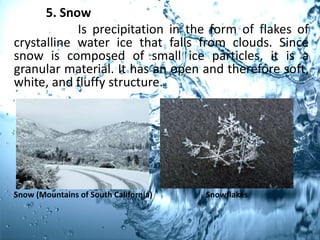
5. Snow
Is precipitation in the form of flakes of
crystalline water ice that falls from clouds. Since
snow is composed of small ice particles, it is a
granular material. It has an open and therefore soft,
white, and fluffy structure.
Snow (Mountains of South California) Snowflakes
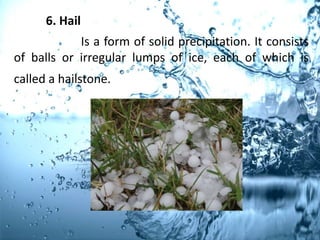
6. Hail
Is a form of solid precipitation. It consists
of balls or irregular lumps of ice, each of which is
called a hailstone.
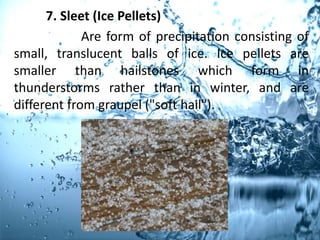
7. Sleet (Ice Pellets)
Are form of precipitation consisting of
small, translucent balls of ice. Ice pellets are
smaller than hailstones which form in
thunderstorms rather than in winter, and are
different from graupel ("soft hail").
Other forms:
Diamond Dust Graupel (Snow Pellets)
2.1.3. TYPES OF PRECIPITATION
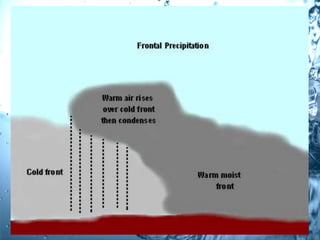
1. Cyclonic Precipitation results to from the lifting of
air converging into low-pressure area, or cyclone.
A cyclonic storm is a large, low pressure system
that forms when a warm air mass and a cold air mass
collide. This collision often occurs under the polar-
front jet stream which spreads cold, dry arctic air near
warm, moist tropical air. The rotation of the earth
causes the air to circulate in a counterclockwise
direction around an area of low pressure.
2. Convective Precipitation is caused by rising the
rising of warmer, lighter air in colder, dense
surroundings.
As the air warms, the air molecules begin to
move further apart. With increased distance
between molecules, the molecules are less densely
packed. Thus, the air becomes “lighter” and rises
rapidly into the atmosphere. As the air rises, it
cools.
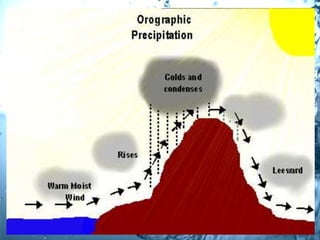
3. Orographic Precipitation results from a
mechanical lifting over mountain barriers.
Orographic precipitation results when warm
moist air moving across the ocean is forced to rise
by large mountains. As the air rises, it cools.
Precipitation

Precipitation

  • 1.
  • 2.
    2.1. INTRODUCTION 2.1.1. DEFINITIONOF PRECIPITATION - Precipitation is any product of the condensation of atmospheric water vapour that falls under gravity. - Precipitation occurs when a portion of the atmosphere becomes saturated with water vapour, so that the water condenses and "precipitates".
  • 3.
    2.1.2. FORMS OFPRECIPITATION 1. Drizzle (Mist) Is a light liquid precipitation consisting of liquid water drops smaller than those of rain - generally smaller than 0.5 mm (0.02 in) in diameter. Drizzle is normally produced by low stratiform clouds and stratocumulus clouds.
  • 4.
    2. Rain Is liquidwater in the form of droplets that have condensed from atmospheric water vapor and then precipitated—that is, become heavy enough to fall under gravity. Rain is a major component of the water cycle and is responsible for depositing most of the fresh water on the Earth.
  • 5.
  • 6.
    3. Glaze Is theice coating, generally clear and smooth, formed on exposed surfaces by the freezing super cooled water deposited by rain or drizzle. Glaze ice on a blade of grass
  • 7.
    It is similarin appearance to clear ice, which forms from supercooled water droplets. It is a relatively common occurrence in temperate climates in the winter when precipitation forms in warm air aloft and falls into below-freezing temperature at the surface.
  • 8.
    4. Rime Is awhite ice that forms when the water droplets in fog freeze to the outer surfaces of objects. It is often seen on trees atop mountains and ridges in winter, when low-hanging clouds cause freezing fog. Rime on Trees
  • 9.
  • 10.
    5. Snow Is precipitationin the form of flakes of crystalline water ice that falls from clouds. Since snow is composed of small ice particles, it is a granular material. It has an open and therefore soft, white, and fluffy structure. Snow (Mountains of South California) Snowflakes
  • 11.
    6. Hail Is aform of solid precipitation. It consists of balls or irregular lumps of ice, each of which is called a hailstone.
  • 12.
    7. Sleet (IcePellets) Are form of precipitation consisting of small, translucent balls of ice. Ice pellets are smaller than hailstones which form in thunderstorms rather than in winter, and are different from graupel ("soft hail").
  • 13.
    Other forms: Diamond DustGraupel (Snow Pellets)
  • 14.
    2.1.3. TYPES OFPRECIPITATION 1. Cyclonic Precipitation results to from the lifting of air converging into low-pressure area, or cyclone. A cyclonic storm is a large, low pressure system that forms when a warm air mass and a cold air mass collide. This collision often occurs under the polar- front jet stream which spreads cold, dry arctic air near warm, moist tropical air. The rotation of the earth causes the air to circulate in a counterclockwise direction around an area of low pressure.
  • 16.
    2. Convective Precipitationis caused by rising the rising of warmer, lighter air in colder, dense surroundings. As the air warms, the air molecules begin to move further apart. With increased distance between molecules, the molecules are less densely packed. Thus, the air becomes “lighter” and rises rapidly into the atmosphere. As the air rises, it cools.
  • 18.
    3. Orographic Precipitationresults from a mechanical lifting over mountain barriers. Orographic precipitation results when warm moist air moving across the ocean is forced to rise by large mountains. As the air rises, it cools.