

WELCOME
CHAPTER 1 – SUN : THE ULTIMATE SOURCE
PRESENTED BY
SHARAN R
Emmanuel college of B.Ed. Training
CONDENSATION
The conversion of a water vapour into a liquid form is called
CONDENSATION
CONDTION:
• Addition of water vapour or fall in temperature, the water
vapour in the atmosphere begins to condense.
FORMS OF CONDENSATION
• Atmosphere should reach the saturation level for
condensation to begin.
• Addition of water vapour or due to a considerable fall in
temperature.
• Therefore, water vapour in the atmosphere begins to
Condense.
FORMS OF CONDENSATION
DIFFERENT FORMS OF CONDENSATION
DEW FROST
FOG / MIST CLOUD
FORMS OF
CONDENSATION
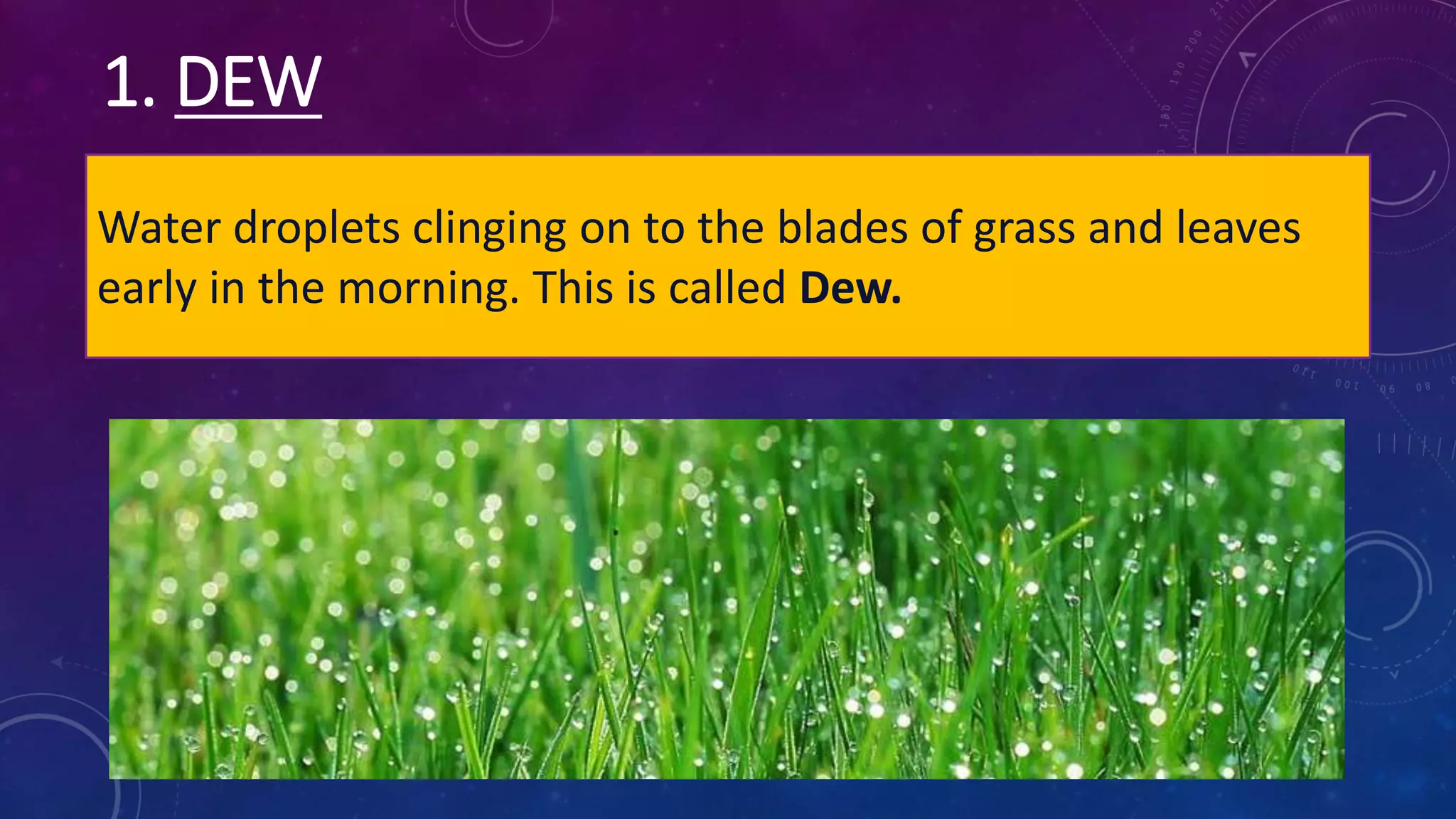
1. DEW
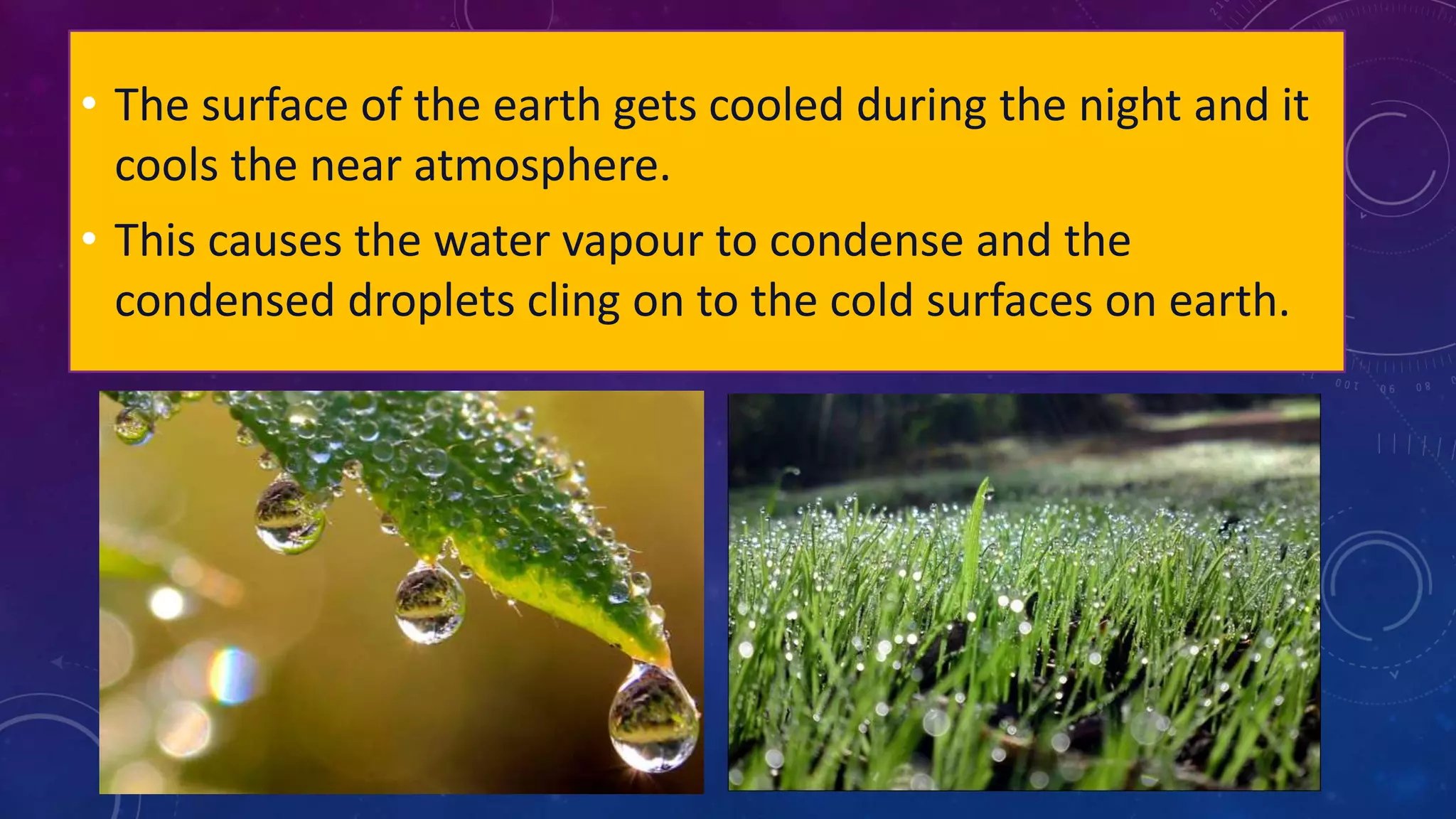
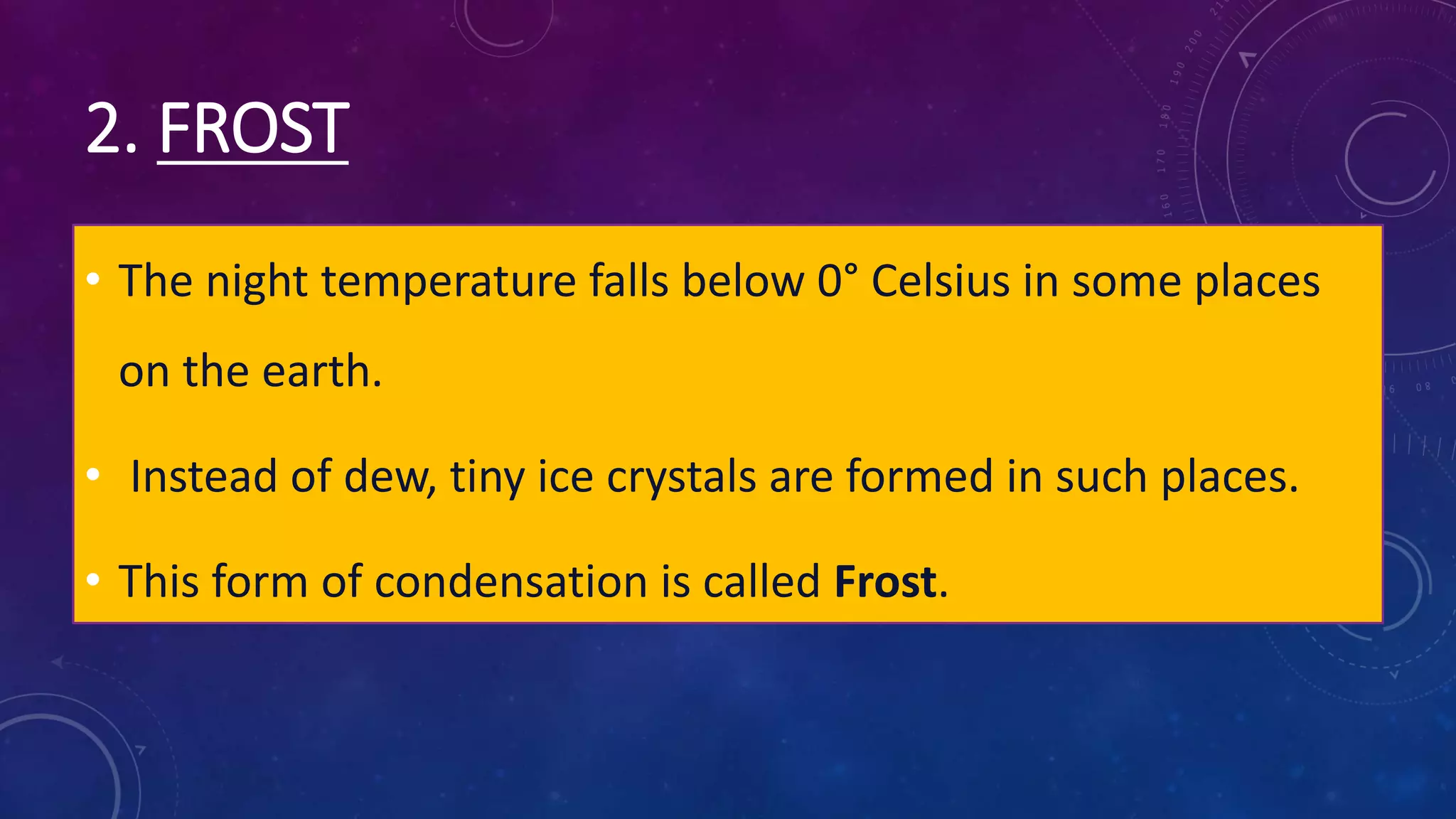
Water droplets clinging on to the blades of grass and leaves
early in the morning. This is called Dew.
• The surface of the earth gets cooled during the night and it
cools the near atmosphere.
• This causes the water vapour to condense and the
condensed droplets cling on to the cold surfaces on earth.
2. FROST
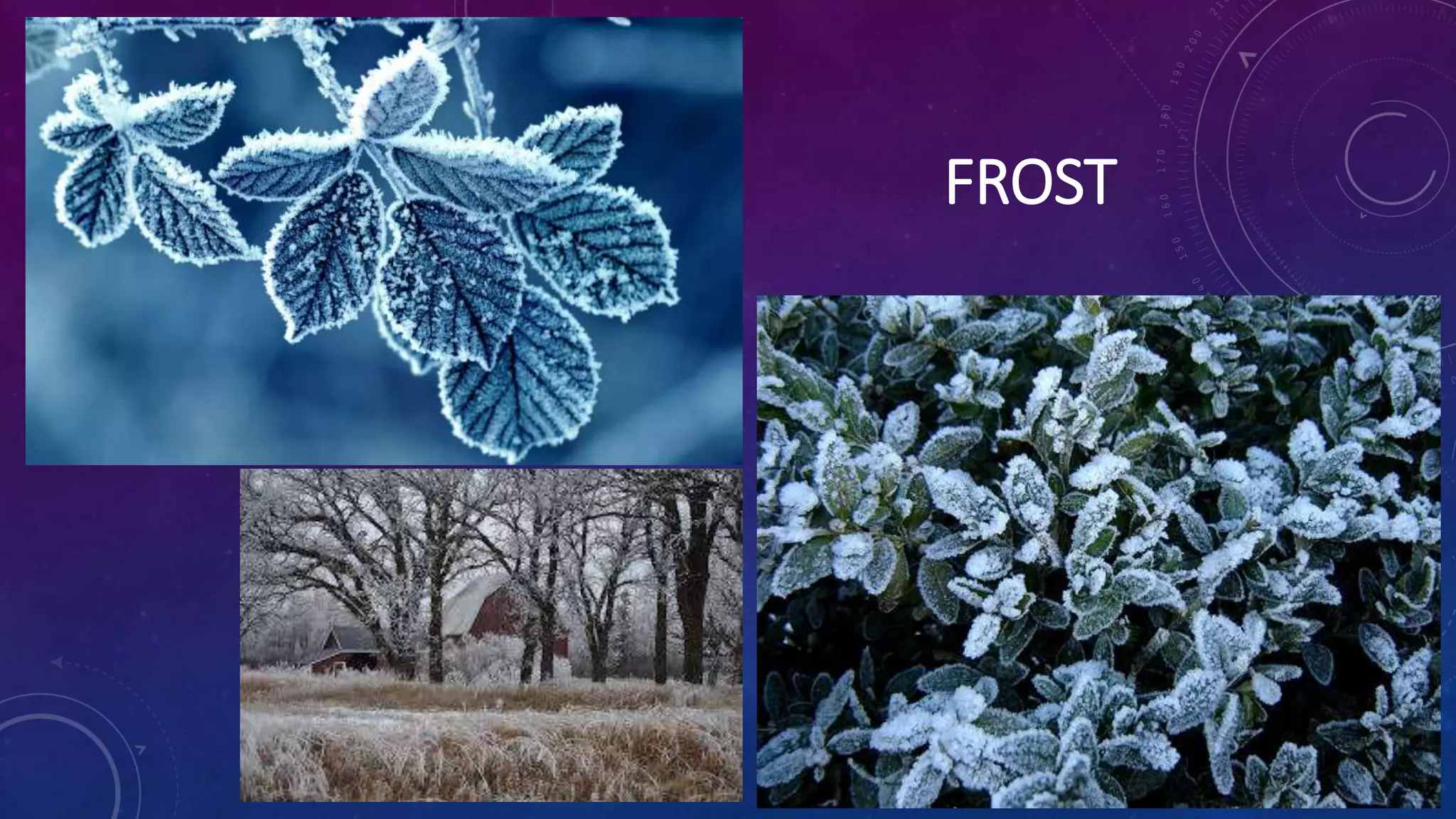
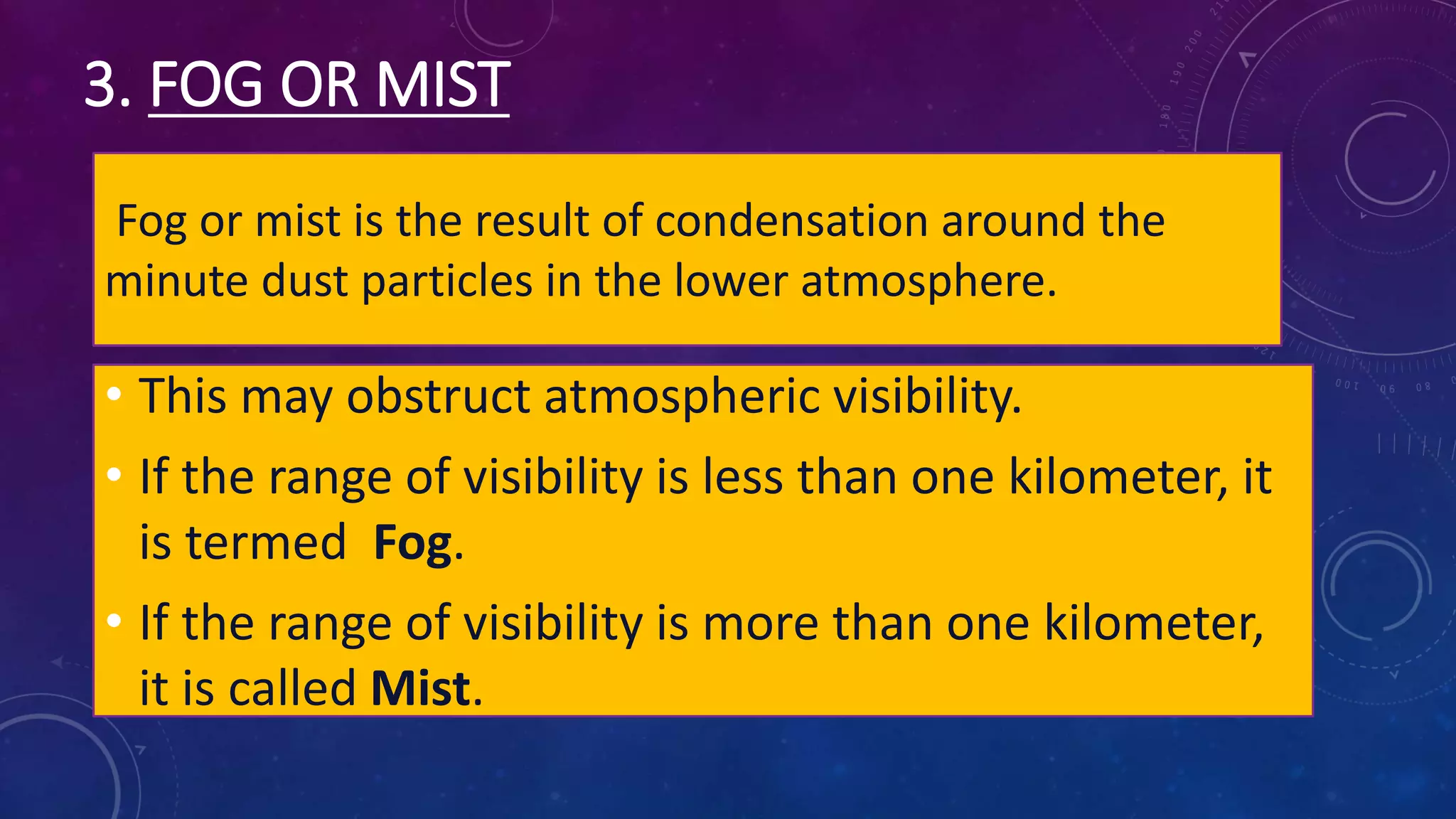
• The night temperature falls below 0° Celsius in some places
on the earth.
• Instead of dew, tiny ice crystals are formed in such places.
• This form of condensation is called Frost.
FROST
3. FOG OR MIST
Fog or mist is the result of condensation around the
minute dust particles in the lower atmosphere.
• This may obstruct atmospheric visibility.
• If the range of visibility is less than one kilometer, it
is termed Fog.
• If the range of visibility is more than one kilometer,
it is called Mist.
FOG :RANGE OF VISIBILITY IS LESS THAN ONE KILOMETER
MIST : RANGE OF VISIBILITY IS MORE THAN ONE KILOMETER
ACTIVITY
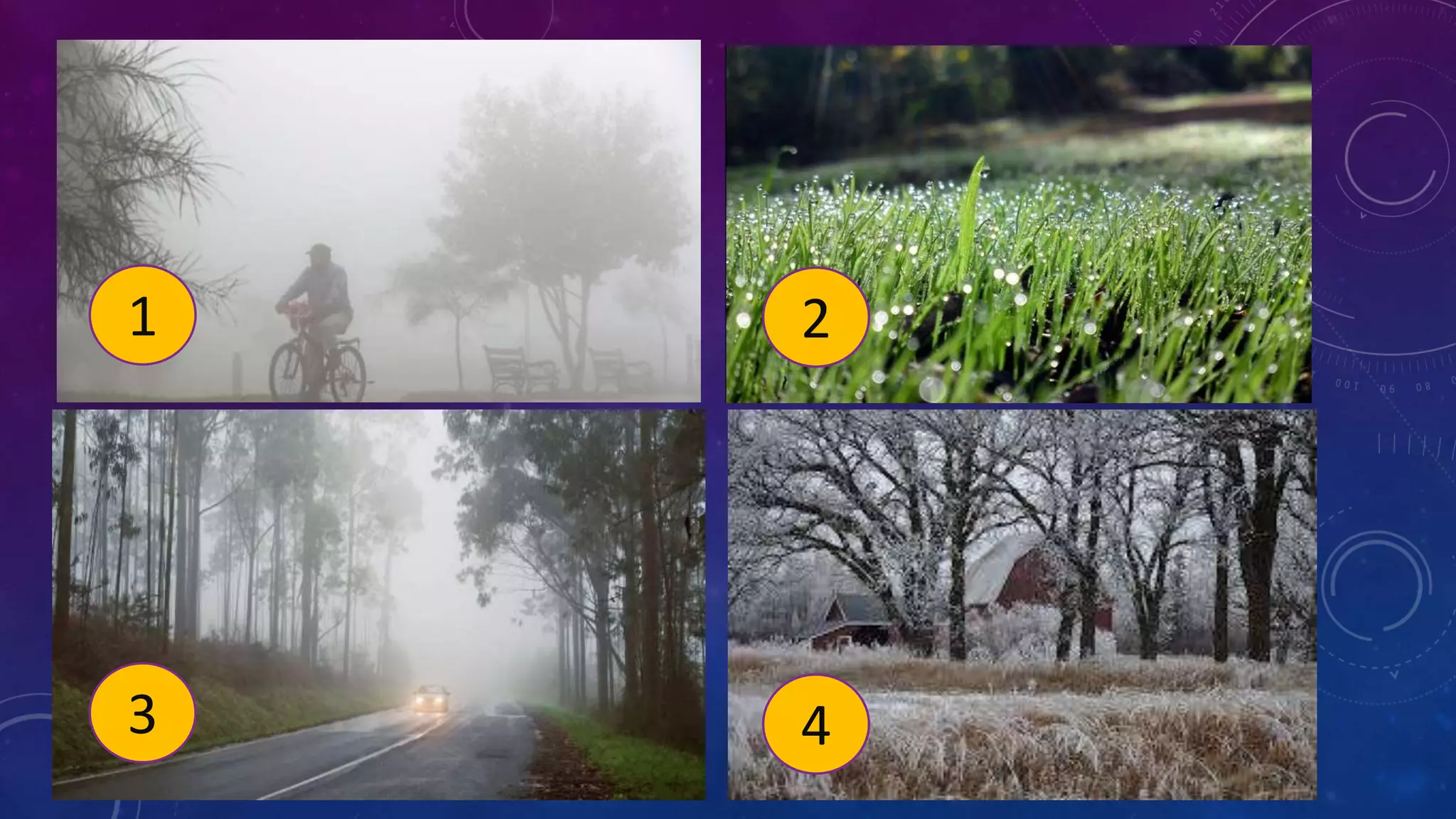
QN : Identify the different form of condensation from
the pictures ?
1 2
3 4
QUESTIONS
1. What are the different forms of condensation ?
2. What is meant by Dew ?
3. What is the difference between Mist and Fog ?
4. What is Frost ?
Forms of condensation

Forms of condensation

  • 1.
    WELCOME CHAPTER 1 –SUN : THE ULTIMATE SOURCE PRESENTED BY SHARAN R Emmanuel college of B.Ed. Training
  • 2.
    CONDENSATION The conversion ofa water vapour into a liquid form is called CONDENSATION CONDTION: • Addition of water vapour or fall in temperature, the water vapour in the atmosphere begins to condense.
  • 3.
  • 4.
    • Atmosphere shouldreach the saturation level for condensation to begin. • Addition of water vapour or due to a considerable fall in temperature. • Therefore, water vapour in the atmosphere begins to Condense. FORMS OF CONDENSATION
  • 5.
    DIFFERENT FORMS OFCONDENSATION DEW FROST FOG / MIST CLOUD FORMS OF CONDENSATION
  • 6.
    1. DEW Water dropletsclinging on to the blades of grass and leaves early in the morning. This is called Dew.
  • 7.
    • The surfaceof the earth gets cooled during the night and it cools the near atmosphere. • This causes the water vapour to condense and the condensed droplets cling on to the cold surfaces on earth.
  • 8.
    2. FROST • Thenight temperature falls below 0° Celsius in some places on the earth. • Instead of dew, tiny ice crystals are formed in such places. • This form of condensation is called Frost.
  • 9.
  • 10.
    3. FOG ORMIST Fog or mist is the result of condensation around the minute dust particles in the lower atmosphere. • This may obstruct atmospheric visibility. • If the range of visibility is less than one kilometer, it is termed Fog. • If the range of visibility is more than one kilometer, it is called Mist.
  • 11.
    FOG :RANGE OFVISIBILITY IS LESS THAN ONE KILOMETER
  • 12.
    MIST : RANGEOF VISIBILITY IS MORE THAN ONE KILOMETER
  • 13.
    ACTIVITY QN : Identifythe different form of condensation from the pictures ?
  • 14.
  • 15.
    QUESTIONS 1. What arethe different forms of condensation ? 2. What is meant by Dew ? 3. What is the difference between Mist and Fog ? 4. What is Frost ?