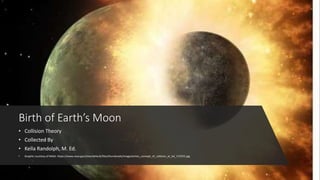
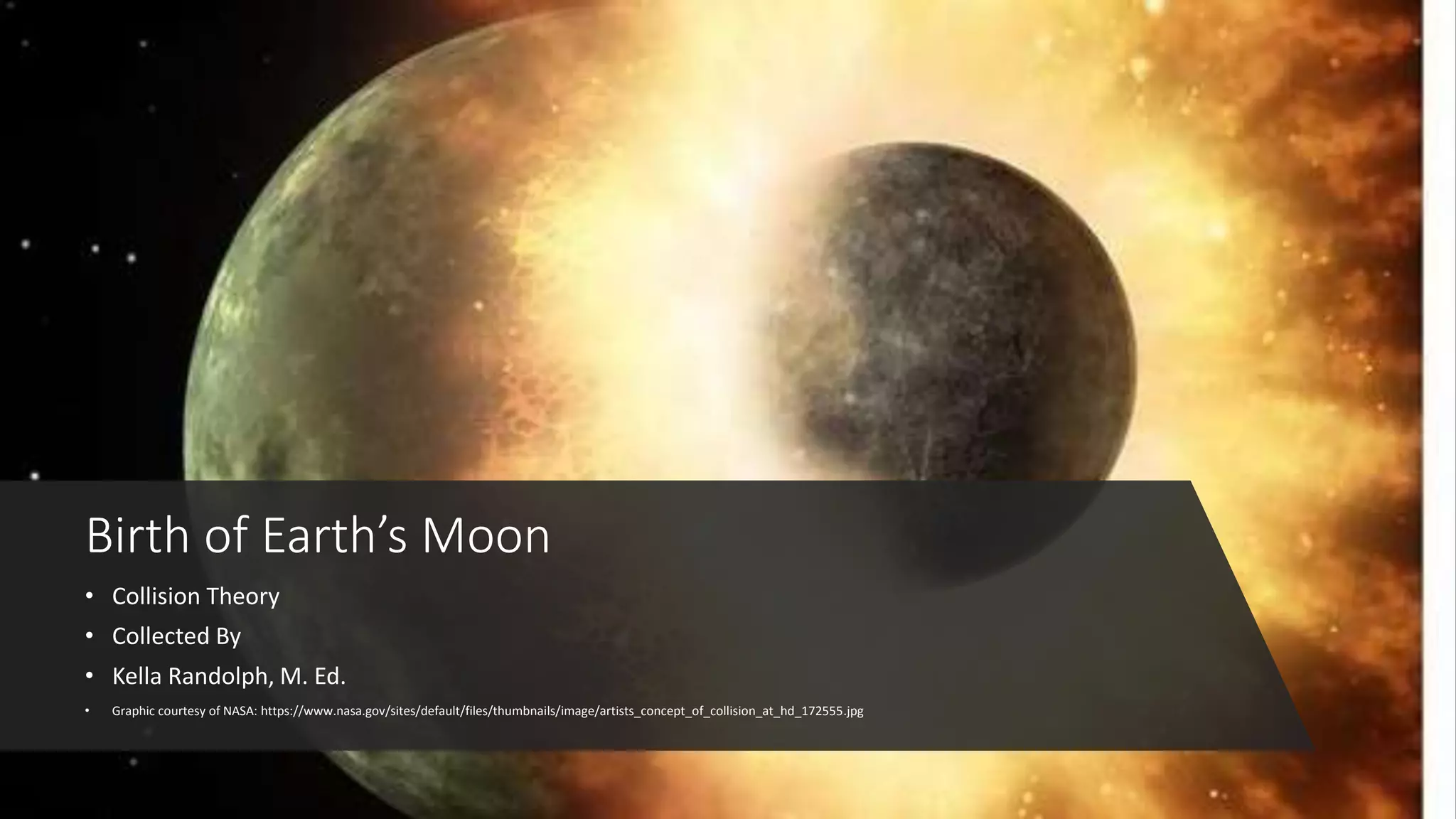
Birth of Earth’s Moon
• Collision Theory
• Collected By
• Kella Randolph, M. Ed.
• Graphic courtesy of NASA: https://www.nasa.gov/sites/default/files/thumbnails/image/artists_concept_of_collision_at_hd_172555.jpg
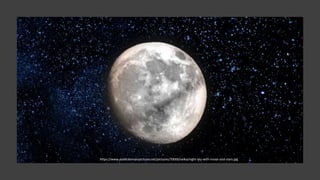
https://www.publicdomainpictures.net/pictures/70000/velka/night-sky-with-moon-and-stars.jpg
NASA finds evidence
two early planets
collided to form
Moon
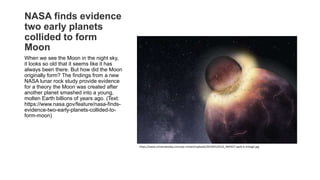
When we see the Moon in the night sky,
it looks so old that it seems like it has
always been there. But how did the Moon
originally form? The findings from a new
NASA lunar rock study provide evidence
for a theory the Moon was created after
another planet smashed into a young,
molten Earth billions of years ago. (Text:
https://www.nasa.gov/feature/nasa-finds-
evidence-two-early-planets-collided-to-
form-moon)
https://www.universetoday.com/wp-content/uploads/2019/01/0123_IMPACT-apv6-b-2nhagit.jpg
How the Moon Formed: Lunar Rocks Support
Giant Impact Theory
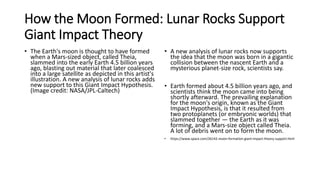
• The Earth's moon is thought to have formed
when a Mars-sized object, called Theia,
slammed into the early Earth 4.5 billion years
ago, blasting out material that later coalesced
into a large satellite as depicted in this artist's
illustration. A new analysis of lunar rocks adds
new support to this Giant Impact Hypothesis.
(Image credit: NASA/JPL-Caltech)
• A new analysis of lunar rocks now supports
the idea that the moon was born in a gigantic
collision between the nascent Earth and a
mysterious planet-size rock, scientists say.
• Earth formed about 4.5 billion years ago, and
scientists think the moon came into being
shortly afterward. The prevailing explanation
for the moon's origin, known as the Giant
Impact Hypothesis, is that it resulted from
two protoplanets (or embryonic worlds) that
slammed together — the Earth as it was
forming, and a Mars-size object called Theia.
A lot of debris went on to form the moon.
• https://www.space.com/26142-moon-formation-giant-impact-theory-support.html
The Giant Impact
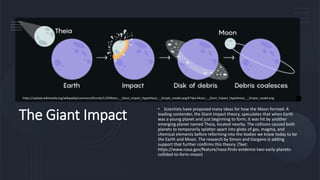
• Scientists have proposed many ideas for how the Moon formed. A
leading contender, the Giant Impact theory, speculates that when Earth
was a young planet and just beginning to form, it was hit by another
emerging planet named Theia, located nearby. The collision caused both
planets to temporarily splatter apart into globs of gas, magma, and
chemical elements before reforming into the bodies we know today to be
the Earth and Moon. The research by Simon and Gargano is adding
support that further confirms this theory. (Text:
https://www.nasa.gov/feature/nasa-finds-evidence-two-early-planets-
collided-to-form-moon)
https://upload.wikimedia.org/wikipedia/commons/thumb/1/1f/Moon_-_Giant_Impact_Hypothesis_-_Simple_model.png/674px-Moon_-_Giant_Impact_Hypothesis_-_Simple_model.png
https://i.stack.imgur.com/iOuA0.jpg https://upload.wikimedia.org/wikipedia/commons/thumb/b/b1/Earth_Rise_as_Seen_From_Lunar_Sur
face.jpg/1024px-Earth_Rise_as_Seen_From_Lunar_Surface.jpg
https://upload.wikimedia.org/wikipedia/commons/thumb/f/f6/Lunar_crater_Daedalus.jpg/1200px-
Lunar_crater_Daedalus.jpg
Copy and paste url below to a search bar for an interactive experience:
https://moon.nasa.gov/exploration/history/
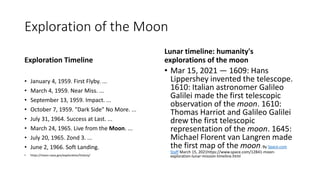
Exploration of the Moon
Exploration Timeline
• January 4, 1959. First Flyby. ...
• March 4, 1959. Near Miss. ...
• September 13, 1959. Impact. ...
• October 7, 1959. "Dark Side" No More. ...
• July 31, 1964. Success at Last. ...
• March 24, 1965. Live from the Moon. ...
• July 20, 1965. Zond 3. ...
• June 2, 1966. Soft Landing.
• https://moon.nasa.gov/exploration/history/
Lunar timeline: humanity's
explorations of the moon
• Mar 15, 2021 — 1609: Hans
Lippershey invented the telescope.
1610: Italian astronomer Galileo
Galilei made the first telescopic
observation of the moon. 1610:
Thomas Harriot and Galileo Galilei
drew the first telescopic
representation of the moon. 1645:
Michael Florent van Langren made
the first map of the moon. By Space.com
Staff March 15, 2021https://www.space.com/12841-moon-
exploration-lunar-mission-timeline.html
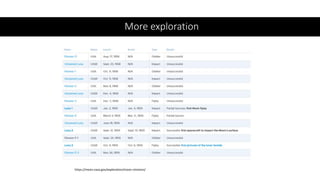
More exploration
https://moon.nasa.gov/exploration/moon-missions/
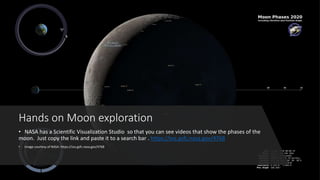
Hands on Moon exploration
• NASA has a Scientific Visualization Studio so that you can see videos that show the phases of the
moon. Just copy the link and paste it to a search bar . https://svs.gsfc.nasa.gov/4768
• Image courtesy of NASA: https://svs.gsfc.nasa.gov/4768

Earth and moon impact theory

  • 1.
    Birth of Earth’sMoon • Collision Theory • Collected By • Kella Randolph, M. Ed. • Graphic courtesy of NASA: https://www.nasa.gov/sites/default/files/thumbnails/image/artists_concept_of_collision_at_hd_172555.jpg
  • 2.
  • 3.
    NASA finds evidence twoearly planets collided to form Moon When we see the Moon in the night sky, it looks so old that it seems like it has always been there. But how did the Moon originally form? The findings from a new NASA lunar rock study provide evidence for a theory the Moon was created after another planet smashed into a young, molten Earth billions of years ago. (Text: https://www.nasa.gov/feature/nasa-finds- evidence-two-early-planets-collided-to- form-moon) https://www.universetoday.com/wp-content/uploads/2019/01/0123_IMPACT-apv6-b-2nhagit.jpg
  • 4.
    How the MoonFormed: Lunar Rocks Support Giant Impact Theory • The Earth's moon is thought to have formed when a Mars-sized object, called Theia, slammed into the early Earth 4.5 billion years ago, blasting out material that later coalesced into a large satellite as depicted in this artist's illustration. A new analysis of lunar rocks adds new support to this Giant Impact Hypothesis. (Image credit: NASA/JPL-Caltech) • A new analysis of lunar rocks now supports the idea that the moon was born in a gigantic collision between the nascent Earth and a mysterious planet-size rock, scientists say. • Earth formed about 4.5 billion years ago, and scientists think the moon came into being shortly afterward. The prevailing explanation for the moon's origin, known as the Giant Impact Hypothesis, is that it resulted from two protoplanets (or embryonic worlds) that slammed together — the Earth as it was forming, and a Mars-size object called Theia. A lot of debris went on to form the moon. • https://www.space.com/26142-moon-formation-giant-impact-theory-support.html
  • 5.
    The Giant Impact •Scientists have proposed many ideas for how the Moon formed. A leading contender, the Giant Impact theory, speculates that when Earth was a young planet and just beginning to form, it was hit by another emerging planet named Theia, located nearby. The collision caused both planets to temporarily splatter apart into globs of gas, magma, and chemical elements before reforming into the bodies we know today to be the Earth and Moon. The research by Simon and Gargano is adding support that further confirms this theory. (Text: https://www.nasa.gov/feature/nasa-finds-evidence-two-early-planets- collided-to-form-moon) https://upload.wikimedia.org/wikipedia/commons/thumb/1/1f/Moon_-_Giant_Impact_Hypothesis_-_Simple_model.png/674px-Moon_-_Giant_Impact_Hypothesis_-_Simple_model.png
  • 6.
  • 7.
    Copy and pasteurl below to a search bar for an interactive experience: https://moon.nasa.gov/exploration/history/
  • 8.
    Exploration of theMoon Exploration Timeline • January 4, 1959. First Flyby. ... • March 4, 1959. Near Miss. ... • September 13, 1959. Impact. ... • October 7, 1959. "Dark Side" No More. ... • July 31, 1964. Success at Last. ... • March 24, 1965. Live from the Moon. ... • July 20, 1965. Zond 3. ... • June 2, 1966. Soft Landing. • https://moon.nasa.gov/exploration/history/ Lunar timeline: humanity's explorations of the moon • Mar 15, 2021 — 1609: Hans Lippershey invented the telescope. 1610: Italian astronomer Galileo Galilei made the first telescopic observation of the moon. 1610: Thomas Harriot and Galileo Galilei drew the first telescopic representation of the moon. 1645: Michael Florent van Langren made the first map of the moon. By Space.com Staff March 15, 2021https://www.space.com/12841-moon- exploration-lunar-mission-timeline.html
  • 9.
  • 10.
    Hands on Moonexploration • NASA has a Scientific Visualization Studio so that you can see videos that show the phases of the moon. Just copy the link and paste it to a search bar . https://svs.gsfc.nasa.gov/4768 • Image courtesy of NASA: https://svs.gsfc.nasa.gov/4768