CLIMATE
CEIP. Almirante Laulhé
Weather and climate
CLIMATE
Climate refers to the
atmospheric conditions of a
specific place over a
considerable period of time,
usually 30 or 35 years.
WEATHER
Weather refers to the conditions
of the atmosphere at a specific
place over a short period of
time.
2
Climate remains largely unchanged*, but weather may change from day to
day.
* unchanged: sin cambios
Elements of climate
Climate is described by referring to its elements:
Temperature Precipitation
Humidity Pressure and winds
“
Temperature
4
Temperature is the degree* of hotness and coldness of a place.
Temperature is affected by solar radiation reaching* the Earth’s surface.
Amount* of solar radiation is determined by: Latitude
Altitude
Distance from the sea
* degree: grado
* reaching: que llega
* amount: cantidad
5
Humidity
Humidity is the amount of water vapour in the air.
It is invisible.
Humidity indicates the probability of precipitation, dew* or fog*.
* Dew: rocío
* Fog: niebla
Precipitation
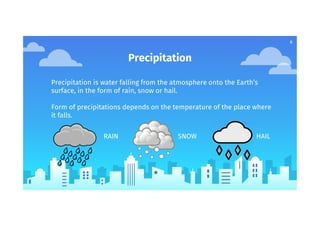
Precipitation is water falling from the atmosphere onto the Earth’s
surface, in the form of rain, snow or hail.
Form of precipitations depends on the temperature of the place where
it falls.
RAIN SNOW HAIL
6
7
Pressure and winds
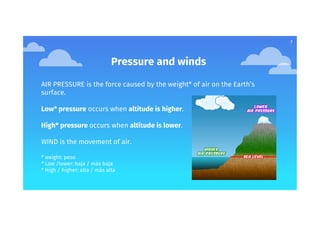
AIR PRESSURE is the force caused by the weight* of air on the Earth’s
surface.
Low* pressure occurs when altitude is higher.
High* pressure occurs when altitude is lower.
WIND is the movement of air.
* weight: peso
* Low /lower: baja / más baja
* High / higher: alta / más alta
8
Now it’s your turn!
1. Match.
Amount of water vapour in the air ● ● Air pressure
Force caused by the weight of air ● ● Precipitations
Water falling from the atmosphere ● ● Humidity
2. Which are the factors that determine the amount of solar radiation?
Climate factors
Climate factors are the characteristics of a specific place that
affect* its temperatures and precipitations.
There are three main* factors: latitude
altitude
distance from the sea
* To affect: influir
* Main: principales
10
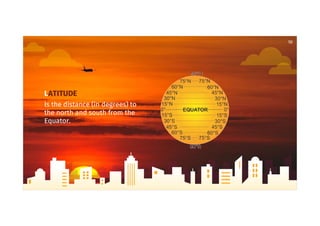
LATITUDE
Is the distance (in degrees) to
the north and south from the
Equator.
11
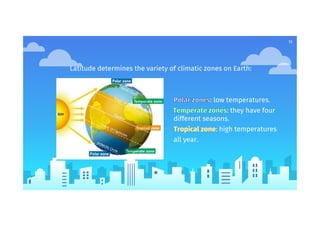
Latitude determines the variety of climatic zones on Earth:
: low temperatures.
: they have four
different seasons.
: high temperatures
all year.
12
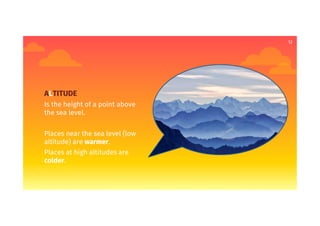
ALTITUDE
Is the height of a point above
the sea level.
Places near the sea level (low
altitude) are warmer.
Places at high altitudes are
colder.
13
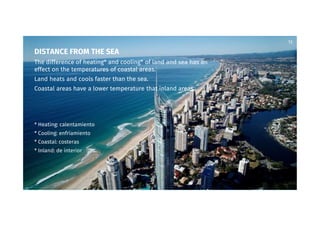
DISTANCE FROM THE SEA
The difference of heating* and cooling* of land and sea has an
effect on the temperatures of coastal areas.
Land heats and cools faster than the sea.
Coastal areas have a lower temperature that inland areas.
* Heating: calentamiento
* Cooling: enfriamiento
* Coastal: costeras
* Inland: de interior
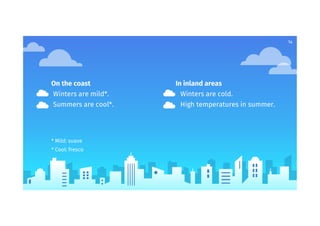
On the coast
Winters are mild*.
Summers are cool*.
* Mild: suave
* Cool: fresco
In inland areas
Winters are cold.
High temperatures in summer.
14
15
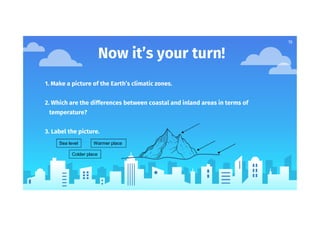
Now it’s your turn!
1. Make a picture of the Earth’s climatic zones.
2. Which are the differences between coastal and inland areas in terms of
temperature?
3. Label the picture.
Sea level Warmer place
Colder place
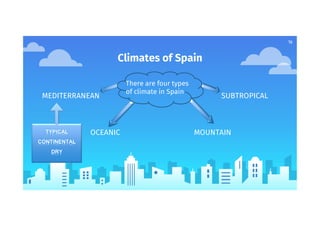
Climates of Spain
There are four types
of climate in Spain
16
MEDITERRANEAN
OCEANIC MOUNTAIN
SUBTROPICAL
TYPICAL
CONTINENTAL
DRY
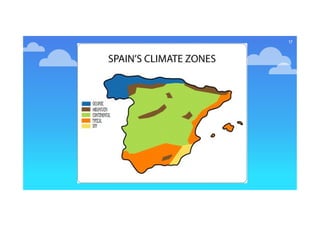
Maps
17
Mediterranean
Typical
This is the climate of the
Balearic Islands, the
Mediterranean coast and a few
inland areas of the Iberian
Peninsula.
- Temperatures are mild in
winter and high in summer.
- Precipitation is low and
irregular. Rainfall is highest
in spring and autumn.
Drought* is common in
summer.
* Drought: sequía
Continental
This is the climate of most
inland areas of the Iberian
Peninsula.
- Temperatures are low in
winter and high in summer.
- Precipitation is low and
irregular. Rainfall is highest
in spring and autumn. There
is also drought in summer. It
sometimes snow in winter.
Dry
This is the climate of the
southeastern areas of the
Mediterranean coast.
- Temperatures are mild in winter
and higher in summer than the
typical Mediteranean climate.
- Precipitation is very low and
irregular. Rainfall is highest from
late* autumn to early* spring.
The summer is ver dry.
* Late autumn: finales de otoño
* Early spring: principios de primavera
18
19
Oceanic
This is the climate of the north and northwest of the Iberian Peninsula.
- Temperatures are mild in winter and warm in summer.
- Precipitation is abundant and regular. Rainfall is high throughout*
the year, although* it decreases in summer.
* Throughout: durante
* Although: aunque
* Decreases: disminuye
20
Mountain
Areas above 1.500 metres have a mountain climate.
- Temperatures are very cold in winter and cool in summer.
- Precipitation is abundant. It often snows in winter.
21
Subtropical
The Canary Islands are the only region of Spain with a Subtropical
climate.
- Temperatures are mild in winter throughout* the year.
- Precipitation is scarce. Rainfall is higher in the northern parts of the
islands and in the mountain areas.
* Throughout: durante
* Scarce: escasas
22
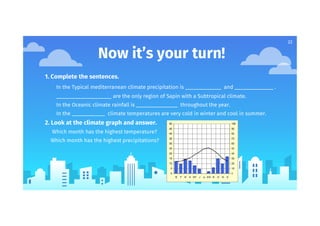
Now it’s your turn!
1. Complete the sentences.
In the Typical mediterranean climate precipitation is _____________ and ______________ .
____________________ are the only region of Sapin with a Subtropical climate.
In the Oceanic climate rainfall is _______________ throughout the year.
In the ____________ climate temperatures are very cold in winter and cool in summer.
2. Look at the climate graph and answer.
Which month has the highest temperature?
Which month has the highest precipitations?

Climate

  • 1.
  • 2.
    Weather and climate CLIMATE Climaterefers to the atmospheric conditions of a specific place over a considerable period of time, usually 30 or 35 years. WEATHER Weather refers to the conditions of the atmosphere at a specific place over a short period of time. 2 Climate remains largely unchanged*, but weather may change from day to day. * unchanged: sin cambios
  • 3.
    Elements of climate Climateis described by referring to its elements: Temperature Precipitation Humidity Pressure and winds
  • 4.
    “ Temperature 4 Temperature is thedegree* of hotness and coldness of a place. Temperature is affected by solar radiation reaching* the Earth’s surface. Amount* of solar radiation is determined by: Latitude Altitude Distance from the sea * degree: grado * reaching: que llega * amount: cantidad
  • 5.
    5 Humidity Humidity is theamount of water vapour in the air. It is invisible. Humidity indicates the probability of precipitation, dew* or fog*. * Dew: rocío * Fog: niebla
  • 6.
    Precipitation Precipitation is waterfalling from the atmosphere onto the Earth’s surface, in the form of rain, snow or hail. Form of precipitations depends on the temperature of the place where it falls. RAIN SNOW HAIL 6
  • 7.
    7 Pressure and winds AIRPRESSURE is the force caused by the weight* of air on the Earth’s surface. Low* pressure occurs when altitude is higher. High* pressure occurs when altitude is lower. WIND is the movement of air. * weight: peso * Low /lower: baja / más baja * High / higher: alta / más alta
  • 8.
    8 Now it’s yourturn! 1. Match. Amount of water vapour in the air ● ● Air pressure Force caused by the weight of air ● ● Precipitations Water falling from the atmosphere ● ● Humidity 2. Which are the factors that determine the amount of solar radiation?
  • 9.
    Climate factors Climate factorsare the characteristics of a specific place that affect* its temperatures and precipitations. There are three main* factors: latitude altitude distance from the sea * To affect: influir * Main: principales
  • 10.
    10 LATITUDE Is the distance(in degrees) to the north and south from the Equator.
  • 11.
    11 Latitude determines thevariety of climatic zones on Earth: : low temperatures. : they have four different seasons. : high temperatures all year.
  • 12.
    12 ALTITUDE Is the heightof a point above the sea level. Places near the sea level (low altitude) are warmer. Places at high altitudes are colder.
  • 13.
    13 DISTANCE FROM THESEA The difference of heating* and cooling* of land and sea has an effect on the temperatures of coastal areas. Land heats and cools faster than the sea. Coastal areas have a lower temperature that inland areas. * Heating: calentamiento * Cooling: enfriamiento * Coastal: costeras * Inland: de interior
  • 14.
    On the coast Wintersare mild*. Summers are cool*. * Mild: suave * Cool: fresco In inland areas Winters are cold. High temperatures in summer. 14
  • 15.
    15 Now it’s yourturn! 1. Make a picture of the Earth’s climatic zones. 2. Which are the differences between coastal and inland areas in terms of temperature? 3. Label the picture. Sea level Warmer place Colder place
  • 16.
    Climates of Spain Thereare four types of climate in Spain 16 MEDITERRANEAN OCEANIC MOUNTAIN SUBTROPICAL TYPICAL CONTINENTAL DRY
  • 17.
  • 18.
    Mediterranean Typical This is theclimate of the Balearic Islands, the Mediterranean coast and a few inland areas of the Iberian Peninsula. - Temperatures are mild in winter and high in summer. - Precipitation is low and irregular. Rainfall is highest in spring and autumn. Drought* is common in summer. * Drought: sequía Continental This is the climate of most inland areas of the Iberian Peninsula. - Temperatures are low in winter and high in summer. - Precipitation is low and irregular. Rainfall is highest in spring and autumn. There is also drought in summer. It sometimes snow in winter. Dry This is the climate of the southeastern areas of the Mediterranean coast. - Temperatures are mild in winter and higher in summer than the typical Mediteranean climate. - Precipitation is very low and irregular. Rainfall is highest from late* autumn to early* spring. The summer is ver dry. * Late autumn: finales de otoño * Early spring: principios de primavera 18
  • 19.
    19 Oceanic This is theclimate of the north and northwest of the Iberian Peninsula. - Temperatures are mild in winter and warm in summer. - Precipitation is abundant and regular. Rainfall is high throughout* the year, although* it decreases in summer. * Throughout: durante * Although: aunque * Decreases: disminuye
  • 20.
    20 Mountain Areas above 1.500metres have a mountain climate. - Temperatures are very cold in winter and cool in summer. - Precipitation is abundant. It often snows in winter.
  • 21.
    21 Subtropical The Canary Islandsare the only region of Spain with a Subtropical climate. - Temperatures are mild in winter throughout* the year. - Precipitation is scarce. Rainfall is higher in the northern parts of the islands and in the mountain areas. * Throughout: durante * Scarce: escasas
  • 22.
    22 Now it’s yourturn! 1. Complete the sentences. In the Typical mediterranean climate precipitation is _____________ and ______________ . ____________________ are the only region of Sapin with a Subtropical climate. In the Oceanic climate rainfall is _______________ throughout the year. In the ____________ climate temperatures are very cold in winter and cool in summer. 2. Look at the climate graph and answer. Which month has the highest temperature? Which month has the highest precipitations?