

WEATHER
• It is the condition of the atmosphere over a
small area for a given period of time.
• It keeps changing every few hours of the day.
• For example: high temperature and high
humidity make the weather sultry and
uncomfortable.
CLIMATE
• It refers to the average weather conditions
over a large area and for a longer period of
time.
• It remains constant for a longer duration, may
be 3 months or 6 months or a year.
MONSOON
• The word monsoon derived from the Arabic
word ‘mausim’ which means season.
• It refers to the seasonal reversal in the wind
direction during a year.
• The climate of India is described as the
monsoon climate.
• Two important elements of Indian climate are:
Temperature and precipitation
1.Temperature:- The degree of hotness or coldness of the
air is called as temperature.
2. Precipitation:- Air has weight and it exerts weight as
pressure on the surface of the Earth.
This weight of the air is called atmospheric pressure.
• Precipitation is in the form of
snowfall in Himalaya
rain over the rest of the country
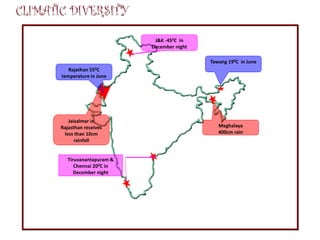
Rajathan 550C
temperature in June
Tawang 190C in June
J&K -450C in
December night
Tiruvanantapuram &
Chennai 200C in
December night
Meghalaya
400cm rain
Jaisalmer in
Rajasthan receives
less than 10cm
rainfall
Six major controls of the climate
1. Latitude
2. Altitude
3. Pressure and wind system
4. Distance from the sea
5. Ocean currents
6. Relief features
Latitude
• The farther away from the Equator, the colder
the climate becomes.
Low
Mid
Mid
Cold
Warm
Hot
Warm
Cold
High
High
Tropic of
Cancer
Equator
Tropic of
Capricorn
Altitude
• Higher the altitude, the lower is the
temperature.
• As one goes up, the density of the air
becomes less and less.
• Higher elevation- thinner air, therefore less air
to hold heat makes it colder.
• Lower pressure at higher altitudes causes the
temperature to be colder on the top of the
mountain.eg: Shimla is cooler than chandigarh
Pressure and wind system
• The variations in air temperature control the
pressure and wind system of a place.
• Warm air rises, creating low pressure areas,
while cold air sinks, creating high pressure
areas.
• As a result, winds blow outward from a high
pressure location towards lower pressures.
Pressure and WIND
Pressure and wind system
• The variations in air
temperature control the
pressure and wind system
of a place.
• Warm air rises, creating low
pressure areas, while cold
air sinks, creating high
pressure areas.
• As a result, winds blow
outward from a high
pressure location towards
lower pressures.
Distance from the sea
• The sea temperature changes slower than
land temperature.
• The sea keeps the coastal area warmer in
winter and cooler in summer.
• As the distance from the sea increases the
weather conditions become extreme.
• Places away from the sea have very hot
summers and very cold winters.
• This condition is known as continentality.
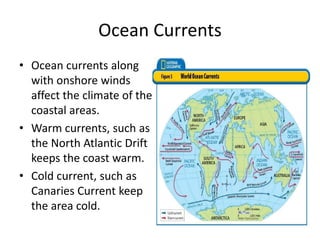
Ocean Currents
• Ocean currents along
with onshore winds
affect the climate of the
coastal areas.
• Warm currents, such as
the North Atlantic Drift
keeps the coast warm.
• Cold current, such as
Canaries Current keep
the area cold.
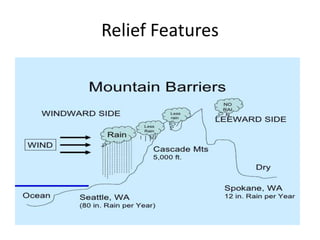
Relief Features
Climate
Climate

Climate

  • 2.
    WEATHER • It isthe condition of the atmosphere over a small area for a given period of time. • It keeps changing every few hours of the day. • For example: high temperature and high humidity make the weather sultry and uncomfortable.
  • 3.
    CLIMATE • It refersto the average weather conditions over a large area and for a longer period of time. • It remains constant for a longer duration, may be 3 months or 6 months or a year.
  • 4.
    MONSOON • The wordmonsoon derived from the Arabic word ‘mausim’ which means season. • It refers to the seasonal reversal in the wind direction during a year. • The climate of India is described as the monsoon climate.
  • 5.
    • Two importantelements of Indian climate are: Temperature and precipitation 1.Temperature:- The degree of hotness or coldness of the air is called as temperature. 2. Precipitation:- Air has weight and it exerts weight as pressure on the surface of the Earth. This weight of the air is called atmospheric pressure. • Precipitation is in the form of snowfall in Himalaya rain over the rest of the country
  • 6.
    Rajathan 550C temperature inJune Tawang 190C in June J&K -450C in December night Tiruvanantapuram & Chennai 200C in December night Meghalaya 400cm rain Jaisalmer in Rajasthan receives less than 10cm rainfall
  • 7.
    Six major controlsof the climate 1. Latitude 2. Altitude 3. Pressure and wind system 4. Distance from the sea 5. Ocean currents 6. Relief features
  • 8.
    Latitude • The fartheraway from the Equator, the colder the climate becomes. Low Mid Mid Cold Warm Hot Warm Cold High High Tropic of Cancer Equator Tropic of Capricorn
  • 9.
    Altitude • Higher thealtitude, the lower is the temperature. • As one goes up, the density of the air becomes less and less. • Higher elevation- thinner air, therefore less air to hold heat makes it colder. • Lower pressure at higher altitudes causes the temperature to be colder on the top of the mountain.eg: Shimla is cooler than chandigarh
  • 10.
    Pressure and windsystem • The variations in air temperature control the pressure and wind system of a place. • Warm air rises, creating low pressure areas, while cold air sinks, creating high pressure areas. • As a result, winds blow outward from a high pressure location towards lower pressures.
  • 11.
  • 12.
    Pressure and windsystem • The variations in air temperature control the pressure and wind system of a place. • Warm air rises, creating low pressure areas, while cold air sinks, creating high pressure areas. • As a result, winds blow outward from a high pressure location towards lower pressures.
  • 13.
    Distance from thesea • The sea temperature changes slower than land temperature. • The sea keeps the coastal area warmer in winter and cooler in summer. • As the distance from the sea increases the weather conditions become extreme. • Places away from the sea have very hot summers and very cold winters. • This condition is known as continentality.
  • 14.
    Ocean Currents • Oceancurrents along with onshore winds affect the climate of the coastal areas. • Warm currents, such as the North Atlantic Drift keeps the coast warm. • Cold current, such as Canaries Current keep the area cold.
  • 15.