ELECTRICITY,
MAGNETISM
AND ENERGY
CEIP ALMIRANTE LAULHÉ
1. ELECTRICITY
Electrical charges
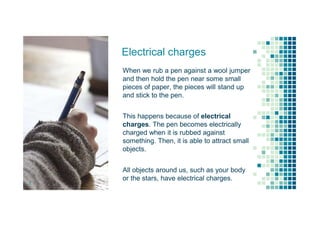
When we rub a pen against a wool jumper
and then hold the pen near some small
pieces of paper, the pieces will stand up
and stick to the pen.
This happens because of electrical
charges. The pen becomes electrically
charged when it is rubbed against
something. Then, it is able to attract small
objects.
All objects around us, such as your body
or the stars, have electrical charges.
3
Electric current
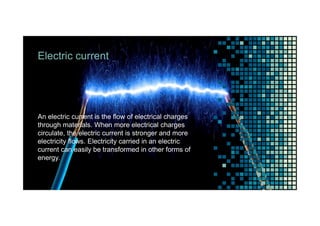
An electric current is the flow of electrical charges
through materials. When more electrical charges
circulate, the electric current is stronger and more
electricity flows. Electricity carried in an electric
current can easily be transformed in other forms of
energy.
Materials can be classiified into two types,
depending on how easily electrical charges can flow
through them.
Conductors. These are materials that allow
electrical charges to move freely. For this reason,
electric current flows easily through them. Copper,
silver and other metals are good conductors.
Insulators. These are materials that do not allow
electrical charges to move. Therefore, electric
current does not flow through them. Glass, plastic
and most non- metal materials are good
insulators.
Conductors and insulators
Electric current produce many different effects when
flowing through objects: heat, light, sound, magnetism,
movement and chemical effects. Match the following
objects to their corresponding effects:
a tablet screen an oven a doorbell
a mobile battery a blender (batidora)
Now it’s your turn!
6
2. MAGNETISM
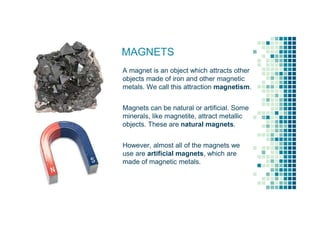
MAGNETS
A magnet is an object which attracts other
objects made of iron and other magnetic
metals. We call this attraction magnetism.
Magnets can be natural or artificial. Some
minerals, like magnetite, attract metallic
objects. These are natural magnets.
However, almost all of the magnets we
use are artificial magnets, which are
made of magnetic metals.
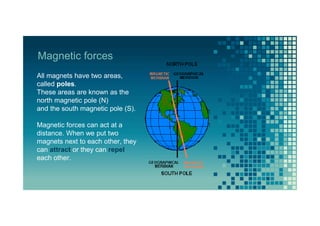
Magnetic forces
All magnets have two areas,
called poles.
These areas are known as the
north magnetic pole (N)
and the south magnetic pole (S).
Magnetic forces can act at a
distance. When we put two
magnets next to each other, they
can attract or they can repel
each other.
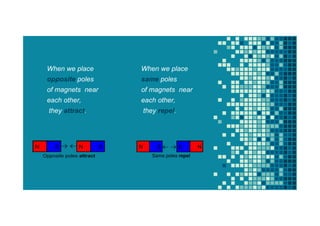
When we place
opposite poles
of magnets near
each other,
they attract.
When we place
same poles
of magnets near
each other,
they repel.
Draw a diagram showing magnetic forces.
Now it’s your turn!
11
3. ENERGY
ENERGY
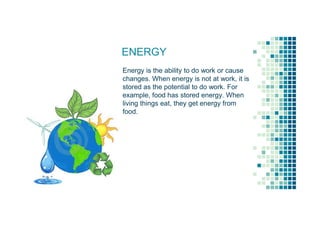
Energy is the ability to do work or cause
changes. When energy is not at work, it is
stored as the potential to do work. For
example, food has stored energy. When
living things eat, they get energy from
food.
Energy can exist in different forms.
Forms of energy
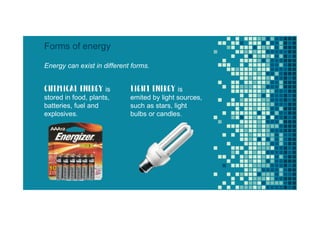
Chemical energy is
stored in food, plants,
batteries, fuel and
explosives.
light energy is
emited by light sources,
such as stars, light
bulbs or candles.
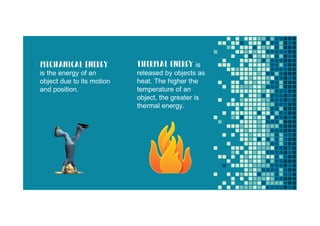
mechanical energy
is the energy of an
object due to its motion
and position.
thermal energy is
released by objects as
heat. The higher the
temperature of an
object, the greater is
thermal energy.
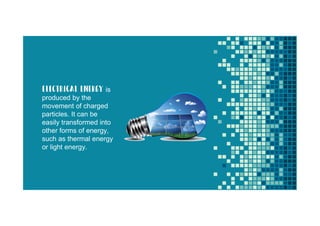
electrical energy is
produced by the
movement of charged
particles. It can be
easily transformed into
other forms of energy,
such as thermal energy
or light energy.
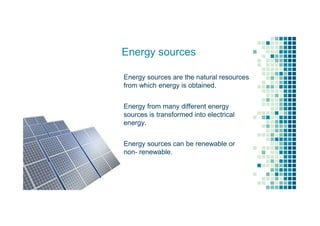
Energy sources
Energy sources are the natural resources
from which energy is obtained.
Energy from many different energy
sources is transformed into electrical
energy.
Energy sources can be renewable or
non- renewable.
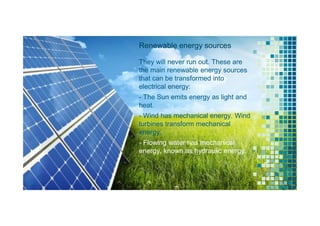
Renewable energy sources
They will never run out. These are
the main renewable energy sources
that can be transformed into
electrical energy:
- The Sun emits energy as light and
heat.
- Wind has mechanical energy. Wind
turbines transform mechanical
energy.
- Flowing water has mechanical
energy, known as hydraulic energy.
18
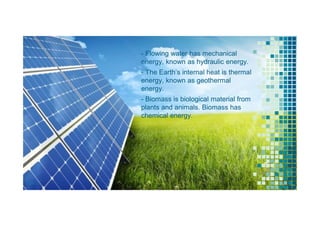
- Flowing water has mechanical
energy, known as hydraulic energy.
- The Earth’s internal heat is thermal
energy, known as geothermal
energy.
- Biomass is biological material from
plants and animals. Biomass has
chemical energy.
19
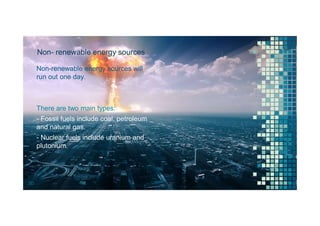
Non- renewable energy sources
Non-renewable energy sources will
run out one day.
There are two main types:
- Fossil fuels include coal, petroleum
and natural gas.
- Nuclear fuels include uranium and
plutonium.
20
1. Make a list with advantages and disadvantages of
electric cars.
2. Explain the difference between renewable and non-
renewable energy sources.
Now it’s your turn!
21

Matter and energy

  • 1.
  • 2.
  • 3.
    Electrical charges When werub a pen against a wool jumper and then hold the pen near some small pieces of paper, the pieces will stand up and stick to the pen. This happens because of electrical charges. The pen becomes electrically charged when it is rubbed against something. Then, it is able to attract small objects. All objects around us, such as your body or the stars, have electrical charges. 3
  • 4.
    Electric current An electriccurrent is the flow of electrical charges through materials. When more electrical charges circulate, the electric current is stronger and more electricity flows. Electricity carried in an electric current can easily be transformed in other forms of energy.
  • 5.
    Materials can beclassiified into two types, depending on how easily electrical charges can flow through them. Conductors. These are materials that allow electrical charges to move freely. For this reason, electric current flows easily through them. Copper, silver and other metals are good conductors. Insulators. These are materials that do not allow electrical charges to move. Therefore, electric current does not flow through them. Glass, plastic and most non- metal materials are good insulators. Conductors and insulators
  • 6.
    Electric current producemany different effects when flowing through objects: heat, light, sound, magnetism, movement and chemical effects. Match the following objects to their corresponding effects: a tablet screen an oven a doorbell a mobile battery a blender (batidora) Now it’s your turn! 6
  • 7.
  • 8.
    MAGNETS A magnet isan object which attracts other objects made of iron and other magnetic metals. We call this attraction magnetism. Magnets can be natural or artificial. Some minerals, like magnetite, attract metallic objects. These are natural magnets. However, almost all of the magnets we use are artificial magnets, which are made of magnetic metals.
  • 9.
    Magnetic forces All magnetshave two areas, called poles. These areas are known as the north magnetic pole (N) and the south magnetic pole (S). Magnetic forces can act at a distance. When we put two magnets next to each other, they can attract or they can repel each other.
  • 10.
    When we place oppositepoles of magnets near each other, they attract. When we place same poles of magnets near each other, they repel.
  • 11.
    Draw a diagramshowing magnetic forces. Now it’s your turn! 11
  • 12.
  • 13.
    ENERGY Energy is theability to do work or cause changes. When energy is not at work, it is stored as the potential to do work. For example, food has stored energy. When living things eat, they get energy from food.
  • 14.
    Energy can existin different forms. Forms of energy Chemical energy is stored in food, plants, batteries, fuel and explosives. light energy is emited by light sources, such as stars, light bulbs or candles.
  • 15.
    mechanical energy is theenergy of an object due to its motion and position. thermal energy is released by objects as heat. The higher the temperature of an object, the greater is thermal energy.
  • 16.
    electrical energy is producedby the movement of charged particles. It can be easily transformed into other forms of energy, such as thermal energy or light energy.
  • 17.
    Energy sources Energy sourcesare the natural resources from which energy is obtained. Energy from many different energy sources is transformed into electrical energy. Energy sources can be renewable or non- renewable.
  • 18.
    Renewable energy sources Theywill never run out. These are the main renewable energy sources that can be transformed into electrical energy: - The Sun emits energy as light and heat. - Wind has mechanical energy. Wind turbines transform mechanical energy. - Flowing water has mechanical energy, known as hydraulic energy. 18
  • 19.
    - Flowing waterhas mechanical energy, known as hydraulic energy. - The Earth’s internal heat is thermal energy, known as geothermal energy. - Biomass is biological material from plants and animals. Biomass has chemical energy. 19
  • 20.
    Non- renewable energysources Non-renewable energy sources will run out one day. There are two main types: - Fossil fuels include coal, petroleum and natural gas. - Nuclear fuels include uranium and plutonium. 20
  • 21.
    1. Make alist with advantages and disadvantages of electric cars. 2. Explain the difference between renewable and non- renewable energy sources. Now it’s your turn! 21