


Clinical Oral Surgery Class
5th year, 2nd semester, 1.5.2012

Cleft Lip and Palate

Dr. Faiyaz Ahmed
Oral & Maxillofacial surgeon

Images used in this presentation may be subjected to copyright. This presentation is to be used only for classroom educational purposes
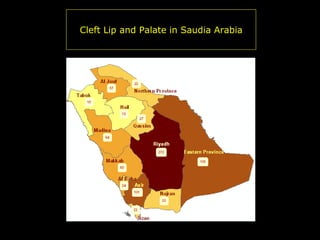
Cleft Lip and Palate in Saudia Arabia
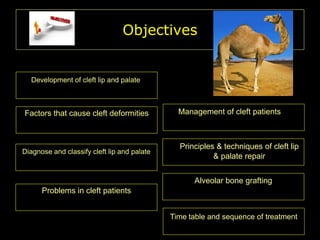
Objectives
Development of cleft lip & palate

Factors that cause cleft deformities

Management of cleft patients

Principles & techniques of cleft lip
& palate repair

Diagnose and classify cleft lip and palate

Alveolar bone grafting

Problems in cleft patients

Time table and sequence of treatment
Embryology

• Formation of the lip and palate takes place
between the 5th and 10th week of fetal life
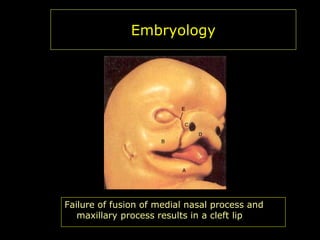
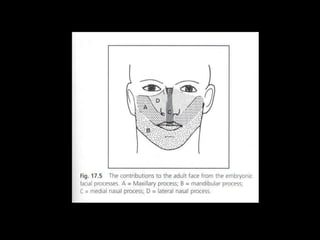
Embryology

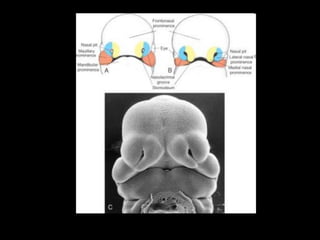
Failure of fusion of medial nasal process and
maxillary process results in a cleft lip
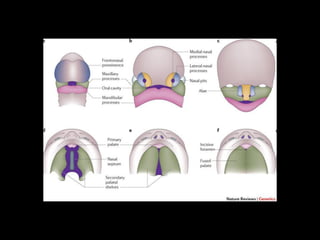
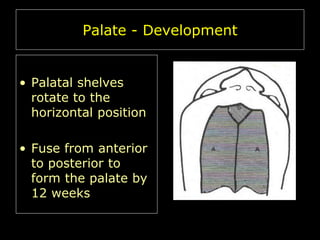
Palate - Development

• Palatal shelves
rotate to the
horizontal position
• Fuse from anterior
to posterior to
form the palate by
12 weeks
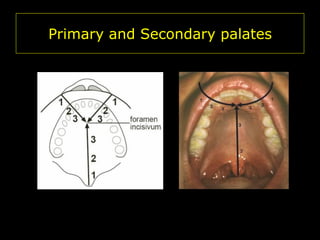
Primary and Secondary palates
• UCLP - most frequent combination, seen
more often in boys, hereditary incidence is
fairly high, predominantly – left side

• Isolated Cleft palate more frequently seen
in girls, incidence 1 in 2000
Etiology
• Multifactorial
– Genetic
predisposition
– Environmental
factors
•
•
•
•

Diazepam
Corticosteroids
Phenytoin
Folic acid deficiency
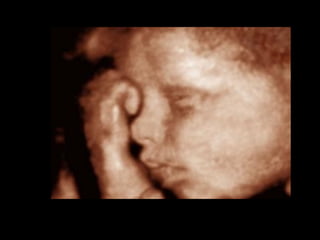
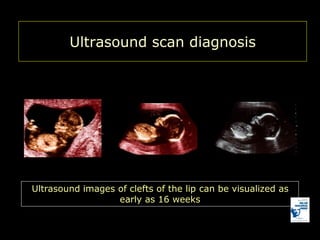
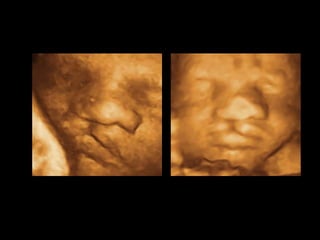
Ultrasound scan diagnosis

Ultrasound images of clefts of the lip can be visualized as
early as 16 weeks
Objectives
Development of cleft lip & palate

Factors that cause cleft deformities

Management of cleft patients

Principles & techniques of cleft lip
& palate repair

Diagnose and classify cleft lip and palate

Alveolar bone grafting

Problems in cleft patients

Time table and sequence of treatment
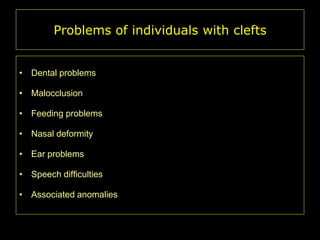
Problems of individuals with clefts
• Dental problems
• Malocclusion
• Feeding problems

• Nasal deformity
• Ear problems
• Speech difficulties
• Associated anomalies
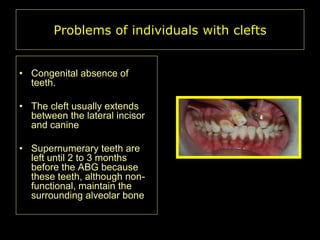
Problems of individuals with clefts
• Congenital absence of
teeth.
• The cleft usually extends
between the lateral incisor
and canine
• Supernumerary teeth are
left until 2 to 3 months
before the ABG because
these teeth, although nonfunctional, maintain the
surrounding alveolar bone
Malocclusion

• Class III seen in most
cases

• Retruded maxilla
Feeding problems

• Suckling and
swallowing reflexes
are normal
• Have extreme
difficulty producing
the necessary
negative pressure
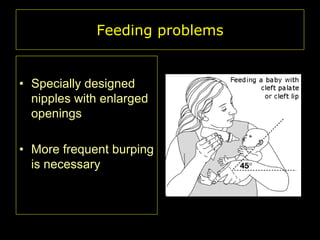
Feeding problems

• Specially designed
nipples with enlarged
openings
• More frequent burping
is necessary
Nasal deformity
• Alar cartilage on the
cleft side is flared
• Columella is pulled
towards the non cleft
side
• Nasal revision may be
the last corrective
surgical procedure the
cleft patient undergoes
Ear problems

• More predisposed to
middle ear infections
• Chronic serous otitis
media is common
among children with
cleft palate
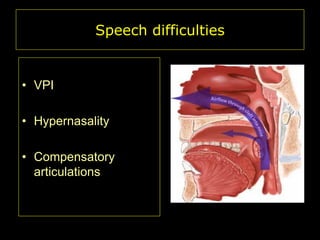
Speech difficulties

• VPI
• Hypernasality
• Compensatory
articulations
Speech difficulties : articulation

• Dental malformation, malocclusion, and
abnormal tongue placement may develop
before the palate is closed and thus
produce an articulation problem.
Speech difficulties

• Hearing loss at an early age is especially
detrimental to the development of normal
speech skills
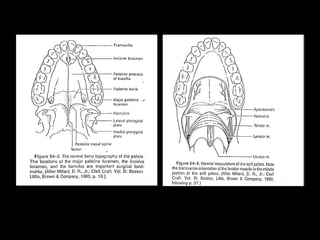
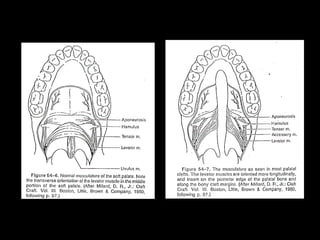
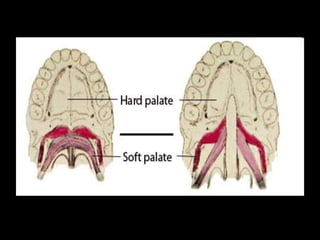
• The levator veli palatini muscle functions
to elevate the velum and enable
appropriate speech production
Objectives
Development of cleft lip & palate

Factors that cause cleft deformities

Management of cleft patients

Principles & techniques of cleft lip
& palate repair

Diagnose and classify cleft lip and palate

Alveolar bone grafting

Problems in cleft patients

Time table and sequence of treatment
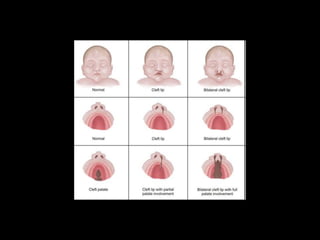
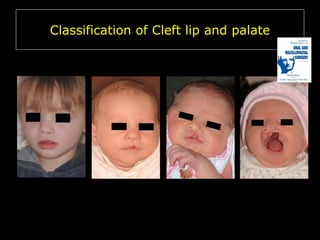
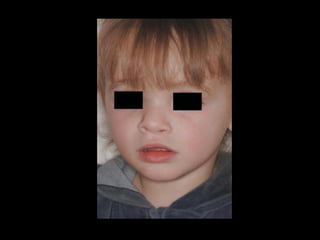
Classification of clefts

The typical classification system used clinically
to describe standard clefts of the lip and palate
is based on careful anatomic description.
Clefts can be unilateral or bilateral;
microform, incomplete, or complete;
and may involve the lip, nose, primary
palate, and/or secondary palates
Classification of Cleft lip and palate
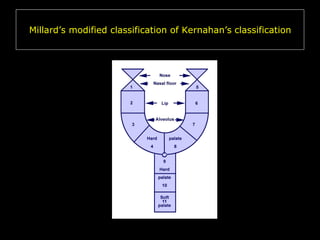
Millard’s modified classification of Kernahan’s classification
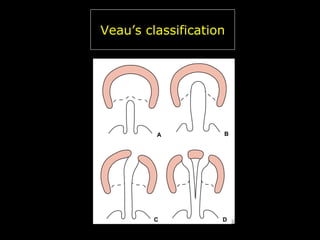
Veau’s classification
Problems of individuals with clefts
• Dental problems
• Malocclusion
• Feeding problems

• Nasal deformity
• Ear problems
• Speech difficulties
• Associated anomalies
Management Protocol for Cleft lip & Palate

• Prenatal - Diagnosis & Psychological counseling
• At Birth – Evaluation by cleft lip & palate team ,
Feeding advice. Naso alveolar molding
• 3-6 months –Cleft lip repair ( Millard’s Rule of 10)
Naso alveolar molding

• Done during the first 3 months to
bring the cleft segments closer and
facilitate lip repair
Rule of 10
• 10 gm% Hb
• 10 pounds wt
• 10 weeks old
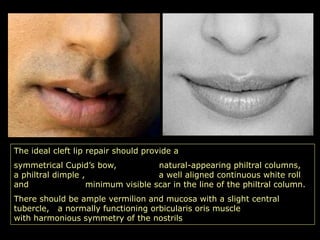
The ideal cleft lip repair should provide a
symmetrical Cupid’s bow,
natural-appearing philtral columns,
a philtral dimple ,
a well aligned continuous white roll
and
minimum visible scar in the line of the philtral column.
There should be ample vermilion and mucosa with a slight central
tubercle, a normally functioning orbicularis oris muscle
with harmonious symmetry of the nostrils
Cleft lip repair
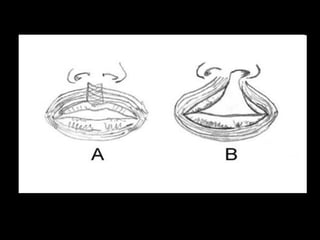
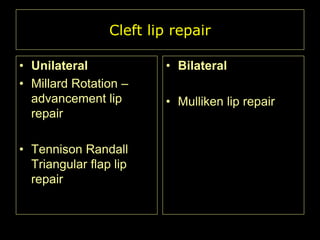
• Unilateral
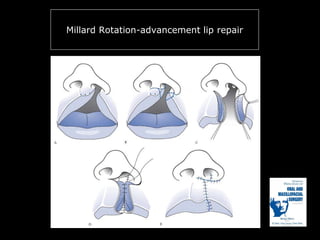
• Millard Rotation –
advancement lip
repair
• Tennison Randall
Triangular flap lip
repair

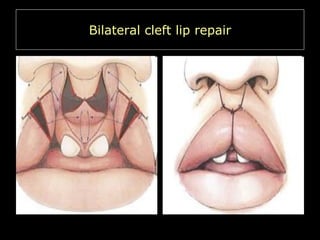
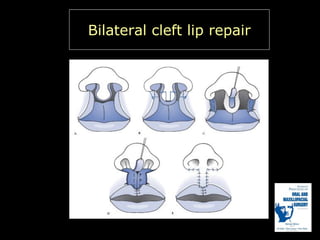
• Bilateral
• Mulliken lip repair
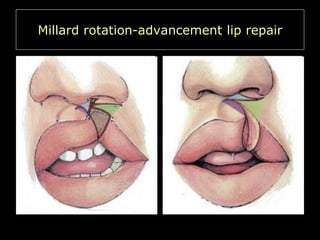
Millard rotation-advancement lip repair
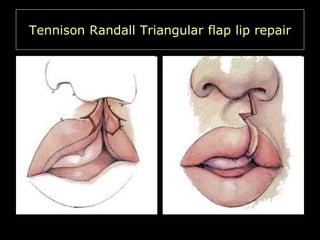
Tennison Randall Triangular flap lip repair
Millard Rotation-advancement lip repair
Bilateral cleft lip repair
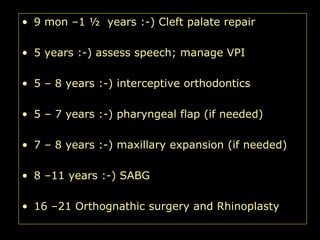
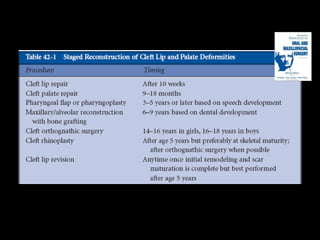
• 9 mon –1 ½ years :-) Cleft palate repair
• 5 years :-) assess speech; manage VPI

• 5 – 8 years :-) interceptive orthodontics
• 5 – 7 years :-) pharyngeal flap (if needed)
• 7 – 8 years :-) maxillary expansion (if needed)
• 8 –11 years :-) SABG
• 16 –21 Orthognathic surgery and Rhinoplasty
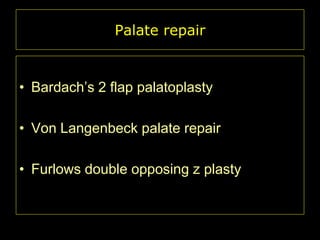
Palate repair

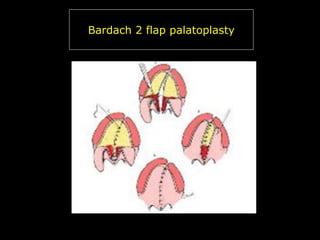
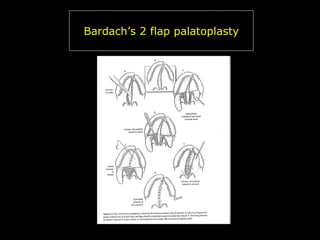
• Bardach’s 2 flap palatoplasty
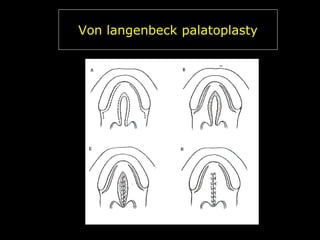
• Von Langenbeck palate repair
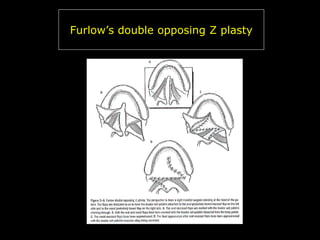
• Furlows double opposing z plasty
Bardach 2 flap palatoplasty
Bardach’s 2 flap palatoplasty
Von langenbeck palatoplasty
Furlow’s double opposing Z plasty
• 9 mon –1 ½ years :-) Cleft palate repair
• 5 years :-) assess speech; manage VPI

• 5 – 8 years :-) interceptive orthodontics
• 5 – 7 years :-) pharyngeal flap (if needed)
• 7 – 8 years :-) maxillary expansion (if needed)
• 8 –11 years :-) SABG
• 16 –21 Orthognathic surgery and Rhinoplasty
SABG
• Specific timing is based on the child’s dental
development instead of chronological age
• Timing is based on the development of the permanent
maxillary canine
• Root resorption and graft failure are common when bone
grafts are placed after eruption of the canine
Goal of bone grafting
• Provide bony matrix for the developing teeth
• Create alveolar ridge continuity
• Closure of any residual oronasal fistulas
• Improve bony support for the nasal base on the
cleft side
Objectives

Development of cleft lip and palate

Factors that cause cleft deformities

Diagnose and classify cleft lip and palate

Management of cleft patients

Principles & techniques of cleft lip
& palate repair
Alveolar bone grafting

Problems in cleft patients
Time table and sequence of treatment

Cleft class

  • 1.
    Clinical Oral SurgeryClass 5th year, 2nd semester, 1.5.2012 Cleft Lip and Palate Dr. Faiyaz Ahmed Oral & Maxillofacial surgeon Images used in this presentation may be subjected to copyright. This presentation is to be used only for classroom educational purposes
  • 2.
    Cleft Lip andPalate in Saudia Arabia
  • 3.
    Objectives Development of cleftlip & palate Factors that cause cleft deformities Management of cleft patients Principles & techniques of cleft lip & palate repair Diagnose and classify cleft lip and palate Alveolar bone grafting Problems in cleft patients Time table and sequence of treatment
  • 4.
    Embryology • Formation ofthe lip and palate takes place between the 5th and 10th week of fetal life
  • 5.
    Embryology Failure of fusionof medial nasal process and maxillary process results in a cleft lip
  • 9.
    Palate - Development •Palatal shelves rotate to the horizontal position • Fuse from anterior to posterior to form the palate by 12 weeks
  • 10.
  • 12.
    • UCLP -most frequent combination, seen more often in boys, hereditary incidence is fairly high, predominantly – left side • Isolated Cleft palate more frequently seen in girls, incidence 1 in 2000
  • 13.
    Etiology • Multifactorial – Genetic predisposition –Environmental factors • • • • Diazepam Corticosteroids Phenytoin Folic acid deficiency
  • 15.
    Ultrasound scan diagnosis Ultrasoundimages of clefts of the lip can be visualized as early as 16 weeks
  • 17.
    Objectives Development of cleftlip & palate Factors that cause cleft deformities Management of cleft patients Principles & techniques of cleft lip & palate repair Diagnose and classify cleft lip and palate Alveolar bone grafting Problems in cleft patients Time table and sequence of treatment
  • 18.
    Problems of individualswith clefts • Dental problems • Malocclusion • Feeding problems • Nasal deformity • Ear problems • Speech difficulties • Associated anomalies
  • 19.
    Problems of individualswith clefts • Congenital absence of teeth. • The cleft usually extends between the lateral incisor and canine • Supernumerary teeth are left until 2 to 3 months before the ABG because these teeth, although nonfunctional, maintain the surrounding alveolar bone
  • 20.
    Malocclusion • Class IIIseen in most cases • Retruded maxilla
  • 21.
    Feeding problems • Sucklingand swallowing reflexes are normal • Have extreme difficulty producing the necessary negative pressure
  • 22.
    Feeding problems • Speciallydesigned nipples with enlarged openings • More frequent burping is necessary
  • 23.
    Nasal deformity • Alarcartilage on the cleft side is flared • Columella is pulled towards the non cleft side • Nasal revision may be the last corrective surgical procedure the cleft patient undergoes
  • 24.
    Ear problems • Morepredisposed to middle ear infections • Chronic serous otitis media is common among children with cleft palate
  • 25.
    Speech difficulties • VPI •Hypernasality • Compensatory articulations
  • 26.
    Speech difficulties :articulation • Dental malformation, malocclusion, and abnormal tongue placement may develop before the palate is closed and thus produce an articulation problem.
  • 27.
    Speech difficulties • Hearingloss at an early age is especially detrimental to the development of normal speech skills
  • 28.
    • The levatorveli palatini muscle functions to elevate the velum and enable appropriate speech production
  • 29.
    Objectives Development of cleftlip & palate Factors that cause cleft deformities Management of cleft patients Principles & techniques of cleft lip & palate repair Diagnose and classify cleft lip and palate Alveolar bone grafting Problems in cleft patients Time table and sequence of treatment
  • 30.
    Classification of clefts Thetypical classification system used clinically to describe standard clefts of the lip and palate is based on careful anatomic description. Clefts can be unilateral or bilateral; microform, incomplete, or complete; and may involve the lip, nose, primary palate, and/or secondary palates
  • 31.
  • 35.
    Millard’s modified classificationof Kernahan’s classification
  • 36.
  • 37.
    Problems of individualswith clefts • Dental problems • Malocclusion • Feeding problems • Nasal deformity • Ear problems • Speech difficulties • Associated anomalies
  • 39.
    Management Protocol forCleft lip & Palate • Prenatal - Diagnosis & Psychological counseling • At Birth – Evaluation by cleft lip & palate team , Feeding advice. Naso alveolar molding • 3-6 months –Cleft lip repair ( Millard’s Rule of 10)
  • 40.
    Naso alveolar molding •Done during the first 3 months to bring the cleft segments closer and facilitate lip repair
  • 41.
    Rule of 10 •10 gm% Hb • 10 pounds wt • 10 weeks old
  • 42.
    The ideal cleftlip repair should provide a symmetrical Cupid’s bow, natural-appearing philtral columns, a philtral dimple , a well aligned continuous white roll and minimum visible scar in the line of the philtral column. There should be ample vermilion and mucosa with a slight central tubercle, a normally functioning orbicularis oris muscle with harmonious symmetry of the nostrils
  • 44.
    Cleft lip repair •Unilateral • Millard Rotation – advancement lip repair • Tennison Randall Triangular flap lip repair • Bilateral • Mulliken lip repair
  • 45.
  • 46.
  • 47.
  • 48.
  • 49.
  • 50.
    • 9 mon–1 ½ years :-) Cleft palate repair • 5 years :-) assess speech; manage VPI • 5 – 8 years :-) interceptive orthodontics • 5 – 7 years :-) pharyngeal flap (if needed) • 7 – 8 years :-) maxillary expansion (if needed) • 8 –11 years :-) SABG • 16 –21 Orthognathic surgery and Rhinoplasty
  • 55.
    Palate repair • Bardach’s2 flap palatoplasty • Von Langenbeck palate repair • Furlows double opposing z plasty
  • 56.
    Bardach 2 flappalatoplasty
  • 57.
    Bardach’s 2 flappalatoplasty
  • 58.
  • 59.
  • 60.
    • 9 mon–1 ½ years :-) Cleft palate repair • 5 years :-) assess speech; manage VPI • 5 – 8 years :-) interceptive orthodontics • 5 – 7 years :-) pharyngeal flap (if needed) • 7 – 8 years :-) maxillary expansion (if needed) • 8 –11 years :-) SABG • 16 –21 Orthognathic surgery and Rhinoplasty
  • 61.
    SABG • Specific timingis based on the child’s dental development instead of chronological age • Timing is based on the development of the permanent maxillary canine • Root resorption and graft failure are common when bone grafts are placed after eruption of the canine
  • 62.
    Goal of bonegrafting • Provide bony matrix for the developing teeth • Create alveolar ridge continuity • Closure of any residual oronasal fistulas • Improve bony support for the nasal base on the cleft side
  • 64.
    Objectives Development of cleftlip and palate Factors that cause cleft deformities Diagnose and classify cleft lip and palate Management of cleft patients Principles & techniques of cleft lip & palate repair Alveolar bone grafting Problems in cleft patients Time table and sequence of treatment