ANTICANCER DRUGS
Introduction
Cancer
Disease of cells characterized by progressive, abnormal &
uncontrolled proliferation of tissues.
Both normal as well as cancerous cells must pass through the
following phases of cell cycle.
1. G1 phase: Synthesis of enzymes and other cellular components
needed for DNA synthesis.
2. Synthetic phase: DNA synthesis takes place
3. G2 phase: Synthesis of cellular components for mitosis
(proteins and RNA synthesis)
4. M phase: Mitotic cell division takes place
5. G0 phase: Cells stop dividing temporarily or permanently.
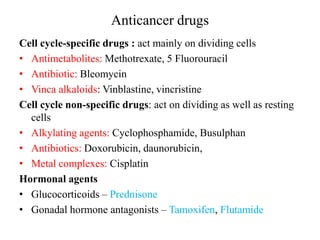
Anticancer drugs
Cell cycle-specific drugs : act mainly on dividing cells
• Antimetabolites: Methotrexate, 5 Fluorouracil
• Antibiotic: Bleomycin
• Vinca alkaloids: Vinblastine, vincristine
Cell cycle non-specific drugs: act on dividing as well as resting
cells
• Alkylating agents: Cyclophosphamide, Busulphan
• Antibiotics: Doxorubicin, daunorubicin,
• Metal complexes: Cisplatin
Hormonal agents
• Glucocorticoids – Prednisone
• Gonadal hormone antagonists – Tamoxifen, Flutamide
METHOTREXATE
Mech of action:
• Inhibits dihydrofolate reductase ↓ nucleic acid synthesis.
Uses:
• Acute leukemias, Non-Hodgkin’s lymphoma, Breast cancer,
• As Immunosuppresant - Rheumatoid arthritis, Inflammatory
bowel diseases
Adv effects
• Mucositis, Myelotoxicity, hepatotoxicity & pulmonary fibrosis
- prevented by Leucovorin (folinic acid)
FLUOROURACIL (5-FU)
Mech of action:
• Converted in cells to 5 fluoro-2-deoxyuridine-5’-
monophosphate (5-dUMP) which inhibits thymidylate
synthase and leads to ‘thymineless’ death of cells.
Uses:
• Bladder, breast, colon cancers.
Adv effects: GI distress, myelotoxicity, Alopecia
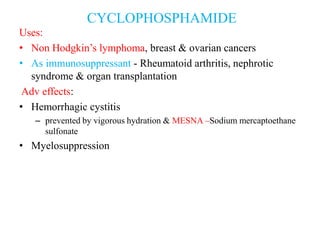
Uses:
• Non Hodgkin’s lymphoma, breast & ovarian cancers
• As immunosuppressant - Rheumatoid arthritis, nephrotic
syndrome & organ transplantation
Adv effects:
• Hemorrhagic cystitis
– prevented by vigorous hydration & MESNA –Sodium mercaptoethane
sulfonate
• Myelosuppression
CYCLOPHOSPHAMIDE
CISPLATIN
Uses: Testicular CA & cancers of bladder, lung and ovary
Adv effects
• Nephrotoxicity,
• Vomiting ( prevented by Ondansetron),
• Myelotoxicity
Carboplatin is less nephrotoxic, has greater myelotoxicity.
Vinca alkaloids
Mech of action :
• Bind to tubulin & prevent its polymerization into microtubules
thereby block the formation of mitotic spindles
Uses:
• Vincristine: Acute leukemias, lymphomas, Wilm’s tumour,
• Vinblastine: Testicular CA, lymphomas, neuroblastoma,
Adv effects :
• Myelotoxicity (Vinblastine)
• Neurotoxicity (Vincristine )
ANTIBIOTICS
DOXORUBICIN & DAUNORUBICIN
– Inhibit topoisomerase II & generate free radicals causing DNA damage.
Uses :
• Doxorubicin -Hodgkin’s
lymphoma, breast, endometrial, lung, ovarian, & thyroid
cancers.
• Daunorubicin – Acute leukemias
Toxicity :
• Cardiotoxicity (prevented by Dexrazoxane)
• Myelotoxicity,
HORMONAL AGENTS
TAMOXIFEN
• Antiestrogenic action
Uses : Breast carcinoma
Adv effects:
• Endometrial hyperplasia
• Thromboembolism,
FLUTAMIDE
• Androgen receptor antagonist
Use: Prostatic cancer
Adv effects: Gynecomastia, hot flushes
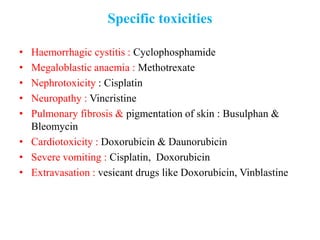
Specific toxicities
• Haemorrhagic cystitis : Cyclophosphamide
• Megaloblastic anaemia : Methotrexate
• Nephrotoxicity : Cisplatin
• Neuropathy : Vincristine
• Pulmonary fibrosis & pigmentation of skin : Busulphan &
Bleomycin
• Cardiotoxicity : Doxorubicin & Daunorubicin
• Severe vomiting : Cisplatin, Doxorubicin
• Extravasation : vesicant drugs like Doxorubicin, Vinblastine
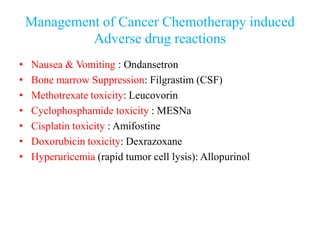
Management of Cancer Chemotherapy induced
Adverse drug reactions
• Nausea & Vomiting : Ondansetron
• Bone marrow Suppression: Filgrastim (CSF)
• Methotrexate toxicity: Leucovorin
• Cyclophosphamide toxicity : MESNa
• Cisplatin toxicity : Amifostine
• Doxorubicin toxicity: Dexrazoxane
• Hyperuricemia (rapid tumor cell lysis): Allopurinol

8 anticancer drugs

  • 1.
  • 2.
    Introduction Cancer Disease of cellscharacterized by progressive, abnormal & uncontrolled proliferation of tissues. Both normal as well as cancerous cells must pass through the following phases of cell cycle. 1. G1 phase: Synthesis of enzymes and other cellular components needed for DNA synthesis. 2. Synthetic phase: DNA synthesis takes place 3. G2 phase: Synthesis of cellular components for mitosis (proteins and RNA synthesis) 4. M phase: Mitotic cell division takes place 5. G0 phase: Cells stop dividing temporarily or permanently.
  • 4.
    Anticancer drugs Cell cycle-specificdrugs : act mainly on dividing cells • Antimetabolites: Methotrexate, 5 Fluorouracil • Antibiotic: Bleomycin • Vinca alkaloids: Vinblastine, vincristine Cell cycle non-specific drugs: act on dividing as well as resting cells • Alkylating agents: Cyclophosphamide, Busulphan • Antibiotics: Doxorubicin, daunorubicin, • Metal complexes: Cisplatin Hormonal agents • Glucocorticoids – Prednisone • Gonadal hormone antagonists – Tamoxifen, Flutamide
  • 5.
    METHOTREXATE Mech of action: •Inhibits dihydrofolate reductase ↓ nucleic acid synthesis. Uses: • Acute leukemias, Non-Hodgkin’s lymphoma, Breast cancer, • As Immunosuppresant - Rheumatoid arthritis, Inflammatory bowel diseases Adv effects • Mucositis, Myelotoxicity, hepatotoxicity & pulmonary fibrosis - prevented by Leucovorin (folinic acid)
  • 6.
    FLUOROURACIL (5-FU) Mech ofaction: • Converted in cells to 5 fluoro-2-deoxyuridine-5’- monophosphate (5-dUMP) which inhibits thymidylate synthase and leads to ‘thymineless’ death of cells. Uses: • Bladder, breast, colon cancers. Adv effects: GI distress, myelotoxicity, Alopecia
  • 7.
    Uses: • Non Hodgkin’slymphoma, breast & ovarian cancers • As immunosuppressant - Rheumatoid arthritis, nephrotic syndrome & organ transplantation Adv effects: • Hemorrhagic cystitis – prevented by vigorous hydration & MESNA –Sodium mercaptoethane sulfonate • Myelosuppression CYCLOPHOSPHAMIDE
  • 8.
    CISPLATIN Uses: Testicular CA& cancers of bladder, lung and ovary Adv effects • Nephrotoxicity, • Vomiting ( prevented by Ondansetron), • Myelotoxicity Carboplatin is less nephrotoxic, has greater myelotoxicity.
  • 9.
    Vinca alkaloids Mech ofaction : • Bind to tubulin & prevent its polymerization into microtubules thereby block the formation of mitotic spindles Uses: • Vincristine: Acute leukemias, lymphomas, Wilm’s tumour, • Vinblastine: Testicular CA, lymphomas, neuroblastoma, Adv effects : • Myelotoxicity (Vinblastine) • Neurotoxicity (Vincristine )
  • 10.
    ANTIBIOTICS DOXORUBICIN & DAUNORUBICIN –Inhibit topoisomerase II & generate free radicals causing DNA damage. Uses : • Doxorubicin -Hodgkin’s lymphoma, breast, endometrial, lung, ovarian, & thyroid cancers. • Daunorubicin – Acute leukemias Toxicity : • Cardiotoxicity (prevented by Dexrazoxane) • Myelotoxicity,
  • 11.
    HORMONAL AGENTS TAMOXIFEN • Antiestrogenicaction Uses : Breast carcinoma Adv effects: • Endometrial hyperplasia • Thromboembolism, FLUTAMIDE • Androgen receptor antagonist Use: Prostatic cancer Adv effects: Gynecomastia, hot flushes
  • 12.
    Specific toxicities • Haemorrhagiccystitis : Cyclophosphamide • Megaloblastic anaemia : Methotrexate • Nephrotoxicity : Cisplatin • Neuropathy : Vincristine • Pulmonary fibrosis & pigmentation of skin : Busulphan & Bleomycin • Cardiotoxicity : Doxorubicin & Daunorubicin • Severe vomiting : Cisplatin, Doxorubicin • Extravasation : vesicant drugs like Doxorubicin, Vinblastine
  • 13.
    Management of CancerChemotherapy induced Adverse drug reactions • Nausea & Vomiting : Ondansetron • Bone marrow Suppression: Filgrastim (CSF) • Methotrexate toxicity: Leucovorin • Cyclophosphamide toxicity : MESNa • Cisplatin toxicity : Amifostine • Doxorubicin toxicity: Dexrazoxane • Hyperuricemia (rapid tumor cell lysis): Allopurinol