Histamine & Antihistaminics
Dr. fouzia nausheen
HISTAMINE
• Histamine is a biologically active amine (autacoid &
neurotransmitter in brain ) is Synthesized from the amino acid
Histidine by decarboxylation
• High amounts found in mast cells or basophils, lung, skin, &
GIT & released by immunological mechanisms (Ag-Ab
interaction ) →allergic response
• Also occurs in venoms & in secretions from insect stings.
Release of histamine
• Stimuli causing the release of histamine from tissues include
hypersensitivity reaction, cold, drugs(morphine), bacterial
toxins, insect bite, trauma, etc.
Mechanism of action :
• Bind to 2 types of histamine receptors H1 & H2
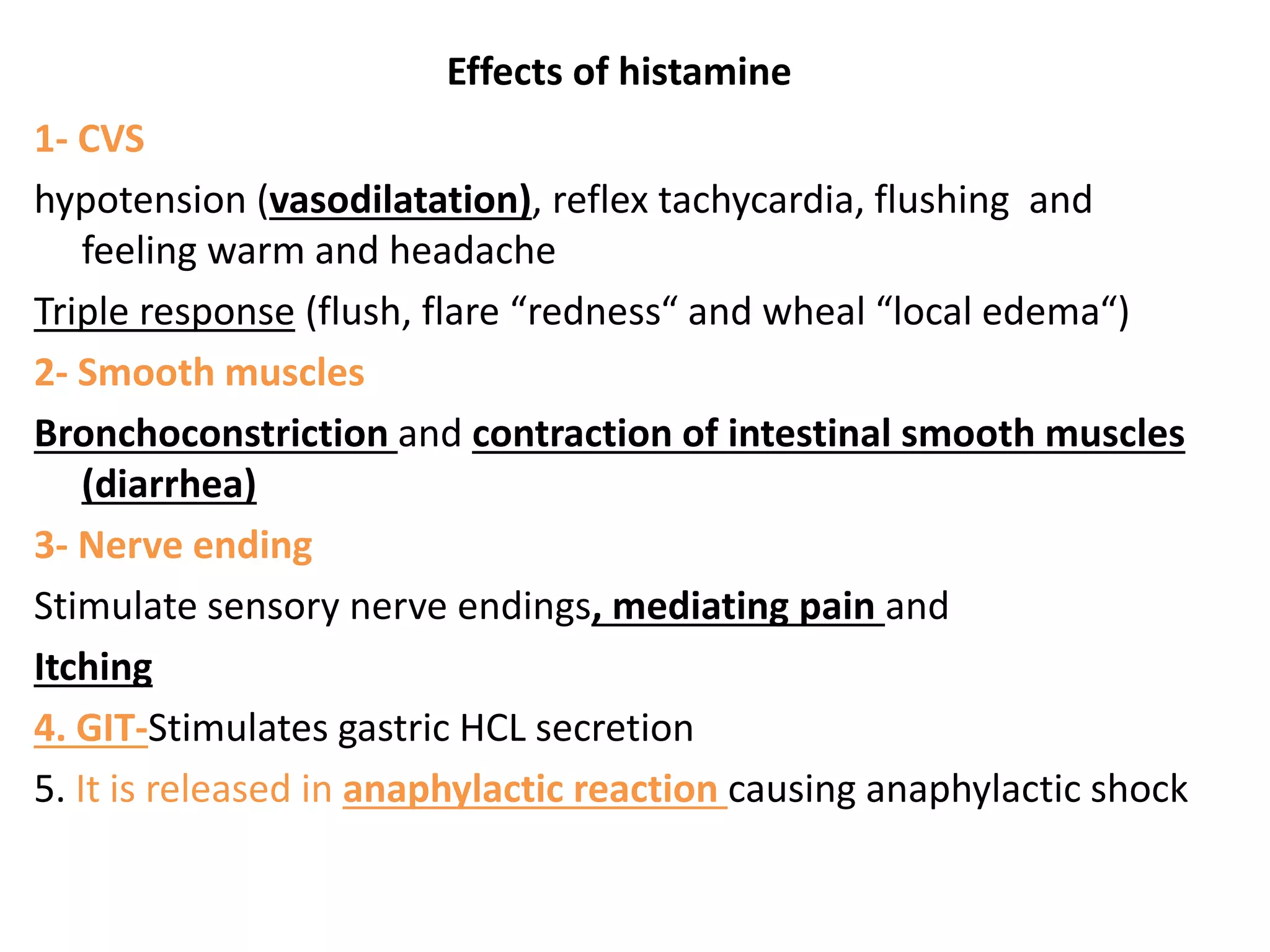
Effects of histamine
1- CVS
hypotension (vasodilatation), reflex tachycardia, flushing and
feeling warm and headache
Triple response (flush, flare “redness“ and wheal “local edema“)
2- Smooth muscles
Bronchoconstriction and contraction of intestinal smooth muscles
(diarrhea)
3- Nerve ending
Stimulate sensory nerve endings, mediating pain and
Itching
4. GIT-Stimulates gastric HCL secretion
5. It is released in anaphylactic reaction causing anaphylactic shock
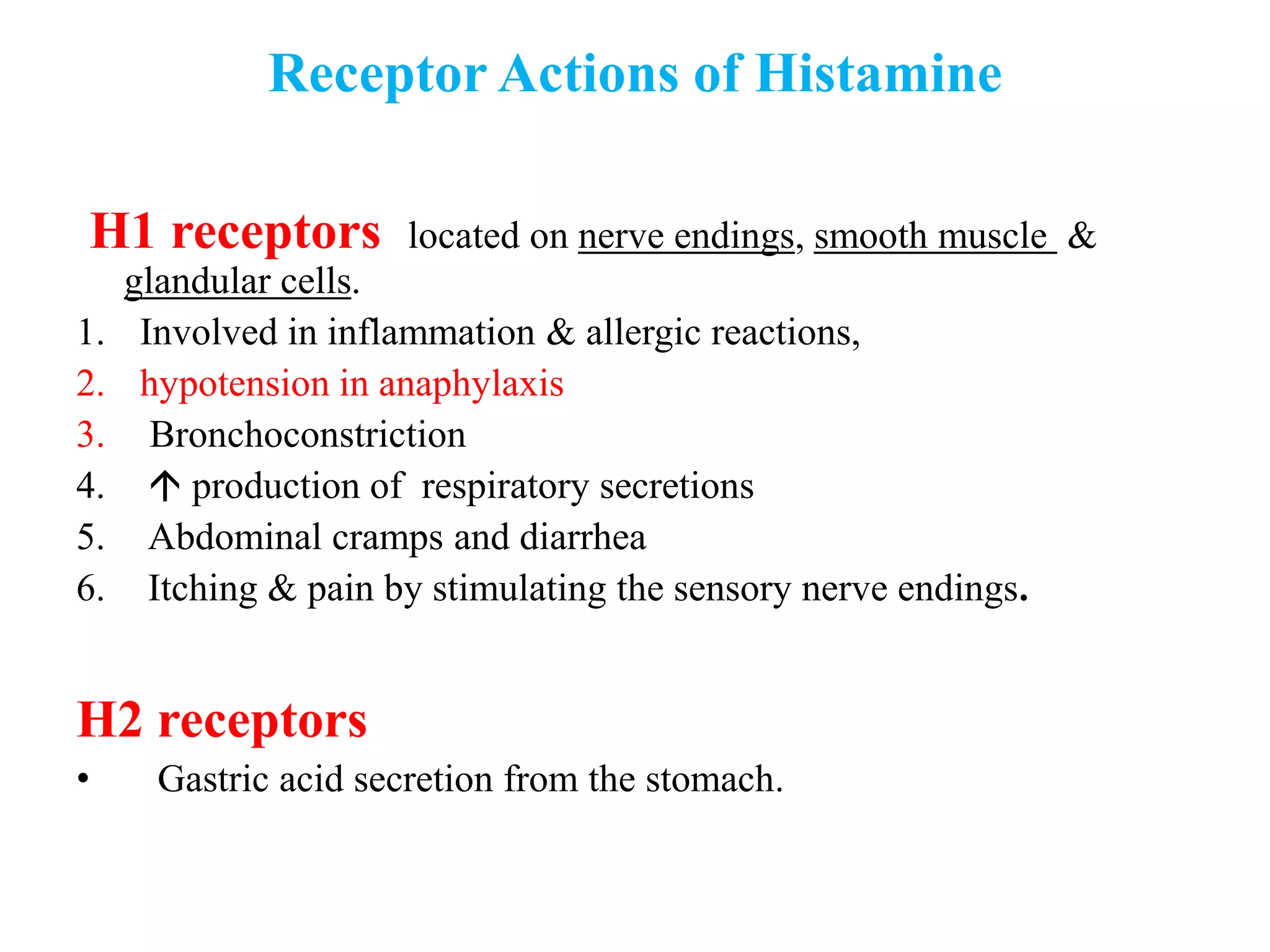
Receptor Actions of Histamine
H1 receptors located on nerve endings, smooth muscle &
glandular cells.
1. Involved in inflammation & allergic reactions,
2. hypotension in anaphylaxis
3. Bronchoconstriction
4.  production of respiratory secretions
5. Abdominal cramps and diarrhea
6. Itching & pain by stimulating the sensory nerve endings.
H2 receptors
• Gastric acid secretion from the stomach.
Clinical uses of histamine
Histamine aerosol has been used as in “Broncho-provocation test” in
pulmonary function laboratories.
It is done for patients with mild, atypical or non-specific symptoms of
bronchial asthma. It is also done for occupational reasons.
Agents used: histamine or methacholine.
Histamine has no valid clinical use for any condition.
Histamine analogue Betahistine used in the treatment of vertigo
and meniers disease
Adverse effects
1- flushing, ↓BP and ↑HR
2- headache
3- wheals
4- broncho-constriction and GI upset
Histamine antagonists
1. Physiologic antagonist
Adrenaline has smooth muscle actions opposite to those of
histamine, but they act at different receptors. Life saving in
Anaphylactic shock which occurs due to massive release of
histamine & other mediators.
2. Release Inhibitors- degranulation of mast cells triggered by
IgE.
Cromolyn & Nedocromil used in the treatment of asthma.
3. Histamine receptor antagonists Block the H1, H2 receptors
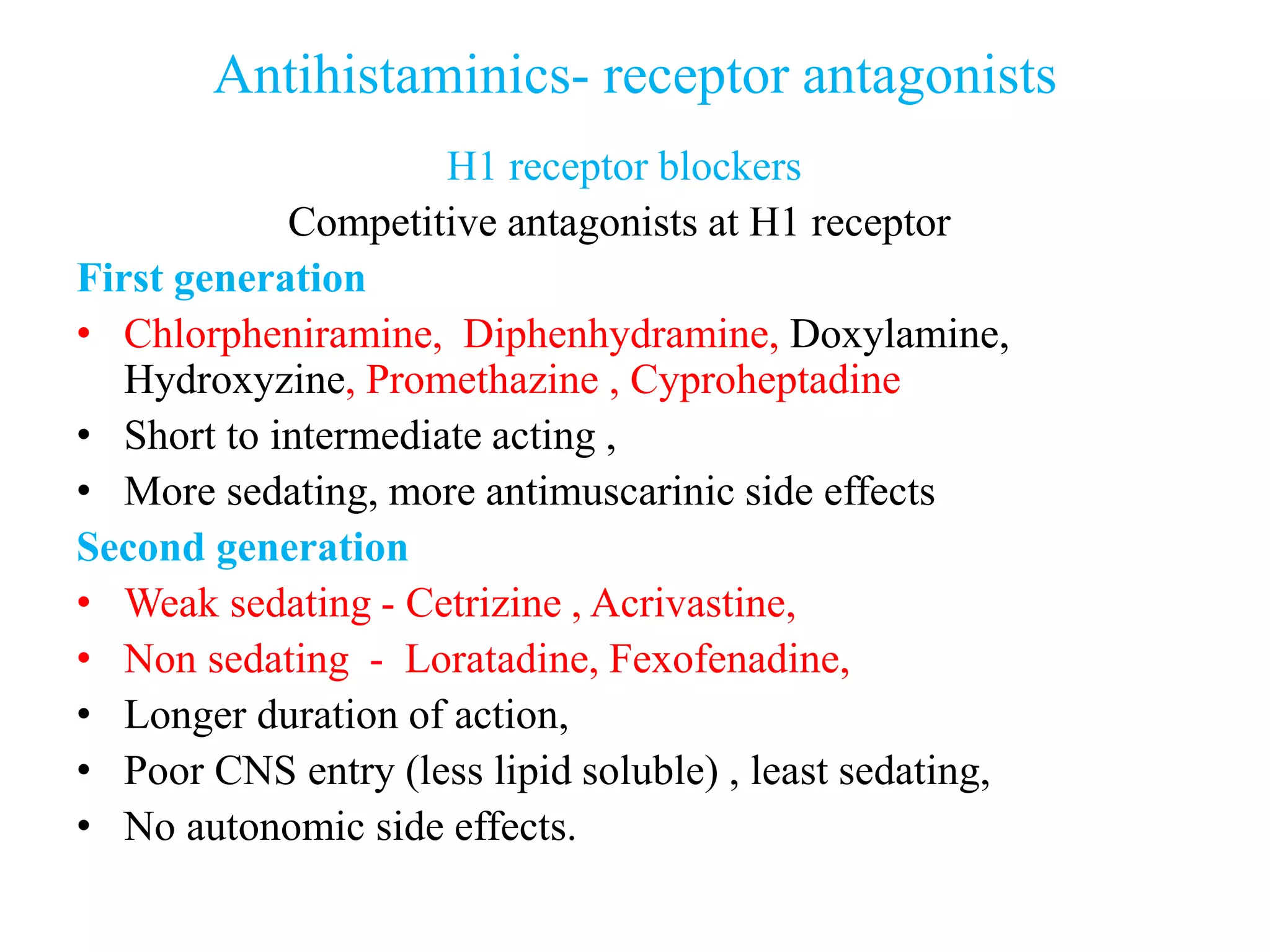
Antihistaminics- receptor antagonists
H1 receptor blockers
Competitive antagonists at H1 receptor
First generation
• Chlorpheniramine, Diphenhydramine, Doxylamine,
Hydroxyzine, Promethazine , Cyproheptadine
• Short to intermediate acting ,
• More sedating, more antimuscarinic side effects
Second generation
• Weak sedating - Cetrizine , Acrivastine,
• Non sedating - Loratadine, Fexofenadine,
• Longer duration of action,
• Poor CNS entry (less lipid soluble) , least sedating,
• No autonomic side effects.
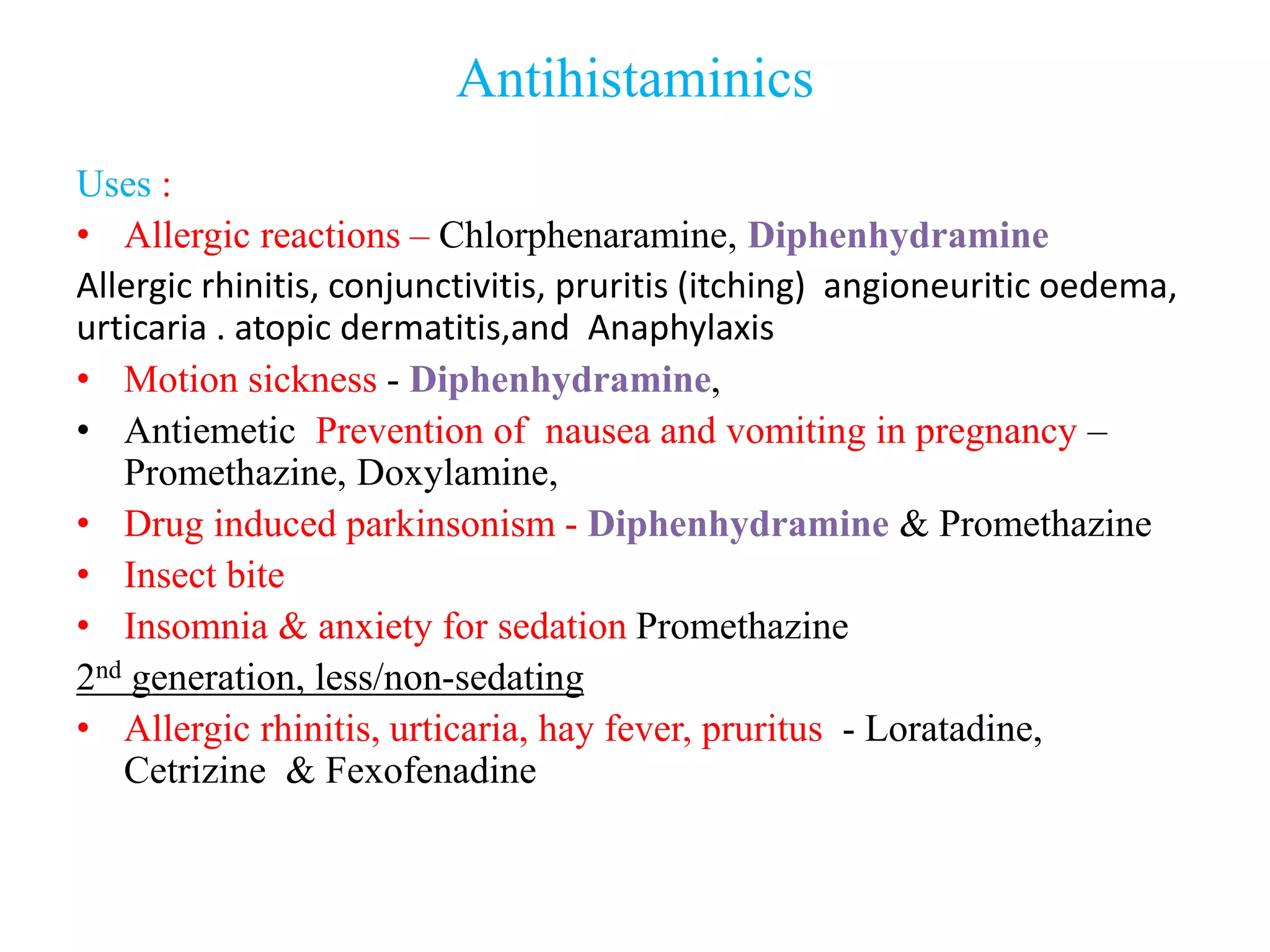
Antihistaminics
Uses :
• Allergic reactions – Chlorphenaramine, Diphenhydramine
Allergic rhinitis, conjunctivitis, pruritis (itching) angioneuritic oedema,
urticaria . atopic dermatitis,and Anaphylaxis
• Motion sickness - Diphenhydramine,
• Antiemetic Prevention of nausea and vomiting in pregnancy –
Promethazine, Doxylamine,
• Drug induced parkinsonism - Diphenhydramine & Promethazine
• Insect bite
• Insomnia & anxiety for sedation Promethazine
2nd generation, less/non-sedating
• Allergic rhinitis, urticaria, hay fever, pruritus - Loratadine,
Cetrizine & Fexofenadine
Adverse effects :
• CNS: sedation,  cognitive & psychomotor performance,
appetite.
• Anticholinergic – dry mouth, blurred vision, tachycardia,
urinary retention & constipation
• α adrenergic blockade-- Hypotension, reflex tachycardia
• Additive effects with CNS depressants like benzodiazepines,
barbiturates, MAO-Inhibitors & alcohol.
Contraindicated in the treatment of individuals working in jobs
where wakefulness is critical ( Drivers & Machine operators)
Second generation antihistamines
Properties of second generation H1 antagonists
include the following ----
1.Have no anti cholinergic effect--------------
2. Do not cross BBB hence no sedation
3. Do not impair psychomotor performance
H2 receptor blockers
Cimetidine, Ranitidine, Famotidine, & Nizatidine
• Inhibit gastric acid secretion
Uses
• Peptic ulcer,
• Stress/Drug (e.g.NSAIDs) induced ulcers
• Gastro Esophageal Reflux Disease,
• Zollinger Ellison syndrome
Drawbacks of Cimetidine
• Antiandrogenic effects–(↑prolactin) gynaecomastia in males
& galactorrhea in females
• Confusion, agitation, & hallucination

7.a. histamine & antihistaminics

  • 1.
  • 2.
    HISTAMINE • Histamine isa biologically active amine (autacoid & neurotransmitter in brain ) is Synthesized from the amino acid Histidine by decarboxylation • High amounts found in mast cells or basophils, lung, skin, & GIT & released by immunological mechanisms (Ag-Ab interaction ) →allergic response • Also occurs in venoms & in secretions from insect stings. Release of histamine • Stimuli causing the release of histamine from tissues include hypersensitivity reaction, cold, drugs(morphine), bacterial toxins, insect bite, trauma, etc. Mechanism of action : • Bind to 2 types of histamine receptors H1 & H2
  • 3.
    Effects of histamine 1-CVS hypotension (vasodilatation), reflex tachycardia, flushing and feeling warm and headache Triple response (flush, flare “redness“ and wheal “local edema“) 2- Smooth muscles Bronchoconstriction and contraction of intestinal smooth muscles (diarrhea) 3- Nerve ending Stimulate sensory nerve endings, mediating pain and Itching 4. GIT-Stimulates gastric HCL secretion 5. It is released in anaphylactic reaction causing anaphylactic shock
  • 4.
    Receptor Actions ofHistamine H1 receptors located on nerve endings, smooth muscle & glandular cells. 1. Involved in inflammation & allergic reactions, 2. hypotension in anaphylaxis 3. Bronchoconstriction 4.  production of respiratory secretions 5. Abdominal cramps and diarrhea 6. Itching & pain by stimulating the sensory nerve endings. H2 receptors • Gastric acid secretion from the stomach.
  • 5.
    Clinical uses ofhistamine Histamine aerosol has been used as in “Broncho-provocation test” in pulmonary function laboratories. It is done for patients with mild, atypical or non-specific symptoms of bronchial asthma. It is also done for occupational reasons. Agents used: histamine or methacholine. Histamine has no valid clinical use for any condition. Histamine analogue Betahistine used in the treatment of vertigo and meniers disease Adverse effects 1- flushing, ↓BP and ↑HR 2- headache 3- wheals 4- broncho-constriction and GI upset
  • 6.
    Histamine antagonists 1. Physiologicantagonist Adrenaline has smooth muscle actions opposite to those of histamine, but they act at different receptors. Life saving in Anaphylactic shock which occurs due to massive release of histamine & other mediators. 2. Release Inhibitors- degranulation of mast cells triggered by IgE. Cromolyn & Nedocromil used in the treatment of asthma. 3. Histamine receptor antagonists Block the H1, H2 receptors
  • 7.
    Antihistaminics- receptor antagonists H1receptor blockers Competitive antagonists at H1 receptor First generation • Chlorpheniramine, Diphenhydramine, Doxylamine, Hydroxyzine, Promethazine , Cyproheptadine • Short to intermediate acting , • More sedating, more antimuscarinic side effects Second generation • Weak sedating - Cetrizine , Acrivastine, • Non sedating - Loratadine, Fexofenadine, • Longer duration of action, • Poor CNS entry (less lipid soluble) , least sedating, • No autonomic side effects.
  • 8.
    Antihistaminics Uses : • Allergicreactions – Chlorphenaramine, Diphenhydramine Allergic rhinitis, conjunctivitis, pruritis (itching) angioneuritic oedema, urticaria . atopic dermatitis,and Anaphylaxis • Motion sickness - Diphenhydramine, • Antiemetic Prevention of nausea and vomiting in pregnancy – Promethazine, Doxylamine, • Drug induced parkinsonism - Diphenhydramine & Promethazine • Insect bite • Insomnia & anxiety for sedation Promethazine 2nd generation, less/non-sedating • Allergic rhinitis, urticaria, hay fever, pruritus - Loratadine, Cetrizine & Fexofenadine
  • 9.
    Adverse effects : •CNS: sedation,  cognitive & psychomotor performance, appetite. • Anticholinergic – dry mouth, blurred vision, tachycardia, urinary retention & constipation • α adrenergic blockade-- Hypotension, reflex tachycardia • Additive effects with CNS depressants like benzodiazepines, barbiturates, MAO-Inhibitors & alcohol. Contraindicated in the treatment of individuals working in jobs where wakefulness is critical ( Drivers & Machine operators)
  • 10.
    Second generation antihistamines Propertiesof second generation H1 antagonists include the following ---- 1.Have no anti cholinergic effect-------------- 2. Do not cross BBB hence no sedation 3. Do not impair psychomotor performance
  • 11.
    H2 receptor blockers Cimetidine,Ranitidine, Famotidine, & Nizatidine • Inhibit gastric acid secretion Uses • Peptic ulcer, • Stress/Drug (e.g.NSAIDs) induced ulcers • Gastro Esophageal Reflux Disease, • Zollinger Ellison syndrome Drawbacks of Cimetidine • Antiandrogenic effects–(↑prolactin) gynaecomastia in males & galactorrhea in females • Confusion, agitation, & hallucination