Module 3
Curriculum & Professional
Issues
Models of Curriculum
In this session we will
•Explore different models of curriculum
•Discuss the ideologies underpinning
curricula
•Discover how this applies to the
curriculum we teach
By the end of the session you will
be able to:
*Evaluate the process model of curriculum design
*Explain at least 3 different models of curriculum
*Apply your new knowledge to critically evaluate your
own curriculum
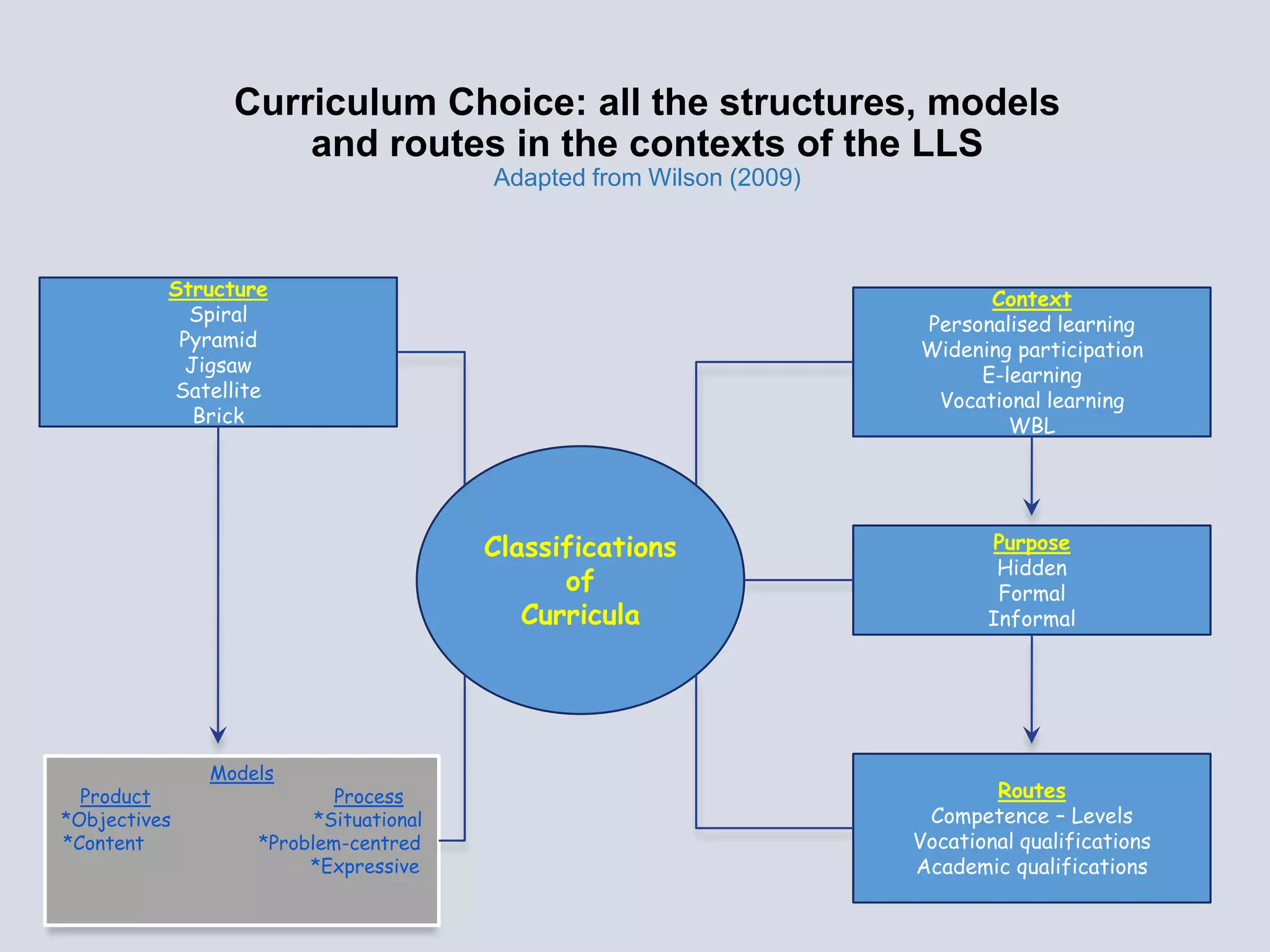
Curriculum Choice: all the structures, models
and routes in the contexts of the LLS
Adapted from Wilson (2009)
Context
Personalised learning
Widening participation
E-learning
Vocational learning
WBL
Structure
Spiral
Pyramid
Jigsaw
Satellite
Brick
Purpose
Hidden
Formal
Informal
Routes
Competence – Levels
Vocational qualifications
Academic qualifications
Models
Product Process
*Objectives *Situational
*Content *Problem-centred
*Expressive
Classifications
of
Curricula
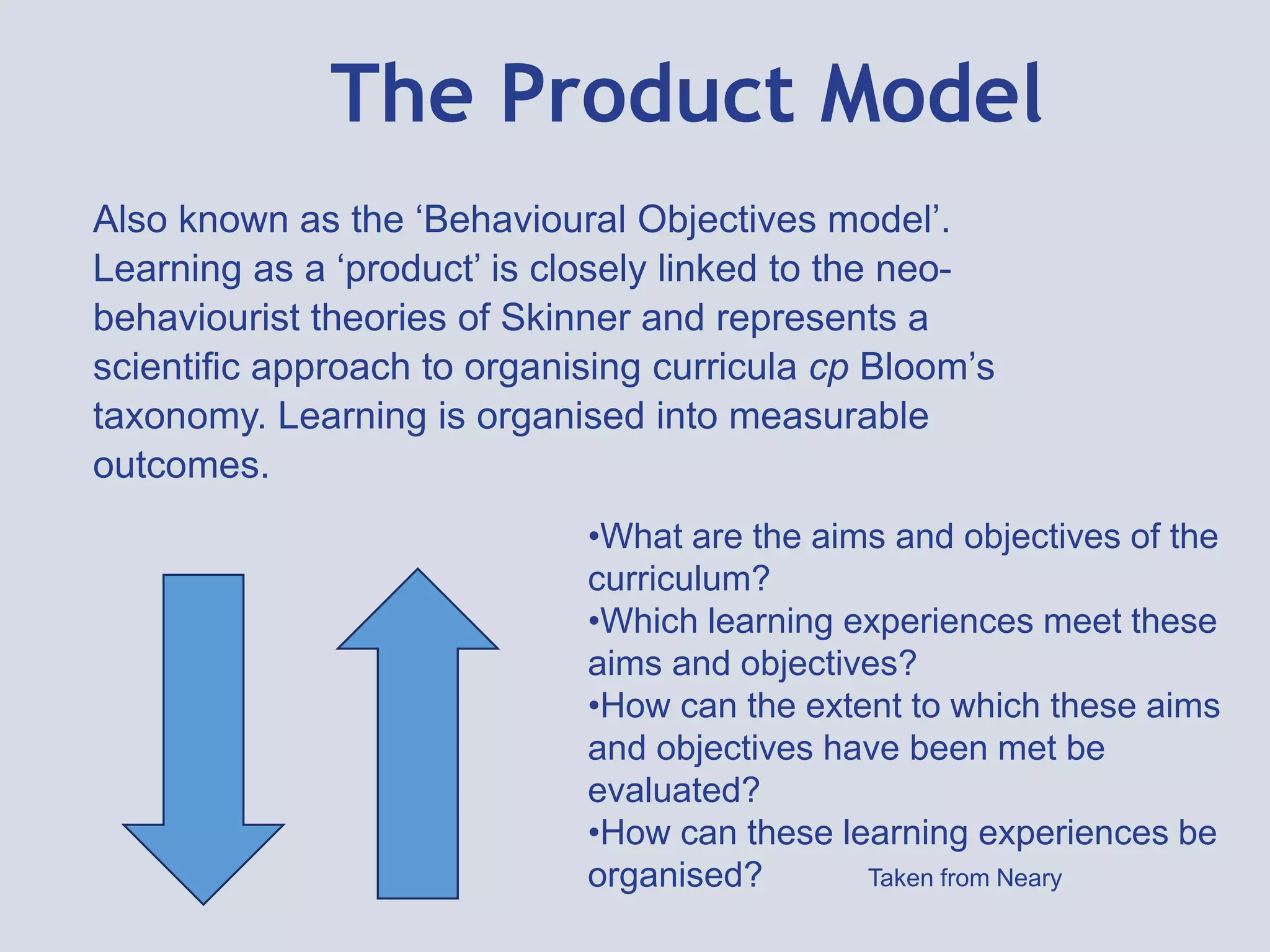
The Product Model
Also known as the ‘Behavioural Objectives model’.
Learning as a ‘product’ is closely linked to the neo-
behaviourist theories of Skinner and represents a
scientific approach to organising curricula cp Bloom’s
taxonomy. Learning is organised into measurable
outcomes.
•What are the aims and objectives of the
curriculum?
•Which learning experiences meet these
aims and objectives?
•How can the extent to which these aims
and objectives have been met be
evaluated?
•How can these learning experiences be
organised? Taken from Neary
Advantages of an objectives
based model
*Helps to avoid aims which are ambiguous and
vague.
*Assessment is precise and measurable.
*Helps to select structure and content.
*Helps to make teachers aware of different types
and levels of learning involved in particular
subjects.
*Clear guidance for both teachers and learners
about skills to be mastered.
Disadvantages of an objectives based
model
• At ‘lower levels’ behavioural objectives may
become trite or unnecessary.
•The affective domain cannot be assessed
adequately.
•Behavioural objectives can stifle ‘creativity’ in both
teachers and learners.
•Behavioural objectives are ‘undemocratic’ as they
are externally set and cannot be changed by the
teachers or learners.
Advantages & disadvantages adapted from Neary
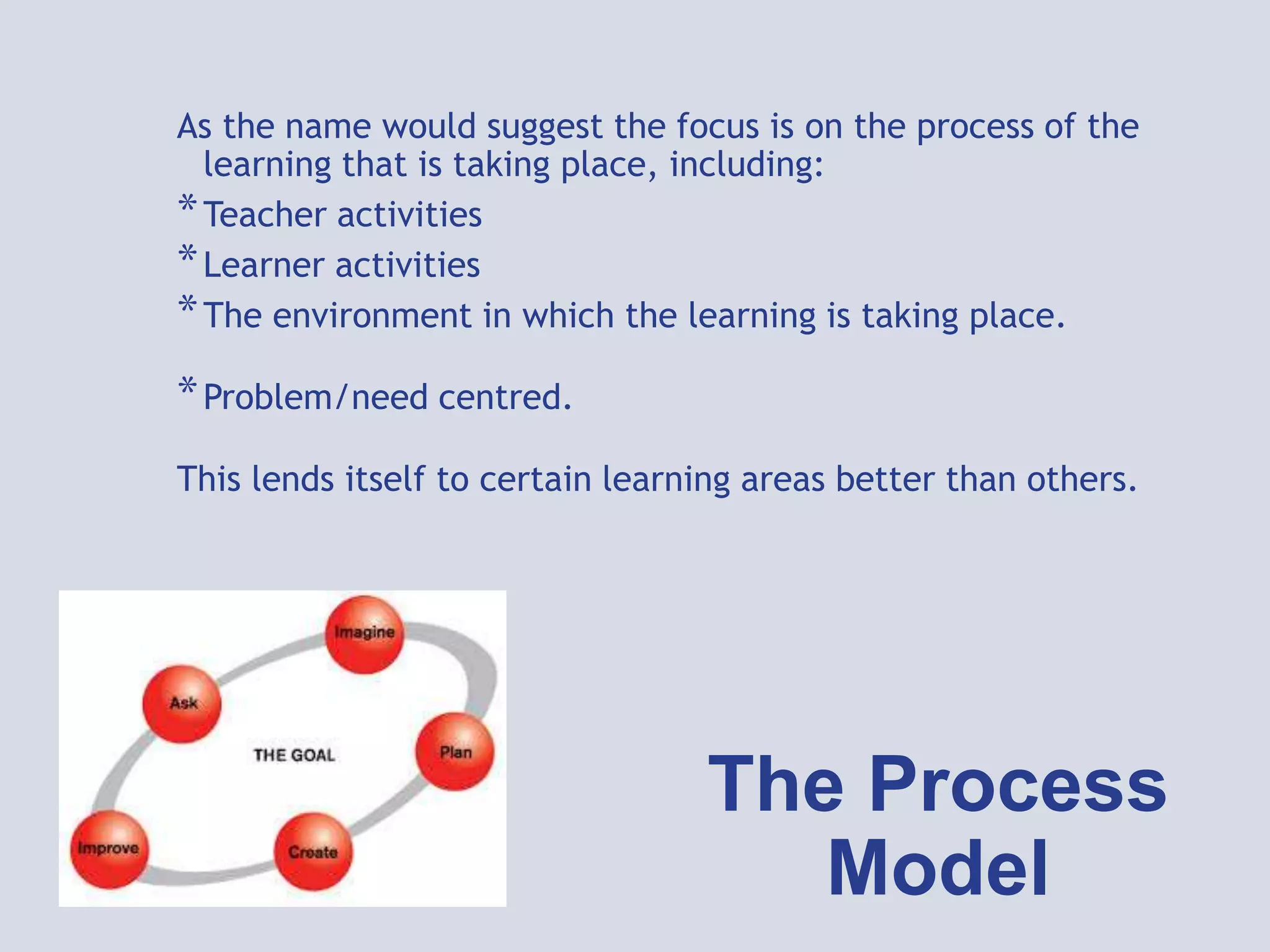
The Process
Model
As the name would suggest the focus is on the process of the
learning that is taking place, including:
*Teacher activities
*Learner activities
*The environment in which the learning is taking place.
*Problem/need centred.
This lends itself to certain learning areas better than others.
What advantages can you see to the process
model?
1. .......................................................
2. .......................................................
3. .......................................................
4. .......................................................
5. .......................................................
6. .......................................................
What drawbacks can you see to the process
model?
1. .......................................................
2. .......................................................
3. .......................................................
4. .......................................................
5. .......................................................
6. .......................................................
*JISC-funded curriculum
design project
Click to view 8 mins
http://www.youtube.com/watch?v=IWUqpdSrTOc&feature=related
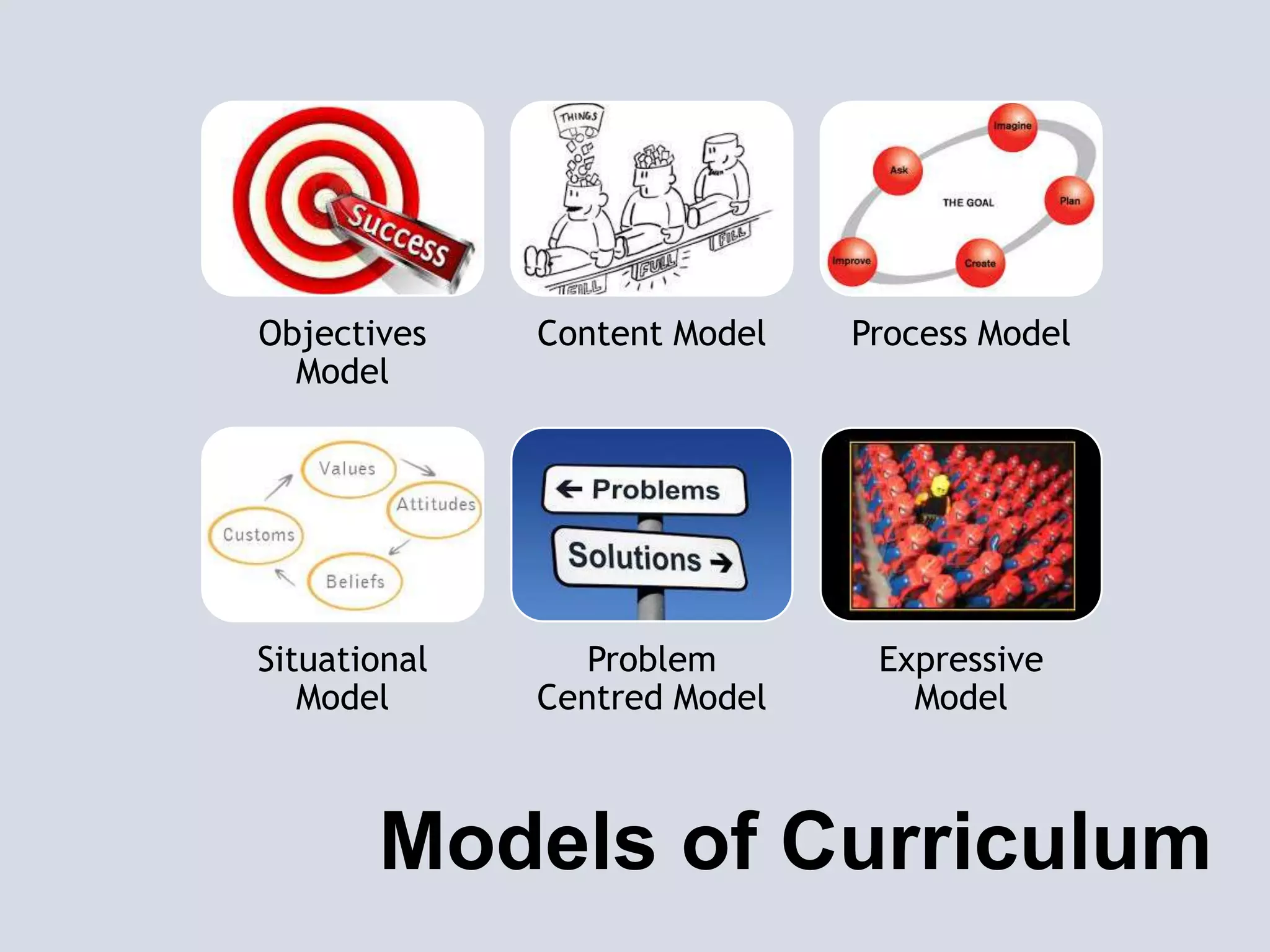
Models of Curriculum
Objectives
Model
Content Model Process Model
Situational
Model
Problem
Centred Model
Expressive
Model
Research Models of
Curriculum
*In groups please research your given models of
curriculum.
*You have 30 minutes to research this and make
notes.
*Make sure your notes are clear & cohesive as
ANOTHER GROUP will be reading from them.
*After 30 minutes I will ask you to stop & swap.
*Each group will explain a model of curriculum
researched by another group.
Ideologies
“What and how we teach are no longer purely
technical issues concerned with selection of
content and teaching methods; for many, the
curriculum is an expression of dominant
ideologies within society in such a way that
we are barely conscious that they are
ideologies”
(Fisher, Fulford, McNicholas, Thompson; in Avis, 2014)
What is an ideology?
A system of values, beliefs, or ideas that is
specific to a particular group of people
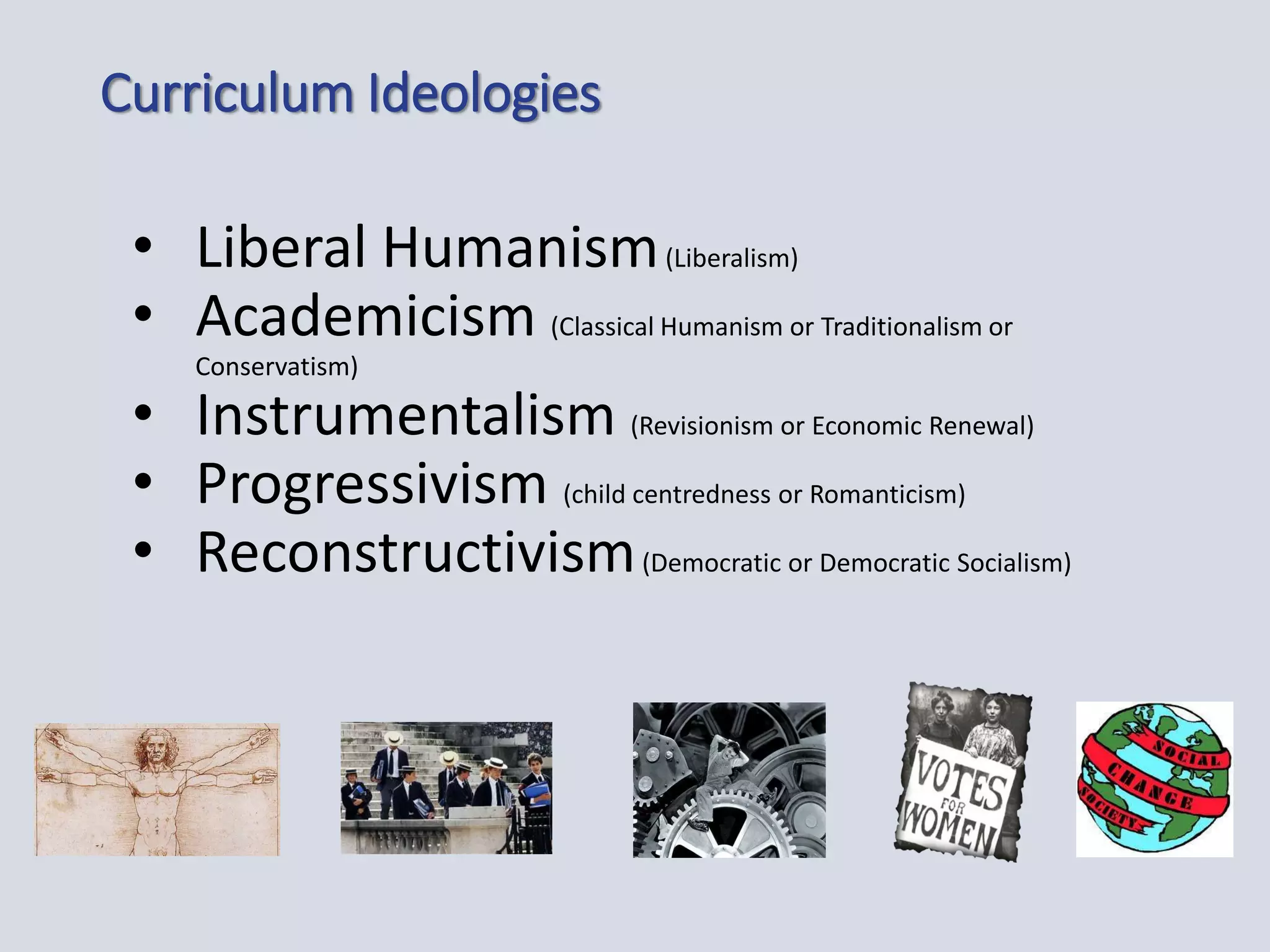
Curriculum Ideologies
• Liberal Humanism(Liberalism)
• Academicism (Classical Humanism or Traditionalism or
Conservatism)
• Instrumentalism (Revisionism or Economic Renewal)
• Progressivism (child centredness or Romanticism)
• Reconstructivism(Democratic or Democratic Socialism)
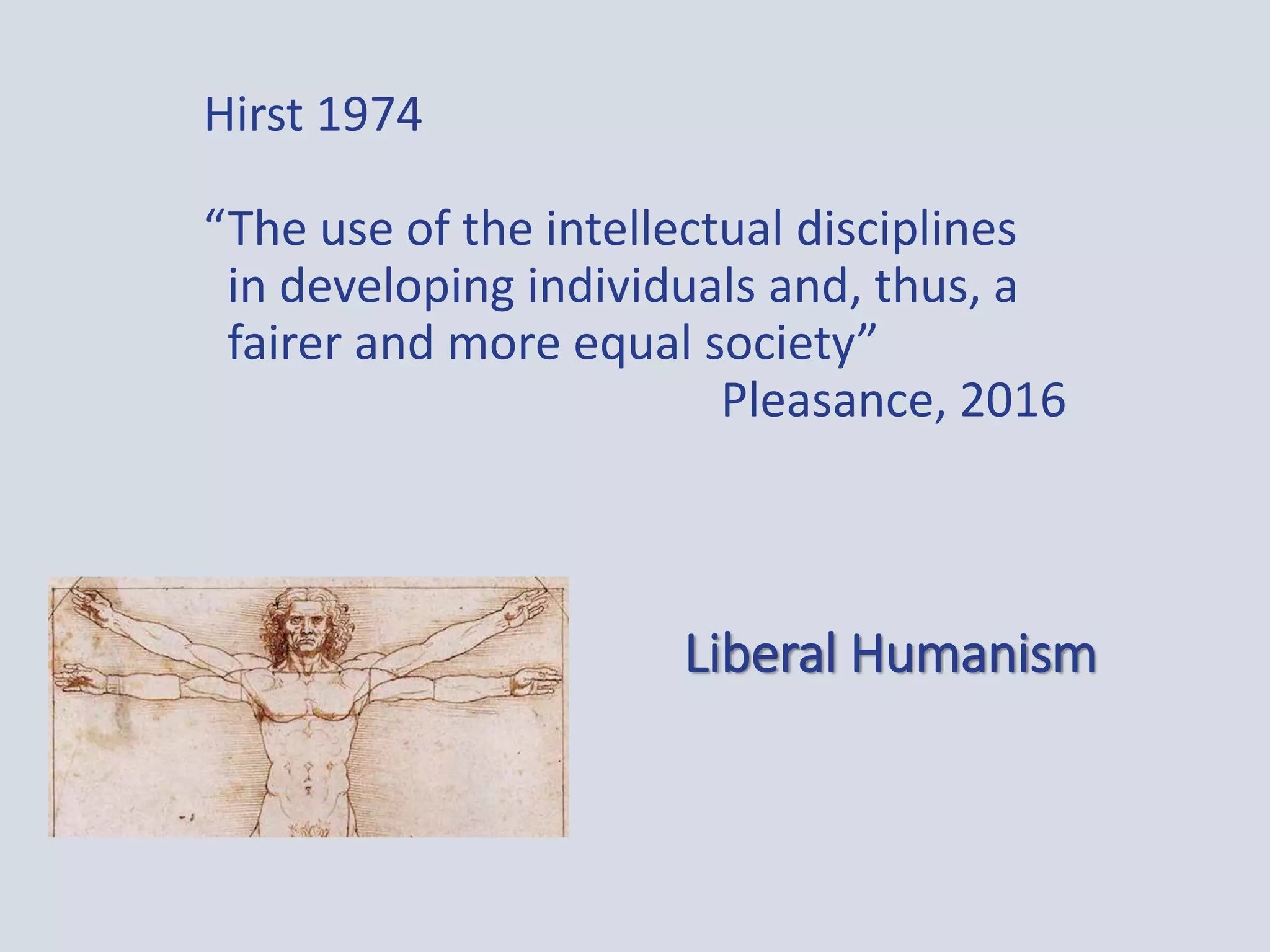
Liberal Humanism
Hirst 1974
“The use of the intellectual disciplines
in developing individuals and, thus, a
fairer and more equal society”
Pleasance, 2016
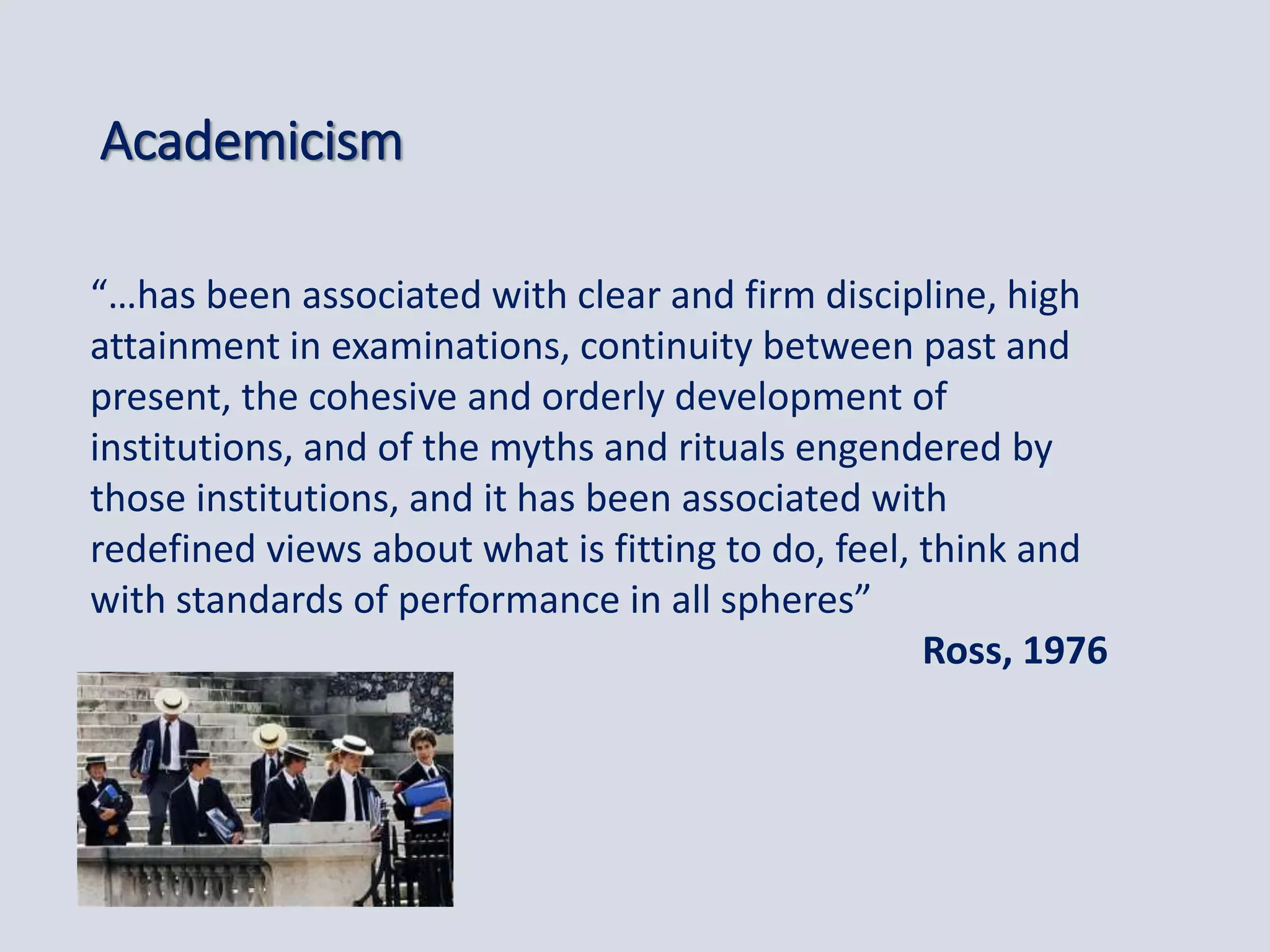
Academicism
“…has been associated with clear and firm discipline, high
attainment in examinations, continuity between past and
present, the cohesive and orderly development of
institutions, and of the myths and rituals engendered by
those institutions, and it has been associated with
redefined views about what is fitting to do, feel, think and
with standards of performance in all spheres”
Ross, 1976
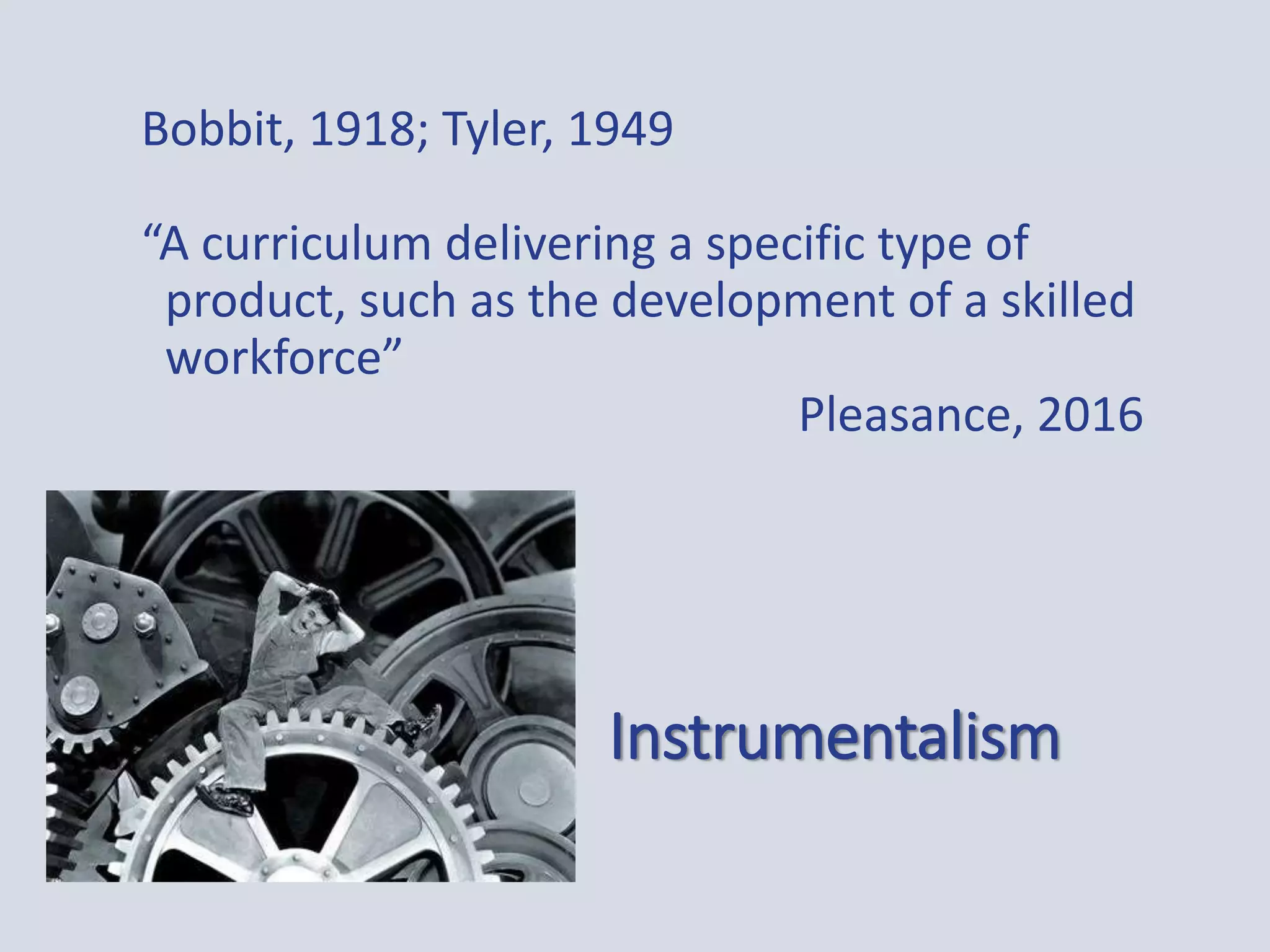
Instrumentalism
Bobbit, 1918; Tyler, 1949
“A curriculum delivering a specific type of
product, such as the development of a skilled
workforce”
Pleasance, 2016
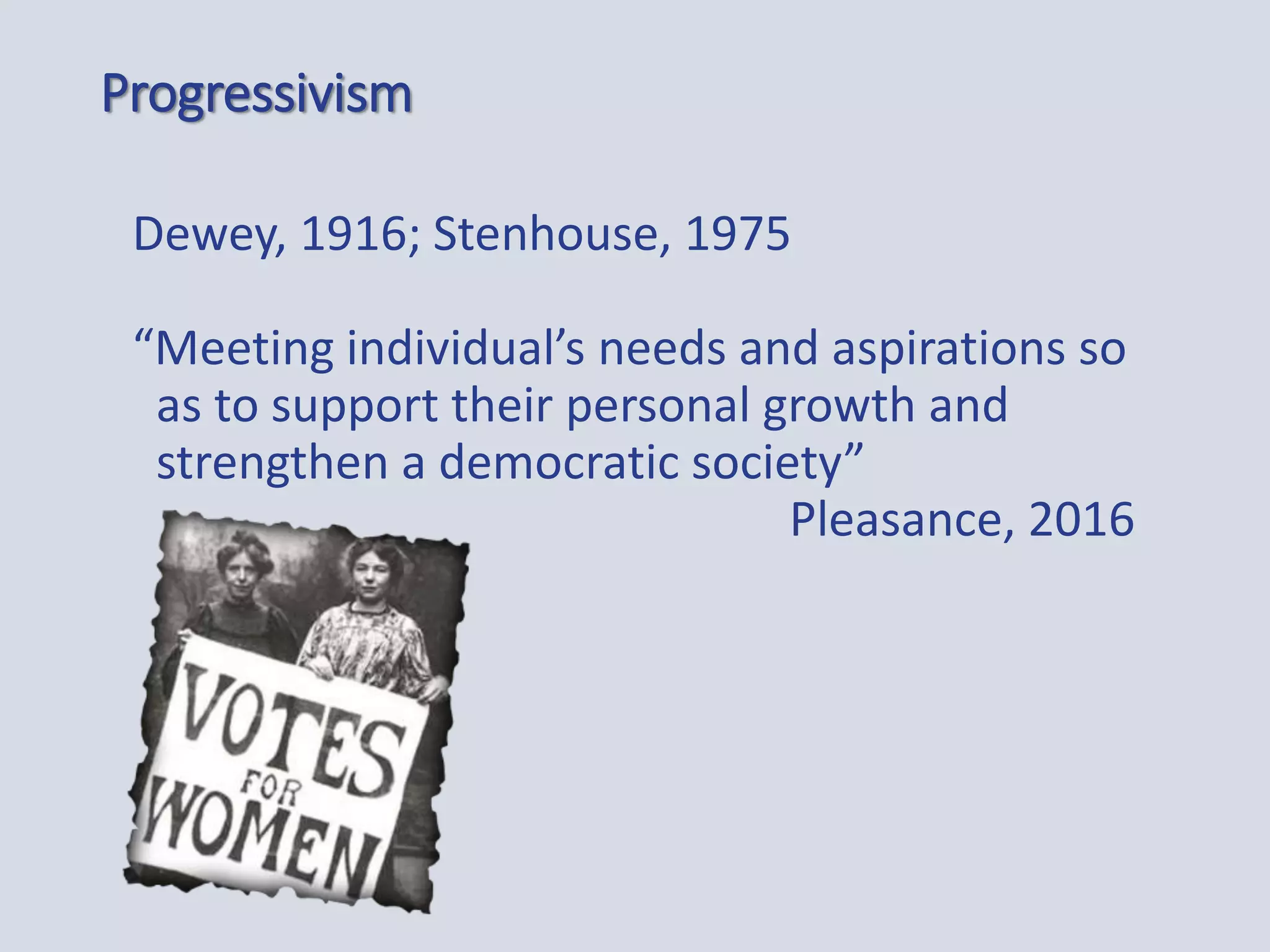
Progressivism
Dewey, 1916; Stenhouse, 1975
“Meeting individual’s needs and aspirations so
as to support their personal growth and
strengthen a democratic society”
Pleasance, 2016
Reconstructivism
Friere, 1970; Lawton, 1983; Skilbeck, 1984
“Education to change society and its existing
injustices. Education should help people become
critical thinkers and to transform existing
society”
Pleasance, 2016
Ideology & you
Which ideology does your curriculum stem
from?
What are the potential implications of this
underpinning ideology on your role, your
practice, and your learners?
Using the mind map provided, add your
thoughts about your curriculum. Prepare
to discuss this with the group.
How did you do?
*Evaluate the process model of curriculum design
*Explain at least 3 different models of curriculum
*Apply your new knowledge to critically evaluate
your own curriculum

Models of curriculum

  • 1.
    Module 3 Curriculum &Professional Issues Models of Curriculum
  • 2.
    In this sessionwe will •Explore different models of curriculum •Discuss the ideologies underpinning curricula •Discover how this applies to the curriculum we teach
  • 3.
    By the endof the session you will be able to: *Evaluate the process model of curriculum design *Explain at least 3 different models of curriculum *Apply your new knowledge to critically evaluate your own curriculum
  • 4.
    Curriculum Choice: allthe structures, models and routes in the contexts of the LLS Adapted from Wilson (2009) Context Personalised learning Widening participation E-learning Vocational learning WBL Structure Spiral Pyramid Jigsaw Satellite Brick Purpose Hidden Formal Informal Routes Competence – Levels Vocational qualifications Academic qualifications Models Product Process *Objectives *Situational *Content *Problem-centred *Expressive Classifications of Curricula
  • 5.
    The Product Model Alsoknown as the ‘Behavioural Objectives model’. Learning as a ‘product’ is closely linked to the neo- behaviourist theories of Skinner and represents a scientific approach to organising curricula cp Bloom’s taxonomy. Learning is organised into measurable outcomes. •What are the aims and objectives of the curriculum? •Which learning experiences meet these aims and objectives? •How can the extent to which these aims and objectives have been met be evaluated? •How can these learning experiences be organised? Taken from Neary
  • 6.
    Advantages of anobjectives based model *Helps to avoid aims which are ambiguous and vague. *Assessment is precise and measurable. *Helps to select structure and content. *Helps to make teachers aware of different types and levels of learning involved in particular subjects. *Clear guidance for both teachers and learners about skills to be mastered.
  • 7.
    Disadvantages of anobjectives based model • At ‘lower levels’ behavioural objectives may become trite or unnecessary. •The affective domain cannot be assessed adequately. •Behavioural objectives can stifle ‘creativity’ in both teachers and learners. •Behavioural objectives are ‘undemocratic’ as they are externally set and cannot be changed by the teachers or learners. Advantages & disadvantages adapted from Neary
  • 8.
    The Process Model As thename would suggest the focus is on the process of the learning that is taking place, including: *Teacher activities *Learner activities *The environment in which the learning is taking place. *Problem/need centred. This lends itself to certain learning areas better than others.
  • 9.
    What advantages canyou see to the process model? 1. ....................................................... 2. ....................................................... 3. ....................................................... 4. ....................................................... 5. ....................................................... 6. .......................................................
  • 10.
    What drawbacks canyou see to the process model? 1. ....................................................... 2. ....................................................... 3. ....................................................... 4. ....................................................... 5. ....................................................... 6. .......................................................
  • 11.
    *JISC-funded curriculum design project Clickto view 8 mins http://www.youtube.com/watch?v=IWUqpdSrTOc&feature=related
  • 12.
    Models of Curriculum Objectives Model ContentModel Process Model Situational Model Problem Centred Model Expressive Model
  • 13.
    Research Models of Curriculum *Ingroups please research your given models of curriculum. *You have 30 minutes to research this and make notes. *Make sure your notes are clear & cohesive as ANOTHER GROUP will be reading from them. *After 30 minutes I will ask you to stop & swap. *Each group will explain a model of curriculum researched by another group.
  • 14.
    Ideologies “What and howwe teach are no longer purely technical issues concerned with selection of content and teaching methods; for many, the curriculum is an expression of dominant ideologies within society in such a way that we are barely conscious that they are ideologies” (Fisher, Fulford, McNicholas, Thompson; in Avis, 2014)
  • 15.
    What is anideology? A system of values, beliefs, or ideas that is specific to a particular group of people
  • 16.
    Curriculum Ideologies • LiberalHumanism(Liberalism) • Academicism (Classical Humanism or Traditionalism or Conservatism) • Instrumentalism (Revisionism or Economic Renewal) • Progressivism (child centredness or Romanticism) • Reconstructivism(Democratic or Democratic Socialism)
  • 17.
    Liberal Humanism Hirst 1974 “Theuse of the intellectual disciplines in developing individuals and, thus, a fairer and more equal society” Pleasance, 2016
  • 18.
    Academicism “…has been associatedwith clear and firm discipline, high attainment in examinations, continuity between past and present, the cohesive and orderly development of institutions, and of the myths and rituals engendered by those institutions, and it has been associated with redefined views about what is fitting to do, feel, think and with standards of performance in all spheres” Ross, 1976
  • 19.
    Instrumentalism Bobbit, 1918; Tyler,1949 “A curriculum delivering a specific type of product, such as the development of a skilled workforce” Pleasance, 2016
  • 20.
    Progressivism Dewey, 1916; Stenhouse,1975 “Meeting individual’s needs and aspirations so as to support their personal growth and strengthen a democratic society” Pleasance, 2016
  • 21.
    Reconstructivism Friere, 1970; Lawton,1983; Skilbeck, 1984 “Education to change society and its existing injustices. Education should help people become critical thinkers and to transform existing society” Pleasance, 2016
  • 22.
    Ideology & you Whichideology does your curriculum stem from? What are the potential implications of this underpinning ideology on your role, your practice, and your learners? Using the mind map provided, add your thoughts about your curriculum. Prepare to discuss this with the group.
  • 23.
    How did youdo? *Evaluate the process model of curriculum design *Explain at least 3 different models of curriculum *Apply your new knowledge to critically evaluate your own curriculum