Mr. Miller
   Cellular transport is the process of moving
    materials into and out of the cell.

   Materials such as water, sugar(glucose),
    oxygen, and carbon dioxide into and out of
    cells because they are needed to carry out
    important reactions in the cell. These reactions
    are responsible for creating food within cells
    and producing energy.
   Cellular transport can be categorized into one
    of three groups:

       Passive Transport
       Active Transport
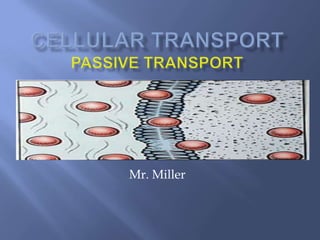
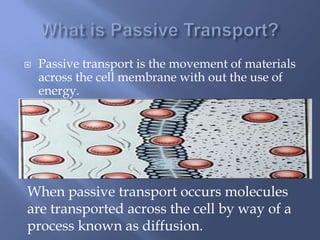
   Passive transport is the movement of materials
    across the cell membrane with out the use of
    energy.


When passive transport occurs molecules
are transported across the cell by way of a
process known as diffusion.
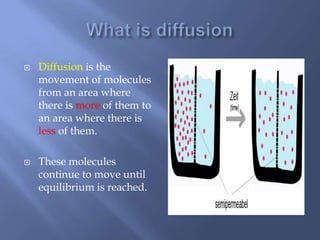
   Diffusion is the
    movement of molecules
    from an area where
    there is more of them to
    an area where there is
    less of them.

   These molecules
    continue to move until
    equilibrium is reached.
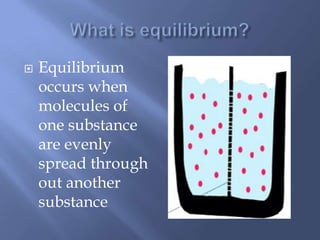
   Equilibrium
    occurs when
    molecules of
    one substance
    are evenly
    spread through
    out another
    substance
   Osmosis is the diffusion of water.

   This type of diffusion has a special name
    because water is vital to life of the cell
   Facilitated diffusion is the final
    type of passive transport we
    will learn about today.

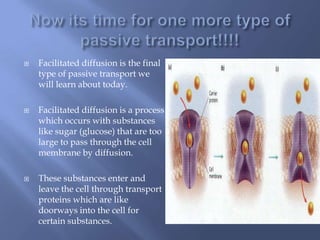
   Facilitated diffusion is a process
    which occurs with substances
    like sugar (glucose) that are too
    large to pass through the cell
    membrane by diffusion.

   These substances enter and
    leave the cell through transport
    proteins which are like
    doorways into the cell for
    certain substances.

Circulatory (Blood)

  • 1.
  • 2.
    Cellular transport is the process of moving materials into and out of the cell.  Materials such as water, sugar(glucose), oxygen, and carbon dioxide into and out of cells because they are needed to carry out important reactions in the cell. These reactions are responsible for creating food within cells and producing energy.
  • 3.
    Cellular transport can be categorized into one of three groups:  Passive Transport  Active Transport
  • 4.
    Passive transport is the movement of materials across the cell membrane with out the use of energy. When passive transport occurs molecules are transported across the cell by way of a process known as diffusion.
  • 5.
    Diffusion is the movement of molecules from an area where there is more of them to an area where there is less of them.  These molecules continue to move until equilibrium is reached.
  • 6.
    Equilibrium occurs when molecules of one substance are evenly spread through out another substance
  • 7.
    Osmosis is the diffusion of water.  This type of diffusion has a special name because water is vital to life of the cell
  • 8.
    Facilitated diffusion is the final type of passive transport we will learn about today.  Facilitated diffusion is a process which occurs with substances like sugar (glucose) that are too large to pass through the cell membrane by diffusion.  These substances enter and leave the cell through transport proteins which are like doorways into the cell for certain substances.