Chapter 3
Cell Processes
Section 2: Moving Cellular
Material
1
II. Moving Cellular Material
A. Selectively Permeable Membrane
1. Cells take in food, oxygen, and other
substances; they also release waste and
Carbon Dioxide CO2.
2. These materials enter and leave through the
cell membrane; acts like a screen.
2
II. Moving Cellular Material
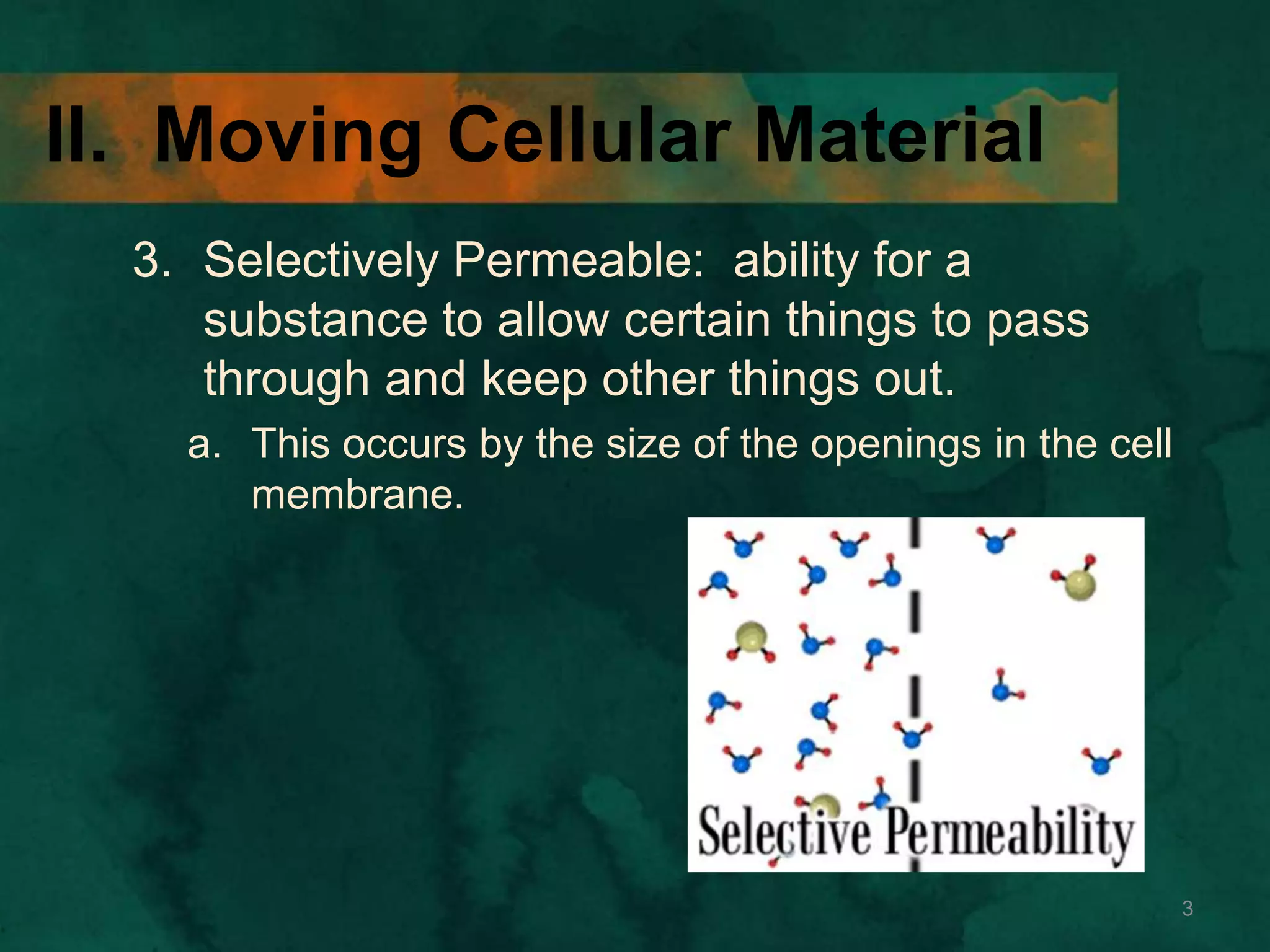
3. Selectively Permeable: ability for a
substance to allow certain things to pass
through and keep other things out.
a. This occurs by the size of the openings in the cell
membrane.
3
II. Moving Cellular Material
B. Passive Transport
1. The movement of substances through the
cell membrane WITHOUT the use of energy
(ATP).
2. Three types of passive transport
a. Diffusion
b. Osmosis
c. Facilitated Diffusion
4
II. Moving Cellular Material
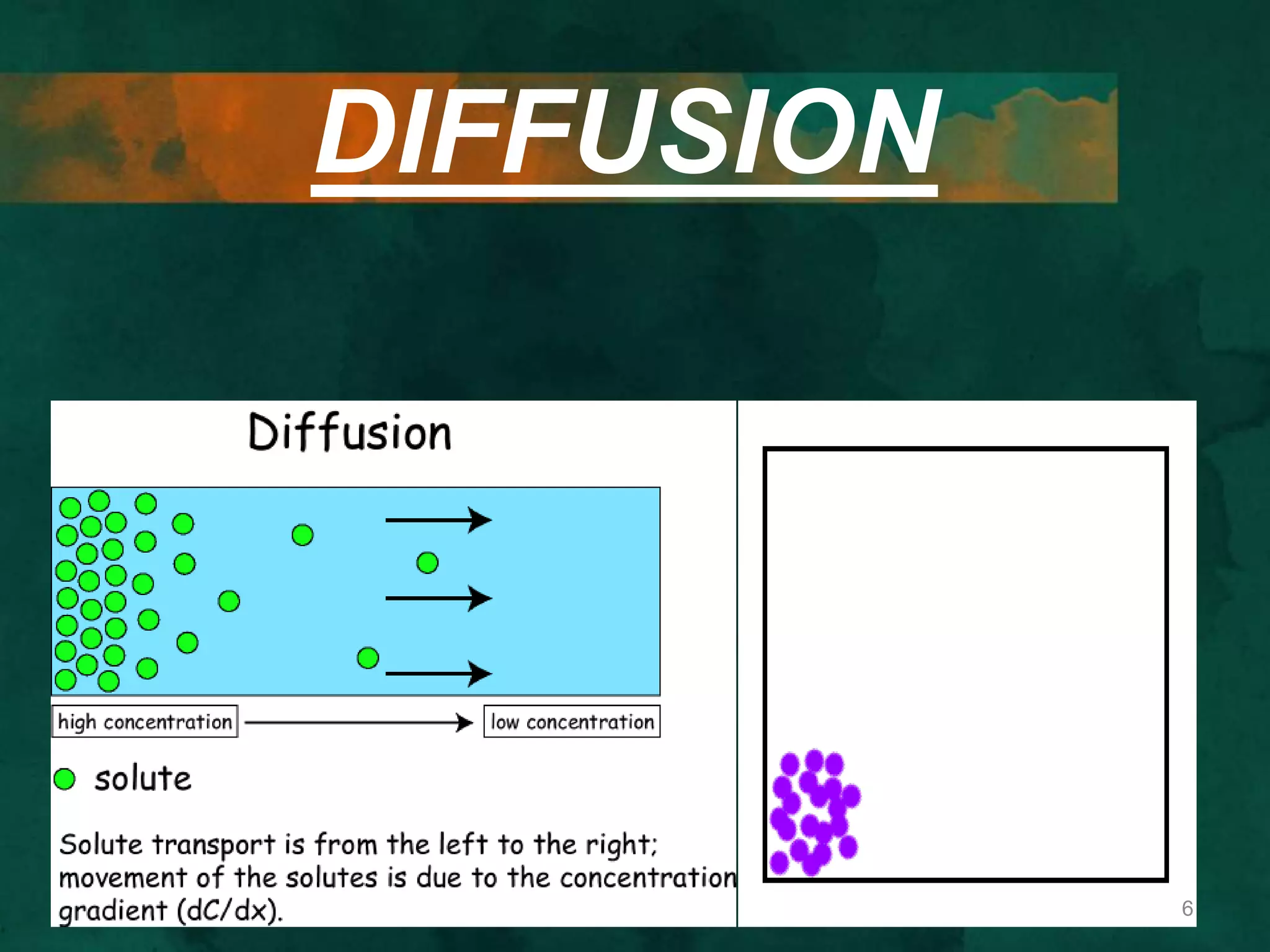
C. What is Diffusion? (Passive Transport)
1. Diffusion: random movement of molecules from
an area of high concentration to an area of low
concentration. (Crowded to Uncrowded)
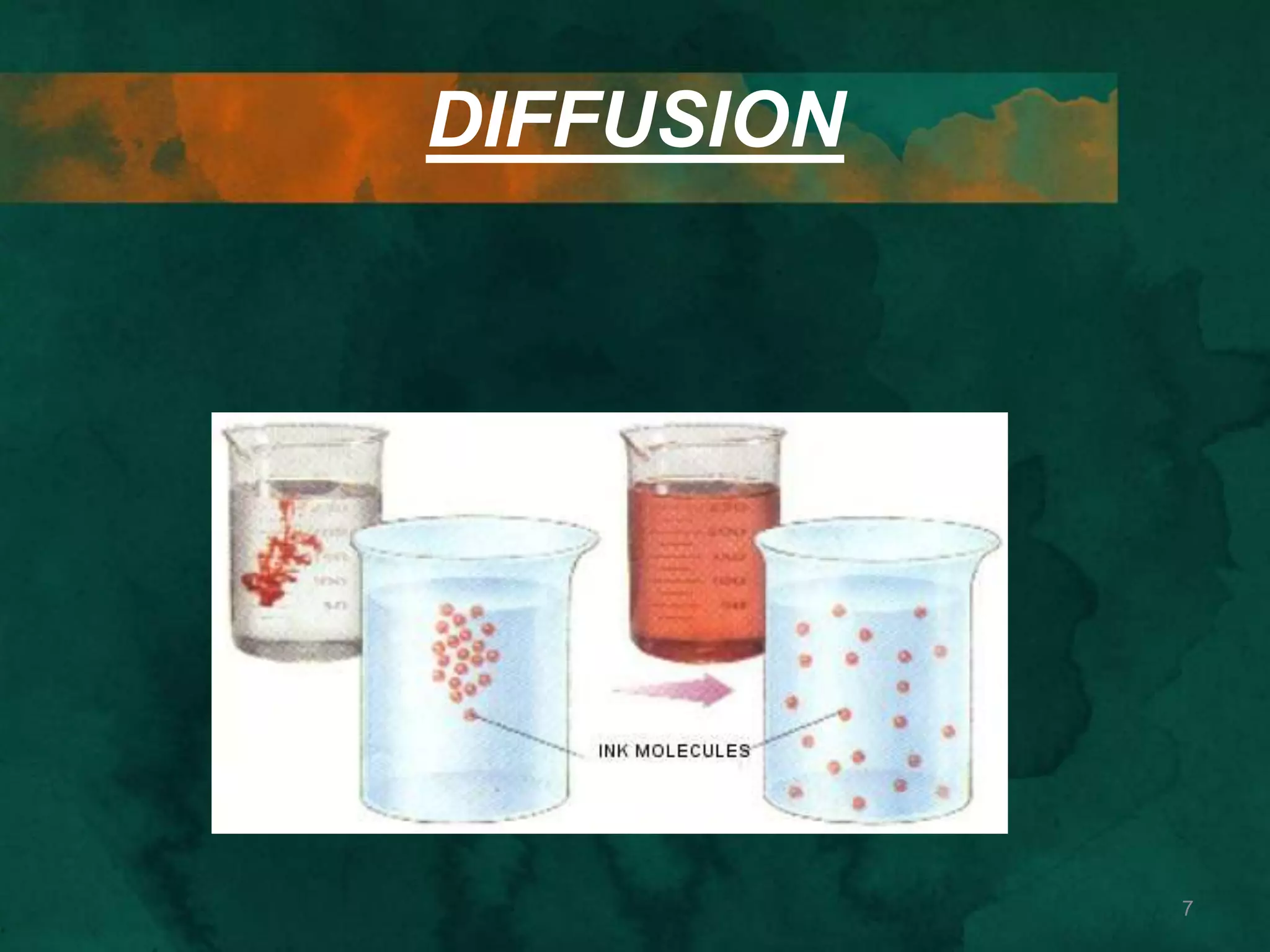
a. Example: Spraying perfume, adding a drop of food
coloring into water.
5
DIFFUSION
6
DIFFUSION
7
II. Moving Cellular Material
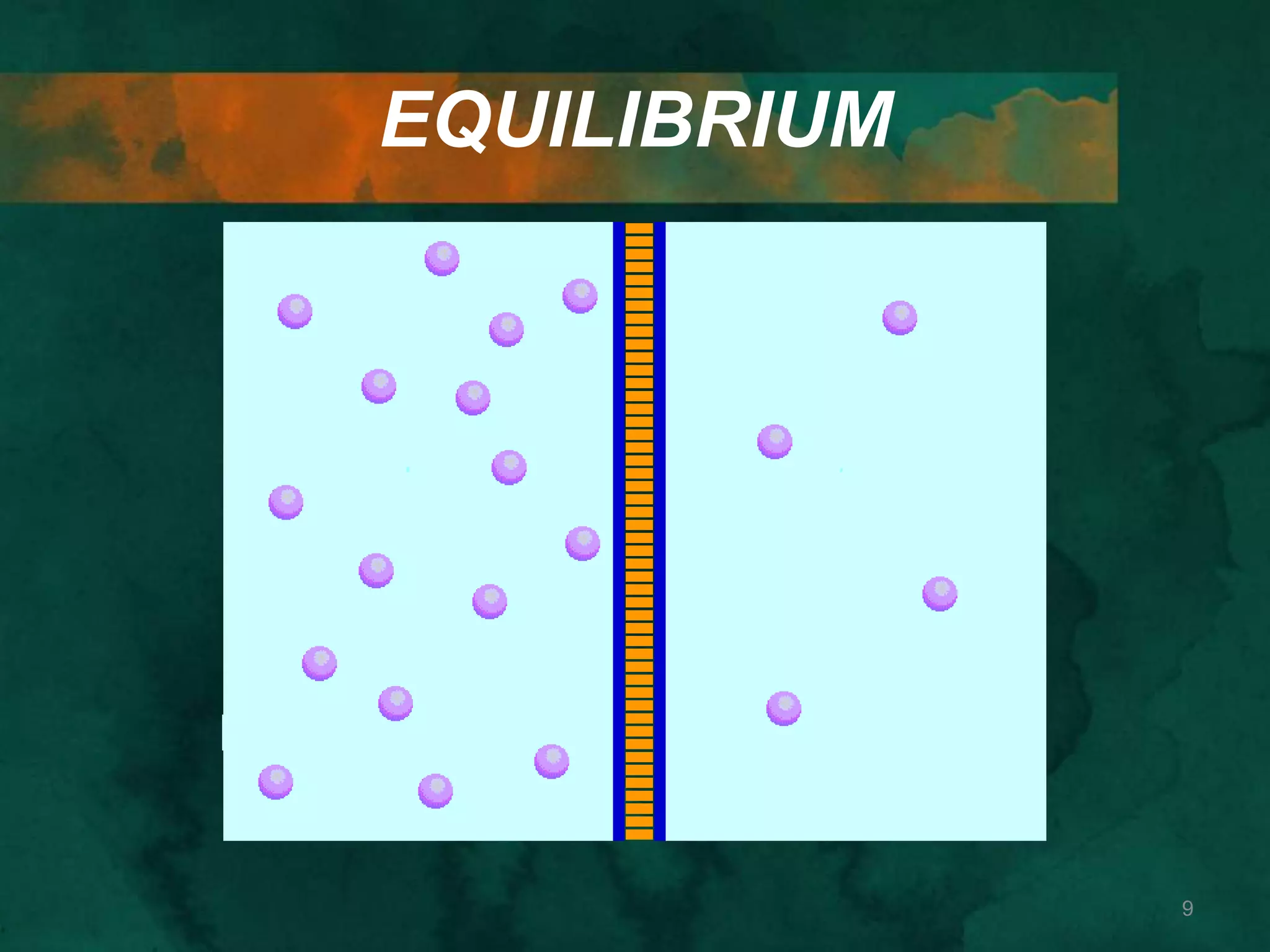
D. What is Equilibrium?
1. When the same number of molecules are on
both sides of a membrane.
a. All cells want this but it rarely happens.
8
EQUILIBRIUM
9
II. Moving Cellular Material
E. Osmosis (Passive Transport)
1. Osmosis is the diffusion of water and only
water across a membrane without the use of
energy (ATP).
a. Water goes from high concentration to low
concentration in diffusion.
b. Crowded to less crowded.
10
II. Moving Cellular Material
E. Osmosis (Passive Transport)
1. Osmosis is the diffusion of water and only
water across a membrane without the use of
energy.
a. Water goes from high concentration to low
concentration in diffusion.
b. Crowded to less crowded.
11
II. Moving Cellular Material
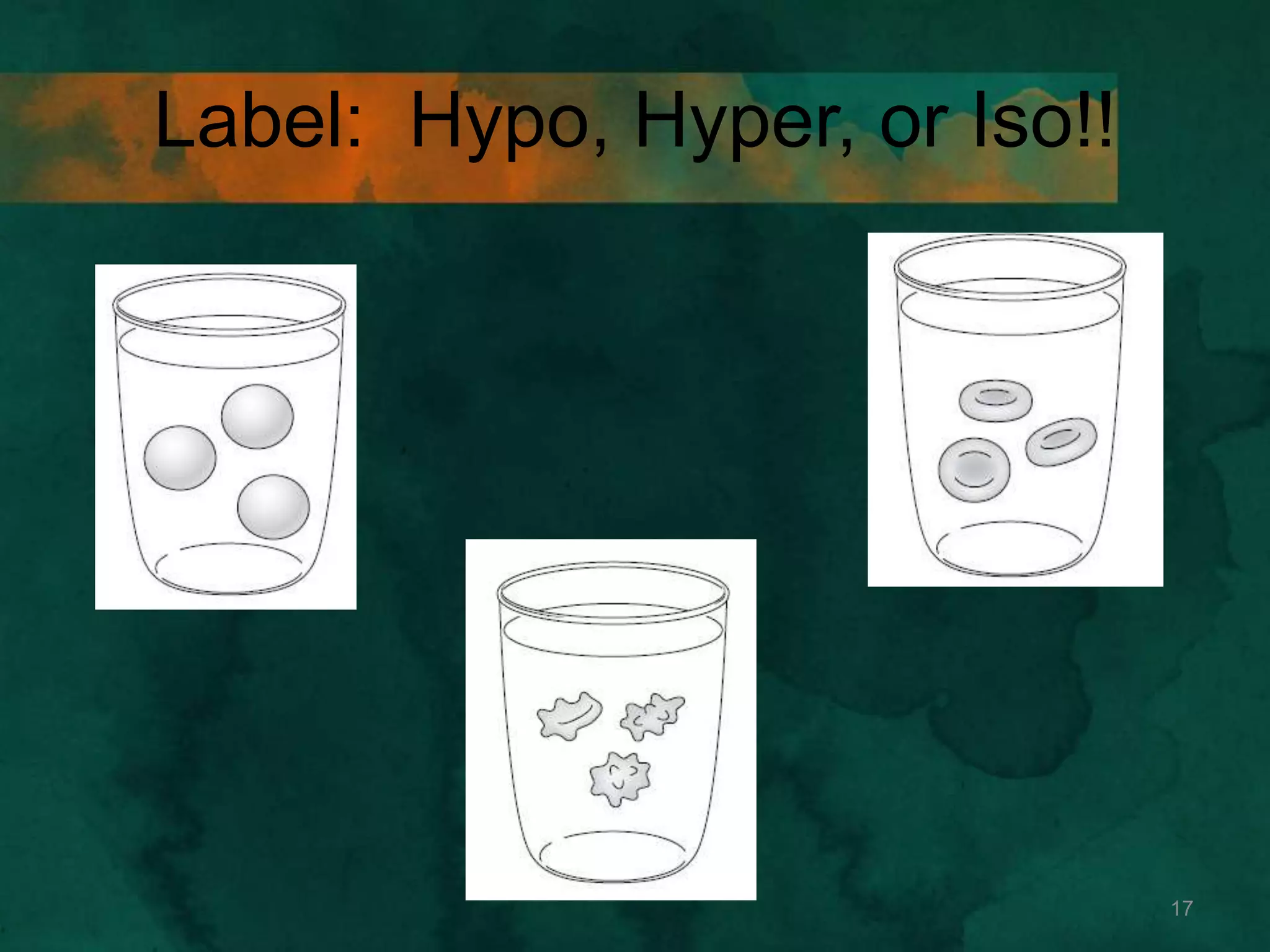
F. Cells and Water
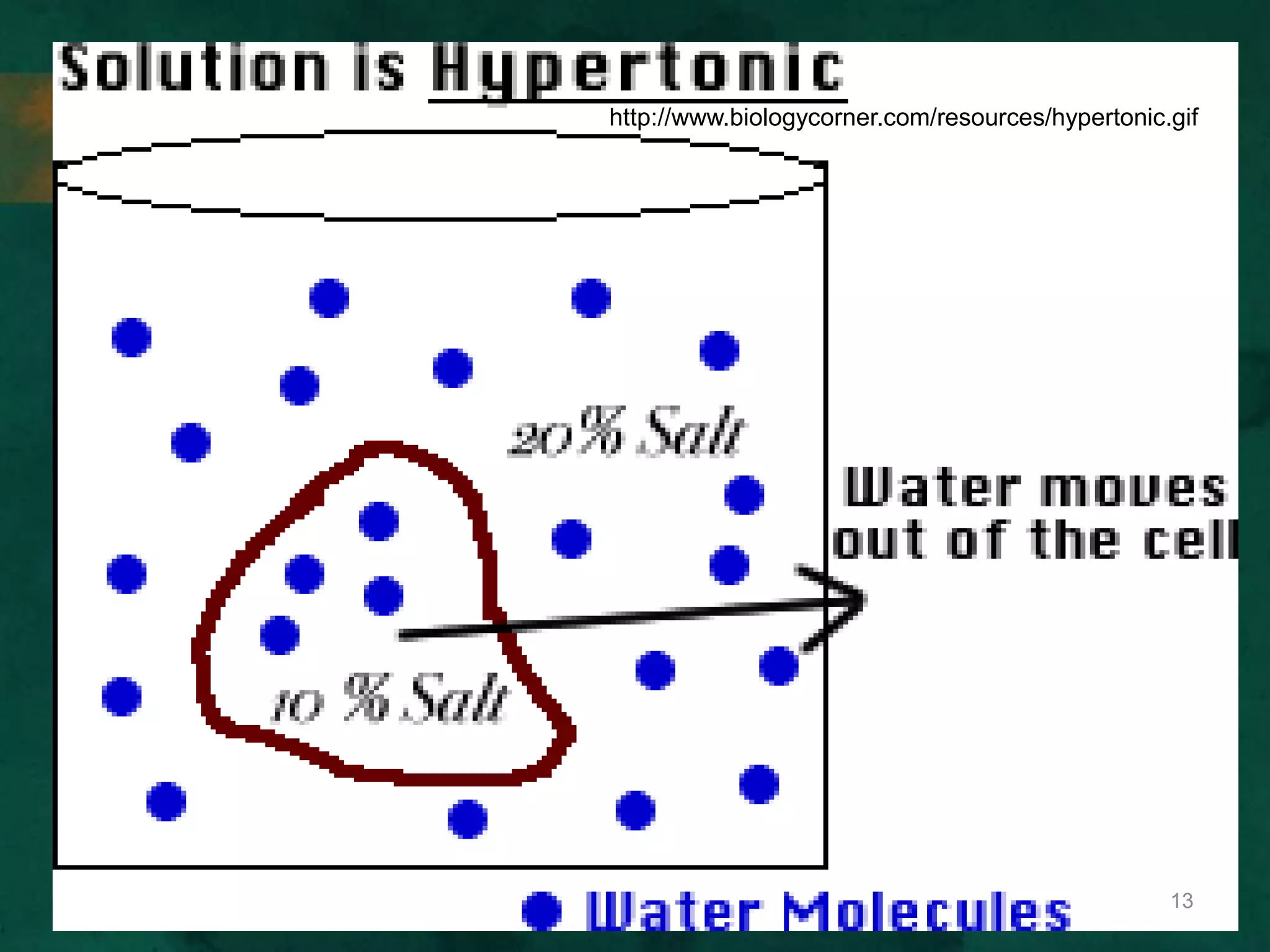
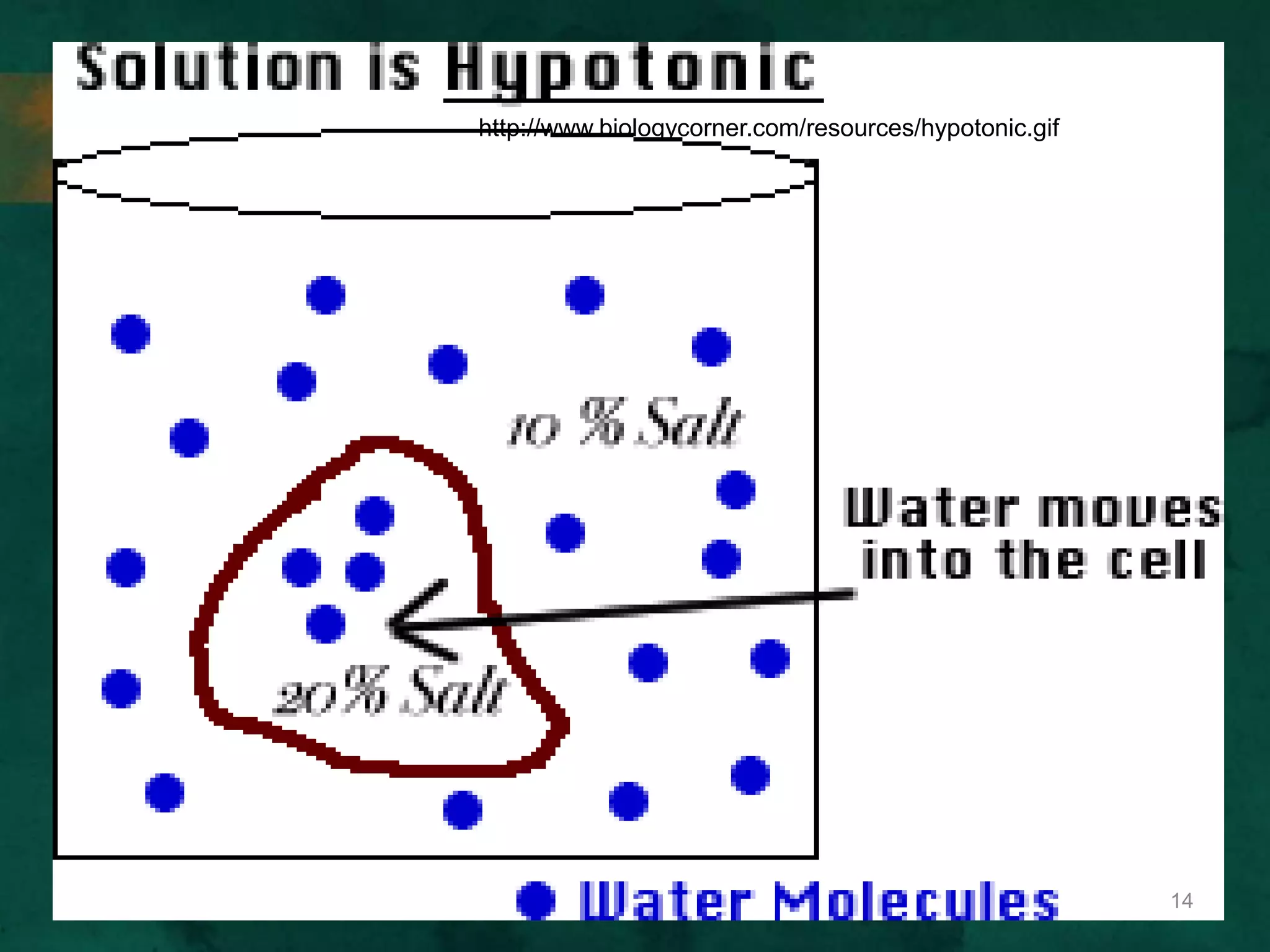
1. If a cell is placed into a container of pure water it
would keep sucking in the water and would not
stop.
a. This will eventually cause the cell to swell to a point of
exploding.
2. If a cell is placed in salt water, the cell would get
rid of all its water; trying to dilute the salt outside
the cell.
a. This would cause the cell to shrivel up and die.
12
http://www.biologycorner.com/resources/hypertonic.gif
13
http://www.biologycorner.com/resources/hypotonic.gif
14
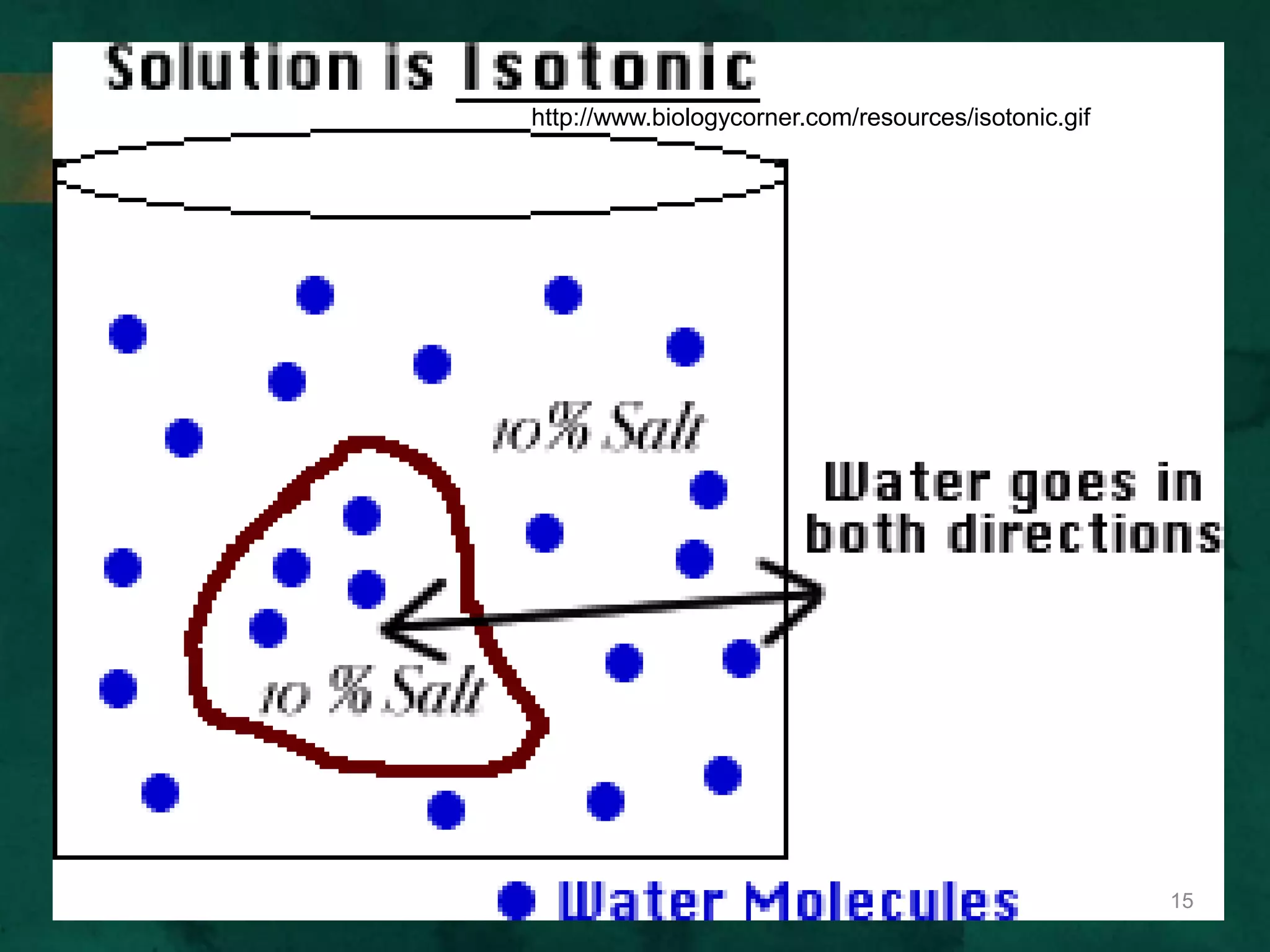
http://www.biologycorner.com/resources/isotonic.gif
15
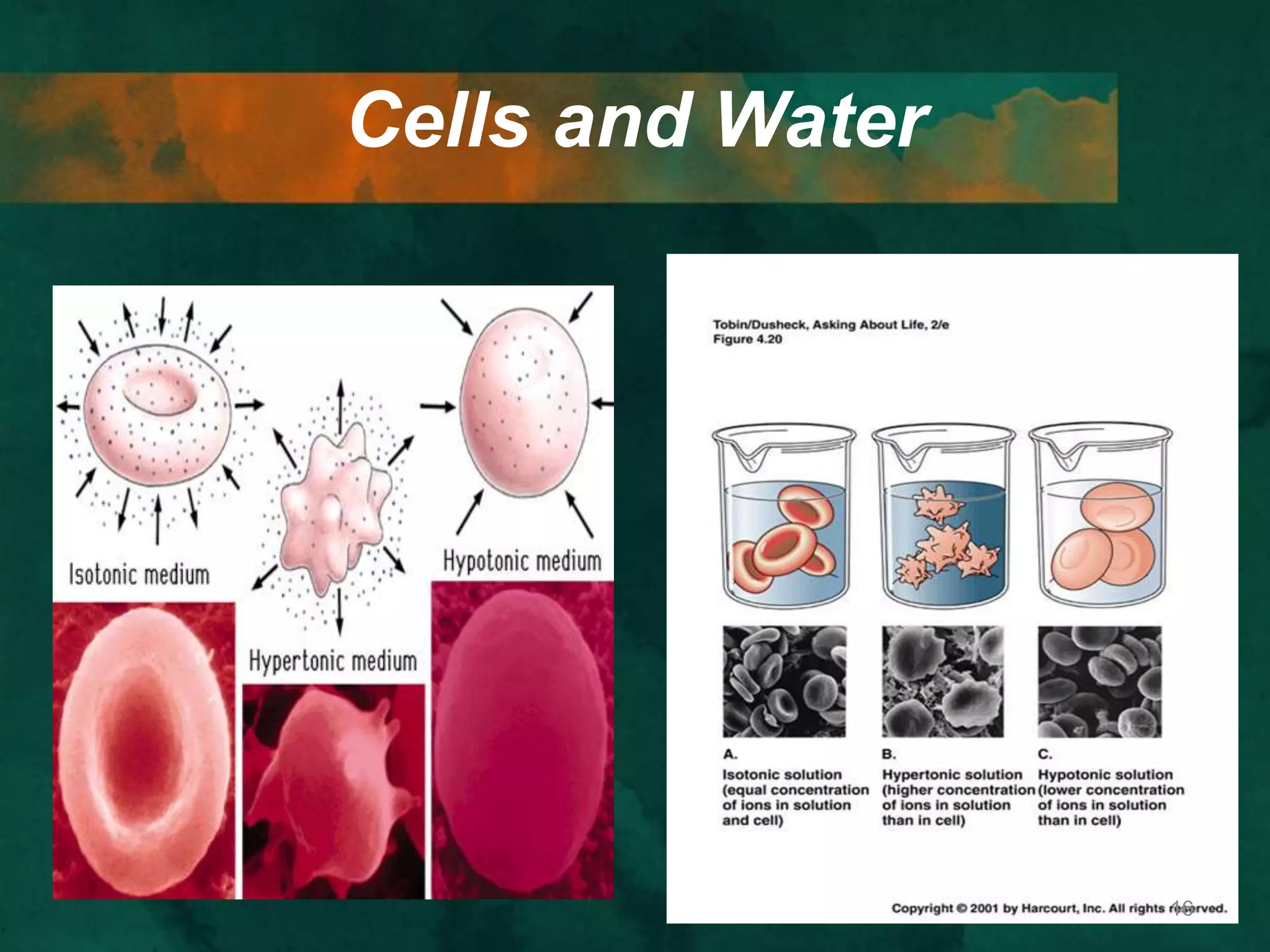
Cells and Water
16
Label: Hypo, Hyper, or Iso!!
17
II. Moving Cellular Material
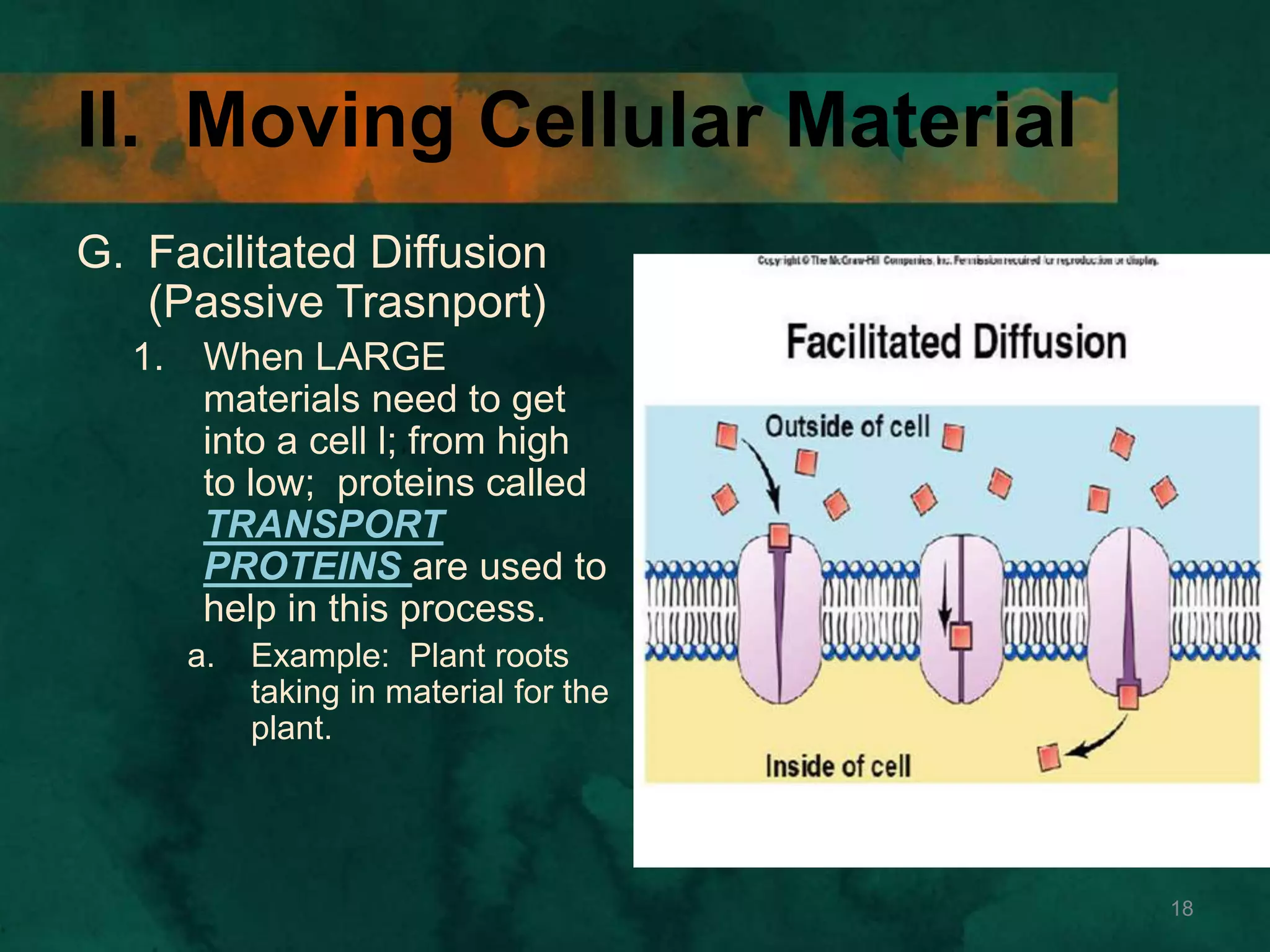
G. Facilitated Diffusion
(Passive Trasnport)
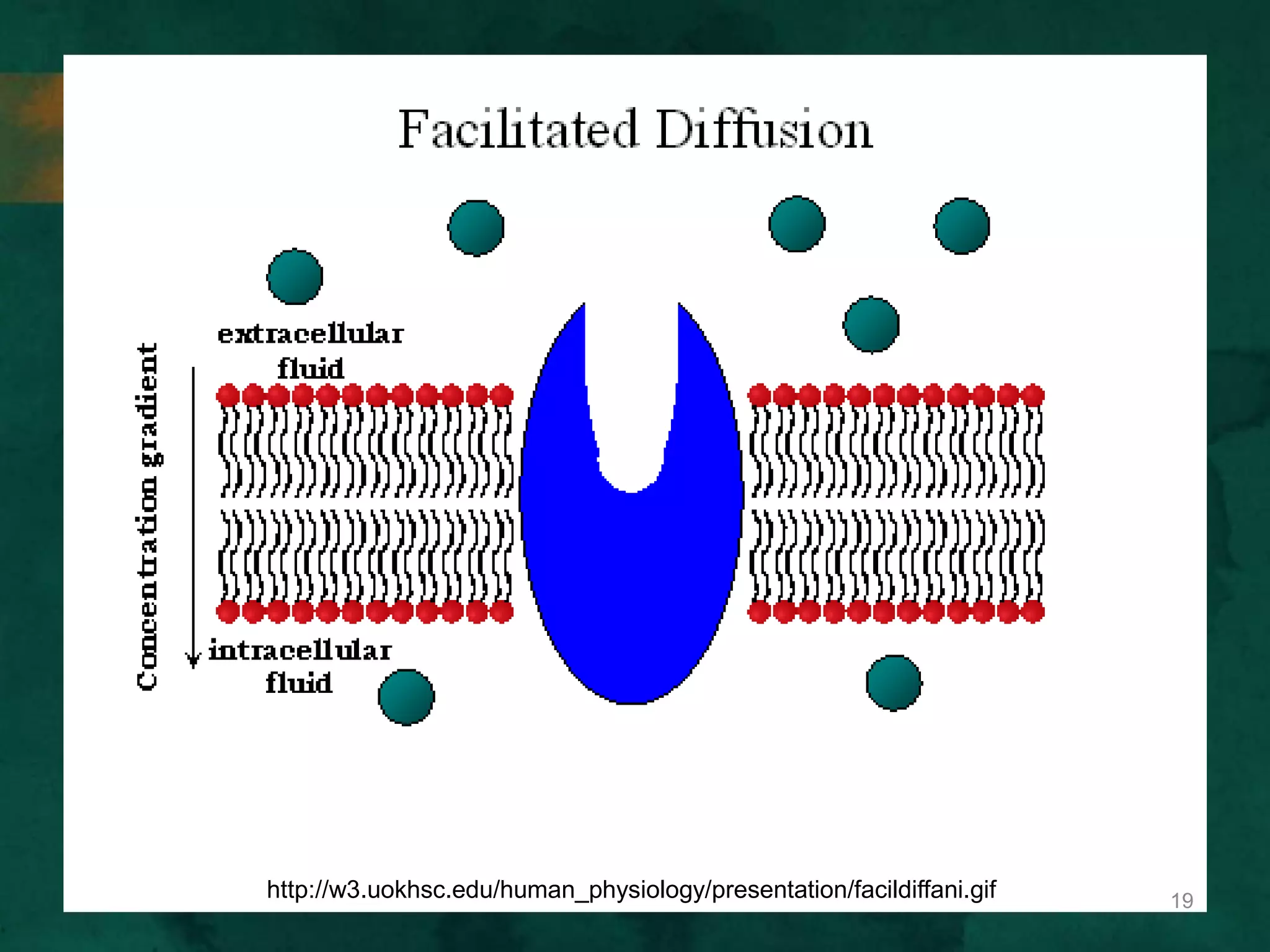
1. When LARGE
materials need to get
into a cell l; from high
to low; proteins called
TRANSPORT
PROTEINS are used to
help in this process.
a. Example: Plant roots
taking in material for the
plant.
18
http://w3.uokhsc.edu/human_physiology/presentation/facildiffani.gif 19
II. Moving Cellular Material
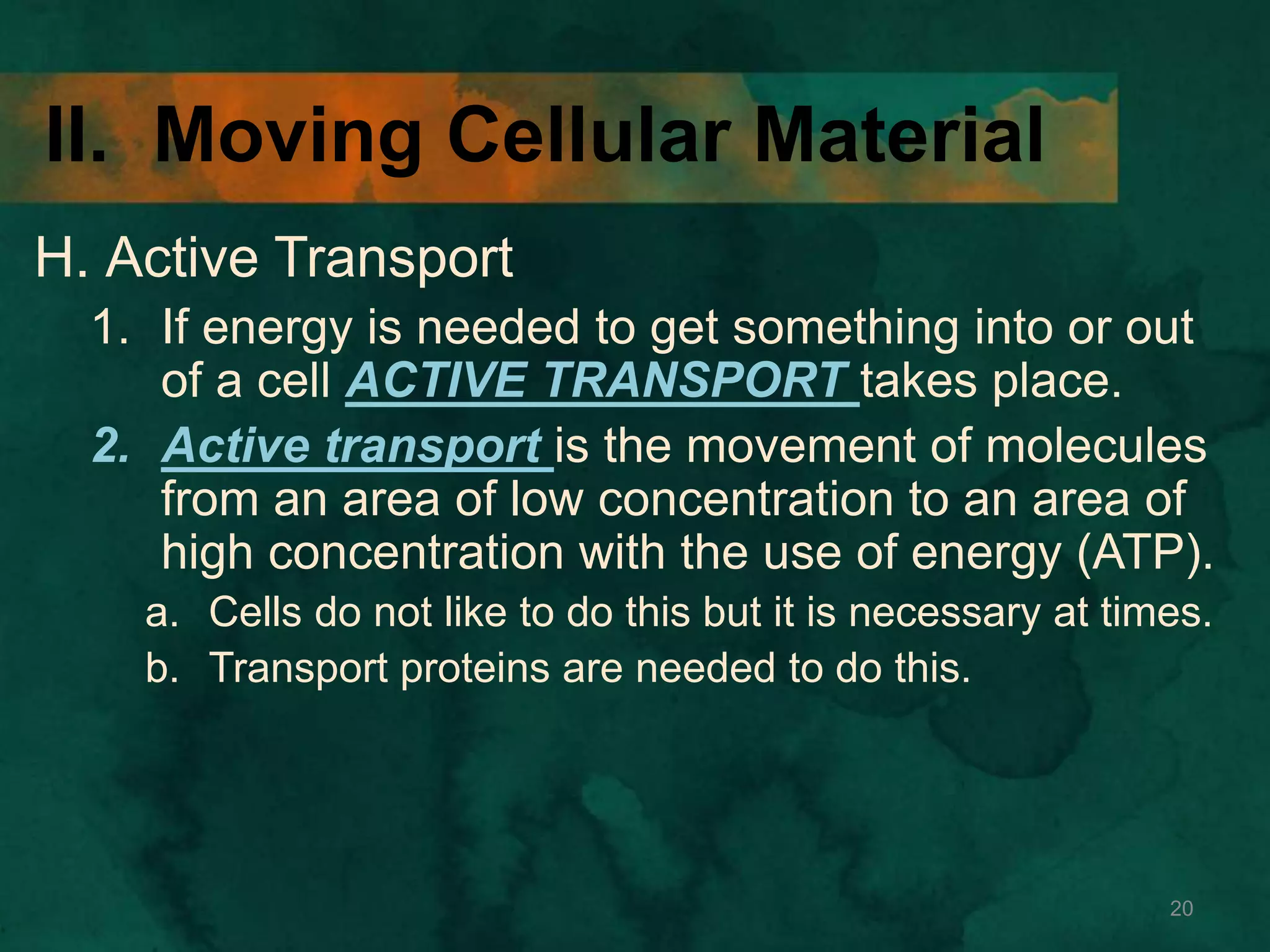
H. Active Transport
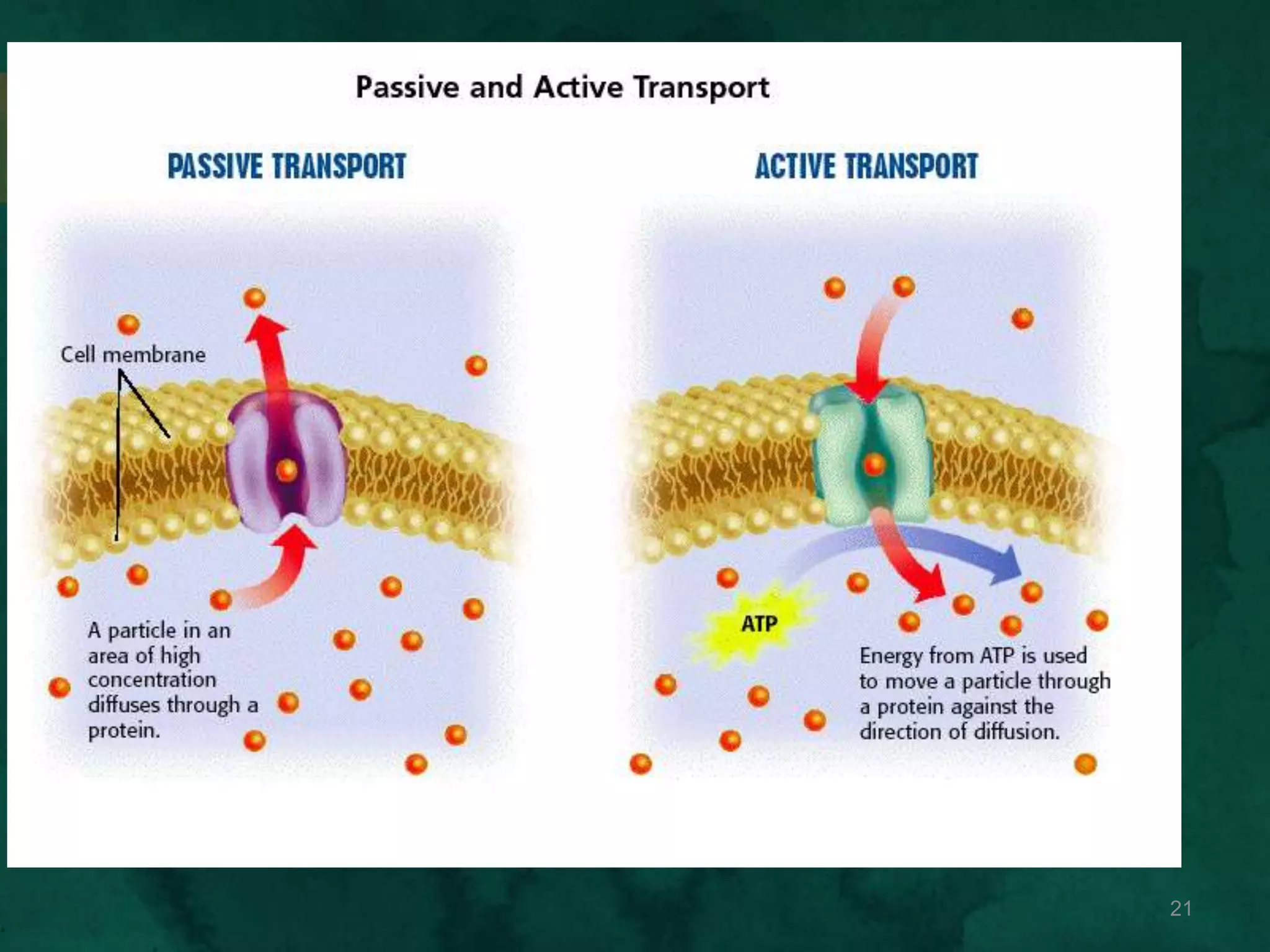
1. If energy is needed to get something into or out
of a cell ACTIVE TRANSPORT takes place.
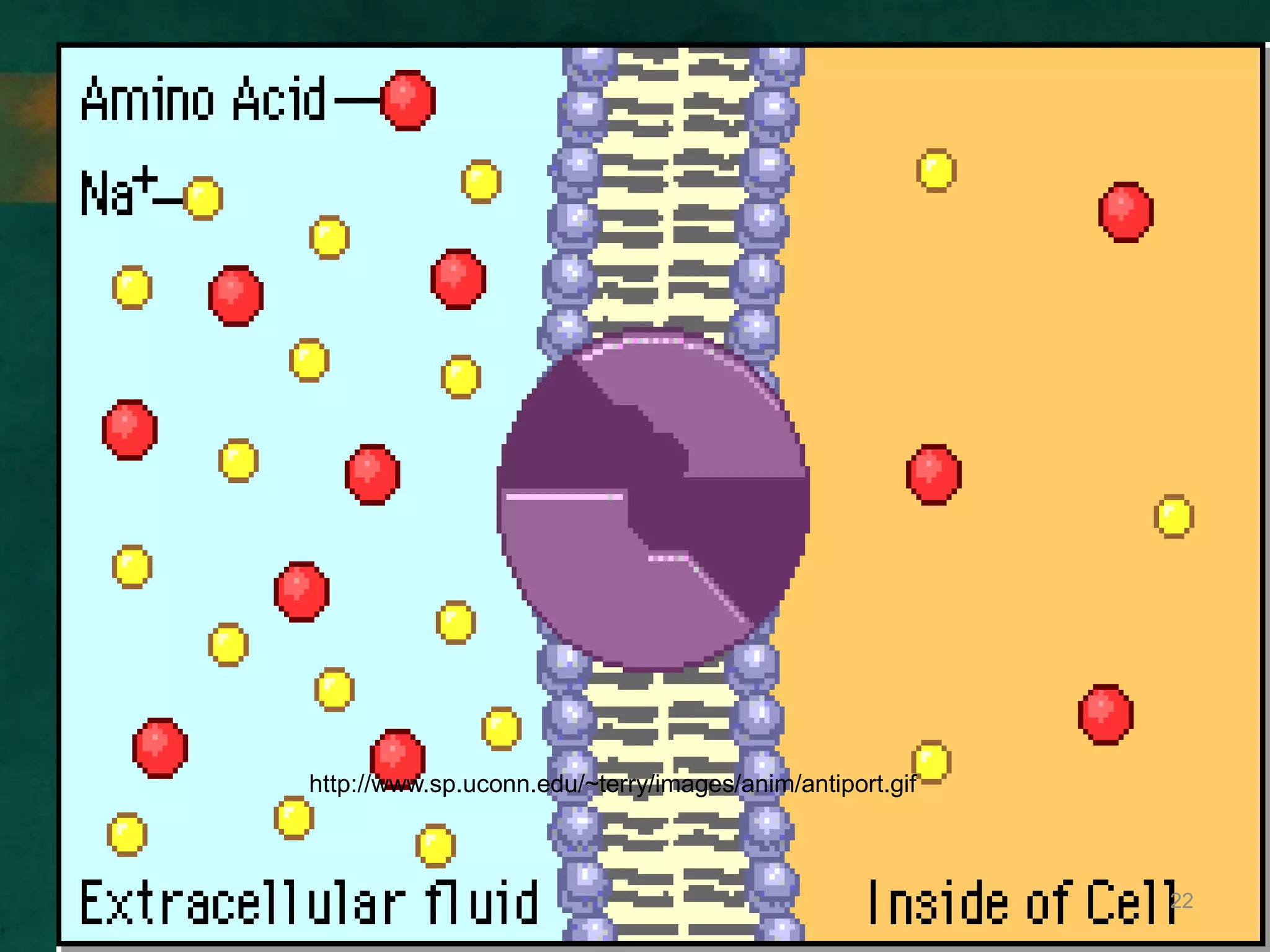
2. Active transport is the movement of molecules
from an area of low concentration to an area of
high concentration with the use of energy (ATP).
a. Cells do not like to do this but it is necessary at times.
b. Transport proteins are needed to do this.
20
21
http://www.sp.uconn.edu/~terry/images/anim/antiport.gif
22
II. Moving Cellular Material
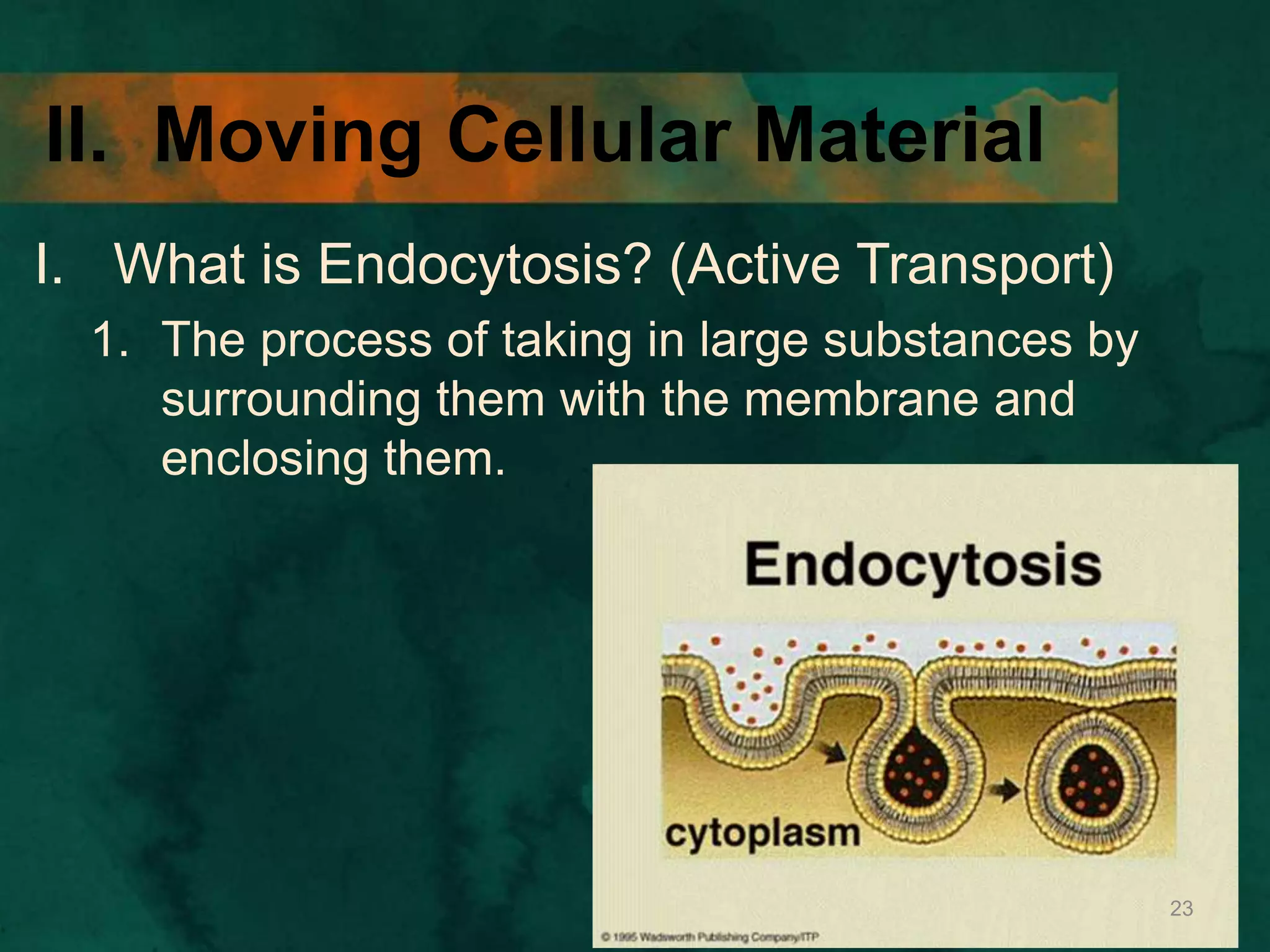
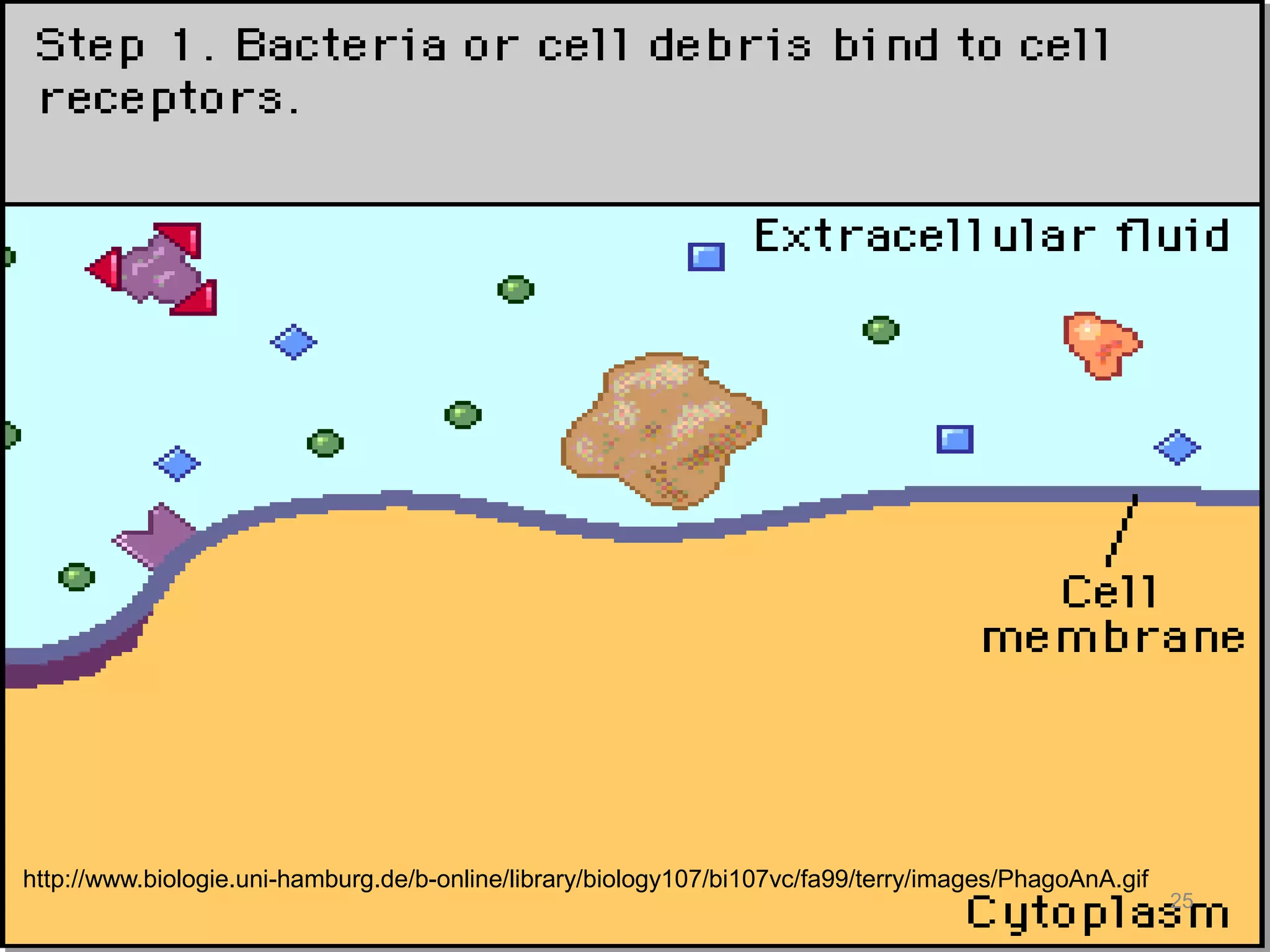
I. What is Endocytosis? (Active Transport)
1. The process of taking in large substances by
surrounding them with the membrane and
enclosing them.
23
II. Moving Cellular Material
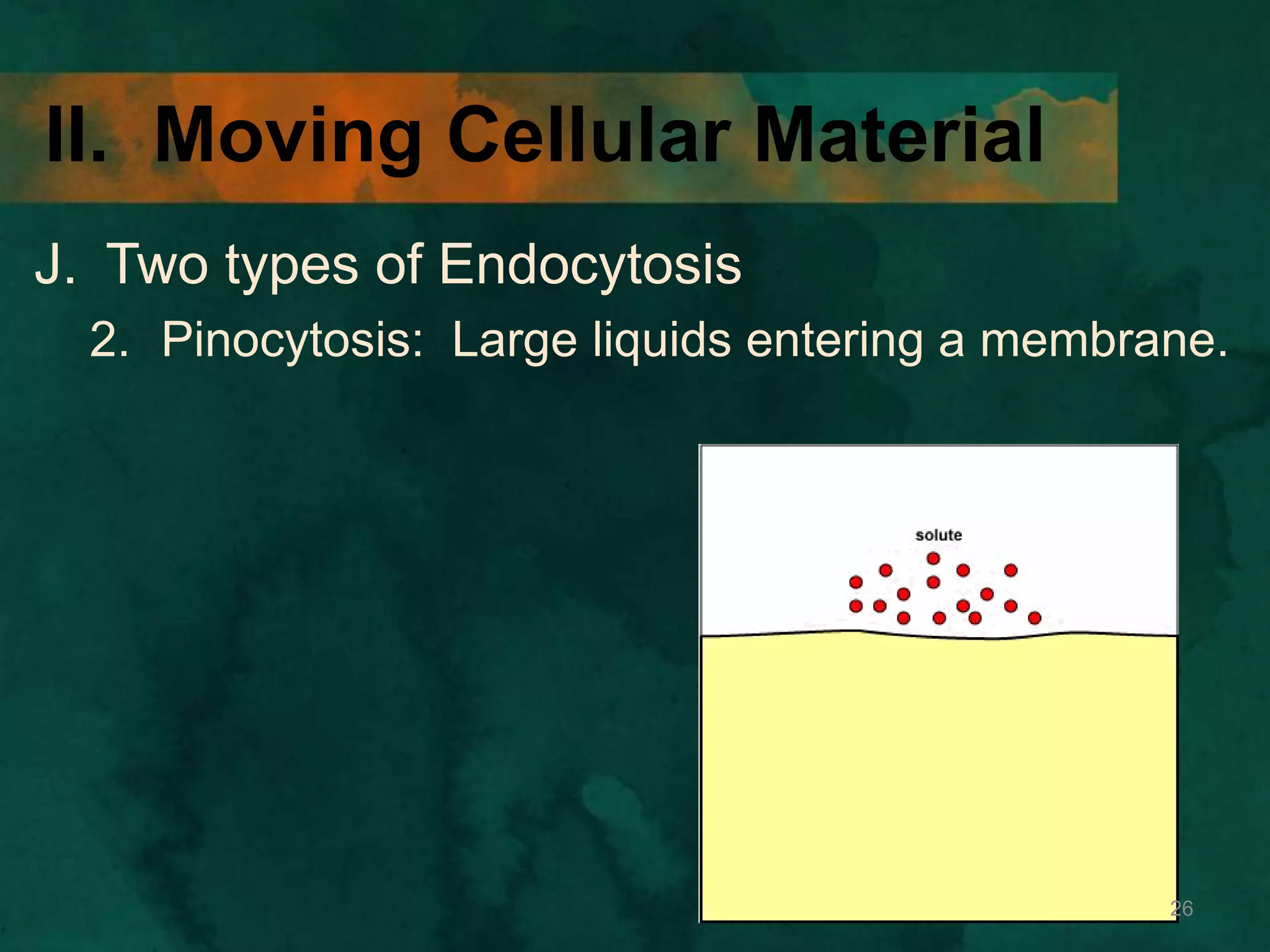
J. Two types of Endocytosis
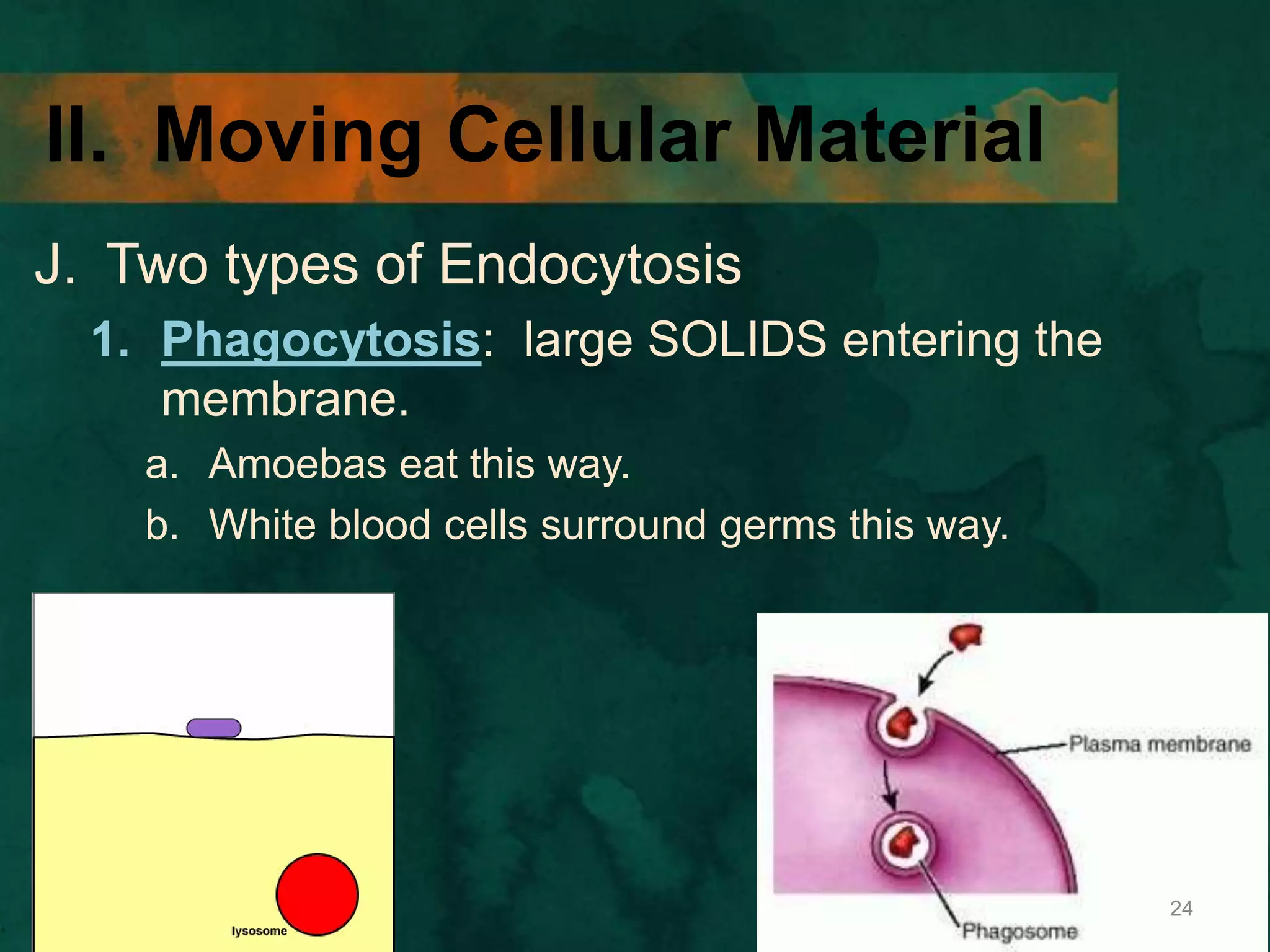
1. Phagocytosis: large SOLIDS entering the
membrane.
a. Amoebas eat this way.
b. White blood cells surround germs this way.
24
http://www.biologie.uni-hamburg.de/b-online/library/biology107/bi107vc/fa99/terry/images/PhagoAnA.gif
25
II. Moving Cellular Material
J. Two types of Endocytosis
2. Pinocytosis: Large liquids entering a membrane.
26
II. Moving Cellular Material
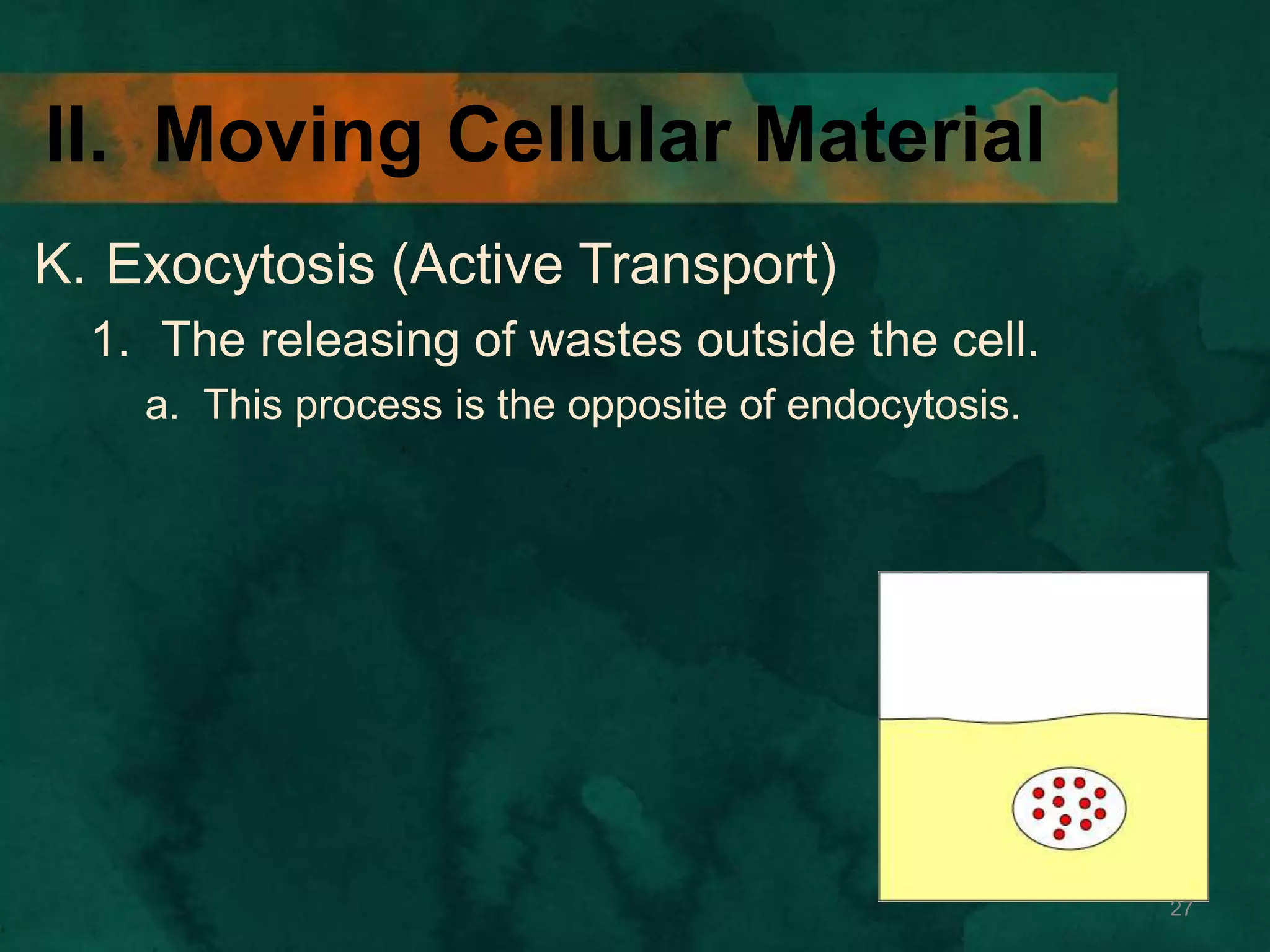
K. Exocytosis (Active Transport)
1. The releasing of wastes outside the cell.
a. This process is the opposite of endocytosis.
27

Chapter 3 section 2 notes (moving cellular material)

  • 1.
    Chapter 3 Cell Processes Section2: Moving Cellular Material 1
  • 2.
    II. Moving CellularMaterial A. Selectively Permeable Membrane 1. Cells take in food, oxygen, and other substances; they also release waste and Carbon Dioxide CO2. 2. These materials enter and leave through the cell membrane; acts like a screen. 2
  • 3.
    II. Moving CellularMaterial 3. Selectively Permeable: ability for a substance to allow certain things to pass through and keep other things out. a. This occurs by the size of the openings in the cell membrane. 3
  • 4.
    II. Moving CellularMaterial B. Passive Transport 1. The movement of substances through the cell membrane WITHOUT the use of energy (ATP). 2. Three types of passive transport a. Diffusion b. Osmosis c. Facilitated Diffusion 4
  • 5.
    II. Moving CellularMaterial C. What is Diffusion? (Passive Transport) 1. Diffusion: random movement of molecules from an area of high concentration to an area of low concentration. (Crowded to Uncrowded) a. Example: Spraying perfume, adding a drop of food coloring into water. 5
  • 6.
  • 7.
  • 8.
    II. Moving CellularMaterial D. What is Equilibrium? 1. When the same number of molecules are on both sides of a membrane. a. All cells want this but it rarely happens. 8
  • 9.
  • 10.
    II. Moving CellularMaterial E. Osmosis (Passive Transport) 1. Osmosis is the diffusion of water and only water across a membrane without the use of energy (ATP). a. Water goes from high concentration to low concentration in diffusion. b. Crowded to less crowded. 10
  • 11.
    II. Moving CellularMaterial E. Osmosis (Passive Transport) 1. Osmosis is the diffusion of water and only water across a membrane without the use of energy. a. Water goes from high concentration to low concentration in diffusion. b. Crowded to less crowded. 11
  • 12.
    II. Moving CellularMaterial F. Cells and Water 1. If a cell is placed into a container of pure water it would keep sucking in the water and would not stop. a. This will eventually cause the cell to swell to a point of exploding. 2. If a cell is placed in salt water, the cell would get rid of all its water; trying to dilute the salt outside the cell. a. This would cause the cell to shrivel up and die. 12
  • 13.
  • 14.
  • 15.
  • 16.
  • 17.
  • 18.
    II. Moving CellularMaterial G. Facilitated Diffusion (Passive Trasnport) 1. When LARGE materials need to get into a cell l; from high to low; proteins called TRANSPORT PROTEINS are used to help in this process. a. Example: Plant roots taking in material for the plant. 18
  • 19.
  • 20.
    II. Moving CellularMaterial H. Active Transport 1. If energy is needed to get something into or out of a cell ACTIVE TRANSPORT takes place. 2. Active transport is the movement of molecules from an area of low concentration to an area of high concentration with the use of energy (ATP). a. Cells do not like to do this but it is necessary at times. b. Transport proteins are needed to do this. 20
  • 21.
  • 22.
  • 23.
    II. Moving CellularMaterial I. What is Endocytosis? (Active Transport) 1. The process of taking in large substances by surrounding them with the membrane and enclosing them. 23
  • 24.
    II. Moving CellularMaterial J. Two types of Endocytosis 1. Phagocytosis: large SOLIDS entering the membrane. a. Amoebas eat this way. b. White blood cells surround germs this way. 24
  • 25.
  • 26.
    II. Moving CellularMaterial J. Two types of Endocytosis 2. Pinocytosis: Large liquids entering a membrane. 26
  • 27.
    II. Moving CellularMaterial K. Exocytosis (Active Transport) 1. The releasing of wastes outside the cell. a. This process is the opposite of endocytosis. 27