Material Flow in the Cell
Semipermeable Membrane
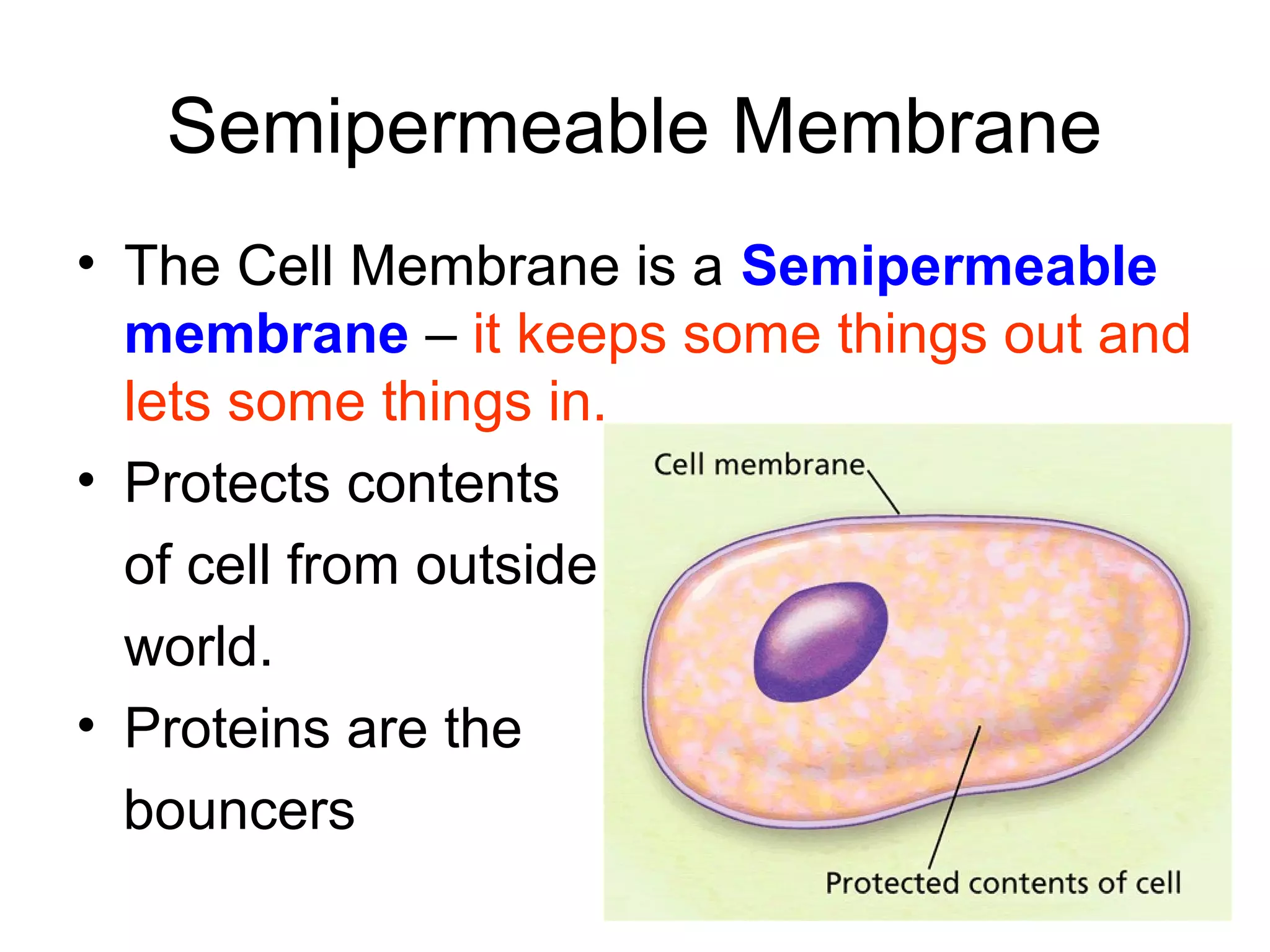
• The Cell Membrane is a Semipermeable
membrane – it keeps some things out and
lets some things in.
• Protects contents
of cell from outside
world.
• Proteins are the
bouncers
What Materials can Pass?
What can come into the cell?
Oxygen & food & proteins
What goes out of the cell?
Waste materials
What is not allowed in?
Poison and waste
PASSIVE TRANSPORT
• PASSIVE TRANSPORT – ways to move
material into and out of the cell without
using any energy.
2 Ways:
1. DIFFUSION
2. OSMOSIS – a type of diffusion
DIFFUSION
• The main method by which small
molecules move across the cell
membrane.
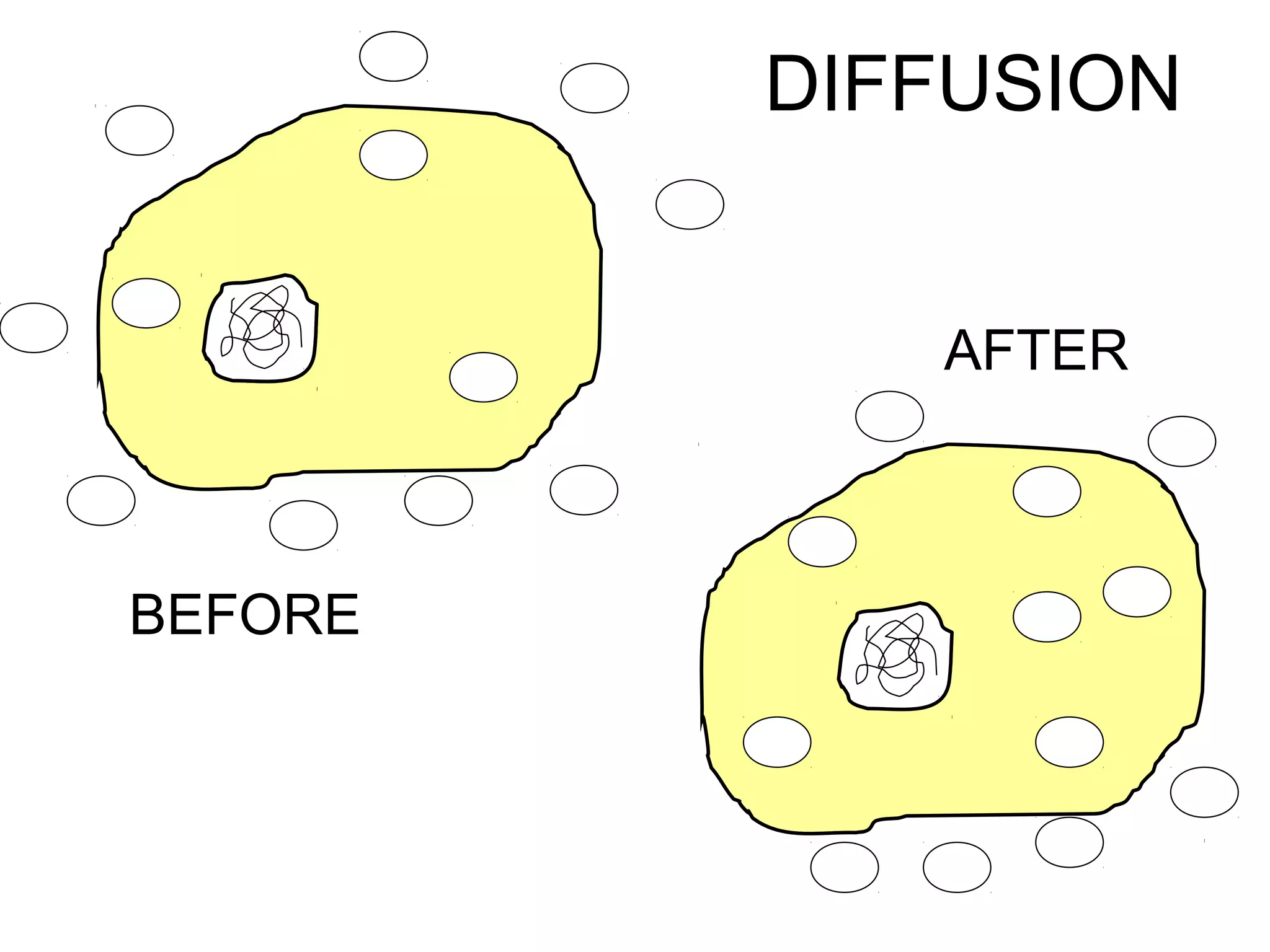
• The molecules move from an area of
HIGHER CONCENTRATION to an area of
LOWER CONCENTRATION.
• Oxygen molecules commonly move into
and out of the cell by Diffusion.
• USES NO ENERGY (passive transport)
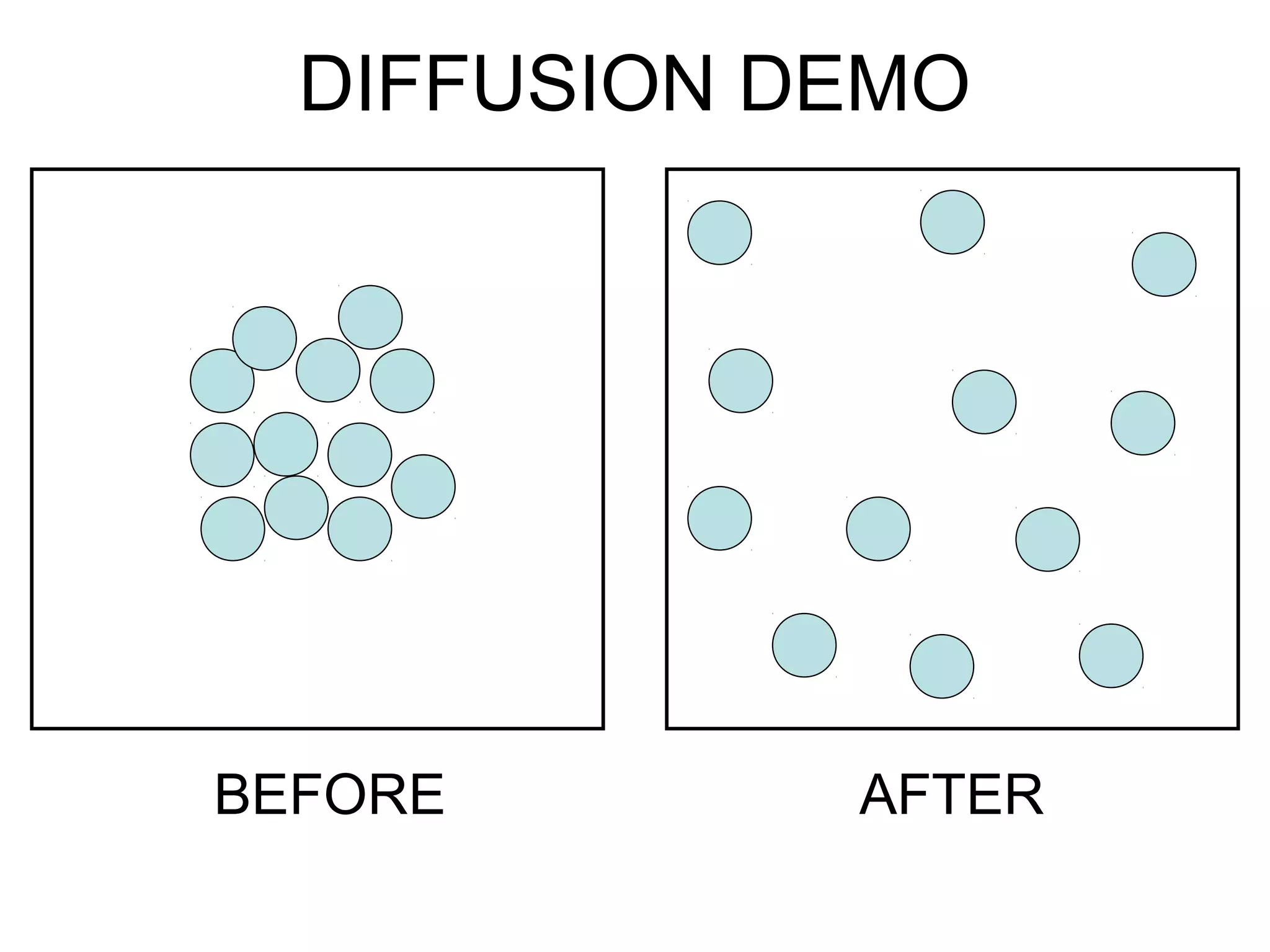
BEFORE AFTER
DIFFUSION DEMO
BEFORE
AFTER
DIFFUSION
What Causes Diffusion?
• Molecules are always moving and they
bump into each other.
• When they bump into each other they
push each other away and spread out.
• Eventually they spread throughout the
whole area.
• NO ENERGY NEEDED by cell because
the molecules have energy in their
vibrations.
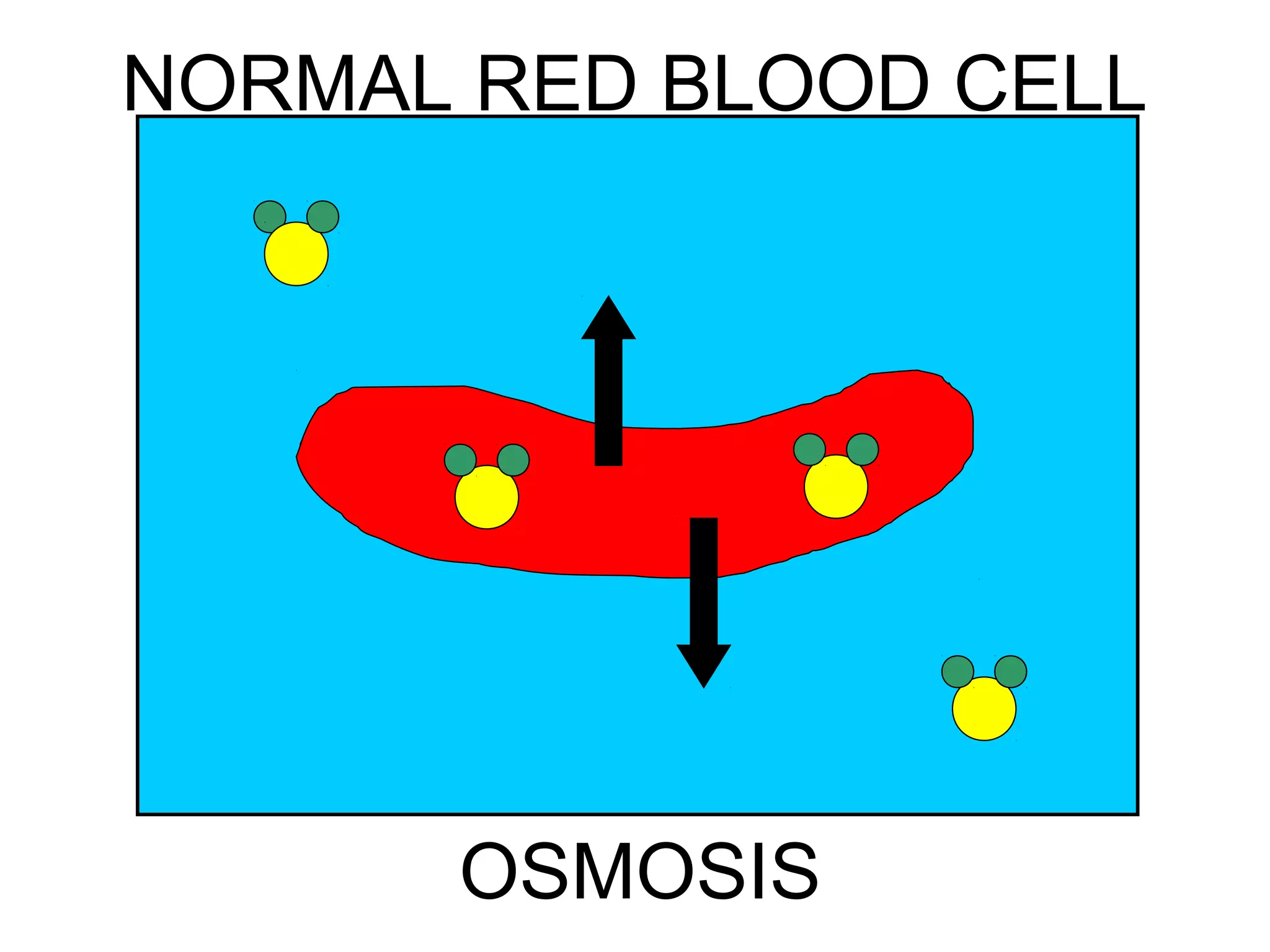
OSMOSIS
• A special kind of diffusion
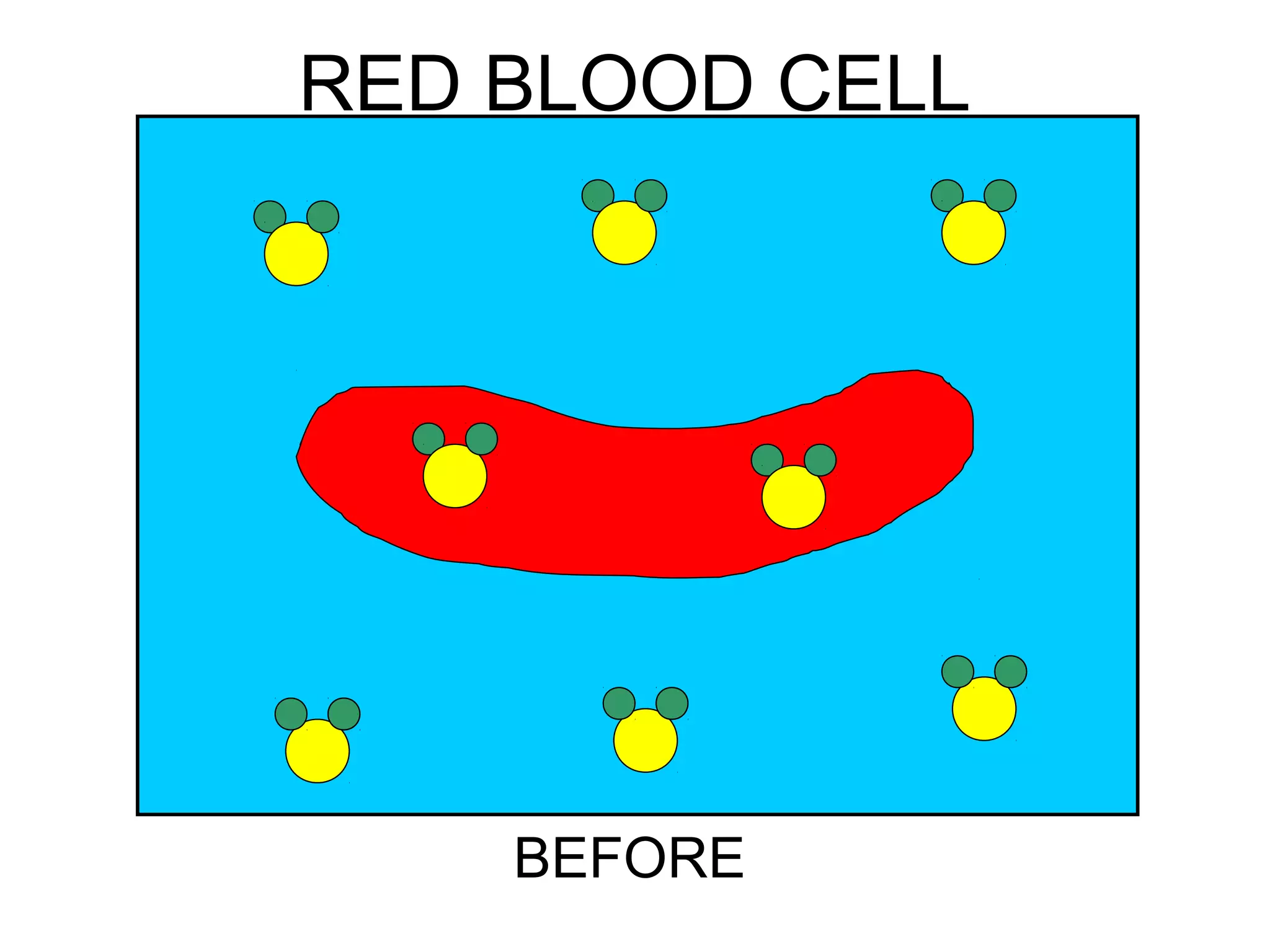
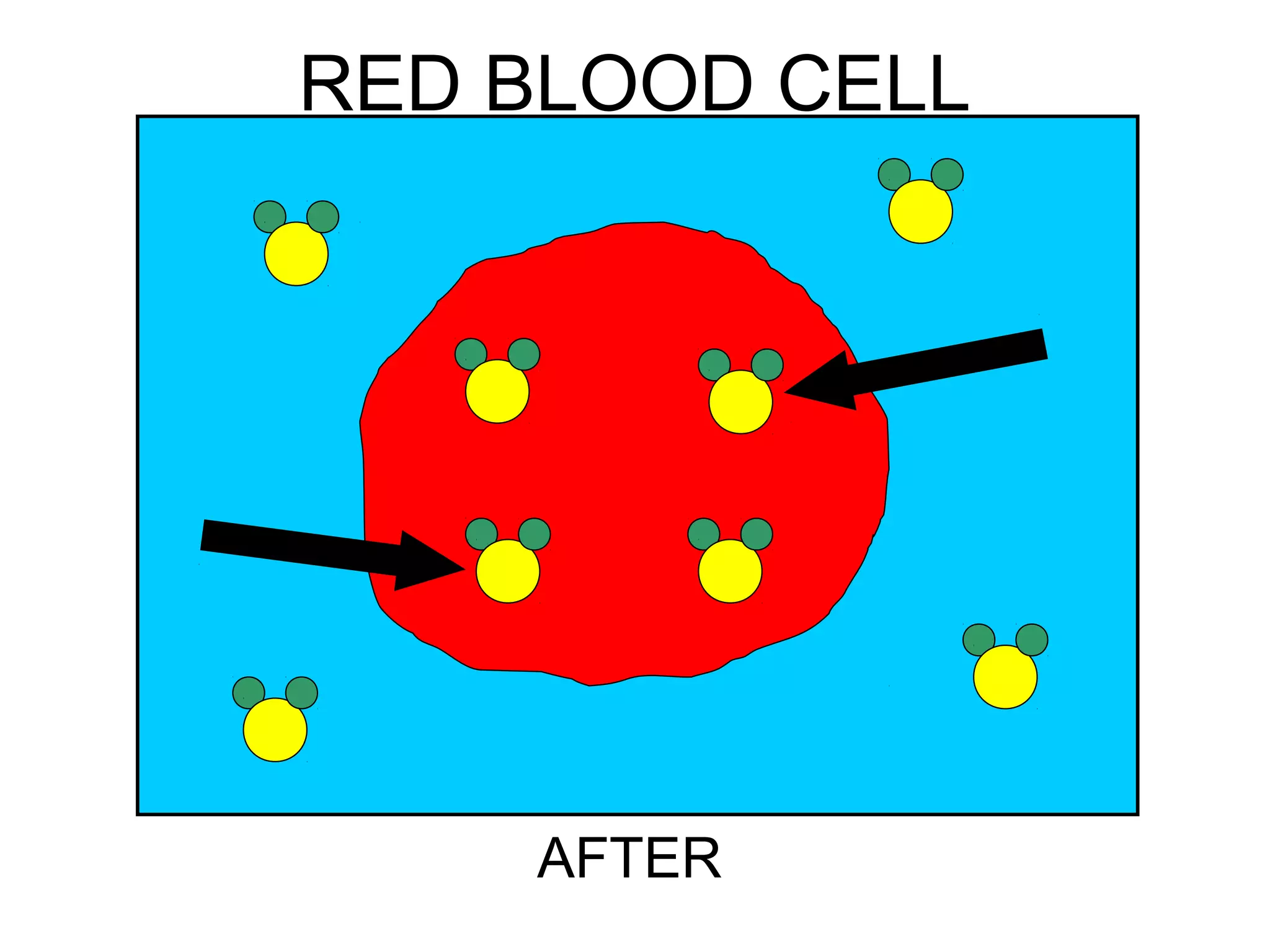
• The diffusion of water molecules through
the cell membrane.
• Water still moves from HIGHER
CONCENTRATION to LOWER
CONCENTRATION.
• USES NO ENERGY (passive transport)
NORMAL RED BLOOD CELL
OSMOSIS
BEFORE
RED BLOOD CELL
RED BLOOD CELL
AFTER
ACTIVE TRANSPORT
• Active Transport – USES ENERGY to move
materials into and out of the cell.
• Often from LOW concentration to HIGH
concentration
• For small or large particles
• This requires the cell to USE ENERGY.
2 ways:
1. ENDOCYTOSIS
2. EXOCYTOSIS
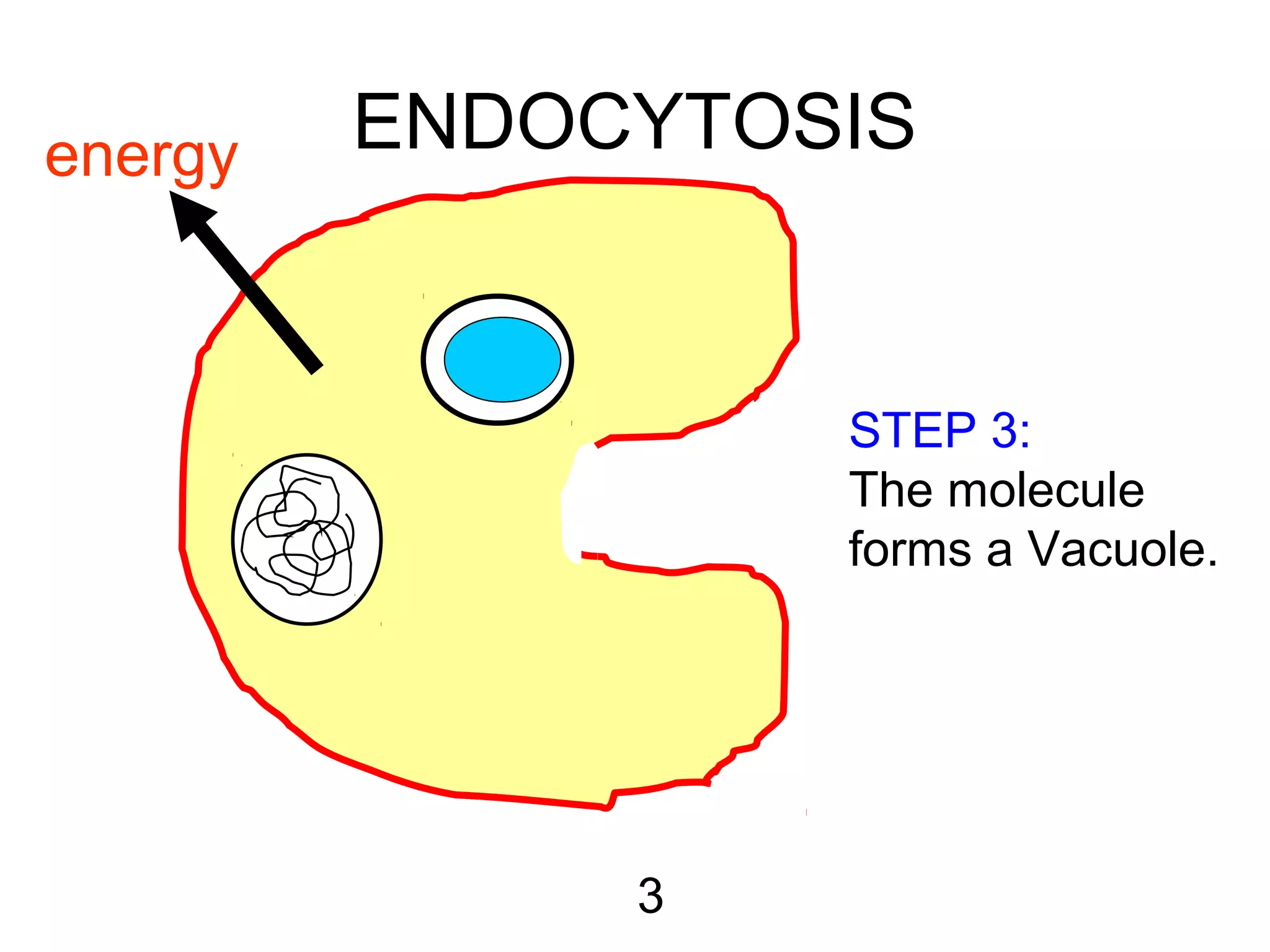
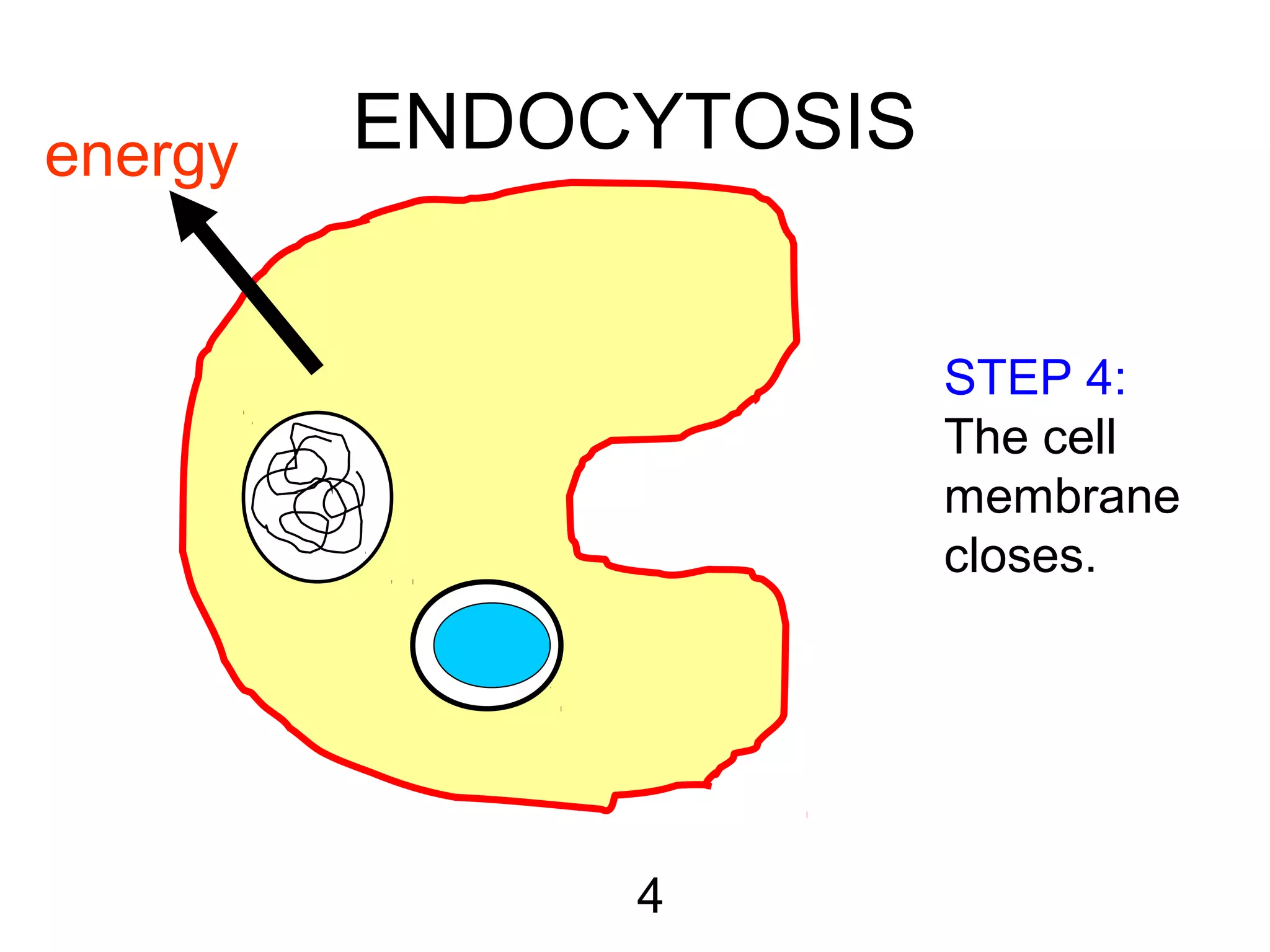
ENDOCYTOSIS
• USES ENERGY (active transport)
• Large particles are taken INTO THE CELL
• Particles include PROTEIN and FOOD
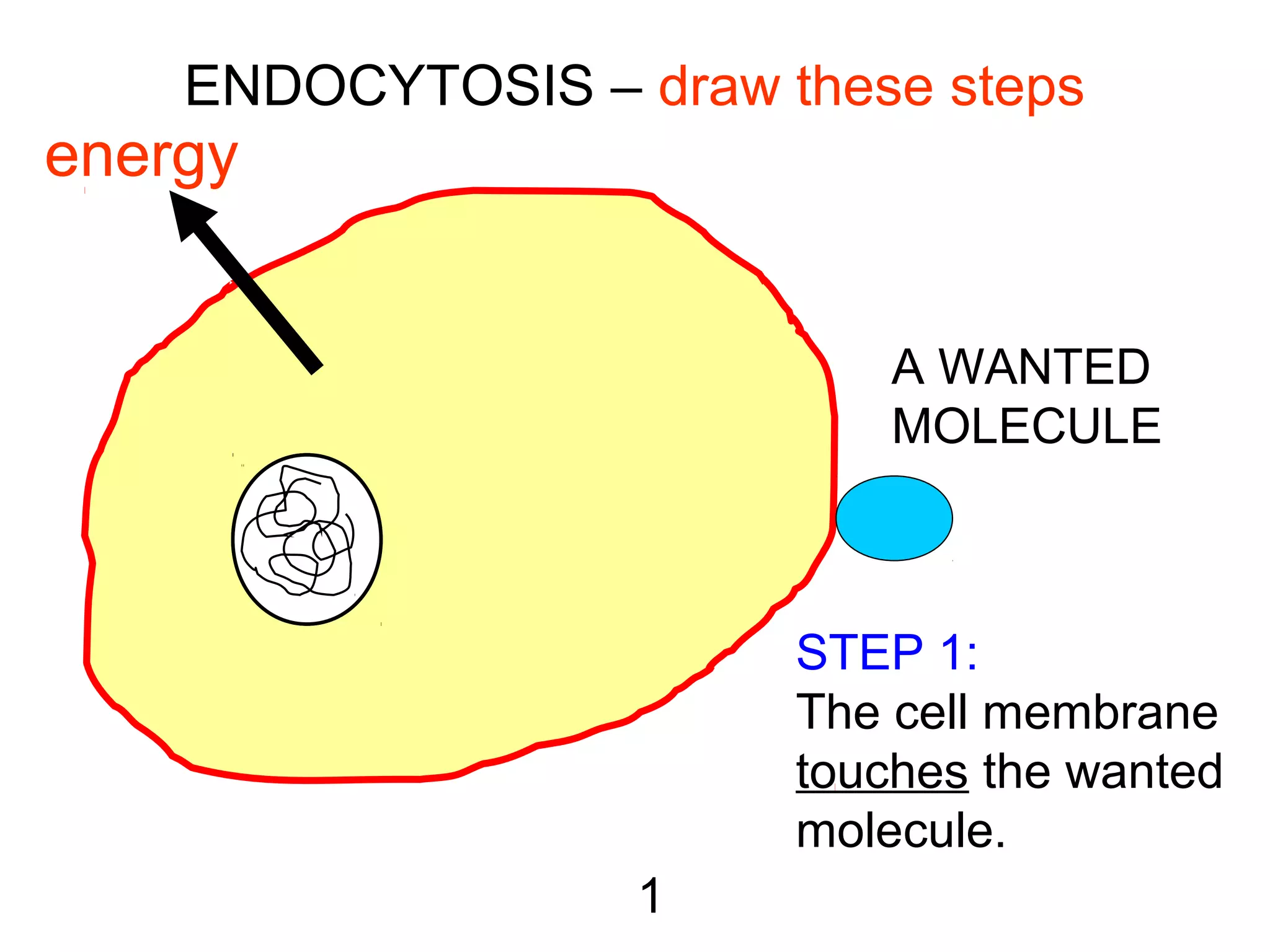
ENDOCYTOSIS – draw these steps
A WANTED
MOLECULE
1
STEP 1:
The cell membrane
touches the wanted
molecule.
energyenergy
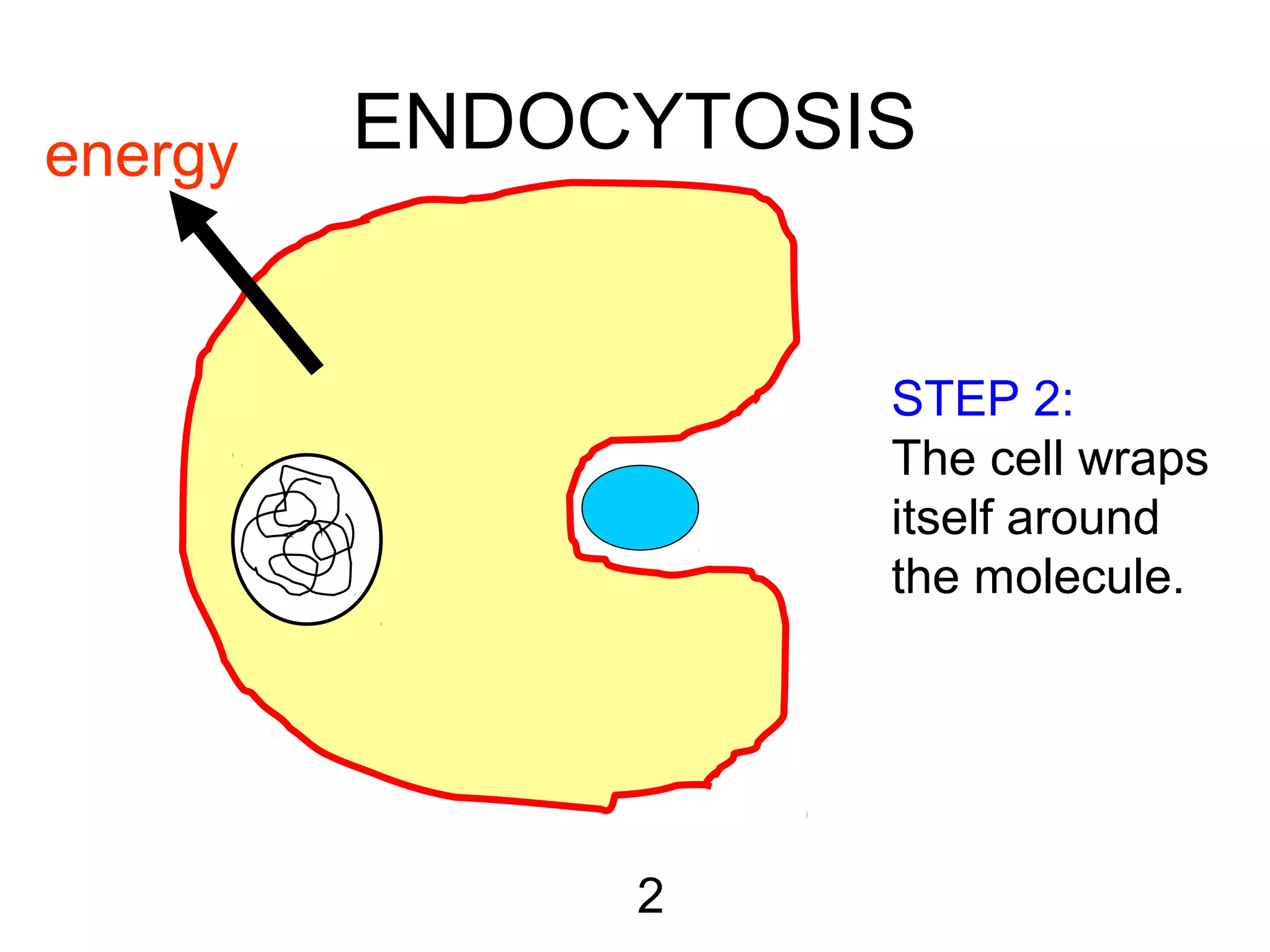
ENDOCYTOSIS
2
STEP 2:
The cell wraps
itself around
the molecule.
energyenergy
ENDOCYTOSIS
3
STEP 3:
The molecule
forms a Vacuole.
energy
ENDOCYTOSIS
4
STEP 4:
The cell
membrane
closes.
energy
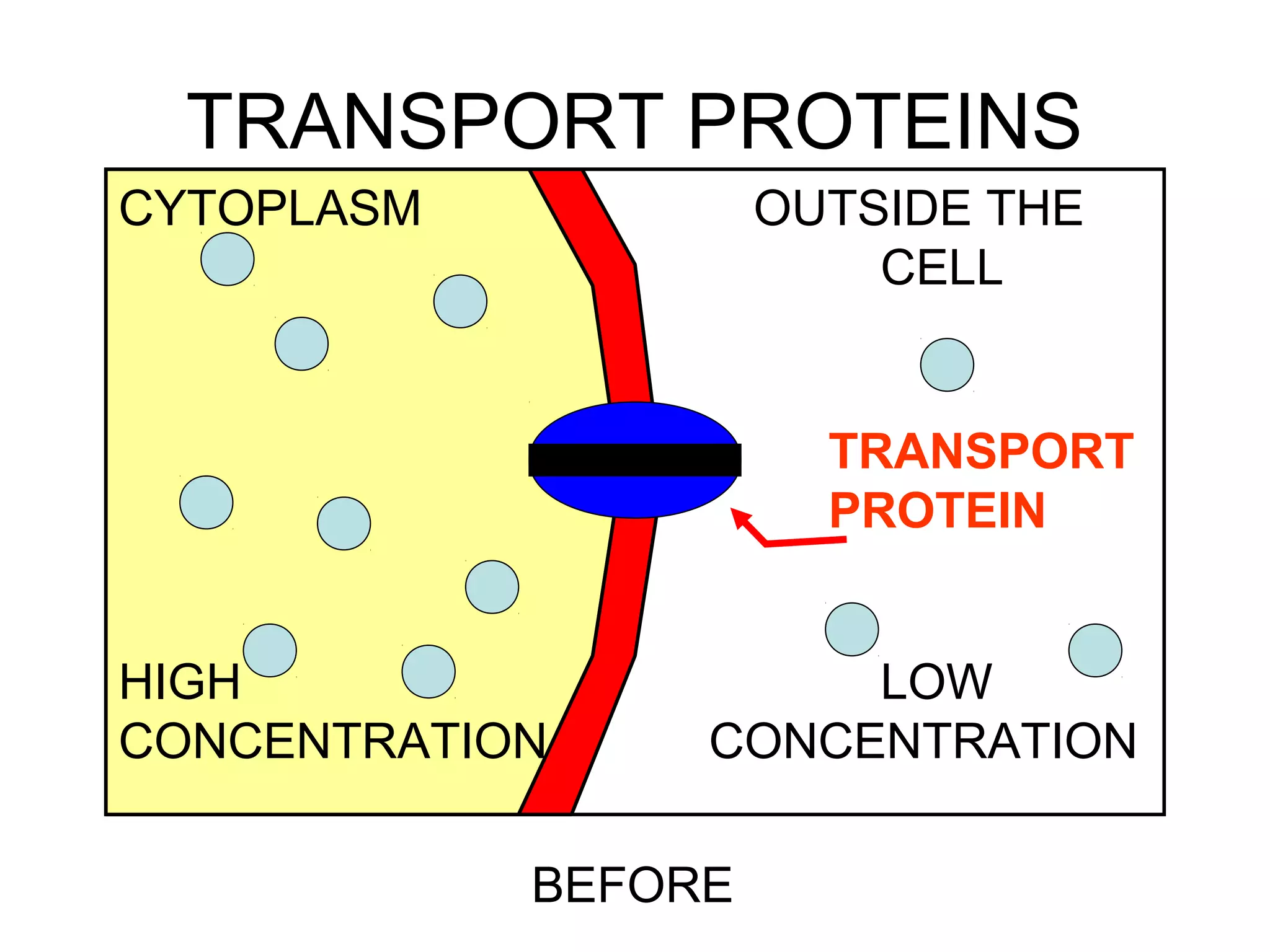
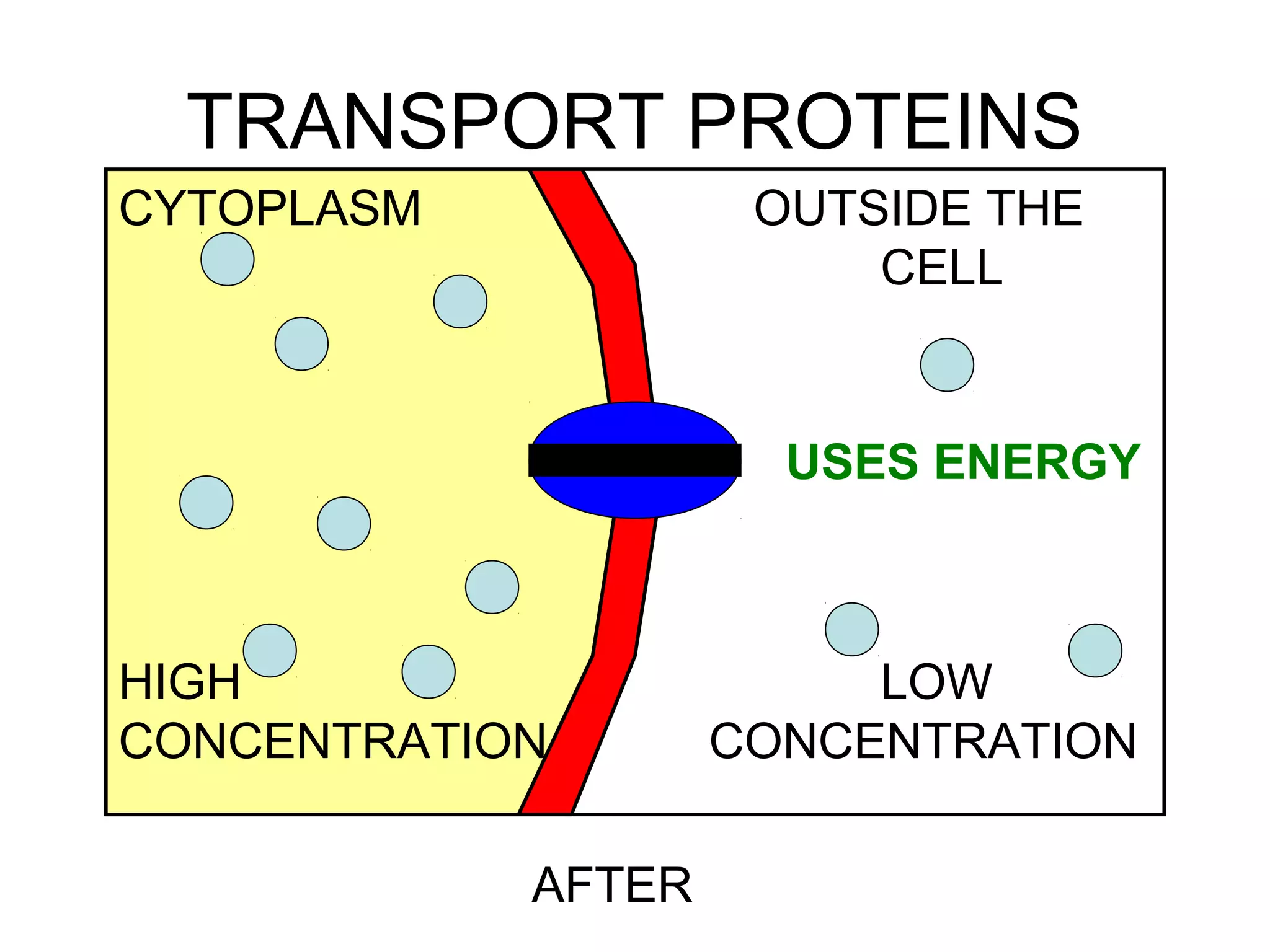
TRANSPORT PROTEINS
• These are special Proteins called
Transport Proteins that are attached to the
cell membrane.
• They “PICK UP” the wanted molecules
inside or outside of the cell and carry
them in or out using energy.
• Common Materials transported this way:
– Calcium, Potassium, and Sodium.
TRANSPORT PROTEINS
BEFORE
CYTOPLASM OUTSIDE THE
CELL
HIGH LOW
CONCENTRATION CONCENTRATION
TRANSPORT
PROTEIN
TRANSPORT PROTEINS
AFTER
USES ENERGY
CYTOPLASM OUTSIDE THE
CELL
HIGH LOW
CONCENTRATION CONCENTRATION

Material flow in the cell ap bio