Nasal polypOPTHALMOLOGY & OTORINOLARYNGOLOGY NURSING DNC 206
ObjectiveIn the end of this presentation, students will able to…Understand  the Definition of Nasal Polyp Know the Statistic / incidence of Nasal PolypList  the Etiology/Risk factors Nasal PolypKnow the Clinical manifestations of Nasal Polyp Know the Complications of Nasal Polyp Know the Diagnostic tests of Nasal PolypKnow the Prevention of Nasal Polyp Explain the Nursing management of Nasal PolypKnow the Medical management of Nasal PolypKnow the Nursing care plan for Nasal PolypKnow the Prognosis of Nasal PolypExplain the Health Education for Nasal Polyp  Summary
definitionNasal polyp…Non – cancerous growth (benign)Develop on the lining of the passages at sinusesGrowth :	-small growth(may cause no problem)	-big growth(cause many complications)Come in many sizes and shapes.(1998-2010 Mayo Foundation for Medical Education and Research (MFMER), 20th February,2009)
Common in adult.Rare in children.4 times are common in men than women.1 and 20 out of every 1000 people will develop Nasal Polyp.(www.mayoclinic.com/health/nasal -polyps/ds00498)incidence
pathophysiologyTriggering factorsViral infections, bacterial infections, allergies, fungus, chronic inflammation, asthma, chronic sinus infections, hayfever, sinusitis.Proliferation of fibroblastsAnd myoblastsAllows fluid to build up in the cells of nose and sinuses.Over time, as gravity pulls on these fluid- filled cells.Nasal polyp developed.
Etiology
Sinusitis Viral and bacterial infection
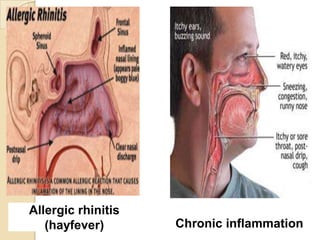
Allergic rhinitis(hayfever)Chronic inflammation
Allergic fungal sinusitisAsthma Allergies
Risk factors
Aspirin sensitivityAsthma Cystic fibrosisAllergic fungal sinusitis
Churg –Strauss SyndromeAge- common in adultFamily history
Clinical manifestationsRunny noseMouth breathingZ zzzSnoring Shape of face may change
Persistent stuffiness and facial discomfortDecreased/ no sense ofsmell and tasteNasal obstruction
ComplicationsObstructive sleep apnea
Altered facial structureBleeding
DIAGNOSTIC TESTs
CT Scan of Nasal cavityPhysical examination
Nasal endoscopicTest for cystic fibrosis
preventionsClean and humidify your home and surroundingUse nasal rinse or nasal lavagePractice good hygieneManage allergies and asthmaAvoid irritants
Medical/ surgicalmanagement
NASAL CORTICOSTEROIDFluticasone (Flonase.Veramyst)Budesonide (Rhinocort)Flunisolide(Nasarel)Prednisone (either alone or with nasal spray)
NASAL SPRAYTo reduce inflammationSurgicalmanagementPOLYPECTOMYRemoved using a small mechanical suction device or a microdebrider. ENDOSCOPIC SINUS SURGERYProcedure to remove the nasal polyp Endoscopic Sinus surgery/ Polypectomy of the Nasal Polyp
nursingmanagement
Pre operative care of patient undergo Polypectomy.Physical examination.Taking vital signs as baseline data.Inform or explain to patient and family members about the procedure.Ensure the consent form is signed.
Make sure case note, blood result, and CT Scan film are ready.Ask patient to change his/ her clothes to OT gown.Shaving if necessary (moustache).Tell patient to stop taking medicine that can lead to severe bleeding. E.g aspirin.
Ask patient to fasting 6-8 hours before procedure.Ensure that patient has already past motion and urine.
Post operative care..Monitor patient’s vital signs properly.Observe any complications such as bleeding and infections.Administer analgesic drugs as prescribed by doctor.Inform doctors if any abnormalities detect. Examples : inflammation
Assess patient’s conditions 	~ take patient’s level of pain. 		(pain scale)
prognosisRemoving the polyps makes easier   to breath through nose.Nasal polyps can returnTreatment and  surgery does not always improve lost sense of smell.
nursingCare plan
Health educationAdvise patient to compliant with medication given and not to take herbs that are not recommended by doctor.Follow up review~ condition of the nasal cavity after surgery done.~detect any infection or inflammation.
Avoid any irritants that can develop back the nasal polyps such as dust, infection, etc.Advice patient not to injured to the surgery area such as.. ~digging~blowing
Summary Nasal polyp is not a disease.It caused by many triggering such as viral and bacterial infections, allergies, and fungus.Nasal polyps are commonly developed in adult.The common causes of nasal polyp are aspirin sensitivity, asthma, cystic fibrosis, and allergic fungal infection.
Nasal polyps can manifest complications such as chronic sinus infection, bleeding, altered facial structures and others.Nasal polyps can return after surgery.
REFERENCESBachert C, Van Cauwenbergep.Nasal Polyps and Sinusitis. In: Adkinsaon NF, Yunginger JW, Busseww,et,eds. Middleton’s Allergy, Principles and Practice, 6thed Philadelphia, Morby; 2003:1421-1436Lewis, Heitkemper, Dirksen, O’Brian, Bucher.  Medical-surgical  Nursing.  Assessment and management of clinical problems.  Page 541.International edition. Mayo Clinic Staff, 1998-2010 Mayo Foundation for Medical Education & Research(MFMER)      (www.mayoclinic.com /health/nasal-polyps/ds00498)Pl Dhingra , Disease  of ear,nose and throat.  Fourth edition 2007.  Elsevier, A division of Reed Elsevier India private limited .Seth Schwartz, MD, MPH, Otolaryngologist, Bachert C, Gevaert P, Van CauwenbergeP.Nasal polyps and rhinosinusitis. In:Adkinson NF Jr.,Bochner BS ,Busse WW, Holgate ST,Lemaske RF Jr.,eds.Middleton’sAllergy:Principles and Practice.7thedition.Philadelphia,Pa;Mosby Elsevier;2008:chap 56
Nasal polyps (2)
Nasal polyps (2)
Nasal polyps (2)

Nasal polyps (2)

  • 1.
    Nasal polypOPTHALMOLOGY &OTORINOLARYNGOLOGY NURSING DNC 206
  • 2.
    ObjectiveIn the endof this presentation, students will able to…Understand the Definition of Nasal Polyp Know the Statistic / incidence of Nasal PolypList the Etiology/Risk factors Nasal PolypKnow the Clinical manifestations of Nasal Polyp Know the Complications of Nasal Polyp Know the Diagnostic tests of Nasal PolypKnow the Prevention of Nasal Polyp Explain the Nursing management of Nasal PolypKnow the Medical management of Nasal PolypKnow the Nursing care plan for Nasal PolypKnow the Prognosis of Nasal PolypExplain the Health Education for Nasal Polyp Summary
  • 4.
    definitionNasal polyp…Non –cancerous growth (benign)Develop on the lining of the passages at sinusesGrowth : -small growth(may cause no problem) -big growth(cause many complications)Come in many sizes and shapes.(1998-2010 Mayo Foundation for Medical Education and Research (MFMER), 20th February,2009)
  • 6.
    Common in adult.Rarein children.4 times are common in men than women.1 and 20 out of every 1000 people will develop Nasal Polyp.(www.mayoclinic.com/health/nasal -polyps/ds00498)incidence
  • 7.
    pathophysiologyTriggering factorsViral infections,bacterial infections, allergies, fungus, chronic inflammation, asthma, chronic sinus infections, hayfever, sinusitis.Proliferation of fibroblastsAnd myoblastsAllows fluid to build up in the cells of nose and sinuses.Over time, as gravity pulls on these fluid- filled cells.Nasal polyp developed.
  • 8.
  • 9.
    Sinusitis Viral andbacterial infection
  • 10.
  • 11.
  • 12.
  • 13.
    Aspirin sensitivityAsthma CysticfibrosisAllergic fungal sinusitis
  • 14.
    Churg –Strauss SyndromeAge-common in adultFamily history
  • 15.
    Clinical manifestationsRunny noseMouthbreathingZ zzzSnoring Shape of face may change
  • 16.
    Persistent stuffiness andfacial discomfortDecreased/ no sense ofsmell and tasteNasal obstruction
  • 17.
  • 18.
  • 19.
  • 20.
    CT Scan ofNasal cavityPhysical examination
  • 21.
  • 22.
    preventionsClean and humidifyyour home and surroundingUse nasal rinse or nasal lavagePractice good hygieneManage allergies and asthmaAvoid irritants
  • 23.
  • 24.
    NASAL CORTICOSTEROIDFluticasone (Flonase.Veramyst)Budesonide(Rhinocort)Flunisolide(Nasarel)Prednisone (either alone or with nasal spray)
  • 25.
    NASAL SPRAYTo reduceinflammationSurgicalmanagementPOLYPECTOMYRemoved using a small mechanical suction device or a microdebrider. ENDOSCOPIC SINUS SURGERYProcedure to remove the nasal polyp Endoscopic Sinus surgery/ Polypectomy of the Nasal Polyp
  • 26.
  • 27.
    Pre operative careof patient undergo Polypectomy.Physical examination.Taking vital signs as baseline data.Inform or explain to patient and family members about the procedure.Ensure the consent form is signed.
  • 28.
    Make sure casenote, blood result, and CT Scan film are ready.Ask patient to change his/ her clothes to OT gown.Shaving if necessary (moustache).Tell patient to stop taking medicine that can lead to severe bleeding. E.g aspirin.
  • 29.
    Ask patient tofasting 6-8 hours before procedure.Ensure that patient has already past motion and urine.
  • 30.
    Post operative care..Monitorpatient’s vital signs properly.Observe any complications such as bleeding and infections.Administer analgesic drugs as prescribed by doctor.Inform doctors if any abnormalities detect. Examples : inflammation
  • 31.
    Assess patient’s conditions ~ take patient’s level of pain. (pain scale)
  • 32.
    prognosisRemoving the polypsmakes easier to breath through nose.Nasal polyps can returnTreatment and surgery does not always improve lost sense of smell.
  • 33.
  • 38.
    Health educationAdvise patientto compliant with medication given and not to take herbs that are not recommended by doctor.Follow up review~ condition of the nasal cavity after surgery done.~detect any infection or inflammation.
  • 39.
    Avoid any irritantsthat can develop back the nasal polyps such as dust, infection, etc.Advice patient not to injured to the surgery area such as.. ~digging~blowing
  • 40.
    Summary Nasal polypis not a disease.It caused by many triggering such as viral and bacterial infections, allergies, and fungus.Nasal polyps are commonly developed in adult.The common causes of nasal polyp are aspirin sensitivity, asthma, cystic fibrosis, and allergic fungal infection.
  • 41.
    Nasal polyps canmanifest complications such as chronic sinus infection, bleeding, altered facial structures and others.Nasal polyps can return after surgery.
  • 42.
    REFERENCESBachert C, VanCauwenbergep.Nasal Polyps and Sinusitis. In: Adkinsaon NF, Yunginger JW, Busseww,et,eds. Middleton’s Allergy, Principles and Practice, 6thed Philadelphia, Morby; 2003:1421-1436Lewis, Heitkemper, Dirksen, O’Brian, Bucher. Medical-surgical Nursing. Assessment and management of clinical problems. Page 541.International edition. Mayo Clinic Staff, 1998-2010 Mayo Foundation for Medical Education & Research(MFMER) (www.mayoclinic.com /health/nasal-polyps/ds00498)Pl Dhingra , Disease of ear,nose and throat. Fourth edition 2007. Elsevier, A division of Reed Elsevier India private limited .Seth Schwartz, MD, MPH, Otolaryngologist, Bachert C, Gevaert P, Van CauwenbergeP.Nasal polyps and rhinosinusitis. In:Adkinson NF Jr.,Bochner BS ,Busse WW, Holgate ST,Lemaske RF Jr.,eds.Middleton’sAllergy:Principles and Practice.7thedition.Philadelphia,Pa;Mosby Elsevier;2008:chap 56