Cholecystectomy: Open Versus
Laparoscopic Surgery.
Dr Imran Javed.
Associate Professor Surgery.
Fiji National University.
Indications
• Chronic Cholecystitis.
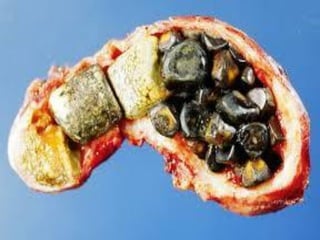
• Cholelethiasis.
• Acute on Chronic Cholecystitis.
• Acute Cholecystitis with complications.
• Empyema Gallbladder.
• Gangrenous Gallbladder.
• Perforated Gallbladder.
• Trauma to Gallbladder.
• Choledocholesthiasis.
• As a part of other procedure like Whipple Procedure.
• Carcinoma Gallbladder.
• Direct Invasion of Hepato-cellular carcinoma.
• Metastasis to gall bladder.
• Prophylactic Cholecystectomy in high risk patients.
• Parasitic Infestation of Gallbladder like in Ascariasis.
Open Procedure
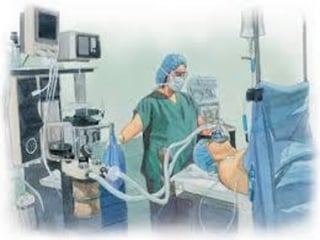
• Preoperative Considerations:
• Consent
• Nill by mouth for 6 hrs.
• Intravenous Fluids.
• Prophylactic Broad Spectrum Antibiotics.
• Anesthesia fitness for General Anesthesia especially
with related to respiratory function.
• Control of Hypertension & DM in affected patients.
• Arrangement of 1-2 pints of cross-matched blood.
• Correction of Any bleeding or clotting disorder.
Operative Method
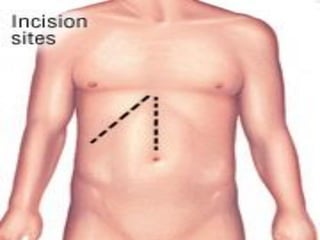
• Right Sub-costal Incision.
• Right Transverse upper abdominal Incision.
• Upper Midline Incision.
• Muscle Cutting variety of incision.
• Hemostasis.
• Division of Right Rectus Abdomenis Muscle
versus retraction.
• Ligation of Right Superior Epigastric Artery.
• Placement of Retractors and abdominal Sponges.
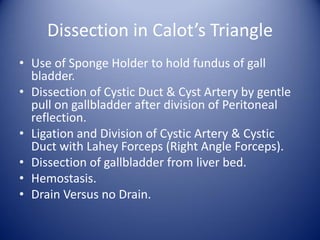
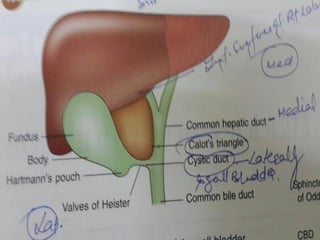
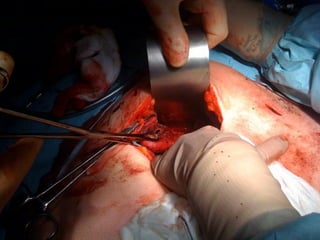
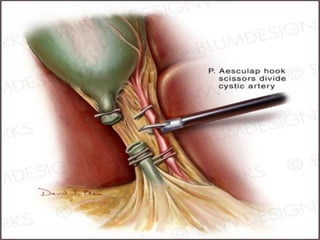
Dissection in Calot’s Triangle
• Use of Sponge Holder to hold fundus of gall
bladder.
• Dissection of Cystic Duct & Cyst Artery by gentle
pull on gallbladder after division of Peritoneal
reflection.
• Ligation and Division of Cystic Artery & Cystic
Duct with Lahey Forceps (Right Angle Forceps).
• Dissection of gallbladder from liver bed.
• Hemostasis.
• Drain Versus no Drain.
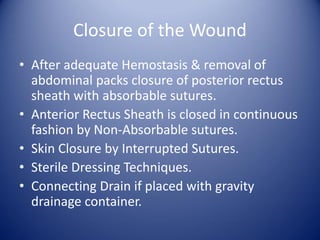
Closure of the Wound
• After adequate Hemostasis & removal of
abdominal packs closure of posterior rectus
sheath with absorbable sutures.
• Anterior Rectus Sheath is closed in continuous
fashion by Non-Absorbable sutures.
• Skin Closure by Interrupted Sutures.
• Sterile Dressing Techniques.
• Connecting Drain if placed with gravity
drainage container.
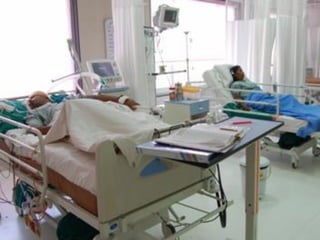
Postoperative Management
• Nill by mouth till bowl sounds are present.
• Continue Intravenous fluids till patient is oral free.
• Adequate Analgesia.
• Continue Intravenous Antibiotics for 72 hours and then
change to oral for one week.
• Change of dressing if soaked early otherwise after 72 hours.
• Removal of drain when drainage is minimal.
• Removal of Sutures when wound is healed.
• Anti-ulcer therapy if needed.
• DVT Prophylaxis.
• Send specimen for Histopathology and stones for chemical
Analysis if present.
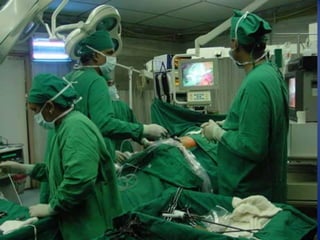
Laparoscopic Approach
• Traditional approach is 4 port but SILS has become
available as well now a days.
• Has become a gold standard approach for gallbladder
removal.
• If fails then convert to Open Procedure.
• Difficult to perform in Patients with Previous open
Abdominal Surgeries.
• Carries some increased risk of extra-hepatic duct
injuries.
• Recovery is better and early than open surgery.
• Needs specialized equipment & training of personnel.
• Usually avoided in cases of suspected malignant
Disease.
Technical Considerations
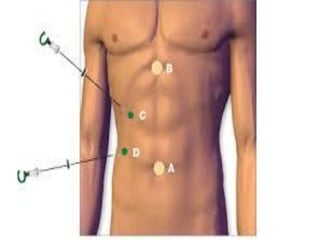
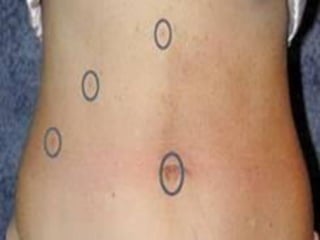
• 4 ports (Umbilical, Epigastric & 2 subcostal).
• Umbilical is used for Camera.
• Subcostal (upper to hold gall bladder from neck & Lower
from fundus)
• Epigastric port is for Dissector, Cautery, Sucker, Clip
Placement & removal of Gall bladder.
• Varus Needle for Insufflation of CO2 into the peritoneal
cavity.
• Lower Subcostal port may be used for Drain if needed.
• After surgery Epigastric & Umbilical Port may need one
stich for closure other ports may be closed by sterri-strips
or simple dressing.
• Post Operative Course is early recovery with shorter
hospital stay.
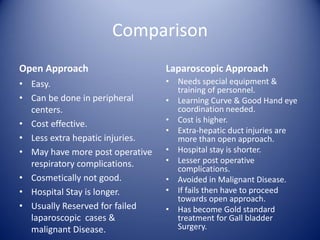
Comparison
Open Approach
• Easy.
• Can be done in peripheral
centers.
• Cost effective.
• Less extra hepatic injuries.
• May have more post operative
respiratory complications.
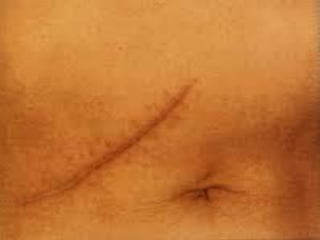
• Cosmetically not good.
• Hospital Stay is longer.
• Usually Reserved for failed
laparoscopic cases &
malignant Disease.
Laparoscopic Approach
• Needs special equipment &
training of personnel.
• Learning Curve & Good Hand eye
coordination needed.
• Cost is higher.
• Extra-hepatic duct injuries are
more than open approach.
• Hospital stay is shorter.
• Lesser post operative
complications.
• Avoided in Malignant Disease.
• If fails then have to proceed
towards open approach.
• Has become Gold standard
treatment for Gall bladder
Surgery.
Cholecystectomy open versus laparoscopic surgery

Cholecystectomy open versus laparoscopic surgery

  • 1.
    Cholecystectomy: Open Versus LaparoscopicSurgery. Dr Imran Javed. Associate Professor Surgery. Fiji National University.
  • 2.
    Indications • Chronic Cholecystitis. •Cholelethiasis. • Acute on Chronic Cholecystitis. • Acute Cholecystitis with complications. • Empyema Gallbladder. • Gangrenous Gallbladder. • Perforated Gallbladder. • Trauma to Gallbladder. • Choledocholesthiasis. • As a part of other procedure like Whipple Procedure. • Carcinoma Gallbladder. • Direct Invasion of Hepato-cellular carcinoma. • Metastasis to gall bladder. • Prophylactic Cholecystectomy in high risk patients. • Parasitic Infestation of Gallbladder like in Ascariasis.
  • 4.
    Open Procedure • PreoperativeConsiderations: • Consent • Nill by mouth for 6 hrs. • Intravenous Fluids. • Prophylactic Broad Spectrum Antibiotics. • Anesthesia fitness for General Anesthesia especially with related to respiratory function. • Control of Hypertension & DM in affected patients. • Arrangement of 1-2 pints of cross-matched blood. • Correction of Any bleeding or clotting disorder.
  • 6.
    Operative Method • RightSub-costal Incision. • Right Transverse upper abdominal Incision. • Upper Midline Incision. • Muscle Cutting variety of incision. • Hemostasis. • Division of Right Rectus Abdomenis Muscle versus retraction. • Ligation of Right Superior Epigastric Artery. • Placement of Retractors and abdominal Sponges.
  • 8.
    Dissection in Calot’sTriangle • Use of Sponge Holder to hold fundus of gall bladder. • Dissection of Cystic Duct & Cyst Artery by gentle pull on gallbladder after division of Peritoneal reflection. • Ligation and Division of Cystic Artery & Cystic Duct with Lahey Forceps (Right Angle Forceps). • Dissection of gallbladder from liver bed. • Hemostasis. • Drain Versus no Drain.
  • 11.
    Closure of theWound • After adequate Hemostasis & removal of abdominal packs closure of posterior rectus sheath with absorbable sutures. • Anterior Rectus Sheath is closed in continuous fashion by Non-Absorbable sutures. • Skin Closure by Interrupted Sutures. • Sterile Dressing Techniques. • Connecting Drain if placed with gravity drainage container.
  • 13.
    Postoperative Management • Nillby mouth till bowl sounds are present. • Continue Intravenous fluids till patient is oral free. • Adequate Analgesia. • Continue Intravenous Antibiotics for 72 hours and then change to oral for one week. • Change of dressing if soaked early otherwise after 72 hours. • Removal of drain when drainage is minimal. • Removal of Sutures when wound is healed. • Anti-ulcer therapy if needed. • DVT Prophylaxis. • Send specimen for Histopathology and stones for chemical Analysis if present.
  • 16.
    Laparoscopic Approach • Traditionalapproach is 4 port but SILS has become available as well now a days. • Has become a gold standard approach for gallbladder removal. • If fails then convert to Open Procedure. • Difficult to perform in Patients with Previous open Abdominal Surgeries. • Carries some increased risk of extra-hepatic duct injuries. • Recovery is better and early than open surgery. • Needs specialized equipment & training of personnel. • Usually avoided in cases of suspected malignant Disease.
  • 18.
    Technical Considerations • 4ports (Umbilical, Epigastric & 2 subcostal). • Umbilical is used for Camera. • Subcostal (upper to hold gall bladder from neck & Lower from fundus) • Epigastric port is for Dissector, Cautery, Sucker, Clip Placement & removal of Gall bladder. • Varus Needle for Insufflation of CO2 into the peritoneal cavity. • Lower Subcostal port may be used for Drain if needed. • After surgery Epigastric & Umbilical Port may need one stich for closure other ports may be closed by sterri-strips or simple dressing. • Post Operative Course is early recovery with shorter hospital stay.
  • 22.
    Comparison Open Approach • Easy. •Can be done in peripheral centers. • Cost effective. • Less extra hepatic injuries. • May have more post operative respiratory complications. • Cosmetically not good. • Hospital Stay is longer. • Usually Reserved for failed laparoscopic cases & malignant Disease. Laparoscopic Approach • Needs special equipment & training of personnel. • Learning Curve & Good Hand eye coordination needed. • Cost is higher. • Extra-hepatic duct injuries are more than open approach. • Hospital stay is shorter. • Lesser post operative complications. • Avoided in Malignant Disease. • If fails then have to proceed towards open approach. • Has become Gold standard treatment for Gall bladder Surgery.