Aromatic acid
Mr. Mote G.D.
Annasaheb Dange College of
B.Pharmacy, Ashta
Aromatic acid
• The compounds in which one or more carboxyl group are attached directly
to the aromatic ring.
COOH
benzoic acid
COOH
OH
COOH
NH2
COOH
COOH
phthalic acid
COOH
CH3
2-methylbenzoic acid
COOH
NO2
3-nitrobenzoic acid
2-aminobenzoic acid2-hydroxybenzoic acid
Acidity of aromatic acids
• The π electron plays important role in acidity
of carboxylic acid.
• The negative charge of the carboxylate ion is
shared by the two carboxylate oxygen atoms
cannot be effectively delocalized by aromatic
ring.
• Acidity influence by inductive effect
Factor affecting on acidity of benzoic acid
• The electron withdrawing group increases the acidity of a benzoic acid.
• The electronegative atom stabilizes anion
• An electron releasing on meta or para position decreases acidity of
benzoic acid.
• Ortho substitution by electrophilic or nucleophilic group increases acidity
due to steric effect.
COOH
HNO3
benzoic acid
H2SO4
COO
NO2
H
Why Aromatic carboxylic acid is meta director?
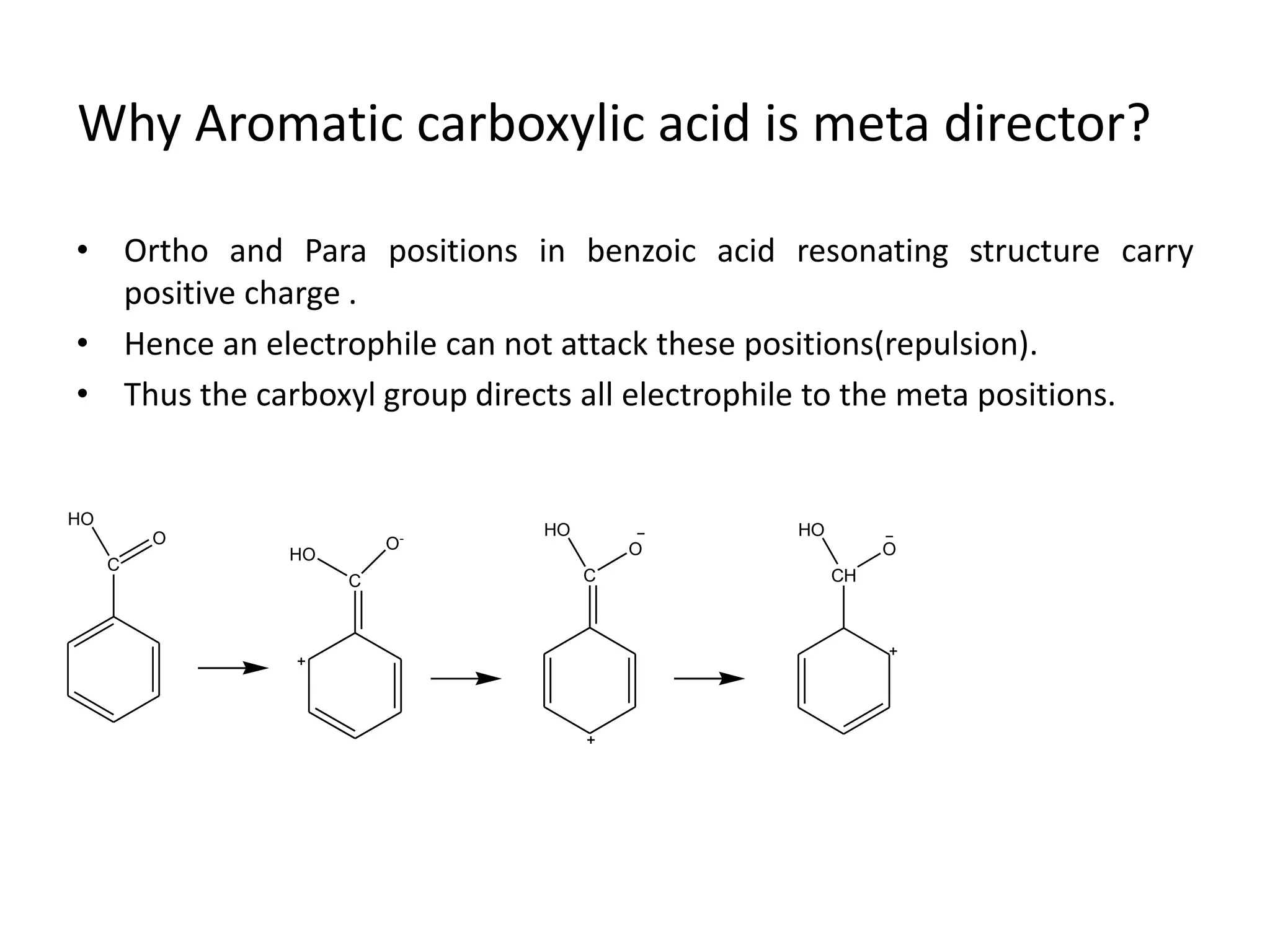
• Ortho and Para positions in benzoic acid resonating structure carry
positive charge .
• Hence an electrophile can not attack these positions(repulsion).
• Thus the carboxyl group directs all electrophile to the meta positions.
C
HO
O
C
O-
HO
C
HO
O
CH
HO
O
Why carboxylic acid is called as deactivating?
• Benzoic acid undergoes electrophilic substitution is more slowly than
benzene because carboxyl group withdraws electron from the ring by
resonance.
• It decreases electron density of the ring and makes it less attractive to an
incoming electrophile. hence electrophilic substitution is slow
• It requires vigorous reagent and condition
COOH
HNO3
benzoic acid
H2SO4
COOH
NO2
Preparation of aromatic acid
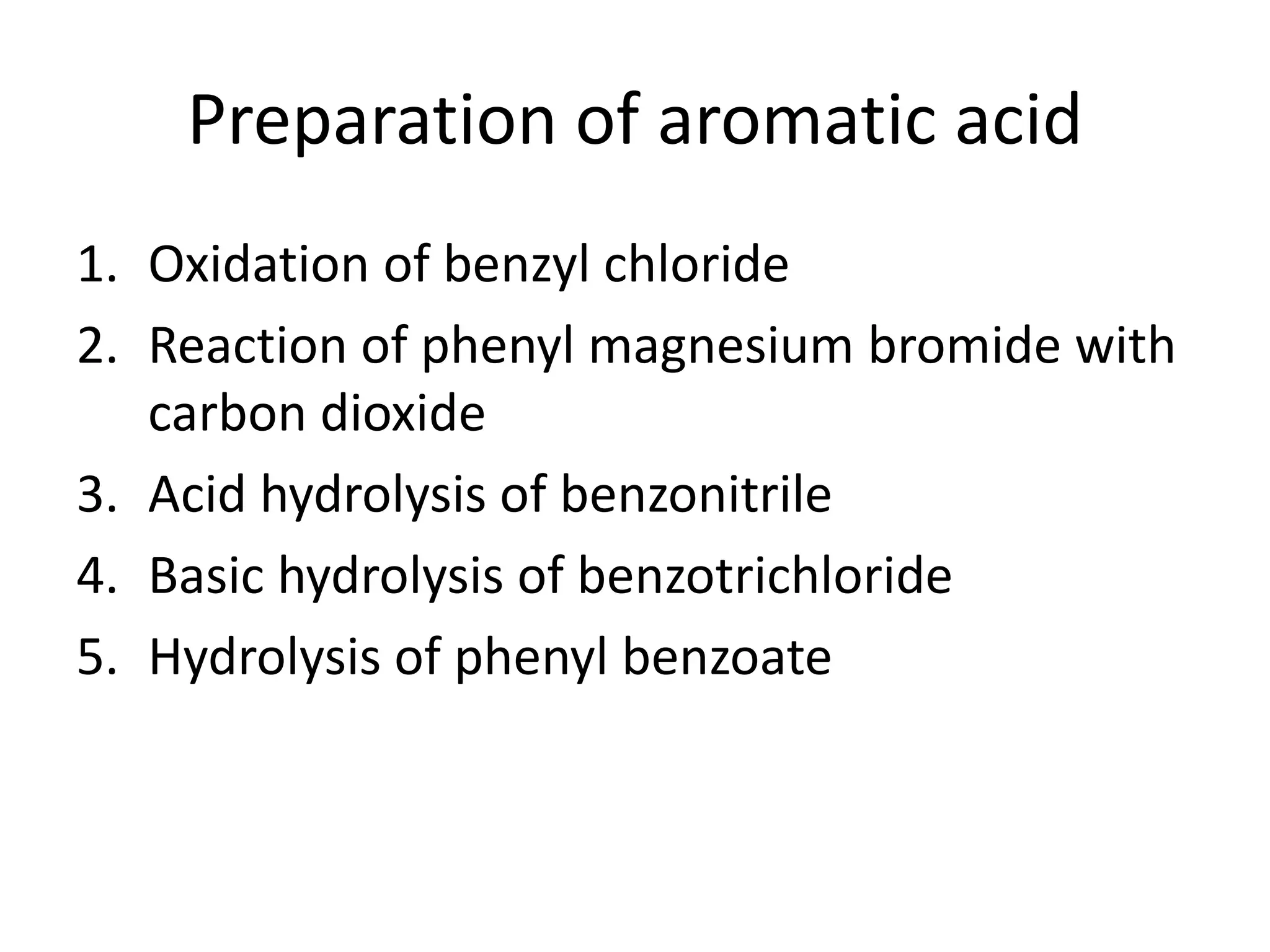
1. Oxidation of benzyl chloride
2. Reaction of phenyl magnesium bromide with
carbon dioxide
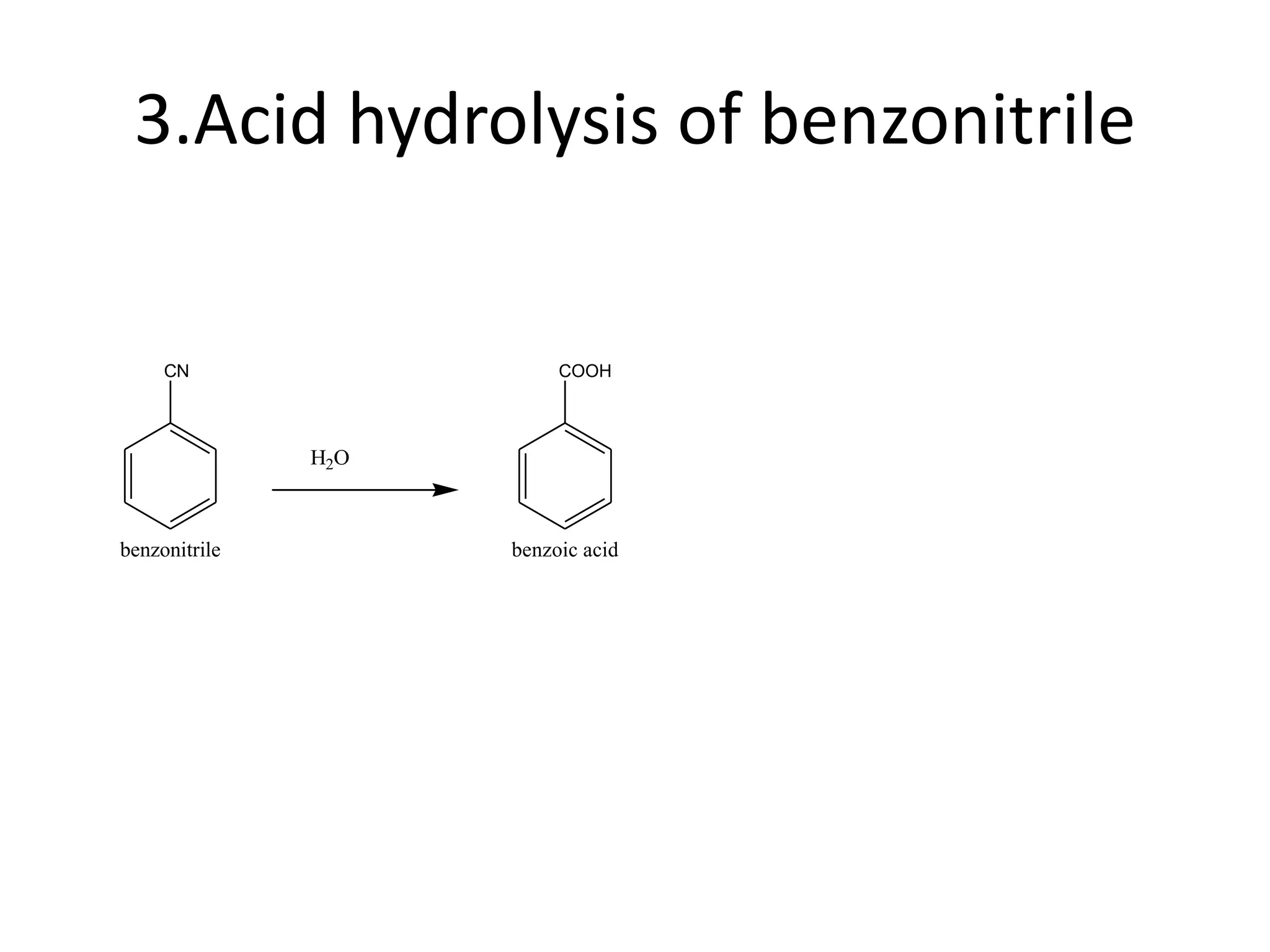
3. Acid hydrolysis of benzonitrile
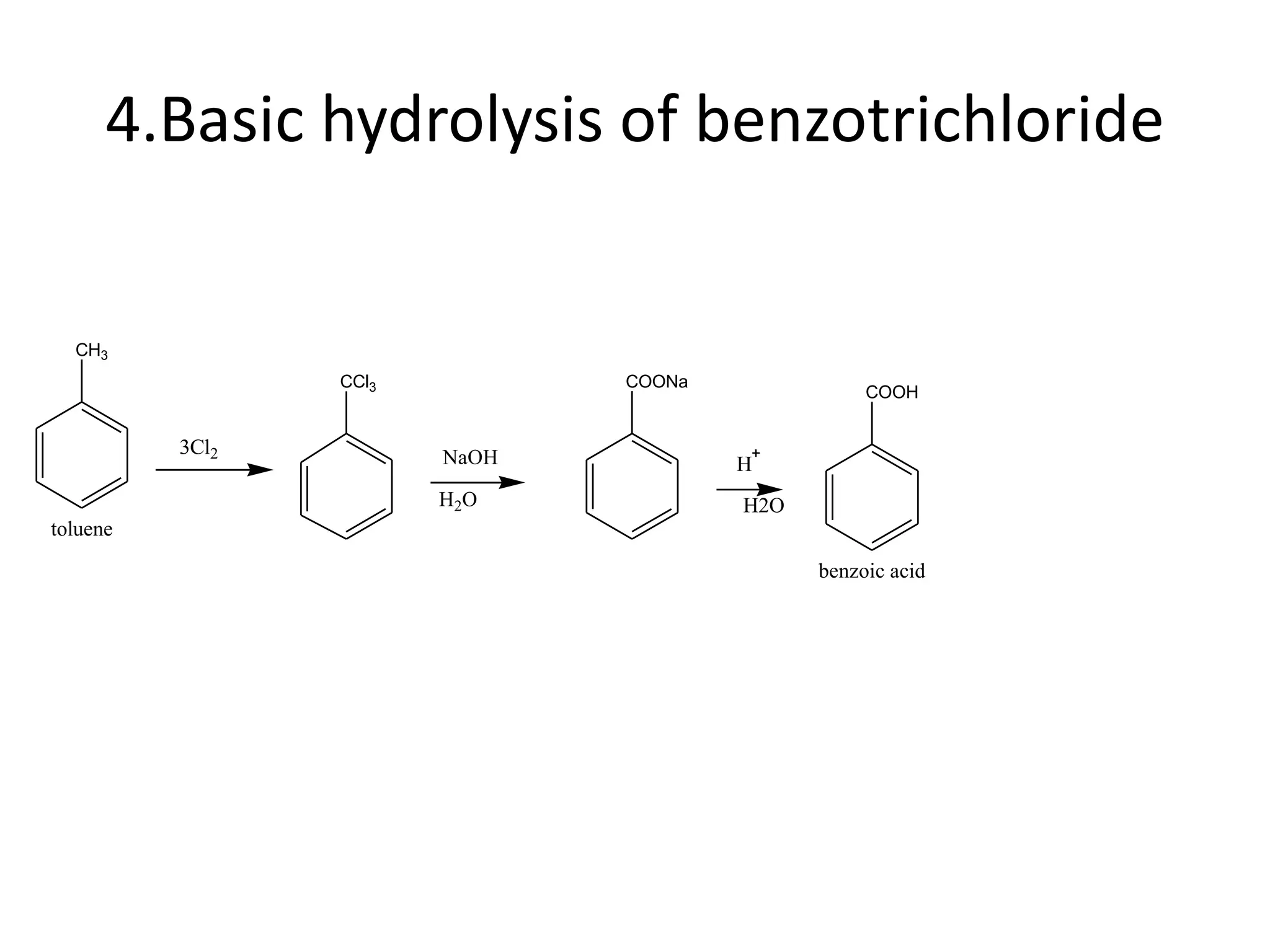
4. Basic hydrolysis of benzotrichloride
5. Hydrolysis of phenyl benzoate
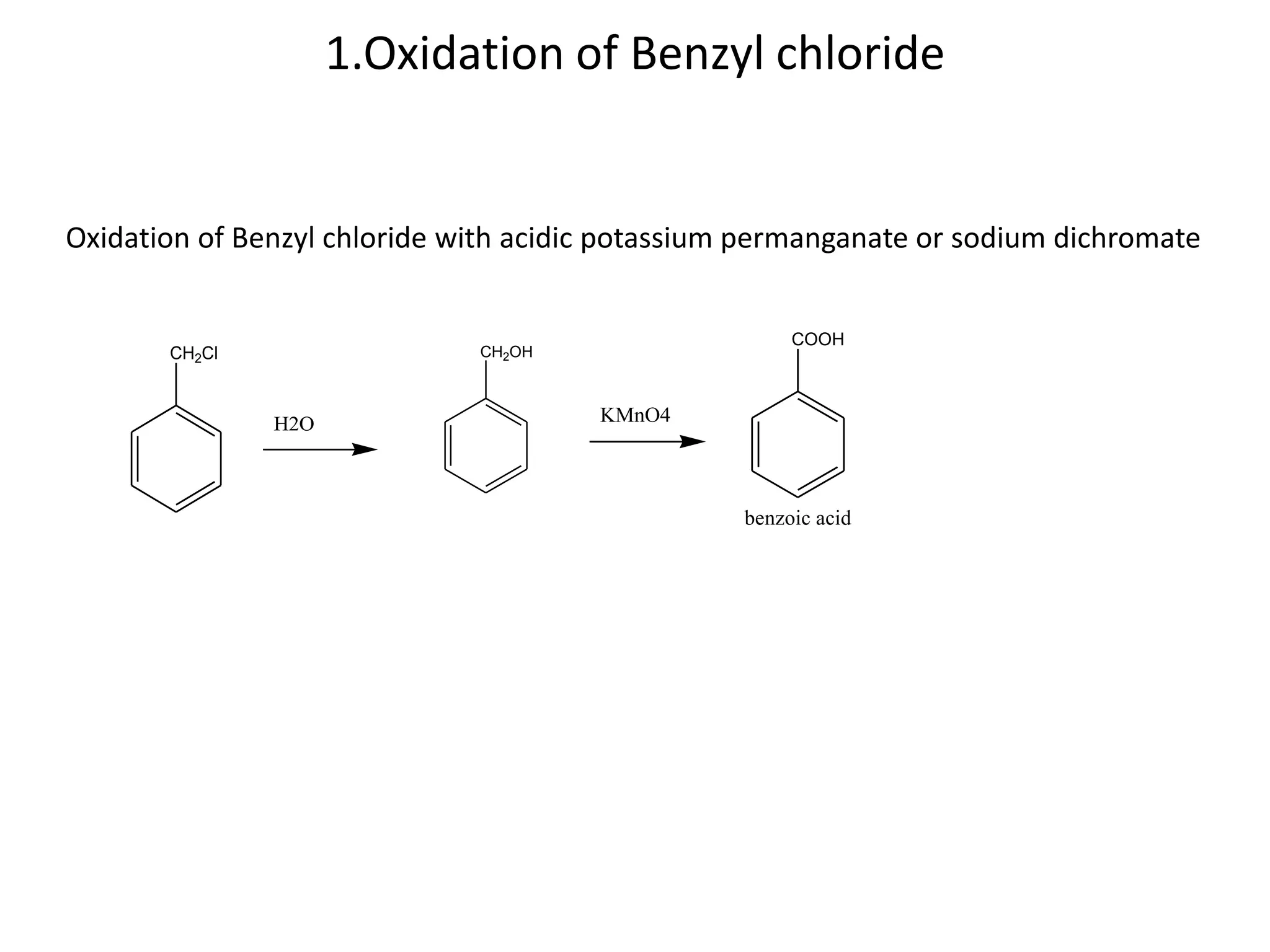
1.Oxidation of Benzyl chloride
CH2Cl
H2O
CH2OH
Oxidation of Benzyl chloride with acidic potassium permanganate or sodium dichromate
COOH
benzoic acid
KMnO4
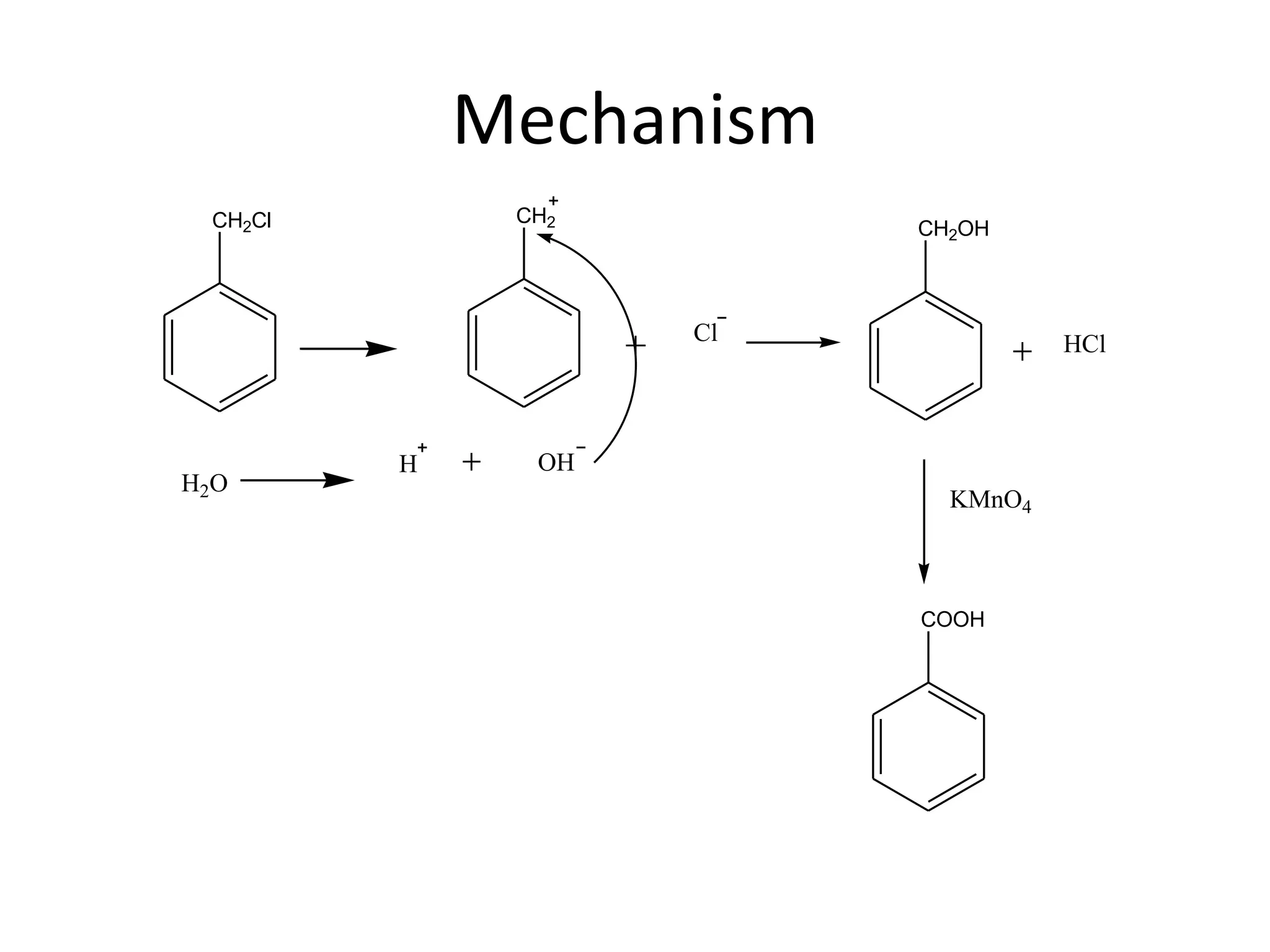
Mechanism
CH2Cl CH2
Cl
H2O
H OH
CH2OH
HCl
KMnO4
COOH
2.Reaction of phenyl magnesium bromide with
carbon dioxide
• The reaction of phenyl magnesium bromide with carbon dioxide followed
by acid hydrolysis.
MgBr
phenylmagnesium bromide
CO2
COO-
magnesium benzoate bromide
H2O
COOH
benzoic acid
3.Acid hydrolysis of benzonitrile
CN
benzonitrile
H2O
COOH
benzoic acid
Mechanism
C C
H2O
OH H
COOH
NH3
N
OH
NH
O
H H
4.Basic hydrolysis of benzotrichloride
CH3
toluene
3Cl2
CCl3
NaOH
H2O
COONa
H
H2O
COOH
benzoic acid
Mechanism
CCl3
C
NaOH
Na OH
COOH
OH
Cl
O
H H
Cl
-2HCl-NaCl
5. Hydrolysis of Phenyl benzoate
C
O
O
H2O
C
O
OH OH
PhenolBenzoic acidPhenyl benzoate
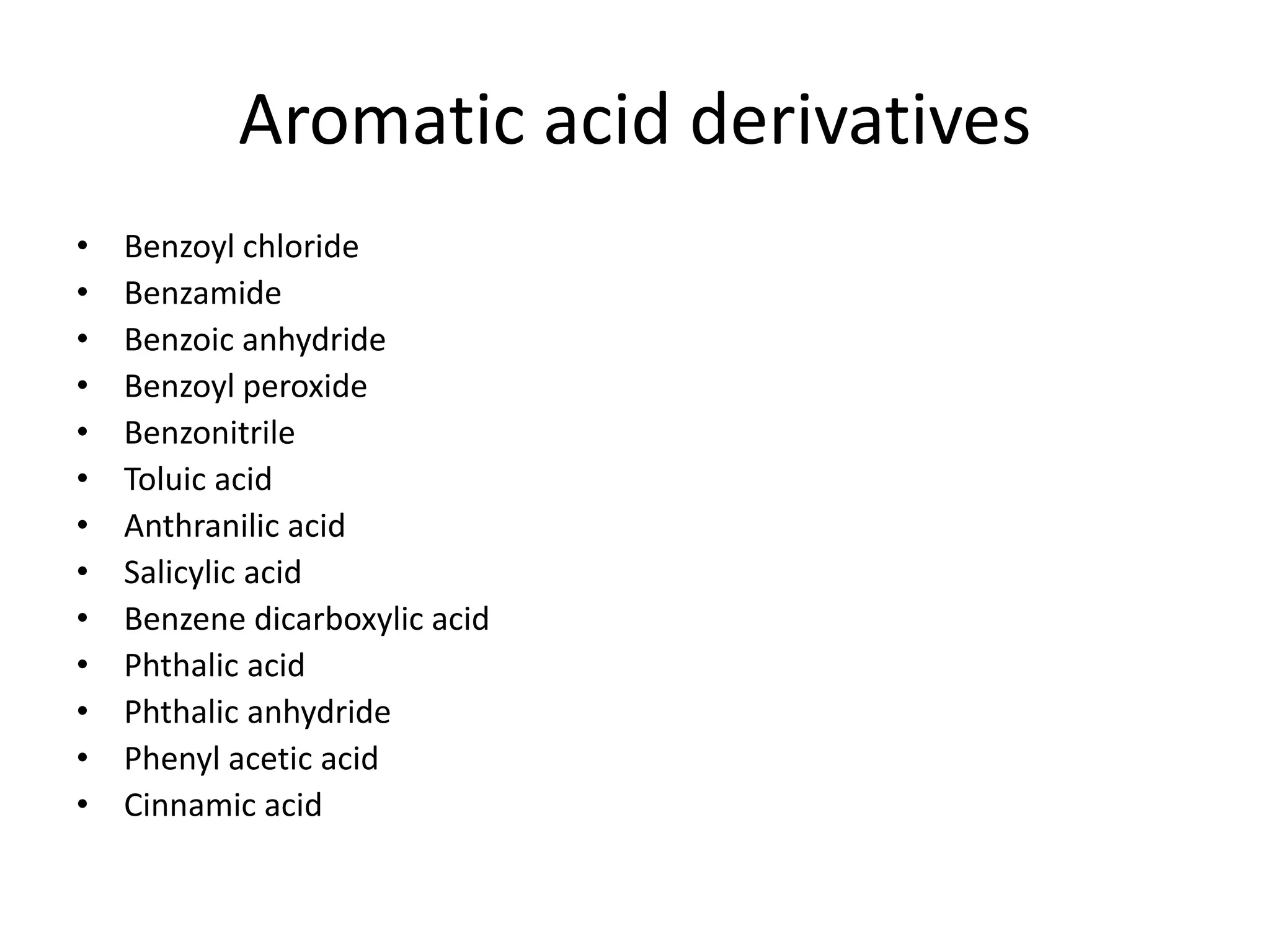
Aromatic acid derivatives
• Benzoyl chloride
• Benzamide
• Benzoic anhydride
• Benzoyl peroxide
• Benzonitrile
• Toluic acid
• Anthranilic acid
• Salicylic acid
• Benzene dicarboxylic acid
• Phthalic acid
• Phthalic anhydride
• Phenyl acetic acid
• Cinnamic acid
Reactions of aromatic acid
1. Salt formation
2. Ester formation
3. Acyl halide formation
4. Reduction to benzyl alcohol
5. Decarboxylation
6. Electrophilic substitution
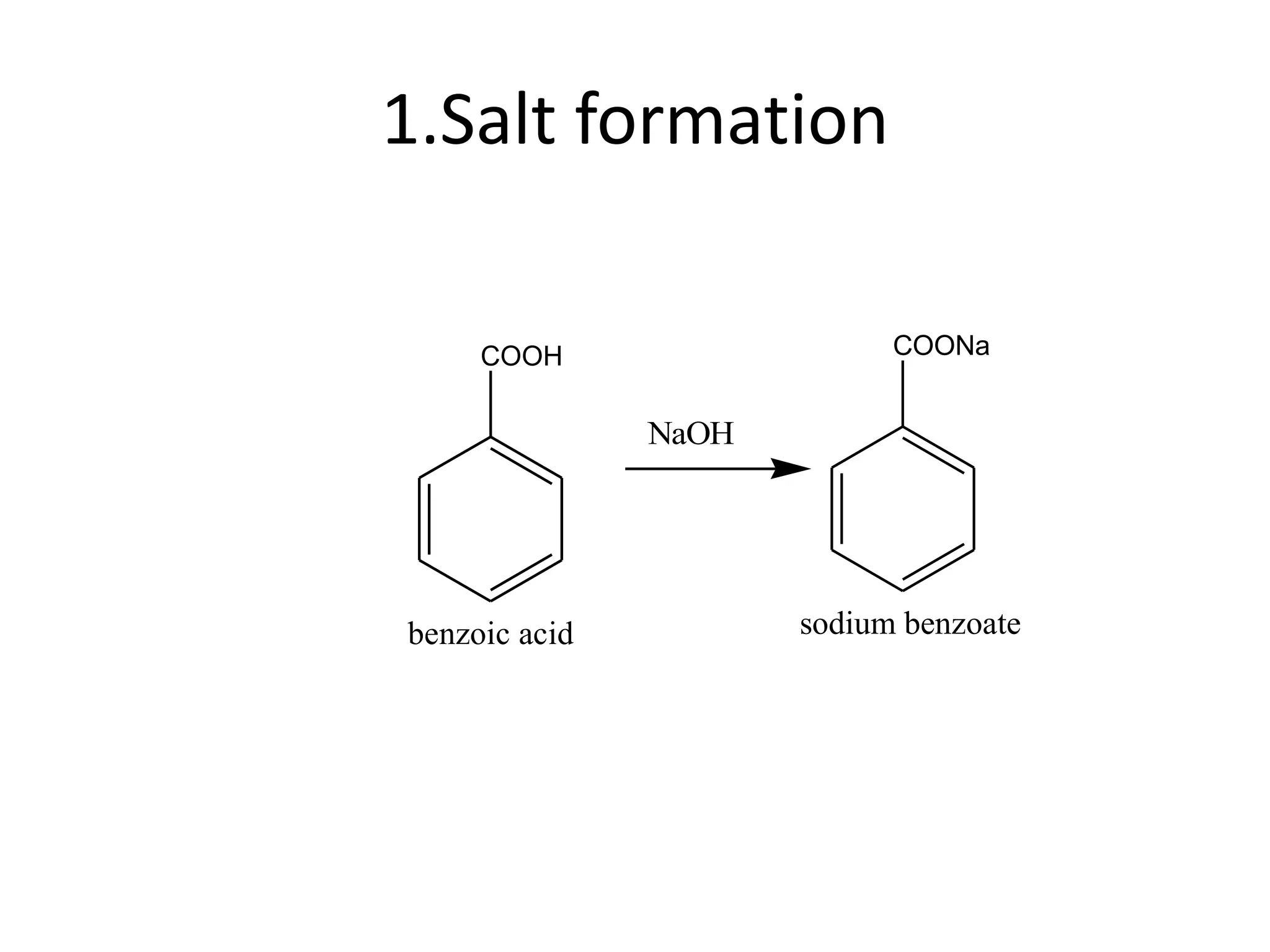
1.Salt formation
COOH
benzoic acid
NaOH
COONa
sodium benzoate
2.Ester formation
COOH
benzoic acid
C2H5OH
H2SO4
COOC2H5
ethyl benzoate
3.Acyl halide formation
COOH
benzoic acid
PCl5
C
O
Cl
benzoyl chloride
PCl3 HCl
4.Reduction to benzyl alcohol
COOH
benzoic acid
LiAlH4
CH2OH
Benzylalcohol
5. Decarboxylation
COOH
benzoic acid
CaO
NaOH CaCO3
6. Electrophilic substitution
COOH
benzoic acid
HNO3
H2SO4
COOH
NO2
3-nitrobenzoic acid
Uses
• Germicide-UTI(urinary tract infection)
• Food preservatives

Chemistry of Aromatic acid

  • 1.
    Aromatic acid Mr. MoteG.D. Annasaheb Dange College of B.Pharmacy, Ashta
  • 2.
    Aromatic acid • Thecompounds in which one or more carboxyl group are attached directly to the aromatic ring. COOH benzoic acid COOH OH COOH NH2 COOH COOH phthalic acid COOH CH3 2-methylbenzoic acid COOH NO2 3-nitrobenzoic acid 2-aminobenzoic acid2-hydroxybenzoic acid
  • 3.
    Acidity of aromaticacids • The π electron plays important role in acidity of carboxylic acid. • The negative charge of the carboxylate ion is shared by the two carboxylate oxygen atoms cannot be effectively delocalized by aromatic ring. • Acidity influence by inductive effect
  • 4.
    Factor affecting onacidity of benzoic acid • The electron withdrawing group increases the acidity of a benzoic acid. • The electronegative atom stabilizes anion • An electron releasing on meta or para position decreases acidity of benzoic acid. • Ortho substitution by electrophilic or nucleophilic group increases acidity due to steric effect. COOH HNO3 benzoic acid H2SO4 COO NO2 H
  • 5.
    Why Aromatic carboxylicacid is meta director? • Ortho and Para positions in benzoic acid resonating structure carry positive charge . • Hence an electrophile can not attack these positions(repulsion). • Thus the carboxyl group directs all electrophile to the meta positions. C HO O C O- HO C HO O CH HO O
  • 6.
    Why carboxylic acidis called as deactivating? • Benzoic acid undergoes electrophilic substitution is more slowly than benzene because carboxyl group withdraws electron from the ring by resonance. • It decreases electron density of the ring and makes it less attractive to an incoming electrophile. hence electrophilic substitution is slow • It requires vigorous reagent and condition COOH HNO3 benzoic acid H2SO4 COOH NO2
  • 7.
    Preparation of aromaticacid 1. Oxidation of benzyl chloride 2. Reaction of phenyl magnesium bromide with carbon dioxide 3. Acid hydrolysis of benzonitrile 4. Basic hydrolysis of benzotrichloride 5. Hydrolysis of phenyl benzoate
  • 8.
    1.Oxidation of Benzylchloride CH2Cl H2O CH2OH Oxidation of Benzyl chloride with acidic potassium permanganate or sodium dichromate COOH benzoic acid KMnO4
  • 9.
  • 10.
    2.Reaction of phenylmagnesium bromide with carbon dioxide • The reaction of phenyl magnesium bromide with carbon dioxide followed by acid hydrolysis. MgBr phenylmagnesium bromide CO2 COO- magnesium benzoate bromide H2O COOH benzoic acid
  • 11.
    3.Acid hydrolysis ofbenzonitrile CN benzonitrile H2O COOH benzoic acid
  • 12.
  • 13.
    4.Basic hydrolysis ofbenzotrichloride CH3 toluene 3Cl2 CCl3 NaOH H2O COONa H H2O COOH benzoic acid
  • 14.
  • 15.
    5. Hydrolysis ofPhenyl benzoate C O O H2O C O OH OH PhenolBenzoic acidPhenyl benzoate
  • 16.
    Aromatic acid derivatives •Benzoyl chloride • Benzamide • Benzoic anhydride • Benzoyl peroxide • Benzonitrile • Toluic acid • Anthranilic acid • Salicylic acid • Benzene dicarboxylic acid • Phthalic acid • Phthalic anhydride • Phenyl acetic acid • Cinnamic acid
  • 17.
    Reactions of aromaticacid 1. Salt formation 2. Ester formation 3. Acyl halide formation 4. Reduction to benzyl alcohol 5. Decarboxylation 6. Electrophilic substitution
  • 18.
  • 19.
  • 20.
    3.Acyl halide formation COOH benzoicacid PCl5 C O Cl benzoyl chloride PCl3 HCl
  • 21.
    4.Reduction to benzylalcohol COOH benzoic acid LiAlH4 CH2OH Benzylalcohol
  • 22.
  • 23.
    6. Electrophilic substitution COOH benzoicacid HNO3 H2SO4 COOH NO2 3-nitrobenzoic acid
  • 24.
    Uses • Germicide-UTI(urinary tractinfection) • Food preservatives