IN THE NAME OF ALLAH
THE MOST BENIFICIENT
THE MOST MERCIFUL
Benzoic acid
C7H6O2 or ( C6H5COOH)
CONTENTS
 What is benzoic acid?
 History
 Production
 Uses
 Biology and health effects
 Reactions
What is benzoic acid?
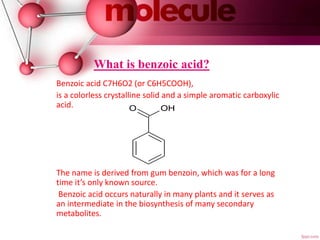
Benzoic acid C7H6O2 (or C6H5COOH),
is a colorless crystalline solid and a simple aromatic carboxylic
acid.
The name is derived from gum benzoin, which was for a long
time it’s only known source.
Benzoic acid occurs naturally in many plants and it serves as
an intermediate in the biosynthesis of many secondary
metabolites.
O OH
History
Benzoic acid was discovered in the sixteenth century.
The dry distillation of gum benzoin was first described by
Nostradamus (1556), and then by Alexius Pedemontanus (1560) and
Blaise de Vigenère (1596).
In 1875 Salkowski discovered the antifungal abilities of benzoic acid,
which was used for a long time in the preservation of benzoate-
containing cloudberry fruits.
It is also one of the chemical compounds found in castoreum. This
compound is gathered from the beaver plant food.
Production
Benzoic Acid is Produced by following method :
1. Industrial preparations:
And Benzoic Acid also Produced by :
2 . Laboratory synthesis by following method:
i. By hydrolysis
ii. From Benz aldehyde
iii. From bromobenzene
iv. From benzyl alcohol
v. From benzyl chloride
vi. Historical preparation
Continue
Production
Industrial preparations:
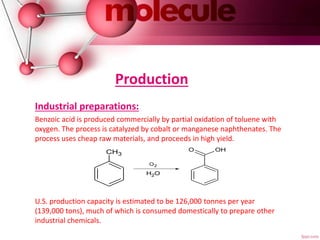
Benzoic acid is produced commercially by partial oxidation of toluene with
oxygen. The process is catalyzed by cobalt or manganese naphthenates. The
process uses cheap raw materials, and proceeds in high yield.
U.S. production capacity is estimated to be 126,000 tonnes per year
(139,000 tons), much of which is consumed domestically to prepare other
industrial chemicals.
CH3
O2
OH2
O OH
Production
Laboratory synthesis:
Benzoic acid is cheap and readily available, so the laboratory
synthesis of benzoic acid is mainly practiced for its pedagogical
value. It is a common undergraduate preparation. Benzoic acid
can be purified by recrystallization from water because of its high
solubility in hot water and poor solubility in cold water
1. By hydrolysis
2. From Benz aldehyde
3. From bromobenzene
4. From benzyl chloride
Production
Laboratory synthesis:
1. By hydrolysis:
Like other nitriles and amides, benzonitrile and benzamide
can be hydrolyzed to benzoic acid or its conjugate base in
acid or basic conditions.
2 From benzyl chloride:
Benzoic acid can be prepared by oxidation of benzyl
chloride in the presence of alkaline KMnO4:
C6H5CH2Cl + 2 KOH + 2 [O] → C6H5COOH + KCl + H2O
Production
Laboratory synthesis:
From Benz aldehyde:
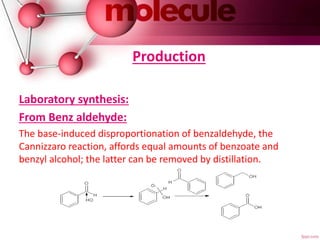
The base-induced disproportionation of benzaldehyde, the
Cannizzaro reaction, affords equal amounts of benzoate and
benzyl alcohol; the latter can be removed by distillation.
Uses
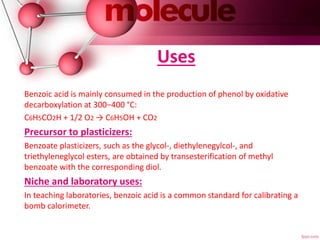
Benzoic acid is mainly consumed in the production of phenol by oxidative
decarboxylation at 300−400 °C:
C6H5CO2H + 1/2 O2 → C6H5OH + CO2
Precursor to plasticizers:
Benzoate plasticizers, such as the glycol-, diethylenegylcol-, and
triethyleneglycol esters, are obtained by transesterification of methyl
benzoate with the corresponding diol.
Niche and laboratory uses:
In teaching laboratories, benzoic acid is a common standard for calibrating a
bomb calorimeter.
Uses
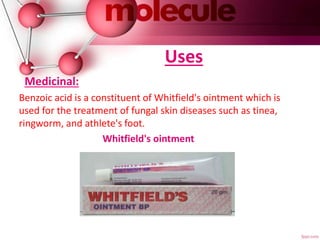
Medicinal:
Benzoic acid is a constituent of Whitfield's ointment which is
used for the treatment of fungal skin diseases such as tinea,
ringworm, and athlete's foot.
Whitfield's ointment
Biology and health effects
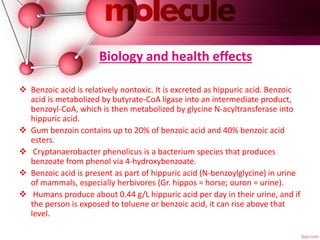
 Benzoic acid is relatively nontoxic. It is excreted as hippuric acid. Benzoic
acid is metabolized by butyrate-CoA ligase into an intermediate product,
benzoyl-CoA, which is then metabolized by glycine N-acyltransferase into
hippuric acid.
 Gum benzoin contains up to 20% of benzoic acid and 40% benzoic acid
esters.
 Cryptanaerobacter phenolicus is a bacterium species that produces
benzoate from phenol via 4-hydroxybenzoate.
 Benzoic acid is present as part of hippuric acid (N-benzoylglycine) in urine
of mammals, especially herbivores (Gr. hippos = horse; ouron = urine).
 Humans produce about 0.44 g/L hippuric acid per day in their urine, and if
the person is exposed to toluene or benzoic acid, it can rise above that
level.
Reactions
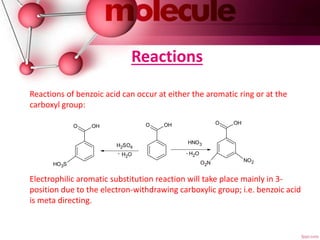
Reactions of benzoic acid can occur at either the aromatic ring or at the
carboxyl group:
Electrophilic aromatic substitution reaction will take place mainly in 3-
position due to the electron-withdrawing carboxylic group; i.e. benzoic acid
is meta directing.
O OH
HO3S
O OH O OH
NO2O2N
H2SO4
H2O-
HNO3
H2O-
 ANY QUESTION 

Bnzoic acid ppt

  • 1.
    IN THE NAMEOF ALLAH THE MOST BENIFICIENT THE MOST MERCIFUL
  • 2.
  • 3.
    CONTENTS  What isbenzoic acid?  History  Production  Uses  Biology and health effects  Reactions
  • 4.
    What is benzoicacid? Benzoic acid C7H6O2 (or C6H5COOH), is a colorless crystalline solid and a simple aromatic carboxylic acid. The name is derived from gum benzoin, which was for a long time it’s only known source. Benzoic acid occurs naturally in many plants and it serves as an intermediate in the biosynthesis of many secondary metabolites. O OH
  • 5.
    History Benzoic acid wasdiscovered in the sixteenth century. The dry distillation of gum benzoin was first described by Nostradamus (1556), and then by Alexius Pedemontanus (1560) and Blaise de Vigenère (1596). In 1875 Salkowski discovered the antifungal abilities of benzoic acid, which was used for a long time in the preservation of benzoate- containing cloudberry fruits. It is also one of the chemical compounds found in castoreum. This compound is gathered from the beaver plant food.
  • 6.
    Production Benzoic Acid isProduced by following method : 1. Industrial preparations: And Benzoic Acid also Produced by : 2 . Laboratory synthesis by following method: i. By hydrolysis ii. From Benz aldehyde iii. From bromobenzene iv. From benzyl alcohol v. From benzyl chloride vi. Historical preparation Continue
  • 7.
    Production Industrial preparations: Benzoic acidis produced commercially by partial oxidation of toluene with oxygen. The process is catalyzed by cobalt or manganese naphthenates. The process uses cheap raw materials, and proceeds in high yield. U.S. production capacity is estimated to be 126,000 tonnes per year (139,000 tons), much of which is consumed domestically to prepare other industrial chemicals. CH3 O2 OH2 O OH
  • 8.
    Production Laboratory synthesis: Benzoic acidis cheap and readily available, so the laboratory synthesis of benzoic acid is mainly practiced for its pedagogical value. It is a common undergraduate preparation. Benzoic acid can be purified by recrystallization from water because of its high solubility in hot water and poor solubility in cold water 1. By hydrolysis 2. From Benz aldehyde 3. From bromobenzene 4. From benzyl chloride
  • 9.
    Production Laboratory synthesis: 1. Byhydrolysis: Like other nitriles and amides, benzonitrile and benzamide can be hydrolyzed to benzoic acid or its conjugate base in acid or basic conditions. 2 From benzyl chloride: Benzoic acid can be prepared by oxidation of benzyl chloride in the presence of alkaline KMnO4: C6H5CH2Cl + 2 KOH + 2 [O] → C6H5COOH + KCl + H2O
  • 10.
    Production Laboratory synthesis: From Benzaldehyde: The base-induced disproportionation of benzaldehyde, the Cannizzaro reaction, affords equal amounts of benzoate and benzyl alcohol; the latter can be removed by distillation.
  • 11.
    Uses Benzoic acid ismainly consumed in the production of phenol by oxidative decarboxylation at 300−400 °C: C6H5CO2H + 1/2 O2 → C6H5OH + CO2 Precursor to plasticizers: Benzoate plasticizers, such as the glycol-, diethylenegylcol-, and triethyleneglycol esters, are obtained by transesterification of methyl benzoate with the corresponding diol. Niche and laboratory uses: In teaching laboratories, benzoic acid is a common standard for calibrating a bomb calorimeter.
  • 12.
    Uses Medicinal: Benzoic acid isa constituent of Whitfield's ointment which is used for the treatment of fungal skin diseases such as tinea, ringworm, and athlete's foot. Whitfield's ointment
  • 13.
    Biology and healtheffects  Benzoic acid is relatively nontoxic. It is excreted as hippuric acid. Benzoic acid is metabolized by butyrate-CoA ligase into an intermediate product, benzoyl-CoA, which is then metabolized by glycine N-acyltransferase into hippuric acid.  Gum benzoin contains up to 20% of benzoic acid and 40% benzoic acid esters.  Cryptanaerobacter phenolicus is a bacterium species that produces benzoate from phenol via 4-hydroxybenzoate.  Benzoic acid is present as part of hippuric acid (N-benzoylglycine) in urine of mammals, especially herbivores (Gr. hippos = horse; ouron = urine).  Humans produce about 0.44 g/L hippuric acid per day in their urine, and if the person is exposed to toluene or benzoic acid, it can rise above that level.
  • 14.
    Reactions Reactions of benzoicacid can occur at either the aromatic ring or at the carboxyl group: Electrophilic aromatic substitution reaction will take place mainly in 3- position due to the electron-withdrawing carboxylic group; i.e. benzoic acid is meta directing. O OH HO3S O OH O OH NO2O2N H2SO4 H2O- HNO3 H2O-
  • 16.