Physiology Seminar
             18/02/2013


 CHEMICAL
 CONTROL OF
 RESPIRATION


                                        1
                          ©Dr. Anwar Siddiqui
Need for chemical regulatory mechanism?

Maintenance of alveolar pCO2 at constant level
Combat the effect of excess H+ in the body
Raising pO2 if it falls to potentially lethal level


                                                       2
Respiratory chemoreceptors
Three types of respiratory chemoreceptors
Peripheral chemoreceptor
Medullary or central chemoreceptors


                                            3
Peripheral chemoreceptors
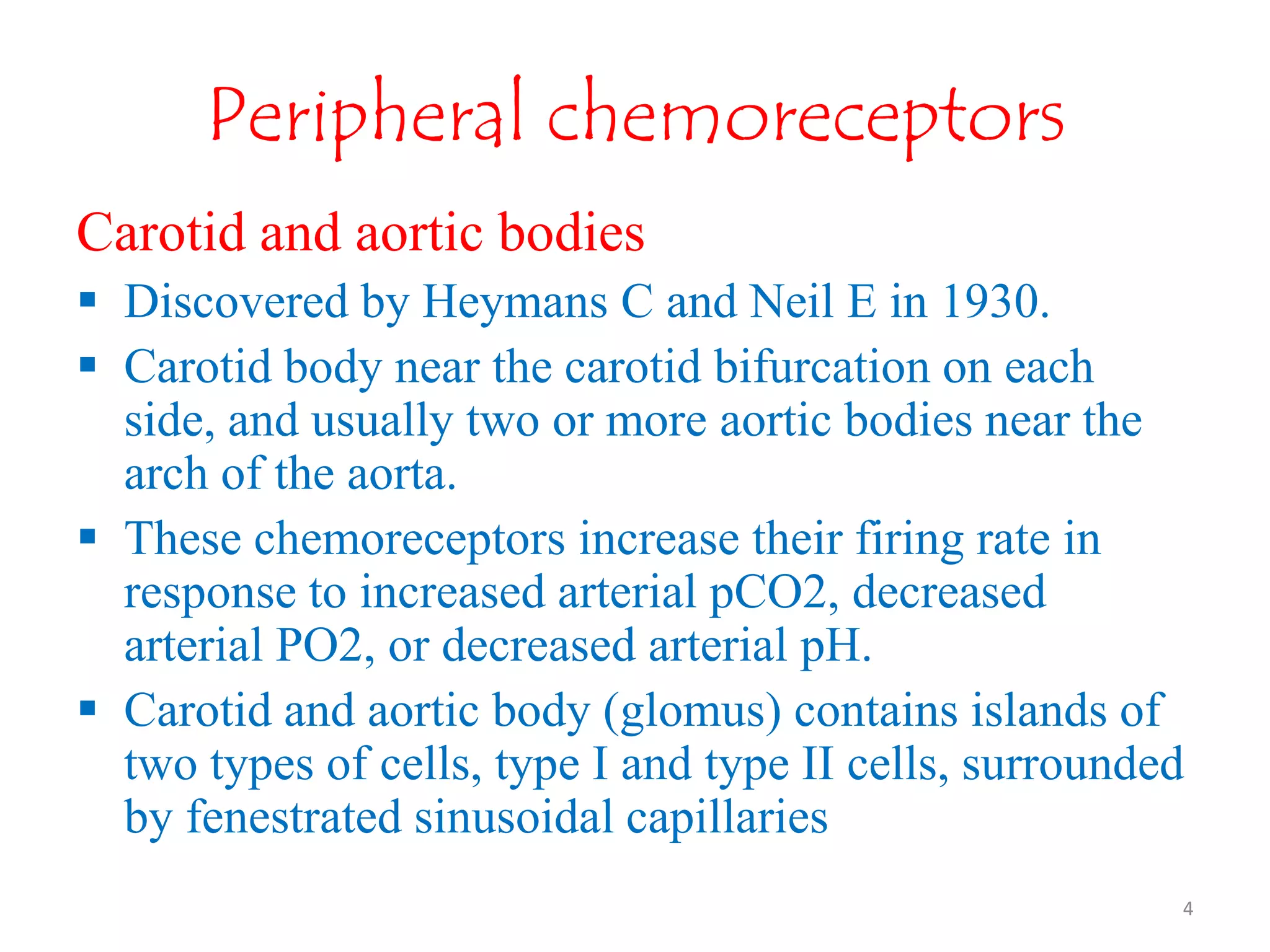
Carotid and aortic bodies
 Discovered by Heymans C and Neil E in 1930.
 Carotid body near the carotid bifurcation on each
  side, and usually two or more aortic bodies near the
  arch of the aorta.
 These chemoreceptors increase their firing rate in
  response to increased arterial pCO2, decreased
  arterial PO2, or decreased arterial pH.
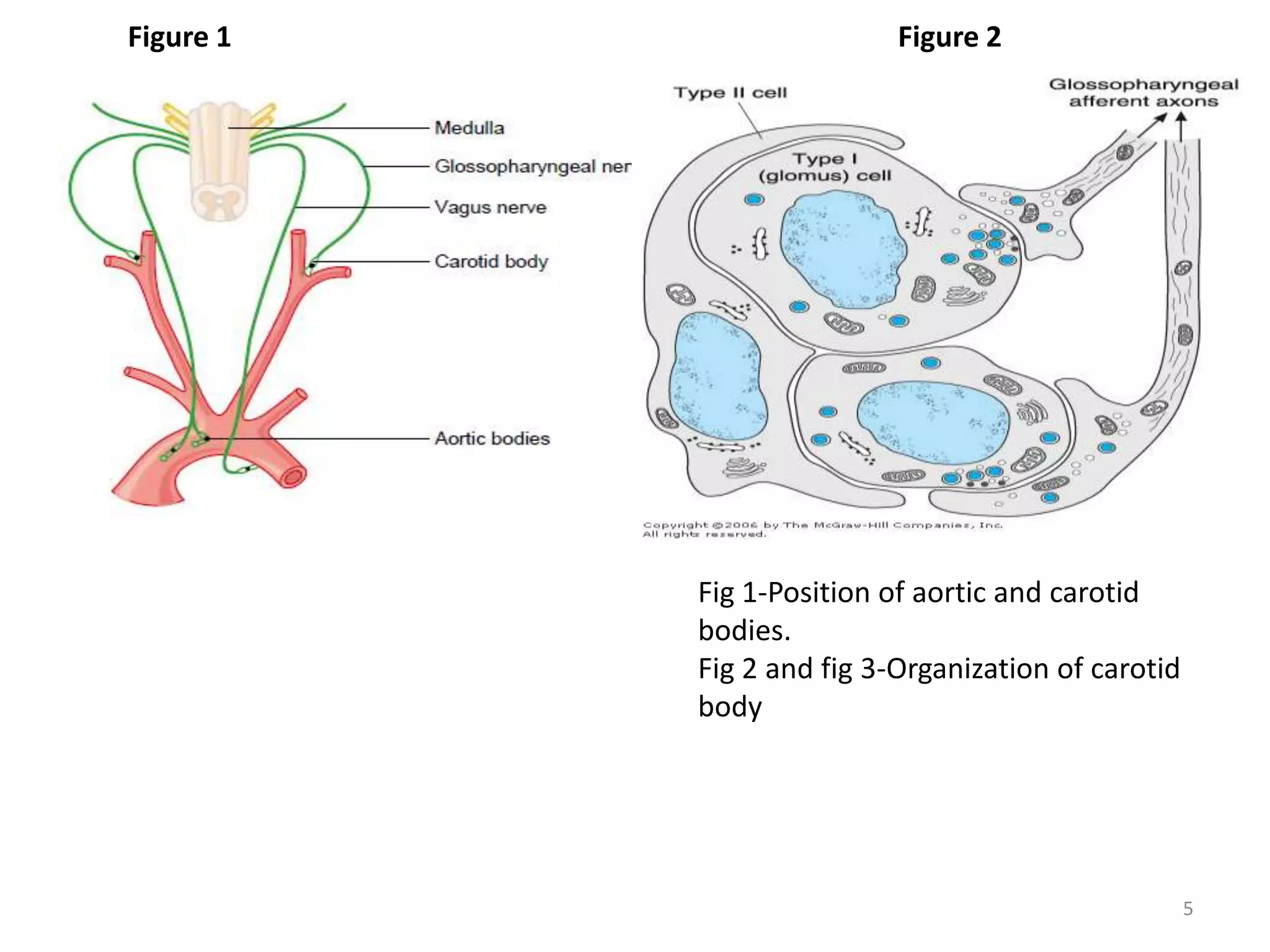
 Carotid and aortic body (glomus) contains islands of
  two types of cells, type I and type II cells, surrounded
  by fenestrated sinusoidal capillaries
                                                         4
Figure 1                   Figure 2


           Fig 1-Position of aortic and carotid
           bodies.
           Fig 2 and fig 3-Organization of carotid
           body


                                                     5
Mechanism of neurotransmitter release by type 1 cells


                                                                                           6
            Image courtesy-http://www.colorado.edu/intphys/Class/IPHY3430-200/015breathing.htm
Stimulus for activation of peripheral receptors
 Hypoxia- decrease in arterial pO2
 Vascular stasis- amount of O2 delivered to receptors is
  decreased
 Asphyxia- lack of O2 plus CO2 excess
 Drugs- cyanide, nicotine etc


                                                        7
Why are these receptors
not activated in anaemia
 and carbon monoxide
     poisoning???


                           8
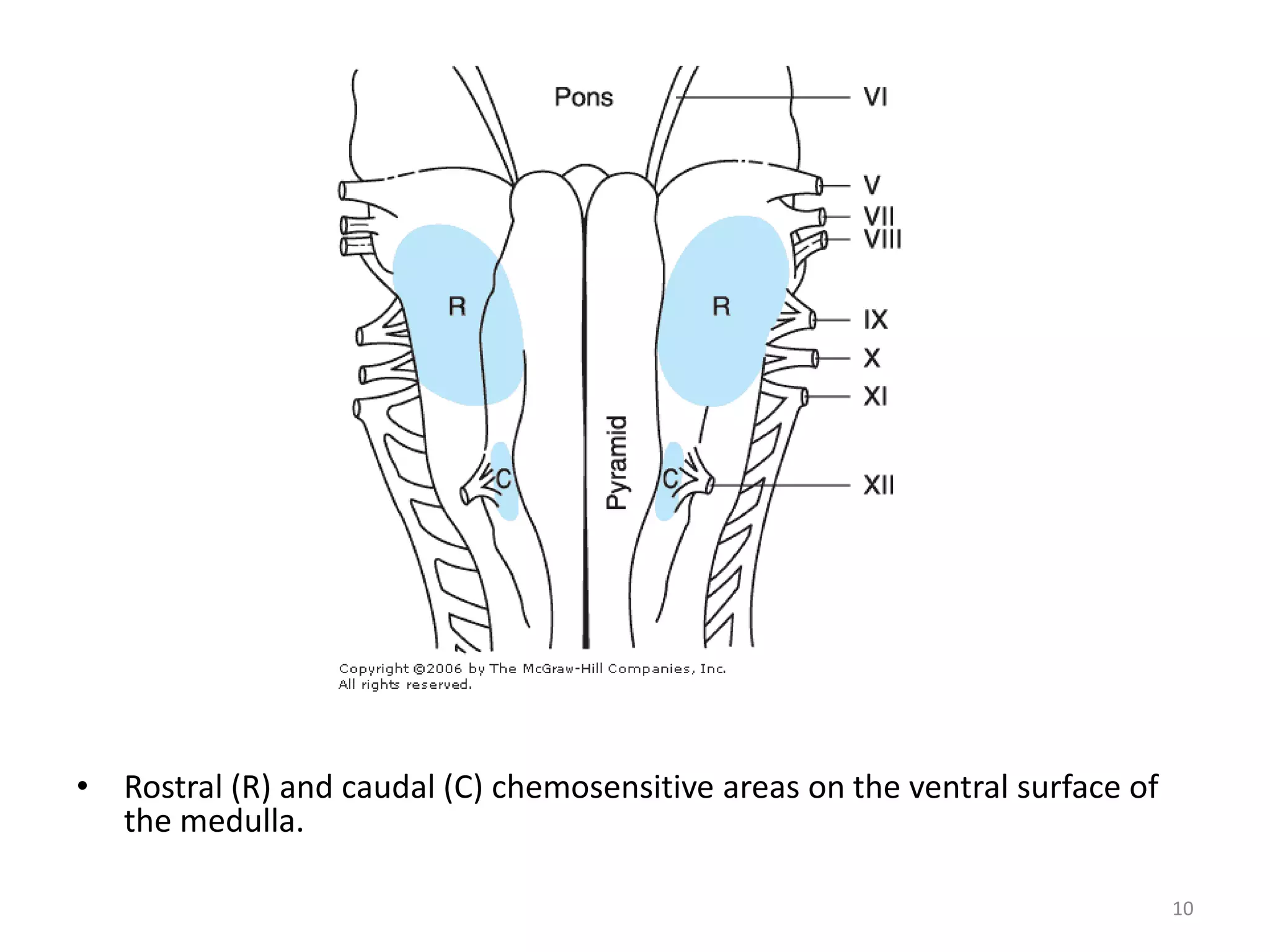
Central chemoreceptor
• Also known as medullary chemoreceptor
• Located on the ventral surface of medulla near VRG.
• Stimulated by the H+ concentration of CSF and brain
  interstitial fluid.
• Magnitude of stimulation is directly proportional to
  H+ concentration ,which increases linearly with
  arterial pCO2.
• Gets inhibited by anaesthesia, cyanide and sleep.


                                                         9
• Rostral (R) and caudal (C) chemosensitive areas on the ventral surface of
  the medulla.

                                                                              10
pH       pCO2        HCO3-


                                                                              7.33     44          22


                                                                              7.4      40          24
                                 HCO3-


Representation of the central chemoreceptor showing its relationship to carbon dioxide (CO2),
hydrogen (H+), and bicarbonate (HCO3–) ions in the arterial blood and cerebrospinal fluid (CSF).


                                                                                                   11
Chemical factors affecting respiration

• Effect of Hypoxia.
• Effect of CO2
• Effect of H+ concentration


                                     12
Effect of hypoxia on respiration
• Decrease in O2 content of inspired air increases
  respiratory minute volume.
• The increase is slight when the IpO2 is above 60 mm
  Hg and marked when the IpO2 falls below 60 mm Hg.


                            The red curve demonstrates the effect of
                            different levels of arterial PO2 on alveolar
                            ventilation, showing a sixfold increase in
                            ventilation as the PO2 decreases from the
                            normal level of 100 mm Hg
                            to 20 mm Hg.
                            Ref –Guyton and Hall physiology
                                                                     13
Effect of CO2 respiration
• The arterial PCO2 is normally maintained at 40 mm
  Hg.
• If arterial PCO2 rises as a result of increased tissue
  metabolism, ventilation is stimulated and the rate of
  pulmonary excretion of CO2 increases until the
  arterial PCO2 falls to normal.
• This feedback mechanism keeps CO2 excretion and
  production in balance.
• There occurs an essentially linear relationship
  between respiratory minute volume and pCO2
                                                           14
Figure depicts responses of normal
                                 subjects to inhaling O2 and
                                 approximately 2, 4, and 6% CO2. The
                                 increase in respiratory minute volume
                                 is due to an increase in both the depth
                                 and rate of respiration.
                                 Ref-Ganong review of medical
                                 physiology


• When the PCO2 of the inspired gas is close to the
  alveolar PCO2, elimination of CO2 becomes difficult.
• When the CO2 content of the inspired gas is more
  than 7%, the alveolar and arterial PCO2 begin to rise
  abruptly in spite of hyperventilation.
                                                                 15
• The resultant accumulation of CO2 in the body
  (hypercapnia) depresses the central nervous
  system, including the respiratory center, and produces
  headache, confusion, and eventually coma (CO2
  narcosis).
• CO2 primarily acts on central chemoreceptors but
  when central chemoreceptors are depressed by
  anaesthesia stimulation of peripheral chemoreceptors
  occur.


                                                       16
Effect of H+ concentration on
               respiration
• H+ normally cannot act through modification of
  central chemoreceptors.
• Acidosis (increase H+ concentration in blood)
  produces marked respiratory stimulation causing
  hyperventilation
• Alkalosis (decrease H+ concentration in blood)
  depresses respiratory centre and causes
  hypoventilation.


                                                    17
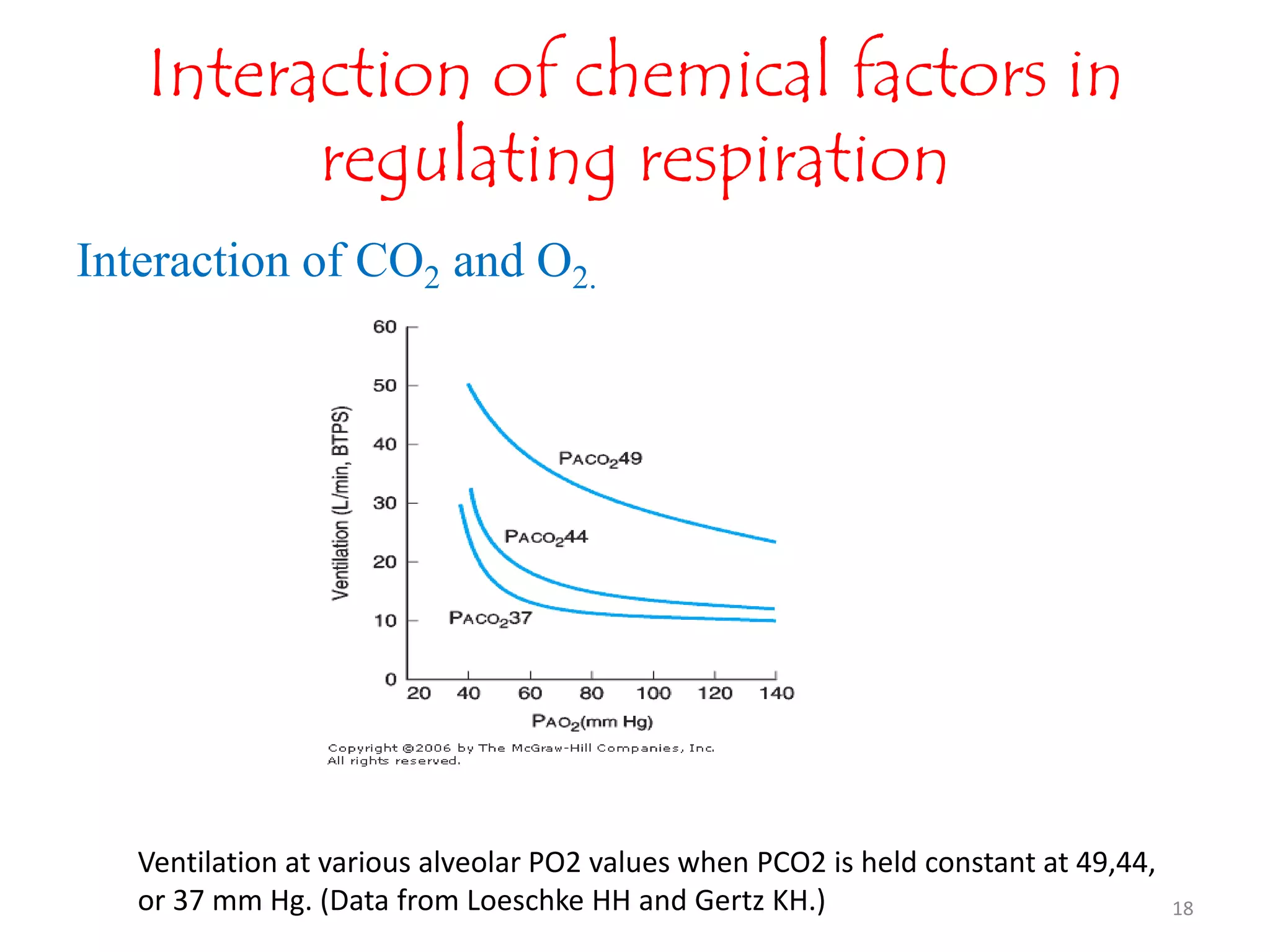
Interaction of chemical factors in
         regulating respiration
Interaction of CO2 and O2.


   Ventilation at various alveolar PO2 values when PCO2 is held constant at 49,44,
   or 37 mm Hg. (Data from Loeschke HH and Gertz KH.)                                18
Interaction of CO2 and H+.
• The stimulatory effects of H+ and CO2 on respiration
  appear to be additive .
• In meatabolic acidosis the same amount of respiratory
  stimulation is produced by lower arterial pCO2
  levels.
• The CO2 response curve shifts 0.8 mm Hg to the left
  for each nanomole rise in arterial H+.


                                                      19
Thanks….


      A presentation by Dr Anwar Hasan Siddiqui


                                              20

Chemical control of respiration

  • 1.
    Physiology Seminar 18/02/2013 CHEMICAL CONTROL OF RESPIRATION 1 ©Dr. Anwar Siddiqui
  • 2.
    Need for chemicalregulatory mechanism? Maintenance of alveolar pCO2 at constant level Combat the effect of excess H+ in the body Raising pO2 if it falls to potentially lethal level 2
  • 3.
    Respiratory chemoreceptors Three typesof respiratory chemoreceptors Peripheral chemoreceptor Medullary or central chemoreceptors 3
  • 4.
    Peripheral chemoreceptors Carotid andaortic bodies  Discovered by Heymans C and Neil E in 1930.  Carotid body near the carotid bifurcation on each side, and usually two or more aortic bodies near the arch of the aorta.  These chemoreceptors increase their firing rate in response to increased arterial pCO2, decreased arterial PO2, or decreased arterial pH.  Carotid and aortic body (glomus) contains islands of two types of cells, type I and type II cells, surrounded by fenestrated sinusoidal capillaries 4
  • 5.
    Figure 1 Figure 2 Fig 1-Position of aortic and carotid bodies. Fig 2 and fig 3-Organization of carotid body 5
  • 6.
    Mechanism of neurotransmitterrelease by type 1 cells 6 Image courtesy-http://www.colorado.edu/intphys/Class/IPHY3430-200/015breathing.htm
  • 7.
    Stimulus for activationof peripheral receptors  Hypoxia- decrease in arterial pO2  Vascular stasis- amount of O2 delivered to receptors is decreased  Asphyxia- lack of O2 plus CO2 excess  Drugs- cyanide, nicotine etc 7
  • 8.
    Why are thesereceptors not activated in anaemia and carbon monoxide poisoning??? 8
  • 9.
    Central chemoreceptor • Alsoknown as medullary chemoreceptor • Located on the ventral surface of medulla near VRG. • Stimulated by the H+ concentration of CSF and brain interstitial fluid. • Magnitude of stimulation is directly proportional to H+ concentration ,which increases linearly with arterial pCO2. • Gets inhibited by anaesthesia, cyanide and sleep. 9
  • 10.
    • Rostral (R)and caudal (C) chemosensitive areas on the ventral surface of the medulla. 10
  • 11.
    pH pCO2 HCO3- 7.33 44 22 7.4 40 24 HCO3- Representation of the central chemoreceptor showing its relationship to carbon dioxide (CO2), hydrogen (H+), and bicarbonate (HCO3–) ions in the arterial blood and cerebrospinal fluid (CSF). 11
  • 12.
    Chemical factors affectingrespiration • Effect of Hypoxia. • Effect of CO2 • Effect of H+ concentration 12
  • 13.
    Effect of hypoxiaon respiration • Decrease in O2 content of inspired air increases respiratory minute volume. • The increase is slight when the IpO2 is above 60 mm Hg and marked when the IpO2 falls below 60 mm Hg. The red curve demonstrates the effect of different levels of arterial PO2 on alveolar ventilation, showing a sixfold increase in ventilation as the PO2 decreases from the normal level of 100 mm Hg to 20 mm Hg. Ref –Guyton and Hall physiology 13
  • 14.
    Effect of CO2respiration • The arterial PCO2 is normally maintained at 40 mm Hg. • If arterial PCO2 rises as a result of increased tissue metabolism, ventilation is stimulated and the rate of pulmonary excretion of CO2 increases until the arterial PCO2 falls to normal. • This feedback mechanism keeps CO2 excretion and production in balance. • There occurs an essentially linear relationship between respiratory minute volume and pCO2 14
  • 15.
    Figure depicts responsesof normal subjects to inhaling O2 and approximately 2, 4, and 6% CO2. The increase in respiratory minute volume is due to an increase in both the depth and rate of respiration. Ref-Ganong review of medical physiology • When the PCO2 of the inspired gas is close to the alveolar PCO2, elimination of CO2 becomes difficult. • When the CO2 content of the inspired gas is more than 7%, the alveolar and arterial PCO2 begin to rise abruptly in spite of hyperventilation. 15
  • 16.
    • The resultantaccumulation of CO2 in the body (hypercapnia) depresses the central nervous system, including the respiratory center, and produces headache, confusion, and eventually coma (CO2 narcosis). • CO2 primarily acts on central chemoreceptors but when central chemoreceptors are depressed by anaesthesia stimulation of peripheral chemoreceptors occur. 16
  • 17.
    Effect of H+concentration on respiration • H+ normally cannot act through modification of central chemoreceptors. • Acidosis (increase H+ concentration in blood) produces marked respiratory stimulation causing hyperventilation • Alkalosis (decrease H+ concentration in blood) depresses respiratory centre and causes hypoventilation. 17
  • 18.
    Interaction of chemicalfactors in regulating respiration Interaction of CO2 and O2. Ventilation at various alveolar PO2 values when PCO2 is held constant at 49,44, or 37 mm Hg. (Data from Loeschke HH and Gertz KH.) 18
  • 19.
    Interaction of CO2and H+. • The stimulatory effects of H+ and CO2 on respiration appear to be additive . • In meatabolic acidosis the same amount of respiratory stimulation is produced by lower arterial pCO2 levels. • The CO2 response curve shifts 0.8 mm Hg to the left for each nanomole rise in arterial H+. 19
  • 20.
    Thanks…. A presentation by Dr Anwar Hasan Siddiqui 20