Oxygen Hemoglobin Dissociation 
Curve 
R.Srihari
• Introduction 
• Hemoglobin 
• The Curve 
• P50 
• Summary
Introduction 
• The oxygen–hemoglobin dissociation 
curve plots the proportion of hemoglobin in 
its saturated form on the vertical axis against 
the prevailing oxygen tension on the 
horizontal axis 
• Important tool for understanding how blood 
carries and releases oxygen
• More specifically it relates between the 
– Percentage of Oxygen carrying capacity of 
Haemoglobin and Partial pressure of Oxygen
Hemoglobin 
• Heme + Globin – Quarternary 
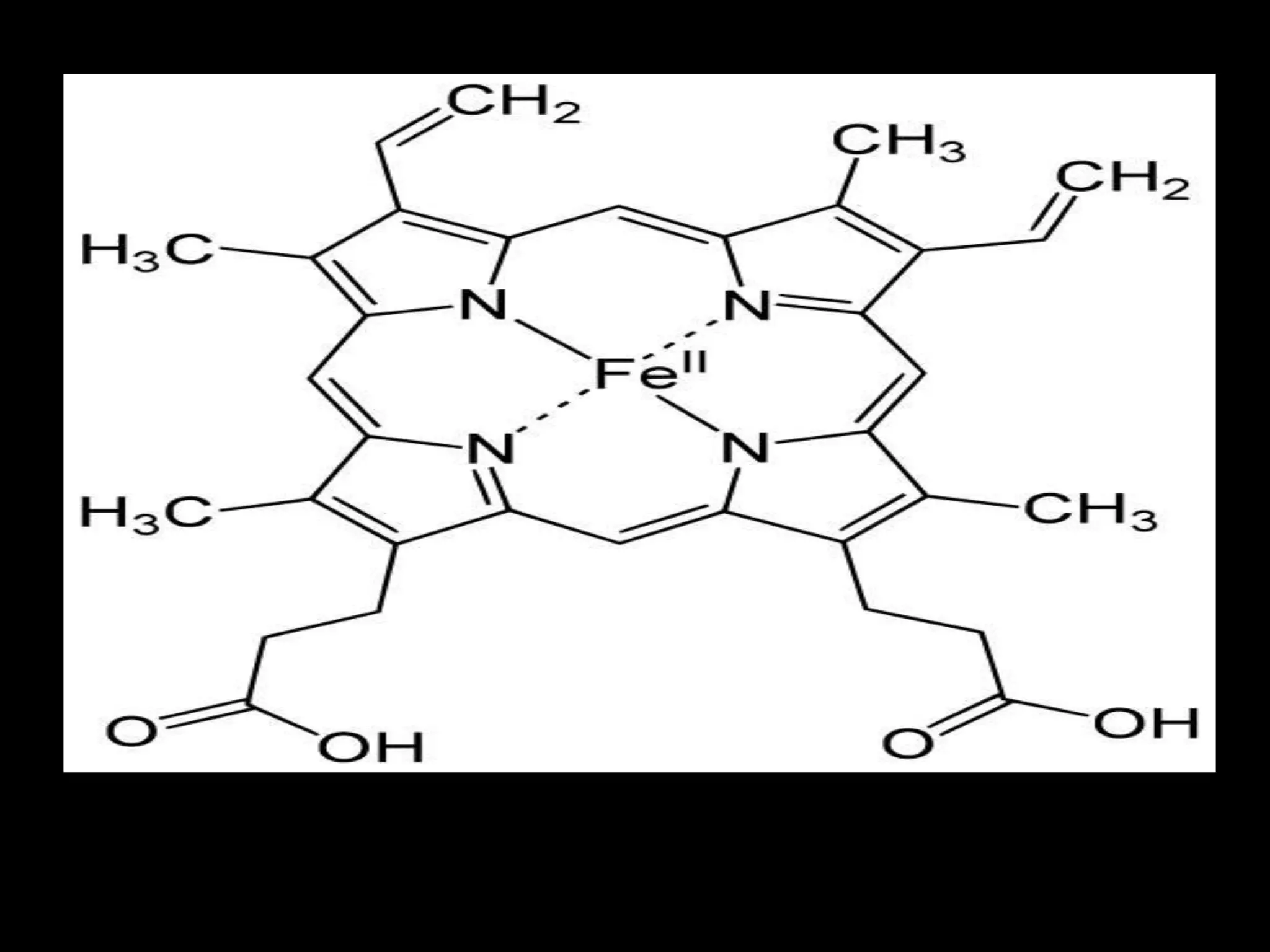
– Heme: present as 4 subunits connected by 
polypeptide globin chains as 2 alpha and 2 beta 
units(adult) 
• Each Heme contains one atom of ferrous iron 
Each ferrous iron has ability of binding reversibly to one 
oxygen molecule (via Oxygenation reaction)
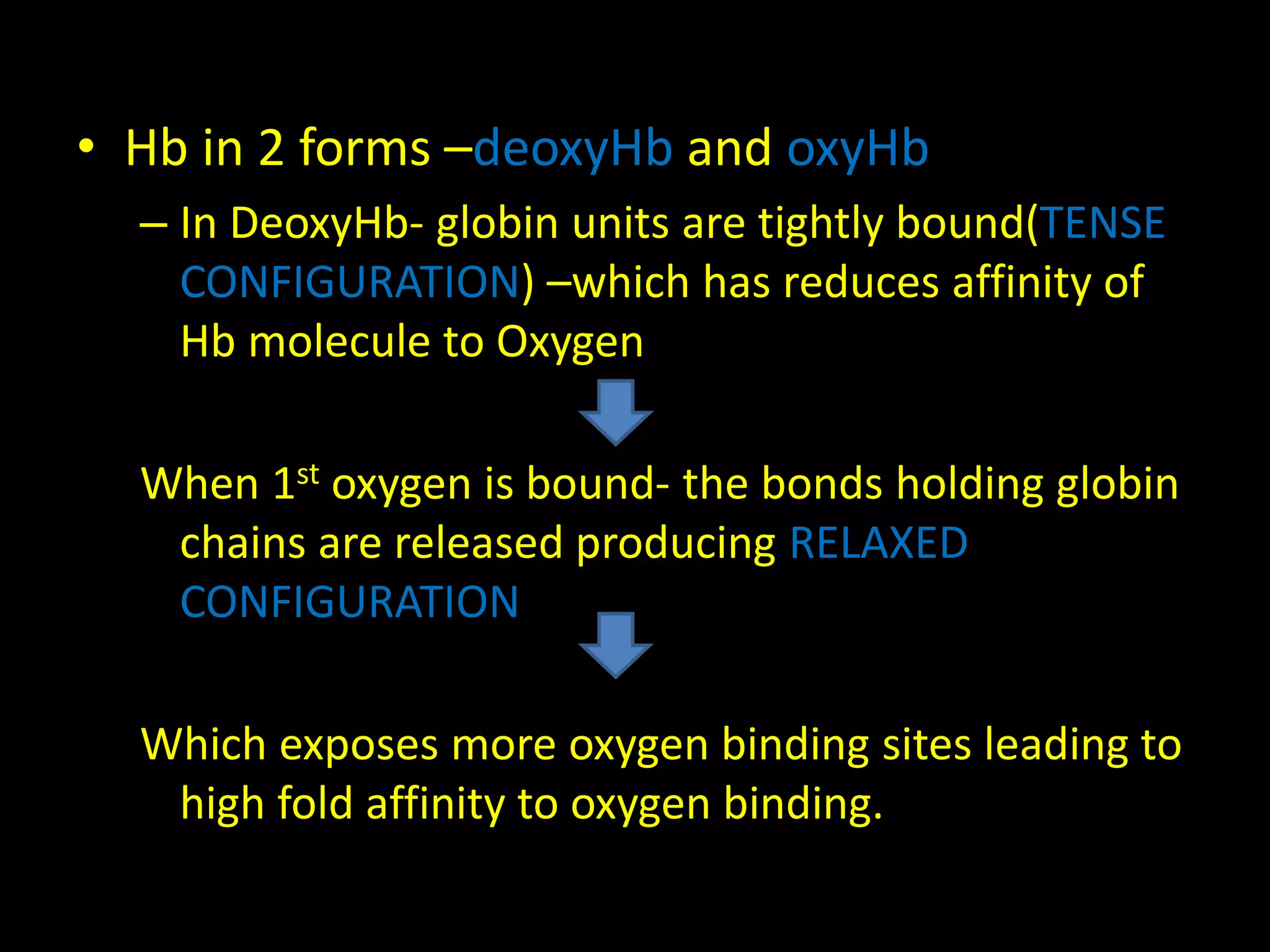
• Hb in 2 forms –deoxyHb and oxyHb 
– In DeoxyHb- globin units are tightly bound(TENSE 
CONFIGURATION) –which has reduces affinity of 
Hb molecule to Oxygen 
When 1st oxygen is bound- the bonds holding globin 
chains are released producing RELAXED 
CONFIGURATION 
Which exposes more oxygen binding sites leading to 
high fold affinity to oxygen binding.
The Curve 
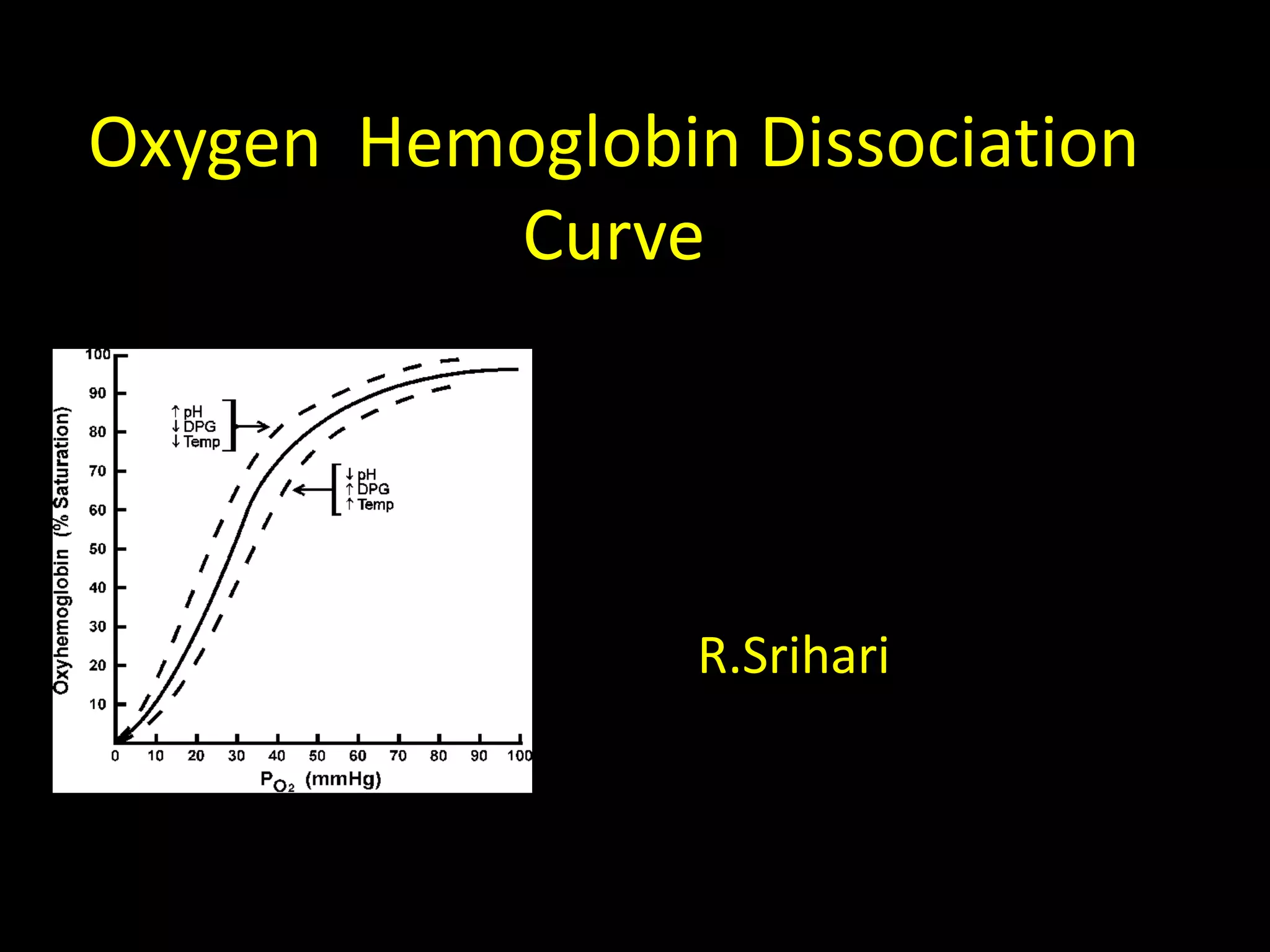
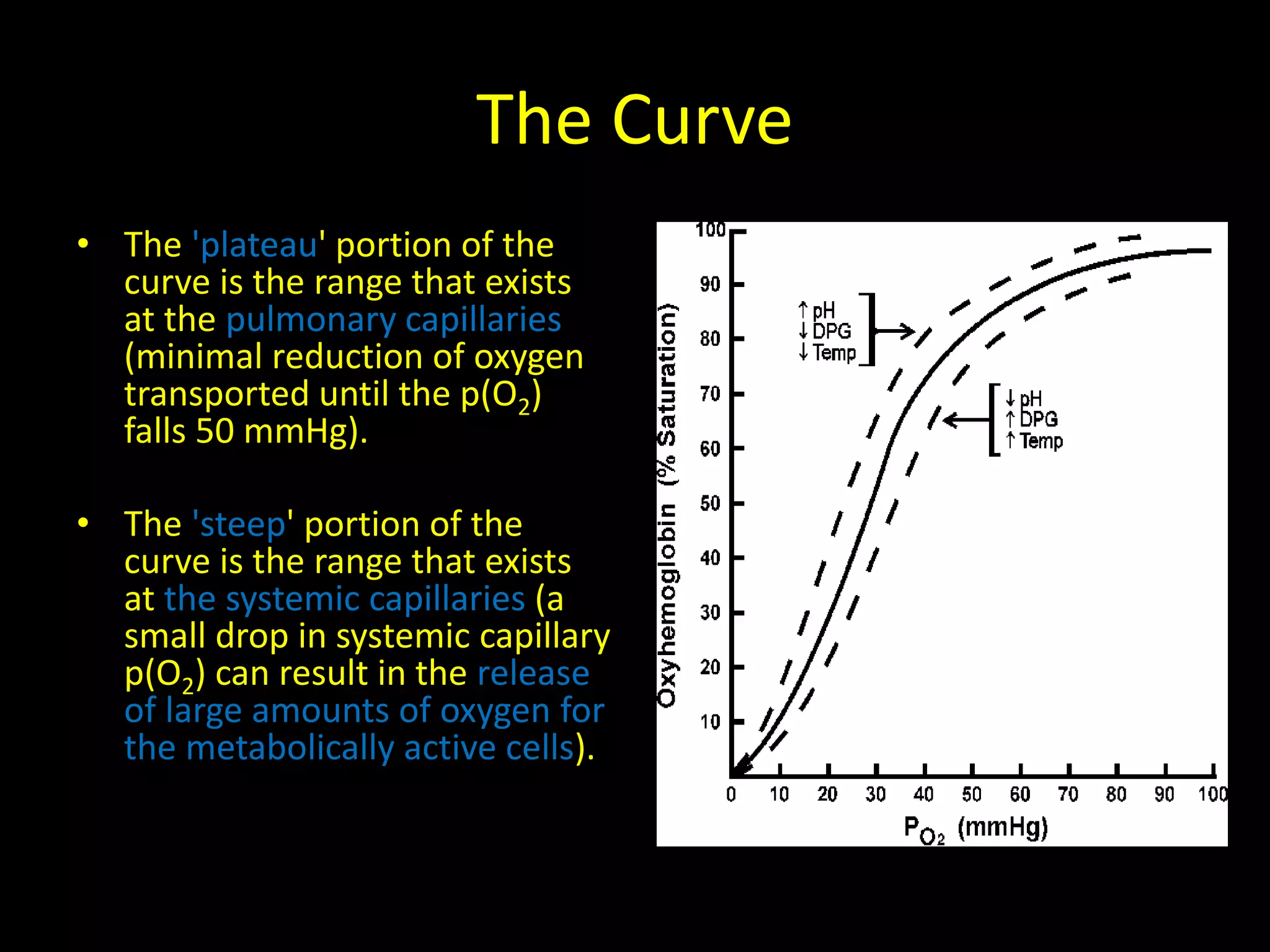
• The 'plateau' portion of the 
curve is the range that exists 
at the pulmonary capillaries 
(minimal reduction of oxygen 
transported until the p(O2) 
falls 50 mmHg). 
• The 'steep' portion of the 
curve is the range that exists 
at the systemic capillaries (a 
small drop in systemic capillary 
p(O2) can result in the release 
of large amounts of oxygen for 
the metabolically active cells).
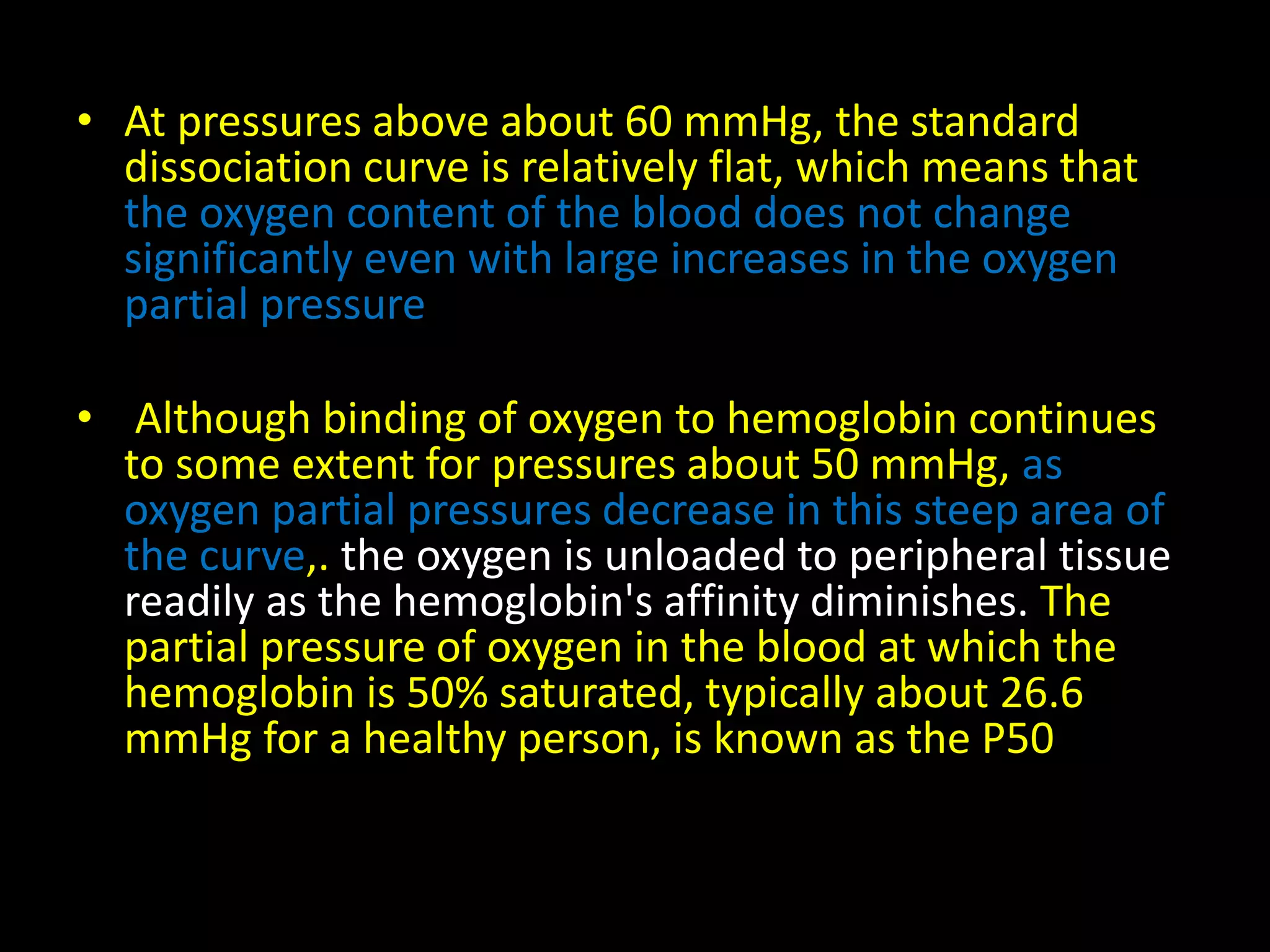
• At pressures above about 60 mmHg, the standard 
dissociation curve is relatively flat, which means that 
the oxygen content of the blood does not change 
significantly even with large increases in the oxygen 
partial pressure 
• Although binding of oxygen to hemoglobin continues 
to some extent for pressures about 50 mmHg, as 
oxygen partial pressures decrease in this steep area of 
the curve,. the oxygen is unloaded to peripheral tissue 
readily as the hemoglobin's affinity diminishes. The 
partial pressure of oxygen in the blood at which the 
hemoglobin is 50% saturated, typically about 26.6 
mmHg for a healthy person, is known as the P50
P50 
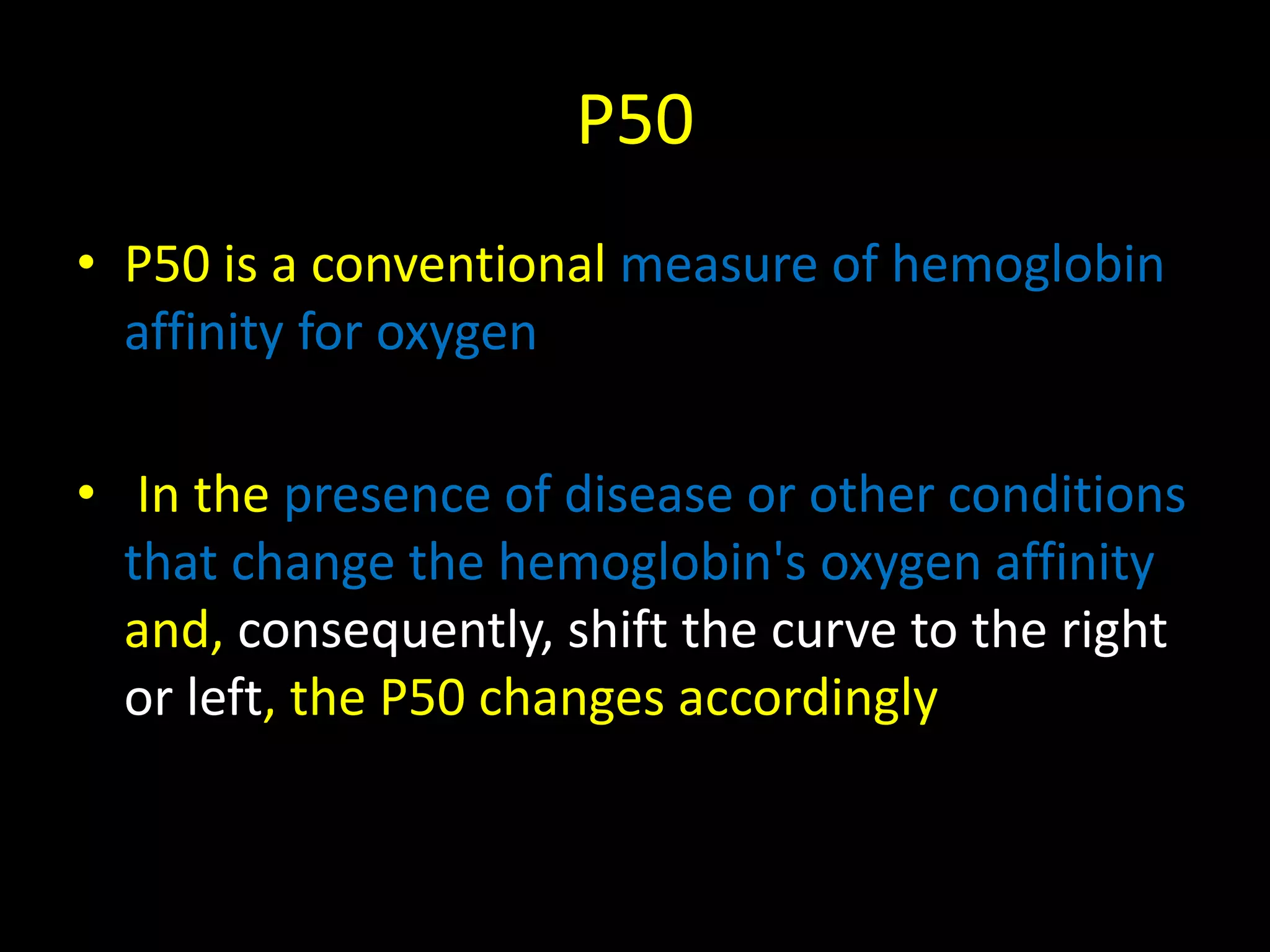
• P50 is a conventional measure of hemoglobin 
affinity for oxygen 
• In the presence of disease or other conditions 
that change the hemoglobin's oxygen affinity 
and, consequently, shift the curve to the right 
or left, the P50 changes accordingly
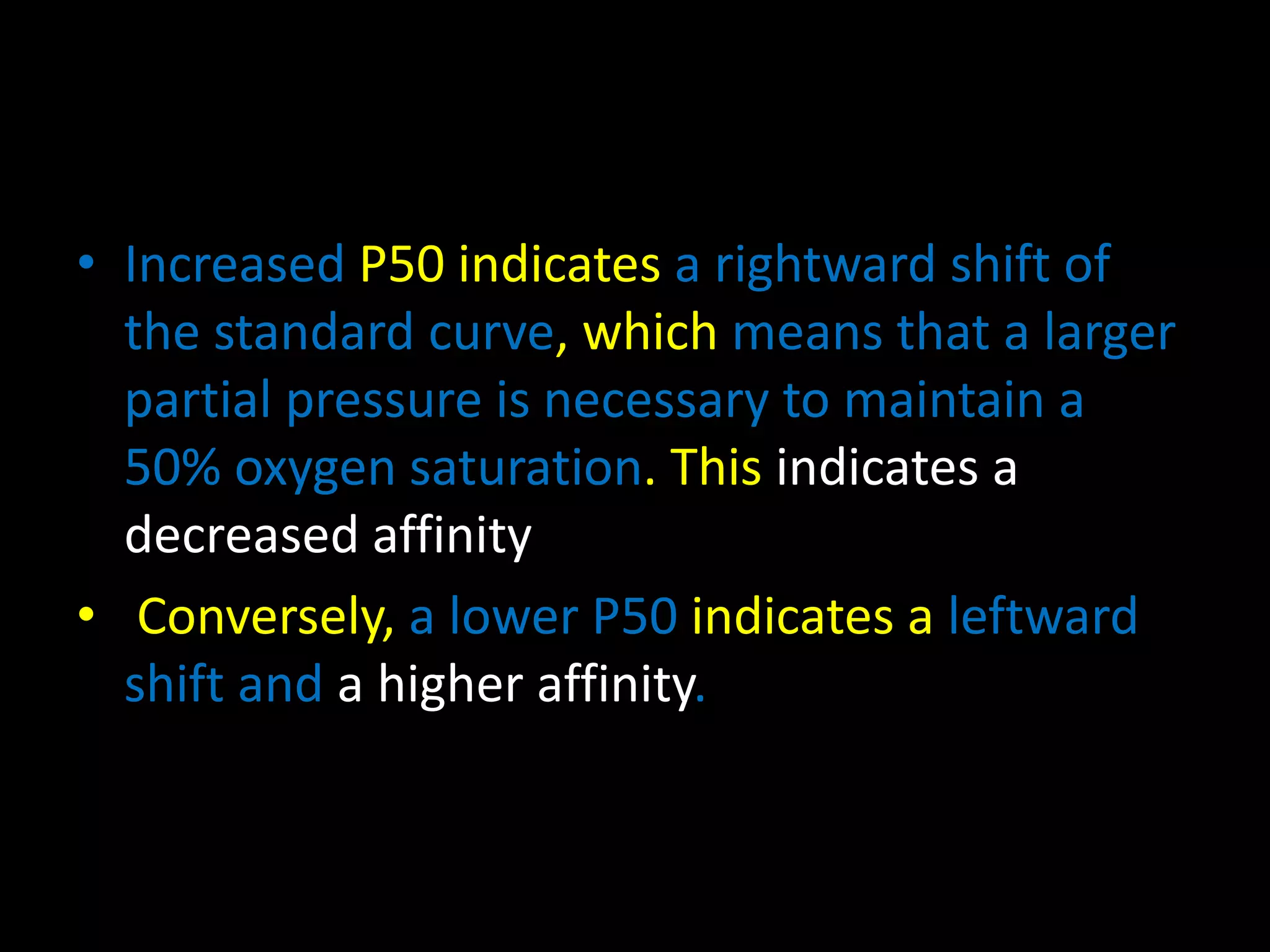
• Increased P50 indicates a rightward shift of 
the standard curve, which means that a larger 
partial pressure is necessary to maintain a 
50% oxygen saturation. This indicates a 
decreased affinity 
• Conversely, a lower P50 indicates a leftward 
shift and a higher affinity.
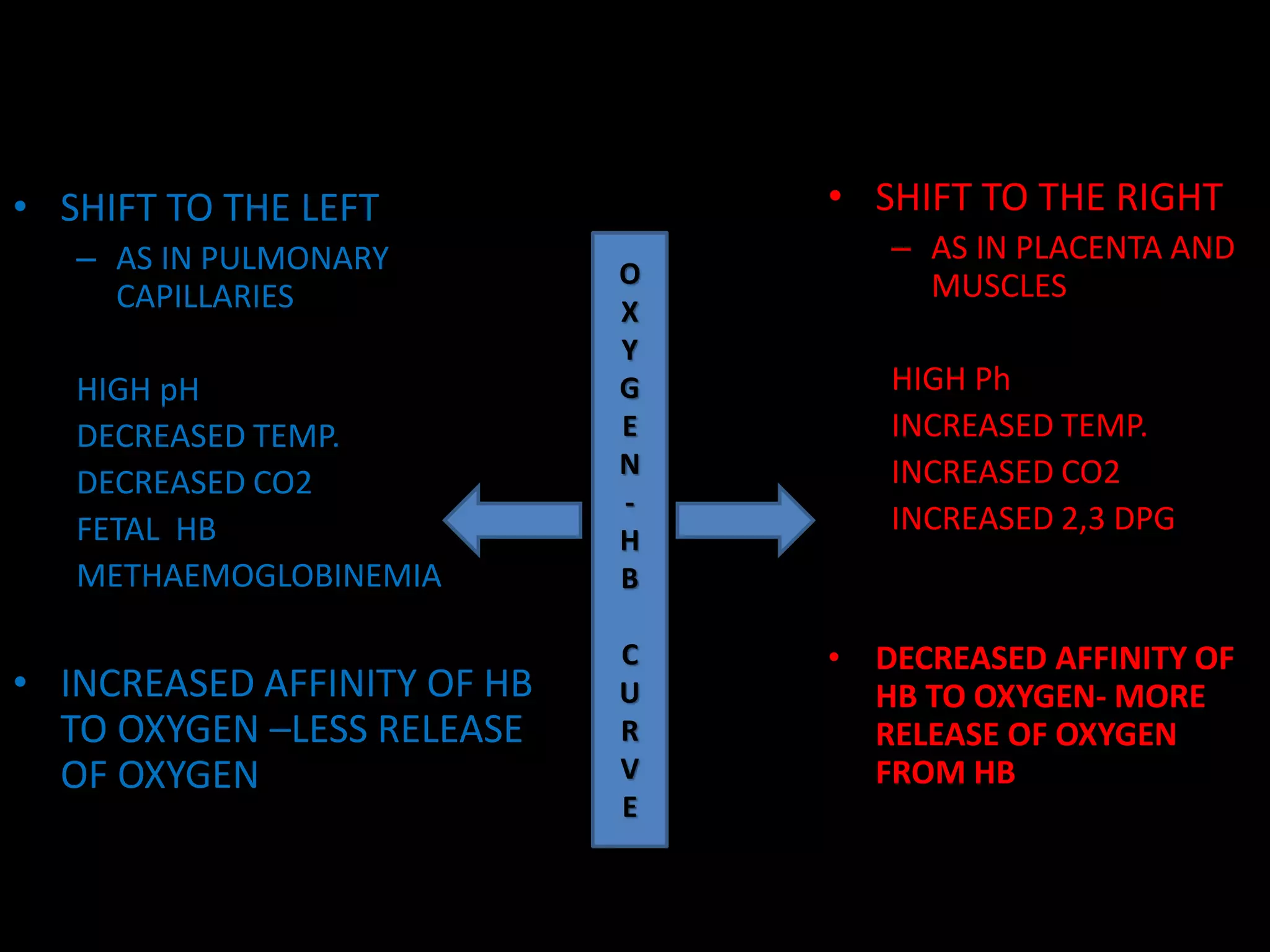
• SHIFT TO THE LEFT 
– AS IN PULMONARY 
CAPILLARIES 
HIGH pH 
DECREASED TEMP. 
DECREASED CO2 
FETAL HB 
METHAEMOGLOBINEMIA 
• INCREASED AFFINITY OF HB 
TO OXYGEN –LESS RELEASE 
OF OXYGEN 
• SHIFT TO THE RIGHT 
– AS IN PLACENTA AND 
MUSCLES 
HIGH Ph 
INCREASED TEMP. 
INCREASED CO2 
INCREASED 2,3 DPG 
• DECREASED AFFINITY OF 
HB TO OXYGEN- MORE 
RELEASE OF OXYGEN 
FROM HB 
O 
X 
Y 
G 
E 
N 
- 
H 
B 
C 
U 
R 
V 
E
THANK YOU

Oxygen dissociation curve

  • 1.
  • 2.
    • Introduction •Hemoglobin • The Curve • P50 • Summary
  • 3.
    Introduction • Theoxygen–hemoglobin dissociation curve plots the proportion of hemoglobin in its saturated form on the vertical axis against the prevailing oxygen tension on the horizontal axis • Important tool for understanding how blood carries and releases oxygen
  • 4.
    • More specificallyit relates between the – Percentage of Oxygen carrying capacity of Haemoglobin and Partial pressure of Oxygen
  • 5.
    Hemoglobin • Heme+ Globin – Quarternary – Heme: present as 4 subunits connected by polypeptide globin chains as 2 alpha and 2 beta units(adult) • Each Heme contains one atom of ferrous iron Each ferrous iron has ability of binding reversibly to one oxygen molecule (via Oxygenation reaction)
  • 7.
    • Hb in2 forms –deoxyHb and oxyHb – In DeoxyHb- globin units are tightly bound(TENSE CONFIGURATION) –which has reduces affinity of Hb molecule to Oxygen When 1st oxygen is bound- the bonds holding globin chains are released producing RELAXED CONFIGURATION Which exposes more oxygen binding sites leading to high fold affinity to oxygen binding.
  • 8.
    The Curve •The 'plateau' portion of the curve is the range that exists at the pulmonary capillaries (minimal reduction of oxygen transported until the p(O2) falls 50 mmHg). • The 'steep' portion of the curve is the range that exists at the systemic capillaries (a small drop in systemic capillary p(O2) can result in the release of large amounts of oxygen for the metabolically active cells).
  • 9.
    • At pressuresabove about 60 mmHg, the standard dissociation curve is relatively flat, which means that the oxygen content of the blood does not change significantly even with large increases in the oxygen partial pressure • Although binding of oxygen to hemoglobin continues to some extent for pressures about 50 mmHg, as oxygen partial pressures decrease in this steep area of the curve,. the oxygen is unloaded to peripheral tissue readily as the hemoglobin's affinity diminishes. The partial pressure of oxygen in the blood at which the hemoglobin is 50% saturated, typically about 26.6 mmHg for a healthy person, is known as the P50
  • 10.
    P50 • P50is a conventional measure of hemoglobin affinity for oxygen • In the presence of disease or other conditions that change the hemoglobin's oxygen affinity and, consequently, shift the curve to the right or left, the P50 changes accordingly
  • 11.
    • Increased P50indicates a rightward shift of the standard curve, which means that a larger partial pressure is necessary to maintain a 50% oxygen saturation. This indicates a decreased affinity • Conversely, a lower P50 indicates a leftward shift and a higher affinity.
  • 12.
    • SHIFT TOTHE LEFT – AS IN PULMONARY CAPILLARIES HIGH pH DECREASED TEMP. DECREASED CO2 FETAL HB METHAEMOGLOBINEMIA • INCREASED AFFINITY OF HB TO OXYGEN –LESS RELEASE OF OXYGEN • SHIFT TO THE RIGHT – AS IN PLACENTA AND MUSCLES HIGH Ph INCREASED TEMP. INCREASED CO2 INCREASED 2,3 DPG • DECREASED AFFINITY OF HB TO OXYGEN- MORE RELEASE OF OXYGEN FROM HB O X Y G E N - H B C U R V E
  • 13.