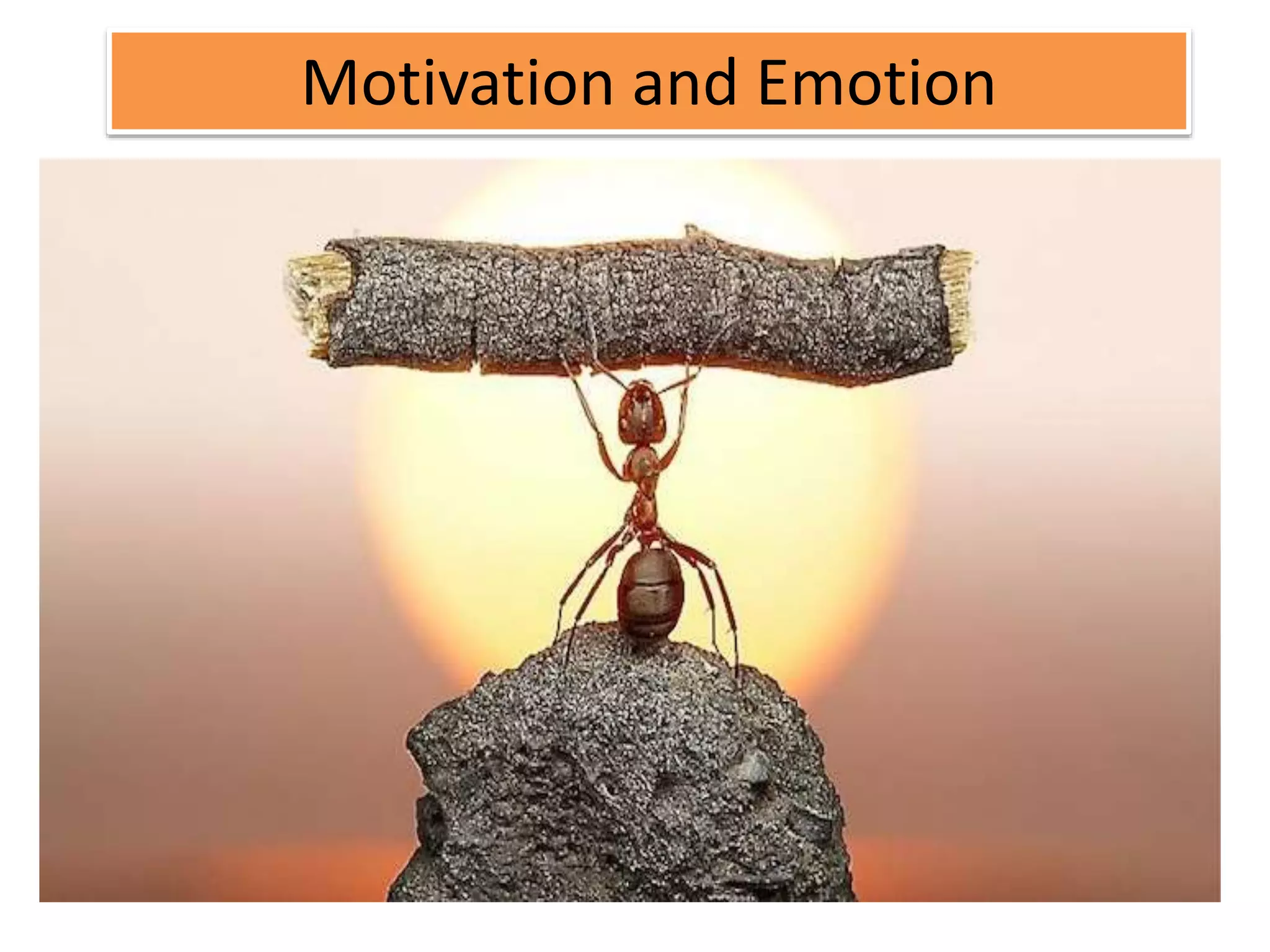
Motivation and Emotion
What is motivation? 
Motivation has been defined in various ways over the years, 
but a common component of the different definitions is that 
motivation is a force that energizes, activates and directs 
behaviour. In 2006, Franken defined motivation as the 
“arousal, direction and persistence of a person’s behaviour”. 
Most theorists who proposed their own explanation of 
motivation believe that any learned behaviour cannot be 
executed unless it is energized. Thus, motivation is important 
in performing all kinds of behaviour. Also, this means that any 
changes in motivation reflect on an individual’s behaviour. 
We can say that motivation is the factor that direct and 
energize the behavior of humans and other organisms. 
Motivation is the willingness and desire to participate or do 
something.
Let’s talk about the 5 theories of 
Motivation 
Instinct Theory 
All creatures are born with specific innate knowledge about how to 
survive. Animals are born with the capacity and often times knowledge of 
how to survive by spinning webs, building nests, avoiding danger, and 
reproducing. These innate tendencies are preprogrammed at birth, they are 
in our genes, and even if the spider never saw a web before, never witnessed 
its creation, it would still know how to create one. 
Drive Reduction Theory 
According to Clark Hull (1943, 1952), humans have internal internal biological 
needs which motivate us to perform a certain way. These needs, or drives, 
are defined by Hull as internal states of arousal or tension which must be 
reduced. A prime example would be the internal feelings of hunger or thirst, 
which motivates us to eat. According to this theory, we are driven to reduce 
these drives so that we may maintain a sense of internal calmness.
Arousal Theory 
Similar to Hull's Drive Reduction Theory, Arousal theory states that we are driven to 
maintain a certain level of arousal in order to feel comfortable. Arousal refers to a state of 
emotional, intellectual, and physical activity. It is different from the above theory, 
however, because it doesn't rely on only a reduction of tension, but a balanced amount. It 
also does better to explain why people climb mountains, go to school, or watch sad 
movies. 
Psychoanalytic Theory 
Remember Sigmund Freud and his five part theory of personality. As part of this theory, he 
believed that humans have only two basic drives: Eros and Thanatos, or the Life and Death 
drives. According to Psychoanalytic theory, everything we do, every thought we have, and 
every emotion we experience has one of two goals: to help us survive or to prevent our 
destruction. This is similar to instinct theory, however, Freud believed that the vast 
majority of our knowledge about these drives is buried in the unconscious part of the 
mind. 
Humanistic Theory 
Although discussed last, humanistic theory is perhaps the most well know theory of 
motivation. According to this theory, humans are driven to achieve their maximum 
potential and will always do so unless obstacles are placed in their way. These obstacles 
include hunger, thirst, financial problems, safety issues, or anything else that takes our 
focus away from maximum psychological growth. 
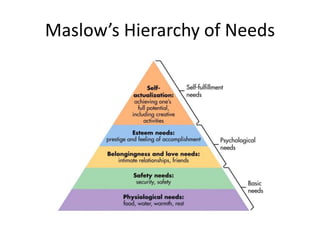
The best way to describe this theory is to utilize the famous pyramid developed 
by Abraham Maslow (1970) called the Hierarchy of Needs.
Maslow’s Hierarchy of Needs
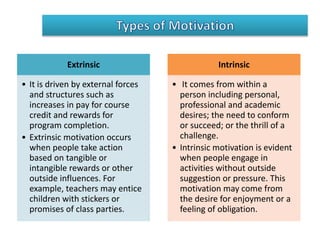
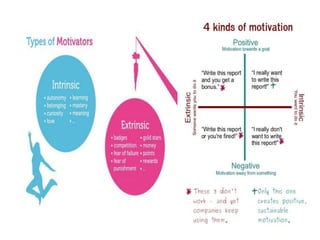
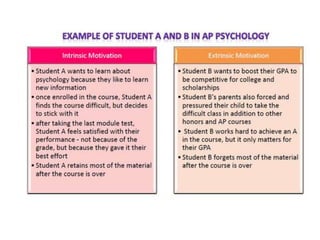
Extrinsic 
• It is driven by external forces 
and structures such as 
increases in pay for course 
credit and rewards for 
program completion. 
• Extrinsic motivation occurs 
when people take action 
based on tangible or 
intangible rewards or other 
outside influences. For 
example, teachers may entice 
children with stickers or 
promises of class parties. 
Intrinsic 
• It comes from within a 
person including personal, 
professional and academic 
desires; the need to conform 
or succeed; or the thrill of a 
challenge. 
• Intrinsic motivation is evident 
when people engage in 
activities without outside 
suggestion or pressure. This 
motivation may come from 
the desire for enjoyment or a 
feeling of obligation.
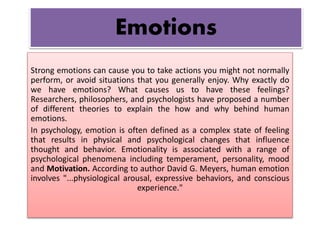
Emotions 
Strong emotions can cause you to take actions you might not normally 
perform, or avoid situations that you generally enjoy. Why exactly do 
we have emotions? What causes us to have these feelings? 
Researchers, philosophers, and psychologists have proposed a number 
of different theories to explain the how and why behind human 
emotions. 
In psychology, emotion is often defined as a complex state of feeling 
that results in physical and psychological changes that influence 
thought and behavior. Emotionality is associated with a range of 
psychological phenomena including temperament, personality, mood 
and Motivation. According to author David G. Meyers, human emotion 
involves "...physiological arousal, expressive behaviors, and conscious 
experience."
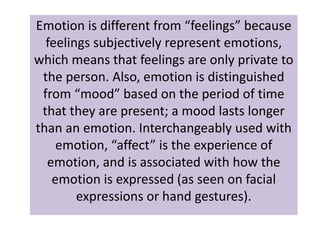
Emotion is different from “feelings” because 
feelings subjectively represent emotions, 
which means that feelings are only private to 
the person. Also, emotion is distinguished 
from “mood” based on the period of time 
that they are present; a mood lasts longer 
than an emotion. Interchangeably used with 
emotion, “affect” is the experience of 
emotion, and is associated with how the 
emotion is expressed (as seen on facial 
expressions or hand gestures).
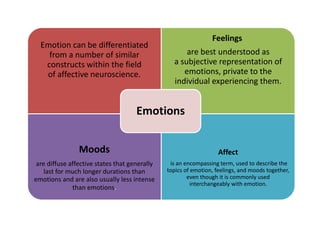
Emotion can be differentiated 
from a number of similar 
constructs within the field 
of affective neuroscience. 
Feelings 
are best understood as 
a subjective representation of 
emotions, private to the 
individual experiencing them. 
Moods 
are diffuse affective states that generally 
last for much longer durations than 
emotions and are also usually less intense 
than emotions. 
Affect 
is an encompassing term, used to describe the 
topics of emotion, feelings, and moods together, 
even though it is commonly used 
interchangeably with emotion. 
Emotions
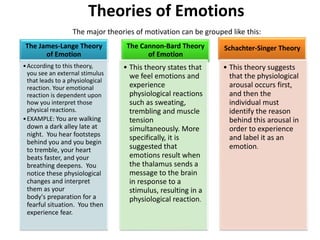
Theories of Emotions 
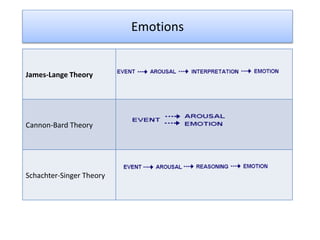
The major theories of motivation can be grouped like this: 
The James-Lange Theory 
of Emotion 
•According to this theory, 
you see an external stimulus 
that leads to a physiological 
reaction. Your emotional 
reaction is dependent upon 
how you interpret those 
physical reactions. 
•EXAMPLE: You are walking 
down a dark alley late at 
night. You hear footsteps 
behind you and you begin 
to tremble, your heart 
beats faster, and your 
breathing deepens. You 
notice these physiological 
changes and interpret 
them as your 
body's preparation for a 
fearful situation. You then 
experience fear. 
The Cannon-Bard Theory 
of Emotion 
• This theory states that 
we feel emotions and 
experience 
physiological reactions 
such as sweating, 
trembling and muscle 
tension 
simultaneously. More 
specifically, it is 
suggested that 
emotions result when 
the thalamus sends a 
message to the brain 
in response to a 
stimulus, resulting in a 
physiological reaction. 
Schachter-Singer Theory 
• This theory suggests 
that the physiological 
arousal occurs first, 
and then the 
individual must 
identify the reason 
behind this arousal in 
order to experience 
and label it as an 
emotion.
Emotions 
James-Lange Theory 
Cannon-Bard Theory 
Schachter-Singer Theory
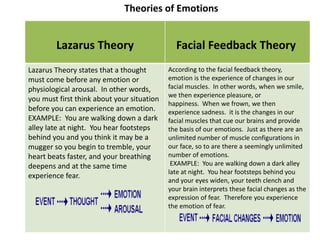
Theories of Emotions 
Lazarus Theory Facial Feedback Theory 
Lazarus Theory states that a thought 
must come before any emotion or 
physiological arousal. In other words, 
you must first think about your situation 
before you can experience an emotion. 
EXAMPLE: You are walking down a dark 
alley late at night. You hear footsteps 
behind you and you think it may be a 
mugger so you begin to tremble, your 
heart beats faster, and your breathing 
deepens and at the same time 
experience fear. 
According to the facial feedback theory, 
emotion is the experience of changes in our 
facial muscles. In other words, when we smile, 
we then experience pleasure, or 
happiness. When we frown, we then 
experience sadness. it is the changes in our 
facial muscles that cue our brains and provide 
the basis of our emotions. Just as there are an 
unlimited number of muscle configurations in 
our face, so to are there a seemingly unlimited 
number of emotions. 
EXAMPLE: You are walking down a dark alley 
late at night. You hear footsteps behind you 
and your eyes widen, your teeth clench and 
your brain interprets these facial changes as the 
expression of fear. Therefore you experience 
the emotion of fear.
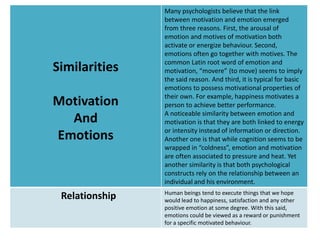
Similarities 
Motivation 
And 
Emotions 
Many psychologists believe that the link 
between motivation and emotion emerged 
from three reasons. First, the arousal of 
emotion and motives of motivation both 
activate or energize behaviour. Second, 
emotions often go together with motives. The 
common Latin root word of emotion and 
motivation, “movere” (to move) seems to imply 
the said reason. And third, it is typical for basic 
emotions to possess motivational properties of 
their own. For example, happiness motivates a 
person to achieve better performance. 
A noticeable similarity between emotion and 
motivation is that they are both linked to energy 
or intensity instead of information or direction. 
Another one is that while cognition seems to be 
wrapped in “coldness”, emotion and motivation 
are often associated to pressure and heat. Yet 
another similarity is that both psychological 
constructs rely on the relationship between an 
individual and his environment. 
Relationship Human beings tend to execute things that we hope 
would lead to happiness, satisfaction and any other 
positive emotion at some degree. With this said, 
emotions could be viewed as a reward or punishment 
for a specific motivated behaviour.
http://education-portal.com/academy/lesson/theories-of- 
emotion.html#lesson 
este video habla 6 minutos sobre teorias de la emocion 
esta muy bueno 
pero si ya tenias Tere algo de eso pues no se pondria

Chapter 7 motivation and emotion 1

  • 1.
  • 3.
    What is motivation? Motivation has been defined in various ways over the years, but a common component of the different definitions is that motivation is a force that energizes, activates and directs behaviour. In 2006, Franken defined motivation as the “arousal, direction and persistence of a person’s behaviour”. Most theorists who proposed their own explanation of motivation believe that any learned behaviour cannot be executed unless it is energized. Thus, motivation is important in performing all kinds of behaviour. Also, this means that any changes in motivation reflect on an individual’s behaviour. We can say that motivation is the factor that direct and energize the behavior of humans and other organisms. Motivation is the willingness and desire to participate or do something.
  • 4.
    Let’s talk aboutthe 5 theories of Motivation Instinct Theory All creatures are born with specific innate knowledge about how to survive. Animals are born with the capacity and often times knowledge of how to survive by spinning webs, building nests, avoiding danger, and reproducing. These innate tendencies are preprogrammed at birth, they are in our genes, and even if the spider never saw a web before, never witnessed its creation, it would still know how to create one. Drive Reduction Theory According to Clark Hull (1943, 1952), humans have internal internal biological needs which motivate us to perform a certain way. These needs, or drives, are defined by Hull as internal states of arousal or tension which must be reduced. A prime example would be the internal feelings of hunger or thirst, which motivates us to eat. According to this theory, we are driven to reduce these drives so that we may maintain a sense of internal calmness.
  • 5.
    Arousal Theory Similarto Hull's Drive Reduction Theory, Arousal theory states that we are driven to maintain a certain level of arousal in order to feel comfortable. Arousal refers to a state of emotional, intellectual, and physical activity. It is different from the above theory, however, because it doesn't rely on only a reduction of tension, but a balanced amount. It also does better to explain why people climb mountains, go to school, or watch sad movies. Psychoanalytic Theory Remember Sigmund Freud and his five part theory of personality. As part of this theory, he believed that humans have only two basic drives: Eros and Thanatos, or the Life and Death drives. According to Psychoanalytic theory, everything we do, every thought we have, and every emotion we experience has one of two goals: to help us survive or to prevent our destruction. This is similar to instinct theory, however, Freud believed that the vast majority of our knowledge about these drives is buried in the unconscious part of the mind. Humanistic Theory Although discussed last, humanistic theory is perhaps the most well know theory of motivation. According to this theory, humans are driven to achieve their maximum potential and will always do so unless obstacles are placed in their way. These obstacles include hunger, thirst, financial problems, safety issues, or anything else that takes our focus away from maximum psychological growth. The best way to describe this theory is to utilize the famous pyramid developed by Abraham Maslow (1970) called the Hierarchy of Needs.
  • 6.
  • 7.
    Extrinsic • Itis driven by external forces and structures such as increases in pay for course credit and rewards for program completion. • Extrinsic motivation occurs when people take action based on tangible or intangible rewards or other outside influences. For example, teachers may entice children with stickers or promises of class parties. Intrinsic • It comes from within a person including personal, professional and academic desires; the need to conform or succeed; or the thrill of a challenge. • Intrinsic motivation is evident when people engage in activities without outside suggestion or pressure. This motivation may come from the desire for enjoyment or a feeling of obligation.
  • 10.
    Emotions Strong emotionscan cause you to take actions you might not normally perform, or avoid situations that you generally enjoy. Why exactly do we have emotions? What causes us to have these feelings? Researchers, philosophers, and psychologists have proposed a number of different theories to explain the how and why behind human emotions. In psychology, emotion is often defined as a complex state of feeling that results in physical and psychological changes that influence thought and behavior. Emotionality is associated with a range of psychological phenomena including temperament, personality, mood and Motivation. According to author David G. Meyers, human emotion involves "...physiological arousal, expressive behaviors, and conscious experience."
  • 11.
    Emotion is differentfrom “feelings” because feelings subjectively represent emotions, which means that feelings are only private to the person. Also, emotion is distinguished from “mood” based on the period of time that they are present; a mood lasts longer than an emotion. Interchangeably used with emotion, “affect” is the experience of emotion, and is associated with how the emotion is expressed (as seen on facial expressions or hand gestures).
  • 12.
    Emotion can bedifferentiated from a number of similar constructs within the field of affective neuroscience. Feelings are best understood as a subjective representation of emotions, private to the individual experiencing them. Moods are diffuse affective states that generally last for much longer durations than emotions and are also usually less intense than emotions. Affect is an encompassing term, used to describe the topics of emotion, feelings, and moods together, even though it is commonly used interchangeably with emotion. Emotions
  • 13.
    Theories of Emotions The major theories of motivation can be grouped like this: The James-Lange Theory of Emotion •According to this theory, you see an external stimulus that leads to a physiological reaction. Your emotional reaction is dependent upon how you interpret those physical reactions. •EXAMPLE: You are walking down a dark alley late at night. You hear footsteps behind you and you begin to tremble, your heart beats faster, and your breathing deepens. You notice these physiological changes and interpret them as your body's preparation for a fearful situation. You then experience fear. The Cannon-Bard Theory of Emotion • This theory states that we feel emotions and experience physiological reactions such as sweating, trembling and muscle tension simultaneously. More specifically, it is suggested that emotions result when the thalamus sends a message to the brain in response to a stimulus, resulting in a physiological reaction. Schachter-Singer Theory • This theory suggests that the physiological arousal occurs first, and then the individual must identify the reason behind this arousal in order to experience and label it as an emotion.
  • 14.
    Emotions James-Lange Theory Cannon-Bard Theory Schachter-Singer Theory
  • 15.
    Theories of Emotions Lazarus Theory Facial Feedback Theory Lazarus Theory states that a thought must come before any emotion or physiological arousal. In other words, you must first think about your situation before you can experience an emotion. EXAMPLE: You are walking down a dark alley late at night. You hear footsteps behind you and you think it may be a mugger so you begin to tremble, your heart beats faster, and your breathing deepens and at the same time experience fear. According to the facial feedback theory, emotion is the experience of changes in our facial muscles. In other words, when we smile, we then experience pleasure, or happiness. When we frown, we then experience sadness. it is the changes in our facial muscles that cue our brains and provide the basis of our emotions. Just as there are an unlimited number of muscle configurations in our face, so to are there a seemingly unlimited number of emotions. EXAMPLE: You are walking down a dark alley late at night. You hear footsteps behind you and your eyes widen, your teeth clench and your brain interprets these facial changes as the expression of fear. Therefore you experience the emotion of fear.
  • 16.
    Similarities Motivation And Emotions Many psychologists believe that the link between motivation and emotion emerged from three reasons. First, the arousal of emotion and motives of motivation both activate or energize behaviour. Second, emotions often go together with motives. The common Latin root word of emotion and motivation, “movere” (to move) seems to imply the said reason. And third, it is typical for basic emotions to possess motivational properties of their own. For example, happiness motivates a person to achieve better performance. A noticeable similarity between emotion and motivation is that they are both linked to energy or intensity instead of information or direction. Another one is that while cognition seems to be wrapped in “coldness”, emotion and motivation are often associated to pressure and heat. Yet another similarity is that both psychological constructs rely on the relationship between an individual and his environment. Relationship Human beings tend to execute things that we hope would lead to happiness, satisfaction and any other positive emotion at some degree. With this said, emotions could be viewed as a reward or punishment for a specific motivated behaviour.
  • 17.
    http://education-portal.com/academy/lesson/theories-of- emotion.html#lesson estevideo habla 6 minutos sobre teorias de la emocion esta muy bueno pero si ya tenias Tere algo de eso pues no se pondria